‘Urgent action needed to prevent surge in digital violence in Africa, experts say’ says article in Business and Human Right of 30 March 2026
Activists and lawyers in Africa are calling for urgent action to protect women, girls and boys as digital violence surges across the continent. A massive rise in internet users, coupled with huge numbers of people aged under 30, has fuelled an increase in gendered online violence across the continent, according to experts, by giving perpetrators new tools to control and silence women and girls, and influence boys. “Unfortunately the world offline is not safe, equal and inclusive. But the world online is proliferating that to such an extent that it’s creating a foundation for a very, very unequal future,” said Ayesha Mago, global advocacy director at the Sexual Violence Research Initiative, a global network looking at violence against women. “In Africa, internet access is growing exponentially and more than 70% of the population of sub-Saharan Africa is under 30. We know that young people generally face higher rates of online violence and very often are bigger users of any tech,” she said.
Digital violence against women and girls has devastating effects such as mental health problems, withdrawal from public and economic life, physical attacks on LGBTQI+ people in countries that criminalise homosexuality, and femicide. While there is very little pan-African research, one study across five countries in sub-Saharan Africa showed that 28% of women had experienced online violence. As internet access expands, this number is expected to rise. Only 38% of people on the continent are internet users, according to the International Telecommunication Union – and among women the figure falls to 31%. Studies, research and anecdotal evidence at a national level paint a horrifying picture of extreme levels of violence and a toxic online environment with dire real-life consequences.
…In Uganda, in 2021, the National Survey on Violence in Uganda revealed that half of the women (49%) reported having been subjected to online harassment. In South Africa, upcoming research by Equimundo and UN Women found that exposure to harmful content translated into men being 2.6 times more likely to perpetrate violence and 1.8 times more likely to believe misogynistic views. Primary targets on the continent include women in the political arena, along with human rights activists, journalists and women with a public profile. A 2021 report by the Inter-Parliamentary Union and the African Parliamentary Union looking at the experiences of 137 female parliamentarians across 50 African countries found that 46% had been the target of sexist attacks online and 42% said they had received threats of death, rape, beating, or abduction, often through social media.
Sarah Bireete was arrested on December 30, 2025, after police and military personnel surrounded her home in Kampala. Shortly before her arrest, she posted on X, “My house is under siege by police and army”. As reported by East and Horn of Africa Election Observation Network (E-HORN) on 2 January 2026
The Police Reforms Working Group (PRWG) Kenya has called for the immediate release of Uganda’s human rights lawyer and civil society leader, Dr Sarah Bireete, warning that her detention ahead of the January elections threatens civic space and undermines democratic processes.
The Uganda Police confirmed her arrest in a brief social media post, stating she would be produced in court “in due course”. Police spokesperson Rachel Kawaala described the detention as part of “ongoing operations” but offered no further details.
“Dr Bireete is widely recognised for her unwavering passion for the protection of civil liberties, her lifelong quest for justice, and her steadfast commitment to democracy, a clarion call that has consistently advanced accountable governance across the region,” the Group said.
Bireete currently serves as Executive Director of the Centre for Constitutional Governance (CCG), Chairperson of the East Africa Civil Society Forum (EACSOF), and Chairperson of the Horn of Africa Election Observers Network (E-HORN).
PRWG Kenya described these roles as reflective of her integrity, credibility and long-standing contributions to human rights, electoral integrity and democratic governance.
The group urged Ugandan authorities to respect civil liberties, the rule of law and democratic processes.
“Respect for civil liberties, rule of law and democratic processes is fundamental to ensuring free, fair, and transparent elections,” PRWG Kenya said.
The statement also highlighted that Uganda’s constitution, under Article 23, guarantees that anyone arrested must be promptly informed of the reasons for their detention, a step that has not been followed in Dr Bireete’s case.
Bireete’s arrest follows her recent advocacy for Starlink, a satellite internet service operated by SpaceX, as a safeguard against potential internet shutdowns during the elections.
In a post dated December 23, 2025, she wrote, “Dear Ugandans, are you thinking of ways to navigate internet shutdown during elections? Starlink got you covered.”
As the country approaches general elections on 15 January 2026, UN experts* today warned that the pervasive climate of fear in Uganda, marked by allegations of enforced disappearance, the use of disproportionate force against political opposition supporters, and the intensified suppression of civil society and independent media, is not conducive to peaceful elections.
For this 31st edition, ten of the world’s leading human rights NGOs composing the Jury of the Martin Ennals Award – Amnesty International, Human Rights Watch, FIDH, HURIDOCS, Bread for the World, Human Rights First, World Organisation Against Torture, International Commission of Jurists (ICJ), International Service for Human Rights (ISHR), and Front Line Defenders – have selected, after much deliberation, three human rights defenders for their exceptional contribution to the human rights movement. [se also https://www.trueheroesfilms.org/thedigest/awards/043F9D13-640A-412C-90E8-99952CA56DCE]
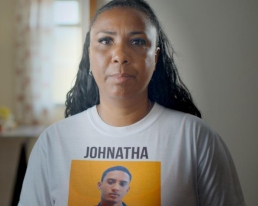
The 2025 Laureate is Ana Paula Gomes de Oliveira (Brazil), who co-founded the collective ‘Mothers of Manguinhos’ to fight for justice after the killing of her son, a 19-year-old Black man, who was shot in the back by a military police officer in the favelas of Rio on his way back from his girlfriend’s house in May 2014. The collective serves as a front for resistance and advocacy, but also as a network of emotional support and solidarity between women who share stories of similar loss. These women, in their majority Black, many of whom have lost children and other family members to violent actions by law enforcement officials, came together to denounce violence in the favelas, especially police violence that disproportionately affects poor Black youth. ‘When we are born Black and raised in the favelas, we are targeted by a racist system that is also reinforced by public security policies based on death and imprisonment,’ says Ana Paula. According to the UN, killings by the police have more than doubled in the last ten years in Brazil, with more than 6000 killings every year over the past six years. Black people, overwhelmingly men, represent a shocking rate of 82,7% of the killings by police officers in 2023. ‘The racist violence in Brazilian streets merits the full attention of the federal government and the international community,’ says Hans Thoolen, Chair of the Martin Ennals Award Jury. The collective ‘Mothers of Manguinhos’ fights for truth, memory, justice, freedom and the human rights of Black, poor, and peripheral lives. The collective is a member of the UN Antiracism Coalition (UNARC) and during the 57th session of the Human Rights Council, Ana Paula delivered a powerful message at a side event organised by UNARC on the perspectives of the Afro-Brazilian community directly affected by police violence in Brazil.
The Jury also recognised two finalists: Aloikin Praise Opoloje (Uganda) and Saadia Mosbah (Tunisia).
Aloikin Praise Opoloje is a 26-year-old Ugandan student who has become a leading voice against corruption, social injustice, and human rights abuses in Uganda. Inspired by the dire living and educational conditions in her home district of Palisa, she has mobilised thousands through social media and organised major peaceful protests, including the March to Parliament and the Nude Protest against government mismanagement, which prompted official accountability for the Kiteezi landfill tragedy. Despite repeated arrests in 2024 and ongoing legal charges, Aloikin went on to create the WeThePeople movement, which informs young Ugandans about their civic rights and non-violent resistance.
Saadia Mosbah is a leading Tunisian human rights activist and co-founder of Mnemty (‘My Dream’), the main organisation dedicated to fighting racism and racial discrimination in Tunisia. She has spearheaded initiatives through education, awareness raising and legislative advocacy, which have led to the 2016 national debate on systemic racism, the adoption of the Anti-Racism Law No. 50 (2018), and the declaration of 23 January as the National Day for the Abolition of Slavery for Tunisia (since 2019). Her work has also focused on combatting prejudice against migrant people and promoting migrant and refugee rights. Despite her legitimate activism, Saadia Mosbah and Mnemty have faced intense smear campaigns. She was arrested on 6 May 2024 on false accusations of financial crimes and remains in pre-trial detention without a set trial date. [https://www.amnesty.org/en/documents/mde30/0846/2026/en/]
The UN High Commissioner for human rights will award the selected laureate during the ceremony to take place on 26 November 2025 in Geneva, Switzerland. [https://www.martinennalsaward.org/2025-edition/]
DefendDefenders in January 2024 has chosen as HRDs of the MonthPamela Angwech from Uganda.
For most of her life, Pamela Angwech’s existence has always been a defiant and simultaneous act of survival and resistance. In 1976 when she was born, the anti-Amin movement was gathering pace, and her family was one of the earliest victims in Northern Uganda. Her father, a passionate educationist in Kitgum district was one of the most vocal critics of the dictatorship’s human rights excesses, which made him an obvious target of the state’s marauding vigilantes. Fearing for his life and that of his young family, he escaped North, to Sudan, leaving behind his wife, then pregnant with Pamela, to follow him as soon as she could. It was on the treacherous journey to rejoin her father that Pamela was born, somewhere between Uganda and Sudan, and named Angwench, an Acholi word to mean “on the run,” in keeping with the circumstances of her birth.
Unfortunately, those precarious circumstances would continue to define most of Angwech’s childhood. Although Amin was eventually overthrown, paving way for her family’s return home, the immediate post-Amin years were equally tumultuous, and when President Museveni’s National Resistance Army took power in 1986, Northern Uganda was immediately engulfed in a civil war by the Lord’s Resistance Army(LRA) rebels that would rage on for the next 20 years, bringing wanton anguish and suffering to the region’s people and communities.
Angwench navigated those precarious circumstances to pursue an education, convinced that only then could she impact her community for the better. At University, she studied Gender and Women Studies and immediately returned home to seek work with the UN’s World Food Program Office in Gulu, determined to join the relief effort to alleviate the suffering of her people in Internally Displaced People’s (IDP)Camps.
Initially, they told me there was no job. But I was determined to work with the UN and nowhere else. So, I camped at their office for 14 straight days. Sometimes, I would volunteer as a gatekeeper when the substantive gatekeeper was away, and other times, I would sit at the front patch of the Office Head the whole day. When they realized I was determined not to leave, they allowed me to start officially volunteering with them. “I would go with them to distribute food in the IDP camps, until later, I was formally integrated as official staff.
Yet, despite her dogged stubbornness and resilience, she was not prepared for the heart-rending experience of life in the IDPs, particularly the plight of women and girls.
“I started to notice that after picking their food rations, women and children would start picking residue beans from the floor, to take for either their little children or their elderly parents who could not queue. One other time, I noticed a visibly tired woman carrying a baby on her back, being pushed out of the queue by others. I called her to the front and assured her that I would give her a special ration but asked her to first untie her baby from the back, so she could protect her from the sun and breastfeed her. When she untied her baby, I noticed that the baby’s neck was twisted – it had suffocated and died! That changed me, forever,”
From Humanitarian to Human Rights Activist
Angwech realized that like a balm, humanitarian work could only soothe the suffering of her people but fell short of tackling the root causes of the same suffering. “So I decided that someone had to speak up about the heartbreaking indignity and human rights violations surrounding the conflict in Northern Uganda. I turned full scale, from a humanitarian to a human rights activist, particularly championing the rights of women who were most vulnerable “she says.
Angwech would move on the streets rallying women to stand up for their rights, holding placards signaling injustices against women in IDP camps like molestation and rape. Overtime, she won followers: Emboldened by her courage and audacity, other women started to show up and speak up against the conflict and related violence. Angwech mobilized grassroot women groups to pursue LRA leader Joseph Kony in Congo’s Garamba forest, to dramatize their cries for peace, under UN resolution 13/25 which provides for women’s participation in peace processes.
In 2004, Angwech started Gulu Women’s Economic Development & Globalization (GWED-G) to rehabilitate victims of the war, from victims of conflict-related sexual and gender-based violence to those physically harmed by the conflict. Since then, Angwech says GWED-G has rehabilitated over 1700 war victims through physical rehabilitation projects, giving them prosthesis, among other forms of support. It has also continued to sensitise and organise grassroot women into human rights defenders’ groups, through which they can report and address GBV cases, issues of women economic rights among others. Today, Angwech says there are about 600 of these groups across Gulu, Lamwo, Amuru and Kitgum, each with a membership of 30 -40 members.
Today, GWED-G is arguably the largest grassroots human rights organisation in Northern Uganda. It has also expanded to cover other social and economic causes, including environmental protection advocacy. Angwech says the environment is the local communities’ last refugee, and yet deforestation and charcoal burning are threatening it. “For post-conflict communities like us in Northern Uganda, land is our primary resource. It is the land from which people make an income to feed their families, send their children to school, and access medical care. War destroyed everything else. So, if we don’t protect the environment, our land will be degraded, rainy seasons will begin to change which will affect food production and bring back hunger,” she says.
Global Voices has released a special coverage called Empowering voices: Women in politics, which explores the state of women’s political participation around the world.
Human Rights First referred to a new report reveals that WHRDs face increasing harassment and threats from a global movement against gender equality and LGBTQI+ rights. The Kvinna till Kvinna Foundation, a leading feminist women’s rights organization, released Hope and Resistance Go Together: The State of Women Human Rights Defenders 2023, a report that found discouraging growth in harassment of WHRDs. The foundation surveyed 458 women’s and queer rights activists and interviewed 25 activists representing WHRDs from 67 countries affected by violence or conflict.
They found that 75% reported facing harassment for their activism, a 15% increase from two years ago, and 25% of respondents have received death threats. Most harassment comes from government authorities, but increased harassment from far-right groups and anti-gender equality actors is also driving these startling statistics. Human Rights Defenders (HRDs) across the world face resistance and violence. In 2022, at least 401 HRDs were killed for their peaceful work. But some of the obstacles facing WHRDs are distinct. https://humanrightsfirst.org/library/recognizing-women-human-rights-defenders-on-international-womens-day/
Human Rights Watch on 7 March carried a piece by Macarena Sáez who says inter alia:
On this International Women’s Day, we march for the one in three women who experience physical or sexual violence in their lifetime. We cheer for countries like Argentina, Colombia, and Ireland that value our autonomy to choose to be pregnant and have legalized access to safe abortion, while protesting that abortion is still or again illegal in many places, including US states like Alabama and Texas. At the same time, we march to honor the women who marched before us, like the Mexican women who organized the first feminist congress in 1916 to push for family law reforms and their right to vote, and the Nigerians who waged their “Women’s War” against colonization and patriarchal laws in 1929. Their struggles sadly mirror the reality of many women around the world today – especially women who belong to historically marginalized groups – who continue to rally against violence and abuse.
Fearing the power of women’s solidarity and collective actions, governments have stifled women’s speech through restrictions on movement, censorship, smear campaigns, and criminal prosecutions. In highly repressive contexts, like Afghanistan and Iran, women suffer arbitrary detention, and even enforced disappearance and torture, for their activism. Meanwhile, social media companies have not done enough to protect women from online violence, chilling women’s freedom of expression on and offline. These barriers make it hard for women’s equality to become reality. Gender justice requires an enabling environment in which women can express themselves, speak and spread their political views, and participate in political and public life. Instead of repressing or tolerating the repression of women, governments should recognize our collective actions – and consequent power – and enshrine our rights in laws, policies, and practice. [https://www.hrw.org/news/2024/03/07/womens-voices-have-power-drive-change]
On 8 March 8, 2024 Almyra Luna Kamilla and Rosalind Ratana opined in IMHO on “Navigating the storms of repression: The resilience of young women rights defenders in Asia”
In recent years, Asia has been witnessing rising authoritarianism and shrinking civic space. Among those in the frontlines of resistance are young women human rights defenders. As we celebrate International Women’s Day, let us demand for an enabling world where women human rights defenders can continue their noble pursuits without fear of reprisals.
In Thailand, the royal defamation law is being excessively used to silence criticisms against the monarchy. Meanwhile in Sri Lanka, economic and political mismanagement has sparked peaceful protests that are met with violence and intimidation. The fate of Asia’s political climate hangs by a thread as elections are held across many countries, including Bangladesh, Indonesia, India, South Korea, and Pakistan. Now more than ever, governments across the region are finding ways to solidify their power, putting an even tighter grip on civil society to the detriment of democracy and people’s fundamental rights and freedoms.
Despite such challenges, many are courageously speaking out and taking collective action to reclaim power for the people. This includes young women human rights defenders – or Youth WHRDs – who are claiming space to call out human rights violations and to demand accountability from oppressive governments. [https://www.rappler.com/voices/imho/young-women-rights-defenders-asia/]
The Alliance for Human Rights in Afghanistan(a coalition of 9 major NGOs) urgently appealed to the international community to significantly bolster its support and actively safeguard the human rights of Afghan women and girls, including Afghan women human rights defenders who face persecution for their peaceful campaigns for rights and basic freedoms.
In 2023, the Taliban further intensified its oppressive policies toward women, girls, the LGBTIQ+ community, and religious minorities. Afghan women and girls have seen their rights and prospects increasingly curtailed, from greater enforcement of restrictions on education – including a ban on girls attending secondary schools and universities – to intensifying exclusion of women from political and public life. Women have been banned from a growing list of forms of paid employment, and economic barriers, such as the ban on women registering organisations and undergoing vocational training, have contributed to a sharp decline in women’s participation in the labour market, impeding their right to make a living. This exacerbates financial insecurity, widens gender disparities, and further confines women to the private sphere. Lesbian, bisexual, and transgender women face severe threats, including torture, sexual violence, forced marriage, and death. Victims of gender violence, including those who identify as such, lack minimal legal and practical support. Obstacles to healthcare and education have exacerbated poverty and vulnerability among women and girls. In 2023, new discriminatory restrictions imposed by the Taliban included the closure of all beauty salons, blocking women from overseas travel for study, mandating female health workers in some areas to have a male chaperone while travelling or at work, and prohibiting women from entering a famous national park.
The oppressive environment extends to female activists, NGO leaders and journalists. Notable cases include the arrests of women’s rights activists Neda Parwani and Zholia Parsi, the enforced disappearance and subsequent discovery of Manizha Seddiqi in Taliban custody to date, the arrest of Matiullah Wesa, founder of an NGO advocating for girls’ education rights, and the arbitrary detainment of Ahmad Fahim Azimi and Seddiqullah Afghan—both dedicated girls’ education activists, among many others. Journalists reporting on the Taliban, facing arrests and threats, equally illustrate the difficulties encountered by the media, particularly women, when covering crimes against women or advocating for women’s rights. Collectively, these cases underscore the near-total denial of freedom of expression, gender equality, or any other internationally recognized right in Afghanistan under the Taliban.
Amid this growing oppression, segregation and fear, Afghan women human rights defenders have urged the international community to exert greater pressure on the Taliban. They call on international bodies to involve Afghan women in all negotiations with the Taliban and to facilitate direct meetings between women and the de facto authorities to address their concerns. Afghan women have also stressed the importance of advocacy for women’s rights by external actors based on the voices and realities of women inside Afghanistan. They call for coordinated efforts between organisations inside and outside the country to defend the rights of Afghan women and girls.
The UN Special Rapporteur on the situation of human rights in Afghanistan, Richard Bennett, called on the Taliban to release women human rights defenders as the world marks International Women’s Day.
I reiterate my appeal to the Taliban to respect all the human rights of women and girls in Afghanistan, including to education, work, freedom of movement and expression, and their cultural rights, and I urge the meaningful and equal participation of Afghan women and girls in all aspects of public life. I call on the Taliban to immediately and unconditionally release all those who have been arbitrarily detained for defending human rights, especially the rights of women and girls.”
On International Women’s Day, the a group of NGOs (ALQST for Human Rights, Amnesty International, CIVICUS, European Saudi Organization for Human Rights (ESOHR), Front Line Defenders, Gulf Centre for Human Rights (GCHR), HuMENA for Human Rights and Civic Engagement, International Service for Human Rights (ISHR),MENA Rights Group, Salam for Democracy and Human Rights) renewed their call on Saudi Arabian authorities to release all women human rights defenders (WHRDs), women’s rights activists and their supporters who are detained in contravention of international human rights standards. The organisations further call on Saudi authorities to lift travel bans imposed on WHRDs and their relatives, and to abolish the male guardianship system. [https://ishr.ch/latest-updates/civil-society-reiterates-their-call-on-saudi-authorities-to-release-jailed-womens-rights-activists/]
The President of Georgia awarded severl with mesla of honor: co-founder of “Safari” organization Babutsa Pataraia, human rights defender Ana Arganashvili, founders of “National Network for Protection from Violence”: Eliso Amirejibi and Nato Shavlakadze and founder of “Vedzeb” organization Tamar Museridze.
On 3 January 2023 it was reported that a prominent Ugandan LGBTQ+ activist Steven Kabuye was stabbed by unknown assailants on a motorbike after receiving death threats. Steven Kabuye, 25, suffered knife wounds and was left for dead on the outskirts of the capital Kampala.
Human rights defenders have been warning about the risk of attacks on members of the LGBTQ+ community after Uganda last year adopted what is considered one of the harshest anti-gay laws in the world.
Kabuye told detectives investigating the incident that he had been receiving death threats, according to a statement issued by police spokesperson Patrick Onyango.
Richard Lusimbo, head of the community action group Uganda Key Populations Consortium, said: “All our efforts at the moment [are to ensure] that he gets the medical attention he deserves and also the perpetrators of this heinous act are held responsible.”
Ugandan gay rights activist Hans Senfuma said in post on X that the attackers wanted to kill Kabuye. “Steven claims that these two guys’ intentions were to kill him, not robbing, and also claims that it seems they have been following him for several days,” Senfuma wrote.
Kabuye, who works with the Coloured Voices Media Foundation, which campaigns on behalf of LGBTQ+ youth, told investigators who visited his bedside that he had been receiving death threats since March 2023. He had returned to Uganda in December for Christmas after travelling abroad in June.
Human Rights Watch’ submission discusses the risks climate activists have faced in Australia, India, and Uganda. It focuses on examples of activists under age 32, as requested by the UN Special Rapporteur on Human Rights Defenders.
Australia
Following increased climate protest activity in New South Wales (NSW), the government in March 2022 established a new police unit known as the Strike Force Guard. The unit is designed to “prevent, investigate and disrupt unauthorized protests across the state.” On April 1, the state parliament introduced new laws and penalties specifically targeting protests that blocked roads and ports. Protesters can now be fined up to AU$22,000 (US$15,250) and be jailed for up to two years for protesting without permission on public roads, rail lines, tunnels, bridges, and industrial estates.
In 2022, Human Rights Watch interviewed three climate protesters who had been arrested and charged under the new laws. These cases indicate that climate protesters are being targeted for disproportionate punishment.
Violet (Deanna) Coco, a 31-year-old activist, took part in a climate protest on April 13, 2022, that stopped traffic in one lane on the Sydney Harbor Bridge. Coco climbed on the roof of a parked truck and stood holding a lit emergency flare. After approximately 25 minutes, NSW police forcibly removed her and the other protesters from the road. Coco was charged with disrupting vehicles, interfering with the safe operation of a bridge, possessing a bright light distress signal in a public place, failing to comply with police direction, and resisting or hindering a police officer. She was also charged under explosives regulations for holding the emergency flare; with an incitement offense for “encouraging the commission of a crime” by livestreaming the protest on Facebook; and for uploading a video of a climate protest she took the previous week, and with disrupting traffic during three previous protests.
Coco pleaded guilty to two charges – blocking traffic and failing to comply with police direction – and not guilty to the other charges. She was released on AU$10,000 (US$6,940) bail, but the magistrate ordered her not to leave her apartment for any purpose except for emergency medical assistance or to attend court. She was also ordered not to associate with any other Fireproof Australia member. Coco spent 21 days under what amounted to house arrest. On May 5, 2022, a magistrate amended her bail and, while she was allowed to leave her property, the authorities imposed a curfew banning her from leaving her address before 10 a.m. and after 3 p.m.
In March 2023, Coco was issued with a 12-month conditional release order after a district court judge heard she had been initially imprisoned on false information provided by the New South Wales police.
In August 2022, the state of Victoria followed New South Wales with harsh new measures targeting environmental protesters at logging sites with up to 12 months in jail or $21,000 in fines. In Tasmania, environmental activists now face fines of $13,000 or two years in prison, while nongovernmental organizations that have been found to “support members of the community to protest” face fines of over $45,000.
On May 18, 2023, the South Australia government introduced harsh new anti-protest measures in the South Australian lower house in the morning and then rushed them through after lunch with bipartisan support after just 20 minutes of debate and no public consultation. The bill would increase the punishment for “public obstruction” 60-fold, from $750 to $50,000 or three months in jail, with activists also potentially facing orders to pay for police and other emergency services responding to a protest or action. On May 30, the laws were passed after a 14-hour debate in the South Australian upper house.
India
In February 2021, Indian authorities arrested Ravi who was sent to police custody for five days. Indian authorities also issued arrest warrants against Nikita Jacob, a lawyer, and Shantanu Muluk, an activist, who were granted pre-arrest bail. The authorities alleged Ravi was the “key conspirator” in editing and sharing an online toolkit shared by the Swedish Fridays for Future founder Greta Thunberg on social media, including Twitter, aimed at providing information to those seeking to peacefully support ongoing farmers protests. In granting bail to Ravi, the Delhi court said the evidence on record was “scanty and sketchy,” and that citizens cannot be jailed simply because they disagreed with government policies. It added: “The offense of sedition cannot be invoked to minister to the wounded vanity of governments.”
The Indian government has enforced Information Technology Rules that allow for greater governmental control over online content, threaten to weaken encryption, and seriously undermine media freedoms, rights to privacy, and freedom of expression online. These rules put youth and other human rights defenders and journalists at further risk of being targeted by the authorities for their online content.
Uganda
Young people from across Uganda have faced reprisals for fighting for climate justice. On September 25, 2020, Ugandan police arrested and detained for eight hours eight youth climate activists while participating in the global climate strike in Kampala. The police told them election campaigns were not allowed, although the activists repeatedly explained that they were an environmental—not a political—movement. The activists, only two of whom were above the age of 18, were detained in a room for eight hours, questioned, and then allowed to leave.
Human Rights Watch published a report that documented a range of restrictions on freedom of expression, association, and assembly related to oil development, including the planned East African Crude Oil Pipeline (EACOP) by the government. Civil society organizations and environmental defenders regularly report being harassed and intimidated, unlawfully detained, or arbitrarily arrested. Human Rights Watch interviewed 31 people in Uganda between March and October 2023, including 21 environmental defenders, and several of whom were under 32 years old.
Many student climate activists protesting EACOP have been arrested and charged with various offences in Kampala since 2021. These protests have been largely peaceful and usually small in scale. Since 2021, there have been at least 22 arrests, largely of students, at anti-EACOP protests in Kampala. Nine students were arrested in October 2022 after demonstrating support for the European Parliament resolution on EACOP and charged with “common nuisance.” Their case was finally dismissed on November 6, 2023, after more than 15 court appearances. Another four protesters were arrested on December 9, 2022, as they marched to the National Environmental Management Authority (NEMA) to demand a re-evaluation of the environmental damage caused by EACOP. One of the detainees was kept at an unknown location until the morning of December 12 when all four were released.
Another protesting student was arrested in Kampala on June 27, 2023, after trying to deliver a petition to the Speaker of the House of Uganda’s parliament. He told Human Rights Watch he was taken to an unlawful place of detention known as a “safe house” with his hands tied behind his back, questioned by plain-clothed security officials about who was providing the funding for the protests, before he was knocked to the floor. He said he awoke two days later in the hospital with serious injuries. On July 11, 2023, five individuals were arrested after protesting EACOP in downtown Kampala.
On September 15, 2023, four student protesters were arrested after a “Fridays for Future” and “StopEACOP” joint protest at the Ugandan parliament as part of the “Global Fight to End Fossil Fuels,” a global mobilization and day of action. They were released on bond five days later and have been charged with “common nuisance.” Their next hearing is scheduled for November 27, 2023. One of the students described to Human Rights Watch being held in a room inside parliament and beaten by uniformed parliamentary security officials and others in civilian clothes with “batons, gun butts, and using their boots to step on our heads” before being taken to Kampala’s Central Police Station (CPS). At the CPS he described plainclothes intelligence officers asking: “Who are your leaders? Among us, who is your leader? How many are you? Who are your leaders in different universities? Who is managing your social media accounts?” They then described being beaten further in CPS cells by other prisoners, one of whom said, “We have order from above to discipline you. You need to stop working on EACOP.”
Human Rights Watch encourages the Special Rapporteur to call on governments to:
Promote and protect universally recognized human rights and fundamental freedoms, respect, and protect the work of climate activists, in line with their human rights obligations.
Publicly condemn assault, threats, harassment, intimidation, and arbitrary arrests of activists, and direct security and other government officials to stop arresting, harassing, or threatening activists for protesting or on false accusations.
End arbitrary arrests and prosecutions of human rights defenders, anti-EACOP activists, and peaceful protesters.
Respect and protect the rights of all human rights defenders and civil society organizations to exercise freedoms of association, assembly, and expression, in accordance with international human rights norms.
Where applicable, ratify and implement regional human rights agreements to ensure public participation in environmental decision-making and to protect environmental defenders.
On 4 August 2023 UN High Commissioner for Human Rights, Volker Türk, expressed deep regret at the closure of his office in Uganda, following the Government’s decision not to renew the Host Country Agreement. The office in Kampala will officially cease its operations on Saturday. Sub-offices in Gulu and Moroto closed on 30 June and 31 July. See also: https://www.hrw.org/news/2023/02/15/uganda-threatens-close-un-human-rights-office
“I regret that our office in Uganda had to close after 18 years, during which we were able to work closely with civil society, people from various walks of life in Uganda, as well as engaging with State institutions for the promotion and protection of the human rights of all Ugandans,” said Türk.
“Much progress has been made in the country over the years, but serious human rights challenges remain in the path to full enjoyment of human rights for all,” the High Commissioner said.
Türk expressed particular concern about the human rights situation in Uganda ahead of the 2026 elections, given the increasingly hostile environment in which human rights defenders, civil society actors and journalists are operating.
He noted that most of the 54 NGOs that were arbitrarily suspended in August 2021 remain closed. The High Commissioner also expressed concerns that the amended Computer Misuse law may further erode free expression.
Türk warned against retrogression from Uganda’s commitments under the international human rights treaties it has ratified, including in the passage of the deeply discriminatory and harmful anti-homosexuality law, that is already having a negative impact on Ugandans.
Türk urged the Government to ensure the national human rights body can function effectively and independently, as the the main body tasked with human rights oversight in Uganda.
“The Uganda Human Rights Commission, our long-standing partner in the protection and promotion of human rights in the country, is chronically under-funded and under-staffed, and reports of political interference in its mandate undermine its legitimacy, independence and impartiality,” he said.
“I urge the Ugandan government to provide the Commission with adequate human, technical and financial resources so that it may more effectively execute its important mandate.”
“On our part, the UN Human Rights Office remains committed to working on human rights in Uganda, in line with my global mandate,” he added.
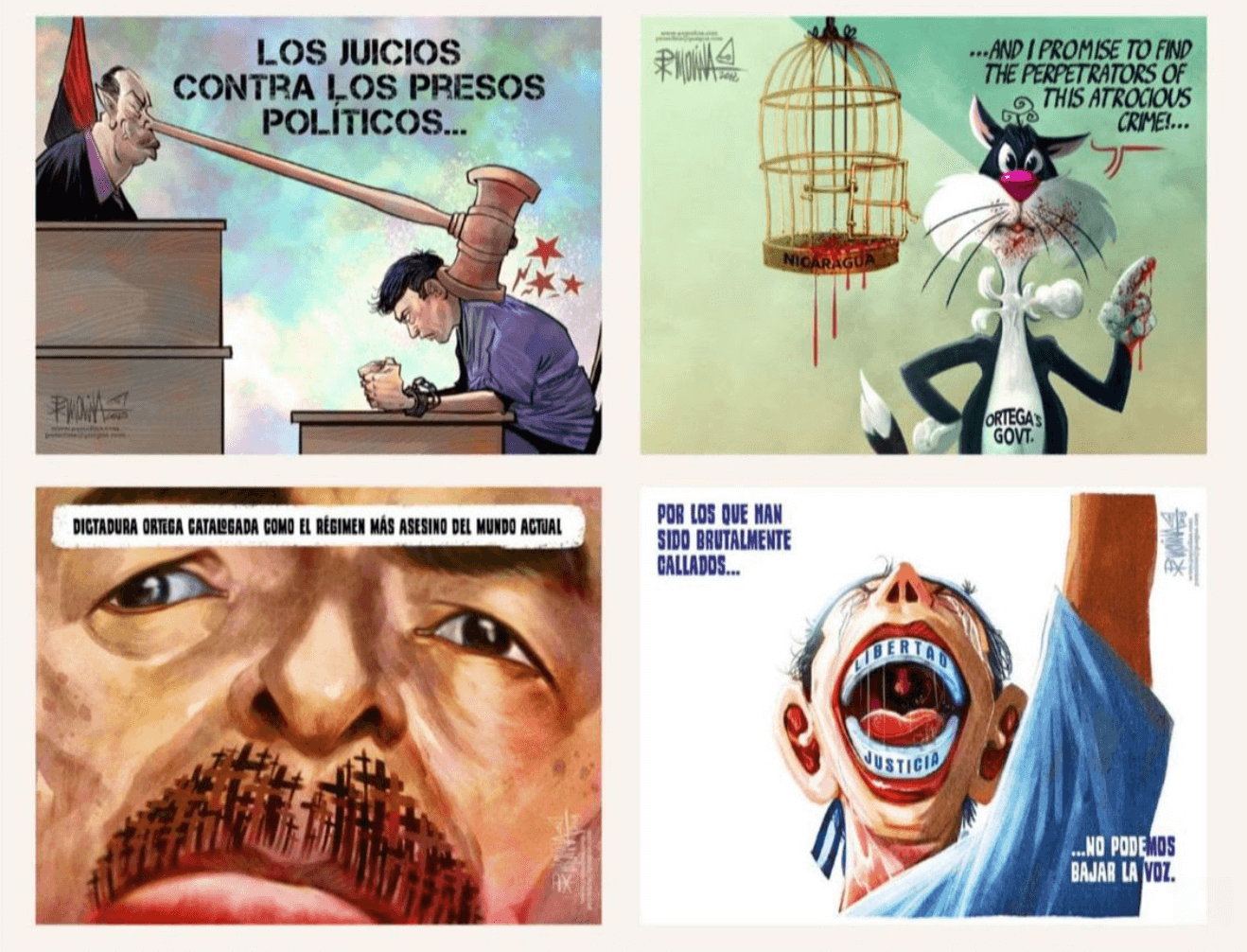
The Human Rights Foundation announced as recipients of the 2023 Václav Havel International Prize for Creative Dissent: Nicaraguan political cartoonist Pedro X. Molina; Ugandan novelist Kakwenza Rukirabashaija; and the third prize to be shared by four Ukrainian artists: the late conductor Yuriy Kerpatenko; the “Art Residency in Occupation” project; the illustrator Mariia Loniuk; and the “Stand Up for Ukraine” performance project.
“In the face of oppression and stifling silence, this year’s laureates have chosen to speak the unspoken, echoing Václav Havel’s creativity and courageous spirit,” said HRF Chief Executive Officer Thor Halvorssen.
This year’s laureates will be recognized during a ceremony on Wednesday, June 14, at the 2023 Oslo Freedom Forum (OFF) in Oslo, Norway. The Havel Prize ceremony will also be broadcast live at oslofreedomforum.com.
Pedro X Molina is a Nicaraguan political cartoonist who was forced into exile on Christmas Day 2018 after Nicaraguan dictator Daniel Ortega’s political police killed a journalist, jailed two others, and ransacked the offices of El Confidencial — the digital newspaper that featured Molina’s biting caricatures of Ortega and his tyranny. Molina published his first two cartoons in Barricada in 1995, later becoming a cartoonist for the digital outlet El Confidencial. In 2019, he received the Maria Moors Cabot Prize, awarded by Columbia University. The same year he was recognized by Americas Quarterly as one of its Top 5 Latin American political humorists.
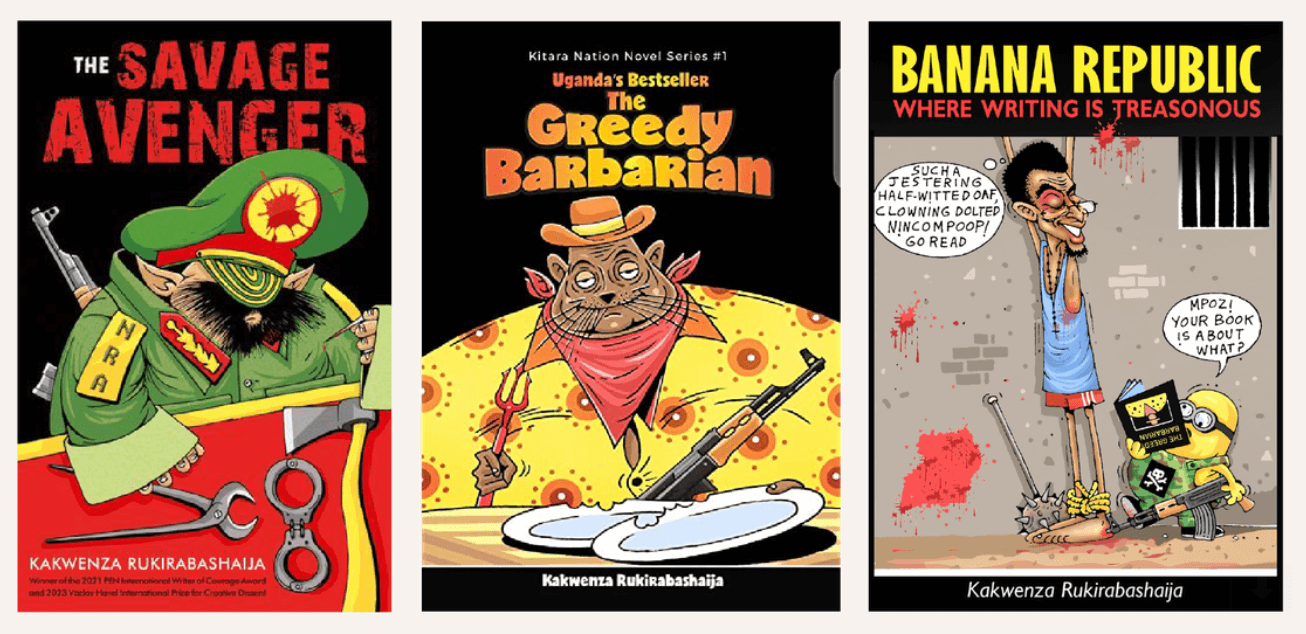
Kakwenza Rukirabashaija is a prominent Ugandan novelist recognized by English PEN in 2021 as a Writer of Courage and a fierce critic of the dictatorship of Yoweri Museveni. He has shown exceptional courage and defiance despite being imprisoned and tortured three times since 2020 for his irreverent writing and books, including “The Greedy Barbarian,” a satirical political fiction novel about corruption and dictatorship in a fictitious African country, and “Banana Republic: Where Writing is Treasonous,” an account of the torture he was subjected to while in detention in 2020 for the publication of his first book. In late December 2021, Rukirabashaija was kidnapped from his home and taken to an army base, where he was illegally detained for one month because of his tweets criticizing Museveni and his son. Rukirabashaija was so severely tortured that he was released only on medical grounds. He was charged with “offensive communication” under Uganda’s repressive Computer Misuse Act. In February 2022, Rukirabashaija managed to flee to Germany for medical treatment, and he vowed to return to Uganda to face trial after his medical treatment.
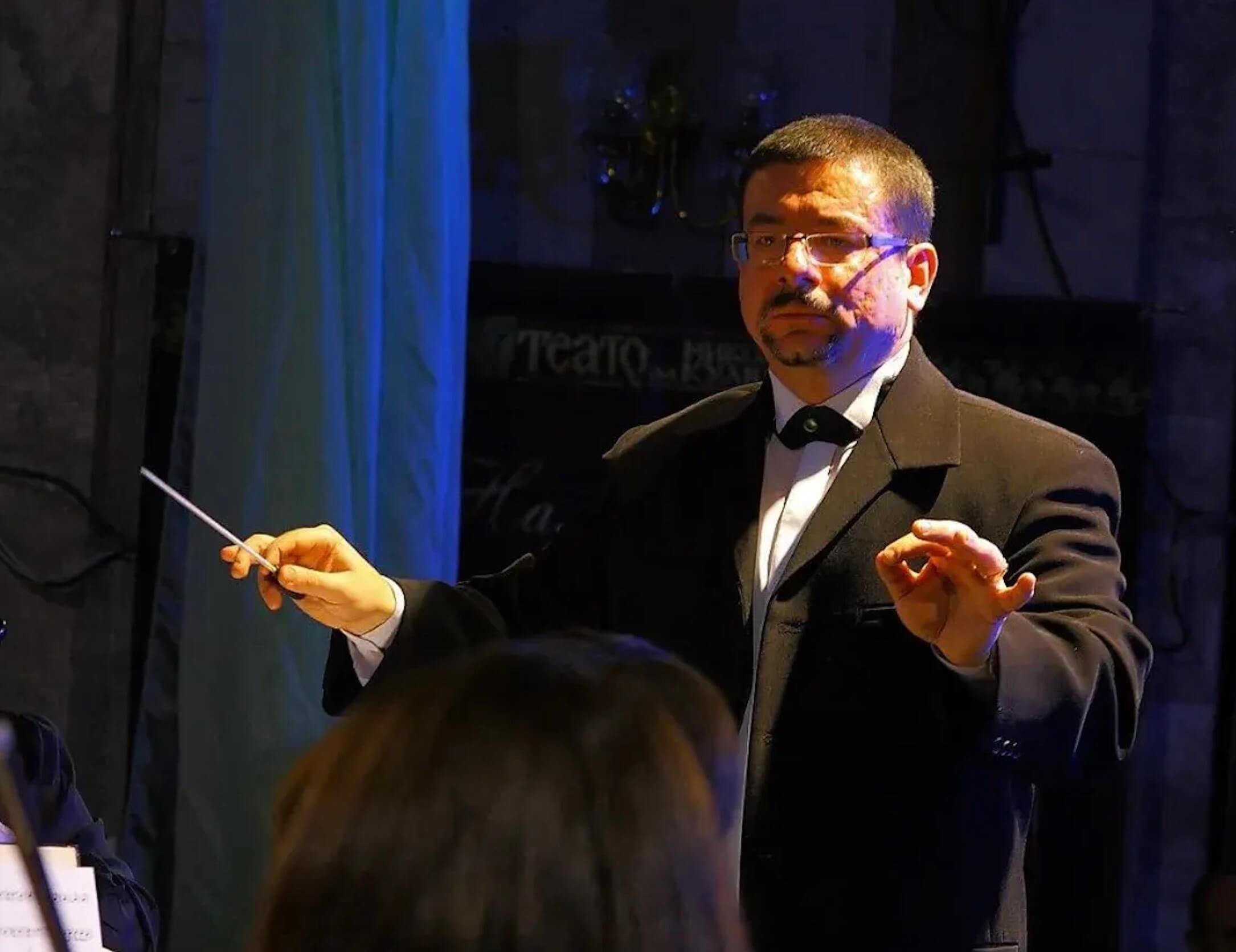
Kerpatenko was a renowned Ukrainian musician and principal conductor of the Kherson Regional Philharmonic. In October 2022, Russian troops assassinated Kerpatenko in his home at point-blank range after he refused to conduct a concert under the rule of Russian invading forces in Kherson, Ukraine. The concert was meant to portray an “improvement of peaceful life” in the occupied city, but Kerpatenko “categorically refused to cooperate with the occupants,” the Ukrainian Ministry of Culture and Information Policy later confirmed. Kerpatenko led his hometown’s orchestra for more than 20 years before he was murdered. The Havel Prize will be presented posthumously to Kerpatenko for his courageous stance against the Russian forces’ repeated attempts at “artwashing” their illegal occupation of Ukraine.
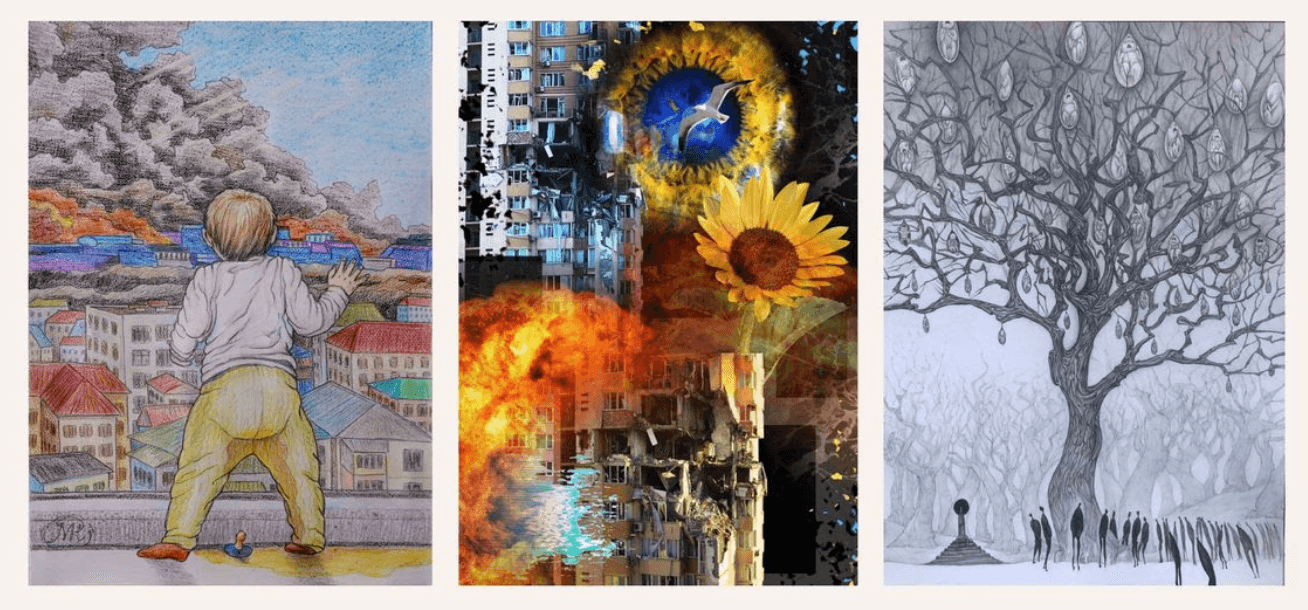
Art Residency in Occupation is an underground art society created by curator Yuliia Manukian. During the occupation of Kherson, Ukraine, six resident artists secretly met in a basement studio at the initiative of Manukian to produce works that showcase the death and destruction in the southern city of Kherson, offering viewers an opportunity to understand the scope of the war. Through this residency, Manukian sought to provide shelter for artists and gave them the opportunity to tell stories of war through the language of art. While written journalism can distance an outsider from the reality of current life in Ukraine, Manukian believes that the group’s collection of drawings, paintings, photographs, diary entries, and videos convey the raw truth.
The Havel Prize will be presented to Manukian on behalf of the collective of artists who bravely united in wartime to create dozens of works that creatively document the horrors endured by millions of Ukrainians living under the Russian invasion.
Manukian is a curator, art critic, and journalist based in Odessa, Ukraine. She was shortlisted in the British Journalism Awards’ foreign affairs category for her vital, courageous, and deeply moving Kherson diaries for The Observer.
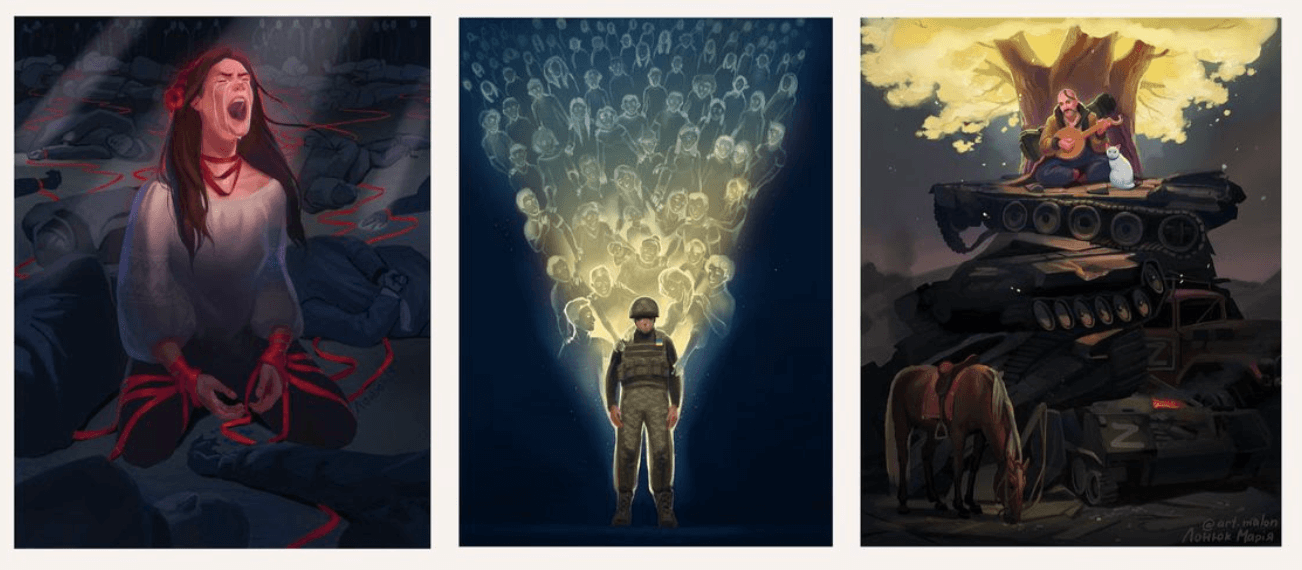
Mariia Loniuk is a Ukrainian freelance artist specializing in digital art. Since Vladimir Putin’s 2022 invasion of Ukraine, Loniuk has created vivid and touching illustrations about the war, conveying the feelings and images Ukrainians face. Her drawings capture the devastation of cities, homes, and human lives, the ubiquity of death and suffering, and the war’s destruction. Despite this, her illustrations also highlight the tremendous bravery and determination of the Ukrainian army and the courage and solidarity of the Ukrainian people as they defend their freedom.
Stand Up for Ukraine is a project that brings people together through the universal language of music, reminding us that art has the ability to transcend boundaries, challenge oppressive ideologies, and ignite a collective spirit of solidarity. The performance project, curated by Neringa Rekašiūtė, Eglė Plytnikaitė, and Elvina Nevardauskaitė, seeks to spark hope and empowerment and encourage people to stand united against a totalitarian regime that undermines human dignity. It consists of a live performance where the 22-year-old Ukrainian singer, Elizaveta Izmalkova, is joined by passersby singing along to the folk song, “Chervona Kalyna” — a symbol of Ukrainian resilience and freedom. Stand Up For Ukraine took the internet by storm, capturing the attention of more than five million viewers worldwide. The project serves as a call to action, urging people to set aside differences and come together in support of Ukraine.
Izmalkova is a 22-year-old Ukrainian singer based in Vilnius, Lithuania. She was born in the city of Pervomaisk in the Luhansk region. In her lifetime, Izmalkova’s family home in Ukraine was destroyed twice by Russian forces, first when Russia invaded Ukraine in 2014 and once again in early 2023.
Hailing from Somalia, Ukraine, Venezuela and Uganda, the 2022 Laureates have each created new models for human and societal interactions that challenge the status quo. With crises stemming from authoritarian governance, international aggression, profit-seeking economic systems and political inertia to take action against a planetary climate breakdown, these change-makers have imagined a better world and work tirelessly to make it a reality.
“The 2022 Right Livelihood Laureates are grassroots actors dedicated to strengthening their communities. In the face of failing governance and a breakdown of order – including wars, terrorism, extractivism, massive displacement and economic crises – they have established new, human-centric systems. Their successes demonstrate how we can build societies on the principles of justice rather than exploitation,” said Ole von Uexkull, Executive Director at Right Livelihood.



![[OPINION] Navigating the storms of repression: The resilience of young women rights defenders in Asia](https://www.rappler.com/tachyon/2024/03/women-rights-defenders-asia-mar-7-2024.jpg)


 Hans Thoolen on Human Rights Defenders and their awards