Posts Tagged ‘Turkmenistan’
February 14, 2015

Reporters Without Borders recently published its 2014 World Press Freedom Index. It has a nice easy-to-use and colorful map. The accompanying text spotlights the negative correlation between freedom of information and conflicts, both open conflicts and undeclared ones. In an unstable environment, the media become strategic goals and targets for groups or individuals whose attempts to control news and information.
The ranking of some countries has also been affected by a tendency to interpret national security needs in an overly broad and abusive manner to the detriment of the right to inform and be informed. This trend constitutes a growing threat worldwide and is even endangering freedom of information in countries regarded as democracies. Finland tops the index for the fourth year running, closely followed by Netherlands and Norway, like last year. At the other end of the index, the last three positions are again held by Turkmenistan, North Korea and Eritrea, three countries where freedom of information is non-existent. Despite occasional turbulence in the past year, these countries continue to be news and information black holes and living hells for the journalists who inhabit them. This year’s index covers 180 countries.
Reporters Without Borders.
Posted in human rights, Human Rights Defenders, RSF | 1 Comment »
Tags: annual report, conflict and peace, digital security, Eritrea, freedom of expression, freedom of information, Human Rights Defenders, journalists, media, North Korea, Reporters without Borders, RSF, Turkmenistan, World Press Freedom Index
May 21, 2014

From 20-21 May 2014 there was in Dushanbe, Tajikistan, a Regional Workshop on Implementing the Human Dimension Commitments and Enhancing the role of Civil Society. An important contribution was the joint statement by six NGOs containing recommendations to protect human rights defenders in Central Asia. The text in its totality follows below: Read the rest of this entry »
Posted in human rights, Human Rights Defenders | Leave a Comment »
Tags: Central Asia, Club Flaming Hearts, detention, foreign agent law, freedom of association, freedom of expression, human rights activists, Human Rights Defenders, Kazakhstan, Kyrgyzstan, ODHIR, OSCE, Tajikistan, Turkmenistan, Ukraine, Uzbekistan, violations
February 28, 2014
Regular readers of this blog know that I like the idea of holding celebrities accountable (most recently: https://thoolen.wordpress.com/2014/02/10/star-power-and-human-rights-a-difficult-but-doable-mix/). The reason is that there is a mutually reinforcing (and for many profitable) interaction between the stars and the media (which in turn feed on the interest of the public). Celebrities’ views on all kind of issues – including human rights – can hardly be called private. Their social media are virtual industries and influence millions globally. So it seems a good idea to have an annual look at which celebrities have advanced and which have harmed the cause of human rights around the world. Halvorssen and Leigh Hancock ( of the Human Rights Foundation) have done exactly that in the Atlantic on 27 February 2004 and linked it to the upcoming Oscars night on Sunday.

(Gary Hershorn/Reuters)
The list of celebrities deserving recognition for their accomplishments in the field of human rights or those who should be ashamed for supporting human-rights violators, is long and contains many video links. Like the real Oscars, the list is slanted in terms of geopolitical interest and I think that if all major international human rights organisations would get together to agree on a list if would be more balanced, but that is probably wishful thinking. Still, the Human Rights Foundation deserves credit for this creative initiative. and here is the summary:
The Nominees for Outstanding Work in the Field of Human Rights Read the rest of this entry »
Posted in awards, films, human rights, Human Rights Defenders, Human Rights Foundation | 5 Comments »
Tags: Africa, Angola, Arnold Schwarzenegger, Bahrain, Bassem Youssef, Ben Kingsley, Bono, celebrities, China, Colin Firth, Cui Jian, democratic republic of the congo, Dennis Rodman, Egypt, Emma Thompson, Equatorial Guinea, Fat Joe, Gabriela Montero, George Clooney, Gustavo Dudamel, Halvorssen, hollywood, human rights, Human Rights Foundation, human trafficking, Jennifer Lopez, Jon Stewart, Julio Iglesias, Kanye West, Kazakhstan, Khalid Abdalla, Kim Kardashian, Leigh Hancock, LGBT rights, Libya, Madonna, major star power, Mariah Carey, Muammar Gaddafi, North Korea, oscar night, Oscars, Russia, Susan Sarandon, the Atlantic, The Square, Turkey, Turkmenistan, Ukraine, Venezuela
February 10, 2014

(Jennifer Lopez performing for the leader Turkmenistan. (c) Agence France-Presse/Igor Sasin)
In quite a few earlier posts in this blog I have drawn attention to stars and celebrities who either support dictators or simply do not care that their actions do. So, I was quite happy to see a thoughtful piece by Jo Biddle of Agence France-Presse on 9 February 2014 analyzing this issue a bit more in-depth, with actress Scarlett Johansson as the “poster girl of Israeli apartheid”, Dennis Rodman in North Korea, and Kim Kardashian expressing her love of Bahrain. I would add, Mariah Carey who thinks nothing of singing for Gaddafi or the Angolan President, while Jennifer Lopez (picture above) did the same in Turkmenistan.
The author rightly states that when celebrities wander into complex foreign policy issues, it can be a minefield, leaving diplomats and human rights campaigners scrambling for damage control. The article mentions exceptions such as Bob Geldof, Bono, George Clooney or Angelina Jolie Read the rest of this entry »
Posted in HRF, human rights, Human Rights Defenders | 10 Comments »
Tags: Agence France-Presse, Angelina Jolie, Angola, Bahrain, Barbara Hendricks, Bob Geldof, Bono, Brian Dooley, celebrities, concert, Dennis Rodman, diplomacy, Gaddafi, George Clooney, HRF, human rights, Human Rights First, human rights violations, Israel, Jennifer Lopez, Jo Biddle, Kim Kardashian, Loreen, Mariah Carey, Muammar Gaddafi, North Korea, Scarlett Johansson, singers, solidarity action, star power, stars, Sting, Turkmenistan
December 19, 2013

Mariah Carey poses with José Eduardo dos Santos, the 34-year dictator of Angola, his wife, and his daughter Isabel—Angola’s only billionaire
The Human Rights Foundation has lately been targeting celebrities who give their voice and reputation to bad causes and I think it is an excellent idea. Some celebrities do good work (think of Barbara Hendricks or Angelina Jolie), most are not interested but there is no reason why some should go out of their way to give support to dictators. There is no financial or diplomatic necessity. So, it is good to highlight Mariah Carey‘s concert on 15 December during a gala for the Angolan Red Cross, which was sponsored by Unitel (President José Eduardo dos Santos billionaire daughter Isabel owns Unitel and is also president of the Angolan Red Cross). “Mariah Carey can’t seem to get enough dictator cash, reportedly more than $1 million dollars this time. Read the rest of this entry »
Posted in human rights, Human Rights Defenders | 7 Comments »
Tags: Angelina Jolie, Angola, Angolan Red Cross, Barbara Hendricks, celebrities, dictatorship, Human Rights Foundation, human rights violations, Jennifer Lopez, José Eduardo dos Santos, Mariah Carey, Muammar Gaddafi, Rafael Marques de Morais, Turkmenistan
September 4, 2013


On 28 May 2012 I congratulated Loreen – the Swedish winner of the Eurovision song festival – as she was the only of the contesting artists who stood up for human rights. During her visit to Baku she visited human rights defenders at risk during a meeting the NGO Civil Rights Defenders arranged. The Government of Azerbaijan tried to downplay the issue by saying that music and human rights have to be separate, but it is shocking that a number of musicians seem to agree with this position.
The New-York based Human Rights Foundation, on 3 September 2013, reports that the American musician Kanye West performed at the wedding of President Nursultan Nazarbayev’s grandson last Saturday night in Kazakhstan. He reportedly received $3 million for the private engagement in the oil-rich former Soviet state, which has been autocratically since 1991. West’s lucrative private performance comes on the heels of a similar concert given by Jennifer Lopez for the dictator of neighboring Turkmenistan earlier this summer, which sparked a worldwide media interest. At the time, Lopez claimed ignorance of Turkmenistan’s notorious human rights abuses. West is not the first global celebrity to be approached to play in Kazakhstan: in 2011, Sting refused to play a private concert there, citing concern over the repression of workers in the country.
Posted in human rights, Human Rights Defenders | 2 Comments »
Tags: Azerbaijan, dictatorship, Eurovision Song Contest, eurovision song festival, human rights, Human Rights Foundation, Jennifer Lopez, Kanye West, Kazakhstan, Loreen, music, Nursultan Nazarbayev, Sting, Turkmenistan
May 27, 2013
When North Korea, Iran and Kazakhstan start praising your human rights records, it may be time to change tactics. Turkmenistan came under fire at a recent session of the United Nations Human Rights Council where it was questioned by its peers for its torture programs, systematic suppression of free speech and persecution of human rights defenders. Read the rest of this entry »
Posted in human rights, Human Rights Defenders | Leave a Comment »
Tags: Berdymukhamedov, European Union, freedom of expression, Human right, human rights, Iran, North Korea, torture, Turkmen people, Turkmenistan, United Nations, United Nations Human Rights Council, Zawya
April 22, 2013
Turkmenistan and Uzbekistan’s highly repressive policies are coming up for rare international scrutiny as from today (22 and 24 April 2013), Human Rights Watch said today. United Nations member countries gathering at the Human Rights Council in Geneva under the Universal Periodic Review (UPR) procedure should seize the opportunity to expose and denounce the ongoing repression in both countries and press for concrete steps to end abuses.
The governments of Turkmenistan and Uzbekistan stand out as among the most repressive in the world, Human Rights Watch said. Both also stand out for their failure to heed recommendations made during their previous Human Rights Council reviews, in December 2008. “The extraordinarily high levels of repression in both Uzbekistan and Turkmenistan, coupled with their governments’ refusal to acknowledge problems, let alone to address them, underscores the need for a strong, unified message,” said Veronika Szente Goldston, Europe and Central Asia advocacy director at Human Rights Watch.
In submissions on Turkmenistan and on Uzbekistan Human Rights Watch highlighted key concerns with respect to both countries, and the steps needed to address them. One immediate step – and crucial if crime should not pay ! – is that both governments should be urged to end their longstanding denial of access for the UN’s own rights monitors. Ten UN rapporteurs have requested such access to Turkmenistan, while the number of UN rapporteurs barred from Uzbekistan has reached 11! Cooperation with the International Committee of the Red Cross ICRC is another pressing issue [On April 12, the ICRC took the unusual step of announcing publicly its decision to end prison visits to detainees in Uzbekistan].
Other key concerns in Turkmenistan include: The government’s longstanding use of imprisonment as a tool for political retaliation and draconian restrictions on freedom of expression and association, which authorities enforce by threatening, harassing, or imprisoning those who dare to question its policies, however modestly. The severe repression of civil society activism makes it impossible for independent human rights defenders and journalists to work openly.
via Turkmenistan/Uzbekistan: Abuses in International Spotlight | Human Rights Watch.
Posted in HRW, human rights, Human Rights Defenders, UN | Leave a Comment »
Tags: Central Asia, Freedom of speech, Geneva, Human right, human rights, Human Rights Defenders, Human Rights Watch, political prisoners, political retaliation, Turkmenistan, UN, UN Rapporteurs, United Nations, Universal Periodic Review, Uzbekistan
February 18, 2013
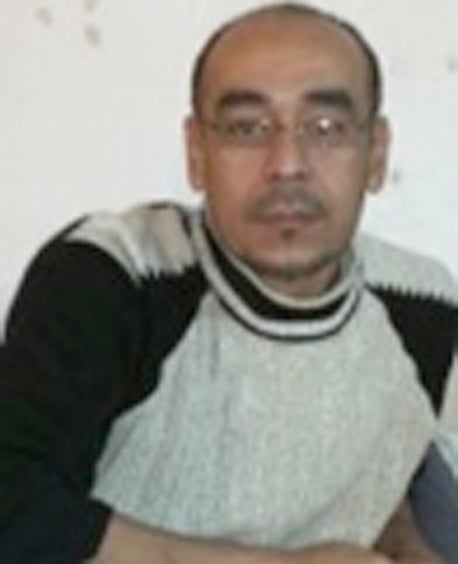
On 17 February 2013 Human Rights Watch announced that two human rights defenders were released in Turkmenistan after serving their sentence: Sapardurdy Khajiev and Annakurban Amanklychev (© Turkmen Helsinki foundation)

The Turkmen authorities have long used the judicial system and long-term imprisonment to suppress civic activism and settle political scores. So while we celebrate Amanklychev and Khajiev’s long overdue freedom, the pressing question remains, how many others still languish behind bars on wrongful charges? said Rachel Denber of HRW.
Read the rest of this entry »
Posted in human rights | Leave a Comment »
Tags: Annakurban Amanklychev, Central Asia, human rights, Human rights in Turkmenistan, Human Rights Watch, illegal detention, Khajiev, Ogulsapar Muradova, Ogulsapar Myradowa, rachel denber, Sapardurdy Khajiev, turkmen authorities, Turkmenistan, Turkmenistan Helsinki Foundation
April 3, 2012
On 30 March
Human Rights Watch (HRW) together with the
International Partnership for Human Rights, and Turkmen Initiative for Human Rights made public a report that on the result of the Turkmen government’s hearing at the UN Human Rights Committee. Both the hearing and the original NGO submission show its abysmal human rights record. “The UN review leaves no doubt about the urgent need for human rights reform in Turkmenistan. What’s key now is to make sure the Turkmen government does what it takes to rectify abuses” stated
Veronika Szente Goldston, Europe and Central Asia advocacy director at Human Rights Watch. Given Turkmenistan’s exceptionally poor record of cooperation with the UN’s human rights bodies, sustained external pressure is essential to enforce compliance, the organizations said.
The Turkmen government’s clampdown on freedom of expression and repression of civil society activism, torture and ill-treatment in places of detention, and the lack of an independent judiciary topped the committee’s concerns. It directed the Turkmen government to report back within one year on measures taken to address them. The committee also highlighted other important areas of concern, such as: Incommunicado detention and imprisonment and restrictions on “the exit and entry into [the country] by certain individuals. Other concerns raised by the committee include: The Law on Public Associations, which “severely restricts freedom of association; reports of the use of child labor in cotton harvesting; criminalization of homosexuality; and the “alleged use of a forced assimilation policy of ‘Turkmenisation,’ for ethnic minorities.
For the full report go to: http://www.hrw.org/news/2012/03/30/turkmenistan-damning-un-report-shows-need-urgent-action
RELATED MATERIALS:
Posted in HRW, human rights, UN | Leave a Comment »
Tags: Central Asia, human rights, Human Rights Watch, International Partnership for Human Rights (IPHR), Turkmen Initiative for Human Rights, Turkmenistan, United Nations, United Nations Human Rights Committee


 Hans Thoolen on Human Rights Defenders and their awards