Posts Tagged ‘threats’

Illustrative storm in a Zimbabwean teacup: billionaire vs HRW

January 3, 2019
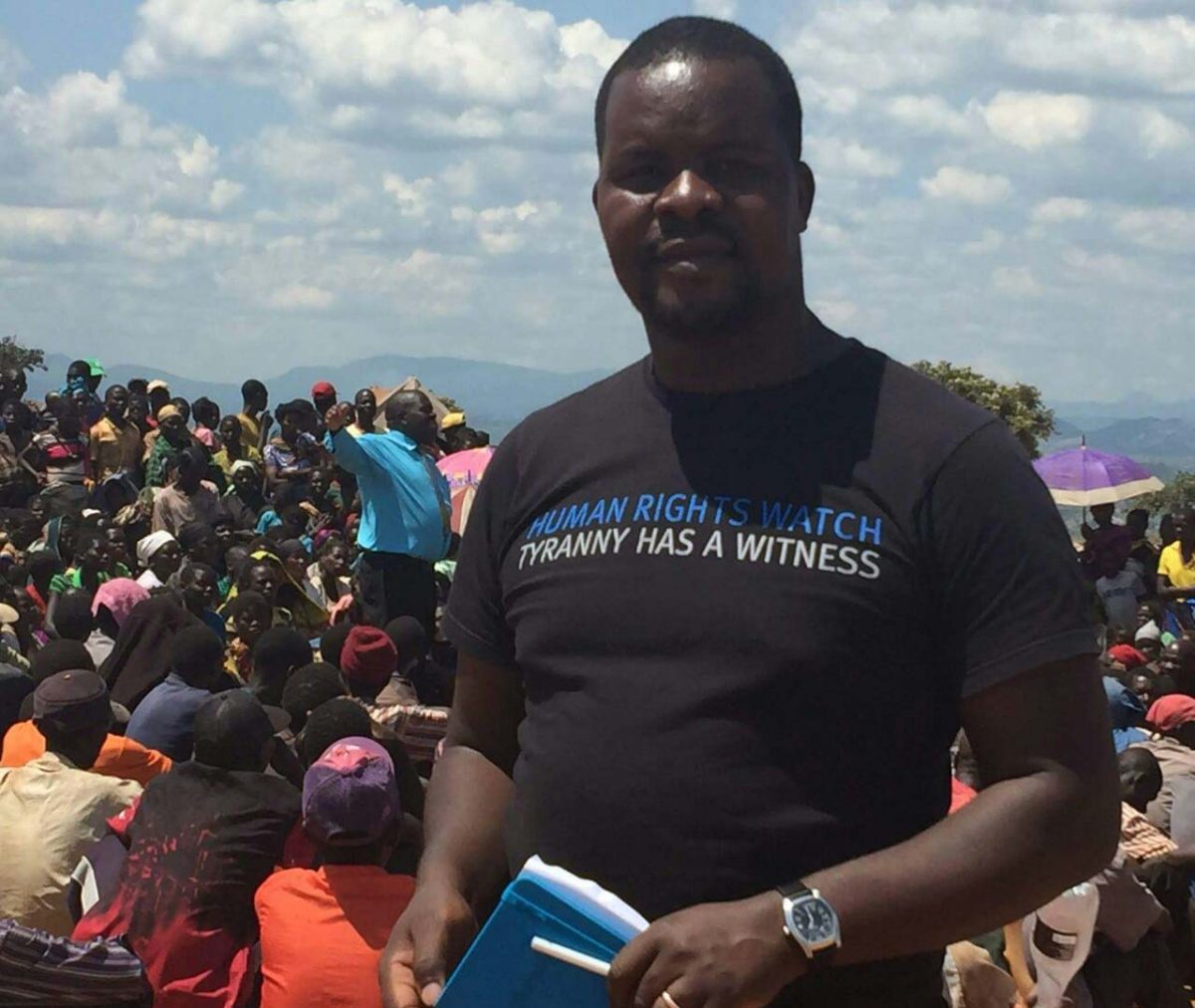
 Human rights defender … Dewa Mavhinga, the southern Africa director for Human Rights Watch

In a Facebook post the billionaire Econet founder Strive Masiyiwa defended his wife Tsitsi’s philanthropic work ands lashed lashed out at an unnamed human rights defender while also appearing to demand his sacking by his employer. This person was soon identified as Dewa Mavhinga, the Southern Africa Director of Human Rights Watch.

Masiyiwa wrote: “Sadly, one of the foremost bullies is a Zimbabwean who works for an international organisation that is highly respected for its work on human rights. It’s founder, now 95, is a close family friend. I hope my human rights friend is happy now that he has stopped her from using Twitter. Maybe now he and others like him will stop this pathetic misogyny. What about the rights of women like my wife to also express an opinion?

In December, Mavhinga took issue with a post by Tsitsi Masiyiwa, in which she suggested human rights causes should only be supported after establishing the motive of those sponsoring them.“Some outcries and actions in pursuit of justice seem and look so right until you discover the source of the outcry and sponsor of the cause. Take a step back and reflect on some of the things we consider good and just causes,” Tsitsi said in a December 18 tweet. In reply, Mavhinga told Masiyiwa’s wife: “If you are implying that all and any outcry and pursuit of justice is sponsored, then that really is sad. When your husband pursued his fight to be licensed [Econet mobile phone network] it was a just cause. In such position of privilege, you should choose your words more carefully, lest you promote injustice.” Mavhinga was not the only one to see this post an an effort to brush up the government’s human rights record and many others expressed similar dismay. As a result Strive Masiyiwa and his wife wife both felt forced to close their Twitter accounts. 

Human Rights Watch executive director Kenneth Roth on Wednesday weighed in on the side of Mavhinga, telling Masiyiwa that their employee “didn’t bully anyone”. Roth said Tsitsi’s comment “closely paralleled the claim of President Mnangagwa and some of his supporters that critics of human rights conditions under his rule are not genuine but are sponsored by outsiders.” He insisted that Mavhinga’s response was “entirely fair – an appropriate way to ensure that your wife’s comment, despite what her intentions might have been, wasn’t understood as an endorsement of the president’s and his allies’ attacks on human rights critics.”
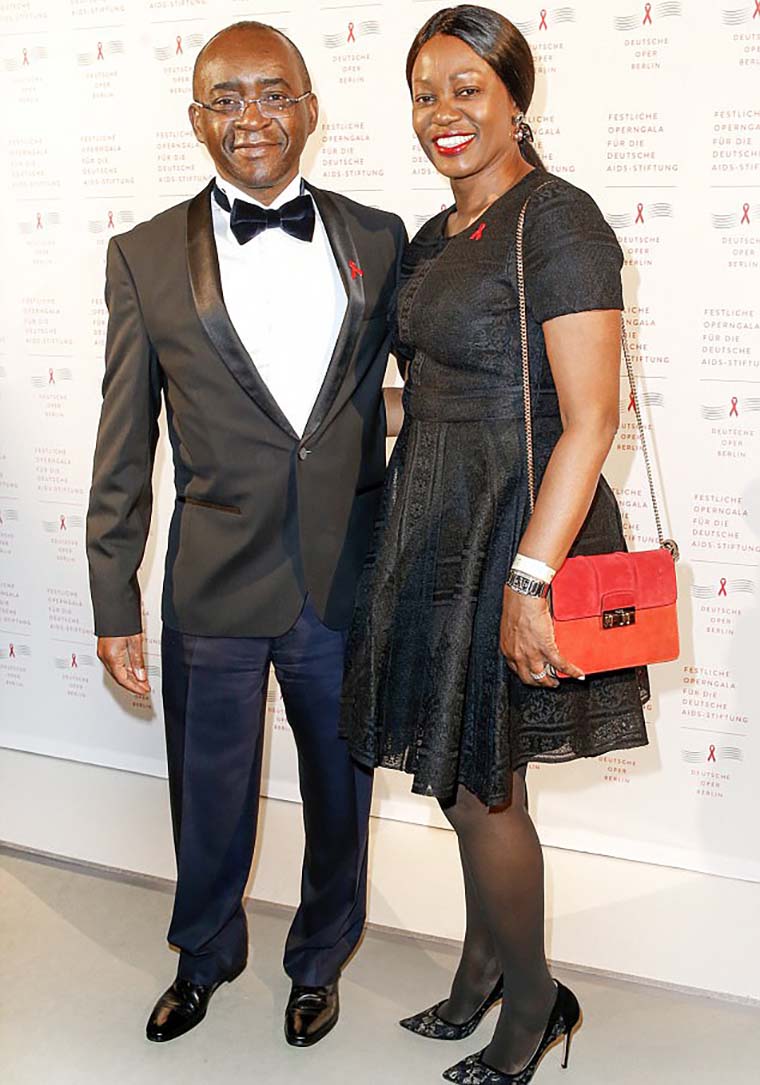
Strive Masiyiwa and his wife

With no further instigation, others took up the theme as well, so your wife chose to close her Twitter account,” he added. “Unlike your statement here, the responder (Mavhinga) didn’t bully anyone – and certainly not your wife – but simply responded to what he feared, whatever her intentions, would be taken as an attack on t he credibility of the human rights movement. That others picked up on this point, without any encouragement or prompting by him, does not make him a bully but speaks to the resonance of his comment,” said Roth. Roth was also dismissive of the claim that Mavhinga was a misogynist, insisting “he would have responded to comments along the lines that your wife made regardless of who had made them.

Zimbabwean lawyer Brighton Mutebuka said he was “thrilled” that Human Rights Watch had backed Mavhinga.  “To seek to use his influence inappropriately to get Dewa fired is unacceptable. Human Rights Watch is a global brand. They would not have taken making such a swift rebuttal and backing Dewa lightly,” Mutebuka said, writing on Facebook. “Whilst Strive and his wife are entitled to their very optimistic views concerning the political trajectory that Mnangagwa’s government is on, they should be aware that a great many people do not share those views. They should also stand ready to be challenged on that, provided that such exchanges are nuanced, proportionate and civil. This is what democracy is founded on.”

Mavhinga and Human Rights Watch had come out of the exchanges as “principled, fearless and uncompromising” whilst Masiyiwa and his wife came across as “petulant, haughty, entitled, patronising and intolerant of divergent views”, he added.

https://www.zimlive.com/2019/01/human-rights-watch-rejects-strive-masiyiwa-bid-to-get-its-southern-africa-director-fired/

Shelter City Netherlands: New call for temporary relocation in 2019

November 13, 2018

Justice and Peace Netherlands is launching a new call for human rights defenders at risk to participate in the Shelter City initiative around March 2019. The deadline to apply is 30 November 2018.  Shelter City offers human rights defenders (HRDs) at riska possibility for rest and respite by letting them escape temporarily from a threatening situation. The initiative can benefit human rights defenders that are threatened or under intense pressure due to their work. Shelter City is an initiative coordinated by Justice and Peace Netherlands together with  municipalities in the Netherlands, local partners, and the Dutch Ministry of Foreign Affairs. [see also: https://humanrightsdefenders.blog/2018/05/23/two-dutch-calls-for-human-rights-defenders-in-need/]

How does Shelter City work? Through temporary relocation, human rights defenders will be offered a shelter for 3 months in one of the Shelter Cities in the Netherlands, during which they can rest, continue their work in safety, build up capacity (including a one-week compulsory training on security), extend their network and raise awareness about the situation in their country. Activities can include meetings with NGOs and public authorities, public lectures, rest or leisure, treatment for work-related problems, continuing working on human rights in their country, raising awareness of human rights among the Dutch public or participating in local initiatives organised by the municipality and/or the host organisation. At the end of the programme, participants are expected to return with new tools and energy to carry out their work at home. A monthly stipend, accommodation, health insurance, visa and return flight tickets to The Netherlands are provided.

Who can apply for Shelter City? For the purposes of Shelter City, the term HRD is intended to refer to the broad range of activists, journalists, scholars, writers, artists, political figures, lawyers, civil rights defenders, independent media professionals, civil society members, and others working to advance human rights and democracy peacefully around the world.
Applicants must fulfil the following conditions:

In order to be eligible to the Shelter City programme, HRDs must meet the following conditions:

  1. They implement a non-violent approach in their work;
  2. They are threatened or otherwise under pressure due to their work.;
  3. They should be able to be relocated for a period of maximum 3 months. Limited spots are available for people who are not able to stay for the full 3 months;
  4. They are willing and able to return to their country of origin after 3 months;
  5. They are willing to speak publicly about their experience or about human rights in their country to the extent that their security situation allows.
  6. They have a conversational level* of English (limited spots are available for French or Spanish speaking HRDs);
  7. They are willing and able to come to The Netherlands without accompaniment;
  8. They are willing to begin their stay in The Netherlands around March 2019.


Note that additional factors will be taken into considerationin the final round of selection, such as the added value of a stay in The Netherlands as well as gender, geographic, and thematic balance. Please note that we can only accept HRDs currently residing in a third country under exceptional circumstances.
An independent commission will select the participants.

Apply for Shelter City 2019: <https://eu.jotform.com/JPNL/apply>

For more information, sheltercity@justiceandpeace.nl


To say it again clearly: assaults on human rights defenders are incompatible with international human rights treaties

June 27, 2018
In a ground-breaking joint statement on 23 May 2018, the UN Special Rapporteur on human rights defenders and representatives from all of the UN human rights treaty bodies have affirmed that all forms of abuse or undue restrictions against human rights defenders constitute violations of States’ parties obligations towards the realisation of rights set out in the Treaties. The statement was adopted on the eve of the 30th annual meeting of Treaty Body chairs on the occasion of a consultation initiated by the UN Special Rapporteur on human rights defenders and ISHR in New York.

This pronouncement constitutes a major step forward in the protection of human rights defenders and lays the ground for substantial enhancement of treaty body recommendations and jurisprudence in that area” says ISHR head of treaty body advocacy Vincent Ploton.

The statement reiterates the vital and central role played by human rights defenders to promote and support the application of the fundamental rights enshrined in the core international human rights treaties. It further contextualises the importance and relevance of the UN Declaration on human rights defenders which “reaffirms, is underpinned by, and elaborates binding human rights obligations, including rights set out in the Treaties, and is relevant to the interpretation and implementation of the Treaties”.

The Committee on economic, social and cultural rights (CESCR) was the first to adopt in 2016 a statement affirming that threats and violence against human rights defenders amount to violations of the Covenant. “We are delighted that fellow Treaty Bodies are now following suit with the adoption of this new joint statement”, says ISHR’s New York Director Madeleine Sinclair.

Marking the 20th anniversary of the UN Declaration on human rights defenders, the statement confirms that the core international human rights treaties and the Declaration prohibit discrimination against individuals and groups who champion such human rights norms and standards. It reaffirms that all individuals should be able to engage with treaty bodies free from all forms of interference, intimidation, abuse, threat, violence, reprisal, or undue restriction. It concludes with a series of practical measures that States ought to take to guarantee the protection of human rights defenders, including the adoption of specific legislation to protect and recognise defenders, and the revocation of legislation which restricts or hinders their work.

Read the full statement: http://www.ohchr.org/EN/NewsEvents/Pages/DisplayNews.aspx?NewsID=23154&LangID=E

[The statement was endorsed by the Committee on Enforced Disappearances, the Special Rapporteur on Human Rights Defenders, and the following Treaty Body members in their individual capacity: Virginia Brás-Gomes, CESCR Chair; Dalia Leinarte, CEDAW Chair; Noureddine Amir, CERD Chair; Ahmadou Tall, CMW Chair; Danlami Basharu, CRPD Vice-Chair; Felice Gaer, CAT Vice-Chair; Marcia Kran, HRCttee member; Olga Khazova, CRC Vice-Chair and Satyabhooshun Gut Domah, SPT member.]

https://www.ishr.ch/news/treaty-bodies-threats-and-assaults-human-rights-defenders-incompatible-core-international-human

UN rapporteurs ask India to protect journalist Rana Ayyub and refer to fate of Gauri Lankesh

May 27, 2018

Many newspapers reported (here India Today) that a group of UN human rights experts has expressed concern over continued threats to journalist Rana Ayyub, calling on the Indian government to urgently take steps to protect her and ensure the threats against her are promptly and thoroughly investigated. “We are highly concerned that the life of Rana Ayyub is at serious risk following these graphic and disturbing threats,” said the UN experts.

Ayyub is an independent journalist and writer whose work has included investigations into alleged crimes committed by public and government officials.

The experts recalled the murder of another Indian journalist, Gauri Lankesh, who had also received death threats for her work. [see: https://humanrightsdefenders.blog/2017/10/06/gauri-lankesh-and-gulalai-ismail-win-2017-anna-politkovskaya-award/]

The UN experts are: Special Rapporteur on extrajudicial, summary or arbitrary executions, Special Rapporteur on the situation of human rights defenders, Special Rapporteur on the promotion and protection the right to freedom of opinion and expression, Special Rapporteur on freedom of religion or belief and Special Rapporteur on violence against women.

https://www.indiatoday.in/pti-feed/story/un-experts-asks-india-to-protect-journalist-rana-ayyub-from-online-hate-campaign-1242829-2018-05-27

Human rights defenders in Asia suffer reprisals says Gilmour

May 18, 2018

On 18 May 2018 several newspapers – such as The Guardian and Scoop (NZ) – carried a piece by Andrew Gilmour, UN Assistant Secretary-General for Human Rights based in New York, which describes with great frankness how human rights defenders in Asia are under attack. To quote liberally:

In February, hundreds of Filipino participants in the peace process, environmental activists and human rights defenders were labeled “terrorists” by their own government. The security of the individuals on this list is at stake, and some have fled the Philippines. The UN independent expert on the rights of indigenous peoples – Victoria Tauli-Corpuz – was on this list. This followed the vilification only months before of another UN independent expert – Agnès Callamard – who deals with extra-judicial executions. Philippine President Rodrigo Duterte declared that he wanted to slap her, and later announced that he would like to throw other UN human rights officials to the crocodiles. The national Commission on Human Rights in the Philippines was threatened with a zero budget and its former chair, Senator Leila de Lima, is in detention for her advocacy. [see also: https://humanrightsdefenders.blog/2018/03/10/there-seems-to-be-no-limit-to-what-duterte-is-willing-to-say-and-may-get-away-with/]

…..If governments in the region can target high profile human rights defenders and those associated with the UN with impunity, what is the message to others at community level who are not afforded the same visibility? ..

In the run up to the 2018 national elections in Cambodia, the Government has cracked down on the opposition, independent media and civil society. ..

In Myanmar, there were reports of violent reprisals by Tatmadaw, the armed forces, against civilians who met with Yanghee Lee, UN independent expert on Myanmar, following her visit to Rakhine State. …..

Bogus accusations of abetting terrorism are a common justification that we hear from governments to defend the targeting of the UN’s important civil society partners. We have countless cases of advocates charged with terrorism, blamed for cooperation with foreign entities, or accused of damaging the reputation or security of the state.

I recently met with a group of human rights defenders from across South-East and South Asia about their experiences, which in some cases have been made worse by speaking out or if they share information with the UN. The stories about these reprisals were common – they have been charged with defamation, blasphemy and disinformation. They are increasingly threatened and targeted for their work, indeed some have been labeled as terrorists. There were also accusations of activists being drug addicts or mentally unwell.

Some governments feel threatened by any dissent. They label human rights concerns as “illegal outside interference” in their internal affairs; or as an attempt to overthrow regimes; or as an attempt to impose alien “Western” values.

Opposition to economic development and investment projects seems to incite particular ire. Agribusiness, extractive industries, and large-scale energy initiatives, including those that involve indigenous peoples’ land, often bear the brunt of the backlash.

Women’s rights activists and advocates of the rights of lesbian, gay, bisexual, transgender and intersex persons seem to be particularly targeted. Many are ostracized by their communities, labelled as outcasts, or branded as immoral. Sexual violence is part of this backlash, including rape threats.

Those working for religious freedom have been called ‘anti-Islam’, they and their families threatened or harassed. When advocacy for religious tolerance intersects with that of women’s rights and sexual freedom, the stakes can be even higher.

……

We are taking these allegations seriously, and addressing particular incidents of reprisals with governments. Civil society has to be heard – for the sake of us all.


For more of my posts on reprisals: https://humanrightsdefenders.blog/tag/reprisals/

http://www.scoop.co.nz/stories/WO1805/S00115/human-rights-advocates-in-asia-under-attack.htm

https://www.theguardian.com/commentisfree/2018/may/18/imprisoned-threatened-silenced-human-rights-workers-across-asia-are-in-danger


Bangladesh Government depicted as “against human rights defenders”

March 5, 2018

Among the many (written) NGO statements issued during the current session of the UN Council on Human Rights in Geneva, this one by the Asian Legal Resource Centre stands out by describing a whole government apparatus as standing against independent human rights defenders. It was dated 26 

The Asian Legal Resource Centre (ALRC) wants to bring the situation of human rights defenders of Bangladesh to the attention of the United Nations Human Rights Council. The Government of Bangladesh stands against the human rights defenders with draconian legislations and various institutions and agencies of the State. Independent dissenting voices face systemic harassments. Given the circumstances, the human rights defenders have to work without any notion of protection while defending rights in the country. The threats against the human rights defenders are increasing as the 3rd Cycle of the Universal Periodic Review (UPR) is approaching.

The Government of Bangladesh has amended the existing laws and has adopted new laws with vague definitions and harsher provisions to stifle the human rights organisations and individual defenders along with other dissenting voices.

The incumbent government made the Foreign Donations (Voluntary Activities) Regulation Act 2016. This law not only intimidates the civil society actors but also prevents the expected outcome that the human rights organisations strive for achieving for the society. The law provides the NGO Affairs Bureau (NGOAB), a wing under the Office of Prime Minister, the power to review and cancel proposed projects by NGOs. A persons’ travelling out of Bangladesh in relation to the projects requires prior governmental approval. The NGO Affairs Bureau is authorised to scrutinise the activities through inspections and monthly coordination meetings by the representatives of the NGOAB while prior approval is also required for planned activities before receiving the grants. Without any judicial process the NGOAB is empowered to impose sanctions for alleged ‘non-compliance’ against any organisation or individual receiving foreign funds for voluntary activities. Such actions also include fines, disciplinary actions, and cancellation of registration of the NGO even for ‘derogatory’ remarks. The decisions of the NGOAB can only be brought before the Secretary of Office of the Prime Minister as an ‘appeal’. The law establishes the bureaucrats’ control over voluntary activities while Bangladesh’s bureaucracy has reputation for systemic corruption and abuse of power.

Bangladesh’s Cabinet has approved the Digital Security Bill-2018 on 29 January 2018. This Bill may be enacted in any day during the ongoing Session of the national parliament. This proposed law curtails both the freedom of press and the writ of human rights organisations. The police is authorised to arrest any person without a warrant of arrest issued by a Court of the country if the police officer believes that an offence is committed under this law. A person can be imprisoned for 14 years, with or without a fine of BDT 10 million for publishing any material online for ‘spreading negative propaganda against Liberation War or the Father of the Nation’ while there is no definition of ‘negative propaganda’ provided in the law. Publishing ‘false’ and ‘distorted’ information to tarnish the image of the State is punishable with three years’ imprisonment and with or without a penalty of BDT three hundred thousand. If a person is held for the second time for the same crime he or she will be imprisoned for five years with or without a penalty of BDT one million. Such provision will put the human rights defenders in grave danger, as they have to contest the official version of the State, which always denies allegation of human rights abuses and accuses the rights groups for ‘tarnishing the image of the State’. For example, the government and the law-enforcement agencies of Bangladesh deny every incident of enforced disappearances and each of extrajudicial executions while the human rights defenders and media explore and expose the truth.

Bangladesh Government, by default, protects the perpetrators of human rights abuses in a deeply rooted culture of impunity. The State prevents the basic institutions from functioning and serving the people with fairness. Instead, the incumbent government uses all the institutions, including the judiciary, as tools to secure its power at the cost of the lives and liberties of the ordinary people.

The participation of independent human rights organisations in the Universal Periodic Review (UPR) mechanism of the UN Human Rights Council makes them governmental targets for exposing the human rights realities. For example, Odhikar, a locally based human rights organisation, contributed to the UPR process during the first and second cycles in 2009 and in 2013. This rights group consistently documented the cases and pattern of extrajudicial executions, enforced disappearances, custodial torture, curtailing the freedom of expression and opinion, and denial of justice to the victims of gross human rights abuses in Bangladesh. The government started harassing this organisation for publishing a fact-finding report on a massive crackdown in May 2013. Its leaders were made the victims of the country’s first ever cyber crime case, which is still pending before a special tribunal incepted for holding trial of such cases. Their bank accounts are frozen and NGO registration’s renewal has been halted since mid 2014. The activists who are engaged in standing beside the victims of human rights violations remain under active surveillance by the intelligence and law-enforcement agencies.

Bangladesh is moving toward another general election by the end of 2018. The incidents of gross human rights abuses are also on the rise. The incumbent government is using the State’s law-enforcement agencies and judiciary to drive away the political opposition. The government has already started arresting the opposition activists arbitrarily as the main opposition leader is afraid to be convicted in controversial corruption cases. As days pass on more violation of human rights would deteriorate the situation requiring the human rights defenders to assist the victims. The activities of the rights groups would invite more reprisals against the human rights defenders, except those who directly or indirectly align with the incumbent government for their financial and political benefits.

Bangladesh’s system of governance is authoritarian and coercive by nature. The institutions – be it a constitutional body or a statutory entity – function according to the wish of the Prime Minister, as a supreme controller of everything. The universal normative principles of justice and good governance do not exist or work in this country. As a result, all the basic institutions constantly fail to act for the actual purpose of upholding the rule of law and facilitate functional democracy. The judiciary and the entire criminal justice apparatus, survive as mere facades. These facades facilitate the process of silencing the society’s vibrant voices.

The ALRC urges the Special Rapporteur on the Situation of Human Rights Defenders to request Bangladesh for sending invitation to the mandate for country visit. The Human Rights Council and the Office of the High Commissioner for Human Rights to focus on Bangladesh’s domestic human rights realities and intervene for the protection of victims from gross violation of rights.

For some of my other posts on Bangladesh see: https://humanrightsdefenders.blog/tag/bangladesh/

http://alrc.asia/bangladesh-government-stands-against-independent-human-rights-defenders/

New: the Scottish Human Rights Defender Fellowship launched

February 12, 2018

The Scottish newspaper the National reports that a human rights fellowship has been launched in Scotland:

Equalities Secretary Angela Constance welcomed the move

Equalities Secretary Angela Constance welcomed the move
 Two international human rights defenders will come to Scotland for three months to study under a new research fellowship. Participants will soon be invited to apply for the scheme which will combine study at the University of Dundee with the opportunity to build relationships and share expertise with Scottish human rights and equality organisations. The Scottish Human Rights Defender Fellowship will be a partnership between the Scottish Government and the University of Dundee, supported by the Scottish Human Rights Commission (SHRC) and campaign groups Front Line Defenders, Amnesty International, Scottish Catholic International Aid Fund and Beyond Borders.

The Scottish Government said it is part of on-going work to promote human rights. Equalities Secretary Angela Constance MSP said: “Across the globe there are people defending basic human rights that everybody should be able to take for granted. From standing against torture, arbitrary detention and discrimination, to campaigning for access to housing, health care, education, food and water. “Often this requires great self-sacrifice in the face of persistent difficulties, abuse and even threats to personal safety. As a country that firmly believes in human rights and equality, we will stand shoulder to shoulder with them and offer practical help where we can. “This fellowship provides a place of safety so participants can carry out research, develop new skills, build networks and return better equipped to continue their work fighting for the fundamental rights we need to demand for each other.”

The initial 2018 fellowship, with two recipients visiting from September, will cost £35,000.

Professor Nick Fyfe, Dean of the School of Social Sciences at the University of Dundee, said: “We are proud to be the host partner for the Human Rights Defenders Fellowship.“With significant expertise in human rights and an interdisciplinary approach championed by our Institute for Social Sciences Research, we are confident that the fellows will find a strong and welcoming community of human rights researchers ready to help them make the most of the three months they will spend working with the Scottish Government, Scottish universities and Scottish civil society organisations.

Front Line’s 2017 report confirms worst expectation: over 300 HRDs killed

January 5, 2018

At the end of last year I published the post: https://humanrightsdefenders.blog/2017/12/31/2017-a-year-to-forget-for-human-rights-defenders-but-dont-forget-the-human-rights-defenders/, and now – 3 January 2018 – Front Line Defenders has published its 2017 report which confirms this impression.

Front Line Defenders said female human rights defenders in particular are increasingly reporting “hyper-sexualised smear campaigns and defamation” which aim to limit their activism by eroding local support networks. File photograph: Getty Images

Front Line Defenders said female human rights defenders in particular are increasingly reporting “hyper-sexualised smear campaigns and defamation” which aim to limit their activism by eroding local support networks. File photograph: Getty Images

There were 312 human rights defenders killed in 27 countries last year, according to the new report. Two-thirds of those killed were activists working on issues of land, environmental and indigenous peoples’ rights, while 80 per cent of killings took place in just four countriesBrazil, Colombia, Mexico and the Philippines. Front Line Defenders said the number of killings remained “truly shocking”, while the “weak response of both national governments and the international community gives little hope that this will change in the short term”. The report outlined that in 84 per cent of killings the defender had previously received a threat.

Andrew Anderson, executive director of Front Line Defenders, said “we know that those killings, in many cases were preventable”. “When we analyse those killings, in 84 per cent, the defendant had previously received a threat, and that highlights if there had been effective action taken by the police or other authorities, there could have been something done to prevent that killing happening.” Mr Anderson added: “These are not random killings of people in crossfire – This is the targeted elimination of people who are working to defend the rights of the most vulnerable.

Front Line Defenders said female human rights defenders in particular are increasingly reporting “hyper-sexualised smear campaigns and defamation” which aim to limit their activism by eroding local support networks.

https://www.frontlinedefenders.org/en/resource-publication/annual-report-human-rights-defenders-risk-2017

https://www.irishtimes.com/news/ireland/irish-news/over-300-human-rights-activists-killed-in-2017-says-report-1.3345060


Fascinating insight: local community can be the leading violators of rights of HRDs

July 6, 2017

Local community leading violators of rights of HRDs

We all assume that the biggest threat to human rights defenders comes from the State or similarly powerful actors. Now a report by the Human Rights Centre Uganda (led by former UN Rapporteur Margaret Sekaggya, pictured above) shows that it can be the local community that is the leading violator of the rights of HRDs. Juliet Kigongo of KFM, reports on 16 June 2017 that – at least in Uganda – 28% of complaints recorded were about members of the community, against 17% about government officials and 16% about politicians. The study was carried out in nine districts of Kasese, Mbarara, Lira, Soroti, Gulu, Mbale, Hoima and Kampala with Arua being the most affected.

[The report compiled by the Human Rights Centre Uganda also raises the red flag over the slow investigations of cases of violations against rights defenders, warning that the “slow pace of investigation could be seen as condoning attacks on Human Rights Defenders. While launching the report Margaret Sekaggya, the center’s Executive Director appealed to parliament to review existing laws that impede the work of human rights defenders and ensure that the legislative framework reflects provisions of the constitution and Uganda’s international commitments to ensure a safe and conducive environment.]
That the danger comes from all sides is clear, see e.g. https://humanrightsdefenders.blog/2017/06/30/uganda-killing-of-human-rights-defender-erasmus-irumba-by-security-forces/, but I really wonder what the situation is in other countries and whether other such studies have been carried out.

Source: Local community leading violators of rights of HRDs | KFM

Greece: MPs of Golden Dawn far-right party attack minority rights defenders – no police action

January 10, 2017

On 6 January 2017 the International Secretariat of the World Organisation Against Torture (OMCT) requested urgent intervention in the following situation in Greece.

OMCT-LOGO Read the rest of this entry »