Posts Tagged ‘Taliban’

March 8, 2024 was again International Women’s Day

March 8, 2024

Like every year, many organisations used the occasion to focus on the role of women human rights defenders. Here a selection of this year’s actions [for earlier posts see: https://humanrightsdefenders.blog/tag/international-womens-day/]:

Global Voices has released a special coverage called Empowering voices: Women in politics, which explores the state of women’s political participation around the world. 

Human Rights First referred to a new report reveals that WHRDs face increasing harassment and threats from a global movement against gender equality and LGBTQI+ rights. The Kvinna till Kvinna Foundation, a leading feminist women’s rights organization, released Hope and Resistance Go Together: The State of Women Human Rights Defenders 2023,  a report that found discouraging growth in harassment of WHRDs.  The foundation surveyed 458 women’s and queer rights activists and interviewed 25 activists representing WHRDs from 67 countries affected by violence or conflict.

They found that 75% reported facing harassment for their activism, a 15% increase from two years ago, and 25% of respondents have received death threats. Most harassment comes from government authorities, but increased harassment from far-right groups and anti-gender equality actors is also driving these startling statistics. Human Rights Defenders (HRDs) across the world face resistance and violence. In 2022, at least 401 HRDs were killed for their peaceful work. But some of the obstacles facing WHRDs are distinct. https://humanrightsfirst.org/library/recognizing-women-human-rights-defenders-on-international-womens-day/

Human Rights Watch on 7 March carried a piece by Macarena Sáez who says inter alia:

On this International Women’s Day, we march for the one in three women who experience physical or sexual violence in their lifetime. We cheer for countries like Argentina, Colombia, and Ireland that value our autonomy to choose to be pregnant and have legalized access to safe abortion, while protesting that abortion is still or again illegal in many places, including US states like Alabama and Texas. At the same time, we march to honor the women who marched before us, like the Mexican women who organized the first feminist congress in 1916 to push for family law reforms and their right to vote, and the Nigerians who waged their “Women’s War” against colonization and patriarchal laws in 1929. Their struggles sadly mirror the reality of many women around the world today – especially women who belong to historically marginalized groups – who continue to rally against violence and abuse.

Fearing the power of women’s solidarity and collective actions, governments have  stifled women’s speech through restrictions on movement, censorship, smear campaigns, and criminal prosecutions. In highly repressive contexts, like Afghanistan and Iran, women suffer arbitrary detention, and even enforced disappearance and torture, for their activism. Meanwhile, social media companies have not done enough to protect women from online violence, chilling women’s freedom of expression on and offline.    These barriers make it hard for women’s equality to become reality. Gender justice requires an enabling environment in which women can express themselves, speak and spread their political views, and participate in political and public life. Instead of repressing or tolerating the repression of women, governments should recognize our collective actions – and consequent power – and enshrine our rights in laws, policies, and practice. [https://www.hrw.org/news/2024/03/07/womens-voices-have-power-drive-change]

Amnesty International on 8 March highlighted three prominent women who reveal why sexual and reproductive rights are a major human rights issue : Charlotte Bunch, USA Leila Hessini, Algeria Marge Berer, UK [https://www.amnesty.org/en/latest/campaigns/2024/03/three-prominent-women-reveal-why-sexual-and-reproductive-rights-are-a-major-human-rights-issue/]

On 8 March 8, 2024 Almyra Luna Kamilla and Rosalind Ratana 
opined in IMHO on “Navigating the storms of repression: The resilience of young women rights defenders in Asia

[OPINION] Navigating the storms of repression: The resilience of young women rights defenders in Asia

In recent years, Asia has been witnessing rising authoritarianism and shrinking civic space. Among those in the frontlines of resistance are young women human rights defenders. As we celebrate International Women’s Day, let us demand for an enabling world where women human rights defenders can continue their noble pursuits without fear of reprisals.

In Thailand, the royal defamation law is being excessively used to silence criticisms against the monarchy. Meanwhile in Sri Lanka, economic and political mismanagement has sparked peaceful protests that are met with violence and intimidation. The fate of Asia’s political climate hangs by a thread as elections are held across many countries, including Bangladesh, Indonesia, India, South Korea, and Pakistan. Now more than ever, governments across the region are finding ways to solidify their power, putting an even tighter grip on civil society to the detriment of democracy and people’s fundamental rights and freedoms.

Despite such challenges, many are courageously speaking out and taking collective action to reclaim power for the people. This includes young women human rights defenders – or Youth WHRDs – who are claiming space to call out human rights violations and to demand accountability from oppressive governments. [https://www.rappler.com/voices/imho/young-women-rights-defenders-asia/]

The Alliance for Human Rights in Afghanistan (a coalition of 9 major NGOs) urgently appealed to the international community to significantly bolster its support and actively safeguard the human rights of Afghan women and girls, including Afghan women human rights defenders who face persecution for their peaceful campaigns for rights and basic freedoms.

In 2023, the Taliban further intensified its oppressive policies toward women, girls, the LGBTIQ+ community, and religious minorities. Afghan women and girls have seen their rights and prospects increasingly curtailed, from greater enforcement of restrictions on education – including a ban on girls attending secondary schools and universities – to intensifying exclusion of women from political and public life. Women have been banned from a growing list of forms of paid employment, and economic barriers, such as the ban on women registering organisations and undergoing vocational training, have contributed to a sharp decline in women’s participation in the labour market, impeding their right to make a living. This exacerbates financial insecurity, widens gender disparities, and further confines women to the private sphere. Lesbian, bisexual, and transgender women face severe threats, including torture, sexual violence, forced marriage, and death. Victims of gender violence, including those who identify as such, lack minimal legal and practical support. Obstacles to healthcare and education have exacerbated poverty and vulnerability among women and girls. In 2023, new discriminatory restrictions imposed by the Taliban included the closure of all beauty salons, blocking women from overseas travel for study, mandating female health workers in some areas to have a male chaperone while travelling or at work, and prohibiting women from entering a famous national park.

The oppressive environment extends to female activists, NGO leaders and journalists. Notable cases include the arrests of women’s rights activists Neda Parwani and Zholia Parsi, the enforced disappearance and subsequent discovery of Manizha Seddiqi in Taliban custody to date, the arrest of Matiullah Wesa, founder of an NGO advocating for girls’ education rights, and the arbitrary detainment of Ahmad Fahim Azimi and Seddiqullah Afghan—both dedicated girls’ education activists, among many others. Journalists reporting on the Taliban, facing arrests and threats, equally illustrate the difficulties encountered by the media, particularly women, when covering crimes against women or advocating for women’s rights. Collectively, these cases underscore the near-total denial of freedom of expression, gender equality, or any other internationally recognized right in Afghanistan under the Taliban.

Amid this growing oppression, segregation and fear, Afghan women human rights defenders have urged the international community to exert greater pressure on the Taliban. They call on international bodies to involve Afghan women in all negotiations with the Taliban and to facilitate direct meetings between women and the de facto authorities to address their concerns. Afghan women have also stressed the importance of advocacy for women’s rights by external actors based on the voices and realities of women inside Afghanistan. They call for coordinated efforts between organisations inside and outside the country to defend the rights of Afghan women and girls.

https://www.omct.org/en/resources/statements/afghanistan-lifting-afghan-women-from-the-shadows-into-the-light-in-the-face-of-the-taliban

The UN Special Rapporteur on the situation of human rights in Afghanistan, Richard Bennett, called on the Taliban to release women human rights defenders as the world marks International Women’s Day.

I reiterate my appeal to the Taliban to respect all the human rights of women and girls in Afghanistan, including to education, work, freedom of movement and expression, and their cultural rights, and I urge the meaningful and equal participation of Afghan women and girls in all aspects of public life. I call on the Taliban to immediately and unconditionally release all those who have been arbitrarily detained for defending human rights, especially the rights of women and girls.”

https://www.ohchr.org/en/statements/2024/03/afghanistan-un-expert-calls-taliban-release-women-human-rights-defenders

On 8 March, Civil Rights Defenders presented 4 woman human rights defenders and asked them to share their message to women around the world.


On International Women’s Day, the a group of NGOs (ALQST for Human Rights, Amnesty International, CIVICUS, European Saudi Organization for Human Rights (ESOHR), Front Line Defenders, Gulf Centre for Human Rights (GCHR), HuMENA for Human Rights and Civic Engagement, International Service for Human Rights (ISHR),MENA Rights Group, Salam for Democracy and Human Rights) renewed their call on Saudi Arabian authorities to release all women human rights defenders (WHRDs), women’s rights activists and their supporters who are detained in contravention of international human rights standards. The organisations further call on Saudi authorities to lift travel bans imposed on WHRDs and their relatives, and to abolish the male guardianship system. [https://ishr.ch/latest-updates/civil-society-reiterates-their-call-on-saudi-authorities-to-release-jailed-womens-rights-activists/]

The President of Georgia awarded severl with mesla of honor: co-founder of “Safari” organization Babutsa Pataraia, human rights defender Ana Arganashvili, founders of “National Network for Protection from Violence”: Eliso Amirejibi and Nato Shavlakadze and founder of “Vedzeb” organization Tamar Museridze.

https://www.interpressnews.ge/en/article/130159-in-connection-with-the-international-womens-day-the-president-awarded-five-female-human-rights-defenders-with-medals-of-honor

a few more addtions:

https://www.un.org/sg/en/content/sg/statement/2024-03-08/secretary-generals-remarks-the-observance-of-international-womens-day-delivered

https://www.eeas.europa.eu/delegations/indonesia/launch-women-human-rights-defenders-network-indonesia_en

https://www.unwomen.org/en/news-stories/speech/2024/03/speech-be-the-light-that-brings-hope-and-that-accelerates-progress-towards-an-equal-sustainable-and-peaceful-future

https://iucn.org/es/node/40738 [IUCN President and Director General’s Statement on International Women’s Day]

https://havanatimes.org/features/march-8-womens-day-with-less-rights-in-nicaragua/amp
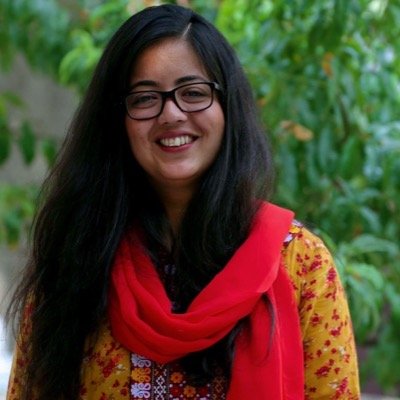
https://bnnbreaking.com/breaking-news/human/global-women-human-rights-defenders-lead-the-charge-for-equality-and-justice

Taliban dissolves ‘unnecessary’ Human Rights Commision

May 20, 2022

Patrick Slater, from the Vermont Law School, reports in Jurist.org of 18 May 2022 that the Taliban authorities in Afghanistan announced that the country’s Human Rights Commission will be dissolved, calling it “unnecessary.”

The Afghan Independent Human Rights Commission (AIHRC) was the national human rights institution of Afghanistan, dedicated to the promotion, protection, and monitoring of human rights and the investigation of human rights abuses.

The Kabul-based Commission was established on the basis of a decree of the Chairman of the Interim Administration on June 6, 2002, pursuant to the Bonn Agreement (5 December 2001); United Nations General Assembly resolution 48/134 of 1993 endorsing the Paris Principles on national human rights institutions, and article 58 of the Constitution of Islamic Republic of Afghanistan.

The much-honoured Sima Samar was the Chairperson of the Afghan Independent Human Rights Commission [see: https://www.trueheroesfilms.org/thedigest/laureates/4AEEBC97-C788-49F5-8DE1-33F7855D2192] and as of 2019, its chairperson was Shaharzad Akbar [see: https://www.trueheroesfilms.org/thedigest/laureates/46068051-7f6e-403a-9663-8286238d7d2e]

Following the Taliban capture of the country in 2021, the AIHRC has been unable to carry out its work, due to confiscation of he human rights commission’s “buildings, vehicles and computers”

Along with the Commission, four other departments were dissolved. The Taliban faces a $500 million budget deficit, and the dissolution of these agencies was deemed necessary to avert a financial disaster. In addition to the Human Rights Commission, key agencies such as the National Security Council and the High Council for National Reconciliation have been dissolved.

For other posts on Afghan human rights defenders, see: https://humanrightsdefenders.blog/tag/afghanistan/

https://www.jurist.org/news/2022/05/taliban-authorities-dissolve-afghanistan-human-rights-agency/

Afghan human rights defender Mariam Atahi continues from far away

February 21, 2022

Mariam Atahi left Afghanistan for safe haven abroad in August 2021 with financial assistance from Journalists for Human Rights and the Daniel Pearl Foundation. However, her fight for women’s rights continues, uninterrupted.

As the Taliban began its ‘humanitarian talks’ last month in Oslo, Mariam called for the release of three fellow activists, allegedly detained for protesting against the closure of women’s universities. “It hurts me,” she said, “…to not have any information or hope to give their families asking questions about their whereabouts.”

As co-founder of the Feminine Perspectives Campaign, Mariam has been leading a fearless movement to demand accountability for the violation of women’s rights by the Taliban. In 2016, she and four colleagues interviewed women from different provinces to document “what women exactly want” and presented them during the 2016 talks with the Taliban in Qatar. They stressed that the freedom to study, work and participate in public life is important to women in urban Kabul and rural provinces alike.

This work put a target on her back. In late 2019, Mariam was working as a communications specialist at Save The Children and was informed by the National Directorate of Security in Afghanistan that she’s on the Taliban’s hit list. At the time, she was used to fielding multiple ‘mysterious calls’ a week. However, the NDS insisted she take the risk more seriously. Mariam applied for an emergency visa to India and relocated to Delhi for two months. When she returned in early 2020, the threats continued. She changed her look, her route to work and her schedule – but kept on working. In 2021, she took on a communications role with UNICEF.

Fighting for women and children’s rights is in my blood. When I see women suffering, I feel responsible. I want to build a bridge for them to reach their dreams. I have to do this work for the rest of my life.

After the Taliban takeover, Mariam decided to leave Afghanistan for a safer location where she can continue her work.

‘In Kabul, I always felt like someone is knocking at my door. I want to set myself in a better position, so I’m able to mobilize more resources to help my people. I hope to see the international community show their solidarity with Afghan women and make a solid, genuine commitment to safeguarding their rights.”

Afghan lawyer Freshta Karimi wins Ludovic-Trarieux Human Rights Prize

September 30, 2021

Freshta Karimi, 38, the founder of the Da Qanoon Ghushtonky (DQG) organisation, one of the largest suppliers of legal aid in Afghanistan, won the Ludovic-Trarieux International Human Rights Prize 2021, awarded by jurists to their peers.

Her organisation works in particular on upholding the rights of woman and children in Afghanistan and she has regularly represented it abroad in recent years.

Since the Taliban seized power last month however, she has kept a lower profile, lawyer Bertrand Favreau, the founder of the prize and chairman of its jury, told AFP.

“For at least five years, she has received threats from the Taliban in all the cities where she has tried to open an office to inform women of their rights,” he said.

That had not stopped her continuing her outreach work however, travelling to even the most remote villages, he added. “Today she is one of the most threatened lawyers in the world.”

Last year, the prize was awarded to two Turkish lawyers, sisters Barkin and Ebru Timtik. Ebru had died the previous month after a 238-day hunger strike to protest her imprisonment on terror-related accusations. Barkin is serving a lengthy sentence on similar charges. see also: https://humanrightsdefenders.blog/2020/09/26/timtik-sisters-in-turkey-share-2020-ludovic-trarieux-prize/

The Ludovic Trarieux Award is an annual prize which recognises lawyers of any nationality who have sought to defend human rights, often at great risk to themselves. The award was named after Trarieux, who in 1898 founded France’s Human Rights League (LDH). For more on this and other awards for jurists, see: https://www.trueheroesfilms.org/thedigest/awards/7C413DBA-E6F6-425A-AF9E-E49AE17D7921.

https://www.infomigrants.net/en/post/35372/afghan-womens-rights-campaigner-wins-top-human-rights-prize

Protect cultural human rights defenders in Afghanistan, says UN rights expert

August 23, 2021

While understandably all eyes are on the risks faced by those who are in the first line of sight of the Taliban such as human rights activist and women human rights defenders, a piece in India Blooms of 19 August 2021 about the “cultural disaster”, that may follow the fall of Kabul, is worth noting. The UN Special Rapporteur Rapporteur in the field of cultural rights, Karima Bennoune, urged countries to provide urgent assistance to human rights defenders, including those working on women’s and cultural rights, as well as artists, trying to flee the country.

It is deplorable that the world has abandoned Afghanistan to a fundamentalist group like the Taliban whose catastrophic human rights record, including practice of gender apartheid, use of cruel punishments and systematic destruction of cultural heritage, when in power, is well documented,” she said.

The independent rights expert called for all forms of culture and cultural heritage to be protected, as well as those who defend it, and implored cultural and educational institutions everywhere to extend invitations to Afghan artists, cultural workers and students, especially women and members of minorities, to enable them to continue their work in safety.

It is not enough for foreign governments to secure the safety of their own nationals”, said Ms. Bennoune. “They have a legal and moral obligation to act to protect the rights of Afghans, including the rights to access to education and to work, without discrimination, as well as the right of everyone to take part in cultural life.”

The Special Rapporteur said she was gravely concerned at reports of gross abuses by the Taliban, including attacks on minorities, the kidnapping of a woman human rights defender, the killing of an artist, and the exclusion of women from employment and education.

Bennoune recalled that the Taliban’s own cultural officials in 2001 had attacked the country’s national museum, destroying thousands of the most important pieces, as well as banning many cultural practices, including music. 

Afghan cultural rights defenders have worked tirelessly and at great risk since then to reconstruct and protect this heritage, as well as to create new culture. Afghan cultures are rich, dynamic and syncretic and entirely at odds with the harsh worldview of the Taliban,” she said. 

Governments which think that they can live with ‘Pax Taliban’ will find that this is grave error that destroys Afghan lives, rights and cultures, and eviscerates important advances that had been made in culture and education in the last two decades with international support and through tireless local efforts.” 

Bennoune said such a policy will harm Afghans most but will also set back the struggle against fundamentalism and extremism, and their harmful effects on cultures, everywhere in the world, threatening the rights and security of all.

See also: https://humanrightsdefenders.blog/2019/12/27/expert-meeting-on-cultural-rights-defenders/

https://www.indiablooms.com/world-details/SA/30852/protect-human-rights-defenders-in-afghanistan-says-un-rights-expert.html

Car bomb kills two human rights workers in Afghanistan

June 30, 2020

Two employees of Afghanistan’s human rights body were killed in a bomb attack in Kabul on Saturday, Agence France-Presse said on 27 June 2020.

The Afghanistan Independent Human Rights Commission said the pair died when a homemade ‘sticky bomb’ attached to their vehicle exploded in the morning. Kabul police spokesman Ferdaws Faramurz confirmed the attack, which has not been claimed by any group.

There can be no justification for attacks against human rights defenders,’ United Nations Assistance Mission in Afghanistan said on Twitter, calling for an immediate probe.

One of the victims was twenty-four-year-old Fatima Khalil, known as Natasha, was a shining example of young, progressive Afghanistan. Born a refugee in Quetta, Pakistan, she won a U.S. Embassy scholarship to study human rights at an American university in Kyrgyzstan. She spoke six languages, was a straight-A student, loved dancing and could have worked overseas like many educated Afghans to escape her country’s constant conflict, according to her family. Instead, she decided to move to Kabul last year to work as a donor coordinator for the Afghan Independent Human Rights Commission. https://news.trust.org/item/20200630144519-wd9kl/

It comes less than a week after two prosecutors and three other employees from the attorney general’s office were shot dead by gunmen on the outskirts of Kabul. On May 30, a television journalist was killed when a minibus carrying employees of private television channel Khurshid TV was hit by a roadside bomb in the city. That attack was claimed by the Islamic State group.

Violence had dropped across much of the country after the Taliban offered a brief ceasefire to mark the Eid al-Fitr festival last month, but officials say the insurgents have stepped up attacks in recent weeks.

http://www.businessworld.in/article/Two-staffers-of-human-rights-organisation-killed-in-Kabul/27-06-2020-291770/

https://www.newagebd.net/article/109619/bomb-kills-2-rights-workers-in-kabul

Afghan women human rights defenders in the picture today

February 11, 2014

Human rights of women in Afghanistan were at the forefront of the international agenda after the fall of the Taliban in 2001. Thirteen years later, nine Afghan women human rights defenders working at the front line reflect on the progress that has been made over the last years, as well as on the risks they have faced because of their work. Today, new challenges arise, as the lack of commitment at national and international level endangers past achievements and the continuation of progress in the near future. Dublin-based Frontline Defenders published the following video in 2 parts:Frontline NEWlogos-1 condensed version - cropped

part 1:

part 2:

Euro MPs of the Green group nominate Snowden for Sakharov Prize 2013

October 1, 2013

The Sakharov Prize for freedom of thought is given by the European Parliament annually since 1988. Previous recipients include Nelson Mandela and Aung San Suu Kyi. Among the nominees for this year are Malala Yousufzai, the Pakistani girl shot in the head by the Taliban last year,…and – this was to be expected since the controversy broke – the US whistleblower Edward Snowden. He was nominated on Monday by the Green group in the European Parliament. His nomination is in recognition of his “enormous service” to human rights and to the European citizens, the Green group said. The winner of the 50,000-Euro prize will be announced on October 10 and is awarded in Strasbourg on November 20. [On August 30, Snowden received the biennial Whistle Blower Award 2013 in Germany, in recognition of his “bold efforts” to expose the monitoring of communications data by his former employer.}

Euro MPs nominate Snowden for rights prize – Europe – Al Jazeera English.

Malala Yousafzai and Harry Belafonte receive top Amnesty award in Dublin

September 18, 2013
On 17 September 2013 Pakistani education rights activist, Malala Yousafzai, who was shot and almost killed by the Taliban, received the Amnesty International Ambassador of Conscience award  in Dublin. “I want to live in a world where free, Read the rest of this entry »

Pakistan ‘gone mad’ says regional human rights organisation after murder of Perveen Rehman

March 14, 2013

Ms. Perveen Rehman (56), worked for the betterment of the poor and neglected

A statement of 14 March 2013 by the Asian Human Rights Commission (AHRC) starts dramatically with this “When a small lady weighing hardly 60 kilograms working for the betterment of poor slum-dwellers, and amongst the under-privileged in poorer residential areas, is viewed as a dire threat to the Taliban and the local administration, the sanity of these institutions, and those that man them, is called into question. However, with yesterday’s murder of Ms. Perveen Rehman, an even more fundamental question confronts us: the raison d’être of the Pakistani state itself.”

Ms. Perveen Rehman, an architect by profession, was targeted and murdered in broad daylight yesterday, March 13th. Fifty-six years of age, having worked for the poor and underprivileged for 25 of them, Ms. Rehman was murdered close to her office as she arrived in a car. Armed men riding two motorcycles approached and opened fire on her. She was struck twice in the face and once in the neck. She was rushed to the Abbasi Shaheed Hospital where she succumbed to her wounds. It is believed that she was assassinated by Deobandi militants of Ahle Sunnat Wal Jamat (ASWJ). These are said to be the same militants responsible for the deaths of the four anti-polio workers and the attack on Malala Yusufzai.

The statement then continues to describe Ms. Rehman as a tireless social activist, working for people living in slum areas. She had, however, been receiving death threats for some time. Read the rest of this entry »