On 1 July 2024 Arab News reported that Volker Turk, the UN High Commissioner for Human Rights stated rhat “when athletes use their voice to promote equality in sport, they are human rights defenders”. “They often speak out at great risk to themselves and to their careers, in a context that has not always been open to criticism from the inside. Because — as in other areas — power dynamics are still very much at play in the sporting world, and more is needed to dismantle them.” Turk, who did not name any athletes, said those who use their voice to address issues in their sport or in society should be protected and given “avenues to speak out and seek redress, safely and without fear of reprisals.” Turk was speaking at the UN Human Rights Council in Geneva on a panel alongside Thomas Bach, the president of the International Olympic Committee (IOC), on human rights and the Olympics ahead of the Paris Summer Games.
In a new report of 6 June 2024, the Amnesty International insists the world governing body “must terminate any agreement to host the tournament if human rights are jeopardised or violated“.
Last year Fifa confirmed Spain, Portugal and Morocco will be co-hosts in 2030, with the opening three matches taking place in Uruguay, Argentina and Paraguay. Saudi Arabia is the sole bidder for the 2034 tournament. Amnesty says the Gulf kingdom has an “appalling human rights record and its bid carries a broad range of very serious risks”.
But it also warns the 2030 tournament “carries human rights risks primarily related to labour rights, discrimination, freedom of expression and assembly, policing, privacy and housing”. It adds that greenhouse gas emissions generated by travel related to the expanded 48-team tournament across three continents “are likely to be significant, despite Fifa’s stated commitment on climate change to halve carbon emissions by 2030 and be ‘net-zero’ by 2040”.
Amnesty claims Fifa has not responded to its requests to speak to consultants involved in human rights-based assessments of the bids.
Fifa has been approached for comment. It is set to formally confirm the hosts of the two tournaments later this year at a meeting of its congress. When unveiling its choices for hosting the World Cups, it said it was “fully committed” to ensuring the competitions were held to “sustainable event management standards and practices, safeguarding principles for the protection of children and adults at risk and to respecting internationally-recognised human rights in accordance with the United Nations Guiding Principles on Business and Human Rights”.
It has also said it will “conduct a targeted dialogue with bidders, to ensure complete, comprehensive bids are received and evaluated against the minimum hosting requirements….[It] will focus on the defined priority areas of the event vision and key metrics, infrastructure, services, commercial, and sustainability and human rights.”
Steve Cockburn, Amnesty’s Head of Labour Rights and Sports, said: “With only a single bid to host each tournament and major human rights concerns surrounding both, there are huge questions about Fifa’s willingness to stand by the pledges and reforms it has made in recent years, including exercising its right to reject any bid which does not meet its stated human rights requirements.
“History shows that the World Cup can be a source of dignity or exploitation, inclusion or discrimination, freedom or repression, making Fifa’s award of the hosting rights for the 2030 and 2034 tournaments among the most consequential decisions ever taken by a sporting organisation.”
Assessing the human rights risks related to the respective bids, Amnesty claims that in Spain, Morocco and Portugal “migrant workers are at risk of exploitation”, “excessive use of police forces is a proven risk” and “racial discrimination is an issue in all three countries”. It says an independent Fifa evaluation of Morocco’s previous bid – to host the 2026 World Cup – “noted its criminalisation of same-sex acts was particularly problematic” and that the country “restricts freedom of expression”.
It adds that “discrimination is deeply embedded in legislation and practices, and could impact fans, workers, players and journalists… women fans face the risk of unfair and disproportionate prosecution… and there have been sweeping arrests and imprisonment of journalists, human rights defenders, political activists.” Amnesty says reforms to prevent human rights violations related to the World Cup in Saudi Arabia would need “sweeping changes to labour laws to protect workers, and the release of activists and human rights defenders who’ve been unjustly imprisoned”.
Last year the Saudi Sports Minister rejected claims of ‘sportswashing’ and defended the country’s right to host the 2034 tournament, telling the BBC: “We’ve hosted more than 85 global events and we’ve delivered on the highest level. We want to attract the world through sports. Hopefully, by 2034, people will have an extraordinary World Cup.”
On 27 October, 2023 Human Rights Watch stated that FIFA has broken its own human rights rules in announcing a plan for hosting the next two men’s World Cups that effectively eliminates bidding and human rights due diligence.
Within hours after FIFA published its arrangements for the 2030World Cup, Saudi Arabiaannounced its ambitions to host the 2034 World Cup.
“Barely a year after the human rights catastrophes of the 2022 Qatar World Cup, FIFA has failed to learn the lesson that awarding multi-billion dollar events without due diligence and transparency can risk corruption and major human rights abuses,” said Minky Worden, director of global initiatives at Human Rights Watch “The possibility that FIFA could award Saudi Arabia the 2034 World Cup despite its appalling human rights record and closed door to any monitoring exposes FIFA’s commitments to human rights as a sham.”
In February 2023, Human Rights Watch contacted FIFA to request details on its due diligence and stakeholder consultation for selection of future World Cup hosts and awarding commercial sponsorship contracts. FIFA has not responded.
Because of regional rotation requirements, the six-country 2030 World Cup means that FIFA will only accept bids from Asia or Oceania for 2034, opening the way for Saudi Arabia to be the host. FIFA instead needs to keep open bidding for the 2034 World Cup and apply the same human rights benchmarks to all bidders in advance of selection, Human Rights Watch said.
FIFA’s Human Rights Policy, adopted in 2017, outlines its responsibility to identify and address adverse human rights impacts of its operations, including taking adequate measures to prevent and mitigate human rights abuses. Article 7 of FIFA’s Human Rights Policy states that “FIFA will constructively engage with relevant authorities and other stakeholders and make every effort to uphold its international human rights responsibilities.” This should include consulting a wide range of stakeholders, including potentially affected groups, domestic human rights monitors, athletes, fans, migrant laborers, and unions, before making major hosting decisions. [see also: https://humanrightsdefenders.blog/2022/04/17/fifa-world-cup-the-human-rights-plans-of-host-cities/]
Under FIFA’s human rights policies, countries bidding to host games must commit to strict human rights and labor standards. In the introduction to FIFA’s “Key Principles of the Reformed Bidding Process,” FIFA President Gianni Infantino writes: “Whoever ends up hosting the FIFA World Cup must …formally commit to conducting their activities based on sustainable event management principles and to respecting international human rights and labour standards according to the United Nations’ Guiding Principles.”
FIFA has so far failed to apply these principles in the award of the 2030 and 2034 World Cups.
In June, FIFA cancelled its planned announcement about the bidding process for the 2030 World Cup, instead announcing that:
in line with the principle of confederation rotation and of securing the best possible hosting conditions for the tournaments, the bidding processes for both the 2030 and 2034 editions would be conducted concurrently, with FIFA member associations from the territories of the Asian Football Confederations and the Oceania Football Confederation invited to bid to host the FIFA World Cup 2034
FIFA’s Overview of the Bidding Processes document sets a deadline for any member associations to confirm bidding by October 31, 2023, an unreasonably tight deadline for the 2034 World Cup 11 years away that should include national stakeholder consultation and could ultimately cost billions of dollars. Saudi Arabia’s appalling human rights record has deteriorated under Crown Prince Mohammed Bin Salman’s rule, including mass executions, continued repression of women’s rights under its male guardianship system, and the killing of hundreds of migrants at the Saudi-Yemen border. Torture and imprisonment of peaceful critics of the government continues, and courts imposed decades-long imprisonment on Saudi women for tweets. Sex outside marriage, including same-sex relations, is a crime, with punishments including death. Lesbian, gay, bisexual and transgender (LGBT) people in Saudi Arabia practice extreme self-censorship to survive their daily lives. LGBT players and fans visiting Saudi Arabia could face censorship, stigma, and discrimination on the basis on their sexual orientation and gender identity. See e.g.: https://humanrightsdefenders.blog/tag/saudi-arabia/]
Independent human rights monitors, journalists, women’s rights activists, and other peaceful critics are jailed, under house arrest, and cannot safely work in Saudi Arabia. Saudi Arabia has severe restrictions on journalists and free expression, a basic requirement for World Cup hosts, Human Rights watch said. In October 2018, Saudi agents murdered and dismembered the Washington Post columnist Jamal Khashoggi, who had been critical of the Saudi government, an assassination apparently approved by the crown prince himself.
“In Saudi Arabia, independent human rights monitoring is not possible due to government repression. This makes it effectively impossible for FIFA to carry out the ongoing monitoring and inspection of human rights its human rights policy requires,” Worden said.
While welcoming the Saudi bid to host the World Cup in 2034, FIFA has not said anything about how it proposes to assess its human rights conditions.
“With Saudi Arabia’s estimated 13.4 million migrant workers, inadequate labor and heat protections and no unions, no independent human rights monitors, and no press freedom, there is every reason to fear for the lives of those who would build and service stadiums, transit, hotels, and other hosting infrastructure in Saudi Arabia,” Worden said.
“FIFA is failing in its responsibility to the world of football to conduct World Cup bidding and selection procedures in an ethical, transparent, objective, and unbiased way,” Worden said. “If there’s to be any integrity in what remains of this process, FIFA needs to immediately delay and open the bidding process for the 2034 World Cup, make public its labor, human rights, and environment policies, and then make sure protections are fully carried out.”
“The International Olympic Committee should immediately adopt and entrench human rights across its operations, and add protecting and respecting human rights to the Olympic Charter as a fundamental principle,” said Minky Worden, director of global initiatives at Human Rights Watch. “Though overdue, this is a critically important step. It is a testament to what happens when athletes, activists, fans, journalists, workers and communities come together to make change.”
The IOC’s progress report acknowledges its responsibility to “respect human rights in accordance with the UN Guiding Principles on Business and Human Rights (the UN Guiding Principles),” and makes a commitment to “amending the Olympic Charter to better articulate human rights responsibilities.” The IOC also rightly focused on salient rights issues, such as equality and non-discrimination; safety and well-being; livelihoods and decent work; voice – including freedom of expression, association and assembly, and meaningful representation –and privacy.
“The IOC report is right to say that athletes sit at the heart of sport, and the IOC’s human rights strategy must deliver for them,” said Brendan Schwab, executive director of the World Players Association. “This means defining athlete rights in accordance with international law, recognizing the right of athletes to organize, and ensuring that bodies such as the Court of Arbitration for Sport will enable athletes to access justice where their human rights have been violated. The IOC has long purported to advance athlete rights without respecting international human rights standards.”
The Sport & Rights Alliance has found key gaps in the document which need to be addressed in the final IOC Human Rights Strategic Framework, scheduled to be launched in September 2022. Most notably, the IOC failed to acknowledge journalists, people with disabilities, spectators and fans, as well as racial and ethnic minority groups as “particularly at-risk populations.”
“The chaos that unfolded around the UEFA Champions League final in Paris clearly shows that the IOC also needs to look closer to how fans are treated, especially for the next Games in Paris 2024,” said Ronan Evain, executive director of Football Supporters Europe. “The Olympic movement has no audience without its spectators. In its role as authoritative leader of the Olympic Movement and global sports governance, the IOC’s decisions determine how and whether fans participate in events, where we travel, how we’re treated, yet it has once again forgotten that fans too have human rights.”
Eli Wolff, director of the Power of Sport Lab and co-founder of Disability in Sport International, said that, “Persons with disabilities are a critically affected group in sport and in society and are protected and recognized by the United Nations and specifically in the Convention on the Rights of Persons with Disabilities. Persons with disabilities are more than 15 percent of the global population and must be recognized in the human rights strategies and all equality and non-discrimination policies of the International Olympic Committee.”
The Sport & Rights Alliance added that the gaps identified in the progress report are not entirely surprising, given that it was developed without direct input from representatives of affected people and communities. Ongoing stakeholder engagement is an essential requirement of the UN Guiding Principles, in the identification and prioritization of human rights risks, when informing effective mitigation strategies, tracking its effectiveness and addressing violations.
Affirming the IOC’s commitment to “integrating meaningful engagement with affected stakeholders” into its ongoing due diligence processes, the Sport & Rights Alliance underlines the need for this to start as soon as possible. As the leader of global sport, the IOC should also take the additional step of including stakeholder representation in its governance structures to ensure the voice and lived experience of affected people are included in all decision-making processes.
“Given the declared launch date of September 2022, the IOC should immediately engage representatives for all affected groups — including spectators, journalists, children, survivors, athletes, LGBTQI+ population and people with disabilities — in meaningful and ongoing consultations for the next steps,” said Andrea Florence, acting director of the Sport & Rights Alliance. “It is only through transparent participation of people and communities directly impacted in decision-making processes that the IOC will actually understand how to prevent and address human rights harms related to their operations.”
Since the UN Guiding Principles were unanimously endorsed by UN Member States in 2011, the IOC has resisted pressures from civil society to adopt human rights across its operations and effectively engage with representatives of affected people and communities, even as it awarded the Olympics to countries with poor or worsening human rights environments.
Members of the Sport & Rights Alliance have long met with Olympic leaders to urge the IOC to adopt a human rights framework, accept their responsibility to seek to prevent and address human rights harms linked to the Olympic Movement, and to mitigate and remedy harms that they cause or contribute to directly. The IOC should also use its enormous power to improve often abysmal human rights conditions in host countries including China, Brazil, Russia, Belarus and Japan.
The collaborative work by CSHR [see also: https://humanrightsdefenders.blog/2018/06/27/new-global-center-for-sport-and-human-rights-created-to-address-abuses/] and Clifford Chance is an independent report recognising highlights from each city’s human rights strategy, providing a view across numerous human rights factors addressed by the cities, including anti-discrimination, human rights-related environmental impact, and workers’ and housing rights. The report recognises proposed initiatives to advance human rights promotion and protection at a city-by-city level, highlighting commitments made in the respective candidate city bids. It also identifies opportunities for ongoing dialogue and peer-learning within and among the cities and stakeholders.
CSHR experts worked with a team of 13 Clifford Chance lawyers from New York, Washington, DC and London to review and analyse submissions from all 22 cities, from three countries, over nearly a three-month period. The report’s release comes in the run up to FIFA, the world’s governing body of football, selecting the host cities and will complement FIFA’s assessment of the cities’ human rights plans.
The Promise of a Positive Legacy includes a compelling colour-coded heatmap that offers an at-a-glance view of where cities have placed the greatest emphasis on human rights issues most salient to their own contexts.
The report: The Promise of a Positive Legacy: The 2026 FIFA World Cup Host City Candidates’ Human Rights Plans
The partnership will span the next four years. From next season, the UNHCR logo will appear on the back of the iconic FC Barcelona jerseys worn by the men’s and women’s first team and the Barça Genuine Foundation team, below each player’s number, with the aim of raising awareness of the plight of refugees and forcibly displaced people around the world.
In addition, the Foundation will make a cash contribution of €400,000 per football season towards four UNHCR projects on four continents (€100,000 per project), plus a separate donation (valued by the club at €100,000 per season) of FC Barcelona sports equipment, as well as the technical expertise of the FC Barcelona Foundation’s sports specialists.
The president of FC Barcelona, Joan Laporta, has stressed the club’s desire to respond to the growing number and complexity of refugee crises. UNHCR has been increasing its focus on the power of sport to help forcibly displaced people – and local communities that host them – to rebuild their lives.
FC Barcelona, through its Foundation, has collaborated with UNHCR since 2009 in various initiatives and programmes for people forced to flee. The Foundation has developed several of its own programmes in refugee settlements in Greece and Lebanon, and for unaccompanied children in Italy and Spain. In 2019, the FC Barcelona Foundation joined the Sport for Refugees Coalition, which was set up at UNHCR’s Global Refugee Forum, where it pledged to increase availability and access to organized sports and sport-based initiatives for refugee and hosting communities.
The English Premier League should immediately adopt and implement human rights policies that would prohibit governments implicated in grave human rights abuses from securing stakes in Premier League clubs to whitewash their reputations, Human Rights Watch said 0n 23 March 2022. The ban should be extended to state entities that they control, abusive state leaders, and individuals funding or otherwise assisting in serious abuses. See also: https://humanrightsdefenders.blog/2020/08/07/human-rights-compliance-test-for-football-clubs/
On March 14, 2022, mediareported that a consortium led by a Saudi media group closely connected to the Saudi government had expressed interest in purchasing Chelsea Football Club. This reinforces the urgent need for the Premier League to adopt policies to protect clubs and their supporters, before any sale takes place, from being implicated in efforts to whitewash rights abuses. The Premier League’s approval of the sale of Newcastle United to a business consortium led by the Saudi Arabia’s Public Investment Fund (PIF), a government-controlled entity implicated in serious human rights abuses, was conducted in an opaque manner and without any human rights policy in place. The Premier League should reconsider the approval of the Newcastle United sale. [see also: https://humanrightsdefenders.blog/2020/01/30/newcastles-takeover-bid-from-saudi-arabia-welcomed-by-many-fans-but-it-remains-sportswashing/]
“Allowing Newcastle United to be sold to a business consortium led by Saudi Arabia’s sovereign wealth fund, an institution chaired by a state leader linked to human rights abuses, has exposed the farcical inadequacies of the Premier League’s Owners and Directors Test,” said Yasmine Ahmed, UK advocacy director at Human Rights Watch. “As another consortium with Saudi government links eyes acquiring Chelsea, the Premier League should move fast to protect the league and its clubs from being a fast-track option for dictators and kleptocrats to whitewash their reputations.”
Human Rights Watch wrote to the Premier League CEO, Richard Masters, on March 15, to express concerns over the Newcastle United decision and to raise further concerns about the involvement of Saudi Arabia’s Public Investment Fund in facilitating human rights abuses.
The October 7, 2021 Premier League statement announcing the sale said that the league had “received legally binding assurances that the Kingdom of Saudi Arabia will not control Newcastle United Football Club.” The league did not disclose what these assurances were, nor explain how they would be legally binding. Instead, the Premier League appears to have acquiesced to the notion that the Public Investment Fund is separate from the Saudi state, even though its chairman is the de facto Saudi ruler, Crown Prince Mohammed bin Salman, its board members are nearly all currently serving ministers and other high-level officials, and it is a sovereign wealth fund that reports to the government’s Council of Economic and Development Affairs…
Human Rights Watch has significant concerns around the role of the investment fund itself in facilitating human rights abuses. Human Rights Watch wrote to the fund’s governor, Yasir al-Rumayyan, who, according to a LinkedIn page attributed to al-Rumayyan and various media reports, was managing director of the fund between 2015 and 2019, on December 21, 2021, and again on March 15 requesting his response to allegations of serious human rights violations associated with the fund. He has not responded. Al-Rumayyan is also Newcastle United’s new nonexecutive chairman.
Human Rights Watch has reviewed internal Saudi government documents submitted to a Canadian court as part of an ongoing legal claim filed by a group of Saudi companies against a former intelligence official. The documents showed that in 2017, one of Mohammed bin Salman’s advisers ordered al-Rumayyan, then the fund’s “supervisor,” to transfer 20 companies into the fund as part of an anti-corruption campaign. There is a risk that these companies were “transferred” from their owners without due process.
..
The Premier League has a responsibility to respect human rights throughout all its operations. The UN Guiding Principles on Business and Human Rights sets out these responsibilities, including the expectation that businesses will adopt specific policies and conduct due diligence to identify any risks of contributing to human rights harm. Such harm may include conferring reputational benefits that help cover up human rights abuses. The Premier League’s handbook does not include human rights under its “owners and directors test,” even though ownership of prominent football clubs by state entities or individuals close to state leaders is on the rise throughout Europe. This gap has allowed Saudi Arabia to employ its “sportswashing” strategy in the Premier League.
On March 3, the Premier League said it was considering adding a human rights component to its owners’ and directors’ test as it reviews its governance and regulations, and Masters told the Financial Times that this had come under “a lot of scrutiny” and league officials were looking to see if “we need to be more transparent and whether those decisions should be approved by an independent body.” The Premier League should also investigate the allegations of involvement of the fund’s and al-Rumayyan’s involvement in abuses, including Khashoggi’s murder, and publish its findings.
Potential purchase of Chelsea FC by Saudi-led consortium The Saudi-led consortium that has reportedly made a £2.7bn bid to purchase Chelsea is being spearheaded by the Saudi Research and Media Group (SRMG), one of the largest publishing companies in Middle East, headed by a prominent Saudi media executive, Mohammed al Khereiji. The company owns more than 30 media outlets including Asharq Al-Awsat, Asharq News, and Arab News – media outlets with an apparently pro-Saudi government bias – and has its headquarters in Saudi Arabia where there are almost no independent media. Al- Khereiji is the only name mentioned in any reports regarding the Chelsea bid, and it is unclear who else is involved in the consortium.
In 2020, Al-Khereiji who holds several high-level positions, was appointed board chairman of MBC Media Solutions, a commercial advertising and sales unit created in partnership between MBC Group, a media conglomerate owned by the Saudi government, and Engineer Holding Group (EGH), the media company’s parent company which al-Khereiji also heads.
Given how closely connected the media company is to Saudi state-controlled entities, how little independence the Saudi-based media outlets under its control have, and how much influence it wields – it claims it has a combined monthly reach of 165 million people – it contributes heavily to promoting the image of the Saudi government.
“The Saudi government has gone all-out in the past years to bury its human rights abuses under public spectacles and sporting events,” Ahmed said. “Until there is real accountability for these abuses by the Saudi leadership, those silently benefiting from the kingdom’s largess risk being an accomplice in whitewashing their crimes.”
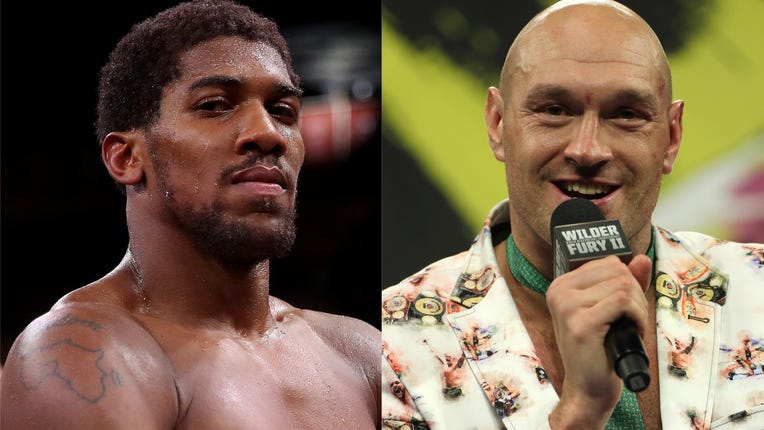
BT.com reports on 11 May 2021 that the all-British showdown between Anthony Joshua and Tyson Fury to determine the undisputed heavyweight champion is set to take place on one of the first two Saturdays in August in Saudi Arabia, according to promoter Eddie Hearn.)
“August 7, August 14,” Hearn said on Sky Sports when asked about a date for Joshua-Fury. “It’s a very bad secret that the fight is happening in Saudi Arabia. I don’t mind giving that information, Bob Arum’s already done it.
Responding to Hearn’s revelation that Joshua-Fury is on course to take place in Saudi Arabia, Kate Allen, director of Amnesty International UK, said in a statement to the PA news agency: “It comes as no surprise that Saudi Arabia is once again set to use a major sporting event as a means to sportswash its atrocious human rights record.
“By staging this high-profile fight, Saudi Arabia is yet again trying to shift the media spotlight away from its jailing of peaceful activists like Loujain al-Hathloul, its grisly state-sanctioned murder of Jamal Khashoggi and its indiscriminate bombing of civilians in neighbouring Yemen
“Simply put – Crown Prince Mohammed Bin Salman wants people around the world to be talking about sport in Saudi Arabia, not the dissidents being locking up after sham trials or the people being tortured in Saudi jails.
“When he fought in Saudi Arabia in 2019 it was disappointing that Anthony Joshua ducked the issue of human rights, and this time we hope he and his opponent can speak out in the build-up to the fight.
“A few well-chosen words about human rights from Joshua and Fury would mean a lot to Saudi Arabia’s beleaguered human rights defenders, helping to counteract the intended sportswashing effect of this boxing match.”
On 2 December 2020 the International Olympic Committee reported that “Building on the work undertaken over the last few years to address human rights issues within the scope of its responsibility across its three spheres of influence, as well as recent recommendations made by experts, the International Olympic Committee (IOC) has made further progress on the development and implementation of its human rights approach. In its recent consultative meeting, the IOC Executive Board (EB) received an update on the ongoing work in this field.
The IOC’s work has been informed by a series of “Recommendations for an IOC Human Rights Strategy”, produced by the independent experts HRH Prince Zeid Ra’ad Al Hussein, a former UN High Commissioner for Human Rights, and Rachel Davis, Vice President of Shift – a non-profit centre of expertise on business and human rights – commissioned by the IOC in 2019. They were developed following a consultative process with key internal staff and expert civil society stakeholders. Shift has been supporting the IOC since 2018 to develop the organisation’s existing human rights due diligence measures. [ see also: https://humanrightsdefenders.blog/2020/03/04/ioc-continues-its-cautious-work-on-human-rights-and-takes-first-steps-on-a-strategy/]
“We would like to thank Prince Zeid and Rachel Davis for their work and the report. The IOC remains committed not only to continuing, but also to strengthening its work concerning human rights within the scope of our responsibility,” said IOC President Thomas Bach.
The IOC has already taken a number of steps to deliver on its human rights responsibilities in its own operations. It has increased the alignment of its existing strategies on sustainability and gender equality and inclusion with human rights standards; and it is working on its own procurement processes and the creation of a human rights unit in the organisation. Engagement with human rights expert groups has also increased.
Work has further progressed in relation to the Olympic and Youth Olympic Games, supporting organising committees in developing and implementing their human rights approaches. As part of the Olympic Agenda 2020 reforms, human rights standards had already been reinforced in the “Operational Requirements” of the Host City Contract for the Olympic Games 2024 and beyond.
Setting out its role to advance respect for human rights as the leader of the Olympic Movement, the IOC is also aiming to work closely with the National Olympic Committees (NOCs) and International Federations (IFs). In its commitment to inclusion across the Olympic Movement, the IOC is working on a framework to ensure fairness, safety and non-discrimination of athletes on the basis of gender identity and sex characteristics; and it is planning to further advance its work around safe sport and implement the “Athletes’ Rights and Responsibilities Declaration”.
The IOC will continue the work already under way.
Additional action will be taken in the short term to complete the development of an IOC human rights strategy and policy commitment, and an amendment to the Olympic Charter will be considered.
Further work will look, among other things, at further embedding human rights in the good governance principles, and the establishment of the previously announced Human Rights Advisory Committee.
This edition of “Human rights defender” examines the Olympic Movement through a human rights lens. The magazine was planned to be released on time for the Tokyo 2020 Olympics which were postponed due to COVID-19. With athletes taking a more public stand as human rights defenders, the authors thought the issue was still timely:
Why athlete rights should be at the core of sport / Mary Harvey. The heavy toll of achieving ‘sport for all’ in Afghanistan / Khalida Popal, interviewed by Natalie Galea. Bahrain’s athletes rewarded with prison sentences / Fatima Yazbek. Athletes first? The right to health and safety in postponing the Tokyo Olympic Games / Han Xiao. A response from the International Olympic Committee. Superhumans or sitting ducks? examining the gaps in elite athletes’ knowledge and understanding of their rights in sport / Yetsa A. Tuakli-Wosornu. Embedding the human rights of athletes / Brendan Schwab. Going beyond the ‘feel-good-factor’ to achieve equality in para-sport / Katie Kelly. The human right of Olympic athletes to earn a living / Maximilian Klein. The story in her own words / Annet Negesa. In search of a safer playing field and gender justice in sport / Payoshni Mitra. The unlevel global playing field of gender eligibility regulation in sport / Madeleine Pape. A fist of freedom or a fist of iron? rule 50 and the Olympic paradox / Stanis Elsborg. Sports activism, the gentle way / Sabrina Filzmoser, interviewed by Gabrielle Dunlevy.




![The human rights of athletes : special issue / Galea, Natalie... [et al.] | Galea, Natalie](https://library.olympic.org/ui/skins/CIOL/portal/front/images/General/DocType/ENUM_MEDIUM.png "More info on 'The human rights of athletes : special issue / Galea, Natalie... [et al.]'")
 Hans Thoolen on Human Rights Defenders and their awards