Posts Tagged ‘solidarity action’

Today: International Human Solidarity Day

December 20, 2023

UN experts today emphasised the need for the international community to support civil society groups expressing international solidarity in pursuit of peace and social justice and not to conflate international solidarity with antisemitism or islamophobia. It is a remarkably large group of UN experts (see below). They have issued the following statement:

We would like to raise public awareness about the need to support concrete actions by civil society groups that express international solidarity in our pursuit of peace and social justice.

The Universal Declaration of Human Rights, Article 1 establishes universal solidarity as the foundation for human rights: “All human beings are born free and equal in dignity and rights. They are endowed with reason and conscience and should act towards one another in a spirit of brotherhood [and sisterhood].”

Around the world, civil society groups have expressed international solidarity in marches and social media campaigns to call for peace and the protection of civilians in armed conflict. Moreover, they have also expressed international solidarity in pursuit of non-discrimination and equality (the core elements of positive peace) by advocating access to justice, truth, protection, and humane treatment for: children, women, members of the LGBTAIQ+ community, persons affected by leprosy (Hansen’s disease), persons with disabilities, racialized, indigenous groups, and other minorities subjected to violence, hate speech, and discrimination, families of disappeared persons, refugees and migrants, victims of terrorism/violent extremism and counter-terrorism/violent extremism measures, and the environment.

The recent significant engagement of people of all ages and diverse backgrounds in the expression of international solidarity is a powerful affirmation of the value of human rights as a narrative of emancipation in response to violence, oppression, and marginalisation.

It is imperative that civil society actors not be subject to censorship and reprisals for their expression of international solidarity, including loss of funding, loss of employment, arrest, attack, harassment, persecution, criminalisation, or other forms of penalisation.

Actions and expressions that promote transnational unity, empathy, tolerance, and cooperation are the elements of a strong culture of international solidarity in support of peace and social progress.

The most striking impact of the contemporary expressions of international solidarity is their embrace of the principle of humanity – the demand to protect life and alleviate human suffering. The combination of these two universal principles underscores the priority of exhausting peaceful dispute resolution mechanisms before using force.

We call on the international community to encourage International Solidarity expressions of civil society groups and human rights defenders that acknowledge that everyone should enjoy human rights without discrimination of any type. States should open civic spaces and refrain from criminalising non-violent actions and expressions that promote international solidarity. International Solidarity should not be conflated with antisemitism, islamophobia, or other movements that are examples of exclusionary, segregated unitary orientations which violate non-discrimination and equality principles.

International Solidarity promotes inclusion through bridge-building and invites everyone to stand up for peace as a fundamental premise for the enjoyment of human rights.”

The experts: Cecilia M. Bailliet, Independent Expert on human rights and international solidarity; Aua Baldé (Chair-Rapporteur), Gabriella Citroni (Vice-Chair), Angkhana Neelapaijit, Grażyna Baranowska, Ana Lorena Delgadillo Pérez, Working Group on enforced or involuntary disappearances; Reem Alsalem, Special Rapporteur on violence against women and girls, its causes and consequences;Tomoya Obokata, Special Rapporteur on contemporary forms of slavery, including its causes and consequences; Irene Khan, Special Rapporteur on the protection and promotion of freedom of opinion and expression; Farida Shaheed, Special Rapporteur on the right to education; Livingstone Sewanyana, Independent Expert on the promotion of a democratic and equitable international order; Alice Jill Edwards, Special Rapporteur on Torture and other Cruel, Inhuman or Degrading Treatment or Punishment; Paula Gaviria BetancurSpecial Rapporteur on the human rights of internally displaced persons;  Ben SaulSpecial Rapporteur on the promotion and protection of human rights and fundamental freedoms while countering terrorism; Graeme Reid, Independent Expert on protection against violence and discrimination based on sexual orientation and gender identity; Marcos OrellanaSpecial Rapporteur on toxics and human rights ; Alioune Tine, Independent Expert on the situation of human rights in Mali; Mama Fatima Singhateh, The Special Rapporteur on the sale, sexual exploitation and sexual abuse of children; Michael Fakhri, Special Rapporteur on the right to food; Beatriz Miranda GalarzaSpecial Rapporteur on the elimination of discrimination against persons affected by leprosy and their family members; Clément Nyaletsossi Voule, Special Rapporteur on the rights to freedom of peaceful assembly and of association.;  Dorothy Estrada Tanck (Chair), Claudia Flores, Ivana Krstić,  Haina Lu, and Laura Nyirinkindi, Working Group on discrimination against women and girls;  Damilola Olawuyi (Chairperson), Robert McCorquodale (Vice-Chairperson), Elżbieta Karska, Fernanda Hopenhaym, and Pichamon Yeophantong, Working Group on the issue of human rights and transnational corporations and other business enterprises; Carlos Salazar Couto  (Chair-Rapporteur), Sorcha MacLeod, Jovana Jezdimirovic Ranito, Chris M. A. Kwaja, Ravindran Daniel, Working Group on the use of mercenaries; Javaid Rehman, Special Rapporteur on the situation of human rights in the Islamic Republic of Iran; Gehad Madi, Special Rapporteur on the human rights of migrants; Richard Bennett, Special Rapporteur on the situation of human rights in Afghanistan; Tlaleng Mofokeng, Special Rapporteur on the right of everyone to the enjoyment of the highest attainable standard of physical and mental health; David BoydSpecial Rapporteur on the issue of human rights obligations relating to the enjoyment of a safe, clean, healthy and sustainable environmentAlexandra Xanthaki, Special Rapporteur in the field of cultural rights;  Priya Gopalan (Chair-Rapporteur),  Matthew Gillett (Vice-Chair on Communications),  Ganna Yudkivska (Vice-Chair on Follow-Up), Miriam Estrada-Castillo, and Mumba Malila, Working Group on arbitrary detention; Ms Attiya Waris, Independent Expert on the effects of foreign debt and other related international financial obligations and human rights.
https://www.ohchr.org/en/statements/2023/12/support-civil-societys-international-solidarity-efforts-peace-un-experts

British Airways ends solidarity trip for al-Khawaya

September 18, 2023

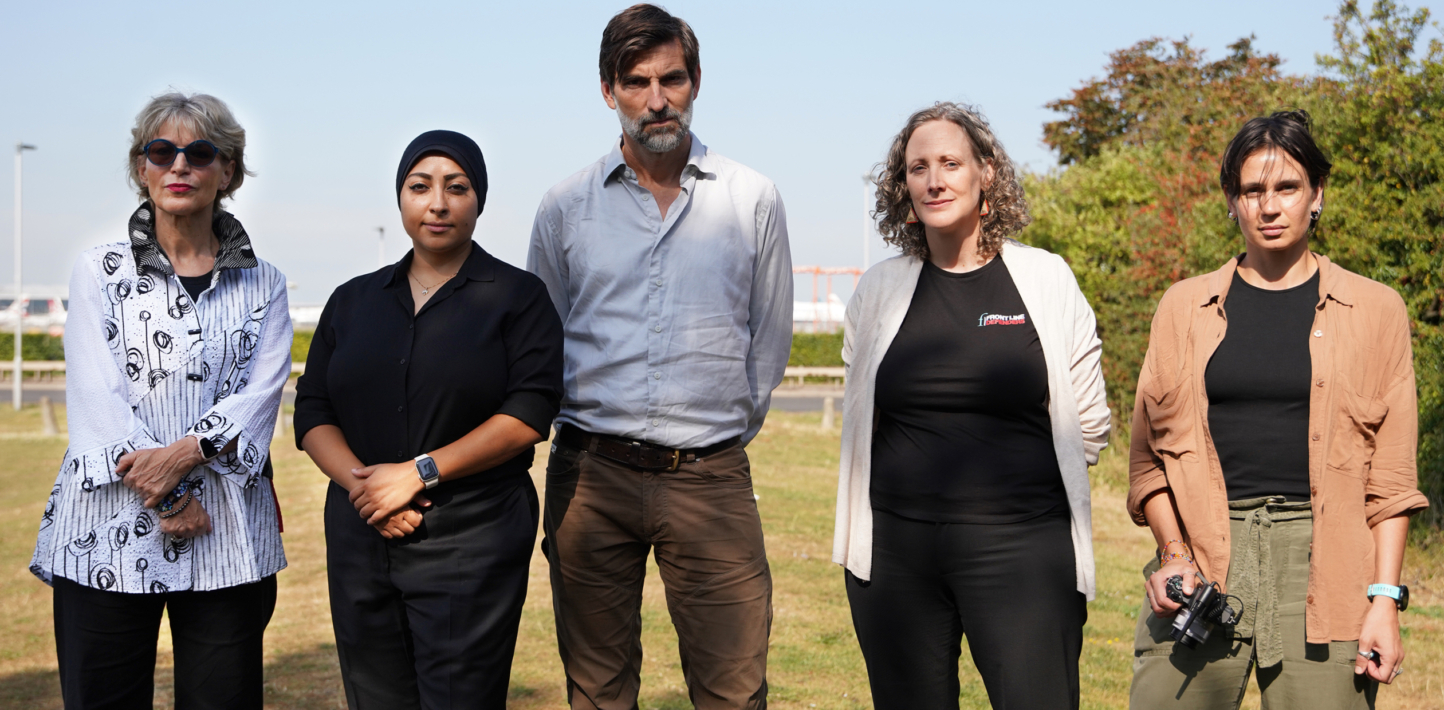
Maryam Al-Khawaja (second right) with members of the human rights delegation who were denied boarding a flight to Bahrain. (c) AI

Bahrani activist Maryam al-Khawaja said on Friday she was denied boarding on a flight to Bahrain by British Airways as she tried to return home to raise awareness of the condition of her imprisoned father. [see: https://humanrightsdefenders.blog/2023/09/14/more-join-maryam-al-khawajas-solidarity-trip-to-bahrain-to-be-continued/]

In a video message posted on X, Khawaja said she was not allowed to board a flight at London’s Heathrow Airport “despite being a Bahraini citizen”.

I was told I have to speak to Bahraini immigration if I want to get a boarding pass to Bahrain. So effectively we are being denied boarding by British Airways on behalf of the Bahraini government,” she said.

Agnes Callamard, the secretary-general of Amnesty International, was among those accompanying Khawaja and said on X that she had also been denied boarding. “Our human rights delegation members are all denied a boarding pass. We are told that British Airways has been instructed by the Bahrain immigration authorities not to give us a boarding pass,” she posted.

A spokesperson for the British Airways Press Office said: “All airlines are legally obliged to comply with immigration control laws and entry requirements for customers as set by individual countries,” he told Middle East Eye in a statement and a government spokesperson in Bahrain added: “…as with other countries, Bahrain reserves the right to refuse entry, if deemed necessary.”

Sayed Alwadaei, a Bahraini activist, and the director of advocacy at the UK-based Bahrain Institute for Rights and Democracy (BIRD), raised concern over al-Khawaja being denied boarding the flight.

“If a Bahraini citizen gets their rights denied at Heathrow airport, in London, in front of international observers and in front of heads of international rights organisations, then imagine what happens to prisoners behind bars, what is happening to Maryam’s father and other political prisoners who are suffering torture and systematic medical denial and slow death without anyone monitoring,” he told MEE. See: https://www.adhrb.org/2023/10/adhrb-at-hrc54-al-singace-al-khawaja-and-naji-fateel-face-reprisals-including-medical-neglect-2/#utm_source=rss&utm_medium=rss

Campaigners and the heads of human rights organisations informed MEE that they are planning to peacefully protest outside the Bahraini embassy in London later today in response to not being allowed to travel to Bahrain. 

Responding to the news, Olive Moore, the Executive Director of Frontline Defenders said that the decision not to let her board the flight was “unjustifiable“.

See also: https://www.ohchr.org/en/press-releases/2023/09/bahrain-un-expert-alarmed-health-human-rights-defenders-prison

https://www.theguardian.com/law/2023/sep/15/bahraini-human-rights-defender-stopped-from-travelling-to-kingdom-to-visit-imprisoned-father

https://www.middleeasteye.net/news/bahrain-activist-denied-boarding-british-airways-manama

More join Maryam Al-Khawaja’s solidarity trip to Bahrain……to be continued

September 14, 2023

On 7 September 2023, Maryam Al-Khawaja announced that she would return from exile to Bahrain to try and save her father Abdulhadi Al-Khawaja [see: https://humanrightsdefenders.blog/2023/09/11/maryam-al-khawaja-risks-prison-by-returning-to-bahrain-to-press-for-her-fathers-release/]. Now Front Line’s Interim Director Olive Moore announced that she will accompany Maryam on the trip to Manama this week to press the Bahraini authorities to release him. Other leading human rights figures have announced their participation in the trip, including Agnès Callamard, Amnesty International’s Secretary General; Tim Whyte, Action Aid-Denmark’s Secretary General; and Andrew Anderson, former Front Line Defenders Executive Director and Amnesty International staff member.

“Front Line Defenders owes a debt of gratitude to Abdulhadi, both as a former staff member and friend to many in the organisation, but more importantly as a principled and trailblazing human rights defender in Bahrain and the region. We will not rest until the Bahraini authorities free him and the human rights defenders Dr Abduljalil Al-Singace and Naji Fateel, both also unjustly imprisoned for over a decade.” said Moore.

The exact timing of the solidarity trip is not being publicised, but it comes the same week as the Bahraini Crown Prince visits Washington, DC, and more than a dozen human rights organisations, including Front Line Defenders, have also called on President Biden’s administration to demand the release of human rights defenders.

“Now is the moment for the Biden administration to step up to the plate and show solidarity with human rights defenders in Bahrain. In meetings with the Crown Prince this week, the US government must be unequivocal in its calls for the immediate and unconditional release of Abdulhadi Al-Khawaja and other unjustly imprisoned human rights defenders,” said Olive Moore.

Human Rights Watch stated on 11 September: “If Maryam al-Khawaja can have the courage to risk her life for democracy and human rights in Bahrain, the least the Biden Administration can do is show the political strength to use its leverage to call on its allied government to free its political prisoners.

The same day Human Rights First’s Brain Dooley blogged about two prisoners (among the hundreds on hunger strike) that have told him about the daily reality of the protest.

One of them is 49-year-old Ahmed Jaafar Mohammed Ali, who has been in prison since he was extradited from Serbia in January 2022 and Sayed Sajjad who has been in prison since September 2013, and is one of the inmates negotiating with the prison authorities. See more at: https://humanrightsfirst.org/library/two-prisoners-on-hunger-strike-in-bahrain-tell-of-their-ordeal/

https://www.frontlinedefenders.org/en/statement-report/front-line-defenders-director-join-solidarity-trip-bahrain-free-abdulhadi-al

https://www.hrw.org/video-photos/audio/2023/09/11/bahrain-brutality-and-biden

https://www.france24.com/en/live-news/20230914-bahrain-activist-says-to-return-home-for-father-despite-arrest-fears-1

Panel: Re-Opening Civic Spaces in Times of Covid-19

October 13, 2020

Hafıza MerkeziAssociation for Monitoring Equal Rights and Netherlands Helsinki Committee kick-start a panel-series titled “Shrinking Democratic Space and International Solidarity”.

Through these panels, we wish to discuss the challenges and potentials ahead of the human rights movement, in light of both the ongoing erosion in democratic/civic spaces and the disruptions of the Covid-19 pandemic. In each panel we will couple one human rights defender from Turkey with one from abroad.

In the first panel of the series, we hope to start with a hopeful perspective on how we can re-open spaces in times Covid-19. We also wish to put forth a conceptual and comparative understanding on concepts such as shrinking civic spaces, authoritarianism and populism. The title of this first panel is “Re-Opening Civic Spaces in Times of Covid-19”.

We will welcome legal scholar, sociologist and human rights advocate César Rodríguez Garavito for this event. Murat Çelikkan, co-director of Hafiza Merkezi, will host the event as co-speaker.

Some of the specific issues and questions we want to focus are as follows;

  • How do concepts such as closing democratic/civic spaces relate to populism, authoritarianism, etc.
  • How has the situation evolved in recent years in terms of these processes?
  • What has been the impact of Covid-19 on top of all this?
  • During Covid times, what are the trends and practices in the global human rights movement that have the potential to push back against the populist tide?
  • How should we frame the debates about the future of human rights?

The first panel will take place on October 15th at 17.00-18.30 (GMT+3) and will be livestreamed to registered participants. Please register from here.

English-Turkish simultaneous translation will be provided during the event.

About speakers

César Rodríguez Garavito’s research focuses on the transformation of law and politics in the context of globalization. He is co-director of the Center for Human Rights and Global Justice in New York University School of Law. César is the founder of JustLabs and the Editor-in-Chief of OpenGlobalRights. He has been a visiting professor at New York University, Stanford University, Brown University, the University of Melbourne, the University of Pretoria (South Africa), the European University Institute, American University in Cairo and the Getulio Vargas Foundation (Brazil). He is a board member of WITNESS, the Business & Human Rights Resource Center, the Annual Review of Law and Social Science, and the Business and Human Rights Journal. César is obsessed with inter-disciplinary research, social innovation, systems thinking, and anything that can get human rights and social justice practitioners to respond more strategically and effectively to complex challenges such as technological disruption, the climate crisis and populist authoritarianism. He has conducted research and advocacy in various regions of the world and has published widely on human rights, environmental justice, globalization and social movements.

Murat Çelikkan has worked as a journalist for 35 years in various positions such as reporter, editor, columnist and chief executive editor. Çelikkan has been an active member of the Turkish Human Rights Movement. He was a founding member and has been on the boards of the Human Rights AssociationHuman Rights Foundation of TurkeyCitizens Assembly and Amnesty International Turkey. He has worked on projects related to the Kurdish problem and media ethics, freedom of speech and assembly, refugees, identity politics and peace. Çelikkan is a graduate of Middle East Technical University. He is currently the Co-Director of Truth Justice Memory Center in İstanbul. He is also the producer of two feature films and the documentary Buka Barane. He has received the Civil Rights Defender of the Year 2018 Award and the 2018 International Hrant Dink Award.

Martin Ennals Award laureates rally to demand freedom for their imprisoned fellow award-winners

April 24, 2020

On 21 April 2020, – for the first time – a group of 14 former winners of the Martin Ennals Award for Human Rights Defenders rallied around their follow laureates lingering in jail.  They signed a joint letter to the Permanent Representatives to the UN of Bahrain, China, Iran and the United Arab Emirates:

Your Excellencies:

As the COVID-19 pandemic spreads, we the undersigned, winners of the Martin Ennals Award for Human Rights Defenders, are calling for the release of all imprisoned human rights defenders around the world, who are at tremendous risk due to the virus. We add our voices to the calls of international leaders, of hundreds of civil society organizations and thousands of mobilized citizens, to grant clemency towards vulnerable prisoners during this health crisis, including our fellow award-winners who are imprisoned for their defense of human rights in four countries:

…..

Today we are deeply concerned about the continued imprisonment of defenders across the world, despite their exposure to and high risk of contracting COVID-19. Numerous health authorities and human rights organisations have denounced the risks of COVID-19 for prisoners held in crowded conditions. …[ See e.g. also: https://humanrightsdefenders.blog/2020/04/23/civicus-and-600-ngos-dont-violate-human-rights-while-responding-to-covid-19/; https://humanrightsdefenders.blog/2020/04/14/un-guidelines-for-use-of-emergency-powers-in-time-of-covid-19-pandemic/%5D

Despite the tragedy of lives lost and significant economic damage, we believe this crisis will also present opportunities for a better world. Now is the time to remedy the unjust detention of these individuals. By releasing our brothers and sisters – Ilham, Ahmed, Nabeel, Abdullah, and Nasrin – the leaders of your nations would demonstrate their capacity for mercy and responsibility. We therefore call on your government to free our fellow Martin Ennals Award winners immediately, as well as all human rights defenders in detainment, so that their physical integrity is ensured, and they can receive appropriate medical and psychological support.

 Signed:

Huda al-Sarari
Yemen, Laureate 2020

Norma Librada Ledezma
Mexico, Finalist 2020

Sizani Ngubane
South Africa, Finalist 2020

Abdul Aziz Mohamat
Sudan, Laureate 2019

Eren Keskin
Turkey, Finalist 2019

Marino Córdoba
Colombia, Finalist 2019

Mohamed Zaree
Egypt, Laureate 2017

Karla Avelar
El Salvador, Finalist 2017

Asmaou Diallo
Guinea, Finalist 2015

Adilur Rahman Khan
Bangladesh, Finalist 2014

Mona Seif
Egypt, Finalist 2013

Bahrain Center for Human Rights, Finalist 2012

Arnold Tsunga
Zimbabwe, Laureate 2006

Clement Nwankwo
Nigeria, Laureate 1996

—-

https://www.martinennalsaward.org/the-mea-winners-are-calling-for-the-release-of-imprisoned-hrd-including-their-fellow-award-winner/

Policy response from Human Rights NGOs to COVID-19: CIVICUS’ Protocol

April 10, 2020

In the midst of the COVID-19 crisis, many human rights organisations have been formulating a policy response. While I cannot be complete or undertake comparisons, I will try and give some examples in the course of these weeks. Here the one by CIVICUS which has published a Protocol, that is open for endorsment by other NGOs. The Protocol (online<https://www.civicus.org/index.php/media-resources/news/4367-protecting-our-co-workers-during-covid-19-a-social-security-protocol-for-civil-society>) has been endorsed by over 60 civil society leaders from across the globe, including Greenpeace International.

The 6 point Protocol proposes practical measures and actions that civil society groups can take to help workers during the COVID-19 pandemic. It is aimed at protecting employees from any adverse health, social or economic issues that will arise during this challenging period.

The 6 proposed measures:

  1. Systems to enable social distancing and other precautions
  2. Support for COVID-19 testing and treatment
  3. Protection of pay and jobs during the COVID-19 lockdown and escalation period
  4. Flexibility and support for home and care-related responsibilities
  5. Extending our community of care to our collaborators and constituencies
  6. Acting in solidarity with workers and other vulnerable communities

In a letter to civil society allies CIVICUS Secretary General Lysa John <https://civicus.org/index.php/media-resources/news/3484-lysa-john-announced-as-new-civicus-sg> says,

“The ‘COVID-19 Social Security Protocol for Civil Society <https://www.civicus.org/index.php/media-resources/news/4367-protecting-our-co-workers-during-covid-19-a-social-security-protocol-for-civil-society> ’ is first and foremost a call for us to recognise that the people we work with and alongside need to be assured of our support for their well-being if we are to remain resilient and relevant in the context of a dire and desperately uncertain future. Without the solid foundations of trust and authenticity, our organisations are not equipped to withstand the formidable challenges that all agencies – large and small – will need to respond to in the coming months.”

Recommendations:

1. Systems to ensure physical distancing and other precautions

What it involves:
  • Procedures to enable physical distancing are explicitly adopted and communicated alongside an overarching call to social solidarity
  • Transition to virtual ways of working wherever   possible, provision of protective gear and guidelines for frontline workers whose efforts are needed to ensure the continuation of critical and essential services (e.g. non-transferable support services to vulnerable populations)
  • Ensuring that pay and benefits for personnel who are unable to perform their duties virtually are not reduced at this time
Why is this important?
  • In keeping with WHO guidelines and corresponding national government regulations, all agencies are required to take active measures to protect their personnel from contracting or transmitting the virus
  • If relevant government authorities have not provided effective guidelines on social distancing, we can be proactive in implementing the WHO guidelines for our teams, and support advocacy efforts to ensure relevant   regulations are put in place.


2. Support for COVID-19 testing and related treatment

What it involves: Access to COVID-19 testing differs across countries. A few essential steps that we can take to support our teams in this context are:

  • Mapping and providing active information on testing procedures
  • Covering costs of testing procedures where these are not covered by health insurance.
  • Supporting the return of personnel located outside their home countries who request or require to be repatriated for health and/or family reasons
  • Fully paid sick leave for personnel needing to rest and recuperate; flexible arrangements in relation to time needed to care for family members and dependents. This could include ‘record-free’ leave provisions so personnel do not need to utilise their annual sick leave quota to cover illness related to the COVID19 outbreak
  • Full or partial support for costs of related treatment through existing group medical insurance plans; in case these are not available, explore organisation-supported reimbursements
  • Psycho-social support to deal with the mental health impacts of the pandemic, including with adverse effects of the outbreak within family and communities
Why is this important?
  • Ensuring access to basic health care for employees is an important responsibility for all organisations. For many organisations however, support to core costs that enable social security benefits for   employees is hard to negotiate and organise.
  • More ideas on how donors and intermediaries can support civil society groups to address core costs in this period are available in this Open Letter to Donors


3. Protection of jobs and pay across the COVID-19 lockdown and escalation period

What it involves: In anticipation of the adverse economic effects of the COVID-19 pandemic, we have an important role to play in protecting our co-workers from reduction of pay and loss of employment. Some measures that can be considered include:

  • Extending employment contracts, till December 2020 for instance, as an immediate measure of protection. This should ideally include personnel who work part-time, such as consultants, fellows and interns.
  • In the event that an employment contract must end in this period, ensuring a source of income is available to support transition is a helpful measure. National regulations on allowances linked redundancy and unemployment, for instance, can be used to benchmark this and activate government-backed programs in this regard
  • Coordinating with donors and intermediaries to redirect costs for new positions that were to be proposed in this period towards costs for staff retention
  • Coordinating with Boards to approve the use of organisation’s reserves, if available, and requesting their support for costs related to employment protection measures
Why is this important?
  • The implementation of this recommendation is directly related to donor flexibility and proactive measures adopted by governance bodies of civil society organisations.
  • Ensuring an open conversation with donors to reallocate expenses related to activities that cannot be undertaken in this period, such as budgets linked to travel and in-person meetings, is one possibility in this regard.


4. Flexibility and support for home and care related responsibilities

What it involves: In order to support staff to cope with the added pressure of familial duties, while also taking care of their own needs, we can consider the following:

  • Flexible or reduced work hours for personnel (without affecting levels of pay)
  • Reduction of work related deliverables for staff who have responsibility for children and other dependents, including the elderly and disabled
  • Additional measures (economic and psycho-social) to support single parents, staff who live alone and those who risk violence and abuse within their homes
Why is this important?
  •  Working from home places significant demands on staff who are primary caregivers within their families. Women are often burdened with additional responsibilities in this time


5. Extending our community of care to our collaborators and constituencies

What it involves:
  • Disseminating information on necessary protection protocols advised by the WHO and, where possible, translating these into relevant languages and making them accessible in multiple formats
  • Providing information on support and services provided by our organizations in this time
  • Ensuring that contingency plans for critical services are in place and shared with them
  • Identifying and calling out public measures that are being used to restrict and intimidate civil society
Why is this important?
  • As we conduct our duty of care to our employees, we have the opportunity to extend care and share knowledge with the communities we serve and networks we work with.
  • Civil society across the world often works to respond to and fill critical gaps in service delivery, access to justice and government accountability. Taking steps to ensure that our collaborators and constituencies are informed helps to ensure transparent flows of information and mediate continuity for critical services where possible.


6. Acting in solidarity with workers and other vulnerable communities

What it involves: We have the opportunity to act in solidarity by:

  • Adding our voice and organisational support to campaigning for improved employment protections by organised labour, and for the most vulnerable casual workers and gig-economy workers
  • Supporting campaigns where there is an opportunity to advance progressive social welfare policies, including wage & income protection, universal social protection, access to healthcare and childcare support for frontline workers who are holding up essential public services.
  • Getting behind the bold, systemic reforms that challenge and change the fundamental inequities that have been exposed by the COVID-19 pandemic
Why is this important?
  • Adding our collective weight and support right now, may help secure both immediate relief, as well as pivotal longer-term wins for progressive campaigns


A list of resources to help determine and action relevant measures is available here.

For more information: | @CIVICUSalliance | https://www.facebook.com/CIVICUS/


For other posts like this see: https://humanrightsdefenders.blog/tag/covid-19/

—-

https://www.civicus.org/index.php/media-resources/news/4367-protecting-our-co-workers-during-covid-19-a-social-security-protocol-for-civil-society

Amnesty starts again its Write For Rights campaign

November 24, 2018
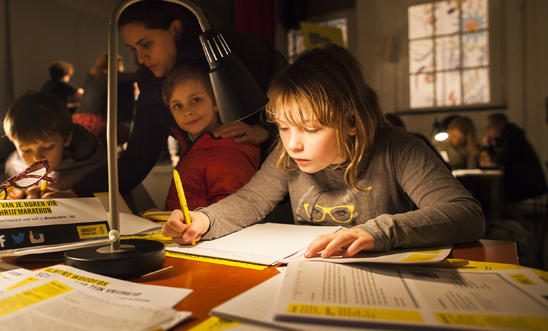
Write for Rights event in Amsterdam, 2015

Write for Rights event in Amsterdam, 2015 © Amnesty International

Every year, Amnesty International runs its Write For Rights, a campaign over November and December where it encourages you to write messages of support to people around the world who have suffered injustice, and show you how to support their campaigns for justice. And the yearly campaign seems to work. For last year’s campaign see: https://humanrightsdefenders.blog/2017/12/04/write-for-rights-again-in-december-2017/

There is plenty of material for those who want to support:

Get the campaign booklet Download the campaign booklet (PDF). It introduces you to each case and sets out how you can write to them, and how to write to the authorities on their behalf. This is the main resource for Write For Rights.

Three ways to join in Write For Rights:

1. Write a message of solidarity

This is where Write For Rights began: writing to people who are wrongly punished, to show them that they’re not alone. If writing letters isn’t for you, you can send a message of solidarity online.

2. Write an appeal letter

In a world of petitions, physical post does get noticed! As well as writing to the people suffering human rights abuses, we also ask you to write to the authorities who can bring them justice. All the details of how to write to authorities are in our campaign booklet.

You can download pre-printed ‘appeal’ address labels to make it easier to send multiple letters.

3. Hold an event

Write for Rights events come in all shapes and sizes – from stalls in outdoor markets, to intimate gatherings in a local pub. See UK AI’s tips for putting together a successful Write for Rights event. Don’t forget to add your event to the website once you’ve got the date and location confirmed!

https://www.amnesty.org.uk/write-rights-getting-started

Mahfooz Saeed, lawyer of Maldives’ ex-president, stabbed

September 7, 2015

It does not rank as the worst human rights violation in the world but the stabbing of the lawyer of the Maldives’ ex-president is a classic case of attacking the defenders. Wonder why not more lawyers organizations have come out in professional solidarity:
On Friday 4 September lawyer Mahfooz Saeed was stabbed in the islands’ capital, Male, ahead of a visit by his international legal team, including human rights lawyer Amal Clooney.  He underwent emergency surgery and is now in a stable condition. “There were many people who saw the incident. The attackers were also caught on CCTV cameras,” Shauna Aminath, a spokeswoman for the MDP, of which Saeed is also a member, told AFP. The party believes the attack was politically motivated, she said.
Amnesty International condemned the assault and called on the Maldivian government to bring the perpetrators to justice.
This vicious attack must not go unpunished — Maldives authorities must ensure that human rights defenders can work free from fear of reprisals and that those responsible are held to account,” the human rights group said in a statement.
Amal Clooney is due to travel to the Maldives this week to meet with Nasheed. She is part of the legal team along with Jared Genser — who has represented Myanmar’s Aung San Suu Kyi — and Ben Emmerson, a judge on international criminal tribunals for Rwanda and former Yugoslavia.

https://thoolen.wordpress.com/2014/10/19/retaliation-now-reaches-even-human-rights-commissioners-in-the-maldives-un-deeply-concerned/

Source: Lawyer for Maldives’ ex-president stabbed in Male | Arab News

Easter cards to christian human rights defenders

March 17, 2015

Fra Angelico

This blog does not often carry religious paintings. This time it is to illustrate the action by Bishop Declan Lang, Chair of the Catholic Bishops’ Conference Department of International Affairs, who is encouraging to contact Christian prisoners of conscience and human rights defenders with a message of hope this Easter. For the first time, Action by Christians Against Torture has published an Easter greetings list containing details of Christians including a teacher imprisoned on political charges in Indonesia, a priest facing threats because of his human rights advocacy in Cuba and an MP risking her safety by speaking out on behalf of religious minorities in Pakistan.

Bishop Declan stated: “Pope Francis has called on us to support Christians facing persecution wherever they are in the world. Sending an Easter message to Christian prisoners of conscience and human rights defenders is a practical yet powerful way to give hope and encouragement. Showing that they are not forgotten can also lead to better treatment by the authorities. I strongly welcome the work of Action by Christians Against Torture, and hope that Catholics throughout England and Wales will join me in sending a message of solidarity this Easter.

The Action by Christians Against Torture Easter greetings list is available at: www.acatuk.org.uk/EastercardList2015.pdf

Bishop endorses campaign to send Easter cards to persecuted Christians – Independent Catholic News.

Monday 2 March, start of the #idefend campaign

February 28, 2015

On Monday 2 March 2015 starts the “#idefend – Making sure civil society has its voice” campaign. It is an initiative of the Delegation of the European Union to the UN in Geneva in partnership with the Office of the High Commissioner for Human Rights and the Permanent Missions of Brazil, the Republic of Korea and Tunisia.

The #idefend campaign takes a public stance to support the voices of civil society.#idefend aims at expressing solidarity with all those human rights defenders and civil society actors, whose dedication and everyday work improve the human rights of people in every corner of the world. Join the campaign and help empower those who speak up for human rights!

Human rights defenders are not violent seditionists, criminals, nor bloody revolutionaries, as so many governments like to portray them. They are the best of us, all of us. And they have a message. To all governments, we say: focus on their message. Listen to what they are saying. Understand the message, talk to them about it, be persuaded or persuade, without violence, instead of silencing them, punishing them, their families, and their communities.
Zeid Ra’ad Al Hussein, UN High Commissioner for Human Rights

Sadly, over the past years, we have observed a worrying trend at the Human Rights Council: Human Rights Defenders and civil society representatives are hampered from speaking at the Council, sometimes they are harassed upon their arrival to Geneva, or subject to reprisals in their home country upon their return. This is not acceptable.
Peter Sørensen, Head of the EU Delegation to the United Nations

#idefend | Making sure civil society has its voice.