Posts Tagged ‘Secretary General’

Secretary-General’s 2024 Report on Responsibility to Protect

June 28, 2024

On 27 June 2024 the Global Centre for the Responsibility to Protect published a summary of the UN Secretary-General’s 16th report on the Responsibility to Protect (R2P), entitled “Responsibility to Protect: The commitment to prevent and protect populations from atrocity crimes.” Within the report the Secretary-General issues a stark warning about worrying global trends, including increasing violations and abuses of International Humanitarian Law (IHL) and International Human Rights Law (IHRL), and articulates challenges that UN member states and the international community have faced in upholding R2P over the past two decades. The Secretary-General asserts, however, that there are still opportunities to shift the current course of events through a more nuanced and strategic approach to prevention and protection by actors across all levels.

KEY POINTS

The Global Centre for the Responsibility to Protect would like to highlight the following key points from the report:

SECTION II. GLOBAL PATTERNS IN THE ONGOING COMMISSION OF ATROCITIES

As requested by many member states during the 2023 UN General Assembly debate on R2P, the Secretary-General takes stock of current global trends with regard to the risk of and commission of mass atrocity crimes. This section highlights the dire trends across three main areas: violations of IHL in the context of growing violent conflict worldwide, violations of and failures to institutionalize protections for human rights and factors that create enabling environments for perpetrators to commit atrocity crimes.

Patterns of violations of international humanitarian law

In recent years the world has experienced a dramatic rise in violent armed conflicts. Throughout many of these crises, parties to the conflict have increasingly employed methods and means of warfare with complete disregard for human life and in flagrant violation of international law and various treaty obligations. The IHL principles of distinction, proportionality, necessity and precaution are routinely violated by both state and non-state actors. There has also been an escalating pattern in the indiscriminate use of explosive weapons in populated areas, as well as targeted attacks on civilian infrastructure and cultural heritage. Drawing upon the Secretary-General’s annual reports on other related issue areas – including the Protection of Civilians, Children and Armed Conflict and Conflict Related Sexual Violence – the section highlights further worrying trends in violations against civilian populations, as well as the targeting of civilians on the basis of their religion, ethnicity, nationality, race, descent, gender and other identity factors. The Secretary-General further notes the man-made humanitarian consequences of these conflicts, including the global forced displacement crisis and the record number of people facing acute food insecurity.

Acts that violate IHL may also constitute war crimes and may amount to crimes against humanity, ethnic cleansing or genocide. Depriving civilians of objects indispensable to their survival, including through blocking access to humanitarian aid, may amount to war crimes.

Patterns of violations and abuses of human rights

The Secretary-General recalls that throughout history, atrocity crimes have often been precipitated by serious violations and abuses of human rights by state and non-state actors. Many human rights violations and abuses may themselves constitute or amount to an atrocity crime if certain thresholds or conditions are met.

The report notes that in many situations, violations and abuses of human rights have risen alongside democratic backsliding and patterns of targeted attacks by governments against actual and/or perceived dissenting voices. As some governments have stripped societies of human rights protections, they have also increased attacks on political opponents, human rights defenders and civil society, the media and other critical voices, sometimes through arbitrary detention, torture, enforced disappearances, extrajudicial killings and other violations in a manner that may amount to crimes against humanity. The Secretary-General particularly highlighted the regression in women’s and girl’s rights.

Environments conducive to atrocity crimes

Atrocity crimes do not occur in a vacuum; they are often preceded by structural, societal and political factors that create an enabling environment for their commission. Some factors may facilitate crimes by creating the means, motives and opportunities for perpetrators to act or may inhibit their mitigation. While cautioning that the list is not exhaustive, the Secretary-General highlights trends related to several key enablers of atrocity crimes, including the continuation and expansion of discriminatory policies and practices targeting populations on the basis of identity – such as threats and attacks against indigenous populations – unconstitutional changes of government, shrinking of civic space, the spread of non-state armed groups, the role of new and emerging digital technologies in proliferating hate speech and capacity for mass surveillance and the impacts of climate change.

The report notes how each of these factors may impact societal resilience to atrocity crimes, particularly when combined with established trends in violations of IHL and IHRL. For example, in countries experiencing democratic backsliding and shrinking civic space, there are often corresponding human rights issues, including arbitrary deprivation of life and liberty, removal of due process guarantees and reversal of women’s rights, among others. Similarly, as the presence and capacity of non-state armed groups has expanded, their ability to perpetrate crimes against humanity and war crimes targeting populations has also increased. Moreover, efforts to regain territorial control and combat such groups have exacerbated fragile security situations and state actors themselves have perpetrated potential atrocity crimes in the name of counterterrorism.

SECTION III. ADVANCES AND CHALLENGES IN PREVENTING ATROCITY CRIMES AND PROTECTING POPULATIONS

This section focuses on advancements in prevention, protection and justice and accountability processes since the inception of R2P. It also reflects upon the numerous normative, conceptual and operational challenges that need to be confronted to improve the prevention of atrocity crimes and the protection of populations.

Advances in prevention and protection

The report acknowledges the progress made in understanding the processes that lead to atrocity crimes and in conceptually understanding early warning signs for atrocities, noting in particular the UN’s Framework of Analysis for Atrocity Crimes, previous Secretary-General’s reports and work within the UN Peacebuilding Commission. Efforts have also been made by states, as well as networks, such as the Global Action Against Mass Atrocity Crimes and the Global Network of R2P Focal Points, to expand early warning expertise and capacities for response.

The Secretary-General notes the expansion of international investigative bodies and mechanisms mandated to assist in the collection, consolidation and preservation of evidence of potential atrocity crimes, as well as the monitoring and advocacy on country situations by the UN High Commissioner for Human Rights. In this regard, the report acknowledges how some of these bodies have utilized the Framework of Analysis for Atrocity Crimes in their assessments of situations with ongoing crimes or potential atrocity risks.

The section also acknowledges the progress made in transitional justice and memorialization as methods for dealing with the past and promoting truth, justice and non-recurrence. Moreover, the Secretary-General notes how national courts, international criminal courts and tribunals and the International Court of Justice have all played critical roles in holding perpetrators accountable for atrocity crimes.

Further challenges in prevention and protection

The advances highlighted by the Secretary-General demonstrate the depth of relevant information on risks, the existing potential to prevent their occurrence and the available institutional capacity to protect vulnerable populations and hold perpetrators of atrocity crimes accountable. They also expose the failure of the international community to prevent and protect populations from atrocity crimes. The report articulates four key challenges that contribute to the failure to realize the promise of R2P.

First, the international community has not capitalized on opportunities to start prevention initiatives before risk factors emerge. States and regional and international bodies need to more consistently take preemptive steps, such as instituting policies, systematic research, practices and structures that identify risk indicators and inform policy makers to enable societal resilience to atrocity crimes, including through the development of measures, laws and initiatives that protect the rights of all populations, prevent their marginalization and inhibit the development of the drivers of direct violence.

Second, improved understanding of the risk factors and gathering of early warning has not always translated into assessments and timely decision making. Due to the exceptional nature of atrocity crimes, patterns that lead to their commission are often not acknowledged or the potential trajectory of early warning information is not adequately anticipated, resulting in a lack of timely decision making.

Third, due to the lack of timely preventive action, discussions on response often occur when options are more limited and when decision-makers across all levels are more polarized.

Fourth, even when the risks are understood or clearly articulated, priority is not sufficiently given to develop adequate and appropriate measures to protect affected populations amidst other considerations decision-makers face in a particular situation. Moreover, the Secretary-General emphasizes the need to ensure that the knowledge and expertise of affected communities are centered in policy, practice and understanding.

SECTION IV. UNDERSTANDING EFFECTIVE PREVENTION AND PROTECTION

To address the challenges put forward in Section III, the Secretary-General highlights several aspects of prevention and protection that states and other actors should consider in order to bolster efforts to limit the occurrence and impact of atrocity crimes.

Prevention as a continuous process

The best way to disrupt the actions that lead to atrocity crimes is to approach prevention and protection as part of a continuous, permanent process. This includes not only a response to imminent and emerging risks, but also instituting policies, practices and structures that build long-term societal resilience to atrocity crimes. In this sense, the early prevention of atrocities is not significantly distinct from practices that support good governance: ensuring respect for the rule of law, supporting a competent and independent judiciary, protecting human rights, enabling civil society and the media to operate without interference or fear of reprisals and creating a political culture that favors tolerance and diversity. These are steps that governments can take to build the institutional architecture to prevent the drivers of atrocities from emerging.

Embodying prevention as a continuous process also includes consistent monitoring and assessment of risks amidst societal transformation and, when necessary, instituting necessary reforms to confront those risks.

A unique framework for atrocity crimes prevention

The Secretary-General invokes the atrocity prevention lens as a strong framework for enabling actors to better understand and more adequately respond to the drivers of crimes. Application of this lens includes identifying factors and indicators and assessing dynamics as they pertain to the risk and potential commission of atrocity crimes, guiding the necessary action at the domestic, regional and international level to prevent their perpetration and to effectively protect populations. This lens compels actors to reframe analysis and intelligence-gathering in order to recognize patterns of behavior and dynamics that may enable or precede atrocity crimes. The atrocity prevention lens also assists in identifying specific vulnerabilities of certain populations – including ethnic and religious minorities, women, populations with distinct sexual orientations and gender identities, children, disabled populations and others – and detects factors that may put them at particular risk to atrocity crimes.

The atrocity prevention lens may also represent an added value for existing conflict prevention, conflict resolution and protection agendas as it compels decision-makers to devise political strategies to counter threats and to avoid solutions that may exacerbate societal cleavages, structural exclusion or violence among groups. As it provides a more tailored understanding of the broader political landscape and how it relates to the threat to populations at risk, stakeholders can better understand what factors in the political process may act as triggers for wider violence or atrocities and what actions by state and non-state actors may exacerbate vulnerabilities faced by certain populations or regions of the country.

Prevention and protection: a cooperative effort

The report emphasizes that effective protection is only possible when informed by preventive assessments. The best outcomes will be reached when prevention and protection are implemented together.

Multiple forms of protection in action

When populations need protection, there are a variety of effective and complementary international instruments that can be utilized. Diverse entities within the UN, national governments and regional bodies, as well as independent human rights institutions, human rights defenders, civil society, and independent media, can all play a critical role in documenting and drawing attention to violations and abuses of human rights, threats to the physical integrity of populations and patterns in attacks.

Legal protection
At the heart of prevention and protection of atrocity crimes lies the legal guarantee of protection provided by states through constitutional and legislative policies, as well as through compliance with international protection instruments, including the Convention on the Prevention and Punishment of the Crime of Genocide, the Convention against Torture and Other Cruel, Inhuman or Degrading Treatment or Punishment, the International Covenant on Civil and Political Rights, the International Covenant on Economic, Social and Cultural Rights and other rights-based instruments. Domestic legal frameworks should be designed in a manner that protects all populations by ensuring equal access to public services and full human right protections. The UN and other states parties to various conventions can also provide legal protection by reminding states of their obligations to populations under the respective conventions and, when necessary and permitted by the relevant treaty body, issue formal complaints about non-compliance.

Preventive diplomacy, good offices and mediation
Preventive diplomacy and mediation aimed at reducing tensions, averting violent escalations and negotiating among parties to conflicts or disputes is a necessary component of ensuring the long-term success of protection efforts. Negotiations among trusted leaders have prompted conflicting parties to step back from violent rhetoric and escalatory action, make political commitments to halt abuses and rethink the tactics utilized in protected civilian spaces. Domestic actors, such as local community and religious leaders, civil society activists and women’s and youth groups, also play a crucial role in de-escalating situations and in engendering dialogue between warring parties or groups.

Physical protection
The Secretary-General notes that a security sector that is community-based and respects international norms and standards on prevention is one of the most important actors in ensuring physical protection of all populations from atrocity crimes. This is particularly the case if the security sector is equipped with knowledge of the atrocity prevention lens and an understanding of the unique vulnerabilities of populations they may be protecting. When necessary, the UN Security Council may authorize regional or international forces to provide physical protection. However, the Secretary-General cautions that states should consider the use of force as a last resort because military action may have a devastating impact on populations.

Humanitarian aid and humanitarian protection
Many of the situations where atrocity crimes are ongoing have resulted in dire man-made humanitarian emergencies as populations flee en-masse and, in some cases, civilian infrastructure is attacked and humanitarian aid blocked. It is essential that humanitarian actors be provided access to all populations, including those in conflict areas, and that there be accountability for any actor who blocks or diverts aid. The Secretary-General further notes that there is growing recognition of the importance of developing a long-term, comprehensive plan and integrated framework to bridge the divide between humanitarian relief, development assistance and peacebuilding.

SECTION V. UPHOLDING THE RESPONSIBILITY TO PROTECT: CONCLUSION AND THE WAY FORWARD

The Secretary-General concludes by reminding states that next year will mark 20 years since the adoption of R2P at the 2005 World Summit and emphasizing the need to produce more tangible results in preventing atrocities and protecting populations. The Secretary-General further encourages states, regional bodies and UN entities to assess and further develop their capacities to prevent mass atrocities.
New SG for Amnesty International: Agnès Callamard

March 30, 2021

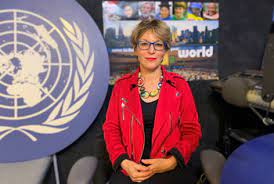
On 29 March 2021 Amnesty International announced the appointment of Dr. Agnès Callamard, a leading international human rights expert, as its new Secretary General, effective immediately. 

Dr. Callamard has recently been the United Nations Special Rapporteur on extrajudicial, summary or arbitrary executions. In that role, she led ground-breaking investigations including into the murder of Saudi journalist Jamal Khashoggi. [see: https://humanrightsdefenders.blog/2020/09/09/agnes-callamard-calls-overturned-verdict-in-khashoggi-case-parody-of-justice/]

As Secretary General, Dr. Callamard will be the Chief Executive of Amnesty’s International Secretariat and the principal spokesperson of the global Amnesty movement, which has some 10 million supporters, and offices in more than 70 countries.

At a time when human rights are under unprecedented threat around the world, Dr. Callamard will lead, excite and rally the entire Amnesty movement to meet these challenges head-on,” said Sarah Beamish, Chair of the International Board, in announcing the appointment.  “The combination of her intellectual acuity, her deep global human rights experience, and her courageous voice makes her highly qualified to front our movement. We are delighted she has accepted this challenge to take us boldly into our next phase.

Where governments and corporations seek to silence those who speak out against their abuses, to obfuscate the truth, and to undermine or reject human rights norms, the rigorous investigations and uncompromising campaigns of Amnesty International are more vital than ever.” Agnès Callamard

  “I am honoured to take up the post of Secretary General and work alongside Amnesty’s supporters around the world so that together we defend and demand respect for all human rights for all,” Dr Callamard said. 

Dr. Callamard, a French national, has built a highly distinguished career in the international human rights and humanitarian sectors, working across NGOs, academia, and the United Nations. Alongside her role as a United Nations independent human rights expert, she held the role of Director of the Global Freedom of Expression Project at Columbia University. Previously, she has been the Executive Director of the Freedom of Expression organization ARTICLE 19 and was the founder and Executive Director of HAP International (the Humanitarian Accountability Partnership).

Dr. Callamard worked with Amnesty International from 1995-2001, including as Chef de Cabinet for then-Secretary General Pierre Sané.  She has led human rights investigations in more than 30 countries and published extensively on human rights, women’s rights, freedom of expression, refugee movements, and the methodology of human rights investigations.

See also 7 April interview: https://www.aljazeera.com/news/2021/4/7/leaders-of-the-world-have-failed-us-qa-with-agnes-callamard

https://www.amnesty.org/en/latest/news/2021/03/dr-agnes-callamard-appointed-as-secretary-general-of-amnesty-international/

In memoriam Kofi Annan – laureate of 10 human rights awards

August 20, 2018

Former United Nations Secretary-General Kofi Annan died on Saturday 18 August 2018 at the age of 80. “Kofi Annan was a global statesman and a deeply committed internationalist who fought throughout his life for a fairer and more peaceful world. During his distinguished career and leadership of the United Nations, he was an ardent champion of peace, sustainable development, human rights and the rule of law,” the Kofi Annan Foundation and Annan family said in a statement. His wife Nane and their children Ama, Kojo and Nina were by his side during his last days.

Born on April 8, 1938, in Ghana, Annan took his first job with the U.N. in 1962,and became its seventh secretary-general serving between 1997 and 2006.

It has been pointed out by many media that he was awarded the Nobel Peace Prize (jointly with the United Nations) in 2001 but few mention the other 9 human rights awards that he received before, such as

2001   Liberty Medal

2003   Indira Gandhi Prize

2003   Sakharov Prize for Freedom of Thought

2004   Franklin Roosevelt Four Freedoms Award

2006   Olof Palme Prize

2007   MacArthur Award for International Justice

2007   Bruno Kreisky Award

2007   North South Prize

2008   Freedom Award (refugees).

For more on these awards, see: http://trueheroesfilms.org/thedigest

The current U.N. secretary-general, António Guterres, called Annan “a guiding force for good. … In many ways, Kofi Annan was the United Nations. He rose through the ranks to lead the organization into the new millennium with matchless dignity and determination,” he said in a statement.

Farewell message from Amnesty’s Salil Shetty

July 17, 2018

I announced Salil’s successor on 22 December [https://humanrightsdefenders.blog/2017/12/22/amnesty-announces-kumi-naidoo-as-next-secretary-general-effective-august-2018/]. The farewell message by the departing Secretary General, Salil Shetty, is worth sharing as it contains some general thoughts on the state of the human rights movement:

..

As some of you would know, after eight great years with Amnesty International, I am moving on. My time as Secretary General formally drew to a close on 8 July after the annual gathering of our global leadership in Poland. I wanted to take this opportunity to thank you for your important and generous support through this period – a turbulent time in the world at large, and a crucial transformation process internally.
 
It is difficult to sum up eight years in a pithy way, but as we look back on the so-called Arab Spring, the Syrian conflict, spiralling refugee numbers, the social impact of government policies in the aftermath of the 2008 financial crisis, and the rise of popular authoritarians in many countries, it is clear that we have lived – and continue to live – through very challenging times. The voices of those who stand up against oppression and the abuse of power are more isolated but more important than ever. And Amnesty has played a vital role in supporting these voices.
 
We have seen much fruit from the work in virtually every region of the world we have done together during this period – from the adoption of the Arms Trade Treaty to some important breakthroughs on corporate accountability, from another 10 countries abolishing the death penalty to the release of innumerable prisoners unjustly detained. We have built a new body of work on technology and human rights, ready to confront important new challenges ahead. We have also seen some crucial steps forward on women’s rights and have good reason to hope for much more progress in the coming months and years. Above all, it has been a privilege to work with so many extraordinary people from every part of the world. I will treasure the memories of so many courageous activists I have met during my time with Amnesty.
 
For me, the biggest source of hope has always been people at the local level who refuse to accept injustice. During the past eight years we have had a strong focus on building a truly global human rights movement, particularly by rebalancing the centre of gravity from our traditional strongholds in the richer countries of the world towards a more distributed centre with a much stronger voice for the global south. The growth of Amnesty’s membership in key southern powerhouses such as Brazil, India, Indonesia, Egypt and Nigeria, has been very encouraging, and gives us stronger foundations for the future.
 
……..
I am delighted to hand over to my successor, Kumi Naidoo from South Africa, who will take up the reins on 15 August. Kumi is a well-respected activist and leader in the international NGO sector, having previously led Greenpeace International and CIVICUS. …


Best,

Salil Shetty

Amnesty announces Kumi Naidoo as next Secretary General, effective August 2018

December 22, 2017

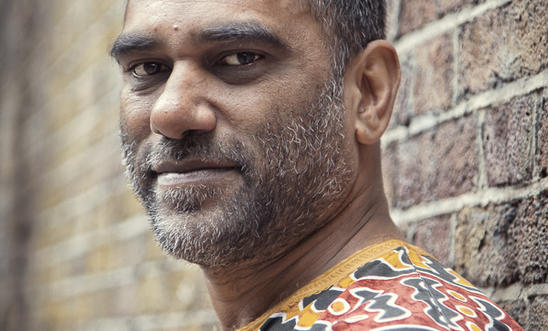
Amnesty International has appointed Kumi Naidoo as its next Secretary General. As from August 2018, Kumi will succeed Salil Shetty, who served two terms as Secretary General from 2010.

Mr Naidoo is an activist and civil society leader. His previous leadership roles include Executive Director of Greenpeace International, Chair of the Global Call for Climate Action, Founding Chair of the Global Call to Action against Poverty and Secretary General and CEO of CIVICUS, the World Alliance for Citizen Participation. [see also: https://en.wikipedia.org/wiki/Kumi_Naidoo]. Mr Naidoo currently chairs three start-up organisations in his home country South Africa: Africans Rising for Justice, Peace and Dignity; the Campaign for a Just Energy Future; and the Global Climate Finance Campaign.

Mwikali Muthiani, Chair of the Board of Amnesty, said: “We are delighted to be welcoming Kumi as our new Secretary General. His vision and passion for a just and peaceful world make him an outstanding leader for our global movement, as we strengthen our resolve for a world where human rights are enjoyed by all.

Mr Naidoo himself stated: “I have been an activist and campaigner all my life, so I am excited to be joining the world’s largest people movement for human rights at a time when we need to counter increasing attacks on basic freedoms and on civil society around the globe. This means adapting to a fluid fast-changing global environment with urgency, passion and with courage. ..Amnesty International’s campaigns for justice and equality today are more urgent than ever, and I am humbled and honoured to be leading the organisation in these challenging times.

Amnesty has a global presence including offices in more than 70 countries, 2,600 staff and seven million members, volunteers and supporters worldwide.

Salil Shetty will remain in office until July 2018. [see also: https://humanrightsdefenders.blog/tag/salil-shetty/]

https://www.amnesty.org/en/latest/news/2017/12/kumi-naidoo-next-amnesty-international-secretary-general/

Joint Inspection Unit on human rights: not so innocent as it sounds

April 7, 2015

In a long but excellent post in Universal Rights of 23 March 2015, Subhas Gujadhur and Marc Limon dissect the issue of the Joint Inspection Unit‘s [JIU] report at the 28th session of the UN Human Rights Council (2 – 27 March) under the title: “The JIU report: what’s all the fuss about?”.

The background in short is that for years a number of countries – not by coincidence those that do not like the sometimes rather forthright pronouncements by the Office of the UN High Commissioner for Human Rights -have tried to get more ‘control’ over its management and resources. They are in fact using the ‘backdoor’ of the UN inspection unit to get there.

This is a very important issue but one that is too much cloaked in UN jargon to make it to mainstream media. In the words of the authors:  “Casual observers of the Human Rights Council may have been forgiven.. for a degree of bafflement at repeated and sometimes quite excitable references to a three letter acronym: JIU.

So let me quote liberally from the post in question:

The report on the ‘review of management and administration’ of the OHCHR [JIU/REP/2014/7] was produced by the JIU in response to a request by the Human Rights Council in March 2013 (resolution 22/2) and the report’s author, Mr. Gopinathan Achamkulangare, hoped to be able to present is to the Council at is 28th session.

This may all seem innocuous enough. However, resolution 22/2 and the JIU report touch upon fundamental and extremely sensitive questions about the role, prerogatives and independence of OHCHR, and its relationship with the member states of the Council; and are part of a long-running struggle between two groups of states with very different views on what OHCHR is, what it is there to do, and how it’s work should be overseen.

Council resolution 22/2 (adopted by a vote, with developed countries against and developing countries in favour) requested the JIU to ‘undertake a comprehensive follow up review of the management and administration of the Office of the High Commissioner for Human Rights (OHCHR), in particular with regard to its impact on the recruitment policies and composition of the staff.’ This resolution, like many previous ones with the same title, was pushed by Cuba and others in the belief that the staffing policies of the OHCHR favoured individuals from some regions (notably the West) over others.

In Cuba’s view, OHCHR had continuously failed to improve regional balance among its staff and thus, in order to strengthen accountability; it was asked to report and explain itself to the Council.

However, to others – especially Western states – asking the OHCHR to report to the Council on an administrative issue represented a worrying step towards making this supposedly independent entity answerable – and thus under the political oversight of – states sitting in the UN’s apex human rights intergovernmental body.

Similar differences of opinion have arisen, since the Council’s establishment in 2006, with regard to the financial resources of the OHCHR. Cuba and other developing countries have regularly expressed concern about where the Office’s money comes from (the UN’s regular budget or voluntary contributions from certain states), and how it is used and allocated (e.g. to certain field operations, to certain Special Procedures mandates). These concerns led Cuba and others to circulate a resolution in 2011, calling for greater financial transparency – though this was subsequently replaced by a Presidential Statement merely inviting the High Commissioner to provide more information on funding.

Central to the concerns of Cuba and others on both issues is a suspicion that the high proportion of individuals from Western states working at the Office (including at senior levels) together with Western financial support (especially where that support is ‘earmarked’ for certain purposes), gives the West undue influence over the OHCHR.

For its part, Western states, together with a number of states from other regions, suspect that Cuba and other leading countries of the Like Minded Group are intent on undermining the independence of the Office and bringing it under the political control of the Council (and thereby seeking to stop OHCHR criticism of states’ human rights records).

It should also be noted that the main author of the report is Mr. Gopinathan Achamkulangare, a former Ambassador of India to the Human Rights Council, who took position in the debates favoring the prerogatives of the Council over the OHCHR.

The report (more detail in the post itself) makes six recommendations:

  1. The GA should initiate an action-oriented review of the governance arrangements of the OHCHR through an open-ended working group/ad hoc committee […] so as to strengthen the capacity of member states to provide strategic guidance and to direct and monitor the work of OHCHR.
  2. The High Commissioner should update the existing action plan with specific measures, targets and timetables to broaden the geographical diversity of the professional workforce.
  3. The High Commissioner should develop a comprehensive strategy and related action plan to adapt specific circumstances and requirements of OHCHR’s human resource management strategy and policies.
  4. The Secretary General should, in the context of the Human Rights Up Front initiative, review the mandates of the different UN entities with human rights functions with a view of streamlining their work and mainstreaming human rights across the UN system.

The controversy even led to uncertainty that Mr. Gopinathan Achamkulangare would be allowed to present the report with some states (correctly, based on a legal analysis of relevant UN documents) arguing that discussing the management and administration of OHCHR is not part of the Council’s mandate as per GA resolution 60/251. In the end, the President of the Council and the Bureau announced that, as a courtesy, the JIU inspector would be allowed to present his report, but there would be no interactive debate with states.

By the time of the report’s presentation on 13th March, the Secretary-General had provided his comments on its findings and recommendations.[Note by the Secretary-General, A/70/68/Add.1] as follows:

  • The Secretary-General in effect rejected recommendation 1, arguing that ‘existing governance arrangements strike an appropriate balance between independence and accountability.’ The Secretary-General noted GA resolution 48/141 (1993) creating the post of High Commissioner, which decided that the High Commissioner would be appointed by the Secretary-General (i.e. is part of the secretariat). He also rejected the notion (used to support the view that while the High Commissioner is independent, the OHCHR is not and should operate under the political oversight of the Council) that the High Commissioner and OHCHR ‘have separate mandates and perform separate functions.’
  • Regarding recommendation 4, the Secretary-General noted that geographical diversity is a priority for the entire secretariat.
  • The Secretary-General also rejected recommendation 5 which called for the UN secretariat’s human resource management strategy to be ‘adapted to the specific circumstances and requirements of OHCHR’, on the grounds that ‘OHCHR is part of the Secretariat…and its staff members are subject to the same regulations, rules and policies as other departments.’
  • Finally, the Secretary-General welcomed recommendation 6 as a useful opportunity to strengthen the mainstreaming of human rights across the UN system.

There was some debate in which Western states, in line with the analysis of the Secretary-General, rejected key findings and recommendations in the report. For example, Norway noted that ‘existing governance arrangements strike an appropriate balance between independence and accountability,’ and underscored the importance of safeguarding the independence of the High Commissioner.

Countering this view, Pakistan on behalf of Like-Minded Group (LMG) states, expressed support for the JIU conclusions and recommendations, noting that oversight by a relevant intergovernmental body would contribute to ‘enhanced efficiency and effectiveness of the Office activities.’ LMG states therefore called for a clarification ‘of the respective roles of the different intergovernmental bodies with a view to streamlining the governance dynamics of OHCHR’ (i.e. in line with the JIU’s recommendations).

The post by Subhas Gujadhur and Marc Limon provides detailed and interesting background to the issue of imbalance in staffing and funding and rightly states that it “doesn’t take an international lawyer to understand that all these utterances are packed with possible political meanings, some subtle some less so, and have enormous potential implications for the functioning of the UN human rights system”.

——–

In this context, on 23 March a group of leading human rights NGOs (delivered by HRW, and supported by ISHRCivicusFIDHFORUM ASIAOMCT and EIPR), called in a statement to the Human Rights Council to resist Cuban-led attempts to micromanage and fetter the independence of the UN’s top human rights official.

The statement said that among its contradictory recommendations, the report proposes a mechanism to enable States to ‘direct and monitor’ the work of the High Commissioner and highlighted that creation of High Commissioner for Human Rights was one of the landmark achievements of the Vienna Declaration adopted by all States in 1994. For more than 20 years, successive High Commissioners have provided a strong and independent voice, committed to promoting and protecting human rights around the world, the statement said.

Today, that independence is under threat. The draft resolution, inaccurately titled “Composition of staff of the Office of the UN High Commissioner for Human Rights” seeks to affirm and encourage follow-up to the report of the Joint Inspection Unit (JIU), which reviews the “Management and Administration” said John Fisher of HRW delivering the statement.

The independence of the High Commissioner for Human Rights and his office is axiomatic to his effectiveness. The High Commissioner must be free to speak without fear and without favour, unconstrained by the political agenda of any State or group of States,’ said ISHR’s Michael Ineichen. ‘This report must not be permitted to be used as a subterfuge to constrain the High Commissioner and his office at a time when both their monitoring and reporting, and their advice and technical assistance, are needed perhaps more than ever before.’

See the full statement here.

 http://www.universal-rights.org/blogs/128-the-jiu-report-what-s-all-the-fuss-about

Human Rights Council: Reject attempts to limit Office of the High Commissioner | ISHR.

Strong voices against homophobia including Ban Ki-Moon’s at UN in New York

December 19, 2012

Human Rights Watch and the International Gay and Lesbian Human Rights Commission organised on 11 December an event, “Leadership in the Fight against Homophobia,” together with the UN Office of the High Commissioner for Human Rights and the Permanent Missions to the UN of Argentina,Brazil, Croatia, the European Union, France, Israel, Japan, the Netherlands, New Zealand, Norway, and the United States.

Ban Ki-moon wholeheartedly denounced homophobia and transphobia and called for decriminalization of homosexual conduct,” said Boris Dittrich, advocacy director of the LGBT rights program at Human Rights Watch. “What makes his speech profound is that he vehemently criticized so called ‘anti-propaganda’ bills, which criminalize public discussion of homosexuality. Such draft bills are being discussed in the parliaments of Ukraine and Russia and should be rejected immediately.”

The hall in the UN Building was packed with hundreds of attendees, who watched a video message from Archbishop Desmond Tutu. The event included statements by two well-known singers, Ricky Martin, and Yvonne Chaka-Chaka of South Africa, who closed the program with a song.

Jessica Stern, executive director at the International Gay and Lesbian Human Rights Commission, honored three international human rights defenders who took part in the program: “The voices of Human Rights Defenders Olena Shevchenko (Ukraine), Blas Radi (Argentina), and Gift Trapence (Malawi) are a clarion call to all – to UN diplomats, world leaders, activists, and every day people – that we cannot compromise on human rights….We are all born equals and human rights must be equal for everyone, everywhere. No more, no less.

In his speech, Ban applauded Argentina for introducing some of the most progressive legislation in the world on gender recognition. Radi helped bring about passage of the gender identity law, which was approved by the Argentinian Senate on May 8 and became effective on June 4.

Let me say this loud and clear: lesbian, gay, bisexual, and transgender people are entitled to the same rights as everyone else,” SG Ban said. “They, too, are born free and equal. I stand shoulder-to-shoulder with them in their struggle for human rights.” 

High Commissioner for Human Rights, Pillay, extended for 2 years

May 16, 2012

High Commissioner for Human Rights Pillay Spea...

High Commissioner for Human Rights Pillay (Photo credit: Wikipedia)

United Nations High Commissioner for Human Rights, the South African Mrs Navanethem Pillay, is coming to the end of her 4-year term in December of this year. Credit should go to the normally timid Secretary General Ban Ki-moon who has asked the General Assembly to approve a two-year extension for one of the best and most outspoken High Commissioners to date. On Monday it was announced by the SG that Navi Pillay had agreed to stay on for two more years. This is excellent news for the human rights movement.

UN High Commissioner preparing report on reprisals agains Human Rights Defenders

May 15, 2012

On 23 March 2012 I reported on the harassment of HRDs – especially from Sri Lanka- who were in Geneva to testify at the Human Rights Council. The High Commissioners Office took a firm stand against this and the Council asked for a report on “Reprisals against persons cooperating with United Nations human rights mechanisms” to be submitted to the Council in September.

That this being taken seriously is shown by the request for information sent out to all NGOs.

Dear All,

In preparation of the Secretary-General’s forthcoming report to the Human Rights Council (September 2012) on reprisals against persons cooperating with United Nations human rights mechanisms, information is invited about cases of reprisals. Please send submissions by 15 June 2012 to reprisals@ohchr.org. The next report is expected to cover the period between June 2011 and June 2012.

Submissions should:

– fall within the scope of Human Rights Council resolution 12/2 – http://goo.gl/Ulvwo

– give attention to the necessity to preserve the security of the persons concerned; please indicate if the victim (or his/her family) has agreed to be mentioned in this report and has been informed accordingly;

 – indicate if the alleged reprisal has been referred to in any UN documents (provide citations);

– in addition, follow-up information (e.g. any developments, whether additional reprisals took place, whether measures were taken by the State to investigate, etc.) is invited on the cases included in the 2011 report. Cases in 2011 referred to Bahrain, Bangladesh, Belarus, China, India, Kenya, Malawi, Rwanda, Saudi Arabia, Sri Lanka and Sudan.
 

Get the 2011 report –  http://goo.gl/LDg9p (Deadline 15 June 2012)

Please share widely.
 
***
 
Background:
 At its 12th session, the Human Rights Council adopted a resolution on “Cooperation with the United Nations, its representatives and mechanisms in the field of human rights”. The resolution invites the Secretary-General to annually submit a report to the Council, containing a compilation and analysis on alleged reprisals against persons cooperating with UN human rights mechanisms (see para. 1 of the resolution), as well as recommendations on how to address the issues of intimidation and reprisals. In addition to cases of reprisals regarding cooperation with the Human Rights Council, Special Rapporteurs and Treaty Bodies, the report can also include cases of reprisals due to cooperation with the Office of the United Nations High Commissioner for Human Rights, its field presences and human rights advisers, United Nations Country Teams, the human rights components of peacekeeping missions, etc.

Facebook – https://www.facebook.com/unitednationshumanrights

Twitter – http://twitter.com/UNrightswire

YouTube –  http://www.youtube.com/UNOHCHR