Magamed Abubakarov, a Russian human rights lawyer specialized in terrorist cases in the North-Caucasus, will receive the Lawyers for Lawyers Award 2013. Magamed Abubakarov will accept the award on 31 May at the end of a seminar called ‘Lawyers controlled, independence at stake?’ in Amsterdam. Read the rest of this entry »
On 16 May 2013 Russia Today spoke with the Russian Foreign Ministry’s Commissioner for Human Rights Konstantin Dolgov, to find out his view on the situation as the hunger strike in Guantanamohits its’ 100-day landmark. It is good to see Russia express its concern about this and even invoke the views of human rights defenders. Below I give some quotes from the interview. If only Russia would always be so concerned with their views! As to illustrate this the Moscow Times comes today with an article by Jonathan Earle Read the rest of this entry »
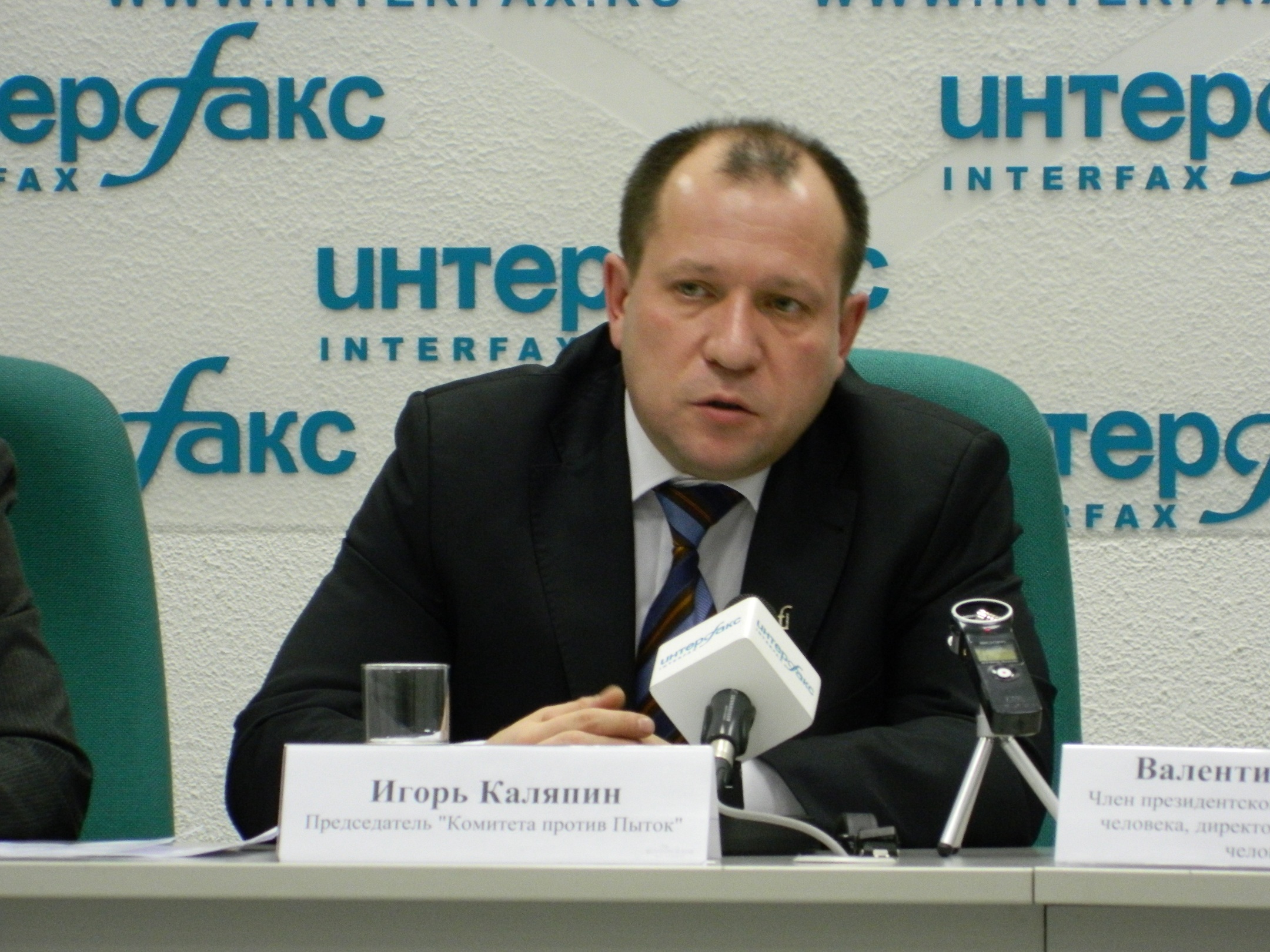
reports that on 22 April 2013 the Committee Against Torture (CAT) is the next NGO received a letter of warning from the local Prosecutor’s Office. The letter alleges that CAT is violating the controversial new ‘Foreign Agents’ Law, which states that any Russian NGO involved in political activity and receiving foreign funding must register as a foreign agent.
CAT processes complaints about torture and inhuman or degrading treatment, carries out public investigations, represents the victims’ interests in court and before investigative bodies, and provides assistance with obtaining compensation. The letter from the Prosecutor’s Office states that CAT receives funds from sources outside of Russia, information which is freely available on CAT’s website. The letter also states that CAT has taken part in certain public events, unidentified in the letter, which the authorities consider to be political. According to the authorities, therefore, CAT should have registered as a foreign agent. Read the rest of this entry »
This video accompanies a new 78-page report, “Laws of Attrition: Crackdown on Russia’s Civil Society after Putin’s Return to the Presidency, which describes some of the changes since Putin returned to the presidency in May 2012. The authorities have introduced a series of restrictive laws, begun a nationwide campaign of invasive inspections of nongovernmental organizations, harassed, intimidated, and – in a number of cases – imprisoned political activists, and sought to cast government critics as clandestine enemies. The report analyzes the new laws, including the so-called “foreign agents” law, the treason law, and the assembly law, and documents how they have been used. Many of the new laws and the treatment of civil society violate Russia’s international human rights commitments, Human Rights Watch said.
In spite of protests by many NGOs and Governments around the world (including earlier posts in this blog), Russia seems bent on pursuing its idea of requiring all organisations which receive foreign funding and are engaged in political activity to register as ‘foreign agents’ [‘Foreign Agents’ Law of 21 November 2012] . After the passing of the law, GOLOS, Memorial and the Joint Mobile Group (just made the Final Nominee of the MEA 2013) and many other organisations declared that out of principle they would not register as ‘foreign agent’.
Yesterday, 25 April 2013, the Russian election watchdog GOLOS became the first NGO to be fined. The decision was taken by the Presnensky Court of Moscow. GOLOS is a Russian non-profit organisation which was founded in 2000 for the protection of voters’ rights and the development of civil society. The court found that GOLOS had been receiving foreign funding, thereby implying that it considered the 2012 Andrei Sakharov Freedom Award as such, despite testimony given by a representative of Norwegian Helsinki Committee who confirmed that GOLOS actually refused to receive the 7700$. The court also found that the advocacy work of GOLOS aimed at the introduction of amendments to the Electoral Code constitute ‘political activity’. The law does not define political activity, the precise definition of which depends on state officials’ interpretation. The court ruled that GOLOS and its executive director Lilya Shibanova failed to comply with the obligation to register as a ‘foreign agent’ and fined them 300,000 roubles (approximately €7500) and 100,000 roubles (approximately €2500) respectively. They intend to appeal the decision.
And on 24 April Front Line Defenders reported that the Russian NGO ‘Man and the Law’ has been warned under the same Foreign Agents Law. Man and the Law, which is based in the Mari-El Republic in Russia, received a warning from the local Prosecutor’s Office re ‘political activity’, evidence for which has allegedly been found in their Charter and on their website. Man and the Law is a local non-governmental organisation which monitors local officials’ and civil servants’ compliance with human rights standards. The NGO also works on prisoners’ rights and monitors detention facilities and organises seminars and workshops for local officials, especially from the Federal Penitentiary Service. The warning also states that the latest inspection of the organisation revealed foreign sources of funding, in which case Man and the Law should have registered as a foreign agent.
The Martin Ennals Jury just announced today (at 11h00 local time) the three Final Nominees for the Martin Ennals Award 2013. The MEA is the main award of the whole human rights movement thanks to its international Jury composed of 10 well-known human rights organisations (see below). The aim of the award is to provide protective publicity. The Final Nominees are:
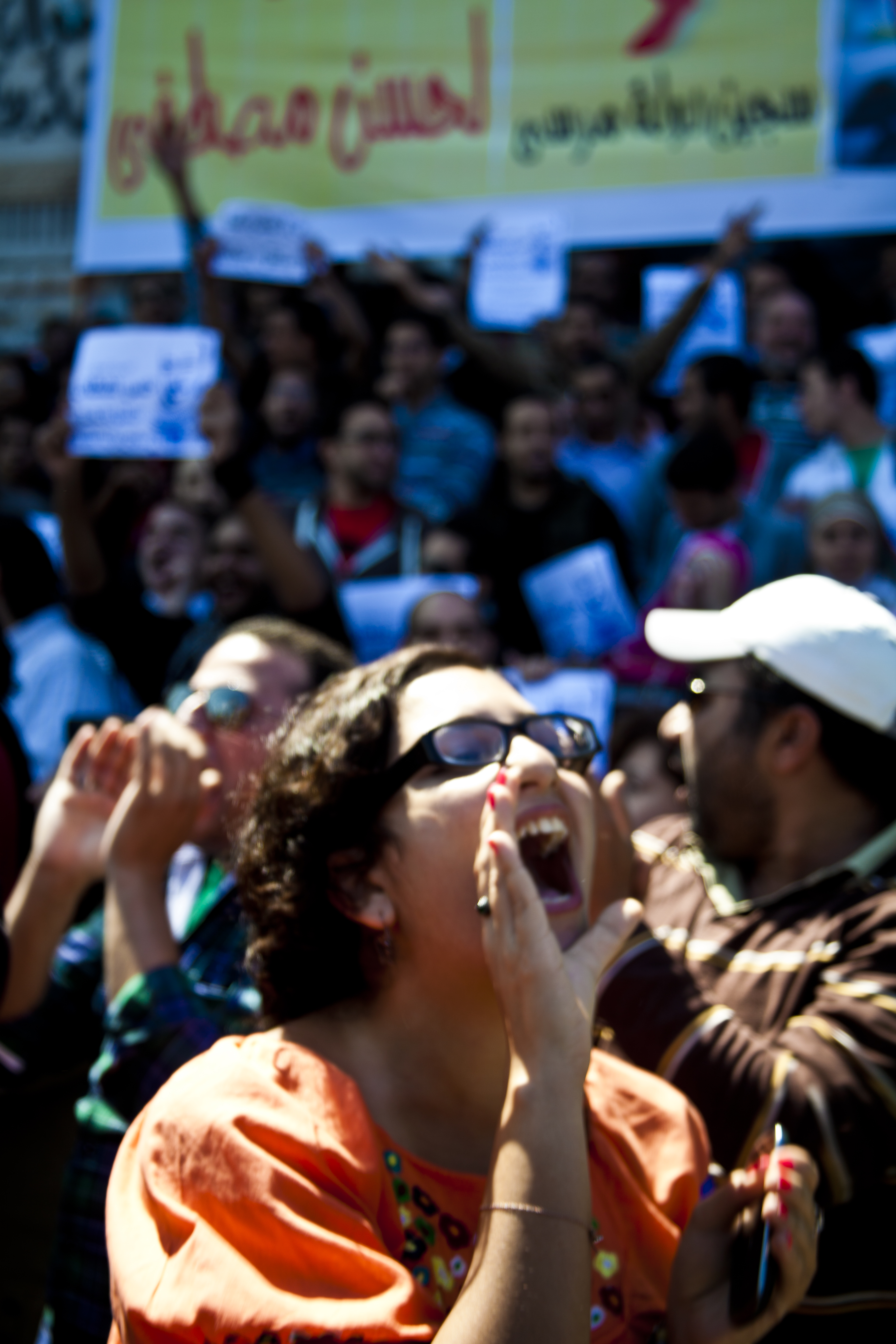
Mona Seif, Egypt – Final Nominee MEA 2013
Mona Seif, Egypt: Core founder of the ”No To Military Trials for Civilians”, a grassroots initiative which is trying to stop military trials for civilians. Since February 2011, Mona has brought together activists, lawyers, victims’ families,local stakeholders and started a nationwide movement against military trials. As part of the recent crackdown on the freedom of speech in Egypt she has been charged along with other Human Rights activists. She noted that “International solidarity, and I mean people’s support not governments’, empowers us to continue our battle and stop military trials for civilians“.
I have expressed concern in earlier posts about the efforts of several governments – especially Russia – who use legal and administrative means to stop or restrict the work of NGOs. Russia uses the gimmick of requiring NGOs that receive funding from abroad to register as ‘foreign agents’. Many organisations have vowed to refuse. The campaign however grinds on and now Front Line reports the first case:
On 9 April 2013, the Ministry of Justice of the Russian Federation opened a case of administrative violation against the NGO ‘GOLOS’ Association for the defence of the rights of voters and its executive director Ms Lilya Shibanova. The Ministry of Justice stated on its official website that GOLOS receives foreign funding and participates in political activity, so the organisation should have registered as a ‘foreign agent’ and, by failing to do so, has infringed Article 19.34(1). On 10 April 2013, the Ministry of Justice will transmit the administrative case against GOLOS to the court. As GOLOS and its executive director have already made public their decision not to register as ‘foreign agent’ under any circumstances, the administrative conviction may be the first step to the closure of the organisation. Read the rest of this entry »
I have reported extensively over the last days on the question of growing judicial and administrative harassment of NGOs and human rights defenders, including the adoption of a resolution last week by the UN Human Rights Council recalling that “domestic law and administrative provisions […] should facilitate the work of human rights defenders, including by avoiding any criminalization, stigmatization, impediments, obstructions or restrictions thereof contrary to international human rights law”. Still, this is exactly what the Russian Federation is doing at the moment according to a statement by the Observatory for the Protection of Human Rights Defenders: Hundreds of NGOs are being subjected to inspections by Government officials across the Russian Federation. This follows the adoption in 2012 of several laws contradicting the right to freedom of association, peaceful assembly and expression. …Since the end of February until today, dozens of inspections of NGOs have been launched in at least 13 regions of the Russian Federation, including Krasnodar, Moscow, Orenburg, Penza, Perm and Altai territories, St. Petersburg, Primorsky, Saratov and Rostov provinces. In St. Petersburg, the Spokesperson for the Office of the Prosecutor declared on March 19, 2013 that over the month some 5,000 inspections would be conducted to check compliance with the laws on terrorism, extremism as well as other offences. After this date, dozens of NGOs were inspected in St. Petersburg, including LGBT, human rights and environmental NGOs. Across the country, these operations have been conducted by prosecutors, together with, in some cases, officials from the Ministry of Justice, the Ministry of Internal Affairs, the Federal Security Service FSB, the Ministry of Emergencies, the Federal Service for Supervision of Protection of Consumer Rights and Human Well-Being, the Tax Inspectorate, the Centre E, a unit specialised in anti-extremism, and even the fire service. According to the information received, inspections have particularly targeted groups that supposedly receive foreign funding and conduct monitoring or advocacy work. The scope of the inspections appears to be far-ranging, though inspectors have particularly insisted on the issue of funding. The massive character as well as methods used during inspections disproportionately interfere with the right to freedom of association: the number of inspections is massive, most inspections are unannounced, NGOs have been given short deadlines to provide a huge amount of documents and vague and non-exhaustive lists of requirements. In the case of prominent NGO Human Rights Centre “Memorial”, a pro-government TV crew was informed and present during the inspection. The news report entitled “Memorial hides its income from the Prosecutors Office” was broadcast the same day before the end of the inspection, in flagrant violation of the presumption of innocence. “Information on NGOs sources of funding are public. Read the rest of this entry »
I reported earlier that on 28 February the International Federation for Human Rights (FIDH) and the World Organisation Against Torture (OMCT), in the framework of their joint programme the Observatory for the Protection of Human Rights Defenders, organised a meeting on (legal) restrictions increasingly imposed on human rights defenders. This was followed up on 11 March with an oral intervention at the UN Human Rights Council.
The statement referred to the recently published Annual Report 2013 of the Observatory, which states that NGOs’ access to funding, in particular foreign funding, is increasingly being hindered by governments around the world. Restrictive laws combined with unfounded criticism, smear campaigns and judicial harassment directed against human rights defenders because of the source of their funding create a hostile environment towards their activities as a way to silence them. Belarusian law now prohibits any possibility for an NGO to hold a bank account in an institution based abroad, and criminalises the use of so-called unauthorised funds. These new provisions were adopted as FIDH Vice-President and “Viasna” President Ales Bialiatski was sentenced to 4.5 years’ imprisonment after he made use of foreign funds to finance human rights activities in his country. Read the rest of this entry »
On Thursday 7 March 2013 will take place “The Human Voices of Freedom – Securing Human Rights Online” event: a panel discussion and interactive webcast with human rights activists from across the globe at the Human Rights Council, highlighting the importance of protecting freedom of expression on-line. This public event, sponsored by the U.S. Mission to the UN, is to take place from on 7 March from 1pm to 3pm in room XXIII/United Nations Office at Geneva.
The Internet Freedom Fellows program brings human rights activists from across the globe to Geneva, Washington, DC, and Silicon Valley to meet with fellow activists, U.S. and international government leaders, and members of civil society and the private sector engaged in technology and human rights. This year’s Internet Freedom Fellows are human rights activists and active practitioners of digital media from China, Russia, Ghana, Nigeria and Sudan.
Please note: Registration is only required for those attendees who do not hold a United Nations badge.





 Hans Thoolen on Human Rights Defenders and their awards