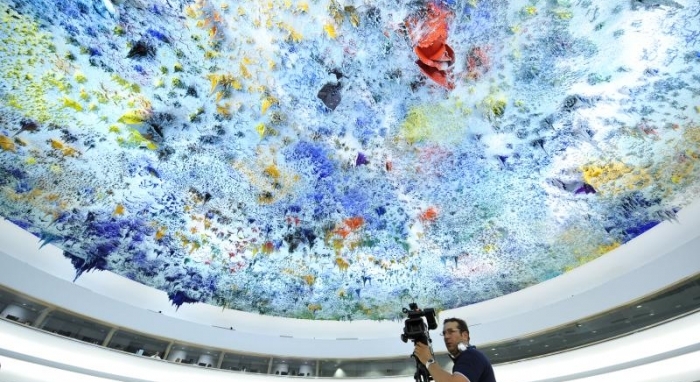
In two statements delivered to the 40th Session of the Human Rights Council, ISHR and Amnesty International reacted to the latest Joint Communications Report of the UN Special Procedures – independent human rights experts, appointed to monitor and report on human rights violations and to advise and assist in promoting and protecting rights. The report cites nine cases of reprisals against human rights defenders cooperating with the UN, and reveals that 95 states have not responded to letters from the UN experts concerning human rights violations.
There are two, related issues at stake here: (1) non-response to letters from the UN, and even worse (2) reprisals against human rights defenders who cooperate with the UN.
As Helen Nolan of ISHR explains, 35 States have recently failed to respond to two or more of these letters. 13 of these nations are members of the Council. ‘Repeat offenders are a particular concern,’ says Nolan. ‘India has failed to reply to a staggering 8 communications, Mexico 6, Italy 5, and Bangladesh and Nepal 4 each.’ Nolan emphasises that a failure to reply is a failure to cooperate, and welcomes the fact that the recently published report of the Annual Meeting of Special Procedures focuses on non-cooperation, including ‘more subtle forms’, such as selective cooperation with particular mandates. ‘To encourage cooperation, the Council must make non-cooperation more costly,’ says Nolan. ‘We urge the President of the Council to work closely with the Coordinating Committee of the Special Procedures to find ways to do this,‘ adds Nolan.
ISHR and Amnesty International’s second statement noted that under GA Resolution 60/251, Council members must ‘fully cooperate with the Council.’ Yet, the report cites nine cases of reprisals involving these members:
China sought to revoke the Society for Threatened Peoples’ ECOSOC status after vexatiously alleging that a person accredited by them, Dolkun Isa, participated in incitement and funding of separatism and terrorism, in retaliation for cooperation with the UN;
Egypt carried out forced evictions, and violations of the rights to physical integrity, liberty and security against individuals who cooperated with the Special Rapporteur on the right to adequate housing during her recent visit;
Iraq carried out unlawful arrest, enforced disappearance and torture against Imad Al Tamimi and intimidated and threatened Israa Al Dujaili for cooperating with the UN;
Libya arrested an individual in retaliation for taking steps to clarify the fate and whereabouts of his father, including with UN mechanisms;
The Philippines labeled defenders “terrorists” in reprisal for their engagement with the UN;
Russia surveilled, intimidated and harassed Yana Tannagasheva and her husband, for speaking out about impacts of coal mining on indigenous people in Siberia and in possible reprisal for their communication with UN mechanisms;
Turkmenistan carried out reprisals against a defender and her husband for her cooperation with the UN; and
In Yemen, forces loyal to President Hadi and the Saudi-led coalition detained human rights defenders Radhya Al-Mutawakel and Abdulrasheed Al-Faqih for cooperating with the UN.
For details about the arrest, please see the link below to HRW
AnEU spokesperson on 19 March stated:
“We believe that the sentencing of Oyub Titiev is directly connected to his human rights work for Memorial, an organisation that has been the subject of ongoing intimidation and harassment in the North Caucasus and beyond. We also believe that Mr Titiev has not received a fair trial. His sentencing continues a trend of arrests, attacks and discrediting of human rights defenders and journalists who work in that region of the Russian Federation. Mr Titiev’s predecessor as head of Memorial in Chechnya, Ms Natalia Estemirova, was killed in 2009 and, almost ten years later, not a single person has yet been brought to justice for this crime,”.
“The European Union expects Mr Titiev to be released immediately and unconditionally. The Russian Federation freely entered into commitments, first in Helsinki in 1975 and later in Copenhagen in 1990, to ensure “the right of everyone, individually or in association with others, to seek, receive and impart freely views and information on human rights and fundamental freedoms, including the rights to disseminate and publish such views and information.” We expect these commitments to be upheld”.
he Russian authorities have for the first time used the repressive “undesirable organizations” law to open a criminal case against human rights defender Anastasia Shevchenko, exposing her to the risk of a six-year prison term. Until now, violations of this law were punished under administrative law.
This morning Anastasia Shevchenko, a Coordinator with the Otkrytaya Rossiya (Open Russia) movement, was charged with “repeated participation in the activities of an undesirable organization.” “In recent years, the Russian authorities have progressively suffocated and criminalized dissent. The Open Russia movement has become the latest victim of this crackdown,” said Marie Struthers, Director for Eastern Europe and Central Asia at AI.
It’s clear that the authorities are expanding their toolkit for imprisoning human rights defenders and activists, so if applied broadly this practice will have far-reaching implications for the right to freedom of expression.”In recent days, police have opened criminal investigations, conducted searches and arrests of Open Russia’s activists across the country. [see also my older post: https://humanrightsdefenders.blog/2015/05/21/russia-human-rights-ngos-likely-to-become-officially-undesirable/]
Background: On 17 January, Open Russia Coordinator in Pskov Liya Milushkina and her husband Artyom Milushkin were arrested and accused of selling drugs, an offense punishable by up to 20 years’ imprisonment. Artyom, who is also a political activist, previously reported that police officers threatened to plant drugs on him during his recent arrest in November. Amnesty International has interviewed several associates of the Milushkins all of whom are adamant that the criminal case against the couple is fabricated. Amnesty International has documented a number of cases in which activists in Russia have been prosecuted on trumped-up drug charges, including human rights defender Oyub Titiev who is currently standing trial in Chechnya. On 18 January, police filed a case against Open Russia Coordinator in Krasnodar Yana Antonova for posting a video about the shortage of schools in the region. She was charged with “participation in the activities of an undesirable organization”, an administrative offence when “committed” for the first time.
Many organizations have bid farewell to Ludmila Alexeeva, the doyenne of Russia’s human rights movement, who died on December 8 in Moscow. Here the In Memoriam by Human Rights Watch:
She will forever be a towering figure for human rights activists everywhere: a clear, moral voice for freedom and dignity. Ludmila gave her energy and her soul to many cases and issues, from the persecution of ordinary people, to civilian carnage in the war in Chechnya, to the Kremlin’s crackdown on civil society that gathered speed as Vladimir Putin’s presidency wore on. She spoke simply, but powerfully. While she was always kind and compassionate, she was not to be trifled with. She refused to sacrifice her dignity to Soviet power and refused to allow the current autocratic Kremlin to dictate terms to her.
In an interview in 2011 with Human Rights Watch, Ludmila described her work as “…Pressing the government to solve the problems at hand. If there is a heavy price to pay for this, then I’ll pay it. It’s more important than lying and obeying out of fear.” In the 1960s Ludmila was part of the Soviet dissident movement. In 1976, she co-founded the Moscow Helsinki Group, and fought for the freedom of imprisoned dissidents. The Soviet government did not long tolerate the Moscow Helsinki Group, arresting and exiling many of its members. In 1977, the Soviet government forced Ludmila into exile, to the United States. In 1993 Ludmila moved back to Russia, and in 1996 became chair of the Moscow Helsinki Group, presiding over the group’s re-invigoration and expansion.
Well into her 80’s Ludmila was unstoppable, observing trials, participating in peaceful public assemblies – even getting detained at one, on New Year’s Eve, while dressed in a snow queen costume. She traveled widely, within Russia and beyond, to promote fundamental freedoms, continuing to inspire new generations of human rights defenders at home. …
Ludmila Alexeeva
She was a formative part of Human Rights Watch’s creation: in 1978, a group of writers, publishers and activists formed to galvanize support in the US and Europe for the Moscow Helsinki Group and Soviet dissidents. That group was Helsinki Watch, which later grew into Human Rights Watch. We send our deepest condolences to Ludmila’s family and colleagues. We will miss you terribly, Ludmila Mikhailovna. Ludmila’s funeral will be held in Moscow on December 11, just after the world marks International Human Rights Day.
Quite remarkable is that according to CryptoCoin Russian President Vladimir Putin also paid tribute, according to his spokesperson, to the work of the late human rights activist Lyudmila Alexeyeva. “The President appreciates the contribution made by Lyudmila Alexeyeva for the development of civil society in Russia,” said Putin’s Confidant, Dmitry Peskov, the Agency Interfax according to. He respects your positions on many issues of the country. Putin had also sent a personal letter of Condolences to the family of Kremlin critic”. [http://www.ccdiscovery.com/vanessa-ponce-de-leon-to-be-crowned-miss-world-2018]
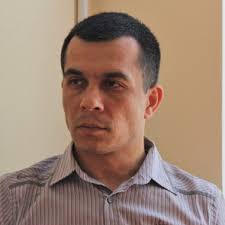
esponding to the news that Crimean lawyer Emil Kurbedinovwas detained by the de-facto authorities in Russian-occupied Crimea and is now facing charges for a Facebook post he made five years ago, Marie Struthers, Amnesty International’s Director for Eastern Europe and Central Asia said: “Following yesterday’s arrest of prominent human rights defender Lev Ponomarev in Moscow, the detention of Emil Kurbedinov is the second time in two days that a human rights defender has been thrown behind bars over a Facebook post….The similarities of these two cases are obvious, even if they are not directly related. Both men are prominent members of the human rights community and both have been deliberately targeted by Russian authorities for this very reason. See also:
Background: Emil Kurbedinov, a human rights defender and lawyer for a number of Crimean Tatar activists prosecuted by the Russian authorities, was detained on 6 December by Russian Interior Ministry officers on his way from home to his office in the Crimean capital Simferopol. He faces charges under the Russian law forbidding “propaganda or public demonstration of Nazi or other extremist attributes or symbols”, on account of his 2013 Facebook post on a Hizb ut-Tahrir event in Simferopol published a year before Russia occupied the peninsula. A number of groups and organizations which legally exist in Ukraine, including Hizb ut-Tahrir, are banned in Russia. On 5 December, a court in Moscow sentenced 77-year-old human rights activist Lev Ponomarev to 25 days in administrative detention for a Facebook post.
“Through his courage and determination, by putting his life in danger, the filmmaker Oleg Sentsov has become a symbol of the struggle for the release of political prisoners held in Russia and around the world,” European Parliament President Antonio Tajani said.
Sentsov, is serving a 20-year sentence in a Russian penal colony north of the Arctic Circle. The 42-year-old was convicted of an alleged arson plot in Crimea, which Russia annexed from Ukraine in 2014 and triggered sanctions from the European Union.
Sentsov’s cousin Natalya Kaplan, who lives in the Ukrainian capital Kiev, said she hopes the prize will raise his morale when he finally hears about it. “I hope (this) will help Oleg to further stay strong and of course I am happy for him. He deserved this,” Kaplan told AFP in written remarks.
Sentsov started a hunger strike on May 14 demanding the release of all Ukrainian prisoners in Russia, and his deteriorating health provoked an outcry from the international community. Sentsov called off the protest after 145 days to avoid being force-fed.
The sixth Václav Havel Human Rights Prize– which honours outstanding civil society action in defence of human rights – has been awarded to the head of the Grozny office of the Memorial Human Rights Center in Chechyna, Oyub Titiev (Russian Federation). The prize was presented at a special ceremony on 8 October 2018 at the Palais de l’Europe in Strasbourg, on the opening day of the autumn plenary session of the Parliamentary Assembly of the Council of Europe (PACE).[see: https://humanrightsdefenders.blog/2018/01/15/chechen-human-rights-defender-oyub-titiev-arrested-on-trumped-up-charges/ ]
Oyub Titiev, in detention since January 2018, is a prominent human rights defender and head of the Grozny office of the Memorial Human Rights Center in Chechyna. In this capacity, Mr Titiev succeeded Natalia Estemirova, murdered in 2009, and has made a widely recognised contribution to the defence of human rights in the region by reporting on abuses by the local authorities. Mr Titiev being in detention, the prize was presented to Aleksandr Cherkasov, Chairman of the Memorial Human Rights Centre Board.
“We are fully aware of the difficulties that Mr Titiev and his colleagues face. This prize is a recognition of the work he and Memorial are doing,” the PACE President said. “It is also a message to all those who work in this region to affirm the principles of the rule of law and human rights. Keep up the good work, you can count on our support,“ Liliane Maury Pasquier added.
Rights Activist Binalakshmi Nepram Wins Anna Politkovskaya Award
Reach All Women in War (RAW in WAR) has decided to honour Binalakshmi Nepram and Svetlana Alexievich with the prestigious 2018 Anna Politkovskaya Award for their bravery in speaking out against injustice, violence and extremism, especially for their role in their respective conflict-ridden and yet ‘forgotten’ domicile regions of Manipur and Belarus. For more on the award: http://trueheroesfilms.org/thedigest/awards/anna-politkovskaya-award
Anna Politkovskaya was assassinated on 7 October, 2006. credit: twitter
Nepram is the founder of the Manipur Women Gun Survivors Network which has helped more than 20,000 female survivors of gun violence rebuild their lives and strive for justice. Binalakshmi Nepram is a writer from the Manipur. A human rights defender on the Indo-Myanmar border, she believes that returning to India would endanger her life. She fears that she could meet the same fate as Gauri Lankesh, a well-known journalist and co-winner of the 2017 Anna Politkovskaya Award. Last year Lankesh was gunned down in Bengaluru for speaking out against religious extremism and violence in India.[see: https://humanrightsdefenders.blog/2017/10/06/gauri-lankesh-and-gulalai-ismail-win-2017-anna-politkovskaya-award/]
In 2015, Svetlana Alexievich received the Nobel Prize in Literature for her body of work primarily centred around oral histories of victims of wars and catastrophes. Alexievich has been relentlessly exposing the injustices in post-Soviet Union Russia and other regions facing the threat of Russian aggression. Alexievich has repeatedly criticised the Russian annexation of Crimea as well as Ukraine’s growing nationalism, which has rendered her vulnerable to threats from both Russian and Ukrainian nationalists.
Svetlena Alexievich. credit: reuters
Responding to the RAW in WAR’s decision to honour her, Alexievich said: “My friends and I, we are all trying to resist the all-consuming grey gloom that surrounds us today, but our efforts are not visible!! But in order to remain true to ourselves, we continue to do our little bit all the same. Thank you for your support.”
The awards will be presented to the winners in March 2019 in London at RAW in WAR’s ‘Refusing to be Silenced’ event, which is part of the 2019 Women of the World Festivalat the London’s Southbank Centre.
Russian President Vladimir Putin (L) Indian Prime Minister Narendra Modi (C) and Turkish President Recep Erdogan (R) interact during a family photo during the BRICS summit meeting in Johannesburg, South Africa, 27 July 2018. EPA-EFE/GIANLUIGI GUERCIA / POO
As they met in Johannesburg last week, BRICS leaders focused on the economy, development, peacekeeping, health and industrialisation issues within the bloc (accounting for 40% of the world’s population). However, equally important issues such as the protection and realisation of human rights in the respective countries remained off the agenda. Jennifer Wells, an intern with AI South Africa, on 30 July 2018, gave a useful reminder of what could and should have been also addressed:
Brazil
Brazil has one of the highest murder rates in the world, with around 60,000 people murdered each year…Brazil’s failure to protect black Brazilians from police violence remains critical as this year marks the 25th anniversary of the Candelaria killings. The tragedy, in which eight young black boys were killed by off-duty police officers in Rio de Janeiro in 1993, represents the endemic racism within the Brazilian security forces. The situation was aggravated by the murder of Rio de Janeiro human rights defender and councilwoman Marielle Franco on 14 March 2018. [https://humanrightsdefenders.blog/2018/03/16/marielle-franco-38-year-old-human-rights-defender-and-city-councilor-of-rio-assassinated/]
Russia
…human rights defenders and civil society activists continued to face harassment, intimidation and arbitrary arrests across the country. The trial of human rights defender Oyub Titiev started in Chechnya. He, like several other human rights defenders, is being prosecuted on trumped-up criminal charges. Law enforcement agencies continue to launch cases on fabricated “extremism” and “terrorism” charges. [https://humanrightsdefenders.blog/2018/01/15/chechen-human-rights-defender-oyub-titiev-arrested-on-trumped-up-charges/] The Ukrainian film director Oleg Sentsov, serving 20 years on “terrorism” charges, is on day 75 of a hunger strike demanding the release of “64 political prisoners from Ukraine”. The right to freedom of peaceful assembly has been increasingly restricted in Russia since 2012 and remains under severe clampdown. …. The rights of LGBTI people are trampled upon daily and the authorities continue to refuse to investigate the horrific gay purge in Chechnya. The World Cup has come and gone, but the suppression of freedoms and shrinking of civil liberties continues unabated.
India
It’s a similar story in India where human rights defenders are consistently under threat, attacked and threatened, often from security forces. India has witnessed horrific instances of alleged extrajudicial executions by security forces for years as police and federal forces have effective immunity from prosecution. In the North-Eastern state of Manipur, human rights defenders who have lost their loved ones in alleged extrajudicial executions and are now campaigning for justice, face unprecedented attacks. Salima Memcha, a widow who lost her husband to an alleged extrajudicial execution, was verbally threatened by security personnel. Her house was also vandalised by them. Three other human rights defenders in Manipur have faced similar reprisals for campaigning for justice for their loved ones.
China
In China, the government continues to enact repressive laws under the guise of “national security” that present serious threats to human rights. Nobel Peace Prize laureate Liu Xiaobodied in custody whilst other human rights defenders are detained, prosecuted and sentenced on vague charges such as “subverting state power”, “separatism” and “picking quarrels and provoking trouble”. Controls on the internet have been strengthened and freedom of expression and freedom of association are under attack.[see also:https://humanrightsdefenders.blog/2018/04/12/how-china-extracts-televised-confessions-from-human-rights-defenders/]
South Africa
In the host nation, nearly a quarter of century after adopting arguably one of the most progressive constitutions in the world, the country is bedevilled by profound inequalities, which persistently undermine economic, social and cultural rights. Failures in the criminal justice system continue to present barriers to justice for victims of human rights abuses and violations, including the state’s failure to hold perpetrators accountable for the killing of 34 striking mineworkers in Marikana in 2012 by the South African Police Service. Access to sexual and reproductive health services remain a human rights issue as does the provision of quality education.
Nepram is the founder of the Manipur Women Gun Survivors Network which has helped more than 20,000 female survivors of gun violence rebuild their lives and strive for justice. Binalakshmi Nepram is a writer from the Manipur. A human rights defender on the Indo-Myanmar border, she believes that returning to India would endanger her life. She fears that she could meet the same fate as Gauri Lankesh, a well-known journalist and co-winner of the 2017 Anna Politkovskaya Award. Last year Lankesh was gunned down in Bengaluru for speaking out against religious extremism and violence in India.[see: https://humanrightsdefenders.blog/2017/10/06/gauri-lankesh-and-gulalai-ismail-win-2017-anna-politkovskaya-award/]