Posts Tagged ‘rights of women’

Global Alliance of National Human Rights Institutions – annual meeting 2025

March 21, 2025

Οn 12 March 2025 the United Nations High Commissioner for Human Rights Volker Türk addressed the Annual Meeting of the Global Alliance of National Human Rights Institutions

…Our partnership is especially crucial today, when the international system and the global consensus on human rights are under tremendous pressure. Across all regions, we see attempts to ignore, undermine and redefine human rights, to pit one right against another.

Women’s rights are one such example. 

The history of women’s rights has always been one of ebbs and flows. There have been incredibly important advances – universal suffrage, the right to work, property, inheritance, and economic rights – followed by setbacks. 

It has never been a straight path, but there has been progress overall. And the setbacks are temporary, because you cannot turn back the clock on gender equality and on the rights of women and girls. Even if there are those who loudly will try do so, you cannot. 

What is clear is that we cannot take anything for granted and must never be complacent.

Today, among other examples, the challenges include online and offline violence against women and girls, arbitrary limits to sexual and reproductive health and rights, resurgent toxic ideas about masculinity, especially among young men. 

Then there are the extreme cases of oppression and persecution of women such as in Afghanistan and parts of Yemen. 

Amidst all of this, against tremendous odds, and at great personal cost, women human rights defenders have remained steadfast in pushing for gender equality for women everywhere. 

More broadly, despite progress over decades, women still go unrecognized and ignored in many areas of life. 

In a world largely built by men, for men, the gender data gap persists. We need to address the invisibility of women on the data front. For example, women are still largely overlooked when it comes to science, healthcare, and the development of new technologies. According to Harvard University, 70 percent of the people impacted by chronic pain are women. And yet, 80 percent of pain studies are conducted on male mice, or on men.

For women with disabilities, women of African descent, indigenous women and other minorities, the disparities are even greater. For example, there is a 2:1 gender gap in internet access in favour of men with disabilities compared to women with disabilities.

Nearly 60 percent of women’s employment globally is in the informal economy, but the value of that work is often excluded from economic indicators. Women’s productivity and contributions are not captured or valued. And the COVID-19 pandemic made it clear that economies depend on women’s unpaid care work. 

There is a high risk that women will continue to be invisible as an overwhelmingly male generation of engineers develop AI systems and other new technologies.

Women and girls face entrenched discrimination, perpetuated by harmful power dynamics that subjugate and oppress half the world’s population.

Unless we dismantle structural inequalities piece by piece; and until we have full gender parity and equality, women’s rights will be vulnerable to fierce pushback and even manipulation.

The primary duty to promote and protect the rights of women and girls rests with States, in line with international human rights law.

But everyone in society – companies, including social media companies, civil society organisations, and national human rights institutions – has a role to play, and a stake in this issue. 

So much of the progress on women’s rights has been due to mobilisation at the national level. You are the best examples of that.

For example, painstaking advocacy by women human rights defenders led to the adoption of laws and policies on violence against women in a number of countries.

The private sector is working in collaboration with Governments to help to close the gender pay gap in a number of other countries.

These examples of success can inspire communities in other regions, inform international standards and improve the situation for women everywhere. 

As national human rights institutions, your role in promoting and protecting human rights is key. You are uniquely placed as advocates of international law and experts on the national context. 

Human rights are about facts. That is why our work to monitor and report on gender equality at the national level is crucial for legal and policy reform. You can also come up with creative new ideas on how to make women visible in data. 

Human rights are about the law. The right of women, in all their diversity, to have an equal say in all decisions that shape their societies, economies, and futures, is non-negotiable. Your advocacy for full gender parity across all policy areas, from economics to climate, from the design and roll-out of digital technologies to peace negotiations, can help make that law a lived reality on the ground. There are myriad examples within your own work of how to do that.

Within your institutions, you can lead by example by setting a high standard of gender parity and ensuring gender equality in staffing at all levels.

And human rights are about compassion – the glue that unites us in our common humanity. With our societies so divided, we need urgently open spaces for dialogue and joint action by different constituencies who may not always agree: Governments, companies, civil society, religious and faith leaders.  You are uniquely placed to build that space and bring various communities together in a public space for open debate and dialogue.

—-

The UNDP Administrator Achim Steiner participated via videolink.

https://www.ohchr.org/en/statements-and-speeches/2025/03/hc-turk-addresses-global-alliance-national-human-rights

https://www.undp.org/speeches/statement-high-level-opening-ganhri-annual-conference-2025

Human rights defender’s profile: Elham Kohistani, from Afghanistan

June 5, 2024

On 3 June 2024, ISHR published Human rights defender’s story: Elham Kohistani, from Afghanistan

Elham Kohistani is a human rights defender from Afghanistan. Having witnessed successive governments trample human rights in her country since her childhood, she has dedicated her life to fighting for the basic rights of women and girls.

In an interview with ISHR, Elham spoke about her hopes for the future of Afghanistan, urging the international community to continue supporting human rights defenders in the long term to achieve peace and prosperity.

Stand in solidarity with Elham and other women human rights defenders (WHRDs) from Afghanistan: join us in our campaign to push for UN experts and States to explicitly and publicly recognise the situation in Afghanistan as a form of gender apartheid and the need for an accountability mechanism to address gross human rights violations against women.

https://ishr.ch/defender-stories/human-rights-defenders-story-elham-kohistani-from-afghanistan

Acquittal of activist Vanessa Mendoza Cortés on defamation charges in Andorra

January 19, 2024

The acquittal of abortion rights activist, Vanessa Mendoza Cortés, on defamation charges is an important victory, but she should never have been charged in the first place, said Amnesty International following a court decision. [see: https://humanrightsdefenders.blog/2020/11/16/andorra-should-drop-charges-against-woman-human-rights-defender-vanessa-mendoza/]

In a joint public statement with the Centre for Reproductive Rights, Women’s Link Worldwide and Front Line Defenders the organisations welcome today’s decision acquitting Vanessa Mendoza Cortés and remind the authorities that she should face no further intimidation or reprisals for carrying out her important and legitimate human rights work.

Today’s acquittal upholds Vanessa Mendoza Cortés’ right to freedom of expression and affirms the legitimacy of the efforts of all those defending women’s rights and sexual and reproductive rights. However, Vanessa Mendoza Cortés has paid a high price for defending human rights. She has endured an unjust and protracted judicial process lasting more than four years. This has impinged on her crucial work and that of the organisation she represents.  

Vanessa Mendoza Cortés has paid a high price,  enduring an unjust and protracted judicial process lasting more than four years.

“We call on the Andorran authorities to publicly recognize the legitimacy of the human rights work carried out by Vanessa Mendoza Cortés. The authorities must take concrete measures to ensure she and other activists can defend the human rights of women and girls in Andorra, including the right to safe and legal abortion, without intimidation and fear of reprisals.

“Andorra should comply with its obligations to decriminalize abortion and make access to it safe and legal in the country.”

Vanessa Mendoza Cortés, President of the women’s rights organisation Stop Violence (Stop Violències), was charged with criminal defamation after voicing concerns about Andorra’s total abortion ban at a meeting of the United Nations Committee on the Elimination of Discrimination against Women (CEDAW) to examine the country’s record on women’s rights in 2019.

https://www.amnesty.org/en/latest/news/2024/01/andorra-acquittal-of-activist-who-raised-concerns-about-total-abortion-ban-at-a-un-meeting-an-important-victory/

Hülya Gülbahar receives Human Rights Tulip 2023

December 15, 2023

On 14 December 2023, the Netherlands Ministry of Foreign Affairs announced that the 2023 Human Rights Tulip has been awarded to Hülya Gülbahar, a feminist attorney from Türkiye and founder of the Equality Watch Women’s Group (EŞİTİZ) and the Women’s Platform for Equality Türkiye (EŞİK). Minister of Foreign Affairs Hanke Bruins Slot presented the prize on 14 December at a ceremony in the Peace Palace.

The winner of the Human Rights Tulip receives a bronze tulip and money that they can use to expand their human rights work in order to reach more people, in more places. For more about the Human Rights Tulip, see: https://www.trueheroesfilms.org/thedigest/awards/D749DB0F-1B84-4BE1-938B-0230D4E22144

In her speech, Ms Bruins Slot said: ‘Human rights are among the most important resources we have at our disposal to tackle the major problems of our time, such as war, poverty and climate change. ..The nominees for the Human Rights Tulip understand this at a profound level. Through their tireless efforts, these human rights defenders make a real difference for people and society.’

EŞİTİZ and EŞİK publish legal analyses of legislative bills and amendments on feminist and LGBTIQ+ issues, conduct awareness-raising campaigns (for example on the Istanbul Convention on preventing and combating violence against women and domestic violence) and promote social mobilisation by the Turkish feminist movement.

‘For more than 40 years,’ Ms Bruins Slot said, ‘Hülya Gülbahar has been defending women’s rights and fighting injustice in Türkiye. She does so using her extensive legal expertise and through her influential network, comprised primarily of women, which is too extensive to ignore. And she has been very successful at it.

Other finalists

The two other finalists for the 2023 Human Rights Tulip were:

  • Julienne Baseke is a journalist and human rights defender who fights for women’s rights in the Democratic Republic of the Congo (DRC). As a journalist, Ms Baseke founded the South Kivu Women’s Media Association (AFEM), which aims to enhance women’s visibility and participation in the DRC media.
  • Claudelice dos Santos is a human rights and environmental activist in the Amazon region. She is the founder of the Zé Claudio e Maria Institute, whose shelter and protection house provides a safe haven for indigenous land, environmental and human rights defenders.

https://www.einpresswire.com/article/675194232/h-lya-g-lbahar-receives-human-rights-tulip

Matiullah Wesa, Afghan human rights defender, released but what about the others?

October 30, 2023
FILE - Matiullah Wesa, a girls' education advocate, reads to students in the open area in Spin Boldak district in the southern Kandahar province of Afghanistan on May 21, 2022. The Taliban have freed the Afghan activist who campaigned for the education of girls, a local nonprofit organization said Thursday, Oct. 26, 2023. Wesa was arrested seven months ago and spent 215 days in prison, according to the group, Pen Path.
Matiullah Wesa, a girls’ education advocate, reads to students in the open area in Spin Boldak district in the southern Kandahar province of Afghanistan on May 21, 2022. Siddiqullah Khan/AP

On 26 October 2023 AP reported that the Taliban have freed an Afghan activist who campaigned for the education of girls. Matiullah Wesa was arrested seven months ago and spent 215 days in prison, according to the group, Pen Path.

The Special Rapporteur on Human Rights of the United Nations Human Rights Council, Rina Amiri,, has welcomed the release of Matiullah Wesa, the founder of the “Rah-e-Qalam” organization and an education activist, and has called for the freedom of all human rights defenders in Afghanistan. Richard Bennett, the Special Rapporteur on Human Rights of the United Nations, has requested the immediate and unconditional release of all individuals detained “arbitrarily for defending their rights and the rights of others.”

Ataullah Wesa, Matiullah’s brother, announced on his social media account that he had been released after 215 days. However, some human rights activists and well-known members of Afghan civil society remain in prison.

Amnesty International said that Wesa should never have been jailed for promoting girls’ rights to education.

The Taliban de-facto authorities must release human rights defenders and women protesters Rasool Parsi, Neda Parwani, Zholia Parsi and Manizha Sediqi and all others who are unfairly kept behind bars for standing up for equality and denouncing repression,” the rights group tweeted.

https://www.ourmidland.com/news/education/article/taliban-free-afghan-activist-arrested-7-months-18449253.php

https://www.ohchr.org/en/press-releases/2023/10/taliban-must-immediately-release-women-human-rights-defenders-say-un-experts

Sakharov Prize 2023: finalists announced

October 18, 2023

On 18 October, 2023 European Parliament published the names of the finalists of the European Parliament’s Sakharov Prize for Freedom of Thought. For more on this and other awards, see: https://www.trueheroesfilms.org/thedigest/awards/BDE3E41A-8706-42F1-A6C5-ECBBC4CDB449. The finalists were chosen in a vote by the foreign affairs and development committees on 12 October.

The 2023 Sakharov Prize finalists are:

  • 19 October: Parliament President Roberta Metsola and the political group leaders decide on the winner  
  • 13 December: the Sakharov Prize award ceremony takes place in Strasbourg.

2023 Sakharov Prize: finalists chosen

Jailed Iranian human rights defender Narges Mohammadi wins Nobel Peace Prize 2023

October 6, 2023

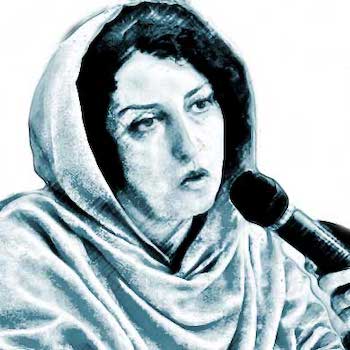
On 6 October, 2023, it was announced that imprisoned HRD Narges Mohammadi, who has campaigned for women’s rights, democracy and against the death penalty in Iran for years, has won the Nobel Peace Prize this year.

Mohammadi, 51, is one of the most recognised Human Rights Defenders in the world. She has received 8 major human rights awards according to THF’s digest of human rights awards [see: https://www.trueheroesfilms.org/thedigest/laureates/07C20809-99E2-BDC0-FDC3-E217FF91C126], but no media outlets got it right.

This prize is first and foremost a recognition of the very important work of a whole movement in Iran with with its undisputed leader, Nargis Mohammadi,” said Berit Reiss-Andersen, the chair of the Norwegian Nobel Committee who announced the prize in Oslo.

Mohammadi’s most recent incarceration began when she was detained in 2021 after she attended a memorial for a person killed in nationwide 2019 protests sparked by an increase in gasoline prices. She’s been held at Tehran’s notorious Evin Prison, whose inmates include those with Western ties and political prisoners. See also: https://humanrightsdefenders.blog/2016/09/30/iran-shameful-sentences-for-narges-mohammadi-issa-saharkhiz-arash-sadeghi-no-detente-in-human-rights/

Reiss-Andersen said Mohammadi has been imprisoned 13 times and convicted five times. In total, she has been sentenced to 31 years in prison.

She is the 19th woman to win the Nobel Peace Prize and the second Iranian woman, after human rights activist Shirin Ebadi won the award in 2003. [see: https://www.trueheroesfilms.org/thedigest/laureates/DCF78E6F-7015-4794-B6D9-1192BB84568C]

From behind bars, Mohammadi contributed an opinion piece for The New York Times. “What the government may not understand is that the more of us they lock up, the stronger we become,” she wrote.

https://apnews.com/article/nobel-peace-prize-oslo-776ca1bcf0fde827ad90af8a069907eb

https://www.abc.net.au/news/2023-10-06/nobel-peace-prize-2023-awarded-to-narges-mohammadi/102946290

https://www.cbc.ca/news/world/2023-nobel-peace-prize-1.6984334

https://edition.cnn.com/2023/10/06/middleeast/iran-narges-mohammadi-womens-rights-mime-intl-cmd/index.html

https://www.frontlinedefenders.org/en/profile/narges-mohammadi

https://www.usnews.com/news/us/articles/2023-10-06/un-expert-iran-is-unlawfully-detaining-human-rights-activists-including-new-nobel-peace-laureate

https://www.france24.com/en/live-news/20231007-nobel-winner-mohammadi-celebrates-prize-in-her-cell-family

and of course: https://www.iranintl.com/en/202310071010,

“The worthiest symbol of world peace was Qassem Soleimani,” declared the Foreign Minister of the Islamic Republic. Soleimani was a notorious military and intelligence operative who created and nursed various militant groups in the Middle East until he was killed in a US drone strike in 2020.

Meet Samreen, who is empowering women in India

October 3, 2023

In their series “Activists Up Close” the American Jewish World Service (AJWS) focuses on Samreen, who grew up in Lucknow, India, in a household where her mother wasn’t allowed to do anything without her father’s permission. But when her father passed away, Samreen began to question the patriarchal norms that ruled her family. When she connected with AJWS partner Sadbhavna Trust, her world opened entirely.

Sadbhavna Trust runs leadership workshops and job training for women and girls in Lucknow, creating a world in which early marriage is not their only option. Today, Samreen is one of the organization’s leaders, inspiring others to follow in her footsteps.

https://ajws.org/blog/activists-up-close-meet-samreen-whos-empowering-women-in-india-to-find-work-and-follow-their-dreams/

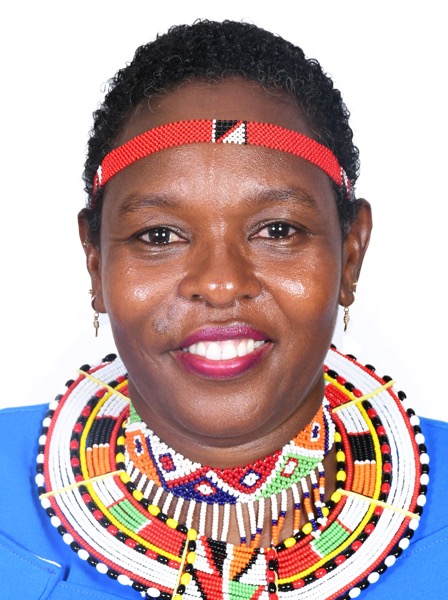
Human Rights Defender, Jane Naini Meriwas, from Kenya, defends the young women of the Samburu community

March 15, 2023

The regional NGO DefendDefenders highlights every month a “Human Rights Defender of the month”. In January 2023 it was Jane Naini Meriwas. Like many African societies, The Samburu community in Northern Kenya is a gerontocracy – a very hierarchical community in which elders hold sway over almost all private and public matters. Among these predominantly pastoral nomads, very little importance is attached to the young – especially young girls, who are barely given a chance at education and often married off before their first menstrual cycle, but not before they undergo mandatory Female Genital Mutilation (FGM).

It is in this community that Jane Naini Meriwas was born 46 years ago, in Kipsing village,  Oldonyiro Subcounty, Isiolo County. When she was 16, her mother passed on, and she watched with great trepidation as her father planned to marry another wife, not sure what that would mean for her or her ambitions for school. As it turned out, fate was on her side. When her father uncharacteristically asked what she thought of his plans, Jane seized the opportunity to stand up for herself and interests:

“I told him that if he wants to go ahead and remarry, he should give me my mother’s share of livestock to support my education since I know I would have no one looking out for me going forward,” says Meriwas. Simultaneously shocked and touched by his daughter’s candidness, Meriwas’ father decided to give the idea of remarrying more thought. By the time Meriwas returned home at the end of the school term, she found that her father had abandoned the idea altogether, and decided to support her to finish school. “I was surprised and elated in equal measure. It also encouraged me to always be confident and speak my mind, assured that I had a father who would always listen to me,” she says. At University, Meriwas studied Community Development, after which she worked with a catholic mission in her community. But her passion to empower more women in her community would not let her rest. “Issues like FGM, girl child beading, forceful abortion, early marriages, wife beating, were still holding my community back and I could not just pursue a personal career and pretend everything was right. I had to do something,” she says. Meriwas teamed up with five other women, with whom they would every month, organise groups of women and sensitise them to resist and push back against these harmful cultural practices. Overtime, they also started engaging with men, encouraging them to educate girl children, using Meriwas’ father as an example. Won over by his daughter’s dedication, Meriwas’ father would tag along to some of these meetings, to testify on the benefits of educating a girl-child. “From a reluctant patriarchal man, he had become a champion of girl-child empowerment,” says Meriwas.Jane Naini Meriwas

Encouraged by the growing consciousness and awareness her and her colleagues’ efforts were igniting in her community, Meriwas, in 2006 resigned her formal job to start Samburu Women Trust, a not-for-profit organisation devoted to the empowerment of  Samburu’s indigenous women and girls.  Here, the Trust offers pyscho-social support to women who have been abused by their husbands, runs campaigns against FGM, supports girls denied an opportunity to go to school by their parents, and engages local and opinion leaders on the consequences of some of the community’s harmful cultural practices to influence mindset change.

Today, Samburu Women Trust has 50 women and girls of different ages, including a Chief Government Officer, who have been empowered to successfully resist FGM and are instead now local champions against the practice. Over the years, the community’s women and girls who previously never owned land have been empowered to start asserting their rights to land, so much that when the Kenyan Government came to issue land tittles to the Samburu Community last year, of the 1000 land tittles issued, 600 were issued to women.

These gains have marked Meriwas out for hateful threats and profiling by especially the patriarchal elders and local politicians afraid of losing their power and social influence thanks to the emerging social consciousness in the community. At one time, she was trailed and pursued by two men and only managed to escape them by running to the nearest police station.

Still, Meriwas will not relent. Together with her team they are now drafting an anti-beading law for tabling in the Samburu County assembly, to outlaw the culture of girl-child beading. The practice involves the community’s warrior men known as Morans marking out young girls between 9 -15years with beads around their necks and proceeding to have involuntary sexual relations with them, as a way of preparing them for marriage. Since the morans and their beaded girls are always from the same clan, marriage is prohibited, and in the event of a pregnancy, it is terminated through forceful abortion carried out by the community’s women elders. “It is a very abusive practice in so many ways, and it is only the Samburu that practice it. So, we are determined to end it,” she says.Jane Naini Meriwas

Asked about what drives her, she says it is the urge to push the ladder back. “I went to school by a chance, I overcame all the obstacles as an indigenous woman to be where I stand today as a respected woman leader in my community and country. So I feel I have an obligation to empower other young girls and women like me to emerge.”  

https://defenddefenders.org/human-rights-defender-of-the-month-jane-naini-meriwas/

UN Human Rights Council holds special session on Iran on 24 November

November 23, 2022
Iranian demonstrators in the streets of the capital, Tehran.
Iranian demonstrators in the streets of the capital, Tehran, during a September 21, 2022 protest for Mahsa Amini, days after she died in police custody.  © 2022 AFP via Getty Images

Just before the United Nations Human Rights Council will hold a special session on ongoing human rights violations in Iran on 24 November, Human Rights Watch urge it to establish an independent fact-finding mission to investigate Iran’s deadly crackdown on widespread protests as a first step toward accountability, Human Rights Watch said today.

The demonstrations began on September 16, 2022, following the death of Mahsa (Jina) Amini, a 22-year-old Kurdish-Iranian woman, in the custody of the “morality police.” As of November 22, human rights groups are investigating the deaths of 434 people including 60 children. Human Rights Watch has documented a pattern of Iranian authorities using excessive and unlawful lethal force against protesters in dozens of instances in several cities including Sanandaj, Saghez, Mahabad, Rasht, Amol, Shiraz, Mashhad, and Zahedan.

“Iranian authorities seem determined to unleash brutal force to crush protests and have ignored calls to investigate the mountains of evidence of serious rights violations,” said Tara Sepehri Far, senior Iran researcher at Human Rights Watch. “The UN Human Rights Council should shine a spotlight on the deepening repression and create an independent mechanism to investigate Iranian government abuses and hold those responsible accountable.”

Since mid-November, Iranian authorities have dramatically escalated their crackdown against protests in several Kurdish cities, with at least 39 people killed, according to the Kurdistan Human Rights Network. The group reported that from November 15 to 18, at least 25 Kurdish-Iranian residents were killed in Kurdish cities during three days of protests and strikes to commemorate the victims of the government’s bloody crackdown on protests in November 2019.

The authorities have pressured families of recent victims to bury their loved ones without public gatherings, but several funerals have become the scene of new protests. The group said that at least 14 people were killed in Javanrood, Piranshahr, Sanandaj, Dehgan, and Bookan from November 19 to 21, 2022. Radio Zamaneh said the victims included Ghader Shakri, 16, killed in Piranshahr on November 19, and Bahaedin Veisi, 16, killed in Javanrood on November 20.

A 32-year-old Sanandaj resident told Human Rights Watch that the security forces fatally shot Shaho Bahmani and Aram Rahimi on November 17 and forcibly removed their bodies from the Kowsar Hospital in Sanandaj, and threatened the two men’s families outside the hospital.

Jalal Mahmoudzadeh, a parliament member from Mahabad, told Shargh Daily on November 21 that between October 27 and 29, security forces killed seven protesters in the city Mahabad. Mahmoudzadeh said security forces also damaged people’s houses; one woman was killed in her home outside of the protests. He said that since then, another man had been killed, and three more had been shot and killed during his funeral, bringing the total number killed in Mahabad, since October 27, to 11.

Videos circulated on social media show that authorities have deployed special forces and Islamic Revolutionary Guard Corps units armed with military assault rifles, vehicle-mounted DShK 12.7mm heavy machine guns, and armored vehicles.

On October 24, Masoud Setayeshi, the judiciary spokesperson, told media that authorities have started prosecuting thousands of protesters. These trials, which are often publicized through state media, fall grossly short of international human rights standards, with courts regularly using coerced confessions and defendants not having access to the lawyer of their choice. As of November 21, trial courts have handed down death sentences to at least six protesters on the charges of corruption on earth and enmity against God. The acts judicial authorities have cited to bring charges against the defendants, including “incineration of a government building” or “using a “cold weapon” to “spread terror among the public.” Amnesty International said that at least 21 people are facing charges in connection to the protests that can carry the death penalty.

Since the protests began in September, the authorities have arrested thousands of people during protests as well as hundreds of students, human rights defenders, journalists, and lawyers outside the protests. Detainees are kept in overcrowded settings and are subjected to torture and other ill-treatment, including sexual harassment, Human Rights Watch said.

Two women who were arrested during the first week of protests in Sanandaj told Human Rights Watch that the authorities brutally beat them, sexually harassed them, and threatened them during their arrests and later while they were detained at a police station. One of these women said she had several severe injuries, including internal bleeding and fractures.

Over the past four years, Iran has experienced several waves of widespread protests. Authorities have responded with excessive and unlawful lethal force and the arbitrary arrests of thousands of protesters. In one of the most brutal crackdowns, in November 2019, security forces used unlawful force against massive protests across the country, killing at least 321 people. Iranian authorities have failed to conduct any credible and transparent investigations into the security forces’ serious abuses over the past years.

Iranian authorities have also used partial or total internet shutdowns during widespread protests to restrict access to information and prohibit dissemination of information, in particular videos of the protests, Human Rights Watch said. They have blocked several social media platforms, including WhatsApp messaging application and Instagram, since September 21, 2022, by an order of Iran’s National Security Council.

On November 24, UN Human Rights Council members should vote to establish an independent mechanism to document serious human rights violations in Iran and advance on the path to accountability,” Sepehri Far said.

https://www.hrw.org/news/2022/11/23/iran-un-rights-council-should-create-fact-finding-mission

https://news.un.org/en/story/2022/09/1128111

https://www.aljazeera.com/news/2022/11/12/iran-pushes-back-against-protests-scrutiny-at-un