The trade union activist Erlan Baltabai was jailed for 7 years by the Shymkent court for “power abuse”, “violation of requirements of regulations of the trade union”, “embezzlement of trade union“s money” and “causing damage to the complainant”.
share information on human rights defenders, with special focus on human rights awards and laureates

The trade union activist Erlan Baltabai was jailed for 7 years by the Shymkent court for “power abuse”, “violation of requirements of regulations of the trade union”, “embezzlement of trade union“s money” and “causing damage to the complainant”.
On 9 August 2019 Global Voices reports that the United Arab Emirates (UAE) have freed activist and political prisoner Osama al-Najjar after detaining him for more than five years. [see: https://humanrightsdefenders.blog/2019/06/13/political-prisoners-in-the-emirats-are-detained-indefinitely-even-after-release-date/]
”Two other detainees, Badr al-Bahri and Othman al-Shehi, whose initial sentences expired in April 2017 and July 2018 respectively, have also been freed”, the International Campaign for Freedom in the UAE (ICFUAE) said in a statement. Al-Bahri and al-Shehi were arrested over their links to al-Islah, which was a legally registered Islamist political movement in the UAE before it was banned by authorities in 2014.
Many political prisoners remain in detention in the UAE, despite repeated calls from human rights groups for their release. Prominent human rights defender Ahmed Mansoor is currently serving a ten-year jail sentence over comments he posted online. Prior to his arrest in March 2017, he campaigned online on behalf of jailed activists in the UAE, including Osama al-Najjar. Academic Nasser Bin Ghaith is also serving a ten-year jail sentence over tweets critical of the UAE authorities. [see: https://humanrightsdefenders.blog/tag/ahmed-mansoor/]
UAE frees activist Osama al-Najjar after 5 years in detention

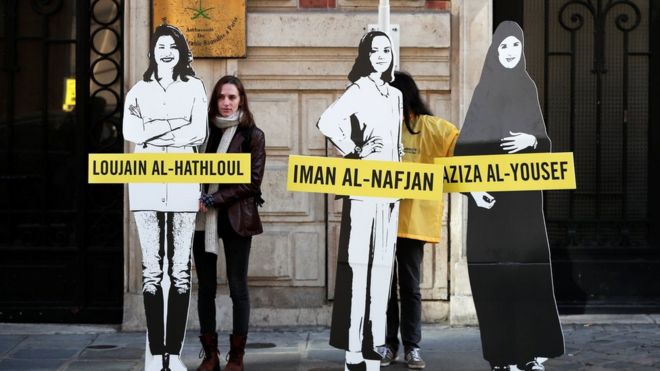
Media just reported that Saudi Arabia has temporarily released three female human rights defenders facing charges related to human rights work and contacting foreigners. Two sources told Reuters that three women had been released, and more would be freed on Sunday.[see: https://humanrightsdefenders.blog/2019/03/13/saudi-arabia-persist-with-trial-for-women-human-rights-defenders/]
Amnesty International and UK-based Saudi rights organisation, ALQST, named the women as Eman al-Nafjan, Aziza al-Yousef and Roqaya al-Mohareb. Saudi state media said the releases were only provisional. Lynn Maalouf from Amnesty welcomed the releases but said it should not be on a temporary basis. “They have been locked up, separated from their loved ones, subjected to torture and threats for simply peacefully calling for women’s rights and expressing their views,” she said.
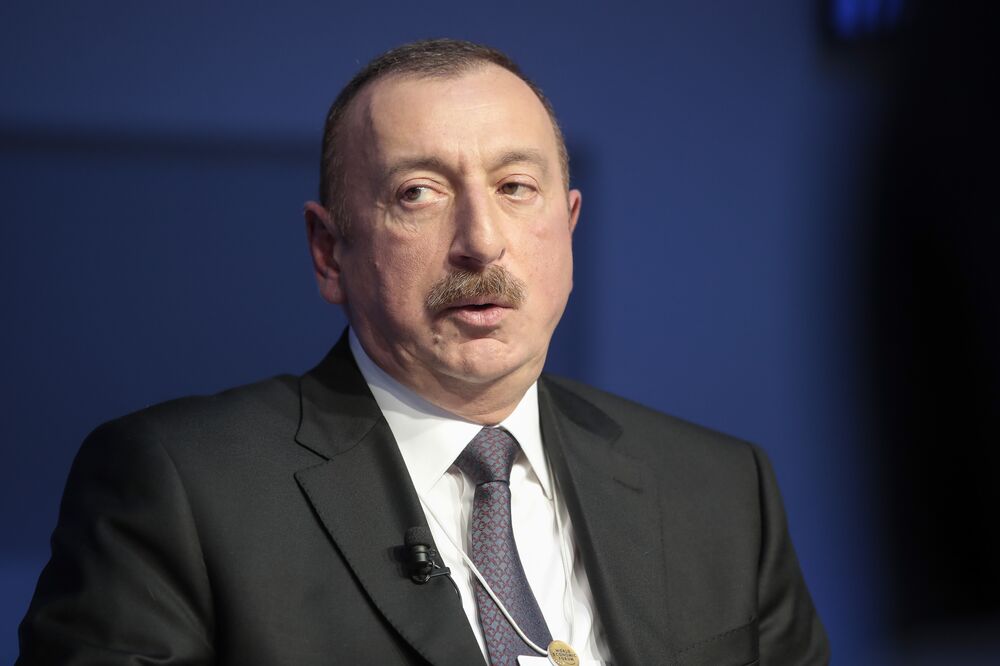
The ink on an EU report (March 15) concluding that human rights in Azerbaijan remain in need of improvement, is hardly dry and there is a surprise announcement that Azerbaijan’s strongman-resident has ordered the release of more than 400 people, including opposition politicians and pro-democracy youth activists who were listed as political prisoners by international human rights groups. True, the EU report comes ahead of the upcoming EU-Azerbaijan Cooperation Council, scheduled to take place on 4 April in Brussels, but there must be other reasons.

Fuad Qahramanli and Gozal Bayramli, deputy leaders of the opposition Popular Front of Azerbaijan Party, are among the pardoned, according to a statement on the presidential website. Pro-opposition youth activists Ilkin Rustamzada, Qiyas Ibrahimov and Bayram Mammadov will also be released. The pardoned are to be freed within 24 hours. At least 43 human rights defenders, journalists, political and religious activists remained wrongfully imprisoned in Azerbaijan last year, according to Human Rights Watch. Whether all of these are freed is not yet clear.
It would be wonderful if this blog can finally turn attention elsewhere after some 30 posts concerning Azerbaijan (https://humanrightsdefenders.blog/tag/azerbaijan).
https://www.europeaninterest.eu/article/eu-report-human-rights-azerbaijan-remain-need-improvement/
https://www.hrw.org/world-report/2019/country-chapters/azerbaijan
Reuters reports that on Monday 4 March 2019 Egypt released photojournalist Mahmoud Abu Zeid, also known as Shawkan who spent more than five years in jail after covering a 2013 sit-in that ended with security forces killing hundreds of protesters. “I can’t describe how I feel … I am free,” he told Reuters by phone after being released at dawn on Monday. [see also: https://humanrightsdefenders.blog/2018/05/04/world-press-freedom-day-a-good-time-for-honoring-journalists/]
Shawkan was released because he had served out his term before being sentenced. But he must still spend his nights for the next five years at a police station, a penalty he said he would challenge. He vowed to continue with his work, saying: “All journalists are at risk of being arrested or killed while doing their work. I am not the first and I will not be the last.”
(Shawkan was charged with belonging to a banned group and possessing firearms. He was sentenced to five years in prison last September in a mass trial which saw 75 people sentenced to death and more than 600 others to jail terms. Shawkan denied the charges against him, saying he was simply providing freelance coverage of the protest for a British-based photo agency.)
UNESCO awarded him its 2018 Cano Press Freedom Prize and said his detention was an abuse of human rights. See: http://www.trueheroesfilms.org/thedigest/awards/unesco-guillermo-cano-world-press-freedom-prize
Prominent human rights lawyer Abdolfattah Soltani in Iran was granted conditional release after serving more than seven years, reports the Guardian on 21 November 2018.

“The authorities agreed yesterday to my client’s conditional parole and he was released today,” Soltani’s lawyer Saeed Dehghan said on Wednesday, according to IRNA.
Soltani was jailed in 2011 over charges of “spreading propaganda against the system” and “setting up an illegal opposition group”, Amnesty International said at the time. He was granted conditional release after serving more than half a 10-year term, IRNA said. A previous parole request on 8 July had been denied, according to his lawyer. Soltani was a co-founder of the now outlawed Defenders of Human Rights Centre alongside Nobel peace prize laureate Shirin Ebadi and others. The human rights lawyer’s release could not be immediately confirmed with his family. Soltani was briefly released from prison in August to attend the funeral of his 30-year-old daughter, Homa, who died of a heart attack.
Chinese authorities must immediately and unconditionally release citizen journalist and human rights defender Huang Qi, a group of 14 NGOs (and not the least, see below) said on November 5, 2018. Huang Qi (黄琦), the founder and director of 64 Tianwang Human Rights Center, is not receiving adequate medical care in detention and his health has seriously deteriorated, according to his lawyer who visited him on October 23. Huang’s condition is so serious that there is an immediate threat to his life. [see also: https://humanrightsdefenders.blog/2016/12/01/rsfs-press-freedom-prize-2016-goes-to-the-64-tianwang-website-in-china/]
The Chinese government must immediately and unconditionally release Huang, who has been detained solely for the peaceful exercise of his right to freedom of expression, and end its policy of denying prompt medical treatment to prisoners of conscience. Several human rights defenders and ethnic and religious minorities have died in detention in recent years due to a lack of prompt medical treatment, including Liu Xiaobo, Cao Shunli [see: https://humanrightsdefenders.blog/2015/03/27/china-or-the-un-must-ensure-independent-investigation-into-death-of-cao-shunli/], Yang Tongyan, and Tenzin Delek Rinpoche, intensifying fears that Huang Qi might suffer the same fate without urgent intervention.
Authorities have repeatedly rejected applications for release on medical bail despite Huang’s heath condition continuing to deteriorate. He faces charges of “illegally providing state secrets to foreign entities” and “leaking state secrets” due to his work with 64 Tianwang Human Rights Center, which documents and publishes reports on enforced disappearances, trafficking, human rights violations and complaints against government officials. Huang faces the possibility of life imprisonment. His 85-year-old mother has been campaigning for his release, fearing he may die in prison. Last month two of his associates received suspended prison sentences and were released, but authorities have continued to hold Huang. The UN Working Group on Arbitrary Detention issued an opinion in April 2018 that declared Huang’s detention arbitrary, but the Chinese government continues to ignore the Working Group’s recommendation that Huang be released and compensated.
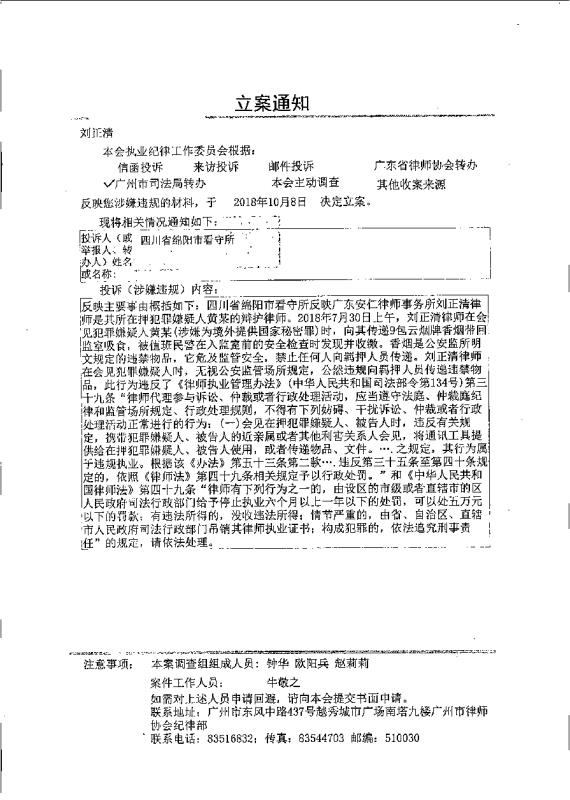
Lawyers representing Huang Qi have also faced retaliation. One of his lawyers, Sui Muqing, was disbarred in February 2018 for defending human rights defenders, such as Huang. [https://www.frontlinedefenders.org/en/case/human-rights-lawyer-sui-muqing-disbarred] Huang’s current lawyer, Liu Zhengqing, received a notice in October that he is under investigation for giving Huang cigarettes during a meeting in July. Liu faces suspension of his law license or a large fine.

http://rsdlmonitor.com/immediately-unconditionally-release-huang-qi/
In this context also relevant is: https://mailchi.mp/ishr/alert-to-the-human-rights-councils-35th-session-31901?e=d1945ebb90
![Dissident Vietnamese blogger 'Mother Mushroom' released Quynh, one of Vietnam's most prominent dissidents, was serving a 10-year-sentence for anti-state propaganda [AP]](https://www.aljazeera.com/mritems/imagecache/mbdxxlarge/mritems/Images/2018/10/17/c9052b243211403eae85961057714cab_18.jpg)
Vietnam has released dissident blogger Nguyen Ngoc Nhu Quynh, also known as “Mother Mushroom“. [https://humanrightsdefenders.blog/2017/07/06/the-kind-of-blogging-that-got-mother-mushroom-10-years-imprisonment-in-vietnam/]. Quynh, 39, was freed from jail and put on a plane to the United States where her mother and children live. She boarded a flight to Houston around noon Wednesday 17 October 2018, said Martin Gemzell, Asia program director for Civil Rights Defenders, a group based in Sweden.
Quynh, one of Vietnam’s most well-known activists, whose recognisable pen name “Me Nam” comes from her daughter’s nickname “mushroom”, was jailed in June 2017. She is an outspoken critic of Vietnam’s one-party state and gained notoriety with her writing about the environment, politics and deaths in police custody. Quynh came to prominence when she received the Civil Rights Defender of the Year award in 2015 and also the (USA) International Woman of Courage Award in 2017.
“The overly broad, ill-defined scope of this law makes it all too easy to quash any kind of dissenting views and to arbitrarily detain individuals who dare to criticize government policies,” former UN High Commissioner for Human Rights Zeid Ra’ad Al Hussein said in 2016.
While the Vietnamese authorities have not given a reason for the release of Quynh, it coincided with a visit to Vietnam by US Secretary of Defence Jim Mattis. Quynh is the second Vietnamese dissident released this year. A prominent human rights lawyer, Nguyen Van Dai, was released from prison in June and went to Germany.
https://www.wral.com/mother-mushroom-vietnamese-activist-is-said-to-be-released/17922631/
The Financial Times (amongst others) reports that changes in Uzbekistan are possibly going in the right direction. [“While Mr Mirziyoyev was part of the old system too, as prime minister for 13 years, his ousting of Mr Inoyatov was the boldest in a series of steps apparently designed to start opening the country up. He has freed 18 high-profile political prisoners — even if thousands more remain in jail — and taken nearly 16,000 people off a 17,500-strong security blacklist of potential extremists that stopped them travelling or getting jobs”.] This echoes what HRW said on 5 September 2017 after delegation had made its first visit to Uzbekistan since the organization was banned there in 2010: “The key is for the Uzbek government to transform the modest steps it has taken thus far into institutional change and sustainable improvements”. Now (13 February 2018) twelve international NGOs have publicly urged Uzbekistan to release journalists and human rights defenders.

In a joint statement HRW, IPHR, Amnesty International, the Association for Human Rights in Central Asia, Civil Rights Defenders, the Committee to Protect Journalists, Freedom House, the Norwegian Helsinki Committee, Reporters Without Borders, Freedom Now, ARTICLE 19, and the Uzbek-German Forum for Human Rights have called on Tashkent to “ensure a thorough, impartial, and independent investigation into the alleged torture and other ill-treatment” of independent journalist Bobomurod Abdullaev.
[Abdullaev was detained in September on charges of “conspiracy to overthrow the constitutional regime” and faces up to 20 years in prison if found guilty. In October, Uzbek authorities arrested well-known economist and blogger Hayot Nasriddinov. They have accused him and others, including Akrom Malikov, an academic who was arrested in 2016, of plotting to overthrow the government.
“At a time when the Uzbek government appears to be taking steps to reform the country’s feared security services, reports of a journalist’s torture in their custody should prompt an immediate investigation and decisive, public condemnation,” HRW Central Asia researcher Steve Swerdlow said in the statement.
“There is a real opportunity for change in Uzbekistan – and yet we hear of journalists and bloggers still being detained and tortured. This case is a test of whether Uzbekistan’s human rights situation is really improving or not,” Brigitte Dufour, director of International Partnership for Human Rights (IPHR), said in the rights groups’ statement.
For my earlier posts on Uzbekistan, see: https://humanrightsdefenders.blog/tag/uzbekistan/
—
https://eurasianet.org/node/84971
https://www.ft.com/content/6c37419c-0cbf-11e8-8eb7-42f857ea9f09