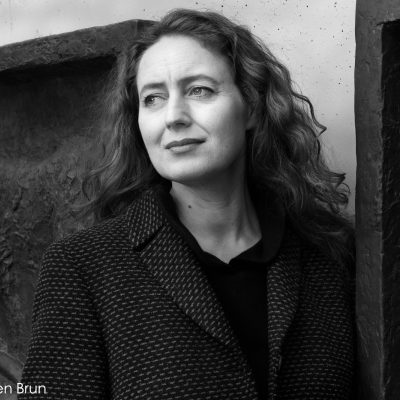
JONAS ALASKA// With his down-to-earth, personal and honest portrayals, it’s no wonder Jonas Alaska is a critic’s favourite. Already with his debut album, he was triple-nominated for the Norwegian Grammy.
NORA GUNDERSEN & ODA VOLTERSVIK // Nora Gundersen and concert pianist Oda Voltersvik will perform at Den Nationale Scene in November! They have both played as solo artists and chamber musicians both in Norway and abroad.
DØSSI // Ingrid Døssland, known as DØSSI, is a producer and singer/songwriter. With her dreamy voice, DØSSI draws you in to her own world of feelings and melancholy.
FRODE GRYTTEN // Frode Grytten has, throughout an extensive and critically acclaimed career, distinguished himself as one of Norway’s foremost writers.
SHARQANT // Sharquant is a band consisting of three musicians with backgrounds from Syria and Iraq. The band was established in 2018, in Bergen. Their music consists of a blend of different parts of the Arab culture, and their music transports the audience to the Mediterranean region.
Guri Solberg is the host of the Rafto Prize Award Ceremony!
ECRF documents, reports and raises awareness about the grave human rights violations in Egypt and beyond, and provides legal support to victims of human rights abuses. Almost ten years since the Arab Spring, it is more pressing than ever to focus on the alarming state of basic human rights in the Middle East. ECRF was founded by Mohamed Lotfy and Ahmed Abdallah in the wake of the coup d’état in 2013. In a relatively short time ECRF has grown to a team of more than 50 lawyers and researchers as well as about 1000 volunteers. The aim of their work is to provide non-partisan support to human rights defenders. Despite working under extremely harsh conditions, the ECRF uses the parts of Egypt’s judiciary, which are still functioning, to defend human rights for political prisoners, prosecuted human rights activists and protestors and victims of disappearances and torture. In this state of fear, the work of ECRF stands out as a beacon of hope for human rights.
Enforced Disappearances
The ECRF works at ground level across Egypt, using peaceful and legal means. The organization conducts extensive documentation, monitoring and analysis of human rights violations. To do this, ECRF’s lawyers and researchers meet with victims, collect testimonies and analyse documents and court verdicts. ECRF has emergency hotlines where relatives and friends can report on arbitrary arrests, and receives on daily basis cases of enforced disappearance. The campaign “Stop Enforced Disappearances” documented 2723 cases over a five-year period. Through the documentation of cases, campaigning and legal aid, the ECRF has contributed to several reappearances. They use the documentation in court defences, as a basis for reports, policy papers, for advocacy, press statements and in social media campaigns to raise awareness around human rights issues. [see also: https://humanrightsdefenders.blog/2019/11/28/egyptian-human-rights-defender-ibrahim-ezz-eldin-reappears-after-167-days/]
Egypt’s state of fear
After a political crisis in 2013, the Egyptian army took control again and General Abdel Fattah el-Sisi has since ruled as president. Under his leadership, the worrying human rights situation in Egypt has deteriorated to a degree not seen before.
Government security forces frequently conduct mass arrests and enforced disappearances, and critical voices are detained incommunicado for long periods of time. Thousands of political opponents, including children, have been arrested in sweeping campaigns. The prisoners are often held in overcrowded prisons in poor conditions, without access to satisfactory medical care.
The regime has dramatically narrowed the space for civil society and dissent by imposinga number of restrictions on the population such as travel bans, targeting human rights defenders and a range of repressive measures. In August 2019, President el-Sisi approved a law that severely restricts NGOs’ independence. His government uses the “war on terrorism” as a disguise to conceal their abuses. In April 2017, the government declared a state of emergency, which gave the security forces unchecked powers. In 2019 the government passed constitutional amendments that consolidated the authoritarian rule, once again undermining the rule of law.
AFP reported on 23 February 2020 that Thich Quang Do, a dissident Buddhist monk who has effectively been under house arrest since 2003 has died at the age of 93. Head of the banned Unified Buddhist Church of Vietnam, the vocal patriarch was born in 1928 in Thai Binh province and spent most of his life advocating for religious freedom and human rights in communist-run Vietnam. His staunch activism landed him under what was effectively house arrest in 2003 in Ho Chi Minh City, where he was under constant surveillance. Do died on Saturday night 22 February at Tu Hieu pagoda, UBCV announced on Sunday morning. According to his will signed on April 2019, Do requested a “simple funeral, not more than three days.” “After the cremation, my ashes will be scattered at sea,” said the statement quoting his will.
Do has long been a thorn on the side for communist-run Vietnam, and he has been nominated multiple times for the Nobel Peace Prize for his vocal advocacy for democracy. In 2001, he wrote an “Appeal for Democracy” and also called on northern and southern dissidents to drop their cultural differences and unite in 2005. He received Norway’s Rafto human rights award the following year for “his personal courage and perseverance through three decades of peaceful opposition against the communist regime in Vietnam.” He also won a Hellmann/Hammett grant in 2001 and the Homo Homini award in 2002.
The UBVC has been banned since the early 1980s, when it refused to join the state-sanctioned Vietnam Buddhist Church.
The Bergen-based Rafto Foundation encourages everyone with an interest in or knowledge of human rights to make a nomination for the 2020 Rafto Prize. Read more about the formal criteria and how to nominate online at Rafto.no. (see link below). Deadline for nominations is 1st February. For more on this and similar awards go to: http://www.trueheroesfilms.org/thedigest/awards/rafto-prize .
Rouba Mhaissen, Defending the human rights of people living as refugees
The Rafto Prize 2019 is awarded to Rouba Mhaissen, director of Sawa for Development and Aid (SDAID), for defending human rights from the local to the global level for people living as refugees. Rouba Mhaissen has contributed locally to improving the lives of people living as refugees in Lebanon in ways that protect their dignity and right to self-determination. At national and global levels, Mhaissen stands out as a relentless and powerful defender of the human rights of refugees. For more on this and other awards for human rights defenders see: http://www.trueheroesfilms.org/thedigest/awards/rafto-prize. For last year’s award: https://humanrightsdefenders.blog/2018/09/27/polish-ombudsman-adam-bodnar-winner-of-2018-rafto-award/
The Rafto Conference with a keynote address by the Rafto Laureate will take place 2 November at 11:00-14:00 at Universitetsaulaen, Bergen and the award ceremony the next day 3 November at 18:00 also in Bergen.
Dr. Rouba Mhaissen (31) is a Syrian-Lebanese economist, activist, community mobilizer and development practitioner who works on forced migration and the Syrian refugee crisis. She is the founder and director of Sawa for Development and Aid, and an outspoken defender of the rights of people living as refugees. Her relentless demands for human rights for all refugees have been heard in international fora. Through her advocacy for Syrian refugees in Lebanon, Mhaissen underlines the importance of treating refugees and other migrants with dignity and as people with the right to form their own lives and destinies: Since the beginning of the Syrian civil war in 2011, the Lebanese government has maintained open borders for Syrian refugees. The early arrivers were allowed to work in certain sectors of the economy, despite being exposed to expensive fees for work-permits, marginalization, and limited freedom of movement. But as the civil war endures, the refugees’ situation has become precarious. The demographic, political, and economic balance in Lebanon is fragile as a third of the local population lives below the poverty line and one out of four are refugees. Lebanese authorities routinely blame the country’s hardship on the refugees, and the economic crisis has further increased the suspicions of refugees.
In this increasingly volatile situation, the Lebanese government has begun emphasizing return-policies toward Syrians living in Lebanon, through a combination of restrictive policies and rampant discrimination. Unlawful evictions, harassment, intimidation, and attacks on refugees leave many with no choice but to return. Upon their arrival in Syria, many have faced arbitrary arrests, interrogations and torture. For Syrian refugees, both residing in Lebanon or returning to Syria represent impossible “choices”.
The Rafto Prize 2019 is a call to protect human rights for all, irrespective of our legal status. .. The current international neglect of the human rights situation for people living as refugees must stop: In the short-term this means financial support, in the long term assisting resettlement and facilitating return or local integration.
The Rafto Conference with a keynote address by the Rafto Laureate will take place 2 November at 11:00-14:00 at Universitetsaulaen, Bergen and the award ceremony the next day 3 November at 18:00 also in Bergen.
You can apply now for the 2019 autumn course in Bergen, Norway. The Business and Human Rights Course explores the links between human rights violations and corporate activity, and the importance of international standards such as the UN Guiding Principles on Business and Human Rights, in strengthening respect and protection of human rights, by states and businesses alike.
The course will focus on what corporate human rights due diligence means in practice, including how companies can effectively address human rights dilemmas across their global operations and throughout their supply chains. Participants will explore emerging sector-specific and thematic issues on the human rights and business agenda, and assess the effectiveness of existing efforts of relevance in Norway and globally.
The course will provide participants with a deeper understanding of how human rights concerns relate to a range of industry sectors. It will also provide practical guidance for developing corporate strategies that are consistent with international human rights standards.
Application deadline for the 2019 autumn course is 19.08.2019
Course information
Available to masters students, professionals and individuals interested in business and human rights.
A bachelors degree or the equivalent and a minimum of two years’ work experience is required.
The course counts 15 credit points and will be offered in English as part-time study.
Classes held over three weekends
The fee will be NOK 19.000.
Course code SAMPOL610.
Upon completion of the course, students will:
have a deeper understanding of international human rights standards and how they apply to companies.
be able to assess human rights risks associated with business activity and understand steps needed to prevent, mitigate, and remediate adverse impacts.
be familiar with the UN Guiding Principles on Business and Human Rights and what they require from governments and corporations.
have working knowledge of available guidance and practical tools to analyse human rights challenges relating to business and align companies’ policies and practices with international standards.
On 28 January, 2019, the Unrepresented Nations and Peoples Organization (UNPO), the World Uyghur Congress (WUC) and Norwegian Uyghur Committee (NUK) announced that they have nominated the Chinese human rights defender Ilham Tohti for the Rafto Prize. With the completion of five years of his arrest, the organisations believe his peaceful trajectory in defense of the freedom and fully enjoyment of human rights by the Uyghur population in China is deserving of this prestigious prize. See also: https://humanrightsdefenders.blog/2018/01/15/today-ilham-tohti-completes-his-fourth-year-in-chinese-detention/.
[Ilham Tohti served as a professor of economics at Minzu University in Beijing where he specialized in research focused on Uyghur-Han relations, China’s ethnic policies and East Turkistan. Alongside his scholarship and teaching, Ilham is revered for establishing and maintaining Uyghur Online, a website dedicated to promoting Uyghur human rights and improved relations between Uyghur and Han Chinese people. Professor Tohti criticised oppressive policies against Uyghurs and wrote extensively on constructive approaches to overcome unequal treatment between ethnic groups. Notably, he called for dialogue and reconciliation, using his web platform as the primary vehicle. For his efforts, he was arrested by Chinese authorities on January 15, 2014. Despite the UN Working Group on Arbitrary Detention finding his detention to be arbitrary in March 2014, Tohti was sentenced to life in prison in September of that year on charges of “separatism” after just a two-day trial. The legal process involving Tohti was met with significant issues throughout. His lawyers were unable to meet him for six months following the initial arrest, his defense team was not provided with complete evidence by the prosecutor, nor were their requested witnesses allowed to testify during the trial. Ilham has been serving his life sentence since December 2014 at Urumqi’s No. 1 Prison. Since then, he has been allowed very few visits from his family. Complicating this has been his continued detention in Urumqi, despite his family living in Beijing – a likely punitive move from Beijing. ChinaChange has noted that Tohti has been held in solitary confinement until at least early 2016 and has been denied the right to communicate with family and friends aside from minimal visits. The WUC gathered 132 scholars and 19 civil society organisations in an open letter to urge the Chinese government to release Ilham Tohti from his arbitrary detention of the five-year anniversary of his arrest in January 2019.]
The WUC,the UNPO and the NUK encourage scholars and organisations to join in nominating Ilham Tohti. The deadline for nominations is Friday, February 1st. As the situation in East Turkistan continues to deteriorate, with more than one million innocent Uyghurs arbitrarily detained in internment camps and the Uyghur people facing unparalleled repression, Ilham Tohti’s life and work stands as an inspiration to continue the peaceful struggle for peace, understanding
Polish lawyer Adam Bodnar – Defender of minority rights and judicial independence in Poland (Photo credit: Kluczek/RPO.GOV.PL )
The Rafto Prize 2018 is awarded to the Polish lawyer Adam Bodnar and the institution he leads, the Office of the Commissioner for Human Rights, for the important stance taken in the face of current political developments in Poland. A key function of the Ombudsman, or the Commissioner for Human Rights, is to ensure that the public authorities secure and respect the human rights of all members of Polish society. As lawyer and Ombudsman, Adam Bodnar (41) has highlighted the crucial role played by independent Ombudsman institutions in safeguarding human rights in Poland – and other countries – where such actors and institutions increasingly have come under attack.
Since Law and Justice (PiS) won the Polish election in October 2015, the party has used its majority in the National Parliament to adopt legislation that reduces the independence of the courts and centralizes state powers. New laws grant the government control of state media and place severe limits on freedom of information and political lobbying. The rights of vulnerable groups have been repeatedly ignored. “The award is not just an award to my work and the institution, but mostly a support from your community given to the Polish civil society, academia, judges and lawyers fighting for rule of law, juridical independence, pluralism and protection of minorities in Poland,” said Adam Bodnar.
The Rafto Prize for 2018 to Adam Bodnar and the Ombudsman for Human Rights highlights the rolling back of democracy and human rights protections in Poland. The conflict over the Polish Constitutional Tribunal and the Supreme Court are important internationally because they are symbolic of an alarming tendency where the independence of courts increasingly is under political pressure. It is crucial that the international community, the EU, Norway and other European countries take a clear stance against human rights violations and attacks on the rule of law and minority rights that take place in our own region. Adam Bodnar, being the civil servant, cannot accept the prize money awarded along with the Rafto Prize. The Rafto Foundation will identify and donate the prize money to civil society working for human rights in Poland.