Posts Tagged ‘profiles’

Video interview with Cleopatra KAMBUGU from Uganda

April 25, 2017
On 24 April 2017 the ISHR published this interview with Cleopatra KAMBUGU, grants administrator at UHAI EASHRI and transgender activist in Uganda. Cleopatra was featured in “Pearl of Africa“, a movie shown at the Geneva international Film Festival and Human Rights Forum and spoke  about the challenges she faces in her struggle to have transgender rights recognised in her country. More information on UHAI-EASHRI: http://www.uhai-eashri.org

Two remarkable women rights defenders from Mexico: Olga Guzmán and Stephanie Brewer

December 15, 2016

OMCT-LOGOpublishes a series of 10 profiles human rights defenders to commemorate International Human Rights Day, 10 December 2016. Here two women HRDs from Mexico: Olga Guzmán and Stephanie Brewer: Read the rest of this entry »

The Hague Defenders Days from 5 to 10 December 2016

December 2, 2016

Justice and Peace NL with support from the City of the Hague and the Ministry of Foreign Affairs is organizing “The Hague Defenders Days” from 5 to 10 December 2016. A wide range of activities (debates, films and even a ball) are planned culminating in the ceremony of the Tulip Award on Human Rights Day 10 December. Most activities are open to the public (but not the Tulip ceremony):

Let’s celebrate the International Human Rights – and Human Rights Defenders Days in the city of peace and justice! Take the opportunity to learn from their experiences and share your own. Meet human rights defenders, debate about your rights, think out of the box and dance at the Human Rights Ball. Discover the defender or rebel in you! Download the flyer.

PROGRAMME


Portraits of Dutch and international human rights defenders by photographers Anette Brolenius and Daniella van Bergen.

5-10 December / Het Nutshuis
11.00 – 16.00 – Admission: free
Click here for more information
 

Watch this documentary and be part of a global one year campaign for respect and equality.

6 December / Het Nutshuis
20.00 – Admission: free
Click here for more information
 

With: Nighat Dad, the Pakistani winner of the Dutch Human Rights Tulip Award 2016. 

7 December / The Hague University
19.30 – Admission: free
Click here for more information
 

What makes a human rights defender? With: Nighat Dad, Hans Jaap Melissen, Saskia Stolz en Hassnae Bouazza.

9 December / B-Unlimited (Library Spui)
20.30 – Tickets €10 / €7: www.b-unlimited.nl

Come and celebrate universal rights with 20 worldwide human rights defenders! With: Dj Socrates, Meet & Greet, Photobooth, live music…

10 December / Nutshuis
20.30 – Tickets €10 / €6: www.justiceandpeace.nl/humanrightsball


Source: The Hague Defenders Days

Human rights lawyer Bryan Stevenson to receive Michigan’s Wallenberg Medal

November 7, 2016

The University of Michigan’s 2016/17 Wallenberg Medal has been  awarded to civil rights lawyer and social justice activist Bryan Stevenson. He is the executive director of the Equal Justice Initiative, an organization he founded in 1989 that focuses on social justice and human rights in the context of criminal justice reform in the United States. EJI litigates on behalf of condemned prisoners, juvenile offenders, people wrongly convicted or charged, poor people denied effective representation, and others whose trials are marked by racial bias or prosecutorial misconduct. Under Stevenson’s direction, EJI has handled hundreds of cases and spared the lives of 125 death row prisoners. Stevenson’s arguments have convinced the U.S. Supreme Court that juveniles in non-homicide cases may not be sentenced to life without parole. He is creating a memorial in Montgomery, Alabama, to commemorate the more than 4,000 persons who were lynched in 12 southern states between 1871 and 1950.

Stevenson is a professor of law at New York University, where he prepares students to consider the legal needs of those in resource-deprived regions. He has been a visiting professor of law at the U-M Law School. He wrote the prize-winning book “Just Mercy: A Story of Justice and Redemption” and has won numerous awards and honors, including Reebok Award (1989), the Gleitsman Award (2000). the MacArthur Foundation Fellowship Award Prize, the ACLU National Medal of Liberty, the Olaf Palme Prize for international human rights (2000), the Gruber Prize for International Justice (2009) and the Ford Foundation Visionaries Award.

Raoul Wallenberg was a 1935 graduate of U-M’s College of Architecture. As a Swedish diplomat Wallenberg saved the lives of tens of thousands of Hungarian Jews near the end of World War II.

NOTE: There are at least two other awards with Wallenberg in the title:

  • Raoul Wallenberg Prize (Council of Europe )
  • Raoul Wallenberg and Civic Courage Awards (USA), and there is
  • the Raoul Wallenberg Institute (Lund, Sweden)

The ceremony for Stevenson will take place on 7 March, 2017; after the medal presentation, Stevenson will give the 25th Wallenberg Lecture.

Source: Lawyer, activist Bryan Stevenson to receive Wallenberg Medal | The University Record

Iftikhar Mubarik, discusses his work addressing child exploitation in Pakistan

September 26, 2016


Human right defender, Iftikhar Mubarik, discusses his work addressing child exploitation in Pakistan and how he seeks to utilise the UN Human Rights system.


https://www.ishr.ch/news/human-rights-defender-profile-iftikhar-mubarik-pakistan

Profile of Jacobus Witbooi, LGBTI human rights defender from Namibia

August 31, 2016

Profile of Jacobus Witbooi, human rights defender from Namibia, working at the Pan Africa International Lesbian, Gay, Bisexual, Trans and Intersex Association (PAI).

In June 2016 he completed ISHR’s Human Rights Defender Advocacy Programme and The Monitor of 27 June contained the following piece:
Jacobus Witbooi knows himself to be an ‘innate activist’ and says that his passion for human rights ‘comes from the inside.’ It has always been a strong part of who he is, taking up the challenge to advocate for those without a voice at a very early age. When still attending school, he recalls campaigning for education on safe sex and sexual health information and advice before it was even considered by national school policy makers.

‘Everyone knew that there were young people having unprotected sex, but they also didn’t have access to condoms, let alone information or advice from community health services about sexual health and safety, especially if they contracted a STI…They felt judged, couldn’t take steps to protect themselves or get help they needed.’

As he matured as a young professional he continued to pursue the issue and played a key role in eventually getting sex education on the national school curriculum in Namibia. He also helped to create a platform for young people to have a say in the design and evaluation of sexual and reproductive health programs, as well as assist health services to provide a caring and sympathetic environment for young people, enhancing accessibility.

Creating a network to drive change

Jacobus’ human rights advocacy journey has brought him to Pan Africa ILGA, a recently formed and rapidly expanding membership-based network for activists working to advance sexual orientation and gender identity rights. He delivers a continent-wide outreach strategy to small, grassroots LGBTI  activists and defenders, helping to develop their skills and confidence to engage with both the UN human rights mechanisms and the African Commission on Human and Peoples’ Rights (the African Commission), and grow their ability to achieve meaningful and lasting human rights change.

The issue is close to his heart. He remembers coming out at a time in Namibia when it was unsafe, denied and denounced by all corners of the community.

‘I didn’t feel welcome in my own country, and was told I should leave.’

Whilst Pan Africa ILGA is rapidly expanding – it now has over 100 members – Jacobus is aware of the limitations his service can provide, and the needs of local LGBTI community organisations.

‘There’s a gap between the amount of work we can do to support local human rights activists, and how far we can teach them to carry forward UN outcomes and recommendations into their country.’

But he adds that he refuses to accept that it is a gap that cannot be closed. In May, Jacobus had a key part in delivering the third PAI regional LGBTI conference in South Africa. Bringing together 184 African delegates from over 34 African States, coming together to convene and share strategies, visions and fostering opportunities to collaborate. More encouraging, was the attendance of Government representatives and members of the African Commission, as well as National Human Rights Institutions.

Highlighting this significant social and political development, Jacobus points out that there is a growing support for sexual orientation and gender identity rights on the African continent, and is optimistic for the future of the LGBTI community. However,  he knows there is a lot more work to be done.

‘I think this space we created was critical as a continent – sharing the success stories. But, how do we move this forward, and deal with the intersectionality of sexual orientation and gender identity issues?’

Expanding his human rights advocacy potential

He identified that one way forward for him was to better harness the UN international human rights mechanisms and expand his human rights advocacy potential and successfully applied to participate in the ISHR Human Rights Advocacy Programme.

‘It’s helped me a lot. I’ve broadened my understanding of available UN-mechanisms beyond the Universal Periodic Review alone. I’ve learnt that there is a wide range of approaches to doing human rights advocacy through the UN. This awareness combined with the confidence I’ve now gained will be vital for me on the ground back home.’

He has also noticed his own approach to engaging in human rights advocacy has transformed.

‘I’ve become more strategic now. Because I have a deeper understanding of the UN system, it means that I can use multiple mechanisms to get outcomes, such as the Treaty Bodies and the Special Procedures.’

Contributing to the first UN Resolution on Sexual Orientation and Gender Identity

With his training coinciding with the 32nd session of the Human Rights Council, Jacobus became heavily involved in contributing to the Working Group advocating and lobbying for a strong resolution on sexual orientation and gender identity. He describes this as,

‘My first real hands on experience advocacy at the Council, working with states delegations and diplomats, trying to bring across an argument that is sensitive and difficult to move on, and coming from a region where it is very difficult to even talk about. It has given me a better understanding of how these things work, what components come into play when these decisions are made.’

Contact: jacobus@panafricailga.org or follow him on Twitter @jacobuswitbooi

Source: Defender profile: Jacobus Witbooi, human rights defender from Namibia | ISHR

Ivette Gonzalez: profile of a Human Rights Defender from Mexico

July 11, 2016

Ivette Gonzalez: Human Rights Defender from Mexico

In the ISHR Monitor of 1 July 2016 there is an interview with Ivette Gonzalez who works as a strategic engagement associate for Project on Organizing, Development, Education and Research (PODER) in Mexico. Ivette was in Geneva to participate in ISHR’s Human Rights Defender Advocacy Programme.

—–

In Mexico, Ivette’s work at PODER is framed around the business and human rights agenda. PODER works to strengthen civil society to achieve corporate transparency and accountability with a human rights perspective. Ivette spoke to ISHR about her motivation to become involved in human rights work, in particular advocating for business and human rights:

‘Injustice and inequality as well as understanding the imbalance of wealth distribution and power triggered my motivation.’

Regarding the risks she and her organisation face on a daily basis, Ivette acknowledged that a focus on safety concerns is necessary in Mexico. PODER has implemented a very strict security protocol in the office to ensure they can work in safe conditions. All members, both those in the field and in the office, are required to follow the protocol.

‘By working in business and human rights, we are aware that powerful actors can consider our work as a threat.’

In the last few years, Ivette feels that human rights defenders and journalists are more at risk in Mexico. Discrediting campaigns point the finger at NGOs and defenders, questioning the legitimacy of their work and even accusing them of taking advantage of victims of human rights violations.

Implementation of laws for the protection of defenders

When talking about particular changes to legislation Ivette would like to see in Mexico, she mentions that the creation of laws is not the issue, but their implementation is. In Mexico, a law and protection mechanism for human rights defenders exists, but the mechanism needs to be improved with the inputs of the users of it and the people at risk. For that to happen, it is crucial that civil society are involved in the process and monitoring.

‘Even though Mexico already has the legislative tools in hand, using these tools, making them concrete and practical for defenders and activists on the ground is the missing step.’

Information is power

Regarding her goals at the international level, Ivette admits that the human rights agenda needs to have an impact at the international level, because some actors are large transnational corporations based in many different countries, and there is a lack of access to justice for the victims of corporate activities in the host and home countries.

Ivette interacts with UN mechanisms including the Special Procedures. PODER has interacted with the Special Rapporteur on human rights defenders, the High Commissioner for Human Rights and the Working Group on Business and Human Rights. In speaking of interacting with the Special Procedures, Ivette acknowledges civil society’s critical role in providing information to Special Procedures.

‘My recommendation for the international community would be to work together and form coalitions. Building new structures and making steps towards change, can be best achieved by working together.’

Learning and advocating in Geneva

Regarding her participation in HRDAP, Ivette is grateful to have been able to receive such a significant amount of information on how to effectively engage with the UN system, as well as how to efficiently use it in her existing work. She looks forward to sharing her knowledge with other civil society organisations and assisting affected communities to engage with the UN. She appreciated the opportunity to lobby various actors, as well as learn how to approach missions and engage with the system – including Special Procedures and Treaty Bodies.

‘During HRDAP, I met very brave defenders with whom I developed professional relationships. Sharing experience and expertise can strengthen our work in the pursue for the respect of human rights.’

Source: Ivette Gonzalez: Human Rights Defender from Mexico | ISHR

Profile: Bose Agbonmerele, woman human rights defender from Nigeria

July 7, 2016

On 20 June 2016 the ISHR Monitor contained the following portrait of Ms Bose Agbonmerele Iro-Nsi, the founder and team leader of the Women’s Rights and Health Project (WRAHP) in Nigeria. WRAHP is an NGO that works to promote community and women’s rights, reproductive health and children’s development.

Ms Bose Agbonmerele of the Women’s Rights and Health Project (WRAHP) in Nigeria.

As an advocate, Bose focuses on access to justice for women suffering domestic violence, child abuse, and cultural practises that are detrimental to health and contravene fundamental rights of both women and children – an example includes female genital mutilation. Bose seeks to create awareness of existing laws that address domestic violence, and educates vulnerable communities on their rights contained in those laws.

‘WRAHP previously received between 2 and 4 cases of women who had suffered domestic violence each month. Since engaging with the media and speaking publically on the common violation of women and children’s rights, WRAHP now receives about 5 cases and large numbers of calls every day from women in distress.’

Challenges and risks

Cultural norms and practise endorse a system of patriarchy in Nigeria. This means that raising children in an environment rife with domestic violence perpetuates a vicious cycle. Bose highlights the importance of focusing on building awareness within the family, as well within religious institutions and churches – which can then create further awareness about Gender based violence.

‘Gender based violence constitutes a further challenge. Domestic violence is often viewed as a personal domestic dispute, which results in law enforcement agencies turning a blind eye. This further drives a system of impunity among the community. Moreover, the stigma associated with calling the police on your own family member and the lack of independence of women puts them at risk of destitution.’

Bose also identified gaps and loopholes in Nigerian laws and policies that need strengthening. She identified 2 major limitations in the Violence Against Persons Prohibition Act, which addresses, among other violations, female genital mutilation and acid attacks. This law is restricted to the capital of Nigeria and often imposes fines for offences that should result in more significant penalties.

Some community elders have claimed that WRAHP’s work is intrusive to their culture and traditions. As a result Bose has suffered intimidation. However, she has maintained a holistic approach to raising awareness, including amongst men who might oppose her views.

Engagement with the international community

Bose explained that her experience in Geneva at ISHR Human Rights Defender Advocacy Programme (HRDAP) has broadened her knowledge of UN mechanisms and her perspective about civil society engagement. Going forward Bose intends to incorporate the international networks she has made in Geneva into her existing regional networks. She also intends to engage with Special Procedures mandate holders to increase awareness about the human rights situation in Nigeria.

‘One of the positive aspects of my experience at HRDAP was the opportunity to share experiences with other participants. I learnt about the diverse issues which other human rights advocates face. The organisation of the programme and activities have been great.’

The change Bose would like to see

Through her brief experience at the UN, Bose has noticed the use of the phrase “intimate partner violence”. She believes the use of this phrase in addressing domestic violence overlooks other serious aspects of domestic violence. This term focuses only on partners, disregarding child abuse, parental abuse of children, and violence at the hands of extended family. Bose would like to see a more robust policy addressing all aspects of domestic violence.

Goals and objectives

Bose believes that it is crucial to understand successful strategies used by defenders working on other issues and defenders in different regions. Bose is grateful to have had the opportunity to interact with defenders working on different thematic groups, including LGBTI and business Human Rights issues. She believes that all activists share the same common goal and working together and learning from each other will help to improve advocacy success rates. Bose would like to continue engaging foreign missions to bolster her national advocacy.

In the long run, Bose would like to see herself as a regional and international advocate sharing her experiences on an international platform. She was impressed with the participation of young people in HRDAP and says she would like to encourage other young people to participate in advocacy training sessions in Nigeria.

‘I just can’t recommend HRDAP enough to other people.’

Source: Defender profile: Bose Agbonmerele Iro-Nsi, woman human rights defender from Nigeria | ISHR

Profile of human rights defender Tuisina Ymania Brown, a Fa’afafine from Samoa

June 2, 2016

Samoa does not figure often in this blog. So, courtesy of the International Service for Human Rights (Monitor 2 May 2016), here is the profile of Tuisina Ymania Brown of the Samoa Fa’afafine Association which represents and promotes the rights of indigenous lesbian, gay, bisexual, transgender and intersex (LGBTI) people in Samoa.  Read the rest of this entry »

Profile of Pedan Marthe Coulibaly, human rights defender from Côte d’Ivoire

May 27, 2016

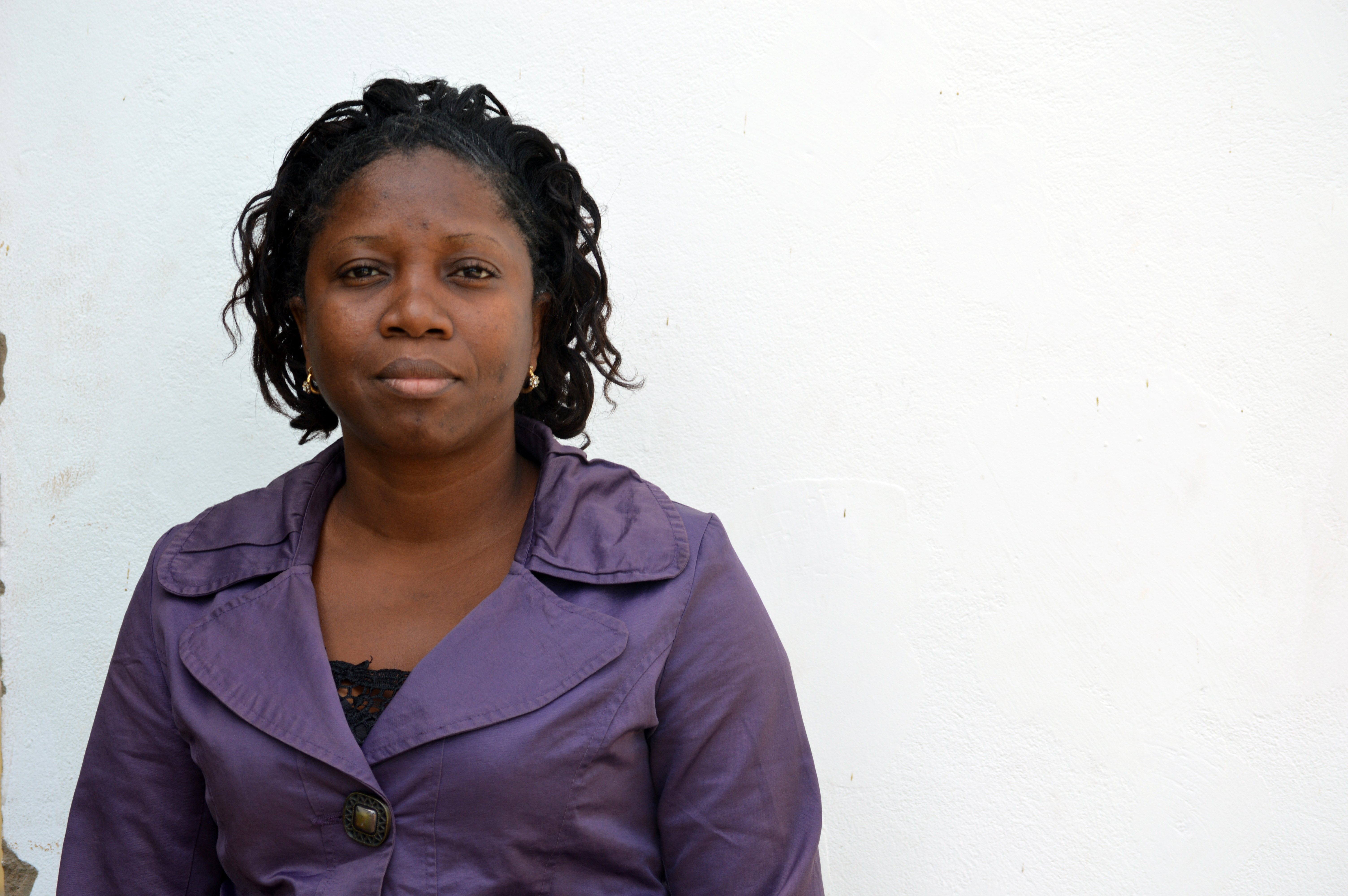
Pedan Marthe Coulibaly human rights defender Côte d'Ivoire.


Pedan Marthe Coulibaly, human rights defender from Côte d’Ivoire

Ms Pedan Marthe Coulibaly is the national coordinator of the “Coalition Ivoirienne des défenseurs des droits humains” (human rights defenders coalition from Côte d’Ivoire). She was part of the NGO delegation sent by ISHR to participate in the 58th session of the African Commission on Human and Peoples’ Rights. On 11 April 2016 ISHR published the following interview on her work

The Coalition Ivoirienne des Défenseurs des droits humains (CIDDH) was founded in 2004 and gathers together more than a dozen national civil society organisations. Its two main missions are to protect human rights defenders and to promote their rights. This work mostly involves raising awareness of and increasing the capacity of defenders to make use of human rights protection mechanisms. A founding member of the Centre féminin pour la démocratie et les droits humains (Women’s centre for democracy and human rights) in Côte d’Ivoire, Ms Coulibaly has been advocating for human rights in general, and women’s rights in particular, for over a decade. She started engaging on these issues immediately after graduating, when she realised that during the 2002 national crisis women were among the most exposed to human rights violations.

What does the coalition do?

The first activity of CIDDH is to ‘connect with the member organisations on a regular basis and seek information about the realities of their work’. The aim is to stay in tune with the challenges facing grassroots human rights defenders and, when needed, to identify ways of assisting them.

When informed about a difficulty facing a defender, the coalition carries out a risk analysis of the situation. If the risk is deemed high, the coalition can decide to alert partners, such as the West African human rights defenders network; send communications to the United Nations and African Commission Special Rapporteurs on human rights defenders; or collect resources among its network in order to ‘move the defender to a safe place’.  Sometimes, the coalition may also publish press releases for distribution at press conferences.

Who are the most exposed defenders in Côte d’Ivoire? 

Given her pivotal role within CIDDH, Ms Coulibaly has been able to identify some of the most at risk defenders in Côte d’Ivoire, who are typically those working on sensitive issues, such as extractive industries. 

‘When they go to the field, defenders working on extractive industries are often forced to hide their true identity and the name of their organisations. (…) They can be subject to intimidations or threats from industries, sometimes with the support of administrative authorities.’

Defenders who question certain cultural practices, such as female genital mutilation, are also often the targets of  hostile community reactions.

The role of the coalition in the development of the HRD law

CIDDH was at the frontline throughout the drafting and adoption process of the recent law on human rights defenders in Côte d’Ivoire. The coalition was first invited by the Ministry of Human Rights to participate in the validation session of the draft law. CIDDH then initiated an intensive advocacy campaign to ensure the recommendations and concerns they shared at the validation session had been taken into account.

CIDDH also intended to check if the parliamentarians targeted during the advocacy campaign had appropriated the recommendations as their own and shared them during the adoption process. One of the concerns exposed by the coalition was the need to include the notion of ‘threat’ in the list of dangers facing women human rights defenders. This concern was duly included in the adoption process. Regretfully, the coalition’s opposition to the obligation for human rights defenders to submit annual reports to the State fell on deaf ears.

The coalition subsequently attended, as an observer, the parliamentary session to adopt the law, where they were relieved to witness that most of the recommendations made by human rights defenders had been retained.

Following the adoption, CIDDH focused on training human rights defenders so they could get to know the content of the law and ‘make it theirs so as to promote their own rights’. The coalition intends to continue advocating for the adoption of an implementation decree for the law, as well as for an implementation mechanism to be put in place.  

More proactivity for better protection 

While recognising the crucial role of ‘emergency funds’ provided by partners such as Frontline Defenders when defenders’ rights are violated, Ms Coulibaly insists on the need for and the difficulty in achieving a more proactive approach.

 ‘We should not wait to see real dangers before starting to collect resources to protect defenders (…) If the coalition had permanent resources for a staff member dedicated to the protection of defenders, this would make the work of defenders a lot easier.’

Ms Coulibaly also calls for the international community to step in for the protection of human rights defenders. She stresses that ‘collaboration with the international community should go beyond exchange of information, communications or reports’ and take the form of ‘concrete measures’ to protect defenders.

Putting defenders at the heart of the African Year of Human Rights

With 2016 being declared the African Year of Human Rights by the African Union there is an opportunity to make an assessment of the situation of human rights defenders in Africa, says Ms Coulibaly. The progress made to date and remaining challenges should be identified. It is also essential that each country sets up strategies to implement laws protecting human rights and that these laws have a real effect on the ground.  

‘It is a real problem: protocols are being adopted, legal instruments are being adopted, but these documents have no impact on real life. No one can feel any change.’

Source: Defender profile : Pedan Marthe Coulibaly, woman human rights defender from Côte d’Ivoire | ISHR