Purpose:To inform the High Commissioner’s report pursuant to the Human Rights Council resolution 59/10.
In its resolution 59/10, the Human Rights Council requested the United Nations High Commissioner for Human Rights to “prepare a thematic report in follow-up to the report containing practical recommendations for the creation and maintenance of a safe and enabling environment for civil society, based on good practices and lessons learned, submitted to the Human Rights Council at its thirty-second session, to review progress against the recommendations contained therein, to identify new and emerging trends concerning civil society space, including through an analysis of the specific contribution and risks faced by underrepresented parts of civil society, and to provide an updated set of recommendations in the light of those trends, and to present the report to the Council at its sixty-third session.”
OHCHR invites States to respond to this online survey and share good practices and measures to protect and promote civic space in their countries, with a focus on the five areas outlined in the previous report (A/HRC/32/20) – as reflected below – on “practical recommendations for the creation and maintenance of a safe and enabling environment for civil society, based on good practices and lessons learned.” Please take the online survey here: English – French – Spanish
OHCHR also invites civil society, non-governmental organizations, national human rights institutions, United Nations entities and other relevant stakeholders, to respond to this online survey. If you are an organization working in a specific country, please provide information related to that country or context. If you represent a global and regional organization, please consider providing information for as many regions and/or countries as appropriate. Please take the online survey here: English– French– Spanish
On 2 April 2025 AFP reported that language used by President Donald Trump and his government to slash US-funded foreign aid is being adopted by other governments to attack NGOs and independent media.
Civil society groups in parts of Eastern Europe and beyond — long targeted by discredit-and-defund campaigns because of the light they shone on corruption and lack of transparency — are now also dealing with Trumpian rhetoric, human rights groups said.
Trump administration statements “are being weaponised in real-time by autocrats and dictators across Eastern and Southeastern Europe to justify and deepen their crackdown on independent media, NGOs, and human rights defenders,” Dave Elseroad, of the Human Rights House Foundation, told AFP.
From Hungary to Serbia, to Georgia and Bosnia, non-governmental organisations and independent media outlets working to bolster democratic norms are hearing officials borrow White House phrases to justify officials’ stances against them.
It includes Trump’s claim that the US Agency for International Development (USAID) was “run by radical lunatics”, and his billionaire advisor Elon Musk’s calling the agency a “criminal organisation” that needed to be put “through the woodchipper”.
Such terms are “seriously encouraging language used in Budapest or in Belgrade or in Bratislava or Banja Luka,” said Miklos Ligeti, head of legal affairs at Transparency International’s Hungary chapter.
In some countries, the verbal ammunition comes on top of a sudden funding gap wrought by the dismantling of USAID, which is hitting the NGO sector hard. USAID had been providing funding to a vast array of independent organisations in countries like Hungary where such groups have been “financially suffocated domestically,” Ligeti told AFP.
Hungarian Prime Minister Viktor Orban has hailed the crackdown on USAID by his ally Trump as a “cleansing wind”. Orban has vowed to “eliminate the entire shadow army” he says is made up of his political enemies, judges, the media and NGOs.
The UN rights office in Geneva slammed “escalating attempts worldwide to weaken and harm domestic and international human rights systems, including defunding and delegitimising civil society”. It said that “it is all the more worrying to see these trends also emerging in established democracies”.
In some countries there is a direct line between utterances in Washington and action to undermine civil society. In Georgia, for example, the ruling Georgian Dream party last month called for the country to adopt its own version of the US Foreign Agents Registration Act (FARA) — which observers warn could be turned against NGOs receiving foreign funding.
And in Serbia, which has been rocked by months of protests over government corruption, authorities referred to statements made by Trump and other top US officials to justify raiding a number of NGOs. The Serbian government saw the Trump administration’s labelling of USAID as a “criminal organisation” as “a fantastic opportunity to basically punish civil society”, said Rasa Nedeljkov, programme director at the Center for Research, Transparency and Accountability (CRTA).
CRTA’s offices were raided in February by heavily armed police. The operation took 28 hours because prosecutors had CRTA staff manually copy documents related to USAID-funded projects to hand to them, rather than accepting digital versions.
Serbian authorities have explicitly referred to statements by Trump and other US officials to justify raids on a number of NGOs.
Pavol Szalai, head of the EU-Balkans desk at Reporters Without Borders (RSF), said leaders in a string of countries were using “the suspension of USAID by Trump to attack media which had received USAID funds”. He said such groups were being doubly punished: they “lost their funding from one day to the next” while also increasingly being “targeted by intimidation”…
He warned that, “as these media retreat.. they will be replaced by propaganda”.
Michelle Langrand for Geneva Solutions of 20 March 2024 has an exclusive report on the liquidity crunch and its effect on the UN human rights branch. Here her report in full:
UN secretary general António Guterres and UN human rights high commissioner Volker Türk at the opening of the Human Rights Council 55th session in Geneva, 26 February 2024. (UN Photo/Elma Okic)
As the United Nations faces its worst liquidity crisis in recent history, experts, staff and observers worry about the ramifications on human rights work. Correspondence seen by Geneva Solutions reveals concerns at the highest levels of the UN human rights branch in Geneva as they are forced to scale back their operations.
A patchwork of cost-saving measures taken over the winter holidays at the Palais des Nations in Geneva, from keeping the heat down and closing the premises for two weeks, revealed how serious the UN’s cash troubles were after states failed to fully pay their bills in 2023. The new year didn’t brighten prospects either. In January, UN secretary general Antonio Guterres in New York announced that “aggressive cash conservation measures” would be taken across the organisation to avoid running out of cash by August as year-end arrears reached a record $859 million.
It couldn’t have come at a worse time for a cash-strapped UN Office of the High Commissioner for Human Rights (OHCHR) as worsening human rights crises worldwide add to its workload. The Geneva-based office acts as a secretariat for dozens of independent experts, investigative bodies and human rights committees that rely for the most part on the UN’s regular budget and few voluntary contributions from states. Between vacancies and travel restrictions, both insiders and outsiders worry that planned cuts could severely impair the UN’s crucial human rights work.
Understaffed and overwhelmed
On 12 February, just as the UN’s Geneva headquarters prepared for one of its busiest months hosting the Human Rights Council’s first session of the year, bad news came from New York. Countries had only paid one-third of the UN’s $3.59bn regular budget for 2024, and instructions from the higher-ups were that the hiring freeze imposed in July 2023 would be extended throughout 2024 across UN operations. The organisation said that $350 million would need to be shaved off through spending restrictions on travel, conference services and others.
Human rights bodies, where vacancies had been piling up in the last months, would have to continue to run with reduced staff. In a letter from 23 December, UN high commissioner for human rights Volker Türk had already warned Council president Omar Zniber that 63 posts in over 10 investigative mandates were waiting to be filled while recruitments had been placed on hold. Currently, there are active investigations on serious human rights abuses in Ukraine, Iran, Syria, South Sudan and Nicaragua among others.
“While no compromise has been made in terms of methodology, some of the investigative bodies have had to narrow the scope of both their investigations and their upcoming reports,” the letter reads.
The fact-finding mission on Sudan was one of the bodies immediately affected. Created in October to collect evidence on atrocities committed during the last year of bloody conflict in which thousands of civilians have been killed and millions displaced, the probe body has struggled to begin work. The independent experts composing it, who aren’t paid, have been appointed since December, but as of late February, the Human Rights Office hadn’t been able to hire a support team due to insufficient cash flow, according to a Human Rights Council spokesperson. The experts, who have been mandated for one year, are due to present their findings in September, with observers wondering whether the western-led proposal will garner the political backing it needs to be renewed.
That isn’t the only initiative struggling to get off the ground. “We have met with some new mandates, and we realised that they barely have a team, if any, to support them,” said one NGO member who collaborates with the human rights mechanisms and asked to remain anonymous. Observers say most investigative bodies, even older ones, are impacted at some level.
Kaoru Okoizumi, deputy head of the Independent Investigative Mechanism on Myanmar (IIMM) – the largest human rights probe team – said six out of 57 staff positions funded through the UN’s regular budget were vacant, significantly affecting their work. The IIMM, which also relies on a trust fund made up of voluntary donations and doesn’t depend on the OHCHR’s budget, is coping better than most.
Expert committees that oversee states’ compliance with international human rights law, such as on children’s rights and on torture, are also stretched thin. One staffer said they were required to take on more work than normally expected, for example, having to conduct research and compile information about several countries at the same time for one session. “It’s just too much!” they said, adding that their team was short of more than 10 people.
Another worker from the OHCHR’s special procedures branch, who said was covering for several vacant spots, conceded that the quality of work is affected in such conditions. “Of course, you won’t work as well after pulling all-nighters,” they said. Türk’s letter to Zniber acknowledges that the secretariat was having trouble supporting some 60 special procedures, which are UN-backed independent experts or groups of experts assigned to report to the council on a specific theme or country.
While the problem of understaffing isn’t new, and many also point to cumbersome months-long recruitment processes that are often incompatible with brief mandates, the situation has worsened. To compensate for the hiring freeze, the UN has also increasingly resorted to temporary contracts that last for a few months and can be exceptionally renewed for up to two years. The two workers, who have living on contract to contract for more than a year, said that there is fear that temporary staff may be among the first to go, along with consultants. “In the food chain of contracts, we’re at the bottom,” one of them said.
A slim year for the Human Rights Council
The UN’s human rights branch, which receives as little as four per cent of the UN’s total budget – around $142 million – just enough to cover one third of its activities, has been scrambling to cut back on spending. On Friday, in another letter seen by Geneva Solutions, Türk informed Zniber that his office would be forced to axe certain activities this year.
OHCHR spokesperson Marta Hurtado confirmed the information to Geneva Solutions by writing: “The office has developed an internal contingency plan, which provides for adjustment pending the complete availability of regular budget resources become available.”
Among the measures it proposes is postponing some activities to 2025 altogether while as many consultations and meetings as possible would be moved online without interpretation, according to Hurtado, since the UN in New York hasn’t authorised it for virtual meetings. For those that will be held in person, resources to fly in experts and civil society will also be reduced.
The UN’s recent decision that it would no longer provide online services for meetings has drawn outcry from rights campaigners who argue it curtails the possibility of civil society groups and states with little resources to participate. While the move has been attributed to matters of rules, observers can’t help but wonder if it isn’t, in the end, about the money. Echoing the concerns in the letter, Türks described the impact of these measures on participation from experts and other stakeholders as “deeply regrettable”.
Another issue raised by the UN rights chief is the difficulty that his office has been facing in providing technical assistance to national authorities. He gave the example of the Marshall Islands, which requested help in 2022 to assess the human rights impact of US nuclear testing in its territory in the 1940s and 50s. A source said that although a first visit finally took place this year, work has been delayed.
Marc Limon, director of the human rights think tank Universal Rights Group, remarked that work by the Council to help states improve their rights record through capacity-building support was unfortunately “almost inexistent” and regretted that resources couldn’t be spared for what he calls the “hard end of human rights diplomacy”. “While UN investigations must be protected, there is little threat to key commissions of inquiry due to the huge budgets allocated to them in the first place,” he said. Most probe bodies have between 17 to 27 staff while special procedures usually have one or two assistants.
The Moroccan ambassador forwarded Türk’s letter to fellow states on Monday and said a draft decision regarding the measures would be tabled for the council to consider at the end of the session at the beginning of April.
Human rights credibility at stake
One that has raised eyebrows but isn’t explicitly mentioned by the UN rights chief is limiting country visits by UN experts to one visit instead of two. Hurtado acknowledged that special procedures and other expert mechanisms, including probe bodies, would see their country visits “reduced” while not commenting on the number of authorised visits.
One UN expert, speaking under the condition of anonymity, voiced concern over the restriction. “Country visits are extremely important because they give us a real intimate understanding of a place and the state gets direct feedback on what they’re doing well and what they can do to improve, while also energising civil society,” they said, point out that experts were already barely able to conduct visits during the Covid-19 pandemic.
Limon commented that while it was a wise choice to cut back on some of the “superfluous” debates and activities, reducing special rapporteur trips to countries to one per year, an idea that he said has been floated around before, showed the office “had its priorities wrong”.
Travel restrictions could also have significant implications for criminal cases. Okoizumi said her Myanmar team only had 65 per cent of its usual travel budget, which is key for the Geneva-based group to reach victims and witnesses. “We do our witness interviews in person because we think it’s important in a criminal investigation to make sure that interviews are being conducted in a way that preserves the integrity of the testimony,” she said.
The body, set up in 2018 by the Human Rights Council, is currently working to support a case brought by The Gambia against Myanmar for violating the Genocide Convention at the International Court of Justice, as well as investigations on crimes against the Rohingya at the International Criminal Court and Argentina.
“These are very concrete proceedings and our ability to support them will be impacted by the number of interviews that we’re able to conduct or the analysis that we’re able to produce and share with these jurisdictions,” Okoizumi said, noting that the ICJ case is particularly time-sensitive as both parties were expected to make submissions this year.
The international lawyer said this has meant shifting resources to meet shorter-term deadlines at the risk of putting aside other objectives. “The whole point of having an investigative mechanism is to make sure that we can collect the evidence very soon after a crime happens, even if there isn’t an investigation or prosecution until many years or even decades later. So, shifting our resources in that way, overall will have a negative impact,” she explained.
Top experts within the human rights branch have also rang alarm bells about the wider repercussions of the funding crisis. In a letter seen by Geneva Solutions addressed to the president of the General Assembly, Dennis Francis, dated 23 February, 10 chairs of human rights committees warned that the liquidity crisis “severely threatens the credibility and efficiency of the United Nations human rights system”.
The experts said the treaty bodies were “being denied even the minimum staff and operational resources required to deliver their critical mandates to advance human rights” at a time of “such a severe existential crisis of multilateralism and of non compliance with international law”.
Referring to some of the measures being considered, the signatories also argue that suspending sessions “for the first time in their over six decades of history for financial reasons, together with visits to prevent torture and other human rights violations” would lead to “concrete and irreversible” harm.
“When the collective security system has failed to honour the ‘never again’ pledge of 1945, the least to do is to strengthen human rights monitoring mechanisms, so that human rights violations are documented, even when justice seems extremely challenging to serve. We note with deep regret that the opposite is being done,” the custodians of human rights law wrote.
Billy Porter is an American actor and singer, who first gained notice performing on Broadway before embarking on a solo career. He is a Grammy, Emmy and two-time Tony Award winner. He is a trailblazer in especially in the LGBTQI+ community including being first openly gay Black man to win an Emmy award. His performance of Audacity at the Royal Albert Hall in London was a world exclusive performance for the Human Rights 75 Concert on 10 December, 2023 in commemoration of the 75th anniversary of the Universal Declaration of Human Rights. #HumanRights75 and #act4rightsnow
Volker Türk speaking to journalists after a press briefing at the Palais des Nations in Geneva, 24 May 2023. (Geneva Solutions/Paula Dupraz-Dobias)
Gabriela Galindo on 24 May 2023 in Geneva Solutions reports that Volker Türk said that $800 million are needed yearly, noting rich nations are quick to splurge when it comes to banks or the military, but not ‘when it comes to people’.
Dire humanitarian crises are piling up across the world, yet the United Nations’ human rights watchdog is still strapped for cash, its chief warned Wednesday.
But as these parallel crises continue to flare and some spiral, Türk warned that his organisation was running on empty and chided global leaders for not taking human rights funding more “seriously”.
“The needs have exponentially increased, but there isn’t the commensurate funding available on the humanitarian front – that’s just the reality,” he said. “And, unfortunately, that trend has been there for quite a number of years.”
“We have this combination of protracted conflict situations; we have the increase in new and emerging crises and [in] both non-international armed conflict and international armed conflict,” he said, referring to the Russian invasion of Ukraine.
Responding to a question on their funding needs, the UN rights chief said he “would want to see a doubling, which would be about $800 million per year, for the organisation”s
Türk addressed a grim roster of situations currently followed by the OHCHR, where human rights were being trampled on amid active armed conflicts, including in Sudan and Ukraine, or at the hands of authoritarian governments in Myanmar and Iran.
In Sudan, he said that the “senseless” fighting between two generals vying for power had civilians “besieged” as ceasefires were broken and added that his office had documented at least 25 cases of sexual violence…
Türk added that he was “deeply troubled by the growing phenomenon of anti-rights movements” targeting asylum seekers in the US and Europe as “hateful narratives against migrants and refugees also continue to proliferate”, spurring “anti-migrant” laws and policies that undermine basic human rights and international refugee laws.
“The developments that are unfolding in various countries including the United Kingdom, the US, Italy, Greece and Lebanon are particularly concerning,” he said, as they “appear designed” to hinder the right to seek asylum, to penalise citizens for assisting those in need or to organise returns in “unlawful, undignified and unsustainable ways”.
“We have some [crises] in the headlines all the time, but others are not. Haiti is a good example. There seems to be (…) no sense of urgency when it comes to dealing with a situation like this.”..
“When you look at how quickly billions can be made available when there is a banking crisis or and – I’m sure, rightly so – including military expenditure and so forth… when it comes to people and the plight of people, there doesn’t seem to be the same,” he said.
“Donor countries, they have a budget for peace and security, they have a budget for development (…) but they don’t actually have a budget down for human rights,” he said. “It is actually important to take human rights seriously, not just by (…) coming to the [UN Human Rights] Council and having all these discussions here and working with us, but also by having and increasing the funding for the organisation.”
The Office of the United Nations High Commissioner for Human Rights and 11 international and regional rights organisations have demanded that the government must immediately cancel its decision to deregister rights organisation Odhikar and allow the rights organisation to function without fear of reprisal.
Ravina Shamdasani, spokesperson for the UN High Commissioner for Human Rights, said in a press briefing in Geneva statement on Friday, ‘We are concerned by the Government of Bangladesh’s decision not to approve the renewal of registration for Odhikar, a prominent and respected human rights organisation in the country’.
She said, ‘We urge the government to immediately reconsider this decision, and to ensure that Odhikar has the ability to seek full judicial review of any such determination. We are further concerned that this decision will have a chilling effect on the ability of civil society organisations to report serious human rights violations to UN human rights mechanisms.’
Odhikar has documented and reported on rights violations for many years to the Office of the UN High Commissioner for Human Rights, UN Special Procedures mandate holders and human rights treaty bodies, she mentioned in the briefing available on the website of the UN body.
Intimidation and reprisals against Odhikar have been documented since 2013, and appear to have intensified, with accusations of ‘anti-state’ and ‘anti-government’ activities, she added.
‘There has been increased surveillance of its activities in recent months. The UN Secretary-General has also raised concerns about reprisals against Odhikar over the past decade for cooperating with the UN,’ she said.
On June 5, 2022, the bureau sent a letter to Odhikar, denying its application for renewal of registration. Odhikar’s application for renewal of its registration with the NGO Affairs Bureau under the Prime Minister’s Office has been pending since 2014, she said, adding that Odhikar’s bank account was also frozen in 2014. ‘We call for Odhikar to be permitted access to its banked funds pending reconsideration of the renewal application,’ said the UN official.
Eleven international and regional human rights organisations, meanwhile, in a joint statement called on the government to immediately reverse the decision to deregister Odhikar.
‘Human rights defenders should be allowed to conduct their work without fear of reprisals, intimidation, and harassment from the authorities,’ read the statement issued by Human Rights Watch, Amnesty International, Anti-Death Penalty Asia Network, Asian Federation Against Involuntary Disappearances, Capital Punishment Justice Project, Elios Justice at Monash University, Human Rights First, International Coalition Against Enforced Disappearance, International Federation for Human Rights, within the framework of the Observatory for the Protection of Human Rights Defenders, Robert F Kennedy Human Rights and World Organisation Against Torture. {See also: https://humanrightsdefenders.blog/2022/03/17/un-experts-urge-bangladesh-to-end-reprisals-against-human-rights-defenders/]
The rights organisation in the statement said this latest development appeared to be part of a pattern of reprisals by the government against human rights organisations groups and defenders following the US sanctions against the Rapid Action Battalion on December 10, 2021. [See https://humanrightsdefenders.blog/2022/03/21/bangladesh-sanctions-seem-to-work/]
On 14 June 2022 Forum Asia in a strong statement said: FORUM-ASIA expresses its solidarity with Odhikar and calls on the Bangladeshi authorities to immediately recall the decision of rejecting Odhikar’s renewal application thereby ensuring it to carry on their human rights work. FORUM-ASIA reiterates its earlier call to repeal the Foreign Donation (Voluntary Activities) Regulation Act, 2016 as it imposes restrictions on civil society organisations’ ability to access resources.
The same day, the Asian Human Rights Commission (AHRC) and CIVICUS: World Alliance for Citizen Participation said they “are extremely alarmed by the decision of the government to arbitrarily revoke the registration of Odhikar, a leading human rights organisation in Bangladesh. This move is another blow to civil society and human rights defenders who have been facing systematic repression by the Sheikh Hasina regime.“
Ms. Claudia MAHLER (Austria) is the new Independent Expert on the enjoyment of all human rights by older persons. This mandate gained in importance with the Corona virus pandemic.
Mr. Balakrishnan RAJAGOPAL (United States of America) is the new Special Rapporteur on adequate housing as a component of the right to an adequate standard of living, and on the right to non-discrimination in this context.
Mr. Tomoya OBOKATA (Japan) is the new Special Rapporteur on contemporary forms of slavery, including its causes and its consequences.
Mr. Olivier DE SCHUTTER (Belgium) is the new Special Rapporteur on extreme poverty and human rights.
Ms. Alena DOUHAN (Belarus) is the new Special Rapporteur on the negative impact of unilateral coercive measures on the enjoyment of human rights.
Mr. Michael FAKHRI (Lebanon) is the new Special Rapporteur on the right to food
Mr. José Francisco CALÍ TZAY (Guatemala) is the new Special Rapporteur on the rights of indigenous peoples.
Ms. Mama Fatima SINGHATEH (Gambia) is the new Special Rapporteur on the sale and sexual exploitation of children.
Ms. Mary LAWLOR (Ireland) is the new Special Rapporteur on the situation of human rights defenders.
Mr. Thomas H. ANDREWS (United States of America) is the new Special Rapporteur on the situation of human rights in Myanmar.
Ms. Isha DYFAN (Sierra Leone) is the new Independent Expert on the situation of human rights in Somalia.
The United Nations’ human rights office in Geneva confirmed on Friday a Reuters report that three-member team of international experts would conduct an inquiry into the murder of Saudi journalist Jamal Khashoggi. [https://humanrightsdefenders.blog/2019/01/26/u-n-rapporteur-agnes-callamard-to-investigate-kashoggi-murder/]. The other two panel members – in addition to Agnes Callamard – are British barrister Helena Kennedy and Duarte Nuno Vieira, a pathology expert and professor at the department of legal and forensic medicine and ethics and medical law at Coimbra University, Portugal.
The trio will visit Turkey from Jan 28-Feb 3 and plan to report to the U.N. Human Rights Council in June, it said.
There was no word on whether the panel would seek access to Saudi Arabia or whether the kingdom would cooperate. The Saudi diplomatic mission in Geneva did not respond to inquiries. On 29 January Human Rights Watch stated that the team has in fact requested to visit Saudi Arabia. HRW added that” Once Callamard presents her findings to the Human Rights Council, UN member states should explore avenues for holding to account everyone responsible for Khashoggi’s murder, from the operatives who dismembered him with a bone saw to any officials who ordered or organized the killing.”
But there is more going on: The UDHR, based on the powerful premise that we are all “born free and equal in dignity and rights,” has spread further and been translated into more languages than any other text ever. The aim of the celebratory events sponsored by the UN Human Rights Office is “to shine a light on the many ways in which universal human rights contribute to the daily lives of people everywhere.” Signature events will be held in 14 cities, spanning seven time zones, with each spotlighting a human rights theme relevant to that location:
Africa
Dakar (Nov 30) – Our right to accountability when rights are violated
Pretoria (Dec 7) – Young people standing up for rights
Marrakesh (Dec 10) – The human rights of migrants
Asia-Pacific
Suva (Nov 16) – Our right to live on a healthy planet
Bangkok (Nov 28) – The rights of people on the move
Europe
Manchester (Nov 12) – Our right to live in harmony
Paris (Dec 4) – The city where the UDHR was adopted in 1948
Geneva (Dec 13) – Upholding rights for a future we all want
Latin America
Mexico City (Dec 6) – Our right to defend human rights
Panama City (Dec 10) – Children as defenders of rights
Santiago (Dec 10) – Women’s rights are human rights
Middle East
Doha (Dec 9) – Our right to peace
North America
Los Angeles (Dec 10) – Human rights in the city
New York (Dec 18) – UN Human Rights Award ceremony
In addition to the 14 signature events, each of which will be accompanied by a social media campaign featuring prominent global and local public figures standing up for human rights, numerous other celebrations are being organized by Governments, NGOs, academic institutions, and many others all over the world.
“I urge everyone to join in celebrating the 70th anniversary of the Universal Declaration. Join us at the public events if you can, or organize one yourself. Any way that you can take part actively – shining your light on rights – will make a difference, even if it is simply by participating on social media,” said UN High Commissioner for Human Rights Michelle Bachelet. “By doing so, we can show just how precious the UDHR is to people all over the world, and the universal nature of the values it contains. It was an inspiration, a sensation, in 1948, and it is still an astonishing and inspiring document today.”
“The preservation of the human rights set out in the Declaration is vital to each and every one us – woman, man and child. Human rights are essential for the protection and dignity of our loved ones, our families and friends, our neighbours and our communities – for all of us, whether living in the smallest village or in the greatest of cities. Violations of anyone’s rights potentially undermine the rights of all of us. So I urge everyone to use the UDHR’s 70th anniversary to reflect on what rights mean, and think of ways we can actively stand up for the rights of not just ourselves, but of everyone else.”
In addition to the events taking place over the next month, on 9 November the UN Human Rights Office will start publishing a series of short articles on each of the 30 Articles of the Universal Declaration. These will be published – one article a day – on www.ohchr.org and issued to media across the world.
For more information on the events listed in this advisory, please contact Rajat Khosla at rkhosla@ohchr.org / +41 22 917 3311
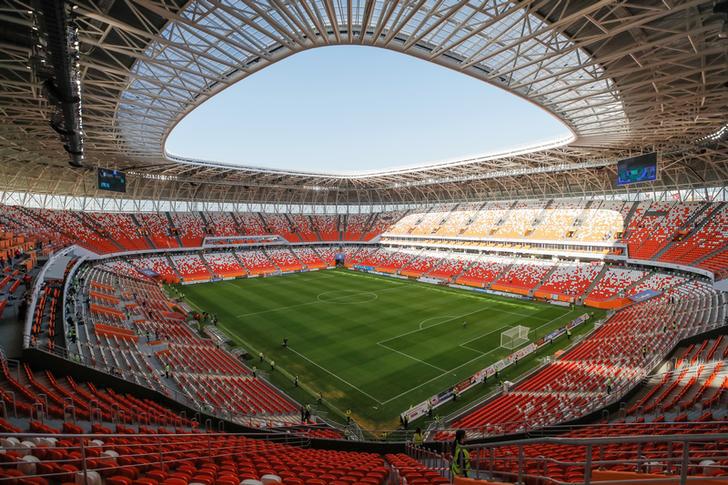
On 25 June 2018 a new Center for Sport and Human Rights was established to curb human rights abuses tied to sports and assist victims. The Geneva-based center will also address abuses linked to mega-sporting events such as the Olympics and the World Cup, under way now in Russia [see also: https://humanrightsdefenders.blog/2018/06/07/the-bravest-world-cup-team-in-russia-fifa-human-rights-defenders/]. The center was established under the auspices of the Institute for Human Rights and Business (IHRB), and is chaired by Mary Robinson, the former president of Ireland and former United Nations high commissioner for human rights.
“Major sporting events have been marred by jailing and harassment of journalists, abuses of workers’ rights, environmental destruction, and abusive sweeps of poor neighborhoods,” said Minky Worden, director of global initiatives at Human Rights Watch. “Sports fans don’t want to sit in a stadium built by exploited, cheated, and abused workers – or worse, a facility that cost lives to construct.”
The Centre for Sport and Human Rights will seek to provide resources for learning and remediation, working to limit and ultimately eradicate the serious human rights violations that often accompany world sporting events. It will seek to increase the accountability of those involved, provide a space for victims to share their stories and seek justice, and help prevent future human rights abuses tied to sports.
The platform is an unprecedented coalition of intergovernmental organizations, governments, sports bodies, athletes, local organizing committees, sponsors, broadcasters, nongovernmental organizations, trade unions, employers, and national human rights institutions that have come together to show that sport has the power to create positive change.
The next World Cup will be hosted by Qatar in 2022. Since December 2010, when Qatar won its bid from FIFA to host the 2022 World Cup, the country has embarked on a massive building spree – restoring or building eight stadiums, hotels, transportation, and other infrastructure. Qatari authorities have said they are spending US$500 million per week on World Cup-related infrastructure projects. It is important for Qatar to respect workers’ rights and to provide remedies for any abuses, Human Rights Watch said. The situation is particularly urgent for workers building the stadiums and other facilities, given the country’s intense heat and humidity. [see also:https://www.ohchr.org/EN/NewsEvents/Pages/DisplayNews.aspx?NewsID=23147&LangID=E]
The Center includes sports organizations like FIFA (The International Federation of Football Association), the International Olympic Committee, UEFA (The Union of European Football Associations), the Commonwealth Games Federation, and other sport institutions seeking to better manage the human rights risks associated with their competitions. It will also include non-governmental watchdogs like Human Rights Watch, Amnesty International, Transparency International, global trade unions, and the UN Office of the High Commissioner for Human Rights.
“Sport has the potential to inspire and celebrate human achievement. So there is no reason one worker should die or one journalist should be jailed to deliver a major sporting event,” Worden of HRW said. “We expect the center to move the ball forward to protect the rights of workers, journalists, athletes, environmentalists, and fans.”



 Hans Thoolen on Human Rights Defenders and their awards