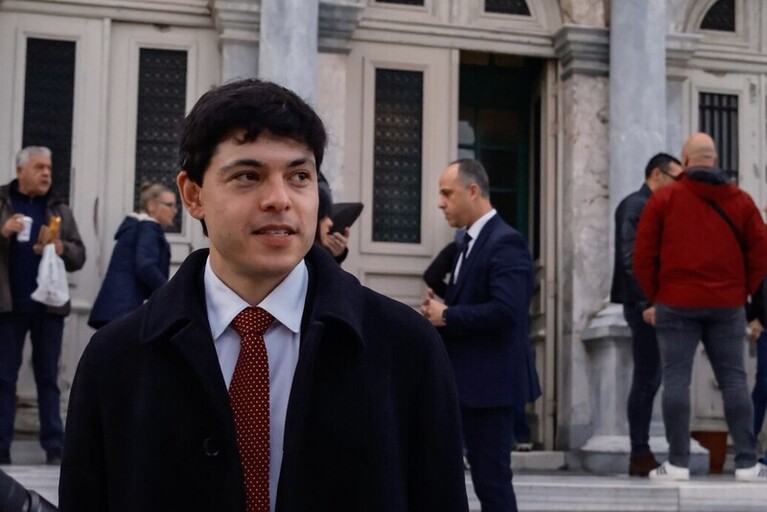
My ordeal started at about 2am one morning in February 2018, when I was arrested by the Greek police. People were fleeing conflicts at home and coming to Europe seeking safety in unseaworthy boats and I was helping the Emergency Response Center International to conduct search and rescue activities.
I was detained without understanding what exactly was happening; we were provided neither a lawyer nor an interpreter. After two nights, we were released “pending further investigation.” We continued to do search and rescue. After all, we had done nothing wrong. In fact, we continued to cooperate with the very authorities that had arrested us.
Then, in August 2018, six months after our initial arrest, my colleague and I were detained again. This time, we were charged with serious crimes, including forgery, the illegal use of radio frequencies, espionage, money laundering, being members of a criminal organization, and facilitating illegal entry….Finally, on 15 January this year, I was acquitted. The prosecutor at trial stated there was no evidence of criminality, and the panel of judges unanimously agreed that my 23 co-defendants and I were motivated by, and engaged in, legal humanitarianism.
Whilst I am delighted not to be returning to prison, it has taken far too long for this absurd prosecution to collapse. In the interim, the damage has already been done. EU states’ authorities have obstructed civilian rescue efforts, and over 32,000 lives have been lost at Europe’s borders since 2014. Meanwhile, dozens of humanitarians across Europe face similar prosecutions, obstruction, intimidation and harassment. Sadly, my case was not the exception but part of a wider pattern of states criminalizing humanitarian work.
The current effort to reform EU anti-smuggling legislation, the so-called “Facilitators Package” offers an opportunity to address some of the issues that have led to our baseless prosecution. However, the proposed revisions to the legislation might inadvertently increase the risk of criminalizing rescue workers – meaning future prosecutions will still be possible and may not end in acquittals like mine. They will also impact migrants, people of migrant origin and racialized people who all too often suffer from these policies.
As Amnesty International has highlighted, the proposal’s broad and vague provisions risk perpetuating the criminalization of refugees, migrants and human rights defenders. Any reform should clarify explicitly and in a binding manner that acts of humanitarian assistance or solidarity should be exempted from prosecution or punishment. Migrants who may have been smuggled themselves, or people assisting their family members should also be protected from criminal liability.
Through this reform, the EU has an opportunity to align with the EU Charter, UN Conventions and Smuggling Protocols, and treaties on maritime search and rescue, and to explicitly protect the right to life, the right to seek asylum, and the duty to render assistance.
As it stands, the proposal tries to expand the avenues to pursue humanitarian workers by introducing the crime of “public instigation” of irregular migration. This vague new provision could be misconstrued to harm refugees and migrants, advocates and activists protesting unjust migration laws or professionals providing legal information or assistance.
Prosecutors should focus on exploitation and violence, including by authorities summarily force people across land or sea borders.
Last year, the European Court of Human Rights found “serious evidence” of systematic pushbacks in Greece. Evidence of similar practices has been mounting across European borders. Without border monitoring, this already opaque crime becomes ever more obscure. Finally, trafficking, another cross-border crime, is arguably exacerbated by EU policy. A UN report published in 2018 found that asylum seekers in Libya face “unlawful killings, torture, arbitrary detention, gang rape, slavery, forced labour and extortion,” with apparent complicity by State actors. Nevertheless, the EU has for years financed the so-called Libyan Coast Guard.
Whether in the Facilitators Package or in its wider border policies, the EU must respect the rule of law and human rights.
The way to stop people taking dangerous journeys is providing safe and legal pathways for protection, commensurate in scale with the need for protection, and channels for regular migration for those seeking a better life. By denying safe routes, the EU pushes people into the arms and boats of smugglers and traffickers.
All the while, EU laws and narratives on stopping smugglers continue being used to criminalize migrants and people doing what they can to save lives or offer assistance. Unless the reform of the Facilitators package takes serious steps to uphold the duty to rescue and defend humanitarians, people will continue to risk jail for doing what is normal, human behaviour: helping others at risk.
Watch Seán as he discusses his case, his reflections and hopes for the future.
Listen to Séan’s full story in the first season of Amnesty’s podcast ‘On the Side of Humanity’.
On 4 December 2025, 24 human rights defenders, including Seán Binder and Athanasios (Nassos) Karakitsos, will appear before the Mytilene Court of Appeals, on the island of Lesvos. This comes seven years (!!) after their initial arrests. The human rights defenders are facing felony charges of ‘membership of a criminal organisation’, ‘facilitation of the entry of third country nationals into the country’, and ‘money laundering’. The charges stem from work carried out by the defenders in Greece between 2016 and 2018, where they assisted people on the move whose lives were at risk while trying to reach safety to the island of Lesvos. If convicted, they face up to 20 years of imprisonment.
Seán Binder and Athanasios (Nassos) Karakitsos are migrant rights defenders who worked with Emergency Response Center International (ERCI) between 2016 and 2018. The humanitarian work carried out by ERCI was extensive, and included helping more than 1000 people reach safety, organising workshops and swimming classes for migrant children in the Kara Tepe camp, and providing residents in the Moria camp with medical assistance. ERCI was registered as a non-governmental organisation and regularly cooperated with Greek authorities, including with the Greek Coast Guard on rescue operations. The organisation was dissolved after the criminalisation of its members and volunteers.
In September 2023, the Supreme Court upheld the Court of Appeals’ decision, delivered on 13 January 2023, to dismiss four misdemeanour charges of ‘forgery’, ‘espionage’, ‘possession of unlicensed radio’ and ‘infringement of state secrets’ faced by Seán Binder and seven other non-Greek speaking defenders. This was due to procedural flaws, including key documents, such as the indictments, having not been translated for the accused. In January 2024, the remaining sixteen human rights defenders, including Athanasios (Nassos) Karakitsos, were acquitted of the same charges. [https://humanrightsdefenders.blog/2021/11/17/greeces-mistaken-deterrence-migrants-and-aid-workers-facing-heavy-prison-sentences/]
On 21 August 2018, Lesvos Police arrested Seán Binder after he attended the police station voluntarily, having learned that another human rights defender had been arrested earlier that day. In the following days, they also arrested Athanasios (Nassos) Karakitsos, the field director of ERCI at the time. The human rights defenders were kept in pre-trial detention for more than one hundred days, accused of ‘people smuggling’, ‘money laundering’, ‘espionage’, and ‘membership of a criminal organisation.’ In December 2018, the human rights defenders were conditionally released on bail.
The upcoming trial is the second court case since 2018 initiated against the 24 human rights defenders based on their work, aiding, assisting and saving the lives of migrants and refugees, who were trapped in the Aegean Sea between Türkiye and Greece.
Front Line Defenders calls on the authorities in Greece to:
Immediately and unconditionally drop all charges against Seán Binder and Athanasios (Nassos) Karakitsos, and the other 22 human rights defenders who are also on trial;
Cease the criminalisation of human rights defenders who peacefully defend the rights of the migrants and refugees, including the humanitarian assistance to save the lives of people stranded at the marine and land borders;
Guarantee in all circumstances that all human rights defenders in Greece are able to carry
out their legitimate human rights activities without fear of reprisals and free of all restrictions, including judicial harassment.
August 14, 2024:The recent summons by the Athens Magistrate marks a new development in Mr Dimitras’ long history of judicial harassment, this time also prospecting the criminal prosecution of his wife, constituting a major violation of their right to defend human rights as well as of the recently adopted European Union (EU) anti-SLAPP Directive. The Observatory for the Protection of Human Rights Defenders (FIDH-OMCT) urges the Greek authorities to put an immediate end to this practice of harassment and to ensure that all human rights defenders in the country can carry out their legitimate activities without hindrance or fear of reprisals.
Panayote Dimitras is a Greek migrants’ rights defender and Spokesperson of the Greek Helsinki Monitor (GHM) who, over the past ten years, has faced continuous episodes of judicial harassment as well as vicious smear campaigns deliberately aimed at discrediting him and his work. In the latest development, Mr Dimitras and his wife – Nafsika Papanikolatou – were summoned on May 31, 2024, by an Athens Magistrate carrying out a preliminary criminal investigation into alleged breach of trust and money laundering (in violation of paragraph 1 of Article 390 of the Greek Criminal Code and paragraphs 1 b) and 1 c) of Article 39 of Law 4557/2018, respectively), following the opening of a criminal case by the Athens First Instance Prosecutor. Mr Dimitras and Ms Papanikolatou replied to the summons and their file is in the hands of the Athens First Instance Prosecutor since then.
Exactly one year earlier, on May 31, 2023, the Greek Anti-Money Laundering Authority had already ordered the freezing of Mr Dimitras’ and Ms Papanikolatou’s personal account, pending an investigation into alleged misuse of donations to the Communication and Political Research Society (ETEPE) – a non-profit research organisation co-founded in 1990 by Mr Dimitras that manages human rights NGOs like GHM and Minority Rights Group – Greece (MRG-G). The same day the order was issued, Greek media published apparently leaked and inaccurate information about the case, reporting that all Mr Dimitras’ personal assets as well as those of the NGOs headed by him had been frozen, and that the alleged money laundering concerned funding received mainly from the EU “to support human rights causes” that “was used for other purposes than those claimed.” In fact, only a joint personal account of Mr Dimitras and Ms Papanikolatou had been frozen, and Mr Dimitras was accused of misusing, between 2010 and 2015, private donations to ETEPE amounting to 178.666,80 Euros and not EU funding.
Mr Dimitras and Ms Papanikolatou received the official notification from the Anti-Money Laundering Authority only one month and a half after the decision to freeze their personal account was taken, thereby delaying their right to access a remedy. The account freeze was initially ordered for nine months and then renewed for another nine months in February 2024. At the time of publication of this statement, the freeze is still effective notwithstanding Mr Dimitras’ and Ms Papanikolatou’s repeated requests to terminate it.
In another court case, the Three-Member Misdemeanours Court of Athens acquitted, in April 2024, Panayote Dimitras after five years of judicial harassment. Mr Dimitras was prosecuted under criminal charges of “false accusation” and “aggravated defamation” (Articles 229 and 363 of the Criminal Code of Greece, respectively) for having denounced racist comments from a public official, Christos Kalyviotis, who in return filed a complaint against Mr Dimitras for defamation.
The Observatory recalled, already at that time, that the procedure initiated by Mr Kalyviotis was only one of many abusive cases brought against Mr Dimitras over the past few years and constitutive of strategic lawsuits against public participation (SLAPPs), abusive civil proceedings aimed at criminalising human rights defenders and journalists.
Notably, since November 2022 a criminal case is ongoing against Panayote Dimitras at the Kos Court of First Instance in which he is accused of “forming or joining for profit and by profession a criminal organisation with the purpose of facilitating the entry and stay of third country nationals into Greek territory” under several articles of Law 4251/2014 (Immigration and Social Integration Code), for having provided humanitarian assistance to asylum-seekers. On January 23, 2023, preventive measures were imposed pending trial. Mr Dimitras was banned from carrying out activities with the GHM, a measure which was subsequently lifted. He was also banned from leaving the country, subjected to the obligation to report to the police station of his place of residence every 15 days, and required to pay a bail of 10,000 Euros.
More than one-and-a-half year later, these last three measures are still in place, with the consequence that Mr Dimitras cannot travel abroad for GHM human rights activities. In August 2023, he requested that the travel ban be lifted so that he could attend international meetings, and to be allowed temporarily to report to the police station in Kelafonia, where he has a summer home. Both requests were rejected by the First Instance Court of Kos. The European Parliament expressed concern about these measures in its resolution of February 7, 2024, on the rule of law and media freedom in Greece (2024/2502(RSP)). The responses provided by the Supreme Court and the Greek government to the resolution are of particular concern and seem to constitute both smear campaigns against Mr Dimitras as well as violations to his right to a fair trial, as it was falsely claimed that he had been arrested and that he had contacted a human smuggler.
The Observatory recalls that the anti-SLAPP Directive adopted by the European Parliament entered into force on May 6, 2024. The Observatory encourages the Greek authorities to bring into force the laws, regulations and administrative provisions necessary to comply with this Directive and to ensure its effective implementation to protect human rights defenders from abusive proceedings.
The Observatory expresses concern about the continued judicial harassment against Mr Dimitras and its recent enlargement towards his wife. The Observatory urges the Greek authorities to put an immediate end to all acts of harassment against Panayote Dimitras and Nafsika Papanikolatou and to allow their free exercise of the right to defend human rights.
On 9 January 2024, Global Voices postedan interview with labour rights defender Prak Pheaktra. [This article by Klaing Kimhuoy was originally published by Prachatai, an independent news site in Thailand. An edited version has been republished by Global Voices under a partner content-sharing agreement.]
Despite threats from the Cambodian government, who claim he is damaging the country’s image, 39-year-old Prak Pheaktra, a Cambodian migrant worker-turned-advocate, is striving to help other Cambodian workers facing unfair treatment from their employers.
In 2000, Pheaktra, who is from Pusat province, came to Thailand to find work. His family was facing financial difficulties after the death of his mother, and his father could no longer afford to send him to school. Chasing the promise of better pay and less strenuous work, he decided to come to Thailand.
Pheaktra started out working as a construction worker in Don Mueang province, but he later faced exploitation and abuse from his employer. Once, his employer withheld wages and threatened legal action against him. Having experienced first-hand the unfair treatment and exploitation of migrant workers in Thailand, he became an advocate so he could help other workers get fair treatment in the workplace.
Pheaktra’s dedication led him to become a Khmer-Thai interpreter for the Ministry of Labour of Thailand in from 2018–2019, where he began studying Thai law. After completing his ministry contract, he joined the Labor Rights Promotion Network (LPN) in 2019–2020 as a Complaints Receiving Officer.
Having worked with both government and civil society, he is now working as an independent advocate for migrant workers. He offers assistance to workers dealing with wage issues, pressure from employers, sexual harassment, and other threats — all pro bono. He also uses social media to educate workers on how to legally live and work in Thailand and warn them of exploitation by brokers. He works with NGOs as part of research projects, including one on child exploitation in Phuket and another on labour abuses faced by fishing boat workers.
However, his advocacy has attracted criticism and threats, including from Cambodian officials, who claim he could damage the Cambodian government’s public image. Last February 2023, when he assisted 10 Cambodian workers in Samut Prakan whose employer wasn’t paying them, he faced some questions from the chief of the Labour Attaché Office at the Cambodian Embassy. When he was in Rayong working on another case, he was asked if he knew that what he was doing could affect the public image of the Cambodian government and was threatened with having his passport revoked.
The chief of the Labour Attaché Office threatened to revoke my passport if I continued to engage in activities that negatively impact the public image of the Cambodian government. I said, you can block my passport if you think what I am doing is really wrong. I’m not afraid.
He has also faced threats from Thai officials, who he observed can be biased in favour of employers and accuse him of putting excessive trust in the workers. He gave an example of a particular case he worked on where an inaccurate resolution led to a worker being unfairly blamed.
He suggested the need for greater accuracy within the Ministry of Labour’s processes and expressed frustration at being accused of trusting workers too much. He’s urging a more balanced approach to better serve the rights and interests of migrant workers.
Despite the threats he faces, Phaektra persists. “I love what I’m doing right now, and I will continue to help Cambodian workers no matter what,” he said.
Those who have worked with Phaektra described him as kind and dedicated. Prum Somnang, a Cambodian worker at a plastic bag factory, was assisted by Phaektra after being abruptly dismissed by her Thai employer, citing lack of work. Somnang had worked there for ten years and was laid off along with 40 other workers. Her employer wanted to sue her, she said, because she started a protest against the layoff. At the same time, her visa was expiring in seven days, and she needed to find a new job within the week. Her friend advised her to seek help from Pheatra.
“He’s very kind. He helped me get money back from the employer and even assisted me in finding a new job before my visa expired,” Somnang said…
Pheaktra said that one key concern about the lives of migrant workers in Thailand is the risk of falling victim to scams orchestrated by middlemen or company representatives when filing documents. Pheaktra emphasized the need for workers to take charge of their documentation to prevent such scams.
Looking ahead, Pheaktra expressed a commitment to continue social work aimed at assisting migrant workers. Despite the presence of numerous NGOs and institutions offering help, some workers hesitate to seek assistance directly due to concerns about influential individuals associated with these organizations. Pheaktra sees himself as an advocate for migrant workers, standing by their side and addressing their problems.
7 January 2024 Cyprus Mail reported that a demonstration will be held condemning the attack on the offices of refugee NGO Kisa.
Kisa’s offices were attacked on Friday, when an improvised explosive device went off outside their offices, smashing windows, destroying computers and photocopiers.
In their statement, the protest organisers said: “Kisa and its members have repeatedly received threats of various forms, against which the state authorities have shown unacceptable tolerance, which, together with government policies and their racist and xenophobic rhetoric on immigration issues, have not only allowed but also encouraged racist and fascist attacks against migrants and refugees, as well as their rights defenders, thus fostering fascism in society.”
Issuing a statement after the attack, the international NGO Amnesty International’s Cyprus Research Kondylia Gogou said: “Last night’s violent attack on anti-racist organisation Kisa is despicable and raises serious concerns over the safety of human rights defenders in the country. However, it did not happen in a vacuum. Racist violence is on the rise in Cyprus, and KISA and its volunteers have been the target of repeated threats, verbal attacks, and smear campaigns in connection with their work supporting refugees and migrants and denouncing hate crimes.”
According to Amnesty, authorities in Cyprus must send an unequivocal message that attacks on human rights defenders and NGOs will not be tolerated, and conduct a prompt, thorough, independent, and impartial investigation on the attack on the Kisa’s offices “that prioritises the hypothesis that the attack was related to their human rights and anti-racist work”.
In August and September 2023, racialised people including refugees and migrants were subjected to pogrom-like attacks in Chloraka and Limassol. Previously, in early 2023, racist attacks were carried out in Limassol and in January 2022 attacks were carried out in Chloraka. In 2023, the European Commission against Racism and Intolerance (ECRI) found that the public discourse in the country had become “increasingly xenophobic”.
In December 2020, further to an amendment to the law on associations, KISA was removed from the Registry of Associations, and proceedings for its dissolution were initiated. KISA’s appeal to challenge the decision before the country’s Appeal Court remains pending, and despite its registration as a non-profit company, KISA operates with many obstacles.
The 53rd session of the UN Human Rights Council started 19 June (to end on 14 July 2023). Thanks to the – as usual – excellent documentation prepared by the International Service for Human Rights (ISHR) I will highlight the themes mostly affecting HRDs.
To stay up-to-date you can follow @ISHRglobal and #HRC53 on Twitter, and look out for its Human Rights Council Monitor. During the session, follow the live-updated programme of work on Sched.
Here are some highlights of the session’s thematic discussions
Human rights of migrants
The Council will consider a resolution on the human rights of migrants this session, where a big problem is the criminalisation of the provision of solidarity and support, including rescues at sea, by migrant rights defenders.
Reprisals
..States raising cases is an important aspect of seeking accountability and ending impunity for acts of reprisal and intimidation against defenders engaging with the UN. It can also send a powerful message of solidarity to defenders, supporting and sustaining their work in repressive environments.
Anexa Alfred Cunningham (Nicaragua), a Miskitu Indigenous leader, woman human rights defender, lawyer and expert on Indigenous peoples rights from Nicaragua, who has been denied entry back into her country since July 2022, when she participated in a session of a group of United Nations experts on the rights of Indigenous Peoples. States should demand that Anexa be permitted to return to her country, community and family and enabled to continue her work safely and without restriction.
Vanessa Mendoza (Andorra), a psychologist and the president of Associació Stop Violències, which focuses on gender-based violence, sexual and reproductive rights, and advocates for safe and legal abortion in Andorra. After engaging with CEDAW in 2019, Vanessa was charged with ‘slander with publicity’, ‘slander against the co-princes’ and ‘crimes against the prestige of the institutions’. She has been indicted for the alleged “crimes against the prestige of the institutions” involving a potentially heavy fine (up to 30,000 euros) and a criminal record if convicted. States should demand that the authorities in Andorra unconditionally drop all charges against Vanessa and amend laws which violate the rights to freedom of expression and association.
Kadar Abdi Ibrahim (Djibouti) is a human rights defender and journalist from Djibouti. He is also the Secretary-General of the political party Movement for Democracy and Freedom (MoDEL). Days after returning from Geneva, where Kadar carried out advocacy activities ahead of Djibouti’s Universal Periodic Review (UPR), intelligence service agents raided his house and confiscated his passport. He has thus been banned from travel for five years. States should call on the authorities in Djibouti to lift the travel ban and return Kadar’s passport immediately and unconditionally.
Hong Kong civil society (Hong Kong): Until 2020, civil society in Hong Kong was vibrant and had engaged consistently and constructively with the UN. This engagement came to a screeching halt after the imposition by Beijing of the National Security Law for Hong Kong (NSL), which entered into force on 1 July 2020. States should urge the Hong Kong authorities to repeal the offensive National Security Law and desist from criminalizing cooperation with the UN and other work to defend human rights.
Maryam al-Balushi and Amina al-Abduli (United Arab Emirates), Amina Al-Abdouli used to work as a school teacher. She was advocating for the Arab Spring and the Syrian uprising. She is a mother of five. Maryam Al Balushi was a student at the College of Technology. They were arrested for their human rights work, and held in incommunicado detention, tortured and forced into self-incriminatory confessions. After the UN Special Procedures mandate holders sent a letter to the UAE authorities raising concerns about their torture and ill treatment in detention in 2019, the UAE charged Amina and Maryam with three additional crimes. The UN Working Group on Arbitrary Detention found their detention arbitrary and a clear case of reprisals for communicating with Special Procedures. In April 2021, a court sentenced them to three additional years of prison for “publishing false information that disturbs the public order”. States should demand that authorities in the UAE immediately and unconditionally release Maryam and Amina and provide them with reparations for their arbitrary detention and ill-treatment.
Other thematic reports
At this 53rd session, the Council will discuss a range of civil, political, economic, social and cultural rights through dedicated debates with the mandate holders and the High Commissioner, including:
The Special Rapporteur on the rights to freedom of peaceful assembly and of association
The Independent Expert on protection against violence and discrimination based on sexual orientation and gender identity
The Special Rapporteur on the right to freedom of expression
The Special Rapporteur on the right to health
The Special Rapporteur on extrajudicial, summary of arbitrary executions
The Special Rapporteur on promotion and protection of human rights in the context of climate change
The Special Rapporteur on contemporary forms of racism, racial discrimination, xenophobia and related intolerance
The Working Group on the issue of human rights and transnational corporations and other business enterprises
The High Commissioner on the importance of casualty recording for the promotion and protection of human rights
The Special Adviser to the Secretary-General on the Prevention of Genocide
In addition, the Council will hold dedicated debates on the rights of specific groups including:
The Working Group on discrimination against women and girls
The Special Rapporteur on violence against women and girls, its causes and consequences
The Special Rapporteur on the human rights of migrants
The Special Rapporteur on trafficking in persons, especially women and children
The Special Rapporteur on independence of judges and lawyers
#HRC53 | Country-specific developments
Afghanistan
The Human Rights Council will hold its Enhanced Interactive Dialogue on Afghanistan, with the Special Rapporteur on the situation in Afghanistan and the Working Group on Discrimination against Women in Law and Practice. The joint report of the two mandates follows up from an urgent debate held last year on the situation of women and girls in the country. Their visit to the country concluded that there exist manifestations of systemic discrimination violating human rights and fundamental freedoms in both public and private lives. ISHR has joined many around the world to argue that the situation amounts to gender apartheid, and welcomes the call of the two mandate holders to develop normative standards and tools to address this as “an institutionalised system of discrimination, segregation, humiliation and exclusion of women and girls”. The gravity and severity is urgent, and requires that States act on the ongoing calls by Afghan civil society to establish an accountability mechanism for crimes against humanity.
Algeria
On 15 June, fifteen activists and peaceful protesters will face trial in Algiers on the basis of unfounded charges which include ‘enrolment in a terrorist or subversive organisation active abroad or in Algeria’ and ‘propaganda likely to harm the national interest, of foreign origin or inspiration’. The activists were arrested between 23 and 27 April 2021, and arbitrarily prosecuted within one criminal case. If convicted of these charges, they face a prison sentence of up to twenty years. This case includes HRDs Kaddour Chouicha, Jamila Loukil and Said Boudour who were members of the LADDH before its dissolution by the Administrative Court of Algiers following a complaint filed by the Interior Ministry on 29 June 2022. We urge States to monitor the prosecution closely, including by attending the trial. We also urge States to demand that Algeria, a HRC member, end its crackdown on human rights defenders and civil society organisations, amend laws used to silence peaceful dissent and stifle civil society, and immediately and unconditionally release arbitrarily detained human rights defenders.
China
The recent findings of the Committee on Economic, Social and Cultural Rights in March, the Committee on the Elimination of Discrimination against Women in May, and the seven key benchmarks on Xinjiang by 15 Special Rapporteurs add up to wide range of UN expert voices that have collectively raised profound concern at the Chinese government’s treatment of Uyghurs, Tibetans, Hong Kongers and HRDs in mainland China. Seldom has the gap between the breadth of UN documentation on crimes against humanity and other grave violations and the lack of action by the Human Rights Council in response to such overwhelming evidence been so flagrant: the Council’s credibility is at stake. ISHR calls on the Council to promptly adopt a resolution requesting updated information on the human rights situation in Xinjiang, and a dialogue among all stakeholders on the matter. Governments from all regions should avoid selectivity, put an end to China’s exceptionalism, and provide a meaningful response to atrocity crimes on the basis of impartial UN-corroborated information.
The recent convictions of prominent rights defenders Ding Jiaxi and Xu Zhiyong to 12 and 14 years in jail respectively, and the recent detention of 2022 Martin Ennals awardee Yu Wensheng and his wife Xu Yan for ‘subversion of State power’ a year after his release, point to the need for sustained attention to the fate of HRDs in China. States should address in a joint statement the abuse of national security and other root causes of violations that commonly affect Uyghurs, Tibetans, Hong Kongers and mainland Chinese HRDs. States should also ask for the prompt release of human rights defenders, including human rights lawyers Chang Weiping, Yu Wensheng and Ding Jiaxi, legal scholar Xu Zhiyong, feminist activists Huang Xueqin and Li Qiaochu, Uyghur doctor Gulshan Abbas, Hong Kong lawyer Chow Hang-tung, and Tibetan climate activist A-nya Sengdra.
Egypt
Since the joint statement delivered by States in March 2021 at the HRC, there has been no significant improvement in the human rights situation in Egypt despite the launching of the national human rights strategy and the national dialogue. The Egyptian government has failed to address, adequately or at all, the repeated serious concerns expressed by several UN Special Procedures over the broad and expansive definition of “terrorism”, which enables the conflation of civil disobedience and peaceful criticism with “terrorism”. The Human Rights Committee raised its concerns “that these laws are used, in combination with restrictive legislation on fundamental freedoms, to silence actual or perceived critics of the Government, including peaceful protesters, lawyers, journalists, political opponents and human rights defenders”. Egyptian and international civil society organisations have been calling on the HRC to establish a monitoring and reporting mechanism on the human rights situation in Egypt, applying objective criteria and in light of the Egyptian government’s absolute lack of genuine will to acknowledge, let alone address, the country’s deep-rooted human rights crisis.
Israel and OPT
Civil society continues to call on the OHCHR to implement, in full, the mandate provided by HRC resolution 31/36 of March 2016 with regards to the UN database of businesses involved in Israel’s illegal settlement industry. The resolution mandated the release of a report containing the names of the companies involved in Israel’s settlement enterprise, to be annually updated. The initial report containing a list of 112 companies was released by the OHCHR in February 2020, three years after the mandated release date and despite undue political pressure. Since then, the UN database has not been updated. UN member states should continue to call on the OHCHR to implement the mandate in full and publish an annual update, as this represents a question of credibility of the Office of the High Commissioner and the Council.
The Commission of Inquiry on the Occupied Palestinian Territory, including East Jerusalem, and Israel will present its second report to the Council on 20 June. Member states should continue to support the work of the CoI to investigate the root causes of the situation in line with its mandate with a view to putting an end to 75 years of denial of the Palestinian’s people inalienable rights to self-determination and return. As the Palestinian people commemorate 75 years of Nakba (the destruction of Palestinian homeland and society), the CoI needs to address the root causes of the situation, including by investigating the ongoing denial of the Palestinian people’s right to self-determination and the return of refugees, as well as the ongoing forcible displacement of Palestinians on both sides of the Green Line in the context of Israel’s imposition of a system of colonial apartheid.
In addition, on 10 July, the Council will hold an interactive dialogue with the Special Rapporteur on the situation of human rights in the Palestinian territories occupied since 1967.
Saudi Arabia
In light of the ongoing diplomatic rehabilitation of crown prince and de facto ruler Mohammed bin Salman, the Saudi authorities’ brazen repression continues to intensify, as ALQST has documented. Some notable recent trends include, but are not limited to: the further harsh sentencing of activists for peaceful social media use, such as women activists Salma al-Shehab (27 years), Fatima al-Shawarbi (30 years and six months) and Sukaynah al-Aithan (40 years); the ongoing detention of prisoners of conscience beyond the expiry of their sentences, some of whom continue to be held incommunicado such as human rights defenders Mohammed al-Qahtani and Essa al-Nukheifi, and; regressive developments in relation to the death penalty, including a wave of new death sentences passed and a surge in executions (47 individuals were executed from March-May 2023), raising concerns for those currently on death row, including several young men at risk for crimes they allegedly committed as minors. We call on the HRC to respond to the calls of NGOs from around the world to create a monitoring and reporting mechanism on the ever-deteriorating human rights situation in Saudi Arabia.
Nicaragua
Continued attention should be paid by States at the HRC to the steadily worsening situation in Nicaragua. On 2 June, the spokesperson for the UN High Commissioner for Human Rights raised ‘growing concerns that the authorities in Nicaragua are actively silencing any critical or dissenting voices in the country and are using the justice system to this end’. The OHCHR reports 63 individuals arbitrarily detained in May alone, with 55 charged with ‘conspiracy to undermine national integrity’ and ‘spreading false news’ within one single night, without access to a lawyer of their choosing. States should express support for the monitoring and investigation work of the OHCHR and the Group of Human Rights Experts on Nicaragua (GHREN), and call on the Nicaraguan government to release the remaining 46 political prisoners, revoke its decision to strip deported political prisoners off their nationality, and take meaningful measures to prevent, address and investigate violence by armed settlers against Indigenous Peoples and Afro-descendants.
Russia
Russia’s war of aggression against Ukraine has also been accompanied by a domestic war of repression against human rights defenders, independent journalists and political dissent. Most recently, Russia has adopted a sweeping new law criminalising assistance to or cooperation with a range of international bodies, including the International Criminal Court, ad hoc tribunals, foreign courts and arguably even the UN Human Rights Council itself. This law is manifestly incompatible with the right to communicate and cooperate with international bodies, and a flagrant and institutionalised case of reprisal. With Russian authorities having been found by a UN-mandated Commission of Inquiry to be possibly responsible for crimes against humanity and war crimes, and having a closed and highly repressive environment for civil society (ranking 17/100 in the CIVICUS Monitor), Russia is plainly unfit to be elected to the UN Human Rights Council and should be regarded as an illegitimate candidate. States should support and cooperate with the mandate of the new Special Rapporteur on the human rights situation in Russia, as well as with the Commission of Inquiry into human rights violations and abuses associated with Russia’s illegal war of aggression against Ukraine.
Sudan
Since the beginning of the war in Sudan on 15 April 2023, increasing numbers of Sudanese WHRDs are receiving threats and subject to grave danger. WHRDs are facing challenges in evacuating from Sudan and face further protection risks in neighboring countries. Sudanese women groups and WHRDs are risking their lives to provide support, solidarity, and report on the rising numbers of sexual and gender-based violence crimes. Many survivors are trapped in fighting areas unable to access support, and the occupation of hospitals by RSF is hindering women’s access to health services. The Council must urgently establish an international investigation in Sudan with sufficient resources, including to investigate the threats and reprisals against WHRDs for their work, and to document sexual and gender-based violence. During the debate with the High Commissioner and designated expert on Sudan on 19 June, we urge States to condemn sexual and gender-based violence (SGBV). States should highlight the impacts of the war on women and girls, including sexual and reproductive health as well as lack of support services for survivors of SGBV. States should reaffirm the importance of participation of women and their demands, and amplify the critical work of WHRDs on the ground despite the imminent risks to their lives and safety. States should also condemn the increasing threats against WHRDs and demand their effective protection.
Venezuela
On 5 July, the High Commissioner will present his report on the human rights situation in Venezuela, which will include an assessment of the level of implementation of UN recommendations already made to the State. The Council focus on Venezuela remains critical at a time when some States’ efforts to normalize relations with Venezuela risk erasing human rights from key agendas. Council members and observers should actively engage in the interactive dialogue with the High Commissioner to make evident that the human rights situation in the country remains at the heart of their concerns. The human rights and humanitarian situation in the country remains grave. Human rights defenders face ongoing and potentially increasing restrictions. We urge States to:
Express concern about the NGO bill, sitting with the Venezuelan National Assembly, and call for it to be withdrawn. The potential implications of this bill are to drastically shrink civic space, including by criminalising the work of human rights defenders;
Call for the release of all those detained arbitrarily – including defender Javier Tarazona who has been held since July 2021 and whose state of health is deteriorating;
Call for the rights of human rights defenders and journalists to be respected including during electoral periods, with a mind to Presidential elections next year; and
Call on Venezuela to engage fully with all UN agencies and mechanisms, including OHCHR, and develop a clear plan for the implementation of UN human rights recommendations made to it.
Tunisia
Civil society organisations have raised alarm at the escalating pattern of human rights violations and the rapidly worsening situation in Tunisia following President Kais Saied’s power grab on 25 July 2021 leading to the erosion of the rule of law, attacks on the independence of the judiciary, a crackdown on peaceful political opposition and abusive use of “counter-terrorism” law, as well as attacks on freedom of expression. The High Commissioner has addressed the deteriorating situation in the three latest global updates to the HRC. Special Procedures issued at least 8 communications in less than one year addressing attacks against the independence of the judiciary, as well as attacks against freedom of expression and assembly. Despite the fact that in 2011 Tunisia extended a standing invitation to all UN Special Procedures, and received 16 visits by UN Special Procedures since, Tunisia’s recent postponement of the visit of the Special Rapporteur on the independence of judges and lawyers, is another sign of Tunisia disengaging from international human rights mechanisms and declining levels of cooperation. The upcoming session provides a window of opportunity for the Council to exercise its prevention mandate and address the situation before the imminent risk of closure of civic space in Tunisia and regress in Tunisia’s engagement with the HRC and its mechanisms is complete.
Syria
On 5 July, the Council will hold an interactive dialogue with the Commission of Inquiry on Syria. In a report to the Human Rights Council in 2021, the Commission of Inquiry on Syria called for the establishment of a mechanism to reveal the fate of the missing and disappeared. On 28 March 2023, during the 77th session of the UN General Assembly, the Secretary-General and UN High Commissioner for Human Rights briefed UN Member States on the situation of the missing in Syria, and the findings of the study conducted by the Secretary-General as mandated by Resolution UNGA 76/228. The study concluded that in order to address the situation of the missing in Syria and its impact on families’ lives, it is necessary to create an institution to reveal the fate and whereabouts of the disappeared and to provide support to their families. As discussions are taking place in the UNGA to adopt a resolution establishing a humanitarian institution to reveal the fate and whereabouts of the disappeared, civil society, led by the Truth and Justice Charter, urges States to support the families of the missing to know the truth about the fate and whereabouts of their loved ones by voting in favour of the resolution at the UNGA.
Other country situations
The High Commissioner will present the annual report on 19 June. The Council will hold an interactive dialogue on the High Commissioner’s annual report on 20 June 2023. The Council will hold debates on and is expected to consider resolutions addressing a range of country situations, in some instances involving the renewal of the relevant expert mandates. These include:
Interactive Dialogue with the Special Rapporteur on Eritrea
Interactive Dialogues with the High Commissioner and the Special Rapporteur on Myanmar
Interactive Dialogue with the Special Rapporteur on Burundi
Interactive Dialogue with the High Commissioner on Ukraine
Interactive Dialogue with the Special Rapporteur on Belarus
Interactive Dialogue with the Fact-Finding Mission on Iran
Interactive Dialogue with the Independent Expert on Central African Republic
Appointment of mandate holders
The President of the Human Rights Council has proposed candidates for the following mandates:
Special Rapporteur on minority issues (Mr Nicolas Levrat, Switzerland)
Special Rapporteur on the human rights of migrants (Ms Anna Triandafyllidou, Greece)
Special Rapporteur on the promotion and protection of human rights and fundamental freedoms while countering terrorism (Mr Ben Saul, Australia).
Resolutions to be presented to the Council’s 53rd session
At the organisational meeting on 5 June the following resolutions (selected) were announced (States leading the resolution in brackets):
Human rights situation in Syria (Germany, France, Italy, Jordan, Netherlands, Qatar, Turkey, USA, UK)
New and emerging digital technologies and human rights (Austria, Brazil, Denmark, South Korea, Morocco, Singapore)
Civil society space (Chile, Ireland, Japan, Sierra Leone, Tunisia)
Independence and impartiality of the judiciary, jurors and assessors, and the independence of lawyers – mandate renewal (Australia, Botswana, Hungary, Maldives, Mexico, Thailand)
Human rights of migrants (Mexico)
Mandate of the Special Rapporteur on the situation of human rights in Belarus – mandate renewal (EU)
Mandate of the Special Rapporteur on the human rights situation in Eritrea – mandate renewal (EU)
Business and human rights – mandate renewal (Russian Federation, Ghana, Argentina and Switzerland)
Extrajudicial, summary or arbitrary executions – mandate renewal (Finland, Sweden)
Situation of human rights of Rohiynga muslims and other minorities in Myanmar (Pakistan on behalf of OIC)
Adoption of Universal Periodic Review (UPR) reports
During this session, the Council will adopt the UPR working group reports on Argentina, Benin, Czechia, Gabon, Ghana, Guatemala, Japan, Pakistan, Peru, Republic of Korea, Sri Lanka, Switzerland and Zambia.
Panel discussions
During each Council session, panel discussions are held to provide member States and NGOs with opportunities to hear from subject-matter experts and raise questions. 5 panel discussions are scheduled for this upcoming session:
Panel discussion on the measures necessary to find durable solutions to the Rohingya crisis and to end all forms of human rights violations and abuses against Rohingya Muslims and other minorities in Myanmar
Annual full-day discussion on the human rights of women [accessible panel]. Theme: Gender-based violence against women and girls in public and political life
Annual full-day discussion on the human rights of women [accessible panel]. Theme: Social protection: women’s participation and leadership
Annual panel discussion on the adverse impacts of climate change on human rights [accessible panel]. Theme: Adverse impact of climate change on the full realisation of the right to food
Panel discussion on the role of digital, media and information literacy in the promotion and enjoyment of the right to freedom of opinion and expression [accessible panel]
Poland must investigate all allegations of harassment of human rights defenders, including media workers and interpreters, at the border with Belarus, and grant access to journalists and humanitarian workers to the border area ensuring that they can work freely and safely, UN human rights experts* said on 16 February 2022.
“I am receiving several reports of harassments from human rights defenders who assist migrants and document human rights violations against them at the Polish-Belarusian border, and I am deeply concerned at this practice,” said Mary Lawlor, the Special Rapporteur on the situation of human rights defenders.
Jakub Sypiański, a volunteer interpreter assisting migrants and asylum-seekers, was reportedly stopped by armed soldiers when driving home in November 2021. The soldiers, who were in an unmarked vehicle, did not identify themselves nor explain their actions. They forced open the car door, took the keys out of the ignition and tried pulling him out by his legs.
“Most of the migrants at the border do not speak Polish,” said Mary Lawlor. “Interpreters play a vital role in ensuring their human rights are protected both at the border and in immigration detention centres.”
At around the same time, armed soldiers reportedly harassed journalists covering the arrival of migrants and asylum seekers. Soldiers who did not identify themselves stopped, searched and handcuffed photojournalists Maciej Moskwa and Maciej Nabrdalik outside a military camp. The soldiers searched their equipment, scrutinising their photos, and documented their phone messages and incoming calls.
Journalists Olivia Kortas and Christoph Kürbel, along with two local Polish residents, were allegedly harassed by soldiers while filming a documentary about the human rights situation of migrants at the border.
“Reports that these journalists are being persecuted for documenting such human rights violations are appalling,” said Irene Khan, the Special Rapporteur on the right to freedom of opinion and expression. “Their work is crucial for everyone’s access to information about the situation unfolding at the border. If they are not allowed to do their job, there are very serious consequences for the human rights of migrants”.
“Interpreters and journalists, along with medics, lawyers and others who peacefully work for the protection of human rights or who provide humanitarian aid, are human rights defenders, according to the UN Declaration on Human Rights Defenders. Poland should bear this in mind and ensure that they are able to carry out their legitimate work in a safe and enabling environment and with full access to the border area,” said Lawlor.
The experts are in contact with the Polish authorities on the matter.
The experts’ call was endorsed by: Mr. Felipe González Morales, Special Rapporteur on the human rights of migrants, and Ms. Elina Steinerte (Chair-Rapporteur), Ms. Miriam Estrada-Castillo (Vice-Chair), Ms. Leigh Toomey, Mr. Mumba Malila, and Ms. Priya Gopalan, Working Group on arbitrary detention.
An abandoned life jacket in the Aegean Sea in 2016 | Photo: Picture-alliance/AP Photo/L.Pitarakis
A post by Marion MacGregor published on 15 November 2021in ‘Infomigrants’ brings out an awful truth which I have to face up to even though Greece is my adopted country. In the face of Turkey ‘weaponsing’ migrants, it is trying its hands at deterrence in the hope that it will diminish the pressure of inflows
Greece and other European countries are increasingly using the threat of criminal proceedings against aid workers and those migrants who ended up being marked as migrant smugglers.
Hanad Abdi Mohammad is in prison, he says, because of something he was forced to do. The Somali is serving an impossibly long sentence of 142 years (!) after he was convicted last December for driving an inflatable dinghy carrying migrants to Greece. He says that he didn’t have a choice, because the smuggler hit him in the face and threatened him with a gun before abandoning the boat in rough seas. As 28-year-old Mohammad told journalists and members of the European Parliament who visited the prison last week, he “didn’t think saving people is a crime.”
In the same prison on the Greek island of Chios two men from Afghanistan, Amir Zaheri and Akif Rasouli, both in their 20s, are also serving sentences of 50 years for similar criminal offences. The men’s convictions and staggering prison terms show how far Greece is ready to go in order to stop migrants in their tracks.
On the day the smuggler abandoned them at sea between Turkey and Greece, Mohammad and nearly three dozen other migrants were only concerned about their lives. Mohammad says that he called the Turkish coast guard repeatedly, begging to be rescued. But when it arrived, the Turkish patrol boat circled the migrants’ dinghy sending water into the boat and gradually pushing it toward Greece. In the chaos, two women fell overboard and drowned, AP reports.
The survivors were finally rescued by the Greek coast guard, and Mohammad helped others onto the rescue boat. He admitted to having driven the boat after the smuggler left. It didn’t cross his mind that would lead to him being prosecuted as a smuggler.
“It’s not possible that someone who comes to claim asylum in Greece is threatened with such heavy sentences simply because they were forced, by circumstances or pressure, to take over handling a boat,” one of the lawyers representing the three imprisoned in Chios, Alexandros Georgoulis, told AP. Greek authorities, he said, “are essentially baptizing the smuggled as the smuggler.”
From file: Sara Mardini and Seán Binder | Screenshot from Amnesty International Ireland
Greek authorities have also accused aid workers and volunteers helping migrants in Greece of serious crimes. In one widely publicized case, the Syrian human rights worker Sara Mardini, a refugee herself, and an Irish volunteer Sean Binder were arrested and detained for months in 2018 on suspicion of espionage, money laundering, human trafficking and other offenses. Due to face trial on the island of Lesbos alongside 22 other civil society activists later this week, Binder says he is “terrified.”
“I’ve had a taste of life in prison on Chios. It was all scabies and bed bugs with 17 of us packed in a cell,” Binder told The Guardian. “The police holding cells were even worse, the most awful place on earth; squalid, windowless rooms full of asylum seekers just there because authorities had nowhere else to put them.”
AP reports that, according to the European Union Agency for Fundamental Rights, Germany, Italy, Malta, the Netherlands, Spain and Greece have initiated 58 investigations and legal proceedings since 2016 against private entities involved in search and rescue.
“I think it’s important to challenge these in the courts, to not at all sit back and accept that we should be cast as smugglers or spies because I offered CPR, (or) more often than not just a smile, to someone in distress,” Binder told the news agency. “It is preposterous that we should be cast as criminals. I don’t accept it….It doesn’t matter who you are, you don’t deserve to drown in the sea.“
Binder told The Guardian that he has not bought a return ticket to the UK, where he has been studying. He and Mardini face a maximum eight-year sentence, convertible into a fine. They are still under investigation for offences which could carry 25-year sentences if they are convicted.
Not directly related but possibly relevant is recent legislation in Greece, adopted on November 11, 2021, that makes it a criminal offence to spread “fake news.” Human Rights Watch said that the Greek government should immediately move to revoke the provision, which is incompatible with freedom of expression and media freedom. “In Greece, you now risk jail for speaking out on important issues of public interest, if the government claims it’s false,” said Eva Cossé, Greece researcher at Human Rights Watch. “The criminal sanctions risk making journalists and virtually anyone else afraid to report on or to debate important issues such as the handling of Covid-19 or migration or government economic policy.”
While the trial began Thursday, it was almost immediately suspended. The court’s decision to adjourn, said 27-year-old Binder, a diver and German national, “is further proof of the absurdity of this case.”
“The rights of migrant workers is a global problem, and actors in different jurisdictions have to come together to make a difference in this particular area,” says Barun Ghimire, a human rights lawyer based in Kathmandu, Nepal. “And we need to create a collective narrative that is based on a rights-based approach of migrant workers”.
Barun Ghimire is a human rights lawyer and programme manager at the Law and Policy Forum for Social Justice. Barun works for the protection and defence of the rights of migrant workers in Kathmandu, Nepal.
In this video, Barun explains his work in relation to the rights of migrants, as well as how Covid-19 has affected this group, which is facing even stronger vulnerability. He also calls the international community and other actors to come together and help improve the situation of migrants workers as well as their families. To achieve this goal, it is necessary to create a new narrative and defend and promote the rights of migrant people in vulnerable situations, especially during and after Covid-19.
Barun was also a participant in ISHR’s Human Rights Defender Advocacy Programme (HRDAP) in 2020.
MSF worked in collaboration with Sea-Watch on board the Sea-Watch 4 until February 2021, providing medical care and supporting with humanitarian assistance for rescued people. (Credit: Médecins Sans Frontières)
As countries across Europe adopt increasingly tough migration policies, NGOs are being prosecuted for acts of solidarity with refugees, asylum seekers and migrants. We speak to Stephen Cornish, director general of Médecins Sans Frontières (MSF) Switzerland, and Behrouz Boochani, a Kurdish Iranian journalist and author who was imprisoned in Australia’s offshore asylum system for six years, about the threat this growing hostility poses to Europe’s democracies.
On 4 March 2021, Italian prosecutors charged dozens of people from humanitarian organisations including Médecins Sans Frontières (MSF) and Save the Children with colluding with people smugglers while carrying out rescue operations in the Mediterranean. After an investigation spanning nearly four years, crew members, mission heads and legal representatives who saved thousands of people from drowning at sea are facing years in prison, sending shockwaves through the humanitarian community. See also: https://humanrightsdefenders.blog/2020/03/04/new-amnesty-report-on-human-rights-defenders-helping-migrants/
“It’s hard to imagine how saving a life can become a criminalised activity,” says Stephen Cornish, director of MSF Suisse, speaking to Geneva Solutions. The organisation, which denies the accusations, estimates that its six humanitarian ships helped save more than 81,000 lives at sea. “It would be like criminalising the fire department for going to put out a fire.”
The investigation is one of dozens brought against NGOs running search and rescue operations in the Mediterranean since 2016, when a handful of humanitarian organisations including MSF and SOS Mediteranee launched vessels in response to a rise in the number of people attempting the perilous journey from countries such as Libya and Turkey to claim asylum in Europe. Over the past few years, these vessels have been frequently detained by authorities or trapped at sea for weeks at a time, refused entry to ports where they can safely disembark. [see also: https://humanrightsdefenders.blog/2019/12/18/international-migrants-day-the-story-of-the-ocean-viking/]
Hostility towards rescue agencies has grown since the height of the so-called ‘refugee crisis’ in 2015, says Cornish, when over one million people – the majority of whom were refugees fleeing the war in Syria – fled to Europe by sea over the course of the year, mainly arriving in Greece and Italy. The EU’s failure to share responsibility for the dramatic rise in the number of people seeking asylum in Europe left countries such as Greece and Italy overwhelmed, Cornish says: “People initially responded with charity and welcome, but then the failure was at a government level not to share the responsibility, and to repopulate people across different states.”
As anti-refugee politics became increasingly mainstream across Europe, countries began to tighten their borders and scrabble for ways to reduce ‘irregular’ migration into the bloc. Last week marked five years since the introduction of the EU-Turkey Deal – a key pillar of these efforts. The agreement called on Turkey to prevent asylum seekers and migrants from reaching the EU in exchange for financial assistance and the promise of the eventual creation of legal resettlement pathways to Europe.
Five years on, Turkey hosts more refugees than any other country in the world, with the EU accused of outsourcing its migration management and turning a blind eye to the poor living conditions facing many refugees in the country. The agreement is also widely viewed as creating the ongoing humanitarian crisis in the Greek islands, which became a final destination for thousands of asylum seekers trapped in overcrowded camps waiting for their applications to be processed.
The inhumane conditions in refugee camps on the Greek islands are well documented, with reports of squalid facilities, violence, abuse and a lack of basic amenities commonplace. At times, there have been 40,000 people living in camps designed for a few thousand. As well as Syria, the majority of people are fleeing war and persecution in countries such as Afghanistan, Somalia, Palestine and the Democratic Republic of Congo, and one in four are children. The horrific fire that engulfed the notoriously overcrowded Moria camp on Lesvos in 2020, leaving 13,000 people without shelter, became a tragic symbol of Europe’s failed migration policy.
MSF has been operational on the Greek islands of Lesvos, Samos and Chios for many years, although it ceased operations inside Moria citing mass deportation and potential refoulement of asylum seekers and refugees. It no longer accepts EU funding in opposition to the policy.
“[The impact of the EU Turkey Deal] has been horrendous,” says Cornish. “There are still 15,000 people trapped in limbo, in no man’s land in Greece with no way forward and no way back, and suffering at the hands of supposed democracies.”
“We see suicides, we see self-harm in children, we see long term PTSD and people with no hope, no ability to move forward or backward, trapped in punishment,” he says. “We put people in hell holes, and then when hell breaks loose, we pretend like we don’t see it.”
The deal has recently been extended until 2022, when the EU’s New Pact on Migration and Asylum is expected to come into force. The New Pact focuses on fast-tracking screening and asylum processes at Europe’s external borders and includes a system of “mandatory solidarity” by which member states do not have to commit to resettling refugees but can instead fund repatriation. It has been widely criticised by humanitarian organisations for repeating the mistakes of the EU-Turkey Deal and failing to improve the situation for asylum seekers and refugees.
“Everything we’ve seen that failed in the US and failed in Australia, and is failing in Greece and Italy, we’d like to now make more semi-permanent policy,” says Cornish of the New Pact, which is currently being negotiated by member states and in the European Parliament. “As we harden these policies, all we do is push people into the hands of traffickers. We push them to take riskier routes and have higher death tolls and greater suffering.”
While the number of asylum seekers and migrants crossing the Mediterranean has decreased dramatically since 2015, migration has continued to be a highly politicised issue across Europe. Countries have adopted increasingly hostile policies which humanitarian organisations say fail to address flaws in existing systems, to the detriment of the people these systems were initially created to help.
Last week, the UK announced an overhaul of its asylum policy, which was met with outrage from humanitarian actors. Under the new plans, migrants and asylum seekers who arrive in the UK by routes deemed illegal will be indefinitely liable for removal even if they are granted asylum, creating a two-tier system which has been criticised as a violation of international law and eroding the right to asylum.
UK home secretary Priti Patel argues that current European policies “play into the hands of people smugglers”, however human rights and migration experts argue that, while governments fail to expand safe and legal routes, it is inhumane and unjust to punish asylum seekers for resorting to irregular routes when the only other option is an interminable wait in one of Europe’s refugee camps.
“Since a number of years [ago], we have made it almost impossible to be able to flee and request asylum from a conflict zone,” says Cornish. “We put all of these hurdles in place to make it impossible to be able to declare asylum and come [to Europe], and then we criminalise anybody jumping the line because we say they’re not following the procedures.”
Lessons from Australia. It has also been reported that asylum seekers in the UK could be shipped overseas while their asylum claim is pending – a policy that echoes Australia’s offshore processing asylum policy, instituted twice from 2001 to 2008 and 2012 to present.
Under the policy, asylum seekers and migrants who arrived in Australia by boat were immediately sent to offshore processing centres on the pacific islands of Manus and Nauru. The detention camps – which held over 2000 people at a time – have been widely condemned for systemic abuses and human rights violations. Although over 85 per cent of people sent to Nauru and Manus were recognised as refugees, the majority were left there for years awaiting resettlement.
Behrouz Boochani, a Kurdish Iranian refugee who was detained on Manus Island for six years after attempting to reach Australia by boat in 2013, experienced the horror of Australia’s inhumane asylum policy first-hand. He spoke to Geneva Solutions ahead of the FIFDH event he took part in alongside Stephen Cornish.
“The dangerous side is that Australia is introducing this policy to countries in Europe, especially the UK,” says Boochani, who continued his work as a journalist writing for publications such as the Guardian from Manus. “Australia became a model for many of these countries. And for many years, we were warning about this, we were talking about it, but no one heard us.” [See also: https://www.trueheroesfilms.org/thedigest/laureates/55687980-7bdc-11e9-8427-f3aebfb2928e]
“This policy damaged the political culture in Australia [and] the democracy in Australia,” says Boochani. “It damaged the principles in Australia and damaged morality in Australia. I think if the UK followed this policy, you cannot say that [you’ve] just damaged the refugees, you’ve damaged your principles, your democracy, your system, your morality, and your political culture too.”
MSF’s Cornish shares Boochani’s concern that Europe’s asylum policies are damaging the democracy and social fabric of countries, partly fuelling the rise in far-right politics that has gained traction across the continent in recent years.
There have also been reports of mounting deportations and systemic violent pushbacks at Europe’s external land borders by the EU border agency Frontex. At sea, NGOs have also collected evidence of refugees being intercepted and illegally pushed back to Turkey from Greek waters. International human rights and refugee law requires states to protect the right of people to seek asylum and protection from refoulement even if they enter irregularly. The increasingly frequent pushbacks have prompted calls by the UN Refugee Agency for an urgent investigation.
“Respecting human lives and refugee rights is not a choice, it’s a legal and moral obligation. While countries have the legitimate right to manage their borders in accordance with international law, they must also respect human rights. Pushbacks are simply illegal,” said UNHCR’s assistant commissioner for protection Gillian Triggs in a statement…




 Hans Thoolen on Human Rights Defenders and their awards