The Hong Kong Free Press comes on 17 December 2020 with the AFP story that the UN Special Raporteur Mary Lawlor slammed a years-long crackdown on rights defenders and lawyers in China, highlighting the case of one attorney who disappeared after revealing he was tortured in detention.
Mary Lawlor, the UN Special Rapporteur on the situation of human rights defenders, warned in a statement endorsed by seven other UN rights experts, that a clampdown that began more than five years ago aimed at courtroom critics of Communist authorities was continuing unabated.
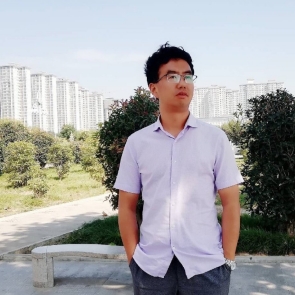
In her statement, Lawlor pointed to the recent arrest and “enforced disappearance” of activist and attorney Chang Weiping as emblematic of Beijing’s efforts to silence lawyers who speak out about the deterioration of human rights in the country.
He was held on suspicion of “subversion of state power” and his licence was annulled, she said. Just days after he posted a video online in October describing the torture and ill-treatment he was allegedly subjected to during his detention, he was detained again and returned to RSDL in retaliation for his video. “Since then, the defender’s whereabouts remain unknown, his lawyers have been unable to contact him and no charges have been brought against him,” Wednesday’s statement said.
“Fundamental human rights are not a threat to any government or society, and neither are the individuals who defend those rights,” she added. “I urge the Chinese authorities to release at once Chang Weiping and all other detained and disappeared human rights defenders.”
Not surprisingly The reaction by China was swift and tough: “By using misinformation, relevant (UN) mandate holders blatantly smear China,” Liu Yuyin, a spokesman at the Chinese mission in Geneva, said in a statement issued 16 December. As for Chang’s case, Liu insisted his “legitimate rights were fully protected.” Chang “was subject to criminal coercive measures by the public security organ in Shanxi Province on October 22, 2020, on suspicion of criminal offences.”
The remarks by Lawlor and other UN experts about the lawyer’s case, Liu warned, “seriously (violate) the spirit of the rule of law and fully exposes their bias against China.”
Voicing concerns over increasing restrictions on civil society in Cambodia, a group of independent UN human rights experts have called for an immediate end to the systematic detention and criminalization of human rights defenders.
In a statement on 16 November 2020 Mary Lawlor, Special Rapporteur on the situation of human rights defenders, said she was “alarmed” by credible reports that at least 21 human rights defenders have been subjected to threats, arbitrary arrests and detentions in the past three months.
“I have reviewed publicly available footage where excessive force has been used by the security forces to prohibit human rights defenders, many of them women, from exercising their rights to peaceful assembly. Promotion and protection of human rights through peaceful means is not a crime,” she said.
Ms. Lawlor referred to several cases in which detention has reportedly been used to punish human rights defenders for carrying out their work.
Rights defender Rong Chhun was arrested on 31 July after taking up the case of farmers in Tbong Khmom province who had their land taken in connection with a border demarcation between Cambodia and Viet Nam.
Subsequently, several other human rights defenders who protested his detention were also arrested. Twelve remain in pre-trial detention, have been denied bail, and are facing charges punishable by up to two years in prison.
“Human rights defenders should never be criminalized for their courageous efforts to protect the rights of others … I am increasingly concerned by the circular pattern of detaining them for advocating against the detention of or violations against fellow defenders,” said Ms. Lawlor.
“There seems to be no limit to who the authorities will target, making their actions in recent months appear as a concerted attempt to erode civic space and stifle the work of human rights defenders,” she added.
The Special Rapporteur appealed to States to help stop the killing of human rights defenders, which she identified as the mandate’s core priority. Defenders, she said, are ‘ordinary people doing extraordinary things to make all of our lives better‘ and shared her hope that all would work together to find ways to protect them.
The Special Rapporteur’s report outlined how she intends to approach and develop the subject of her mandate in the coming years. Her priorities include: those defenders most exposed to killings and other violent attacks, with attention paid to the most marginalised and vulnerable, among them women defenders, those defending the rights of LGBTI persons, defenders who are children, defenders with disabilities, defenders working on the rights of migrants, the climate crisis, defenders working in isolated and remote areas, defenders serving long terms in prison, reprisals against defenders who cooperate with the UN, the issue of impunity for those who attack defenders, the role of businesses and financial institutions in both harming and protecting the work of defenders, and strengthening follow-up to individual cases brought to her attention.
As the Third Committee continues to grapple with the difficulties of moving its work online, the dialogue was plagued by a number of IT issues, including not being webcast for the first 35 minutes, and several statements remained muted in the archived video made available later.
A large number of States took the floor to welcome the Special Rapporteur’s report and echo her concerns and priorities. Many of the States that spoke touched on the need to address the worrying deterioration of civic space brought on by the COVID 19 pandemic. The UK delivered a joint statement on reprisals on behalf of 75 States, following up on its initiative last year when it delivered the first ever such statement.
The US raised a number of individual cases and country situations: Nasrin Sotoudeh in Iran; China’s systematic persecution and imprisonment of human rights defenders, including those from Xinjiang, Tibet, and Hong Kong, naming Ilham Tohti and Joshua Wong in particular; in Zimbabwe, opposition leader Job Sikhala, parliamentarian Joana Mamombe and activists Cecilia Chimbiri and Netsai Marova. China used its time to question the notion of a human rights defender arguing there is no accepted definition of the term and that defenders are not ‘above the law’. China also accused the US of suppressing civil society during the pandemic.
In her concluding remarks, the Special Rapporteur touched on the need for the UN’s human rights work to be properly funded and for States to cooperate fully with Special Procedures through standing invitations and positive responses to requests for visits. She emphasised her desire to cooperate with States, to have an open dialogue, and cited recent talks with Bahrain, Burundi and Iran in that regard. She indicated she hoped these talks would result in releases of defenders soon. The Special Rapporteur also emphasised that her approach would include specifically highlighting positive changes in each of her reports.
The Norwegian Center for Human Rights and the Norwegian Human Rights Fund invite you to a seminar addressing the Norwegian and international support to human rights defenders.
This seminar will focus on the role of human rights defenders in creating sustainable, peaceful and just societies, in accordance with the Sustainable Development Goal 16. It will look at the role and support of the Norwegian government, Oslo Municipality, the University of Oslo and Norwegian civil society in the protection of individuals and organisations working for human rights and peaceful and just societies. How can these institutions collectively – and individually – meet the needs of the day, both during and after COVID-19?
Program
13:00-13:10: Welcome by the Rector of the University of Oslo, Svein Stølen.
Welcome by the organizers: NHRF (Executive Director Sandra Petersen) and NCHR (Head of Department Gentian Zyberi).
Short introduction of the panels by the facilitators.
13:10-14:25: Panel 1: The current situation of Human Rights Defenders and protection work.
• Luciana Peri, Coordinator of Shelter Initiatives, ProtectDefenders.eu
• John Peder Egenæs, Director of Amnesty International Norway
Moderator:Nora Sveaass, Professor Emeritus (University of Oslo), member of the UN Subcommittee on Prevention of Torture (SPT) and member of NHRF’s Advisory Board.
14:25 – 14:45: BREAK.
14:45 – 16:00: Panel 2: The role of international, national and local support to Human Rights Defenders
Short video messages from human rights defenders from different countries with recommendations to Norwegian and international actors supporting human rights defenders.
Key note: Mary Lawlor, UN Special Rapporteur on the Situation of Human Rights Defenders (digital participation)
Panel:
• Ine Eriksen Søreide, Norway’s Minister of Foreign Affairs
• Raymond Johansen, Governing Mayor of Oslo
• Mary Lawlor, UN Special Rapporteur on the Situation of Human Rights Defenders
Moderator: Sandra Petersen, Executive Director of the NHRF.
Jordi Cuixart is the head of Omnium Cultural, a Catalonian cultural association
THE UN’s special rapporteur on Human Rights Defenders, Mary Lawlor, has called for jailed Catalonian independence activist Jordi Cuixart to be freed.
Yesterday marked the third anniversary of the civic leader’s imprisonment for his role in the 2017 independence referendum. Writing in The National, Cuixart reveals the grim reality of life in a Spanish prison, saying that he’s forced to spend 23 hours a day in a room measuring just eight square metres. However, the father of two young children makes clear that he would make the same choices as before.”
He was handed a nine-year sentence after being convicted of sedition. Unlike the other eight imprisoned, Cuixart is not a politician, he is the head of Omnium Cultural, a Catalonian cultural association.
Taking to Twitter, Lawlor said it was time for Cuixart to be freed. “In 2019, the Working Group on Arbitrary Detention found his detention to violate both the [Universal Declaration of Human Rights] and [the International Covenant on Civil and Political Rights] and deemed it arbitrary. He should be released.”
Stan Swamy and the adivasis he supports in an impossible battle for their own ancestral lands are pawns pitted against mammoth mining companies. Falsely branding activists as Maoists is the easiest way to condemn to enable vested interests to finish them off.
A file photo of human rights activist Stan Swamy. Photo: PTI
Mari Marcel Thekaekara wrote in the Indian Wire of 10 October 2020 a detailed and personal piece about “The Indomitable Spirit of Father Stan Swamy”
“No, it’s not possible,” were my first thoughts when I heard that Father Stan Swamy, an 83-year-old Jesuit priest and activist had been arrested – for the second time. His crime? He defended the rights of adivasis being exploited in their homeland Jharkhand.
Father Swamy has been accused of having links to a Maoist plot connected to the Bhima Koregaon case and was arrested by the National Investigation Agency on Thursday night. The rights activist is one of the gentlest and kindest men I have ever met. So the entire premise – for anyone who knows him – is entirely ludicrous. Funny even, if it were not so tragic. He has Parkinson’s disease. His hand shakes when he raises a cup of tea to his lips. He speaks so softly, you have to strain to hear him.
Social activists hold a protest after the arrest of Father Stan Swamy by the NIA in the Bhima Koregaon case, in Ranchi, October 9, 2020. Photo: PTI
He assures his interrogators that he has no connection with Maoists. He believes in peaceful, non-violent protest. I believe him. Because I know that his integrity is above reproach.
I heard of Father Stan Swamy in the early seventies, because he was among the first people I knew who advocated living with the adivasi community in Jharkhand to understand their lives and their problems; to help find solutions and a way forward. I went there in the early seventies while still in college to write a story for our student magazine.
On a more personal note, Stan Swamy, introduced my husband, also named Stan, to the adivasi world. He shared Father Swamy’s hut in a Ho village in Jharkhand. My husband always told young activists:
“Gandhiji’s non violence was not merely moral or religious. It was strategic. Gandhi was a brilliant general. Oxymoronic though that sounds. He understood that the fight for freedom could not be won by violence because mere ordinary Indians, even if they poured out on the streets with justice on their side, with God on their side, could never win. Even if there were thousands or lakhs of people marching in protest, they could never match the might of the state. Before 1947, the British could bring out the artillery and finish us off. One wrong step could have changed the course of our history. But the entire world watched India’s non violent battle for independence, open mouthed. Non violence was a new word, a new tactic, made in India. The world sympathised and empathised. Gandhi’s strategic non violence was the most brilliant weapon in our war for Independence’
The same scenario is playing out today. And the average activist understands that putting ordinary villagers, adivasis, Dalits or women in the line of fire is counterproductive and unfair. We learnt this strategy from Gandhi and Jayaprakash Narayan.
In recent times, it has become the norm to equate the word activist with ‘anti-national’. But who is an activist? What do they do?
It’s quite simple. All over India, there are thousands of people who took up the cause of fighting for social justice for the poor, the marginalised and the voiceless. These people were inspired by the brightest and best minds in our country – from Gandhiji to Vinobha Bhave to JP.
Post Independence, when the battle for freedom was won, Gandhi urged his followers to go out and continue the fight for freedom. This time, it was to free the poorest from hunger and poverty, to teach and educate, to weave and spin, to spread harmony and peace. Thousands rallied to his call and Gandhi ashrams were filled with people determined to continue the freedom struggle on a new battlefield – India’s villages.
The sixties saw the rise of the Dalit movement. New leaders emerged. Gandhi raised the question of untouchability in the early days of the Independence movement, but his ‘Harijan’ epithet was subsequently dismissed by Dalits as patronising. Dalit power became a clarion call, drawing inspiration from the African-American Black Panther movement. Dr B.R. Ambedkar showed the way.
The term activist gained popularity during the JP movement and during the fight against the Emergency in the mid seventies. After the Emergency, thousands of young patriots, drawing their inspiration from JPs charisma, accepted his challenge to go out and organise the poor, the under privileged and the vulnerable; to fight for their rights. This period saw a proliferation of human rights defenders, though the term was not used till later.
Women and men dedicated their lives to fighting for Dalit rights, adivasi rights, womens’ rights, farmers’ unions and fisherfolk movements. These activists evolved in their understanding of rights based movements. They often lived with the communities they worked with. They identified with the people and though many were middle class, they tried to live simpler lives than their parents, than the backgrounds and privileged upbringing they had been born into. They were pleased to be branded activists and wore the badge with pride.
From the fifties and sixties, when Gandhians prevailed, we moved into the seventies where a sea change took place. Global thinking wafted across the world to India. The 1968 student movement in France, Latin American thinking, Marxist ideology – all these gained ground and influenced grass roots workers. The focus changed from the passive Gandhian way – the giving of food, clothes, free education and medicine to changing unjust situations at the base. ’Daan’ or mere giving was now passe. Activists were trained to encourage people to ask who was cheating them and why? So if people were encroaching on adivasi or Dalit land, it was time to establish basic human rights; time to equip people to defend themselves, to fight injustice – non-violently, the Gandhian way, and the strategic way.
Soon, womens’ groups began to take action against dowry deaths and acid attacks, and took to the streets and courts to protest and demand justice. Dalit groups found lawyers willing to fight caste atrocity cases in court. Adivasis had activists urging them to defend their ancestral millennia old homelands from dominant caste landlords who shamelessly cheated them and usurped their lands. Environmentalists and eco-warriors hugged trees and stopped forests from being denuded. A huge green movement began. The protest movements grew from strength to strength.
In reality, these people are defending human rights and saving the Earth for future generations. When it comes to central India and defending tribal land from powerful mining companies, the battle assumes David versus Goliath proportions.
Stan Swamy and the adivasis he supports in an impossible battle for their own ancestral lands are tiny pawns pitted against mammoth mining companies. Falsely branding activists as Maoists is the easiest way to condemn them and to enable vested interests to finish them off.
The frail 83-year-old has trumped up charges levelled against him. Yet he has a core of steel, an indomitable strength that comes with moral conviction and a commitment to truth and to the powerless. As they took him to prison, Stan Swamy announced he would begin a fast. His fellow Jesuits who rushed to the prison with his medicines, say he has refused even a sip of water.
I kept asking why, they would arrest this gentle, kind man. Father Cedric Prakash, who is also a Jesuit and activist, said in a TV interview, “It’s to create a fear psychosis. If they can imprison an 83-year-old who has spent his life committed to the poor, who is safe?”
Asianet phoned to interview my husband Stan. People cautioned him, “You will draw attention to yourself. It can boomerang and have repercussions on your work in the Nilgiris.”
“Carola Rackete, the former captain of the rescue vessel Sea-Watch 3, and the ‘Iuventa 10’ crew members are human rights defenders and not criminals,” said Mary Lawlor, the UN Special Rapporteur on the situation of human rights defenders on 8 October 2020.
“I regret that the criminal proceedings against them are still open and they continue to face stigmatization in connection with their human rights work protecting the human rights of migrants and asylum seekers at risk in the Mediterranean Sea.“
In September 2016, a criminal investigation was opened against some crew members of the Iuventa rescue ship. Charges against them included aiding and abetting in the commission of a crime of illegal immigration, an offence that carries a jail term of between five and 20 years, and a fine of 15,000 euros. On 18 June 2019, a motion for the dismissal of the preliminary criminal investigation against the ‘Iuventa 10’ crew members was filed, but a formal decision is still pending. See also: https://humanrightsdefenders.blog/2020/07/31/absurd-prosecution-of-the-crew-of-the-ship-iuventa-continues-in-italy/
Ms. Rackete was arrested by Italian authorities on 29 June 2019 for docking her rescue ship, with 53 migrants on board, without permission. At the beginning of this year, acting upon appeal, the Italian Supreme Court ruled that she should not have been arrested. Despite this, Ms. Rackete continues to face charges, including aiding and abetting in the commission of a crime of illegal immigration. She risks up to 20 years of imprisonment , and various fines of up to 50,000 euros.
Since 2014, at least 16,000 migrants have lost their lives in the Mediterranean, according to the IOM’s ‘Missing Migrants’ project. “The Italian Government must publicly recognise the important role of human rights defenders in protecting the right to life of migrants and asylum seekers at risk in the Mediterranean and must end the criminalization of those who defend their human rights,” Lawlor said.
The expert’s call has been endorsed by: Independent Expert on human rights and international solidarity, Mr. Obiora Okafor, Felipe González Morales, Special Rapporteur on the human rights of migrants; Dubravka Šimonovic, Special Rapporteur on violence against women, its causes and consequences; Elizabeth Broderick, Chair-Rapporteur of the Working Group on discrimination against women and girls.
The same day Human Rights Watch came out with an initial assessment by civil society of the legislative and non-legislative proposals contained in European Commission’s Pact on Migration and Asylum.: The commitment to a more human approach to protection and the emphasis on the fact that migration is needed and positive for Europe with which the European Commission launched the Pact on Migration and Asylum is welcome. However, this rhetoric is reflected only sparsely in the related proposals. Instead of breaking with the fallacies of the EU’s previous approach and offering a fresh start, the Pact risks exacerbating the focus on externalisation, deterrence, containment and return.
September 30, 2020 from 10:00 AM – 11:00 AM EDT there will be an Online meeeting on the “Implementation of the Human Rights Council Resolution A/HRC/40/ on Environmental Human Rights Defenders and the Geneva Roadmap” by the World Resources Institute (WRI)
This session aims to explore how civil society organizations can use the UN Resolution A/HRC/40/L.22/. The session also intends to discuss the “ Road Map to Geneva” which was created in April of this year to facilitate international engagement on processes that support defenders at the national and international level. Join us as we highlight the work of the new Special Rapporteur on Human Rights Defenders and her vision as well as provide a practical list of events that can move the agenda forward.
Speakers
Ms. Mary Lawlor,Special Rapporteur on the situation of human rights defenders
Peter Bille Larsen, University of Geneva
Enteng Bautista,National coordinator of Kalikasan People’s Network for the Environment, Philippines
The Colombo Gazette on 15 September reported that a group of five UN special rapporteurs have expressed their serious concerns to the Government of Sri Lanka on the continued harassment of journalist Dharisha Bastians, the former editor of Sunday Observer and reporter for the New York Times in Colombo. [The joint letter was issued by David Kaye Special Rapporteur on the promotion and protection of the right to freedom of opinion and expression, Agnes Callamard, Special Rapporteur on extrajudicial, summary or arbitrary executions, Clement Nyaletsossi Voule, Special Rapporteur on the rights to freedom of peaceful assembly and of association, Mary Lawlor, Special Rapporteur on the situation of human rights defenders and Joseph Cannataci, Special Rapporteur on the right to privacy.]
In a joint letter to the Government dated 13th July 2020 the Special Rapporteurs said Bastians’ was being targeted for her writing and her work to defend human rights in Sri Lanka. The letter said the rapporteurs were concerned that the continued harassment of Bastians and the seizure of her computer and exposure of her phone records could endanger and compromise her sources and deter other journalists from reporting on issues of public interest and human rights. “We are particularly concerned that these measures may be aimed at discrediting her work, in an effort to stop her reporting on Sri Lankan political and human rights affairs,” the special rapporteurs letter to the Government noted.
In June 2020 the Criminal Investigation Department (CID) entered the home of Ms. Bastians in Colombo and seized her personal computer in connection with an ongoing investigation carried out over the alleged abduction of a Swiss embassy staffer in Colombo in November 2019. Bastians said the CID had arrived at her residence on two previous occasions to seize her laptop without a court order. The joint letter also noted that “pro-government media have reportedly conducted a smear campaign against Ms. Bastians and her family, supported by attacks on social media, labelling her as a traitor and a criminal.”
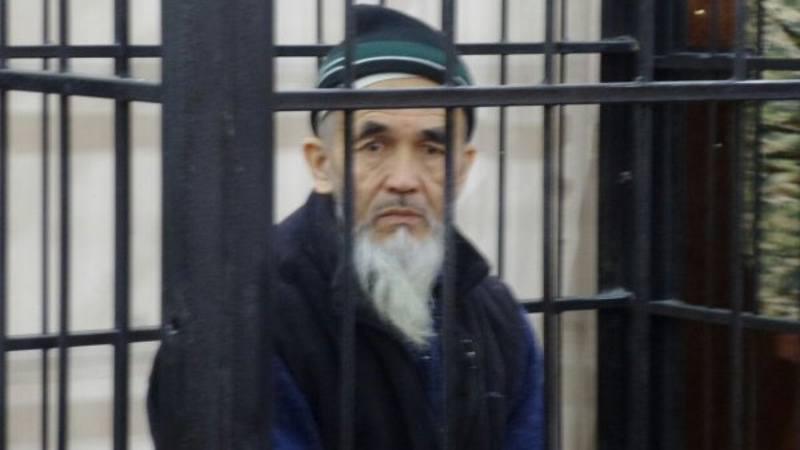
“I was deeply saddened to hear the news of Mr. Askarov’s death, despite multiple requests for his release on humanitarian grounds as his health deteriorated significantly in prison,”
Although the Kyrgyz Government shared detailed information on court proceedings and medical care afforded to Askarov, she criticized the government for not taking concerns about his health seriously.
“We learned in June that, in the midst of COVID-19, and despite his age and pre-existing conditions, Mr. Askarov did not qualify for early release under Kyrgyz law,” Lawlor said. “I now question whether more could have been done to protect his health.”
In the days before Askarov’s death, his lawyer made a number of urgent medical appeals to authorities after the 69-year-old fell ill with a cough, fever, aches and pains, and had difficulty eating and walking. It was only on 24 July 2020, when he had already been sick for 10 days, that he was transferred to a prison medical facility, where he died the following day.
“Mr. Askarov’s case should act as a reminder to all states of the serious and grave threat that prisoners in at-risk categories face during the COVID-19 pandemic,” she said. She stressed that human rights defenders and all those detained without sufficient legal basis, or most at risk of the virus, should be released…
Lawlor’s call has been endorsed by the Special Rapporteur on minority issues, Fernand de Varennes; the Special Rapporteur on the independence of judges and lawyers, Diego García-Sayán; and the Special Rapporteur on torture and other cruel, inhuman or degrading treatment or punishment, Nils Melzer.



 Hans Thoolen on Human Rights Defenders and their awards