ILGA World (https://ilga.org/) published a comprehensive index of deadlines facilitating engagement with UN human rights mechanisms. This invaluable resource is crafted to serve as a guiding beacon for human rights defenders (HRDs) dedicated to advancing the rights of individuals within the realms of sexual orientation, gender identity, gender expression, and sex characteristics (SOGIESC). The active involvement of HRDs in UN mechanisms is paramount, acting as a catalyst for transformative global change. The Guide is equally useful for non-SOGIESC submissions.
For those aspiring to witness targeted recommendations on SOGIESC issues directed at their respective countries, active participation in the Universal Periodic Review (UPR) holds utmost importance.
Similarly, collaboration with the Treaty Bodies provides a unique platform wherein a panel of experts rigorously evaluates a nation’s adherence to international human rights treaties, illuminating crucial intersections with the challenges faced by the LGBTI community.
This index serves as a vital compass, delineating pivotal deadlines and milestones, empowering HRDs to navigate the intricate UN mechanisms strategically, thus making substantial contributions to promoting and protecting human rights on a global scale.
On 14 December 2023, the Netherlands Ministry of Foreign Affairs announced that the 2023 Human Rights Tulip has been awarded to Hülya Gülbahar, a feminist attorney from Türkiye and founder of the Equality Watch Women’s Group (EŞİTİZ) and the Women’s Platform for Equality Türkiye (EŞİK). Minister of Foreign Affairs Hanke Bruins Slot presented the prize on 14 December at a ceremony in the Peace Palace.
In her speech, Ms Bruins Slot said: ‘Human rights are among the most important resources we have at our disposal to tackle the major problems of our time, such as war, poverty and climate change. ..The nominees for the Human Rights Tulip understand this at a profound level. Through their tireless efforts, these human rights defenders make a real difference for people and society.’
EŞİTİZ and EŞİK publish legal analyses of legislative bills and amendments on feminist and LGBTIQ+ issues, conduct awareness-raising campaigns (for example on the Istanbul Convention on preventing and combating violence against women and domestic violence) and promote social mobilisation by the Turkish feminist movement.
‘For more than 40 years,’ Ms Bruins Slot said, ‘Hülya Gülbahar has been defending women’s rights and fighting injustice in Türkiye. She does so using her extensive legal expertise and through her influential network, comprised primarily of women, which is too extensive to ignore. And she has been very successful at it.
Other finalists
The two other finalists for the 2023 Human Rights Tulip were:
Julienne Baseke is a journalist and human rights defender who fights for women’s rights in the Democratic Republic of the Congo (DRC). As a journalist, Ms Baseke founded the South Kivu Women’s Media Association (AFEM), which aims to enhance women’s visibility and participation in the DRC media.
Claudelice dos Santos is a human rights and environmental activist in the Amazon region. She is the founder of the Zé Claudio e Maria Institute, whose shelter and protection house provides a safe haven for indigenous land, environmental and human rights defenders.
Billy Porter is an American actor and singer, who first gained notice performing on Broadway before embarking on a solo career. He is a Grammy, Emmy and two-time Tony Award winner. He is a trailblazer in especially in the LGBTQI+ community including being first openly gay Black man to win an Emmy award. His performance of Audacity at the Royal Albert Hall in London was a world exclusive performance for the Human Rights 75 Concert on 10 December, 2023 in commemoration of the 75th anniversary of the Universal Declaration of Human Rights. #HumanRights75 and #act4rightsnow
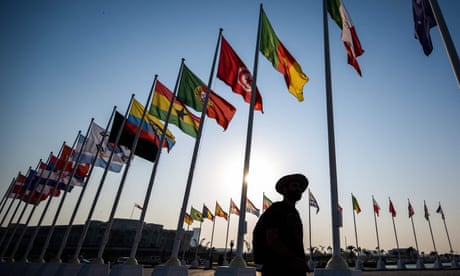
According to the Guardian of 14 November 2022, singer says she will not be playing at 2022 opening ceremony. The chart-topping 27-year-old singer, born in London to parents from Kosovo, said she would only play in the country if it improves its record on human rights.
BTS star Jung Kook is the only official act confirmed for the opening ceremony, which will be held at Al Bayt stadium on 20 November. US rapper Diplo, DJ Calvin Harris and Jamaican singer Sean Paul will also be performing at the Fifa Fan festival, which will run over the 29 days of the tournament.
Lipa is not the first musician to make a point of avoiding playing concerts in Qatar. On Sunday, Sir Rod Stewart revealed he turned down more than US$1m to play in the country last year.
After reports linking her to the event, Lipa shared a statement on Instagram, writing: “There is currently a lot of speculation that I will be performing at the opening ceremony of the world cup in Qatar. I will not be performing and nor have I ever been involved in any negotiation to perform.
“I will be cheering England on from afar and I look forward to visiting Qatar when it has fulfilled all the human rights pledges it made when it won the right to host the World Cup.” He told the UK’s Sunday Times newspaper: “I turned it down. It’s not right to go. And the Iranians should be out too for supplying arms [to Russia].”
Also on Sunday, comedian Joe Lycett told David Beckham he would shred £10,000 if the sportsman didn’t pull out of his Qatar World Cup deal. The footballer is reportedly being paid £10m to be an ambassador for the event, and has been heavily criticised for accepting the money, given that he has previously been viewed as an ally to the LGBTQ+ community..
“Xheni Karaj, from Albania, and Frank Mugisha, from Uganda, are two of the world’s most courageous LGBTI+ activists and human rights defenders. Despite working in environments where homophobia is widespread, they continue fighting with impressive resilience, for every individual’s right to have their own sexual orientation and gender identity. They have both been instrumental in building LGBTI+ movements in their countries and inspire LGBTI+ activists all over the Balkan region and the African continent,” the Civil Rights Defenders Board of Directors writes in the motivation for the award.
The right to one’s own sexuality and gender identity is a human right, but violence and discrimination against people from the LGBTI+ community is still a problem globally. Xheni Karaj, founder and Executive Director of Aleanca LGBT in Albania and Frank Mugisha, Executive Director of Sexual Minorities Uganda (SMUG) are working for LGBTI+ and human rights in countries where violence, discrimination, and homophobia is widespread. Due to the situation in both Uganda and Albania, many LGBTI+ people keep their sexual identity hidden out of fear for the consequences they might face if coming out in public. Through education, advocacy, and building a community for LGBTI+ persons, Frank Mugisha and Xheni Karaj are contributing to improving the lives of thousands. Their commitment to LGBTI+ rights has played a huge part in the progress for human rights in their regions.
“I am excited and happy about the award. This prize shows that LGBTI+ rights are part of universal human rights. For us, it is a recognition that we are involved in advancing human rights work,” says Frank Mugisha.
“The award made us all feel very happy and appreciated and motivates us to continue with the good work we are doing. To get this acknowledgment also helps me realise that we are making a revolution in Albania. From being invisible, we have showed people that we exist. That we are proud of ourselves, and we should have the right to be free and tell our stories,” says Xheni Karaj.
On Thursday 24 March 2022, from 1:30pm – 2:30pm (CET)will take place the panel “Fighting for equality: Working together to combat violence and discrimination on the basis of sexual orientation and gender identity“
Over the last two decades, UN human rights bodies and mechanisms have been at the forefront of promoting equality and fair treatment of lesbian, gay, bisexual, trans, gender-diverse and intersex (LGBTI) people.
These contributions have led to considerable progress regarding decriminalisation of same-sex consensual acts and diverse gender identities, enactment of progressive laws and the promotion of international standards on the rights of LGBTI persons.
While these advances have been, and continue to be, integral in the promotion and protection of equal rights for LGBTI persons, the stories of those relentlessly fighting for that progress often remain untold. Indeed, everywhere around the world human rights defenders working on issues of sexual orientation and gender identity and expression (SOGIE) play a central role in the fight for equality for LGBTI persons.
This side event aims to shed light on the success stories of human rights defenders working to combat violence and discrimination based on SOGIE, bringing together defenders as well as two UN mandate holders that focus on human rights defenders and on SOGIE. The panel will reflect on opportunities and risks for LGBTI human rights defenders, nation-level developments towards equality for LGBTI persons, progress of the current UN standards on these issues, and what can be done to address challenges. SPEAKERS:
Victor Madrigal-Borloz, Independent Expert on violence and discrimination on the basis of sexual orientation and gender identity
Mary Lawlor, Special Rapporteur on the situation of human rights defenders
Other speakers will be confirmed soon
Welcoming and closing remarks by the Permanent Mission of the Netherlands and the Permanent Mission of Mexico
MODERATOR: Julia Ehrt, ILGA World’s Executive Director
You are welcome to join this discussion, which will be held in English with simultaneous interpretation in Spanish. Click here to register to the event.
The University of York has decided to name its new college after Ugandan David Kato who went to the university in 2010 for six months as a Protective Fellow on the Human Rights Defenders Programme at the Centre for Applied Human Rights (CAHR).
The announcement comes during national Refugee Week (June 14-20 ) as the university celebrates its newly-awarded status as a University of Sanctuary with a launch event on today (Wednesday).
David’s time in York provided respite from his role in Uganda as a human rights activist, and his legacy supports the University’s continued commitment to the lesbian, gay, bisexual and transgender communities (LGBT+).
He returned home to Uganda to fight the country’s controversial anti-homosexuality act. But he was murdered in Kampala in 2011, weeks after winning a court victory over a tabloid paper that called for homosexuals to be killed.
Vice-Chancellor, Professor Charlie Jeffery said: “Colleges are an integral part of university life here at York and we knew we wanted an inspiring role model when naming our new college – one which would also reflect our belief in equality, diversity and inclusion.
Director of the Centre for Applied Human Rights, Professor Paul Gready said:“The naming of the David Kato College also symbolises and demonstrates our admiration of, and solidarity with, human rights defenders across the world and with all previous Protective Fellows, of which there have been over 90 from more than 45 countries over the last 12 years.
The University will mark its newly-awarded status as a University of Sanctuary with an online event tonight (June 16) at 6.30pm. The event will include the launch of a film which tells the story of how York became a University of Sanctuary for refugees, asylum seekers, human rights defenders and those in need of humanitarian protection. The film will be followed by a round-table discussion. Go to http://www.refugeeactionyork.org/refugee-week.
Sunday March 7 2021 an initial hearing was held in the court at Trujillo, Colón, in which Marianela Solórzano and Jennifer Solórzano, women human rights defenders belonging to the Black Fraternal Organization of Honduras (OFRANEH), are on trial. Both were arrested by the Public Security Force (FUSEP) on March 3rd, and charged with damages, threats, robbery and usurpation of lands.
In the trial records they are incriminated for the offenses of land usurpation, involving other Garifuna defenders, as well. The charges against them are related to the historic process of resistance by the Garifuna people to the plunder of their lands. Private businesses and governments alike have participated in the illegal appropriation of the ancestral territory of the Garifuna people, particularly the ownership of more than seven thousand hectares of land in the Cristales and Rio Negro communities confirmed by ancestral property deeds.
Marianela is a defender of the rights of the LGBTI Garifuna community, and Jennifer, a defender of the ancestral Garifuna territories. Their arrests took place in the context of the continuous persecution and attacks against the Garifuna people organized in OFRANEH.
Historically, the communities belonging to OFRANEH have been the target of harassment, threats by armed groups, assassinations, and the disappearance of community leaders, among other highly serious rights violations. During the last ten years, these have only worsened due to the authoritarian criminal government model headed by Juan Orlando Hernández. Eight months ago, five Garifuna comrades were disappeared by armed men wearing uniforms of the Office of Police Investigations (DPI) of Honduras. As of now, their whereabouts are unknown.
National Network of Women Human Rights Defenders in Honduras, the Mesoamerican Initiative of Women Human Rights Defenders (IM-Defensoras), and many other groups and networks of women human rights defenders in Mesoamerica, as well as the FIDH call on all feminist and LGBTI social movements and the international community to stay on the alert for developments in this case and to demand a hearing with full guarantees for the rights of the criminalized Garifuna defenders.
Helena Dalli – the European Union Commissioner for Equality – and Dunja Mijatović – the Council of Europe Commissioner for Human Rights – published a joint opinion piece “Stop the rain on human rights” in Euractive at the occasion of International Human Rights Day 2020 on 10 December:
The current pandemic crisis serves as a magnifying glass of all existing inequalities in Europe – racism, gender and sexual discrimination, treatment of migrants: there is still a long way to go to ensure full and real equality in Europe,
Regrettably, for all the progress of the past seven decades, there is still a long way to go to ensure full and real equality in Europe. Our societies breed divisive levels of inequality, fear and polarisation. Structural discrimination keeps millions of Europeans on the margins of our societies, especially in employment, health, education, housing, and the criminal justice system.
The current pandemic crisis serves as a magnifying glass of all existing inequalities in Europe and exacerbates them. Those who were poor before it became poorer; those who were disadvantaged faced even greater disadvantages. Inequalities affecting women, LGBTIQ people and ethnic minorities illustrate this problem well….
Restrictions to freedom of assembly and association, obstacles to legal gender recognition and lack of adequate protection at public events are evident failures of state authorities to uphold their commitments and legal human rights obligations to ensure equality for LGBTIQ people.
The situation is not much better for people from ethnic minority and immigrant backgrounds. If you are of African descent you are more likely than white people to face discrimination in the job market, in education and housing, and to be stopped by the police without reasonable suspicion.
Hate incidents also continue to scar the lives of Jews, Muslims and Roma, who are among the preferred scapegoats of those who still stigmatise some groups of people on the grounds of their ethnic origin or religion.
The unkept promise of equality betrays a long political, philosophical and judicial tradition which places equality at the centre of European democracies. Both the European Court of Justice and the European Court of Human Rights have upheld the principle of equality and non-discrimination since the 1970s.
Yet, more and more governments and parliaments seem to pay little attention to their legal obligations, and to the destabilising consequences that keeping millions of Europeans as second-class citizens is having on our societies. Hard won progress’ longevity is not a given. We must protect and reinforce it every day.
The many challenges that our societies will have to face require that Europe strengthens the place equality occupies in our societies, starting by giving a more central focus to the principle of equality and non-discrimination in relations to all human rights, be they civil, political, economic social or cultural.
We must do better for the rights of the single mother living in poverty and for the disabled child prevented from attending a mainstream school. We must protect the rights of women and girls who have been sexually harassed, of young graduates who face discrimination in the labour market because of how their name sounds.
We also must remain vigilant in the face of worrying attempts to roll back progress towards equality for women and LGBTIQ people.
There is no easy fix, but already taking the decision to address these long-standing problems together is a good start. We firmly believe that the founding principles and values of the Universal Declaration are as relevant today as they were when they emerged from bloodshed, tyranny and war. They require that governments become stronger defenders of human rights.
We are helping them do so by addressing effectively the pervasive discriminations against women in Europe. Ratifying and implementing the Council of Europe Convention on preventing and combating violence against women and domestic violence is key to advance gender equality. This Convention has been ratified by 34 European countries, and signed by the EU.
However, the EU is not yet in a position to ratify because unanimity between member states has not been reached. We will join forces to make clear that the Convention protects from violence and nothing else; contrary to the misconceptions, fallacious and uninformed claims that have circulated and sown doubts.
Likewise, we are committed to fight racism and bring about an anti-racist culture. To this end, we believe that one of the priorities is to help member states stamp out ethnic profiling and end impunity for police misconduct.
We will also strengthen our work to counter discrimination against LGBTIQ people. We will continue to raise the visibility of LGBTIQ people in our dialogue with member states, support activists and use all means at our disposal to defend the right of LGBTIQ people to equality.
For this to happen, however, our voices alone will not suffice. There is the need for a renewed commitment by national authorities to uphold the founding values and legal obligations set out by the European Union and the Council of Europe. And here we get to the heart of the problem.
At best, many politicians in our member states remain indifferent about discrimination. At worst, they instigate violence and hostility. Politicians must be champions of equality, not obstacles to it. International organisations and the human rights community too have their bit to do.
We must become more inclusive in the way we defend human rights. We deliver a public service in the interest of society, but we do not own that service. We talk about, for and sometimes with people who have suffered human rights violations.
But we rarely empower them to speak for themselves. They should take part in decision-making processes as much as possible. We should learn to listen more and they must have the space to tell their stories and shape the policies and laws that concern them.
When states adopted the Universal Declaration on Human Rights on 10 December 1948, they pledged themselves to achieve equality. Giving practical effect to that vision is still possible – but only if we choose to strengthen freedoms, promote participation and empower all people.
Interesting example of enhancing international awards at the local level: Several Dutch embassies have started to issue a local version of the Ministry’s international human rights award, the Tulip [see: https://www.trueheroesfilms.org/thedigest/award/D749DB0F-1B84-4BE1-938B-0230D4E22144]. Here the case of Georgia where the Ambassador, Maaike van Koldam, has awarded 3 Georgian media activists with a Human Rights Tulip prize
Established in 2008 by the Dutch government, the Human Rights Tulip is an annual award intending to support human rights defenders and help them learn from each other. Photo: The Embassy of Netherlands to Georgia.
The winner is Kamilla Mamedova, the founder of Radio Marneuli. The second prize went to Tsabunia Vartagava, an LGBTI and women’s rights activist from Georgia’s western region of Samegrelo, and Manana Qveliashvili, a journalist working on various human rights issues in the Adjara region.
Due to the Covid-19 pandemic, the award ceremony took place virtually. The Tulip prize will remain with the ambassador for now, until she will be able to hand it over to the winner in person.