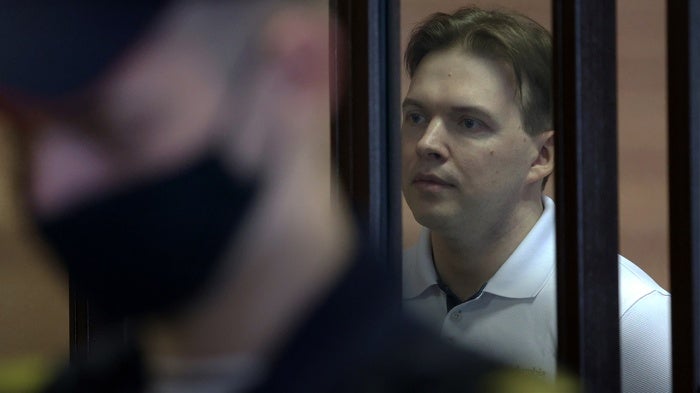
The first Sunday in December is Lawyers’ Day in Belarus. It iscelebrated against the backdrop of the fact that at least 18 lawyers, human rights activists, and legal professionals remain in prison. Since 2020, according to the Right to Defence project, 146 lawyers have had their licenses revoked, and dozens have been charged with administrative and criminal offences. Among those currently imprisoned for political reasons are Aliaksei Barodka, Vital Brahinets, Aliaksandr Danilevich, Maksim Znak, Anastasia Lazarenka, Siarhei Khlystou, and Yuliya Yurhilevich.
On November 29, the Homyel Regional Court convicted 41-year-old preacher Aliaksei Yahiela, charged with “assisting extremist activity” under two parts of Article 361-4 of the Criminal Code. Yahiela, who has a medical background but also worked as an evangelical preacher and healthy-lifestyle activist, had attracted attention, even from state media, for his anti-smoking initiative. Initially, it was unknown what sentence Aliaksei would receive.
However, it later emerged that he had been sentenced to imprisonment and is currently being held at Homiel’s Pretrial Detention Center No. 3.
Marharyta Yasevich, 29, a BSU history graduate from Lida, was convicted of “assisting extremist activity” under Parts 1 and 2 of Article 361-4 of the Criminal Code. Yasevich, who, after graduating, ran a business in Smolensk and lived in Samakhvalavichy for the last few years, was sentenced, according to preliminary information, to imprisonment under house arrest.
The Council of Europe has adopted on 12 March 2025 the first-ever international treaty aiming to protect theprofession of lawyer. This is to respond to increasing reports of attacks on the practice of the profession, whether in the form of harassment, threats or attacks, or interference with the exercise of professional duties (for example, obstacles to access to clients).
Lawyers play a key role in upholding the rule of law and securing access to justice for all, including to vindicate possible human rights violations. Therefore, public confidence in justice systems also depends on the role played by lawyers.
The Council of Europe Convention for the Protection of the Profession of Lawyer covers lawyers and their professional associations, whose role is vital in defending lawyers’ rights and interests as a profession. The Convention addresses entitlement to practise, professional rights, freedom of expression, professional discipline and specific protective measures for lawyers and professional associations.
Under the Convention, states must ensure that lawyers can carry out their professional duties without being the target of any form of physical attack, threat, harassment or intimidation or any improper hindrance or interference. Where such circumstances could amount to a criminal offence, parties must conduct an effective investigation. Parties must also ensure that professional associations can operate as independent, self-governing bodies.
The Convention will be opened for signature on 13 May, on the occasion of the Council of Europe Foreign Affairs ministers’ meeting in Luxembourg.At least eight countries, including six member states of the Council of Europe, must ratify it for it to enter into force. Compliance with the Convention will be monitored by an expert group and a committee of the parties.
On 27 May 2024 Human Rights Watch published a major report on the politically motivated crackdown on Human Rights Lawyers in Belarus.
Summary: In August 2020, peaceful protests in Belarus began with hundreds of thousands of people gathering in the streets of Minsk and across Belarus following the contested electoral victory of Aliaksandr Lukashenka, who had already served as president for more than 26 years. Belarusian authorities responded with unprecedented brutality, using excessive force, arbitrarily detaining thousands of peaceful protesters, and subjecting them to ill-treatment and torture in detention before conveyor-belt administrative and criminal trials.
Since then, Belarusian authorities have unrolled widespread and systematic repression of any form of dissent. Government critics have been forced into exile or thrown behind bars on politically motivated charges. The number of political prisoners swelled and at time of publication exceeded 1300, according to Human Rights Center “Viasna,” the prominent Belarusian human rights organization. The term “political prisoner,” for the purpose of this report, includes anyone detained, imprisoned or otherwise deprived of their liberty by Belarusian authorities for peacefully exercising their rights and freedoms or defending human rights and fundamental freedoms.
In the face of these grave and widespread rights violations, some lawyers stepped up to represent clients in politically motivated cases. ..This report examines the Lukashenka government’s retribution against lawyers who represent government critics and its nearly complete takeover of the legal profession in Belarus. The authorities have subjected lawyers in politically motivated cases, as well as lawyers who criticize state abuses, to harassment, arbitrary revocation of their licenses, detention and administrative charges, and politically motivated criminal prosecution. Behind bars, lawyers along with other politically-targeted detainees and convicts, experience retaliatory ill-treatment. The authorities have left no space for earnest and efficient discharge of lawyers’ duties in politically motivated cases. At the time of writing, very few lawyers, if any, were willing to take on such cases, which has severely undermined the right to a fair trial, due process, and access to remedy in Belarus.
The report shows that while governmental crackdown on lawyers in times of political unrest in Belarus is not new, the scale and severity of this wave of repression is unprecedented. For the first time in the history of modern Belarus, lawyers have become political prisoners themselves for their work on behalf of clients.
At the time of writing, six lawyers—Maksim Znak, Aliaksandr Danilevich, Vital Brahinets, Anastasiya Lazarenka, Yuliya Yurhilevich, and Aliaksei Barodka—were serving sentences on politically motivated charges ranging from six to ten years. Such charges included providing legal aid to political opposition figures and activists or giving interviews to and sharing information with independent media labelled “extremist” by the authorities. [see https://humanrightsdefenders.blog/2021/09/10/two-lawyers-from-belarus-share-lawyers-for-lawyers-award-2021/]
In addition to politically motivated prosecution, lawyers also have faced politically motivated disbarment. Since 2020, more than 140 lawyers have been disbarred by the regional bar associations or faced arbitrary license revocation by the Justice Ministry following decisions of its Qualification Commission because they supposedly breeched some regulations or were not sufficiently qualified to work as lawyers. These grounds are often easily exposed as flimsy pretexts: on average, those “unqualified” lawyers had more than 13.5 years of experience; many had successfully worked in the legal field for two to three decades, or more, and some of them were previously recognized by bar associations for their excellence…
The report also examines how the Belarusian government has established all-encompassing control over the legal profession in the country by controlling the admission of lawyers into the profession, regulating the way they discharge their duties, and exercising other broad controlling functions including but not limited to revoking lawyers’ licenses and essentially stripping lawyers’ self-governing bodies of independence.
In November 2021, a set of amendments into the Law on the Bar and Practice of Law in the Republic of Belarus (Law on the Bar) entered into force, which banned lawyers from working individually or opening law firms, requiring them to join legal consultation offices created and supervised by regional bar associations in coordination with the Justice Ministry. The amendments also significantly expanded the Justice Ministry’s control over the self-governing bodies of the bar and eased the conditions for obtaining a lawyer’s status for ex workers of law enforcement and judiciary….
The Belarusian Republican Bar Association (BRBA) and regional bar associations generally have failed to represent and protect the rights of their members and withheld support from lawyers facing obstacles in discharging their duties, which in recent years have come to include harassment, arbitrary detention, and criminal prosecution. Moreover, bar association executive bodies have become vehicles for the agenda of state officials, triggering sanctions against and disbarring lawyers deemed undesirable by the authorities. In light of the control exercised by the state over the formation of the Belarusian bar’s executive bodies and their work, these associations cannot be considered genuinely independent self-governing bodies representing the interests of all lawyers in Belarus.
Some lawyers described the current state of the Belarusian justice system and bar as a “total collapse of the legal system” and many felt “disarmed” in the face of systematic and widespread violations of due process, fair trial, and rule of law. Yet, lawyers noted, that it is their duty to discharge their functions to the highest professional standard, notwithstanding the political motivation of their clients’ cases and the unprecedented pressure from the state:
Recommendations
To the Belarusian Government
Immediately end the systematic detention and prosecution of anyone who peacefully exercises their rights and freedoms, release all political prisoners, provide effective remedies for victims and survivors of human rights abuses, and carry out prompt and impartial investigations into all alleged human rights violations;
Immediately end the ill-treatment of prisoners and ensure the protection of their rights and freedoms in confinement, including by ending the pervasive practice of incommunicado detention; grant lawyers and families unhindered access to detainees, and ensure all prisoners receive adequate medical assistance;
End all harassment of, attacks on, and interference with lawyers, particularly those representing clients in politically motivated cases and exercising their freedom of expression in line with international standards;
Ensure all courts adhere to fair trial standards. Allow lawyers to effectively perform their professional functions in accordance with the guarantees provided for in article 14 of the International Covenant on Civil and Political Rights (ICCPR) and the UN Basic Principles on the Role of Lawyers, including by instructing law enforcement and state agencies on the protected role and function of lawyers;
Repeal and amend national legislation to bring domestic law in compliance with international standards to ensure the independence and self-governance of the legal profession in Belarus;
Restore the licenses of all lawyers who have been disbarred or lost their licenses as a result of discharging their professional duties in accordance with international standards or for exercising their freedom of expression (including those lawyers who lost their license over arbitrary and state-controlled procedures at the Justice Ministry’s Qualification Commission);
Guarantee the independence of disciplinary proceedings against lawyers, which should be carried out by lawyers’ self-governing bodies in a fair and objective manner;
Curtail the Justice Ministry’s authority to interfere with independence of the legal profession, including the ministry’s authority to issue regulations on the work of lawyers, admit them into the profession, revoke licenses, carry out certification procedures, initiate disciplinary proceedings, and shape the selection of executive bodies of bar associations;
Void existing policies undermining the independence of legal profession and ensure separation of the bar from the state, including by abolishing the pervasive practice of forcing lawyers to express support for the government’s agenda and interests;
Respect the right to legal assistance, including by removing arbitrary obstacles to lawyers’ access to clients, safeguarding lawyer-client privilege, stopping the practice of making lawyers sign arbitrary and overly broad non-disclosure obligations, and ensuring fair and public trials and full equality of arms in courts of law;
Promptly comply with repeated requests by the UN special rapporteur on the human rights situation in Belarus to conduct a country visit.
To the Belarusian Republican Bar Association and Regional Bar Associations
Immediately end retaliation against members for carrying out professional duties or legitimately exercising their freedom of expression, and ensure lawyers targeted on such grounds have access to an effective remedy;
Repeal internal regulations that undermine the unhindered provision of legal assistance;
Advocate resolutely with the Belarusian government in support of the above recommendations and for Belarus’s adherence to international standards on the role of lawyers and the right to a fair trial;
Take measures to actively protect the interests of lawyers, defend the right of all accused to an effective defense regardless of the charges, and emphasize that lawyers cannot be identified with or punished for the alleged crimes of their clients;
Push back consistently and in principled fashion against the ongoing severe erosion of the bar’s professional autonomy and integrity, and the state’s overarching control of the bar;
Encourage regional bar associations to draw up rosters of lawyers to visit prisons to provide free legal advice and assistance to prisoners.
To United Nations Member States, Council of Europe, Organization for Security and Co-operation in Europe, and the European Union
Refrain from any cooperation with the Belarusian Republican Bar Association and regional bar associations until they become independent self-governing bodies representing the interests of Belarusian lawyers;
Call on the government of Belarus and the Belarusian bar to respect the rights of lawyers and to end arbitrary arrests, harassment, retaliation, and attacks against them;
Develop and fund programs to support lawyers who have faced retaliation for their professional activities or exercise of freedom of expression and examine ways of integrating Belarusian lawyers in exile into the legal profession in host countries;
Recognize Belarusian lawyers who have faced retaliation for their professional activities in defending clients in politically motivated cases as human rights defenders and afford them the requisite protection, including assistance with access to visas, funding and protection in exile and protection from transnational repression;
Consider imposing coordinated, targeted sanctions against the Justice Ministry officials and leaders of the Belarusian bar responsible for the systematic and widespread abuses against lawyers working on politically motivated cases and exercising their freedom of expression;
Recognize the Belarusian Association of Human Rights Lawyers as a key independent organization of Belarusian lawyers, and support its efforts to promote and protect the human rights of lawyers deprived of their right to exercise their profession in retaliation for discharging their duties and exercising their freedom of expression, and to improve the provision of legal aid in Belarus;
Express solidarity with and provide support to Belarusian human rights defenders working to deter politically motivated repression and document cases of grave rights violations for future accountability;
Support independent information sources providing independent coverage of events in Belarus and promoting universal human rights principles.
To Bar Associations and Lawyers’ Associations in Europe, Canada, and the US
Advocate for the above recommendations, in particular , for Belarusian authorities, and bar, to uphold international human rights standards, ending politically motivated persecution, ensuring independence and guarantees for legal profession.
Privately and publicly express concern at the interference of the government in the work of lawyers in Belarus;
Support Belarusian lawyers who have experienced or face retaliation for their legitimate professional activities, including by monitoring politically motivated cases against lawyers and, when relevant, providing third party interventions to courts and international agencies;
Refrain from any cooperation with the Belarusian Republican Bar Association and regional bar associations until they become independent self-governing bodies representing the interests of Belarusian lawyers.
Human Right Watch wrote to the Belarusian Justice Ministry and the Belarusian Republican Bar Association in April 2024 seeking their response to a summary of the report findings. At the time of writing no response had been received.
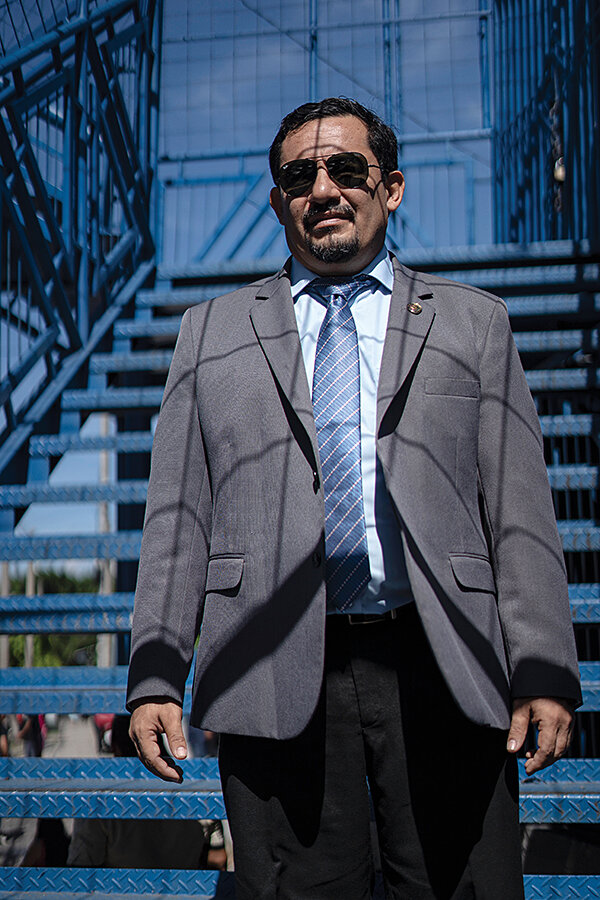
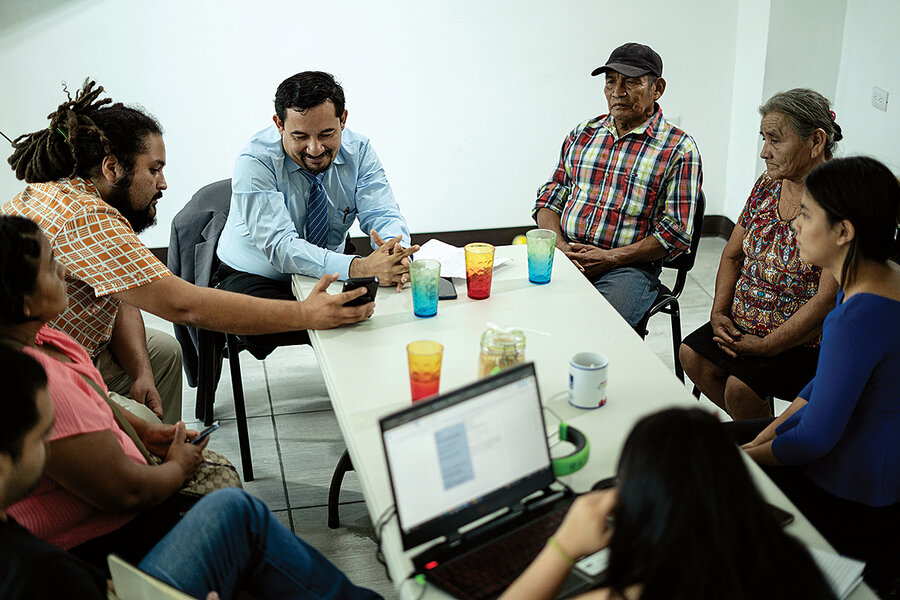
The Christian Science Monitor of 30 October 2023, tells the story of attorney Dennis Muñoz who seeks to uphold human rights in El Salvador, despite increasingly difficult and dangerous odds.
Víctor Peña/Special to The Christian Science Monitor
Mr. Muñoz found a way to channel his deep-seated desire for justice by becoming a lawyer in 2005. But he doesn’t work with just anyone – he goes for the tough cases of human rights abuses. He has defended multiple women who suffered miscarriages but were accused of murder in a nation where abortion is banned without exception. He has fought arbitrary arrests of environmentalists, activists, and average citizens. He could be called a defender of lost causes.
There’s no shortage of demand for Mr. Muñoz’s work in El Salvador, which has the highest incarceration rate in the world. And these days the risks of his work are almost as high as the demand for it.
In March 2022, a monthlong “state of exception” was enacted in response to extreme gang violence. The order suspended basic constitutional rights for those arrested under it. Securing a court warrant before searching private communications was no longer required, for example, and arrestees were barred from their right to a defense attorney and their right to see a judge within 72 hours.
But what started as an emergency measure has become ordinary practice. The state of exception has been extended every month for more than a year and a half now, with no end in sight. Violence has declined dramatically, but critics say the order’s extreme powers are seeping far beyond the gang-related arrests they were meant to address. Even those detained outside of the state-of- exception category are having their rights suspended.
That’s the group Mr. Muñoz focuses on. While he has taken a few state-of-exception cases, he primarily works on human rights violations, with the added burden now of his clients getting caught in the emergency order’s crosshairs. Despite death threats and intimidation, he’s not slowing down. Instead, fellow lawyers doing similarly risky work ask him to be on call if – or, perhaps more likely, when – they themselves are arrested.
… Despite quashing constitutional rights, the move has been overwhelmingly popular for providing a long-elusive sense of calm.
“A tired society, fed up with a lack of answers to the chronic problem of violence, is willing to accept short-term answers,” says Verónica Reyna, director of human rights for the Passionist Social Service, a nongovernmental organization focused on local violence prevention and support of human rights.
Gustavo Villatoro, minister of justice and public security, acknowledges that the state of exception is affecting more than gang members. Over 7,000 innocent people have been arrested, Mr. Villatoro said in August, noting that some degree of error is inevitable. But the consequences of those errors can be grave. Even if a case has nothing to do with gang activity, lawyers can be blocked from visiting their clients in detention, and court hearings can be suspended. Over 71,000 Salvadorans have been arrested under state-of-exception rules. With 6 million people in El Salvador, close to 2% of the adult population is currently behind bars. And many of them, even those not under the emergency order, lack access to a lawyer and may be tried en masse.
Margaret Satterthwaite, the United Nations special rapporteur on the independence of judges and lawyers, tweeted in May that in El Salvador, “public defenders reportedly have 3-4 minutes to present the cases of 400 to 500 detainees.” She warned that “fair trial rights must not be trampled in the name of public safety.”
In the last week of July, Salvadoran lawmakers eliminated a previous two-year limit on pretrial detentions and passed reforms to allow mass trials that could bring together 1,000 individuals in a single appearance before a judge.
“Maybe they won’t let us be lawyers anymore,” says Mr. Muñoz, “at least not private attorneys with independent criteria.”
“The reforms have disrupted the whole system and have turned innocence into an exception,” says Ursula Indacochea, program director at the Due Process of Law Foundation, based in Washington. “Presumption of innocence is disappearing because the roles have shifted. The state no longer has to prove I’m guilty, but now I’m guilty and have to prove I’m innocent,” Ms. Indacochea said in a Sept. 7 radio interview in El Salvador.
Of the 35,000 authorized lawyers registered in El Salvador, Mr. Muñoz stands out for almost exclusively taking cases of human rights violations.
“Things aren’t easy right now,” he says, describing the justice system as “made to convict.” The government is “criminalizing the job of lawyers,” he adds.
Yet Mr. Muñoz looked anything but cautious at a press conference in early July, where he was the only person wearing a suit at the San Salvador offices of the Christian Committee for Displaced People in El Salvador, a wartime human rights organization. He headed to the podium in the ample room, sparsely decorated with pictures of St. Óscar Romero, the archbishop of San Salvador murdered by right-wing death squads in 1980.
Mr. Muñoz discussed openly a forbidden topic. Five environmentalists were arrested in January over the alleged 1989 murder of a Salvadoran woman during the war. The case was under a court-issued gag order.
“It’s very serious that environmentalists are being unjustly accused, bending [what are considered] the rules of due process anywhere in the world,” Mr. Muñoz said, staring into the cameras.
His clients in this case are former guerrilla members, and two of the accused are part of the Association of Economic and Social Development Santa Marta, known as ADES. One of the country’s oldest environmental organizations, ADES was key in achieving the total ban on mining here in 2017. In a country where almost the entirety of war crimes remain unresolved and defendants in active cases are rarely imprisoned, the arrest of these men was an outlier, apparently due to their vocal criticism of the government. The U.N. called for the activists’ immediate release.
“Dare I say there are crimes being committed against these environmentalists,” Mr. Muñoz said before the media. “It’s nefarious that things like this happen in a country that calls itself democratic but really has a criminal injustice system in place.”
Víctor Peña/Special to The Christian Science Monitor
By late August, Mr. Muñoz had successfully convinced a judge to grant an order for his clients’ release. “It’s a crumb of justice, but we shouldn’t celebrate until there’s a dismissal of proceedings,” he said at a later press conference.
It’s hard to reconcile this image of seeming fearlessness with Mr. Muñoz’s request when the Monitor approached him for an interview: Could the piece leave out his last name? The question reflects a sense of fear that has built up over many years of doing this work.
Mr. Muñoz downplays receiving death threats, normalizing the culture of violence he’s lived under for most of his professional life. “They say they wish that I was extorted or killed because of the people I’ve defended,” he says about the social media threats. He thinks he’s been able to stay off the political radar by censoring his opinions. “I issue legal and technical opinions,” he explains. “Other colleagues have entered the political arena and expose themselves more to attacks.”
The Hong Kong Free Press comes on 17 December 2020 with the AFP story that the UN Special Raporteur Mary Lawlor slammed a years-long crackdown on rights defenders and lawyers in China, highlighting the case of one attorney who disappeared after revealing he was tortured in detention.
Mary Lawlor, the UN Special Rapporteur on the situation of human rights defenders, warned in a statement endorsed by seven other UN rights experts, that a clampdown that began more than five years ago aimed at courtroom critics of Communist authorities was continuing unabated.
In her statement, Lawlor pointed to the recent arrest and “enforced disappearance” of activist and attorney Chang Weiping as emblematic of Beijing’s efforts to silence lawyers who speak out about the deterioration of human rights in the country.
He was held on suspicion of “subversion of state power” and his licence was annulled, she said. Just days after he posted a video online in October describing the torture and ill-treatment he was allegedly subjected to during his detention, he was detained again and returned to RSDL in retaliation for his video. “Since then, the defender’s whereabouts remain unknown, his lawyers have been unable to contact him and no charges have been brought against him,” Wednesday’s statement said.
“Fundamental human rights are not a threat to any government or society, and neither are the individuals who defend those rights,” she added. “I urge the Chinese authorities to release at once Chang Weiping and all other detained and disappeared human rights defenders.”
Not surprisingly The reaction by China was swift and tough: “By using misinformation, relevant (UN) mandate holders blatantly smear China,” Liu Yuyin, a spokesman at the Chinese mission in Geneva, said in a statement issued 16 December. As for Chang’s case, Liu insisted his “legitimate rights were fully protected.” Chang “was subject to criminal coercive measures by the public security organ in Shanxi Province on October 22, 2020, on suspicion of criminal offences.”
The remarks by Lawlor and other UN experts about the lawyer’s case, Liu warned, “seriously (violate) the spirit of the rule of law and fully exposes their bias against China.”
Thanks to student Amrita Nair in the Leaflet of 14 September 2020 we have a good report of Indira Jaising‘s webinar: “The nature of the Legal Profession: Its role, challenges and limitations”
The motto of the courts is “The truth shall prevail.” Speaking at a webinar held by The Lawsters on the subject, “The nature of the Legal Profession: Its role, challenges and limitations”, senior lawyer Indira Jaisingremarked, “One can never know what the truth really is as we, as lawyers, are no eye witness to what happened. Our role is to serve the seekers of justice and help the court do justice.” The task of a lawyer is a difficult one, as they have to completely identify with the person they represent and believe their version on one hand, while on the other, they have to try to serve justice by helping the courts in their quest for finding the truth. It puts them in a situation where it becomes imperative to become dispassionate about their work “but being dispassionate about a case should not be seen as being dispassionate about the quest for justice, equality and non-discrimination,” she said. [re Jaising see also: https://humanrightsdefenders.blog/2019/07/22/retired-civil-servants-in-india-come-out-to-support-human-rights-defenders/]
She referred to the courts as the conflict zones and lawyers being people who resolve conflicts.
Quoting Atticus Finch, Jaising stated that the courts are to be great levelers where all men must be treated equally, but alas, this is ideal, but not necessarily the situation. Bias, blind prejudice, and lack of access to legal services have created huge gaps between people, making them less equal from one another. People come to the courts for all sorts of reasons. But the largest litigant in the court of law is the State, being respondent in a plethora of cases relating to fundamental rights violations and enjoying the monopoly for prosecuting crimes, among other things. While the state has the privilege to prosecute crimes, several individuals find themselves arrayed as accused persons in these cases, warranting the help of legal representation to prevent being stripped off of their right to life and liberty. The fight of an individual against the might of the state is unequal in criminal cases, making the system intrinsically unequal and discriminatory. Not every individual has the resources to hire a lawyer who could represent their case to the best of their capabilities. It is during such times that lawyers must come to the rescue of the unfortunate and underprivileged, to help restore balance in the system.
Jaising traced back the history of the evolution of the legal profession, stating that India got it from the British and emphasised how important it is to study the history of courts to understand how and why they function the way they do, today.
She spoke about the concept of the Star Chambers where the proceedings went on in closed chambers with only the judge, the jury, and the executioner present. Emphasis was laid on how there was no legal representation allowed and everything depended on how a person defended his own case, making it highly arbitrary as not everyone possessed the skills to defend themselves.
The emergence of the legal profession came with the modern judges having local experience and the position of the Barrister being created, with wide powers including the power to remove other advocates. The judicial system has come a long way since then, with modern-day High Courts and the Supreme Court making their own rules and the monopoly of Barristers being removed.
The Indian Bar Council Act was enforced with the objective of unifying various practicing advocates under the banner of lawyers or the members of the Bar. The Bar Councils were given more powers with regard to the decisions in matters of education, regulation and appointment. The Advocates Act of 1961 established an All India Bar which had wide powers and duties in regard to the legal profession.
Jaising remarked that the rejection of the Star Chambers and the need to protect the life and liberty of the people is what our system is based on. Lawyers are the frontline warriors and defenders of rule of law, which is a basic feature of the Constitution.
She said it was the duty of the lawyers in defending and upholding the values of the 73-year-old Constitution of India.
While speaking about the Parliamentary form of government, Jaising observed that the government does may claim to represent the will of the people, but their decisions and laws are subject to judicial review and even a majoritarian government cannot violate the basic features of the Constitution. It was the duty of the lawyers to question them when they seemed to deviate from the constitutional principles and mandate.
Addressing the issues surrounding the independence of the judiciary, Jaising stated that there cannot be an independent judiciary without the independence of the legal profession. Just as there exists the separation of powers between the three branches of the government, lawyers must be independent of judges. They must be allowed to make bona fide criticism of judges and the judgements or else the system gets reduced to the archaic Star Chambers, without any voice of opposition.
She explained that being charged with contempt of court charge by the judiciary threatened the independence of the legal profession. Prashant Bhushan’s case being a recent example. In Bhushan’s case, the court exercised powers to convict him dehors the Contempt of Courts Act, 1971. Fundamental rights can only be restricted by law and not by relying on the inherent powers to convict, the court threatened the freedom of speech and the independence of the legal system by bypassing the Act.
“Lawyers need to be respectful of judges, but not sycophants. Lawyers who bend over backward for judges pose a threat to the independence of the legal system,” she said.
According to her, an attack on one lawyer is an attack against the entire profession. The ability of lawyers to speak truth to power must be defended collectively through Bar Associations and Bar Councils. The need of the hour is more Bar Associations that speak out on issues of Human Rights, she said.
Jaising explained how the police were often the biggest lawbreakers, relying on the media to defame the innocent. Press conferences being held by the police while the case is sub judice brings prejudice into the matter and amounts to contempt of court. It is the lawyers that step in to defend the individuals against the might of the State and a prejudiced media, she said.
She pointed out that the right to legal representation itself is under attack. She spoke of how the State had the time and again targeted various lawyers defending the foundations of the Indian Constitution by standing against CAA, defending human rights, criticizing the State among other things. As lawyers and members of the legal community, despite all attacks, the only way to live is to stand up for our rights.
When asked about the pay gap between a corporate job and litigation and whether one would have enough to fend for themselves if they take up the litigation route, Jaising made an observation that the ones who chose the corporate path realised soon that the pursuit of wealth is not giving them any satisfaction. She responded by saying that all law students must come together and demand that all juniors working with a senior advocate must be paid a minimum amount of salary that is pre-decided and equal for all. It must be taken up at an institutional level and the Bar Council must come up with a rule to tackle this problem. Like in the US, ones engaging in pro bono work must have their loans waived and must do a mandatory 2-3 years of pro bono with law firms. She encouraged students to engage in work that they’re passionate about and not be driven by the quest for money. The satisfaction derived out of the work is priceless and one will never feel the lack of money when they engage in the work that they love and are passionate about.
In response to a question regarding the emotional connect of a lawyer with a client and the righteousness of the law and how it might prove to be an impediment, Jaising said that it is always possible to have an emotional connection with the client while also being dispassionate about the case. It is important to not make a conflict out of the two. One must not lie or manipulate the record but make the judge see the law as they see it or how the law ought to be seen.
“Get up, stand up and stand up for your rights!” said Jaising. She urged law students and lawyers to become human rights defenders and fight for principles they believed in.
The Ankara Chief Public Prosecutor’s Office on Friday 11 September issued detention warrants for 60 lawyers on terror charges, following a call by Turkish President Recep Tayyip Erdoğan for the suspension of lawyers accused of terrorist links in a speech on September 1, Turkish Minute reported. According to a statement released by the office, detention warrants were issued for 48 lawyers, seven trainee lawyers, four dismissed judges and a law school graduate over their alleged affiliation with the Gülen movement, a religious group inspired by Turkish cleric Fethullah Gülen.
The lawyers followed up on “the cases of Gülen-affiliated defendants,” and “tried to manipulate the trials to the benefit of the terrorist organization under the guise of the practice of law,” the prosecutor’s statement read.
Rights groups and lawyers criticized the detention warrants and claimed that the latest move was part of a broader strategy to obliterate the right to a defense for many who are jailed on terror charges.
“An assault on lawyers in Turkey was launched after the failed 2016 coup. This assault started with the arrest of the chair of the Konya Bar Association and 20 lawyers and has been ongoing since then,” said Barış Çelik, a lawyer who spoke to Turkish Minute. “Up until the present day, nearly 1,600 lawyers have been detained, more than 600 have been arrested and 441 have been convicted over activities related to the practice of law.”
Another law practitioner, Ömer Turanlı, told Turkish Minute that even though lawyers visited the courthouse regularly, they were rounded up by 1,500 police officers.
“Due process was ignored, case files the lawyers had worked on were gathered as evidence and the lawyers were denied the right to choose their legal representatives, restricted instead to a special lawyer assigned by the prosecution,” Turanlı said. “All this unlawfulness aims to silence lawyers.”
The detentions come in the aftermath of the news that Turkey’s governing party has started working on an amendment to the law on lawyers following Erdoğan’s call on September 1 for the suspension of lawyers accused of links to terrorism
“We should be discussing whether methods such as expulsion from the profession should be introduced for lawyers,” Erdoğan had told judges and prosecutors at a ceremony in Ankara.
Just as thieves should not be called on to defend burglars, “a lawyer who defends terrorists should not be a terrorist,” he had said.
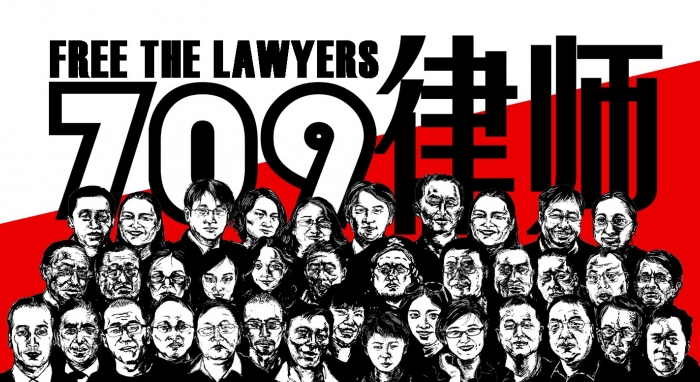
On 9 july 2020 the International Service of Human Rights came out with a good overview of what has happened to the Chinese lawyers since the crackdown five year ago [see: https://humanrightsdefenders.blog/2015/07/29/the-remarkable-crackdown-on-lawyers-in-china-in-july-2015/]. Human rights lawyers are a cornerstone of China’s human rights movement: they represent victims of abuses, promote compliance with international law, and strive for human rights change inside the system.
In the weeks following 9 July 2015, over 300 Chinese weiquan (‘rights defence’) lawyers and legal activists were harassed, detained and disappeared, in a nationwide police sweep that came to be known as the ‘709 Crackdown’. Five years later, these lawyers and their families still face a range of restrictions and rights violations aimed at silencing their efforts for a more just and rights-compliant society.
Disbarment, secret detention, disappearances, harassment of relatives, stigmatisation: the ‘systematic crackdown on lawyers’ denounced by UN experts has changed in form but not in its scale or scope.
Despite the risks, they strive to uphold the fundamental rights of all Chinese citizens, guaranteed under China’s Constitution and international treaties. They represent the most vulnerable and unjustly accused: those who have been evicted from their land or are victims of police abuse; minorities criminalised for their religious belief or ethnicity; human rights defenders and those expressing opinions different from the official Party line.
‘Without independent lawyers, there can be no rule of law,’ says Sarah M Brooks, ISHR Asia Advocate.
‘And when the rule of law is weaponised – as we saw last week with the imposition of the National Security Law in Hong Kong – lawyers are on the front lines of defending rights and freedoms. The least we can do – as individuals and as a global community – is to stand with them.’
In a defiant act of reclaiming, 9 July is now recognised by the human rights movement as ‘China Human Rights Lawyers Day’. To highlight this important day, ISHR has produced a bilingual information flyer on the patterns of repression against Chinese human rights lawyers, and action by the international community. The information flyer is available in English and Chinese. 请点击此处下载中文版。 For more information, please contact Raphael Viana David at r.vianadavid@ishr.ch or on Twitter at @vdraphael.
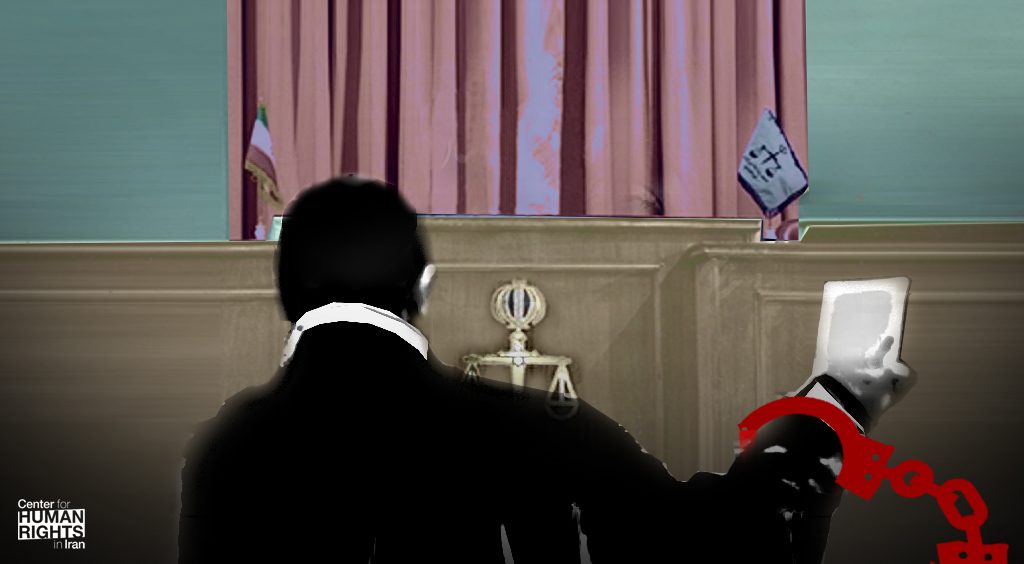
On 23 June 2020 the Center for Human Rights in Iran (CHRI) published under the title “No Lawyers, No Justice” a list of lawyers imprisoned in Iran for defending Human Rights Defenders. The adagium “utopia is a world without lawyers” clealry does not apply to Iran:
At least nine known cases of attorneys that have been arrested, charged with national security-related crimes, and/or banned from practicing law in the last two years. In addition to the list below, CHRI maintains this regularly updated list of lawyers known to have been imprisoned in Iran for their work defending the law.
Payam Derafshan: Held incommunicado at an unknown location since his arrest in June 2020 on unannounced charges. In May 2020, he was sentenced to a one-year suspended prison sentence for“insulting the supreme leader,” and suspended from practicing law for two years.
Soheila Hejab: Held at Gharchak Prison since May 2020, serving an 18-year prison sentence, five of which she must serve before becoming eligible for parole for “forming a group for women’s rights.”
Nasrin Sotoudeh: Detained in June 2018 and sentenced to 38 years in prison, 12 years of which she must serve before becoming eligible for parole. Among her charges were “encouraging prostitution” for advocating against compulsory hijab. Previously she served three years in prison for “acting against national security” and “membership in the Defenders of Human Rights Center.”
Mohammad Najafi: Imprisoned for demanding accountability for deaths in detention and facing new unspecified charges, he was sentenced in 2019 to 13 years in prison for “propaganda against the state,” “insulting the supreme leader,” and “collaborating with enemy states,” in addition to a four-year prison sentence in 2018. He must serve 10 years before becoming eligible for parole.
Amirsalar Davoudi: Behind bars since November 2018, he was sentenced to 30 years in prison and 11 lashes. He will be eligible for release after serving 15 years under the charge of forming “an illegal group,” which was a news channel for lawyers on the Telegram messaging app.
Arash Keykhosravi, who, along with fellow lawyer Ghasem Sholeh Sa’di, was sentenced to six years in prison but later acquitted, is facing new charges of “publishing falsehoods” for writing an article criticizing the imprisonment of attorney Mohammad Najafi.
Abdolfattah Soltani, who spent more than seven years behind bars for defending political prisoners, and Mohammad Ali Dadkhah, who was sentenced in 2012 to nine years in prison but released on furlough in 2013, are both banned from practicing law.
The assault on rights lawyers in Iran has been occurring amid a backdrop of two major changes to the legal process that have facilitated the authorities’ ability to convict defendants in politically motivated prosecutions on unsubstantiated charges.
In January 2018, Iranian courts began citing the Note to Article 48 of Iran’s Criminal Procedures Regulationsas justification for forcing defendants to choose their legal counsel from a court-approved list. The note also allows a delay in an individual’s access to counsel in cases involving “national security” charges, which are used against perceived critics of the state.
In a second blow to due process, in November 2019, Judiciary Chief Ebrahim Raisi ruled that Appeal Courts could issue verdicts without the presence of defendants and their attorneys, rendering the appeal process effectively meaningless.
“If the head of the judiciary can stop lawyers from practicing, it’s time to say goodbye to this profession,” Sotoudeh said in 2018. She was arrested two months after making the comments and has been behind bars ever since. [See also: https://humanrightsdefenders.blog/tag/nasrin-sotoudeh/]
Pakistan is the focus of this year’s Day of the Endangered Lawyer (January 24) and the American Bar Association is organising a teleconference, in which panelists will provide a report of the current state of attacks on the judiciary, bar and other human rights defenders in Pakistan, as well as offering suggestions for how the ABA and other outside organizations can lend support. [see also: https://humanrightsdefenders.blog/2018/01/22/24-january-2018-day-of-the-endangered-lawyer-focus-on-egypt/]
Moderator:
Sara Sandford, Immediate Past Co-Chair, International Human Rights Committee
Speakers:
Jalila Haider, Founder of We the Humans
Farahnaz Ispahani, Senior Fellow, Religious Freedom Institute; Global Fellow, Woodrow Wilson International Center for Scholars
Hussain Haqqani, Former Ambassador to US
Raza Rumi, Director of the Park Center for Independent Media, Ithaca College; Visiting Faculty at Cornell Institute for Public Affairs; and Editor of Daily Times





 Hans Thoolen on Human Rights Defenders and their awards