Posts Tagged ‘Kurdish cause’

Young Syrian human rights defenders working for truth and justice express cautious hope

May 26, 2025

“Removing a dictator is not enough; real change requires a shift in governance, security, justice.”

Syrians gather in celebration days after the fall of Bashar Assad’s government at Umayyad Square in Damascus on Dec. 12, 2024. | Leo Correa/AP

On 19 May 2025 Bassam Alahmad, Noah Abbas, and Simav Hasan wrote in Global Citizen an interesting piece on how Syrian human rights defenders feel about the changes in their country:

In a previously published Global Citizen In My Own Words article, human rights defender Bassam Alahmad detailed his experiences of being a stateless citizen residing in Syria who stands for justice. In this article, following the fall of Al-Assad, Bassam Alahmad is joined by colleagues from Syrians For Truth and Justice, Simav Hasan, and Noah Abbas, as they share their reflections on what the regime change in the country means for them personally and for their hopes for a democratic Syria.

How would you describe your relationship with Syria and how has the decades-long conflict impacted you?

Bassam Alahmad: I think ‘complicated’ or ‘complex’ is the best way to describe my relationship with Syria. Being born stateless means having no rights, but we love our country because we were born there. We know the people and communities and we belong to the land but I didn’t feel as though I belonged politically. I didn’t feel as though I had full citizenship in the country. I like my country but unfortunately, the way in which the Kurdish people were treated for decades made it so we didn’t feel like we were equal parts of this country.  

Noah Abbas: As a Kurdish Syrian national, the long-standing conflict in Syria has profoundly influenced both my personal and professional life. It has not only shaped my views on war and peace, but has also deepened my understanding of resilience and the value of community. Witnessing the enduring struggles of friends, family, and the broader Syrian community has motivated me to advocate for humanitarian causes and pursue solutions that aim to bring lasting peace to the region. The impact of this conflict extends into my academic pursuits as well; I am currently engaged in postgraduate studies in military intelligence and security.

This academic path was chosen with a clear purpose: to shift the perspective on the role of intelligence in Syria. Under Al-Assad’s governance, intelligence agencies were often viewed as instruments of fear, particularly against opponents of the regime. As a human rights activist, I believe it is our duty to transform this perception and demonstrate how intelligence can serve as a cornerstone for justice and societal safety. Joining the efforts of Syrians for Truth and Justice has been crucial in my journey.

Simav Hasan: I am a Kurd from Qamishli, and so my existence here has always been shaped by layers of oppression, resistance, and hope. The decades-long conflict has left scars on my community and on me personally. I’ve witnessed forced displacement, the suffering of victims, and the destruction of lives and history. But more than that, I’ve felt the weight of injustice firsthand — whether through the fight for accountability, the struggle for basic rights, or the ongoing humanitarian crises. Despite everything, I refuse to detach myself from this reality. My work as a journalist and human rights activist is my way of pushing back against the violence, ensuring that the voices of the victims are heard, and trying to carve out a future where justice isn’t just a distant dream. The war has taken much, but it has also strengthened my resolve. Even in the darkest moments, I believe in the power of truth, memory, and resistance.

………

In 2024 the Al-Assad government fell, how did this make you feel? 

Alahmad: To be honest, while part of me is very happy that there is no longer the Assad regime, part of me also thinks that there is a big obstacle in the road to democracy, open civic society, and citizenship. As people working in human rights we must not be naive because we know the history and we know that there are human rights violations committed. The main issue is there is a huge gap betweenwhat they say to the west — to the EU, to the US, to the UN — and what they ultimately decide. For example, the national dialogue was kind of a missed opportunity, where instead of having a good version of national dialogue in Damascus and to be more inclusive, they excluded a huge part of Syria, including Kurds and other minorities.

It was a missed opportunity. The same is true with the constitutional declaration adopted in March 2025. They didn’t recognize the Kurdish people or the Kurdish language. They did not recognize diversity. Most of the authority was in the hands of the president. Our main problem is that Syria without the Assad regime is good, but there is no guarantee that we are going towards democracy. The recent Human Rights Watch report on the constitutional declaration clearly states that this constitutional declaration is not a road to a democratic country. This should be very clear for our partners in the US, the EU, and the international community. The most serious thing that happened in the coastal area in Latakia and Tartus is that hundreds of Alawite people were killed based on their identity, because they are from this minority group. A lot of violations happened by the groups linked to the government. 

Abbas: The fall of the Al-Assad government, as welcomed by human rights organizations, provoked a complex mix of emotions within me. On one hand, I felt a profound sense of relief and happiness that the brutal regime, known for its relentless human rights violations and oppressive rule, had come to an end. The release of prisoners of conscience and the acknowledgment of the sacrifices made by countless human rights defenders brought a wave of hope for a future where justice and accountability could finally be addressed. However, as a Kurdish-Syrian national, this transition also brought with it significant fears and concerns. The potential for ethnic conflicts or even ethnic cleansing within the new power structures (such as the factions that committed violations in Efrin city, my home town, and other Kurdish cities across the country) was alarming, especially given the historical challenges faced by Kurdish communities in asserting their rights and safety within Syria.

Despite these fears, the fall of the regime marked a critical moment for Syria — an opportunity to rebuild and redefine the nation on the principles of freedom, justice, and human dignity. It was a moment to champion the efforts of Syrians for Truth and Justice and engage more actively in the civil society space dedicated to transitional justice and documenting human rights violations. 

Hasan: With the fall of the Assad government, I felt a sense of cautious optimism. It marked the end of a regime responsible for decades of repression, war crimes, and mass atrocities — a moment many victims and survivors had long awaited. There was hope that this could be the beginning of rebuilding Syria on principles of justice, accountability, and human rights. However, I remained wary. The fall of a regime does not automatically guarantee freedom or stability. Power vacuums in Syria have often led to new forms of repression and external interference. Many armed actors still operate with impunity, and the path to true justice remains uncertain. While this moment was significant, real change depended on what came next. Would justice be pursued? Would the voices of victims and marginalized communities — especially Kurds and other oppressed groups — be heard? The fall of Assad was a turning point, but Syria’s future was still being written.

https://www.globalcitizen.org/en/content/syria-justice-human-rights-after-al-assad/
One of many FLD appeals: Jina Modares Gorji

May 30, 2024

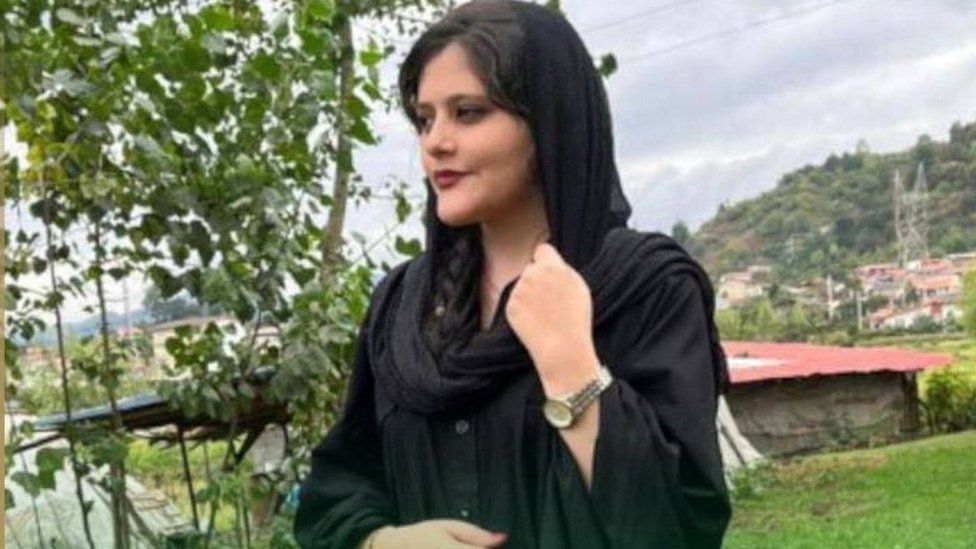
Front Line Defenders issues regularly urgent appeals on behalf of Human Rights Defenders. This case is just an example: on 29 May 2024 FLD called for action on behalf of woman human rights defender Jina Modares Gorji in Iran who was sentenced to twenty-one years in prison.

Please get your own Front Line Defenders Appeals. By subscribing to this list [https://www.frontlinedefenders.org/secure/act-now.php] you will receive information on all cases that Front Line Defenders takes up on behalf of human rights defenders at risk. You will receive an average of 4 to 8 emails per week.

On 24 May 2024, Jina Modares Gorji was notified that Branch 1 of the Sanandaj Revolutionary Court has sentenced her to a total of twenty-one years in prison. In the verdict of the revolutionary court, the woman human rights defender has been sentenced to ten years in prison on the charge of “forming groups and association with the intention of disturbing the national security,” ten years in prison for “collaboration with a hostile government,” and one year in prison on the charge of “propaganda activities against the state.”

Jina Modares Gorji is a woman human rights defender, book seller, and feminist podcaster and blogger in Sanandaj, in the Kurdistan province in Iran. Her human rights work includes advocating for women among the Kurdish community, girls’ rights, and socio-cultural rights via holding book clubs and writing blogs. She has been arrested several times since September 2022, following the death of Mahsa (Jina) Amini in the custody of the Iranian morality police …

On 9 April 2024, the last hearing occurred for the woman human rights defender. The aforementioned charges are related to her peaceful human rights activities, which includes speaking to media, participating in international conferences and organising activities to promote women’s rights in the Kurdistan province in Iran. The woman human rights defender was arrested on 10 April 2023 and was arbitrarily detained for almost three months in solitary condiment and in the public Womens Ward of Sanandaj prison. She was also denied access to a lawyer. In mid-February 2023, she was informed that “spreading disinformation” had been added to the previous charges of “forming groups and association with the intention of disturbing the national security”, and “propaganda activities against the state”. On 3 July 2023, the woman human rights defender was released on a bail of one billion IRR.

In April 2023, Branch 1 of the Sanandaj Public and Revolutionary Court dismissed the lawsuit that Jina Modares Gorji filed against the physical and verbal assault during her arbitrary arrest.

On 12 February 2023, Jina Modares Gorji appeared with her lawyer before Branch 1 of the Sanandaj Revolutionary Court, where she did not sign the pardon scheme as she stated this would constitute an acknowledgement that the charges against her human rights work were legitimate. This scheme was announced by the Iranian judiciary in February 2023 on the occasion of the 44th anniversary of the Islamic Revolution.

The woman human rights defender had previously been arrested on 21 September 2022 for her work and participation in the “Woman, Life, Freedom” protests, and charged with “gathering and collusion against the national security” and “propaganda activities against the state.” She was released on a bail of 10 billion IRR on 30 October 2022, after going on hunger strike for three days in protest against the physical assault and detention she endured in the Sanandaj Correctional Centre.

The prosecution of Jina Modares Gorji is part of a wide crackdown on human rights defenders in Iran where, hefty sentences issued against human rights defenders on the charge of “forming groups and association with the intention of disturbing the national security,” against groups of human rights rights defenders reported by Front Line Defenders in April and May 2024.

Front Line Defenders is particularly concerned with the sentencing of the woman human rights defender Jina Modares Gorji , as it believes the judicial action is in reprisal for her peaceful and legitimate human rights work.

Download the urgent appeal.

    Iran gives the usual treatment to Mahsa Amini’s family: stopped at airport on way to collect award

    December 10, 2023
    Mahsa Amini file pic
    Mahsa Amini

    It sounded familiar hearing the BBC News that the family of Mahsa Amini have been banned from flying to France to collect the 2023 EU’s Sakharov Prize [see https://humanrightsdefenders.blog/2023/10/19/mahsa-amini-and-woman-life-and-freedom-movement-in-iran-awarded-eus-sakharov-prize/]. In 2009, as chairman of the MEA, I had to deal with the Martin Ennals Award laureate, Emad Baghi, who could not accept the prize in person due to travel restrictions. The same happened to other awards, including: the Civil Courage Prize (2004), the human rights award from France (2005), and the British Press Award (2008). https://www.trueheroesfilms.org/thedigest/laureates/EA0410ED-BC5A-4436-A3D7-012EF3232C55

    Ms Amini’s parents and brother were stopped from boarding their flight and had their passports confiscated, their lawyer said. They were banned from leaving despite having valid visas.

    Speaking to the AFP news agency, the family’s lawyer, Chirinne Ardakani, said Ms Amini’s mother, father and brother had been “prohibited from boarding the flight that was to take them to France for the presentation of the Sakharov Prize”.

    The president of the European Parliament, Roberta Metsola, called on Iran to “retract the decision” to ban the family from travelling. “Their place next Tuesday is at the European Parliament in Strasbourg to receive the Sakharov Prize, with the brave women of Iran,” she said on social media. “The truth cannot be silenced.”

    https://www.bbc.com/news/world-67672565

    https://www.theguardian.com/world/2023/dec/10/iran-bans-mahsa-amini-family-travelling-receive-human-rights-prize

    Polish refugee worker and Kurdish defender receive Paul Grüninger award 2023

    November 21, 2023

    The Paul Grüninger Foundation awarded Polish refugee worker Paula Weremiuk and Kurdish politician Ayşe Gökkan, who is in prison in Turkey, the 2023 Grüninger Recognition Prize for Humanity and Courage 2023. [see: https://www.trueheroesfilms.org/thedigest/awards/845EA081-C3DB-705C-E6FC-1BA88858803E]

    The award ceremony took place on at the Palace Cultural Center in St. Gallen.

    Paula Weremiuk from Narewka on the Polish-Belarusian border works as a teacher during the day and as a refugee aid worker in the Bialowieza forest at night. According to the Paul Grüninger Foundation, a refugee drama of enormous proportions has been taking place there since 2021.

    Paula Weremiuk searches for people in need in the inaccessible areas of Bialowieza, providing them with clothing, food, sleeping bags and the most basic necessities, writes the Paul Grüninger Foundation. The Belarusian dictator Alexander Lukashenka is forcing thousands of refugees from the Middle East and Africa across the border to Poland, where they are met with strong political rejection.

    At the border, in the primeval forest of Bialowieza, there is often brutal violence, abuse, rape and repeated deaths. The refugees, including women and small children, are helplessly abandoned to their fate in the inaccessible terrain and are chased back and forth across the border by the authorities. Refugee helpers are being harassed and criminalized, the press release continues.

    Ayşe Gökkan’s award was accepted by her lawyer, Berfin Gökkan. The lawyer read out a letter from Ayşe Gökkan written in Kurdish: “I greet you with the warmth of the sun and the enthusiasm of Jin-Jiyan-Azadî. As a member of the Movement of Free Women, I accept this award on behalf of thousands of struggling Kurdish women. There are many fighting women in prison in Turkey.”

    The foundation justified the awarding of the recognition prize of 10,000 francs to the Kurdish feminist and human rights defender Ayşe Gökkan for her civil society commitment and her criminalization:

    “Ayşe Gökkan has particularly distinguished herself as a journalist and as an activist for women’s rights. For almost forty years, she has been writing newspaper columns against racial and gender discrimination, speaking at national and international podiums and seminars, leading workshops on the topic of gender inequality and taking part in peaceful demonstrations in this context.

    From 2009 to 2014, Ayşe Gökkan was mayor of the Kurdish city of Nusaybin, which lies on the border between Turkey and Syria. When Turkey began to build a wall against refugees between Nusaybin and the neighbouring Syrian town of Qamishlo, the mayor protested against this “wall of shame” with, among other things, a sit-in strike.

    Because of her civil society commitment, Ayşe Gökkan has been arrested in Turkey more than eighty times, subjected to more than two hundred investigations and, in 2021, sentenced to more than 26 in a grotesque court case based on the statements of a single “secret witness” for membership in a “terrorist organization”.

    She is a victim of the criminalization of the political opposition in Turkey. Ayşe Gökkan is in prison, her sentence has not yet been confirmed by the Turkish Court of Cassation, and proceedings are also pending before the European Court of Human Rights.”

    https://anfenglish.com/women/jailed-kurdish-politiciangokkan-awarded-paul-gruninger-foundation-s-recognition-prize-70380

    Kurdish politician and human rights defender Leyla Zana prosecuted for accepting awards

    August 10, 2023

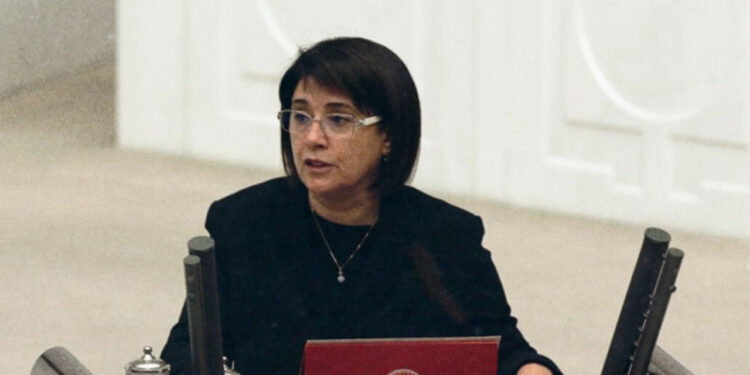
    Leyla Zana, a renowned Kurdish politician and human rights activist, and the first Kurdish female member of the Turkish parliament, will face prosecution on 7 September 2023, with her international awards being cited as “criminal evidence” in the indictment.

    Prominent Kurdish politician Leyla Zana to stand trial for accepting international honours

    Former Member of Parliament Leyla Zana is due to stand trial in a Turkish court on 7 September 2023, facing accusations of “terrorist propaganda” in her speeches and charges of accepting international awards, deemed as “crimes” under Article 325/1 of the Turkish Penal Code. The penal code article, titled “Acceptance of Titles and Similar Honours from the Enemy,” stipulates that a citizen who accepts academic degrees, honours, titles, medals, or other honorary ranks from a state at war with Turkey could face imprisonment from one to three years.

    Zana’s lawyer, İbrahim Çeliker, has questioned the basis of the charges, asking, “Which awards received by Ms. Zana could be a source of crime? Which country has Turkey declared war on? These need to be clarified. The awards in question that Ms. Zana received are awards given from European countries and America on human rights,” Çeliker stated. [see: https://www.trueheroesfilms.org/thedigest/laureates/82F7AAA5-88D1-47E8-8B62-4EBC66D1602D]

    Zana is internationally recognised for her human rights work and political activism. Her accolades include the Thorolf Rafto Memorial Prize, the Sakharov Prize for Freedom of Thought, the Aachen Peace Prize, the Bruno Kreisky Prize, and the Freedom Medal by the American Human Rights Association. One should add the Juan Maria Bandres Prize for Human Rights and Refugee Protection in 2008. She has also been awarded the Silver Medal of the City of Paris and has been recognised as an “Honorary Citizen” by the cities of Paris and Geneva.

    The indictment also implicates pro-Kurdish Democracy Party (DEP) former MP Orhan Doğan and Vedat Aydın, the People’s Labour Party (HEP) Diyarbakır (Amed) Provincial Chairman who was killed in 1991, citing their participation in memorial programmes as criminal. Çeliker responded to this, stating, “The prosecutor considers Orhan Doğan and Vedat Aydın as members of the PKK [Kurdistan Workers’ Party]/KCK [Kurdistan Communities Union]. He sees the mention of these names as a criminal element. However, Orhan Doğan is a Kurdish politician who spent years in prison with Leyla Zana and served as an MP. Vedat Aydın is a Kurdish intellectual who fell victim to an unsolved murder.”

    Çeliker also emphasised that the indictment targets freedom of speech, stating, “The main point that the prosecutor focuses on is Ms. Zana’s speaking in Kurdish. There is a special clause in the indictment about her speaking in Kurdish. He emphasises this as a fault and evidence of the alleged crime; the crime of making terrorist propaganda. There are expressions picked out from speeches made in the fields of peace, brotherhood, and democracy … Ms. Zana has never praised violence, she has fought for peace to come, she is a politician who has paid the price.”

    Eren Keskin, human rights defender from Turkey. receives 2018 Anna Lindh Prize

    May 26, 2018
    Eren Keskin

    The Swedish-based Anna Lindh Memorial Fund has named pro-Kurdish human rights lawyer from Turkey Eren Keskin as the recipient of the 2018 Anna Lindh Prize. “She has worked tirelessly to help … girls and women as well as LGTBQ people and [displaced] Syrians in Turkey,” said Lena Hjelm-Wallén, chairman of the memorial fund’s board. “Even when her work led to imprisonment, she still stood up for human rights without regard to political or religious background. Keskin’s brave voice is needed today more than ever and is a work entirely in Anna Lindh’s spirit.

    The prize will be awarded at a ceremony in Stockholm on June 19.

    The prize is awarded in memory of slain Swedish politician Anna Lindh since 2004 and aims “to encourage primarily women and youth who, in Anna Lindh’s spirit, show the courage to work against indifference, prejudice, oppression and injustice in order to stimulate a society where human rights are respected.” See also: https://humanrightsdefenders.blog/2014/10/27/the-anna-lindh-lecture-2014-focused-on-human-rights-defenders/

    Human Rights defender Fakhteh Zamani comments on Iranian developments

    January 3, 2018

    For the past ten years, Fakhteh Zamani has resided in Norway, given that her return to Iran at the moment is fraught with risks. Zamani is in daily touch with her friends living in Iran’s Kurdish provinces and human rights defenders in the Mashhad. Hetq interviewed Zamani via the internet and published the following on 3 January 2018 (under the title : Iranian Human Rights Activist – People in Iran Want Change, not Reforms):

    It’s difficult to receive credible information regarding events now taking place in Iran. .. How do you receive information from Iran? ..

    Yes, social networks are being filtered. My human rights defender acquaintances in Mashhad and elsewhere are able to break through the barriers and get information out. The Iranian government has tried to monitor the populace for the past forty years. The populace has long since found ways to transfer information. This is how we get our information, by using our contacts on the ground.

    While the international media is reporting that the poor socio-economic situation and inflation have fueled the protests, President Hassan Rouhani has accused Saudi Arabia of inciting the situation….

    You know that all dictators are accustomed to blaming outside governments for their failures. While it’s true that Iran and Saudi Arabia have always had tense relations, those who are protesting are demanding their fundamental rights. …There is no justification for blaming outside governments. People are hungry. Many go without being paid for weeks and months. Food prices are increasing, and wages are decreasing. People are disgruntled. Yesterday, I was talking to a wealthy businessman in Iran. He said that even though he makes money, he still can’t afford certain things. So, just imagine the plight of those working for others.

    Given the sporadic information reaching the outside, is it correct to assume that the protests lack leadership? ….

    Yes, there are no leaders. People are organizing themselves. Organizing demonstrations in Iran isn’t easy. The government spends millions to form groups designed to crush any opposition. Those taking to the streets, in revolt, have violated the law and face serious retribution. The protesters have spontaneously taken to the streets.

    What are your predictions on the protests? What will follow?

    Honestly, I can’t make specific predictions as to what will come next. But I already see the end of the Islamic Republic of Iran. While the government has introduced some reforms in the past twenty years, people have realized that these reforms haven’t benefitted them. In contrast to the 2009 protests, the current protesters are demanding that the regime steps down, to be replaced by democratic rule. People are also tired that their taxes are being spent on proxy wars in the Middle East. People in Iran want real change, not reforms. This is evident from the slogans they use.

    You have left Iran due to your political views and activities. Would you return is serious changes take place?

    I would return to expand my actions in the name of democracy and a better life. Furthermore, I would have to be certain that the rights of national minorities are placed on the back burner.

    Two of three Turkish human rights defenders released awaiting trial

    July 3, 2016

    A Turkish court on Thursday 30 June 2016 released a prominent press freedom advocate and leading human rights defender, two of three activists put under pre-trial arrest on June 20 for participating in a solidarity campaign with a pro-Kurdish daily newspaper. [see: https://thoolen.wordpress.com/2016/06/23/turkey-outcry-over-detention-of-human-rights-defenders-is-even-russia-too-much/]

    Sebnem Korur Fincanci, president of the Human Rights Foundation of Turkey, and Erol Onderoglu, Turkey’s representative to Reporters Without Borders, are to remain free pending trial on charges of “propaganda for terror organization PKK,” or the Kurdistan Workers’ Party, according to the state-run Anadolu Agency. The first hearing is scheduled for November 8. A different court is handling the case against writer and journalist Ahmet Nesin and there has been no decision yet on the possibility of his release pending trial, according to Anadolu.

    The three had participated in a solidarity campaign taking turns as co-editors in support of Ozgur Gundem, a pro-Kurdish publication subject to multiple investigations and lawsuits.

    Source: Human rights and media activist released in Turkey – Watertown Public Opinion: Europe

    Turkish human rights defender Ragip Zarakolu receives PL Foundation Peace Prize

    December 17, 2015

     On December 10 Turkish publisher, human rights defender Ragip Zarakolu was awarded PL (Paul Lauritzen) Foundation Peace Prize for his extraordinary efforts in the areas of freedom of thought and expression. Zarakolu is an author of a number of works on Armenian Genocide. The prize amounting to 100.000 Danish krone is awarded to organizations and people who struggle for democracy without resorting to violence within the scope of United Nations Declaration of Human Rights. [Ragıp Zarakolu was born in 1948 on Heybeliada, in İstanbul. He started publishing with his wife, Ayşe Nur Zarakolu in 1977. He never abandoned his struggle for “popularizing respect for different ideas and cultures in Turkey” despite pressures, his books being seized or destroyed, heavy fines and being sent to prison. Zarakolu serving as the President of Publishers’ Union of Turkey Committee of Free Publishing has worked on Kurdish question and condition of minorities in Turkey. Zarakolu lastly was arrested together with his son Deniz Zarakolu within the scope of Group of Communities in Kurdistan (KCK) case in 2011. He remained in prison until April 2012. (EA/TK)]

    President of the PL Foundation Paul Sogaard noted in his opening remarks that Ragip Zarakolu was chosen as a recipient of the prize for his long struggle for the freedom of thought and human rights, as well as for his efforts targeted at raising awareness about the Armenian Genocide committed at the hands of the Ottoman Empire 100 years ago. Zarakolu said, in turn, he dedicates the award to the memory of Hrant Dink, the slain editor-in-chief of the Turkish Armenian Agos weekly, and Armenian linguist and architect Sevan Nisanyan, who’s currently serving a term in Turkey. He urged to do the utmost to speak out against and condemn the radical intolerance in Turkey and contribute to the release of detained intellectuals.


    Sources:

    http://bianet.org/english/freedom-of-expression/169901-ragip-zarakolu-receives-pl-foundation-peace-prize

    Ragip Zarakolu receives PL Foundation Peace Prize, criticizes radical intolerance in Turkey | Public Radio of Armenia

    Evîn Bagdu, international human rights expert, discusses Kurdish genocide claims

    May 13, 2015

    Rudaw is a Kurdish media network funded and supported by Rudaw Company. The network aims to impart news and information about Kurdistan and the Middle East in a professional manner.  Evîn Bagdu is  being interviewed about the issue of genocide and how the Kurdish case fits into this. A long but interesting read:

    Evîn Bagdu, an international human rights  law expert.
    Evîn Bagdu, an international human rights law expert.

    “Rudaw: Why did the Halabja and Garmiyan mass murders not get the attention from the international community as much as the recently discovered Yezidi mass graves did?

    Bagdu: In the history of the human rights movement, the issue of not getting enough attention for the suffering of victims of gross violations has always been a challenge, regardless of the character of the groups or scale of the suffering.  For instance, in Sierra Leone, the news items on the widely practiced mutilation of limbs by the child soldiers couldn’t make it to the big news agencies as it “was too difficult to watch.”

    On the other hand, in many cases—historically speaking—while these gross violations and atrocities took place, the victims sometimes have been isolated from the rest of the world as the matter was considered an “internal issue.” So, the doctrine of state sovereignty is frequently used as a shield in such cases.  Examples include the Armenian case in 1915, Jewish case in 1940s, Kurdish case in the Saddam Era—all have this factor in common.

    This was the case when the world was unaware of what was happening in these cases. Once a case does become known, the next challenge is how to get a reaction to stop the atrocities.  And, this is the part that is immensely frustrating not only to the human rights defenders alone, but to every human being with a clear conscience. The arguments often put forward are typically:

    -The reaction would aggravate the situation and cause more severe suffering for the victims;

    -It would be futile;

    -It is not the right time for a reaction to the event in question;

    -It is not in the national interest of state actors, or against the security of their people.

    In fact, prior to the Nuremberg Trials, such systematic and purposeful killings did not even have the name “genocide,” let alone codification of it, as an international crime.

    At this point, I believe it is necessary to see the difference between a couple concepts which are important to consider when discussing widespread human rights abuses.  Do the issues pose a moral, political or legal challenge?  As the nature of the issue is gravely inhumane, the first instinct is to approach the issue from the moral stand point.  This usually leads to a disappointment mentioned earlier.

    In comparison of the Anfal campaign of 1986-89 to the recent atrocities of 2015 against the Yezidi population, we may also consider the political dimension.  There are undeniable political aspects at stake. But, when we think of other similar incidents of such massacres, the political environment surrounding the situations always differs.

    In the Saddam era, there was an Iran/Iraq War, Saddam was a head of state enjoying certain immunities, and holding immense power to control any communication with the outside world.  Today, however, Iraq has a lot more international presence in the country, and media coverage is much more widespread. Therefore, flow of information regarding the facts of the case is easier.

    In the Yezidi case, there is an international conflict carried out by a non-state actor against more than one state and the citizens thereof.  It is a conflict that many of the nations of the world see as a global threat to their common peace and security. So, the attention of the international community is more intense in the Yezidi case.  But this was the case in Srebrenica as well.

    This brings us to the last concept; the legality.  There is a historic lesson for the Kurds too that needs to be taken from each one of the past gross human rights violations against civilian populations. Other nations have used international legal mechanisms to address the harm done in the past.  It of course is important to get political recognition by states, and in the Anfal case Iraq itself recognized the case as genocide.

    But genocide is a crime under international law and such recognition must come from the international courts.  It needs to be investigated, evidence that could clearly substantiate the facts needs to be obtained and then utilized by the court.   But if not proven through the standard, fair, legal processes, by impartial courts, all these events will continue to be referred to as alleged “atrocities,” “campaigns,” and “gross human rights and humanitarian law violations.”  If not thoroughly dealt with, the perpetrators will go free and there will always be a lesson for them that they could get away with it.  The phrase “never again” will turn into “always possible.” This is important, because it relates to the rule of law commitments, it sheds unbiased light on history and more importantly it brings justice therefore some closure to the survivors of such horrible events.
       
    Rudaw: Could these mass graves serve as something Kurds could use to get attention to their identity and issues revolving around recognition of their identity?

    Bagdu: I will hold my criticism of the usage of terms such as “mass graves” or “martyrs” to refer to certain topics in Iraq for another time (I am saying in Iraq because such usage is not specific to the Kurds only).  What you are asking me is I believe, if Kurds could change the game in their favor by bringing these issues to international attention.  My answer is, absolutely yes! 

    The reason there is such an emphasis on proving the genocide is that it is an internationally recognized form of a crime that could only be committed against a group because of the group’s identity.  It does provide a picture to the background of these identity issues, for example: 
     
    -how difficult it is to have such identity under regimes which violate their citizens’ human rights (and especially minorities’ rights);

    -how to properly observe rights based on group identity;

    -to what degree safeguards are provided and needed for the protection and continuity of these identities, and so on and so forth.
     
    The current conflict itself is telling so much about this.  While the whole world “absolutely again” is watching or passing resolutions, or in better cases “providing support” while this armed group was making advances into what is called “Iraqi cities,” in the north, it was the Peshmerga and the Kurdish fighters that were defending the civilians and the land. Other armed forces in Iraq simply fled, leaving even their arms behind.

    When studying the subject of “indigenous populations’ rights,” the idea of attachment to the land was one element that captured my attention that differed from the ties citizens of modern states hold to the land they live on. To me, these things we have seen in the most recent conflict have demonstrated this phenomenon very well.

    Rudaw: Jewish people were also the victims of the genocide by the Nazis and this helped them to get support from the world to help realize their cause.  Why couldn’t the Kurds turn these mass murders into an element to help their suffering get recognition?

    Bagdu: To be fair to the Kurds, once there was an opportunity to act, they have done almost everything in their capacity to address their issues.  For instance, regarding Anfal and Halabja after the fall of Saddam, and the emergence of post-Saddam Iraq, Kurds have invested in every aspect of addressing the mass killings and the missing person issue throughout Iraq as a whole. At the time of the Coalition Provisional Authority, they assisted with reconnaissance and exhumation of mass graves and the identification of remains. 

    There was a law necessary to address the issue, and they drafted a simpler version of the missing persons law (The Law on Protection of Mass Graves).  A ministry needed to serve as a leading institution, and they held two important ministry seats (namely, the human rights ministry and the foreign ministry) in the national parliament.  They worked with the leading international organization on missing persons issues to duplicate successful practices around the world, (a work still in progress as we speak).

    But since you are making a comparison between the Kurdish efforts and the Jewish efforts in addressing the mass murders against their populations, allow me to highlight a couple differences. 

    The Jewish Diaspora consisted of very well educated, very committed individuals who did everything in their personal capacity to inform the world of what happened to their people.  In fact, it was because of work done by a Jewish lawyer that genocide took a codified form in statutes.  Even the word genocide was pioneered by Raphael Lemkin. Also, after the atrocities ceased, many of the survivors personally got involved in the hunt for concentration camp guards, military commanders and decision makers in the Nazi army in order for them to be tried before national and international tribunals.

    Kurds also have a diaspora scattered around the world.  So, in this sense I believe while the Kurds on the ground are fighting to stop the atrocities, the Kurdish diaspora must assume responsibility to inform the world of the wrong done to their people, as well as documenting and investigating the cases as much as possible.  In the Kurdish case it is worth noting that such efforts have been undermined in the past by states that oppressed their Kurdish populations, and neighboring countries where Kurds live in large numbers. This might remain the case for future attempts as well.”

    Rudaw interview with Evîn Bagdu, an international human rights.