Hans Thoolen on Human Rights Defenders and their awards

share information on human rights defenders, with special focus on human rights awards and laureates


Posts Tagged ‘judicial harassment’

« Older posts
Newer posts »

Interpol: UAE Major General and Chinese Public Security Official are not good candidates for Interpol!

November 16, 2021

INTERPOL is going to have its General Assembly on the 23 – 24 November 2021 in Lyon. The election of both its President and a member of the Executive Committee look terrible. Already in 2017 there was a problem: see https://humanrightsdefenders.blog/2017/04/20/interpol-headed-by-chinese-police-official-human-rights-defenders-fearsome/. (The former chairman of Interpol Meng Hongwei was also a ministry of public security official, serving as vice-minister. However, Meng’s Interpol term ended prematurely in 2018 when he disappeared during a visit to China and was later jailed for 13 years on bribery charges, amid Xi Jinping’s anti-graft campaign targeting millions of officials.)

Several prominent members of the European Parliament (MEPs) have warned that the appointment of the Emirati official Major General Ahmed Nasser Al-Raisi to the position of president of Interpol would “undermine the mission and reputation” of the global police organisation. In a letter sent to the European Commission president, three MEPs urged European Union (EU) states to elect an Interpol chief that comes “from a country with an established criminal justice system and longstanding respect for human rights”.

The Gulf Center for Human Rights (GCHR), the French League for Human Rights and the International Federation for Human Rights are also concerned about the candidacy of Major General Ahmed Nasser Al-Raisi call to reject him.

Ahmed Al-Raisi has been Inspector General of the UAE’s Interior Ministry since 2015 and is also in charge of the UAE police force. Under his leadership, forces have carried out repeated and systematic arbitrary detentions and tortured prisoners of conscience and human rights defenders with complete impunity. One of the most emblematic cases concerns human rights defender Ahmed Mansour. Winner of the 2015 Martin Ennals Award and member of the GCHR steering committee, Ahmed Mansour has been imprisoned since March 2017 and sentenced to ten years’ imprisonment in 2018 for, according to the authorities, criticising the Emirati government and tarnishing his country’s image on social networks. Since 2017, he has been held in solitary confinement in Al-Sadr prison, in a 4m2 cell, without access to medical, hygiene, water or sanitary facilities. The inhumane conditions of Ahmed Mansour’s imprisonment have been the subject of several appeals without any favourable response from the Emirati authorities. [see: https://humanrightsdefenders.blog/tag/ahmed-mansoor/]

According to reports of several NGOs, torture is used systematically in detention centres in order to obtain confessions of guilt or testimonies against other detainees, particularly in the prisons of Al-Razeen, Al-Wathba and Al-Sadr. In addition, some prisons, such as Al-Awair prison and the Al-Barsha police detention centre, are overcrowded and unsanitary, making it extremely difficult to comply with social distancing and recommended hygiene practices in the context of the COVID-19 pandemic….In addition, prisoners are regularly denied medication and medical treatment for pre-existing health problems or illnesses developed during detention. Several UN experts have condemned these practices and expressed their concerns to the UAE authorities in recent years, but the authorities have not changed their practices.

Such inhumane treatment is recurrent in the UAE and is in flagrant contravention of international law and the Nelson Mandela Rules on the Treatment of Prisoners. While Major General Al-Raisi is, by virtue of his office, responsible for investigating complaints of abuse by the police and security forces in his country, none have been conclusively investigated. In the absence of any enforceable accountability mechanisms in the UAE, the GCHR has filed a complaint in France, against General Major Al-Raisi for acts of torture. Unfortunately, Interpol did not listen: https://www.businessinsider.com/interpol-president-uae-official-accused-of-torture-elected-2021-11

Another problematic candidate is Hu Binchen, the deputy director-general of the Chinese Ministry of international cooperation department, who is one of three candidates vying for two seats as Asia delegates on the committee.

The 13-member executive committee oversees the work of Interpol’s general secretariat and helps set future policy. Interpol controls a number of databases containing identifying details of people and property, which assist in global policing. It also operates the system of red notices, which are requests “to locate and provisionally arrest an individual pending extradition”.

However, there are long-running concerns over governments or authorities misusing the system to track down dissidents. While there are clear rules against the use of red notices on refugees, high-profile cases have shown countries are repeatedly able to obtain red notices, against Interpol policy.

Activists and advocacy groups, as well as 50 members of an international cross-party group of legislators, the Inter-parliamentary Alliance on China, have lodged their objections at Hu’s potential election to the committee, noting alleged attempts by China to use the red notice system to target exiled Uyghur activists.

“By electing Hu Binchen to the executive committee, the general assembly would be giving a green light to the PRC government to continue their misuse of Interpol and would place the tens of thousands of Hong Kong, Uyghur, Tibetan, Taiwanese and Chinese dissidents living abroad at even graver risk,” said the letter from the Alliance, citing the July detention of Uyghur activist Idris Hassan in Morocco.

“Allowing Interpol to be used as a vehicle for the PRC government’s repressive policies does great harm to its international standing.”

The human rights group Safeguard Defenders said the Chinese ministry’s international cooperation department, in which Hu is a senior official, oversaw operations named Sky Net and Fox Hunt, chasing down fugitives overseas. It alleged “teams were sent by the ministry “to intimidate and harass ethnic Chinese to force them to return to China ‘voluntarily’”. In a report also released on Monday, Safeguard Defenders said there had been a tenfold increase in the issuance of Chinese red notices between 2000 and 2020.

A later development is that 259 organizations, call on INTERPOL to immediately ban the Myanmar military junta from representing Myanmar as a member of INTERPOL. They demand that the military junta is excluded from the upcoming 89th INTERPOL General Assembly and all benefits and future cooperation that membership entails. [see: https://www.forum-asia.org/?p=36143]
https://www.fidh.org/en/issues/litigation/open-letter-to-the-representatives-of-the-member-states-of-the

https://www.middleeasteye.net/news/eu-lawmakers-say-uae-police-chief-would-undermine-interpols-reputation

https://www.theguardian.com/world/2021/nov/15/chinese-official-seeks-interpol-role-sparking-fears-for-dissidents

https://www.business-standard.com/article/news-ani/china-s-nominee-to-interpol-committee-opposed-by-lawmakers-from-20-countries-121111600231_1.html

https://www.theguardian.com/world/2021/nov/20/uae-nominee-interpol-ahmed-naser-al-raisi-torture-claims

https://www.thestar.com/news/world/europe/2021/11/22/interpol-election-raises-rights-concerns-about-fair-policing.html

Posted in EU, FIDH, human rights | 1 Comment »
Tags: Ahmed Mansoor, Ahmed Nasser Al-Raisi, China, Emirates, Forum Asia, Gulf Centre for Human Rights (GCHR), Interpol, judicial harassment, Meng Hongwei, Myanmar, red notice, UAE

Azerbaijani human rights lawyer Shahla Humbatova being disbarred

February 10, 2021
Shahla Humbatova. Photo: US State Department.

On 9 February 2021 Hamida Giyasbayli of OC Media reports that Azerbaijani human rights lawyer Shahla Humbatova has vowed to fight disbarment procedures against her despite what she says is a campaign of ‘harassment and threats’ from the Bar Association.

The Azerbaijani Bar Association has accused Humbatova of submitting a fake document as evidence during a civil case she was litigating, a criminal offence. They have also accused her of owing ₼460 ($270) in membership fees.  The association has taken her to court in an attempt to disbar her, which would strip her of the right to practice law.

Humbatova is well known in Azerbaijan for taking on high-profile human rights cases, including those of queer Azerbaijanis as well as blogger Mehman Huseynov. The move to disbar her follows the disbarment of dozens of other human rights lawyers in recent years, leaving few remaining lawyers taking on such cases. [see: https://www.trueheroesfilms.org/thedigest/laureates/e761cd05-65b0-4a02-8abe-e8ce9c58faed]

Speaking with OC Media, Humbatova said the allegation she submitted fake documents was baseless, and that her defence had submitted evidence proving this.

She confirmed that she had owed eight months of membership fees, but insisted the association did not make any effort to notify her of this. ‘I learned about this from the media the day after the Board’s decision [to take me to court]’, she said.  She immediately made the payment, so when the Bar went to court with her disbarment request, there was no longer any debt. Emin Abbasov, a legal practitioner who also works on human rights cases, criticised the proceedings against Humbatova for being conducted behind closed doors and without any records.  Abbasov, along with four others, is himself appealing to the European Court of Human Rights after being denied certification by the Bar Association.                                                                                                                     

Humbatova told OC Media that the move to disbar her was a continuation of the policy of dismantling human rights defenders in the country.  ‘It is lawyers and human rights activists who are fighting against politically motivated arrests, torture, repression of dissidents and those who simply demand their rights, and informing the public and international organisations. Therefore, they are being neutralised’, she stated.

In December 2019, 42 member organisations of the Human Rights House, a global rights group, called on the Azerbaijani Bar Association to ‘halt reprisals against a number of human rights lawyers, including Shahla Humbatova and Elchin Sadigov’. Sadigov is Humbatova’s current lawyer. 

See also: https://humanrightsdefenders.blog/2020/01/20/annual-reports-2019-azerbaijan-in-review-muted-hope-for-2020/

Azerbaijani rights lawyer vows to fight on despite disbarment proceedings

Posted in awards, Human Rights Defenders | Leave a Comment »
Tags: Azerbaijan, digest of human rights awards and laureates, disbarment, Emin Abbasov, human rights lawyers, judicial harassment, Mehman Huseynov, Shahla Humbatova, woman human rights defender

Pakistan goes after family of escaped human rights defender Gulalai Ismail

February 4, 2021
Mohammed Ismail, above in 2019, faces charges of sedition and terrorism financing, which human rights defenders say are bogus and thinly veiled revenge against the family for embarrassing the state security services.
Mohammed Ismail, above in 2019,.Credit…Saiyna Bashir for The New York Times

Jeffrey Gettleman and Zia ur-Rehman report in the New York Times of 3 February 2021 that Mohammed Ismail, father of the women’s rights activist Gulalai Ismail, now faces harsh terrorism charges that critics say are about revenge, not justice. (Digest: https://www.trueheroesfilms.org/thedigest/laureates/91dafeaf-7056-466f-82b9-4a380ba6391a]

Gulalai Ismail, one of Pakistan’s boldest human rights defenders and a stalwart critic of Pakistan’s security services, succeeded in escaping to the United States in 2019, humiliating the authorities who had been persecuting her. Now Pakistan has taken aim at her parents, accusing them of terrorism, and throwing her father, who was recovering from Covid-19, into jail.

A bail hearing ended with Mohammed Ismail being led away in handcuffs. He faces charges of sedition and terrorism financing, which human rights defenders say are bogus and thinly veiled revenge against the family for embarrassing the state security services.

Ms. Ismail, who now lives in New York and has applied for political asylum in the United States, said the charges against her and her parents were “malicious and false.” “This is about setting a precedent,” she said on Wednesday, by phone from Brooklyn. “If a woman raises her voice, the whole family will face consequences.”

Ms. Ismail made a name for herself by spotlighting the rampant abuse of women and girls in Pakistan, especially gang rapes perpetuated by government soldiers. She also joined the Pashtun Protection Movement, a human rights protest group known as the P.T.M., and whose rallies became the focus of a massive crackdown by the Pakistani security forces. [see also: https://humanrightsdefenders.blog/2017/10/06/gauri-lankesh-and-gulalai-ismail-win-2017-anna-politkovskaya-award/]

https://www.ucanews.com/news/civicus-demands-release-of-pakistani-rights-activist/91311#

Posted in human rights, Human Rights Defenders | Leave a Comment »
Tags: Gulalai Ismail, judicial harassment, Mohammed Ismail, NYT, Pakistan, USA, woman human rights defender

EU law on corporate due diligence and SLAPPs: crucial and urgent matters

November 19, 2020

European Parliament is deciding its position on what an EU law on corporate due diligence should look like. Richard Gardiner (a Senior Campaigner for Corporate Accountability at Global Witness) on 2 September  2020 explains more and more recently (11 November 2020) a group of 87 organisations and media freedom groups call on the EU to to protect journalists against gag lawsuits (SLAPPs)

As the European Parliament begins developing proposals for a new – and momentous – law to hold business to account for its impact on people and planet, Richard Gardiner sets out how this process came about and what needs to happen now to ensure this really delivers results.

Where are we now?

Following the publication of the European Commission study on due diligence requirements through the supply chain earlier this year, in April, European Commissioner for Justice Didier Reynders announced to the European Parliament Responsible Business Conduct Working Group that he will introduce EU rules on corporate accountability and corporate due diligence in early 2021.

In response to this announcement, Members of the European Parliament are now starting work to develop a European Parliament position on what an EU law on corporate due diligence could look like. This work will take place within the European Parliament Legal Affairs Committee and will be led by MEP Lara Wolters.

The goal of this work is to influence the final Commission legislative proposal and ensure that the Commissioner follows through on his commitment to present an ambitious framework for this law.

Potential to be a real game changer?

Global Witness has long advocated for mandatory corporate accountability rules to tackle corporate abuse against people and planet.

Our recently published report ‘Defending Tomorrow’ shows that while land and environmental defenders continue to act as the first line of defence against climate breakdown, far too many businesses, financiers and governments either fail to protect them or – in the worst examples – can be complicit in the violence they face.

These brave people play a vital role challenging companies operating recklessly, rampaging unhampered through virgin forests, protected wetlands, indigenous territories and biodiversity hotspots. They are on the frontline of our global, collective fight against climate change. However, despite their importance to the preservation of our planet, our report shows that 212 land and environmental defenders were murdered in 2019 – the bloodiest on record, with the deadliest sectors for this violence being mining, agribusiness and logging.

Our findings show that an average of four land and environmental defenders are killed every week since the Paris Agreement was signed in 2016. These are reinforced by our previous investigations on continued deforestation, minerals that fuel and fund conflict, and grand-scale corruption.

There is clearly a legislative gap when governments and citizens have no legal means to hold corporations accountable for their human rights and environmental abuses. As the world’s largest trading bloc, the EU is now looking to lead the global debate on corporate accountability and this new law will shape not only corporate behaviour within the EU but also globally.

What needs to be in this new law?

Civil society united in their calls for the EU to introduce legislation on corporate due diligence. We have consistently pointed to the fact that voluntary measures have proved to be vastly insufficient and new legislation is urgently needed to establish clear, robust and enforceable cross-sectoral requirements on all business enterprises, including financial institutions, to respect human rights and the environment.

As the European Parliament begins to discuss the details of corporate accountability legislation, Global Witness is part of a coalition of NGOs that has published its call to action for the key elements needed to hold businesses to account:

  • The new law must apply to all businesses, including finance, of all sizes and sectors acting in the EU.
  • Business must have a duty to address all the adverse human rights, environmental and governance impacts in their global supply chains.
  • Businesses must conduct Responsible Business Conduct (RBC) Due Diligence to identify, cease, prevent, mitigate, monitor and account for their adverse risks.
  • Businesses must engage and consult with all relevant stakeholders, including human rights defenders and indigenous peoples, as part of their RBC due diligence.
  • Businesses must be made liable for the human rights, environmental and governance adverse impacts in their global value chains.

You can read the full paper here.

So what happens next?

The months between now and the end of the year promise to be extremely interesting on the topic of corporate accountability across all the EU institutions. Firstly, the European Parliament will aim to finalise its advice to the Commission by end 2020 in order to ensure that it can be taken into account in the Commission proposal. Secondly, the Commission has draft plans to release a public consultation on the new due diligence legislation in Autumn 2020 to get public input on how to draft their proposal.

And finally, the German Presidency of the European Council have indicated that due diligence is a key political priority for their Presidency and they will aim to have Council conclusions on this topic by the end of the year. At Global Witness, we will continue to engage with all the European institutions to ensure that EU policy makers live up to their commitments to introduce a meaningful and impactful new law.

SLAPPs: More and more journalists and civil society organisations are being sued by powerful businessmen and politicians. The International Press Institute (IPI) has joined a group of 87 organisations and media freedom groups calling on the EU to ensure those with a watchdog role are protected from gag lawsuits.

‘SLAPP’ stands for Strategic Lawsuit against Public Participation. It’s a form of legal harassment designed to intimidate critical voices into silence. Expensive and unscrupulous law firms market this attack-dog service to powerful and wealthy individuals who can afford to drag on abusive proceedings for years just to shield themselves from unwanted public scrutiny. [see also: https://humanrightsdefenders.blog/2020/01/28/ngos-demand-that-rules-against-strategic-lawsuits-against-public-participation-slapp-are-upgraded/]

This scrutiny is the lifeblood of healthy democratic societies. The European Court of Human Rights and other national and regional courts have consistently and explicitly recognised in their judgments the important role a free press, and more broadly civil society, plays in holding the powerful to account. Their judgments reaffirm the obligation states have to create an environment that is conducive to free speech. Because without this, democracy weakens and dies.

The holes in our laws that allow powerful people to hammer their critics into submission are a hole in European democracy. Cases of abuse pepper the continent. Poland’s second-biggest daily newspaper, Gazeta Wyborcza, has received over 55 legal threats and lawsuits by a number of actors, including from Poland’s ruling party, since 2015.

French businessman Vincent Bolloré and companies affiliated with the Bollore Group have blanketed journalists and NGOs in libel suits to stop them covering his business interests in Africa. In Spain, meat producer Coren is demanding €1 million in damages from an environmental activist for criticising its waste management practices, having previously threatened activists and scientists who were researching nitrate levels in its local waters.

The people we depend on for information about what is happening around us are being distracted, impeded, or entirely blocked from pursuing their work by these costly and resource-intensive legal attacks. The situation is becoming skewed beyond recognition. When it comes to certain people, governments, companies and topics, it’s not writers, film makers or journalists who decide what we read, watch and talk about.

It’s not even the courts, for SLAPPs rarely make it to a hearing, let alone a court judgment. Rather, it’s the oligarchs and their associates in politics, through the lawyers they pay, who are shaping the narrative and preventing the truth from emerging.

We’ve seen a worrying pattern emerge in Europe of government officials or beneficiaries of large public contracts adopting the tactics of celebrities and oligarchs to shield themselves from the heightened level of scrutiny that their positions or financial links to government warrant. The fact that the threats are often cross-border ratchets up the costs for journalists and activists, who find themselves summoned to court far from home in Europe’s most expensive legal jurisdictions.

Awareness of this problem is growing. European Commission Vice-President Věra Jourová has promised to ‘look into all possible options’ to counter the threat SLAPPs pose to European democracy. One promising solution lies in the institutions of the European Union, and it could help realter the balance between pursuers of SLAPPs and the public’s right to be informed of matters in the public interest.

EU-wide legislation should be adopted to protect people across the European Union from SLAPPs. This has to be a priority. As in other parts of the world, rules should be in place across the EU to allow SLAPP suits to be dismissed at an early stage of proceedings, to sanction SLAPP litigants for abusing the law and the courts, and to provide measures to allow victims to defend themselves.

When we consider the importance of public watchdogs such as investigative journalists, activists, and whistleblowers to the rule of law and the fight against corruption, the absence of safeguards is a threat not only to press freedom but to the proper functioning of Europe’s internal market and, increasingly, to Europe’s democratic life.

The reality is that for every journalist or activist threatened with violence in Europe, a hundred more are silenced discreetly by letters sent by law firms, perverting laws meant to protect the reputations of the innocent from attacks by the powerful.

SLAPPs are a far less barbaric means of silencing someone than a car bomb or a bullet to the head, but their silencing effect is often just as destructive.

Signatories

https://www.responsible-investor.com/articles/due-diligence-in-supply-chains-a-watershed-moment-on-corporate-accountability

https://www.marketscreener.com/news/latest/SLAPPs-EU-law-needed-to-protect-journalists-against-gag-lawsuits–31813866/

Click to access EXPO_BRI(2020)603495_EN.pdf

Posted in EU, human rights | Leave a Comment »
Tags: corporate accountability, environmental defenders, EU, Global Witness, independent journalists, intimidation, judicial harassment, Richard Gardiner, Strategic Lawsuits Against Public Participation (SLAPPs)

Andorra should drop charges against woman human rights defender Vanessa Mendoza

November 16, 2020

It is not often that Andorra figures in this blog but on 6 November 2020 the International Service for Human Rights (ISHR) refers to the case of Vanessa Mendoza, the president of Associació Stop Violències, who demands that all women in Andorra are able to enjoy their rights to sexual and reproductive health, in particular the decriminalisation of abortion. Due to her advocacy including with the UN Committee for the Elimination of Discrimination against Women (CEDAW), she is facing intimidation, judicial harassment and defamation.

Vanessa Mendoza, President of Associació Stop Violències, is facing at least two judicial proceedings related to her activism. In one case where she received formal notification, she is facing charges of slander against the government, defamation against the co-princes and crimes against the State institutions due to statements she made to the media and her engagement with CEDAW. These charges carry up to four years imprisonment. In a separate case in relation to organising a protest in September 2019 calling for decriminalising abortion, she was brought before the police to testify in November 2019, but has not yet received a formal notification of the charges she is facing

During the Universal Periodic Review (UPR) of Andorra, which took place on 5 November 2020, the State delegation of Andorra said that Mendoza ‘is not risking in any case a jail sentence’. ISHR urges Andorra to drop all charges against Mendoza, provide assurances that she will no longer face any intimidation, threats or judicial harassment, and guarantee her right to an effective remedy for the reprisals that she was subjected to.

ISHR welcomes the Netherlands’ statement at the UPR raising concerns about the reprisals against Mendoza for her engagement with CEDAW, and recommending that the Andorran government ‘stop the judicial harassment, the reprisals and intimidation against human rights defenders in relation to the exercise of human rights and fundamental freedoms and engagement with the UN’.

The UN Secretary-General, in his 2020 annual report on reprisals, documented that the Andorra Government is taking ‘disproportionate measures’ against Stop Violències and its President for their participation with the CEDAW.

https://www.ishr.ch/news/andorra-drop-charges-against-vanessa-mendoza-and-guarantee-safe-and-enabling-environment-women

Posted in Human Rights Defenders, ISHR | 1 Comment »
Tags: abortion, Andorra, CEDAW, human rights of women, ISHR, judicial harassment, reproductive rights, Vanessa Mendoza

Dunja Mijatović calls on Russia to end judicial harassment of human rights defenders

October 1, 2020

Yuri Dmitriev

Yuri Dmitriev

On 30 September 2020 the Commissioner for Human Rights of the Council of Europe in Strasbourg issued the following statement:

“Yesterday’s judgment against Yuri Dmitriev, a Russian historian and human rights defender, sentenced to 13 years’ imprisonment in a high-security prison having been acquitted earlier on the same charges, raises serious doubts as to the credibility of his prosecution”, says today Dunja Mijatović, Council of Europe Commissioner for Human Rights. [see: https://humanrightsdefenders.blog/2020/07/24/gulag-historian-yury-dmitriyev-returns-to-prison/]

“Mr Dmitriev is widely known in Russia and beyond for his research and his work focusing on the commemoration of victims of past political repression. The harsh verdict delivered by the Karelian Supreme Court in the absence of the legal counsel chosen by Mr Dmitriev cannot be deemed to have complied with fair trial guarantees and is a further illustration of a broader pattern of judicial harassment against human rights defenders, journalists and other independent or critical voices, which has been growing in the Russian Federation in recent years.

Once again I urge the Russian authorities to reverse this alarming trend of targeting Russian civil society. As a matter of urgency the criminal prosecution of a number of human rights defenders, journalists and civil society activists, including those of Abdulmumin Gadzhiyev, Yulia Tsvetkova, Anastasia Shevchenko [see https://humanrightsdefenders.blog/2019/01/22/in-russia-first-criminal-case-under-undesirable-organizations-law/%5Dand Semyen Simonov for engaging in legitimate civil society activities, must stop. As a Council of Europe member state, Russia should also adopt structural measures at the political, legislative and practical level which genuinely create a safe and enabling environment for the work of human rights defenders, as required by European human rights standards. Instead of intimidating and harassing civil society, the Russian authorities at all levels should effectively co-operate with them and publicly acknowledge their essential role and invaluable contribution to society’s democratic development.”


 Commissioner website

Posted in Human Rights Defenders | 3 Comments »
Tags: Abdulmumin Gadzhiyev, Anastasia Shevchenko, Council of Europe Commissioner for Human Rights, Dunja Mijatović, Human Rights Defenders, judicial harassment, Russia, Semyen Simonov, Yulia Tsvetkova, Yuri Dmitriev, Yury Dmitriyev

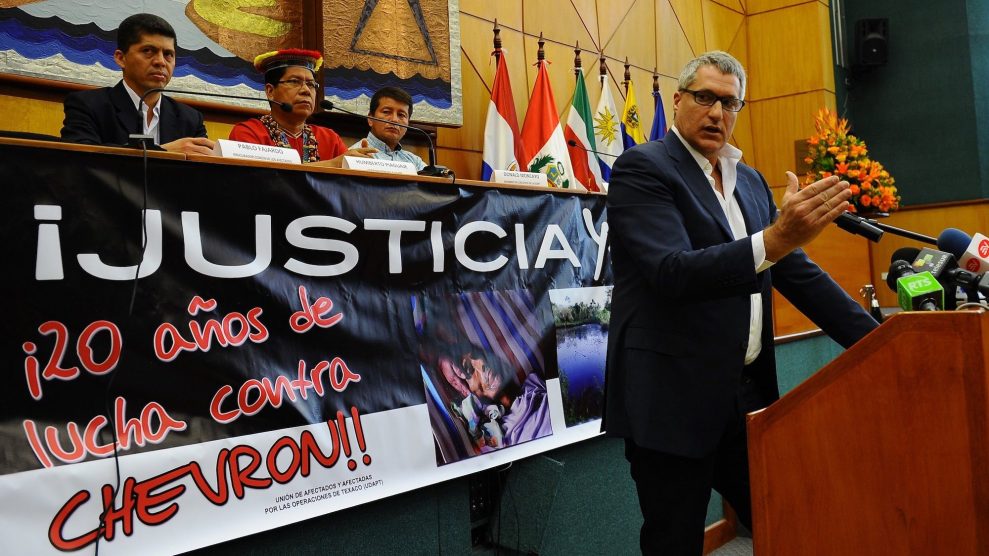
Steven Donziger speaks out himself about being targetted by Chevron

August 17, 2020
Mongabay of 15 August 2020 carries a piece by Steven Donziger himself [about whom i posted recently: https://humanrightsdefenders.blog/2020/08/10/steven-donziger-human-rights-defender-now-victim-of-judicial-harassment/] entitled: Don’t Let Big Oil Open a New Front in Its War on Environmental Defenders. “Chevron clearly wants me confined so I can no longer work on the case or speak publicly about the company’s gross wrongdoing.”
In the Pozo Aguarico region of Ecuador, lawyer Maria Cecilia Herrera shows the oil pollution that remains in the ground 30 years after oil production ceased. Photograph by Enrico Aviles, 2020.

In the Pozo Aguarico region of Ecuador, lawyer Maria Cecilia Herrera shows the oil pollution that remains in the ground 30 years after oil production ceased. Photograph by Enrico Aviles, 2020.

After recalling the work and death of his friend Rosan Steve relates how the culprit, the oil giant Chevron, has been pursuing a scorched-earth campaign to avoid paying for the cleanup or helping any of the victims. In the process, Chevron and its main law firm – Gibson Dunn – has pioneered a new, highly unethical form of lawfare intended to intimidate environmental defenders in all 180 countries where it operates. I should know; I’m the main target of Chevron’s lawfare, which has involved 60 law firms and 2,000 lawyers.

Here’s some of the backstory. Multiple courts have found that from the late 1960s to 1992, Texaco deliberately dumped billions of gallons of cancer-causing oil waste across 1,500 square miles of previously pristine rainforest, poisoning groundwater and rivers residents depended on for drinking, bathing, and fishing. Texaco, which was later acquired by Chevron, told local Indigenous peoples that the toxic waste was actually good for them, saying it would “nourish the brain and retard aging.”

In 1993, a coalition of 30,000 Indigenous peoples and rural communities fought back. The father of one of my Harvard Law School classmates asked me to join the team of Ecuadorian and American lawyers representing them. After hearing from leaders like Rosa and seeing the damage with my own eyes, I was appalled by what Texaco had done to these communities. Unlike BP’s Deepwater Horizon spill in the Gulf of Mexico, this disaster was no accident. It was done by design to externalize production costs onto some of the most vulnerable communities on the planet—the very people whose historical role is to act as the guardians of the forest.

After years of fighting in courts in the U.S., Ecuador, and Canada, the coalition won an unprecedented $9.5B in damages. Several appellate courts and a total of 17 appellate judges affirmed the case unanimously, and Canada’s Supreme Court ruled the Ecuadorians had the right to enforce their judgment. Human-rights champions hailed the victory as the beginning of a new era of environmental accountability.

But then Chevron unveiled another component of its strategy to try to prevent the Indigenous plaintiffs from receiving a cent. The central feature was filing a civil RICO suit in U.S. federal court against me as well as all 47 Ecuadorian community leaders who signed the lawsuit, claiming that the entire case on which I had spent 18 years of my life had been nothing more than a “racketeering” conspiracy designed to “extort” money from the company. Judge Lewis Kaplan denied us a jury, refused to review any of the voluminous scientific proof of Chevron’s pollution, and then ruled in Chevron’s favor. He based his decision almost completely on the testimony of a man who later admitted to lying repeatedly under oath and to receiving huge payments from the company.

I continue to challenge Kaplan’s flawed decision, which has been rejected by multiple appellate courts in Ecuador and Canada. But largely because I would not turn over my computer and cell phone to Chevron (an order that many experts believe to be a violation of attorney-client privilege and one that I have appealed), Kaplan tried to prosecute me criminally for contempt. His charges were rejected by the federal prosecutor. Kaplan then took the extraordinarily rare step of appointing a private law firm, Seward & Kissel, to prosecute and detain me in the name of the government. Seward & Kissel later admitted that Chevron is actually a client of the law firm.

While I await my day in court, I’m now under house arrest. (I believe I’m the only lawyer in U.S. history detained pretrial on a contempt charge.) I’ve been confined to my small apartment for 12 months on a charge that carries a maximum of six months’ imprisonment. This has been incredibly hard on my 14-year old son as well as my clients, who have been denied their lawyer. Chevron clearly wants me confined so I can no longer work on the case or speak publicly about the company’s gross wrongdoing.

One thing that keeps me going is the fact that hundreds of top human-rights lawyers and dozens of Nobel Laureates have sprung to my defense. They see this abuse of power as the latest example of corporations trying to criminalize environmental activism. They know the use of corporate lawfare to target activists has been copied by a mining company in South Africa, a pipeline company in the U.S., and a logging company in Canada.

Two weeks ago, two retired U.S. federal judges provided a big boost. The Hon. Nancy Gertner (Harvard Law School) and the Hon. Mark Bennett (Drake University Law School) criticized their former colleague Kaplan in the news journal Law360 for the way he’s handled this case. I’m grateful for their courage, because it’s extremely rare for federal judges to call out colleagues publicly.

Please vote with your wheels and fill up your tank anywhere but Chevron. And I hope governments around the world will stand up to attempts to criminalize peaceful activism. They can start by refusing to do business with Chevron until the company learns to respect the rule of law and ceases its attacks on human rights defenders. We must not let this targeting of human rights defenders spread as quickly as the toxins that killed Rosa and the men, women, children whose names filled her notebook.

Steven Donziger

Steven Donziger is a human-rights advocate based in New York City. He can be followed on Twitter at @SDonziger. His legal defense fund is at www.donzigerdefense.com and Frente de Defensa de la Amazonía’s web site is makechevroncleanup.com

https://www.commondreams.org/views/2020/08/15/dont-let-big-oil-open-new-front-its-war-environmental-defenders

See also later: https://www.thenation.com/article/activism/a-new-justice-movement-emerges-to-defend-steven-donziger/

as well as

https://www.thenation.com/article/environment/steven-donziger-chevron-sentencing/

Posted in Human Rights Defenders | 1 Comment »
Tags: Chevron, Common Dreams, environmental defenders, human rights lawyer, judicial harassment, Mongabay, pollution, resource extraction, Steven Donziger, Texaco

Steven Donziger: human rights defender now victim of judicial harassment

August 10, 2020

Rex Weyler in Mother Jones of 10 August 2020 produced a fascinating piece on Steven Donziger a human rights lawyer who took on Chevron in Ecuasor and won, but himself ended up under house arrest.(This piece was originally published in Canada’s National Observer and appears here as part of the Climate Desk Partnership.)

Steven Donziger, gestures during a press conference on March 19, 2014 in Quito, Ecuador.Rodrigo Buendia/Getty

Last September, I travelled from Western Canada to New York City to see the human rights lawyer Steven Donziger. Donziger cannot travel. He cannot even stroll the hallway of his Upper West Side apartment building on 104th Street without special court permission. He remains under house arrest, wearing an ankle bracelet. Eight years ago, Donziger and a team of Ecuadorian lawyers, on behalf of Indigenous and farmer plaintiffs, won the largest human rights and environmental court judgment in history, a $9.5-billion US verdict against the Chevron Corporation for massive oil pollution in Ecuador’s Amazon basin.

Following the trial, Chevron removed its assets from Ecuador, left the country, and has refused to pay. The company now claims the Ecuador verdict was achieved fraudulently, and produced a witness, who told a US court that he possessed knowledge of a bribe. Judge Lewis Kaplan ruled in Chevron’s favour, halting collection of the pollution fine in the US and placing Donziger in electronic chains in his home.

The details in this case really matter, so here the story in full:

Crime and punishment

Donziger, born in Jacksonville, Florida, in 1961, graduated from Harvard Law in 1991, and founded Project Due Process, offering legal services to Cuban refugees. In 1993, Ecuador’s Frente de Defensa de la Amazonía (FDA), representing 30,000 victims of Chevron’s pollution, heard about Donziger and asked him to help win compensation for their lost land, polluted water, and epidemics of cancer and birth defects in a region now known as the “Amazon Chernobyl.”

Donziger originally filed the claim in New York, but Chevron insisted the case be heard in Ecuador, where the trial began in 1993.

Evidence showed that between 1964 and 1992, Texaco (now Chevron) dumped 16 billion gallons of toxic wastewater into rivers and pits. Fifty-four judicial site inspections confirmed that the average Chevron waste pit in Ecuador contained 200 times the contamination allowed by US and world standards, including illegal levels of barium, cadmium, copper, mercury, lead, and other metals that can damage the immune and reproductive systems and cause cancer. According to Amazon Watch, by ignoring regulations, the company saved about $3 per barrel of oil, earning an extra $5 billion over 20 years.

In 2007, during the trial, Chevron stated that if the victims pursued the case, they faced a “lifetime of … litigation.” The plaintiffs persevered. Since the victims were dirt poor, Donziger and his team, with FDA support, devised an innovative solution to fund the case, offering investors a tiny portion of any eventual settlement.

“I believe the injustice to him is intended to intimidate the rest of us, to chill the work of other environmental and corporate accountability advocates.”

In 2011, after an eight-year trial, the court ruled in favor of the plaintiffs. Two appeals courts and the nation’s Supreme Court, the Court of Cassation, confirmed the decision. Seventeen appellate judges ruled unanimously that Chevron was responsible for the contamination and owed Donziger’s clients $9.5 billion.

The lone witness

According to court documents, Chevron “refus(ed) to comply” with the judgment and began to make good on its threat for a “lifetime of litigation.” According to internal company memos, Chevron launched a retaliatory campaign to attack the victims, discredit Ecuador’s courts, and “demonize” Donziger.

Chevron hired one of the world’s most notorious law firms, Gibson, Dunn & Crutcher—previously censured by England’s High Court of Justice for fabricating evidence. Judges in California, Montana, and New York have censured and fined Gibson Dunn for such misbehavior as witness tampering, obstruction, intimidation, and what one judge called “legal thuggery.”

Using US RICO statutes designed to prosecute organized crime syndicates, the firm filed a “racketeering” case against Donziger. Judge Kaplan at the US Court of Appeals for the Second Circuit in New York—a former tobacco company lawyer widely viewed as being friendly to large corporations—agreed to hear the peculiar case. Kaplan claimed the Ecuador trial “was not a bona fide litigation” and insulted the victims, calling them “so-called plaintiffs.” Gibson Dunn lawyer Randy Mastro called the Ecuador courts “a sham.”

Prominent trial lawyer John Keker, representing Donziger, claimed the Kaplan trial was pure intimidation and called the proceedings a “Dickensian farce” driven by Kaplan’s “implacable hostility” toward Donziger.

On the eve of the trial, Chevron dropped its financial claims, allowing Kaplan to dismiss the jury and decide the outcome himself. Then Chevron unveiled their star witness—Alberto Guerra, a disgraced former Ecuadorian judge removed from the bench for accepting bribes. In a Chicago hotel room, Chevron and Gibson Dunn lawyers rehearsed Guerra for 53 days.

In Kaplan’s court, Guerra claimed that Donziger had approved a “bribe” to an Ecuadorian judge and had written the final court ruling for the judge, allegedly transferred on a computer thumb drive. No corroborating evidence was ever offered. Guerra later admitted lying about these facts, and a forensic investigation of the Ecuadorian judge’s computer proved that Guerra had lied.

The entire story now appears fabricated. Donziger’s lawyers have attempted to locate Guerra and depose him, but the star witness has not yet been found.

“Chevron’s case,” said Donziger’s lawyer Andrew Frisch, “rested on the testimony of a witness who was paid over $1 million.” Frisch stated that Kaplan’s rulings “have been contradicted in whole or in part by 17 appellate judges in Ecuador and 10 in Canada, including unanimous decisions of the highest courts in both countries.”

Nevertheless, without a jury, Kaplan accepted Guerra’s testimony and found that Donziger had committed fraud. Finally, Kaplan ordered Donziger to turn over his computer and cellphone to Chevron. Since this order violated attorney-client confidentiality, Donziger refused until the court of appeals could decide the issue.

Kaplan charged Donziger with “criminal contempt” for refusing his order. However, the order and the contempt charge were so outrageous that the N.Y. prosecutor’s office refused to accept the case. Kaplan defied the state authorities and appointed a private law firm, Seward & Kissel—with commercial ties to Chevron—to act as prosecutor, which, in turn, ordered Donziger be placed under “pretrial home detention.”

Legal thuggery

An unnamed New York Second Circuit judge—presumed by Donziger and his lawyers to be Kaplan—filed a complaint against Donziger with the bar grievance committee in New York, which then suspended Donziger’s law license without a hearing. However, bar referee and former federal prosecutor John Horan called for a hearing and recommended the return of Donziger’s law license. “The extent of his pursuit by Chevron is so extravagant, and at this point so unnecessary and punitive,” Horan wrote, “he should be allowed to resume the practice of law.” Donziger responded that, “Any neutral judicial officer who looks objectively at the record almost always finds against Chevron and Kaplan. The tide is turning and the hard evidence about the extreme injustice in Kaplan’s court will be exposed.”

This case appears to be about bullying. Chevron is one of the wealthiest corporations in the world. The plaintiffs are poor, Indigenous, and campesino people with scarce access to money or lawyers. “Donziger came to our rescue,” says FDA president Luis Yanza. How big can high-stakes corporate bullying get? Donziger’s lawyers estimate the oil giant has spent over $2 billion on 2,000 lawyers, public relations teams, and private investigators.

At the dinner party at Donziger’s, I met supporters from around the world, from Amazon Watch and Global Witness, journalists, lawyers, and human rights advocates. “This case is not just about Steven’s fate,” said Simon Taylor, director of Global Witness in London. “I believe the injustice to him is intended to intimidate the rest of us, to chill the work of other environmental and corporate accountability advocates.”

American human rights attorneys Martin Garbus and Charles Nesson formed a support committee for Donziger with dozens of civil society leaders, including: Clive Stafford-Smith, founder of the prisoner-rights group Reprieve in London; Atossa Soltani and Leila Salazar, the founder and executive director of Amazon Watch; Lynne Twist, co-founder of the Pachamama Alliance working in the Amazon; renowned author John Perkins; and famed musician Roger Waters.

The tide may be turning for Donziger and the victims in Ecuador. In June 2019, Amnesty International asked the US Department of Justice to conduct a criminal investigation into Chevron’s and Gibson Dunn’s conduct, witness bribery, and fraud in the Ecuador pollution litigation

This past February, Prof. Ellen Yaroshefsky, director of the Monroe H. Freedman Institute for the Study of Legal Ethics at Hofstra University in New York, wrote that the Kaplan and Seward & Kissel prosecution of Donziger is flawed with conflicts of interest, financial ties to Chevron Corporation, and judicial bias.

In April, 29 Nobel laureates signed a letter stating, “(We) support Steven Donziger and the Indigenous peoples and local communities in Ecuador in their decades-long work to achieve environmental justice over pollution caused by Chevron…. Chevron and a pro-corporate judicial ally, US District Judge Lewis A. Kaplan, manufactured ‘contempt’ charges against Donziger. (Chevron’s) goal is to intimidate and disempower the victims of its pollution and a lawyer who has worked for decades on their behalf.”

A month later, more than 475 international lawyers, bar associations, and human rights advocates criticized Kaplan’s ruling for persecuting Donziger “based on false witness testimony provided by Chevron, personal animus, and… to protect Chevron from a valid foreign court judgment.” The letter, from the US National Lawyers Guild and the International Association of Democratic Lawyers, urges an end to the pretrial house arrest of Donziger, noting “such arbitrary detention sets a dangerous precedent for human rights attorneys in the United States and around the world.”

On May 27, 2020, the Newground investment firm in Seattle, Wash., placed two proposals on Chevron’s 2020 proxy call, asking for governance reforms to bring its Ecuador issues to resolution, and prevent future human rights and pollution liabilities. The proposals were supported by actor Alec Baldwin, musician Roger Waters, and Nobel laureate Jody Williams.

On July 16, the European Parliament wrote to the US Congress asking the Congressional Subcommittee on the Constitution, Civil Rights, and Civil Liberties to investigate Chevron’s treatment of Donziger, which the EU Parliament found “not consistent with what has traditionally been the strong support in the United States for the rule of law generally and for protection for human rights defenders in particular.”

Late at night, in the Donziger home, after the supporters had left, Donziger and his wife Laura sipped wine. “We’re not giving up,” Donziger said. “The only fraud in this case has been conducted by Chevron. Modern nations have comity relationships, formally respecting each other’s court decisions. We’re reviewing enforcement actions in Canada, Australia, and other jurisdictions. Chevron owes the money, and they can’t just run, hide, and fabricate stories to avoid paying. They’re persecuting me to try to change the public narrative, but they’re guilty. They committed the crime, they hurt people, they were proven responsible in a court of law that they chose, and they owe the money.”

…..As I write this, in mid-July, Donziger has been in home detention for 345 days, almost a year, longer than any lawyer in US history has ever served for a contempt charge.

How Did a Lawyer Who Took on Big Oil and Won End up Under House Arrest?

Posted in Human Rights Defenders | 1 Comment »
Tags: Chevron, Ecuador, environmental issues, House arrest, human rights lawyer, judicial harassment, malicious prosecution, Mother Jones, oil industry, pollution, retaliation, Steven Donziger, Texaco

Absurd prosecution of the crew of the ship Iuventa continues in Italy

July 31, 2020

AI has started a campagiun to call on the Italian prosecutor to drop the absurd investigation against the crew of the rescue ship “Iuventa 10”. Despite having saved more than 14,000 lives, they are accused of “facilitating the irregular entry” of migrants into Italy, which carries a sentence of up to 20 years. The criminalization of rescue at sea has hampered vital lifesaving activities in the Central Mediterranean, and it is part of a wider crackdown on acts of solidarity across Europe

“Three years after the baseless criminal investigation began, the Iuventa 10 crew remain in limbo with the threat of long jail terms hanging over them,” said Maria Serrano, Amnesty campaigner on migration.

[see: https://humanrightsdefenders.blog/2019/05/15/european-governments-should-stop-treating-solidarity-and-compassion-as-a-crime/

“The criminalization of rescue at sea has hampered vital lifesaving activities in the Central Mediterranean, and it is part of a wider crackdown on acts of solidarity across Europe. Wrapped up with the fate of these ten men and women are the fates of hundreds of others and thousands of refugees and migrants they are helping.” .

“We could no longer stand by and watch people disappearing in the Mediterranean mass grave. We chose to use our privilege to be eyewitnesses, reporters, and a safe harbour for thousands of people on the move,” said one of the Iuventa10

“It was, still is and will remain the task of all of to save human lives wherever possible, to offer protection to those who need it, to treat everyone with dignity and to fight with them for the world in which we want to live.”

Forensic Architecture reconstruction – https://forensic-architecture.org/investigation/the-seizure-of-the-iuventa

BACKGROUND:

The Iuventa case is not an isolated one. Across Europe people standing in solidarity or assisting refugees and migrants have been threatened, smeared, intimidated, harassed and dragged through the courts simply for helping others. Authorities have misused and abused anti-smuggling laws to criminalize human rights defenders and punish solidarity.  https://www.amnesty.org/en/documents/eur01/1828/2020/en/

Fewer rescue assets had led to an increase of the death rate in 2018 and 2019. Since 2016 more than 50,000 women, men and children have been intercepted at sea by the Libyan Coast Guard and returned to Libya, where they are exposed to arbitrary detention, torture, extortion and rape.

The Iuventa case was the first judicial proceeding launched against a rescue NGO in Italy, following a smear campaign in which NGOs were stigmatized.

https://www.amnesty.org/en/latest/news/2020/07/italy-crew-of-rescue-ship-face-20-years-in-jail-on-third-anniversary-of-smuggling-investigation/

Posted in AI, Amnesty international, Human Rights Defenders | 2 Comments »
Tags: AI, “Iuventa 10”, criminalisation, Italy, judicial harassment, Maria Serrano, migrants rights defender, prosecution, rescue-at-sea

Defending Defenders: Challenging Malicious Lawsuits in Southeast Asia

June 8, 2020

SLAPPs on the increase

shutterstock_1049504825

The work of human rights defenders (HRDs) to expose harm by companies around the world has never been more important, but the space to do so is increasingly under threat as unscrupulous companies and governments around the world use the legal and judicial system to harass critics.

Logo

Strategic Lawsuits Against Public Participation (SLAPPs) are a powerful tool to silence by forcing defendants in a costly fight for their freedom of expression and their organisations’ existence. This year’s Corporate Legal Accountability Annual Briefing by the Business & Human Rights Resource Centre provides an in-depth analysis of nine emblematic case studies from Southeast Asia, and outlines the legal framework in which these lawsuits are brought, including emerging anti-SLAPPs regulation. The briefing also examines the legal and other tactics companies have used to silence HRDs; and analyses the legal strategies that lawyers have employed to successfully defend against SLAPPs while highlighting the role that courts have played in the region in either allowing or dismissing SLAPPs.

Key Findings

  • SLAPPs take place in a broader context of judicial harassment. 40% of all attacks on business-related HRDs globally [2015-2019] were judicial harassment, with numbers growing at an annual rate of 48%.
  • Judicial harassment appears to be the tactic of choice deployed by businesses operating in Southeast Asia to punish or silence defenders. Nearly half (44 %) of all attacks against HRDs in South East Asia constitute judicial harassment.
  • We recorded 127 cases of judicial harassment against HRDs in Southeast Asia between 2015 and 2019, including at least 30 SLAPPs, making Southeast Asia one of the most dangerous regions in the world for HRDs facing such threats.
  • In order to effectively fight SLAPPs in Southeast Asia and globally, we need robust legal frameworks that prevent companies from filing SLAPPs in the first place and allow courts to identify, call out and dismiss them as soon as they are filed. To make this happen, governments, businesses and investors, alongside defenders and civil society (and the lawyers who defend them), need to act decisively for the protection of civic freedoms and human rights defenders.

See also: https://humanrightsdefenders.blog/2020/01/28/ngos-demand-that-rules-against-strategic-lawsuits-against-public-participation-slapp-are-upgraded/

Full Briefing

Posted in Human Rights Defenders | 1 Comment »
Tags: Business & Human Rights Resource Centre, Business and human rights, Human Rights Defenders, intimidation, judicial harassment, South-east asia, Strategic Lawsuits Against Public Participation (SLAPPs)

« Older posts
Newer posts »
  • Enter your email address to subscribe to this blog and receive notifications of new posts by email.

    Join 1,786 other subscribers
  • Recent Posts

    • Ales Bialiatski free but more human rights defenders must be released in Belarus
    • New study shows that on-line attacks against women human rights defenders doubled
    • International Federation for Human Rights keeps growing
    • Human rights defender: Cressida Kuala from Papua New Guinea
    • Human Rights Defenders in Greece on trial for baseless charges for assisting people on the move
    • 10 NGOs Taking Action for Transitional Justice
    • UN experts concerned by Interpol red notices against human rights defenders from El Salvador
    • NGOs call on Malaysian authorities to stop intimidating human rights defenders
Blog at WordPress.com.
Entries and comments feeds.Valid XHTML and CSS.
  • Subscribe Subscribed
    • Hans Thoolen on Human Rights Defenders and their awards
    • Join 441 other subscribers
    • Already have a WordPress.com account? Log in now.
    • Hans Thoolen on Human Rights Defenders and their awards
    • Subscribe Subscribed
    • Sign up
    • Log in
    • Report this content
    • View site in Reader
    • Manage subscriptions
    • Collapse this bar
 

Loading Comments...