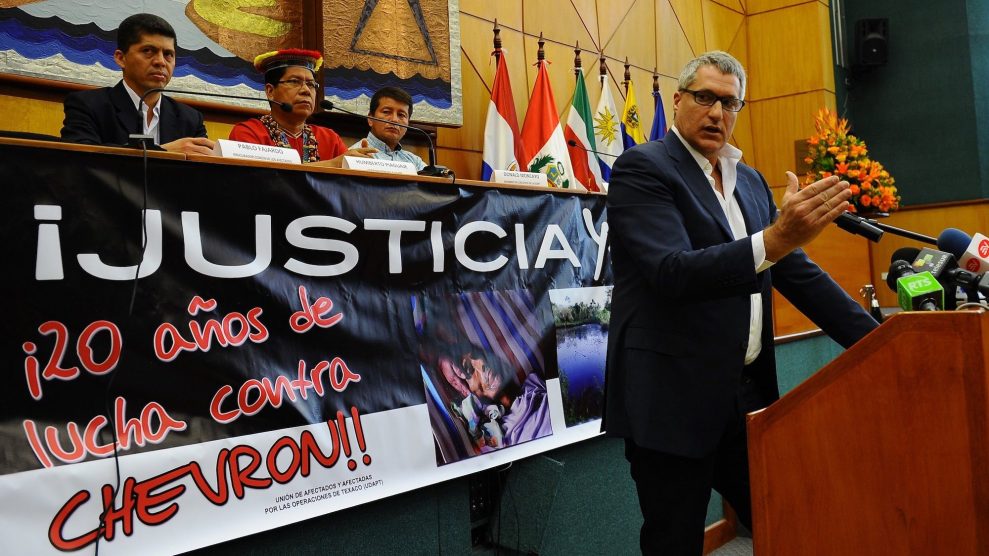
The work of human rights defenders (HRDs) to expose harm by companies around the world has never been more important, but the space to do so is increasingly under threat as unscrupulous companies and governments around the world use the legal and judicial system to harass critics.
Strategic Lawsuits Against Public Participation (SLAPPs) are a powerful tool to silence by forcing defendants in a costly fight for their freedom of expression and their organisations’ existence. This year’s Corporate Legal Accountability Annual Briefing by the Business & Human Rights Resource Centre provides an in-depth analysis of nine emblematic case studies from Southeast Asia, and outlines the legal framework in which these lawsuits are brought, including emerging anti-SLAPPs regulation. The briefing also examines the legal and other tactics companies have used to silence HRDs; and analyses the legal strategies that lawyers have employed to successfully defend against SLAPPs while highlighting the role that courts have played in the region in either allowing or dismissing SLAPPs.
Key Findings
SLAPPs take place in a broader context of judicial harassment. 40% of all attacks on business-related HRDs globally [2015-2019] were judicial harassment, with numbers growing at an annual rate of 48%.
Judicial harassment appears to be the tactic of choice deployed by businesses operating in Southeast Asia to punish or silence defenders. Nearly half (44 %) of all attacks against HRDs in South East Asia constitute judicial harassment.
We recorded 127 cases of judicial harassment against HRDs in Southeast Asia between 2015 and 2019, including at least 30 SLAPPs, making Southeast Asia one of the most dangerous regions in the world for HRDs facing such threats.
In order to effectively fight SLAPPs in Southeast Asia and globally, we need robust legal frameworks that prevent companies from filing SLAPPs in the first place and allow courts to identify, call out and dismiss them as soon as they are filed. To make this happen, governments, businesses and investors, alongside defenders and civil society (and the lawyers who defend them), need to act decisively for the protection of civic freedoms and human rights defenders.
Lam LeThailand’s female land rights defenders for whom activism is a daunting necessity. The country’s 2014 forest reclamation policy was meant to target businesses, but smaller farmers have been disproportionately threatened with eviction. As more women join the fight, rights groups say more than 200 women have been subjected to judicial harassment, while two have been murdered
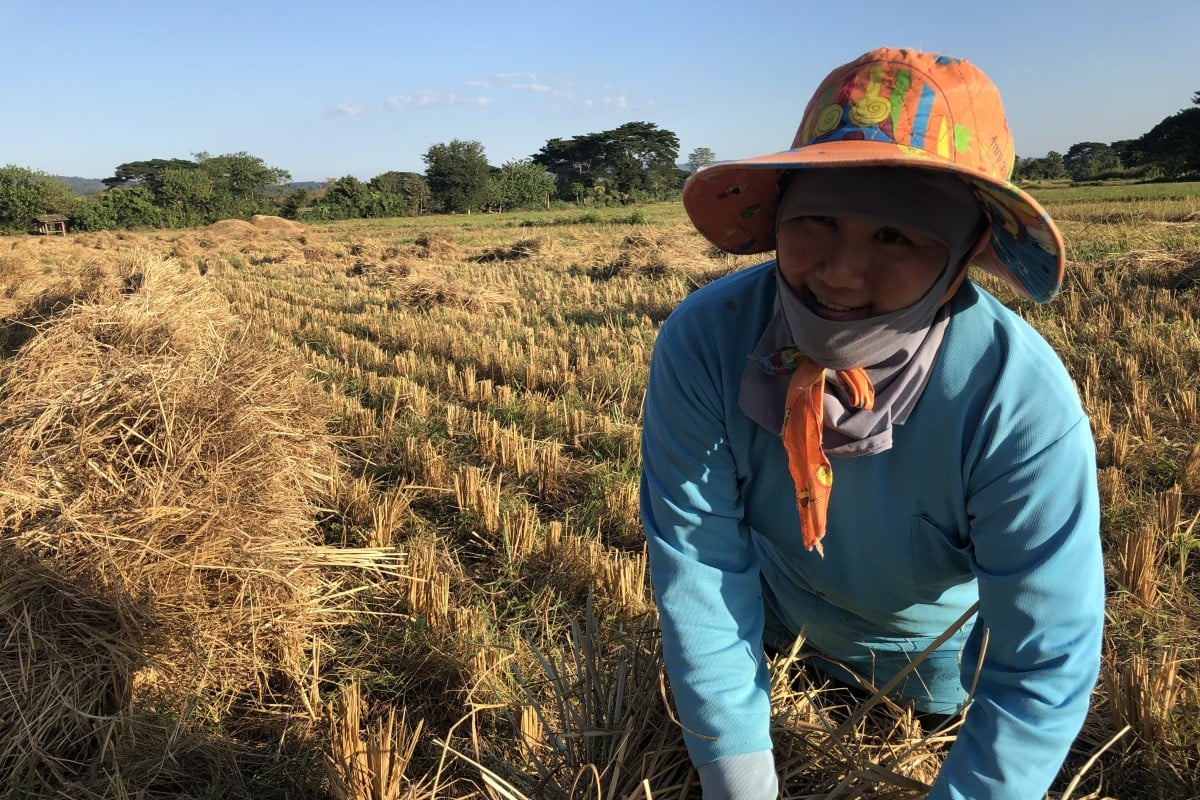
Thai land rights activist Waewrin Buangern, or Jo, working in the fields in Ban Haeng village. Photo: Lam Le
Growing up, cassava farmer Nittaya Muangklang did not think she would ever become an activist – let alone that she would lead a group of land rights defenders in the first-ever bid to challenge Thailand’s government and its “take back the forests” policy at the Supreme Court. “We did encroach on the national park, but as poor farmers, we should be eligible for exemption,” said Muangklang, who is fighting eviction, imprisonment and fines. Faced with what farmers and rights groups perceive as increasing judicial harassment, more women living in rural areas have joined the fight for land rights in Thailand – amid the spectre of intimidation and the threat of jail time or even being killed for their activism. The appeal court last year sentenced Muangklang and 13 other land rights defenders from Ban Sap Wai village in Thailand’s northeast to up to four years in prison, and ordered them to pay fines of between 40,000 and 1.6 million baht (between US$1,300 and US$52,000) for encroaching on and damaging land in Sai Thong National Park. The court said the farmers failed to prove they had occupied the land before the park was established in 1992. Muangklang, out on bail since last August, said her family had not applied for a land certificate when they moved to Ban Sap Wai in 1986 because they never thought it necessary until the day they faced eviction.
..Thai NGOs estimate that at least 8,000 households have been threatened with eviction since 2015. Meanwhile, Thailand’s ruling junta has in the past five years given away around 999 hectares of forest conservation land as concessions to large corporations, including cement and mining companies, according to Land Watch Thai. Muangklang’s case caught the attention of United Nations special rapporteurs, who last August expressed their concern that Thailand was misusing the forest reclamation policy. In a letter to the government, the UN said Muangklang’s prosecution “appears to be a result of her work as a community leader”, and pointed out that the eviction of the Ban Sap Wai farmers might violate their human rights. The Thai government has yet to respond to the UN’s request to justify its prosecution of the farmers. Thailand’s Ministry of Natural Resources and Environment did not respond to This Week in Asia’s request for comment.
Being a female advocate for land rights in Thailand is a dangerous calling. In 2012, female activists Montha Chukaew and Pranee Boonnak were brutally killed. Since 2014, 225 female human rights defenders from Thailand’s rural areas have been subjected to judicial harassment, according to NGO Protection International, which estimates that 70 per cent of these activists are land rights defenders accused of encroaching on national parks and other lands. However, their work is often overlooked and underappreciated…Even when efforts are made to enshrine women’s rights, as is the case with gender equality in the United Nations’ Sustainable Development Goals (SDGs) – a 17-section blueprint on achieving a sustainable future by 2030 – on-the-ground implementation when it comes to female land rights defenders tends to be lacking. “There’s a challenge there because many times states are not really connecting a human rights-based approach with [the SDGs’] development approach,” said Dubravka Simonovic, UN special rapporteur on violence against women. Thai human rights activist Matcha Phorn-in, who works with marginalised communities, agrees. “When the government is the key actor, [SDGs won’t work for] many people who oppose the government because of violations of human rights,” she said, explaining that this meant a lack of indicators and data to assess how female land rights defenders were being affected….On top of this, Phorn-in fears that millions of people could be affected, now that officials involved in the forest reclamation policy have search-and-destroy powers they can use without first needing court orders.
Protection International’s Somwong explained that with the labour involved in household and family-care duties, female activists were essentially “doing double work” while also facing the risk of sexual harassment. Consequently, rights groups have been calling for gender-sensitive support for these activists. “When you’re not protecting women, you’re not protecting the family, the community, or the movement,” Somwong said. Nine of the prosecuted Ban Sap Wai farmers are women.
…..
…Waewrin Buangern, or Jo, said it was her habit of questioning authority that led her to activism. She contended that the local authorities and the Kiew Lueng Company, which oversees the project, had not been transparent with local villagers on the environmental and economic impact of the mine. As a result, she and members of the conservation group have faced more than a dozen defamation lawsuits from the mining company as well as the local government. The project was put on hold in 2015 after the group counter-sued. The company got a mining permit in 2015 but has not been able to move forward since then due to the lawsuits. Jo has paid a steep price for her perseverance. She lost her job at the local school, another job as assistant to the village chief, and suffered two miscarriages due to the stress of activism, which also took its toll on her marriage and saw her divorce her husband. At 36, Jo’s main sources of income are farming and being an administrator of a Facebook group. But she has found a different family. Of the Rak Ban Haeng Conservation Group’s 1,400 members, 70 per cent are women. …….
Early last year, Ban Haeng villagers received a note that the government was planning to annex the forest the community had been relying on as a source of livelihood, and turn it into a national park. The villagers have submitted a letter of objection, stating that people are living in the area. Jo is positive that no one will get evicted. Unlike the Ban Sap Wai case, she said, the people of Ban Haeng had clear proof of the village’s history – a namesake temple that dates back to 1851….
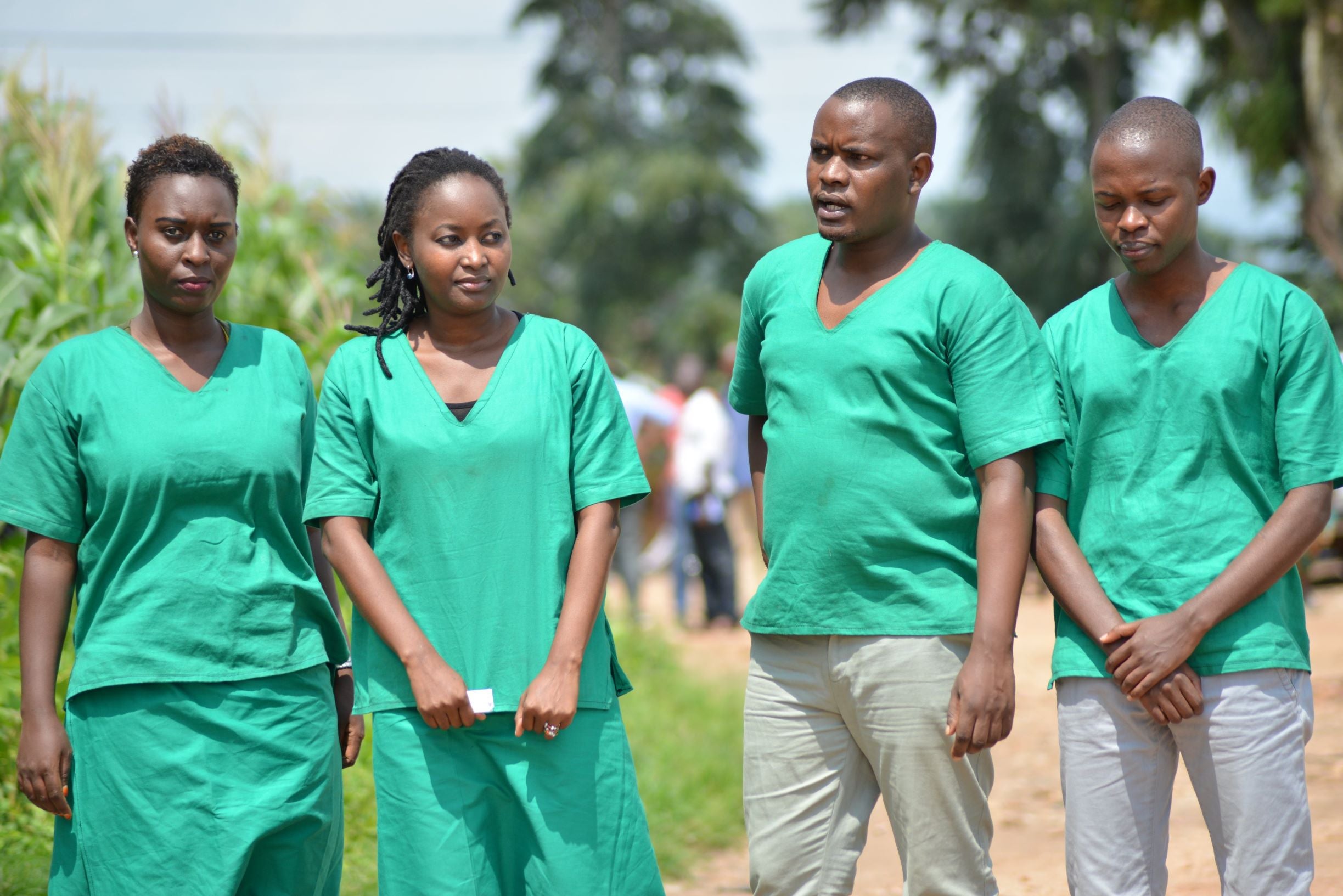
The conviction of four Burundian journalists in a flawed trial on January 30, 2020 is a clear example of the misuse of the justice system to stifle freedom of expression, Human Rights watch said on 4 February 2020.
The High Court of Bubanza, in western Burundi, convicted Christine Kamikazi, Agnès Ndirubusa, Egide Harerimana, and Térence Mpozenzi – all of whom work for the country’s last remaining independent newspaper, Iwacu – and sentenced them to two and half years in prison and a fine of approximately US$530. Although they were charged with complicity in threatening the internal security of the state, they were ultimately convicted of attempting to commit the crime, a lesser criminal offense against which, their lawyers say, they were not allowed to defend themselves in court. They will appeal the conviction.
“Reporting on issues of public interest should not result in a criminal prosecution,” said Lewis Mudge, Central Africa director at Human Rights Watch. “The authorities are leading an assault on free expression in the months before the country’s 2020 elections.” These proceedings lay out in stark terms the politicization of the judiciary in Burundi, Human Rights Watch said.
The court acquitted Masabarakiza, who had already been released from pretrial detention. The judge ordered that the phones, camera, company car, recorders, and notebooks seized from the convicted journalists should be returned to Iwacu. Neither the accused nor representatives of the diplomatic community in Burundi were present when the verdict was announced. On January 16, 2020, the European Parliament adopted a resolution calling on Burundi’s authorities to drop charges and immediately and unconditionally release the four journalists and all others arrested for exercising their fundamental rights. It also called for European diplomats in Burundi to attend trial proceedings of journalists, human rights activists, and political prisoners, and to visit them in prison, in line with the EU Guidelines on Human Rights Defenders. The diplomatic community in Burundi should publicly show its solidarity with the Iwacu journalists by attending the appeals hearings and visiting them in prison.
The convictions form part of a pattern of government repression of people attempting to expose abuse or report on sensitive issues. They take place against a backdrop of an increasing crackdown on perceived government critics, in advance of elections scheduled to begin in May. Prosecutions, threats, and intimidation have forced many activists and journalists to stop working on sensitive political or human rights issues, or leave the country. [see also: https://humanrightsdefenders.blog/2019/03/05/un-human-rights-office-in-burundi-formally-closed/]
OMCT in the meantime published on 6 February 2020 an urgent appeal re judicial harassment against twelve Burundian human rights defenders in exile (in French)
In a blog post by Kunal Majumder, CPJ India Correspondent on 8 January 2020, Indian freelance journalist Santosh Yadav says “I feel like a weight has been lifted’ as Chhattisgarh court ends four-year legal nightmare.
Freelance journalist Santosh Yadav, left, with human rights defender Shalini Gera and CPJ India Correspondent Kunal Majumder, during a convention on journalist safety in Raipur, Chhattisgarh, in February 2019 (CPJ)
On January 2, 2020 freelance journalist Santosh Yadav got his life back when the National Investigation Agency court in Jagdalpur acquitted him of charges of helping Maoists militants. The ruling marked the end of a legal nightmare that lasted over four years for Yadav, who says that he was threatened and beaten in custody, before being released on bail under restrictive conditions.
Yadav’s ordeal started in September 2015, when police in India’s Chhattisgarh state arrested him on accusations of aiding and abetting Maoist militants. The journalist’s colleagues and his lawyer, who spoke with CPJ at the time, said they believed the arrest was in connection to his reporting on alleged human rights abuses by police.
The journalist, who at the time was a contributor to the Hindi-language newspaper Navbharat in Bastar district, was charged with 28 counts including associating with a terrorist organization, supporting and aiding terrorist groups, taking part in a Maoist-led ambush against security forces, rioting with a deadly weapon, unlawful assembly, wrongful restraint, attempt to murder, public mischief and criminal conspiracy. He was held in pre-trial detention for one and a half years. Yadav told CPJ that during that time, police beat him regularly and threatened to have him killed. When he was released on bail, the court imposed several restrictive measures.
The day after the January 2 ruling that exonerated Yadav, the journalist spoke with CPJ about his struggle during the four years since his arrest. Here some excerpts from this interview :
Congratulations. So does this court ruling mean you are a free man?
Yes, all charges have been dropped. The judge said that I’m innocent and have been exonerated of all charges. He added that there is no evidence to prove the police charge that I’m a Maoist.
Prior to your 2015 arrest, had police contacted you about your reporting? Were there any signs or warning that police were unhappy with your journalism?
There were numerous incidents when local police officials would express displeasure over my reporting. I never thought it was anything serious. However, before my arrest, police started picking me up from my home at random hours, once at 3 a.m. They would threaten to arrest me, kill me. They even offered money in exchange for information on Maoists. They would keep me in lock-up the whole day and release me in the evening. I had a feeling that my life was at threat. I informed several journalists and human rights defenders including Malini Subramaniam [one of CPJ’s 2016 International Press Freedom Awardees], Shalini Gera and Isha Khandelwal that the police might arrest me.
…….. Previously, you told CPJ and otheroutlets that you were beaten and threatened even inside jail. Could you describe your time in prison?
I was beaten repeatedly, especially when I would go for bathing. I even started a protest fast, which several prisoners supported. The prison guards retaliated by beating us with batons. At that point, I didn’t know if I would live or die. After beating me mercilessly, I was stripped and put in solitary confinement for 11 days. Then they moved to me Kanker jail. [Kanker is 122 miles from Yadav’s hometown of Darbha.] Even there I was beaten up. The prison guards singled me out for my protests in the Jagdalpur jail and targeted me…
Front Line Defenders reports that on 20 November 2019, the Public Prosecution in Chlef ordered the preventive detention of human rights defender Halim Feddal, after he was arbitrarily arrested on 17 November 2019. He had been taking part in a peaceful demonstration demanding the release of a number of Algerian political prisoners.
Halim Feddal is the founder and secretary general of the Algerian National Association Against Corruption (ANLC) which works on exposing and fighting corruption in Algeria. He is also a member of the Hirak Movement, which is a grassroots human rights movement that calls for the promotion of civil and political rights in Algeria. The human rights defender frequently participates in peaceful demonstrations in the city of Chlef.
On 17 November 2019, Halim Feddal was arrested by security forces in plain clothes from a peaceful demonstration that he was attending in front of the court in Chlef. The protesters were demonstrating against the politically motivated detention of some members of the Hirak movement. Halim Feddal was taken to a local police station where he spent three days under interrogation and was not allowed to contact his lawyer or his family. On 20 November 2019, the Public Prosecution charged him with “threatening the unity of the country” and “incitement of an illegal gathering”. The Public Prosecution ordered preventive detention for Halim Feddal without scheduling a date for his court hearing.
Human rights defenders in Algeria are continually harassed and arbitrarily detained by the authorities. Halim Feddal has frequently been called to the police station and interrogated about his human rights work. Front Line Defenders is deeply concerned about the detention and harassment of Halim Feddal, and finds the general crackdown on human rights defenders in Algeria increasingly worrying. Front Line Defenders believes that Halim Feddal is being detained solely as a result of his peaceful and legitimate human right work.
This is to draw attention to a long-runing battle between civil society and the authorities in Malawi.
The Human Rights Defenders Coalition (HRDC) says it will not be intimidated by arrests of its members. The coalition said on Friday it will continue demanding the resignation of Malawi Electoral Commission Chairperson Justice Dr Jane Ansah. Speaking at a press briefing at the HRDC Offices in Lilongwe, Vice Chairperson for HRDC Gift Trapence said his arrest has reinvigorated the coalition. “We will continue to fight for justice. They are not going to win and suppress this justice,” he explained. Trapence who was arrested for K7 million fraud on Tuesday and released on bail on Friday refused to comment on the case saying it is in court. The activist was arrested together with HRDC member Macdonald Sembereka. Trapence revealed that that HRDC members have been receiving threats from people who say they will torch the activists’ houses. He however stated that the HRDC will continue with plans to demonstrate two days a week until Ansah resigns. The coalition therefore encouraged people to join the protests in large numbers on Tuesdays and Fridays.
HRDC wants Ansah to resign saying she mismanaged the 2019 presidential elections in which President Peter Mutharika was declared winner.
The latest report by the Asian Forum for Human Rights and Development (FORUM-ASIA) found that human rights defenders in Asia are at high risks. “In Asia, we are witnessing more and more human rights defenders being subjected to increasingly severe forms of violations, particularly killing, simply for defending human rights,” said Sejin Kim, Programme Manager of FORUM-ASIA.
The report titled “Defending In Numbers: Resistance in the Face of Repression” exposes 688 cases of human rights violations affecting 4,854 people across 18 different countries in Asia, and analyses current and emerging trends of violations against human rights defenders, including journalists, civil society organisations, advocates and their family members, throughout 2017-2018.
Besides that, the report also reveals that “violations have become more extreme, and the safe space in which human rights defenders can work have increasingly shrunk”. State and non-state actors openly threatened these defenders, something which played a key role in creating a dangerous climate for them. In fact, according to the report, there were 164 cases where physical violence was used against human rights defenders, and 61 of these cases resulted in death. The majority of these cases occurred in the Philippines (48 per cent) and India (25 per cent). Concerningly, most of the perpetrators of these killings remain unknown, a reality which perpetuates impunity in the region…. In the period under review, a staggering 327 cases of judicial harassment were recorded across 17 countries which include the (arbitrary) arrest and detention of human rights defenders; the misuse of the law and the passage of repressive laws aimed at criminalising human rights defenders; and the denial of a fair trial.
..
Although threats and harassment endanger all defenders, but certain groups are particularly targeted like prodemocracy defenders, who are vocal critics of state repression; and land and environmental rights defenders, who are targeted by state and non-state actors competing to access natural resources and/or implement mega-development projects. Women human rights defenders, who challenge gender norms and power structures, also ranked high among the most affected groups. Gender-based violence, including online attacks and harassment, were common tactics used against women human rights defenders.
On 16 April 2019, human rights defender Numan Afifi was asked by the Royal Malaysia Police (PDRM) to present himself on 26 April at the federal police headquarters in Bukit Aman in relation to an investigation into a speech that he had delivered at the United Nations in Geneva last month.
According to the information received from Front Line Defenders, Numan Afifi is a human rights defender who has advocated for LGBT+ rights in Malaysia. He has actively contributed to issues ranging from democracy to HIV advocacy through his involvement in the Pelangi Campaign, the Coalition of Malaysian NGOs in the UPR Process (COMANGO) and Challenger.
On 16 April 2019, the human rights defender was contacted by an inspector from the Classified Crimes Investigation Unit, which investigates cases that fall under the Sedition Act. Numan Afifi has been asked to present himself at the federal police headquarters in Bukit Aman on 26 April 2019 to provide a statement regarding a speech presented at the United Nations Human Rights Council in Geneva during the Consideration of the Universal Periodic Review (UPR) Outcome of Malaysia on 14 March 2019. The human rights defender has not been told whether the police investigation concerns his speech alone or if other civil society organisations present at the conference are involved as well. To date, no official charges have been lodged against him.
In Geneva, Numan Afifi read out a statement on the situation of LGBT+ rights in Malaysia. The statement, which was a response to Malaysia’s UPR submission, had been prepared by a coalition of 12 Malaysian organisations working on gender identity and sexual orientation. It commended the government on its acceptance of one of the recommendations regarding sexual orientation and gender identity, and raised concerns about the rejection of the other 10. The statement also called for the government and civil society to have a dialogue on sexual orientation and gender identity.
[On 17 April 2019, a smear campaign has been launched against him by pro-government groups on social media, alleging that the statement he had presented at the UN conference contained inaccurate information. The human rights defender is being pressured to retract his claims regarding the existence of state-sponsored violence against LGBT+ people in Malaysia. In June 2017, Numan Afifi was barraged with online criticism, harassment and death threats after organising a “gay breaking fast” event during the month of Ramadan to show solidarity to the LGBT+ community.]
Israel must fully honour and implement the rights and obligations contained in the UN’s Declaration on human rights defenders, and in particular end the use of criminal, legal and security tools to obstruct the legitimate work of human rights defenders, say two UN rapporteurs: Michael Lynk, the special rapporteur on the situation of human rights in the Palestinian Territory and Michel Forst, the special rapporteur on the situation of human rights defenders .
Their comments come on 11 April 2019 after the latest hearing on 7 April in the case of Issa Amro, a human rights defender and founder of Youth Against Settlements, a Hebron-based group which seeks to end settlement expansion through non-violent civil resistance. “Israel must provide for the protection of human rights defenders in the context of their work and ensure that, if charged with any offence, their right to a fair trial is respected,” said the Rapporteurs “The case of Issa Amro is emblematic of the sophisticated array of obstacles faced by Palestinian human rights defenders who engage in non-violent activities.”
“Cracking down on individuals whose work is essential to denouncing violations and creating safe and peaceful societies, sends a troubling message that the Israeli authorities make little effort to abide by international human rights standards, including the right to a fair trial.
“We are very concerned that in January 2019 Israel did not renew the mandate of the Temporary International Presence in Hebron (TIPH), an international observer force that was instrumental in efforts to avoid violence – a decision which led to a group of human rights defenders, including Issa Amro, deciding to accompany children to school.”
The UN experts also expressed deep concern about the repressive working environment faced by Palestinian human rights organisations in recent years.
reports that on 30 January 2019, Randy Felix Malayao, a human rights defender and peace consultant for the National Democratic Front of the Philippines (NDFP), was shot dead while he was asleep on bus in Aritao, Nueva Vizcaya.Randy Felix Malayao [https://www.frontlinedefenders.org/en/profile/randy-felix-malayao]was a human rights defender and peace advocate. Since 2008, he had served as a consultant on political and constitutional reforms for the NDFP, a coalition of groups that has long been engaging in peace negotiations with the Phillipine government. The human rights defender also participated in the peace talks in Europe in 2016, as a spokesperson during the formal negotiations. Other than his work with the NDFP, Randy Felix Malayao was also on the board of trustees of a local human rights organisation in Northern Luzon, the current vice president of the Makabayan coalition, and an active campaigner against human rights violations committed by the military in Cagayan Valley.
Following the death of the human rights defender, his work and character were targetted by a slew of unfounded allegationsfrom the Philippine National Police (PNP). They alleged that Randy Felix Malayao was a ranking officer of the Communist Party of the Philippines (CPP), that he embezzled funds from “the Party” and extorted money from the people, and that he had eloped with another activist who was already married. Randy Felix Malayao’s family denounced these allegations. Cristina Palabay, Secretary General of Filipino NGO Karapatan , also denounced the PNP’s allegations and reaffirmed that Randy Felix Malayao was not a member of the CPP.
Before his death, as a result of his human rights advocacy, Randy Felix Malayao had been hounded by suspected military personnel; abducted and tortured by political adversaries; spent four years in prison on trumped-up and politically-motivated charges; and was among the 650 individuals branded as terrorists by the Duterte administration in the proscription petition issued by the Department of Justice in February 2018. The eventual removal of his name from this list in January 2019 by the Manila Regional Trial Court Branch was supposed to have accorded Randy Felix Malayao a safer environment to carry out his work, but his murder proves that this was not the case. [see also: https://humanrightsdefenders.blog/2018/11/08/and-in-the-philippines-the-killing-of-human-rights-defenders-also-continues-with-benjamin-ramos/]
To show that harassment of HRDs continues unabated is shown by the Amnesty USA report that the Philippine Department of Justice has recommended ‘cyber libel’ charges against Maria Ressa, the editor of news outlet Rappler, together with one of its former reporters. Amnesty International’s Philippines Director, Butch Olano stated: “The latest harassment of Maria Ressa and her team comes as no surprise. Rappler’s fearless journalism has consistently exposed the so-called ‘war on drugs’ for what it really is: a deadly campaign that has led to thousands of unlawful killings of poor and marginalized people, including children. Critics, activists, and journalists alike have faced President Duterte’s wrath for speaking the truth”. It is all the more ridiculous given that the National Bureau of Investigation, which first reviewed the complaint, dismissed this claim as baseless last year.
Background: On May 29, 2012 Rappler published a story, written by former reporter Reynaldo Santos Jr., alleging that a car used by former Chief Justice Renato Corona during his impeachment trial belonged to a businessman, Wilfredo Keng, who has alleged ties to human trafficking and drug smuggling rings. On January 10, 2018, Keng filed a “cyber libel” complaint against Santos, Maria Ressa, and six members of Rappler’s board of directors under the Cybercrime Prevention Act of 2012. The National Bureau of Investigation subsequently dismissed the complaint because the report preceded the enactment of this law.
In a January 2019 decision obtained by Rappler this week, the Department of Justice revived the charges against Ressa and Santos, as well as Rappler Inc., on the grounds that the news article was updated in February 2014, and is therefore actionable. Maria Ressa and Rappler Inc are already facing charges of tax evasion which Amnesty has condemned as politically-motivated. Rappler has been a consistent critic of President Rodrigo Duterte and his administration, publishing detailed investigations into some of the thousands of extrajudicial executions committed by police and other unknown armed persons during drug-related operations.