Posts Tagged ‘journalists’

Grim times for human rights defenders and real journalists in Russia

April 1, 2022
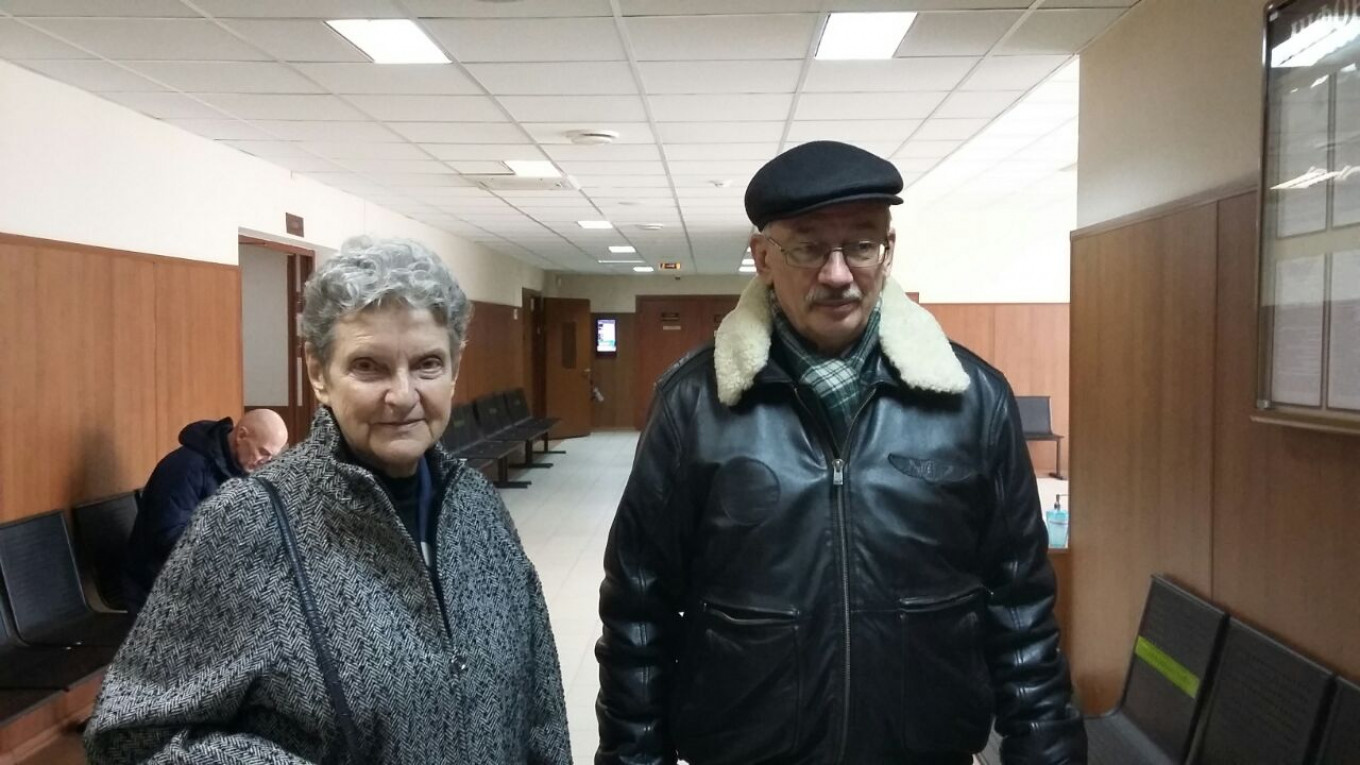
Svetlana Gannushkina and Oleg Orlov in court. @MemorialMoscow / Twitter.com

While understandably most attention goes to the real war in Ukraine, we should keep an eye on the worsening situation in Russia itself. See also my earlier post: https://humanrightsdefenders.blog/2022/03/05/ngos-express-great-worries-about-human-rights-situation-in-russia-at-un-human-rights-council/

Michael Mainville for AFP on 31 March 2022 is writing about this very intelligently:

For many years, veteran Russian human rights defender Oleg Orlov thought his country’s darkest days were behind it. Not anymore. “I don’t think I have ever seen a darker period,” says Orlov, 68, who began a lifetime of activism in the early 1980s handing out leaflets against the Soviet war in Afghanistan.

What is happening now cannot be compared with anything that happened before in Russia, maybe anywhere in the world… when a country that left totalitarianism behind went back.”

For Orlov and other activists of his generation, the conflict in Ukraine has marked the definite end of a hopeful time that started with Soviet leader Mikhail Gorbachev’s reforms in the 1980s. Nearly 40 years later, Russian troops are again fighting and dying abroad, Kremlin opponents are in jail, independent media have been shut down and thousands of Russians have decided to flee the country.

“The hopes we had did not come true, there have been terrible disappointments,” says Svetlana Gannushkina, 80, one of Russia’s most prominent post-Soviet rights activists. “Today we have a country that can no longer be called authoritarian, this is already a totalitarian regime.

Orlov and Gannushkina are two of the last few critical voices still at work in Russia, and in interviews with AFP in Moscow this week both said they had no plans to quit or to leave. Orlov was in the offices of Memorial, which was shut down last year after decades as Russia’s most prominent rights group, where bookcases sat empty, desks had been cleared and packing boxes were piled on the floor. [see: https://humanrightsdefenders.blog/2021/12/29/russias-supreme-court-orders-closure-emblematic-memorial/]

“I don’t see myself outside Russia. I… have always wanted to live and die in this country,” says Orlov.

A biologist by training, Orlov joined Memorial in the late 1980s when the group was set up to document Soviet-era crimes. He went on to record rights abuses in a series of post-Soviet conflicts, especially in Russia’s two wars in Chechnya in the 1990s.  In 1995 he was part of a group who swapped themselves for hostages taken by Chechen fighters and were eventually released, and in 2007 he was abducted, beaten and threatened with execution by a group of masked gunmen in Ingushetia next to Chechnya. After serving two years in the mid-2000s on Russia’s presidential human rights council, Orlov has since been active in opposing President Vladimir Putin. He was arrested at a March 6 protest against the military action in Ukraine, and returned home one day this week to find his front door painted over with the letter “Z” — a symbol used to show support for Russia in the conflict — and a sign reading “collaborator.”

The harsh new political climate and impact of severe sanctions have prompted thousands of Russians to leave in recent weeks, including many of the country’s young, opposition-minded liberals. Gannushkina has seen it at her Civic Assistance Committee, the group she founded in 1990 to help refugees and migrants in an often-hostile environment. “Unfortunately, our wonderful young people, who followed their hearts to our organization, are leaving,” she says…These young people, who we had so much hope for, feel in danger and helpless, so they leave. And we are left here with this insanity...”

The former mathematics professor set up the Civic Assistance Committee to help the thousands displaced by conflicts as the Soviet Union fell apart in 1991. From its modest Moscow offices, it provides legal assistance and help with finding jobs and housing, as well as campaigning for the rights of marginalized groups. Gannushkina also worked with Memorial and like Orlov served on the presidential human rights council before resigning in 2012. A letter of thanks for her service signed by Putin still hangs on her office wall. She remains very active, taking the time to meet individually with people seeking help.  [see: https://www.trueheroesfilms.org/thedigest/laureates/215E5731-7786-434A-9C20-923168E65F44]

“No, I don’t think about leaving,” Gannushkina says, though she admits she is glad her children and grandchildren live abroad. I am happy they are not here, because it gives me the chance to say what I think, to everyone and everywhere.”

We had a chance to create a normal federation, which would be governed in the way other federations are governed in democratic regimes. We missed that chance,” she says. All she can do now, Gannushkina says, is “hope that time will pass and we will get another chance. “But most likely I won’t be here to see it.”

Image without a caption

Also on 31 March 2022 The Washington Post had an editorial: A generation of independent Russian journalists meets its grim end:

In his lecture accepting the Nobel Peace Prize on Dec. 10, the editor of the Russian investigative newspaper Novaya Gazeta, Dmitry Muratov, declared that “journalism in Russia is going through a dark valley.” He said more than 100 journalists, media outlets, human rights defenders and nongovernmental organizations have been branded “foreign agents,” a label equivalent to “enemies of the people.” Many journalists lost their jobs and fled the country. [see: https://www.trueheroesfilms.org/thedigest/laureates/bdbb2312-8b7a-4e44-bb4c-1864474daec7]

Now Novaya Gazeta itself has suspended publication, threatened by the government for failing to label a group as a “foreign agent” and because of an onerous new law that makes it a crime with penalties up to 15 years in prison to “discredit” the armed forces — including use of the words “war,” “invasion” or “attack” to describe President Vladimir Putin’s onslaught against Ukraine. A day after the invasion, Novaya Gazeta expressed outrage with a front-page three-word banner headline against a black background: “Russia. Bombs. Ukraine.” The paper continued to report, including from a correspondent in Ukraine, until it could no longer. The decision to suspend was portrayed by Mr. Muratov as temporary, but the future for all independent media in Russia appears grim.

This is a tombstone moment for a generation of independent journalists. In the final years of Soviet glasnost and in the unbridled and exuberant first years of Russia’s democracy, they threw off the straitjacket of censors and state-dominated media outlets to create newspapers, magazines, radio stations, television broadcasts and digital and social media that drew large and information-hungry audiences. To be sure, the audiences often were liberal, elite and urban, but at the very least, Russians benefited from information sources outside state control. Even in the authoritarian years of Mr. Putin’s rise, some were permitted to function. Novaya Gazeta distinguished itself with hard-hitting investigations, as Mr. Muratov noted in his lecture, fearlessly exposing money-laundering and the exploitation of Siberian forests, among other topics. Six of the paper’s reporters have been killed over the years.

But now it seems that Russia is moving from authoritarianism to totalitarianism, where the state can no longer tolerate any independent outlets. Echo Moskvy, a bastion of open discussion on radio and online, has been silenced and closed. TV Dozhd, founded in 2010, has suspended operations, and some of its journalists have fled. The popular news website Znak.com has also closed. A similar trend has swept independent media in Russia’s regions.

Mr. Putin completely missed the ferment and exhilaration of the late-1980s glasnost years — he was serving in the KGB in East Germany — and in his two decades in power, he has shown little patience for free speech. Lately, dozens of people have been arrested for expressing anti-war sentiments. Vera Bashmakova, the editor of a popular science magazine, was detained for several hours when she showed up at preschool to pick up her daughter with a “No to war!” sign in her car window. She was charged with “discrediting the army.” This is indeed a “dark valley” for Russia, and it is growing darker by the day.

https://www.themoscowtimes.com/2022/03/31/shattered-hopes-and-dark-days-for-longtime-russian-rights-activists-a77158

https://www.washingtonpost.com/opinions/2022/03/31/generation-independent-russian-journalists-meets-its-grim-end/

Basic intro to the UN Human Rights Council

February 23, 2022

On 22 February 2022 Imogen Foulkes (a journalist reporting from Geneva for SWI swissinfo.ch as well as the BBC) published a piece: “What can the Human Rights Council do for you?”

Next week the spring session of the UN Human Rights Council begins [see also my: https://humanrightsdefenders.blog/2022/02/21/guide-to-49th-session-of-human-rights-council-with-human-rights-defenders-focus/]. Geneva will be inundated with the world’s top diplomats and human rights activists, who will wade their way through mountains of reports.  Foulkes brief survey helps to see the essence:

It’s too easy, sometimes, to be overwhelmed by all the paperwork and protocol of the human rights council. The 47 council members sit, day after day, in the vast council chamber, listening to those endless reports, and waiting for their two minutes to speak. 

Of course, the content of the reports is utterly serious; from possible war crimes and crimes against humanity in Syria, Yemen, or Myanmar, to the plight of child soldiers, to violence against women, and racial discrimination. Our world continues, day after day, to flout the human rights standards we’ve all signed on to defend. 

But the very quantity of those reports, the way multiple human rights crises are addressed in a single day, before moving on to the next litany of cruelty and misery, can be exhausting, and, somehow, desensitising. I, and my journalist colleagues at the UN in Geneva, often find it difficult to interest our editors in what the human rights council is doing. Not least because, when those editors ask “so, once they’ve passed the resolution condemning x or y country, what happens then?” our answer has to be “not much”. The council has no power to impose sanctions, it cannot prosecute, its investigators can never apprehend someone they know to be a war criminal, and drag him or her to the International Criminal Court. 

So what’s the point of it? That’s the question we try to answer in this week’s edition of Inside Geneva. We talk to human rights investigators, and to human rights defenders, people who bring their own testimonies of atrocities to the UN, often at great risk to themselves, and, often, because the UN is their last and only hope. 

Andrew Clapham, who is currently a member of the UN team investigating violations in South Sudan, tells us that “The idea that someone has listened to your story, and you have taken your case to the United Nations is incredibly important.” 

But is that enough? Is the UN’s human rights work simply a form of counselling, a way for victims of violations to talk through their trauma? 

Feliciano Reyna, a human rights defender from Venezuela, explains that the UN’s regular reviews of a country’s record, from its upholding of the convention against torture, on women’s rights or the rights of the child, allow human rights defenders to participate – they come to Geneva to present their version of what’s happening in their country. This process, Feliciano tells Inside Geneva has been “absolutely key in advancing our work on human rights and putting Venezuela on the international and local agenda”. 

We also talk to Collette Flanagan, whose son Clinton was shot and killed by Dallas police in 2013. Together with many other US mothers who have lost a child to police violence, Collette brought her case to the UN, because, she told us, her attempts at home to get answers for what had happened to her son, who was unarmed, were “dismissed by…the police department, we couldn’t get any answers to what happened to our child.” 

See also her piece: What does the Human Rights Council mean to victims of atrocities?

Collette’s campaigning resulted, eventually in the UN’s report on the treatment of people of African descent. Presenting that report last year, UN Human Rights Commissioner Michelle Bachelet drew a direct link between slavery and the violence and discrimination inflicted on people of African descent today. She said there was “an urgent need to confront the legacies of enslavement” and called for “amends for centuries of violence and discrimination”, including “formal acknowledgment and apologies, truth-telling processes and reparations in various forms”. 

For Collette, the report was a hugely important sign that even the most powerful country on earth, with its oft repeated promise of “liberty and justice for all”, is not above international scrutiny. 

“The United States is a democracy,” Collette says. “And we are supposed to uphold life, liberty and freedom for every citizen. And that is not happening in the United States. And if those things are not happening in the United States then that is an egregious attack on democracy and human rights and freedom. How can the United Nations not be involved?” 

One of the most disturbing investigations currently underway by UN human rights officers is the Fact Finding Mission on Myanmar, which is examining, among other things, the treatment of the Rohingya Muslim community by Myanmar’s ruling military regime. 

In 2016 and 2017 over a million Rohingya fled appalling violence. When human rights officer Ilaria Ciarla arrived in the refugee camps in Bangladesh to take witness accounts, among them from mothers whose babies had been killed before their eyes, she tells Inside Geneva her initial reaction was “incredulity… is this possible? How can human beings do such horrible things to other human beings?” 

Australian lawyer Chris Sidoti also served on the Fact Finding Mission, and highlights the inherent weakness in the human rights council’s inability to legally hold perpetrators to account. “I still know that the Myanmar butchers who are responsible for what happened may never individually be brought to justice,” he says. 

But, he explains, those UN investigations are quietly growing some teeth. Names of perpetrators, and all the evidence to convict them, is available to courts, national or international, who do have the power to try and convict. 

“We are seeing court cases in the top international courts now, dealing with Myanmar,” he notes. “The International Court of Justice is using our report. The International Criminal Court is using our report.” 

And for Khin Ohmar, who has devoted her life to the struggle for democracy in her native Myanmar, this is a milestone. “Oh yes, that is what I have been working for, there is no other way. We have allowed this military to enjoy blanket impunity for so long, and that must stop,” she says. “These perpetrators [must be] held to account by law, and there is no domestic law available, so now we need international law to hold them to account for all the crimes they have committed against the people of Myanmar.” 

https://www.swissinfo.ch/eng/what-can-the-human-rights-council-do-for-you-/47368266

Human Rights Defenders at Polish-Belarus border under pressure

February 18, 2022

Poland must probe into harassment of human rights defenders at Belarus border

Poland must investigate all allegations of harassment of human rights defenders, including media workers and interpreters, at the border with Belarus, and grant access to journalists and humanitarian workers to the border area ensuring that they can work freely and safely, UN human rights experts* said on 16 February 2022.

I am receiving several reports of harassments from human rights defenders who assist migrants and document human rights violations against them at the Polish-Belarusian border, and I am deeply concerned at this practice,” said Mary Lawlor, the Special Rapporteur on the situation of human rights defenders.

Jakub Sypiański, a volunteer interpreter assisting migrants and asylum-seekers, was reportedly stopped by armed soldiers when driving home in November 2021. The soldiers, who were in an unmarked vehicle, did not identify themselves nor explain their actions. They forced open the car door, took the keys out of the ignition and tried pulling him out by his legs.

“Most of the migrants at the border do not speak Polish,” said Mary Lawlor. “Interpreters play a vital role in ensuring their human rights are protected both at the border and in immigration detention centres.”

At around the same time, armed soldiers reportedly harassed journalists covering the arrival of migrants and asylum seekers. Soldiers who did not identify themselves stopped, searched and handcuffed photojournalists Maciej Moskwa and Maciej Nabrdalik outside a military camp. The soldiers searched their equipment, scrutinising their photos, and documented their phone messages and incoming calls.

Journalists Olivia Kortas and Christoph Kürbel, along with two local Polish residents, were allegedly harassed by soldiers while filming a documentary about the human rights situation of migrants at the border.

Reports that these journalists are being persecuted for documenting such human rights violations are appalling,” said Irene Khan, the Special Rapporteur on the right to freedom of opinion and expression. “Their work is crucial for everyone’s access to information about the situation unfolding at the border. If they are not allowed to do their job, there are very serious consequences for the human rights of migrants”.

“Interpreters and journalists, along with medics, lawyers and others who peacefully work for the protection of human rights or who provide humanitarian aid, are human rights defenders, according to the UN Declaration on Human Rights Defenders. Poland should bear this in mind and ensure that they are able to carry out their legitimate work in a safe and enabling environment and with full access to the border area,” said Lawlor.

The experts are in contact with the Polish authorities on the matter.

The experts’ call was endorsed by: Mr. Felipe González Morales, Special Rapporteur on the human rights of migrants, and Ms. Elina Steinerte (Chair-Rapporteur), Ms. Miriam Estrada-Castillo (Vice-Chair), Ms. Leigh Toomey, Mr. Mumba Malila, and Ms. Priya Gopalan, Working Group on arbitrary detention.

https://www.devdiscourse.com/article/law-order/1924185-poland-must-probe-into-harassment-of-human-rights-defenders-at-belarus-border

https://news.un.org/en/story/2022/02/1112032

Call for Applications for the 30th Lorenzo Natali Media Prize

February 18, 2022

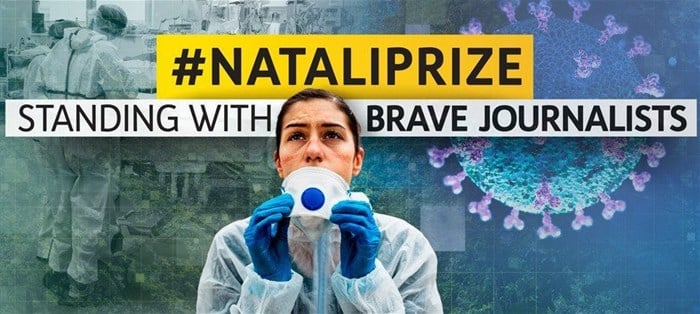
The Lorenzo Natali Media Prize has announced that it is open for applications. The European Union’s journalism award is celebrating its 30th anniversary, and awards journalists reporting on themes such as inequality, poverty, climate, education, migration, employment, digital, healthcare, peace, democracy, and human rights.

Imaged sourced:Imaged sourced: Natali Prize

Commissioner for International Partnerships, Jutta Urpilainen, said, “The Lorenzo Natali Media Prize celebrates its 30th anniversary. Democratic backsliding that we have witnessed during the pandemic, hybrid threats, disinformation and shrinking space for civil society are all worrying
phenomena, which brave journalists tackle. As showcased at the Summit for Democracy in December, the EU is a firm supporter of fundamental freedoms and those who defend them, often with high personal risk. The Lorenzo Natali Media Prize is a symbol of our support to those who give voice to the voiceless and bring truth to light.
”:

The submission should be made online in one of the five accepted languages (English, French, Spanish, Portuguese, or German). Applications can be submitted from today until 31 March 2022. Submissions can be entered online here.

For more on this and other media awards, see: https://www.trueheroesfilms.org/thedigest/awards/D49ECF35-4B42-444D-B4FA-F7ACE2BF65BC

A Grand Jury of international renowned journalists and specialists in international development from around the world will choose the winners in each category. Each winner will receive €10,000. The winner of the Best Emerging Journalist category will also be offered work experience with a media partner. The winners will be announced at the Lorenzo Natali Media Prize Award Ceremony during the 2022 European Development Days between 14 – 15 June 2022.

https://www.bizcommunity.com/Article/196/15/225198.html

Myanmar: one year after the coup – only getting worse

February 2, 2022
A crowd of protesters wearing face masks, holding up an image of a woman, Aung San Suu Kyi.

On 1 February last year, the military seized power over Myanmar/Burma by overturning the election results and detaining State Counsellor Aung San Suu Kyi. The military is still controlling power by force and uses brutal violence against human rights defenders, civil society groups, and journalists in order to silence all forms of protest and dissent. More than 1,500 people have been killed by the military and over 8,000 people have been arrested.

The coup prompted mass protests and more than 1,500 people have been killed by the military. Over 8,000 people have been arrested in the harsh crackdowns. In a series of charges, Aung San Suu Kyi has been sentenced to several years in prison. Most recently, five new corruption charges against her were announced and in all she faces up to 164 years in jail. See also: https://humanrightsdefenders.blog/2021/09/30/rohingya-human-rights-leader-mohibullah-murdered-in-bangladesh-refugee/

Despite the military’s brutal response, people have come together to fight the dictatorship. Nationwide protests, boycotts, strikes, and coordinated civil disobedience movements have taken place. Journalists across the country have continued their work despite severe attacks by the military.  

A new report by Athan looks at how the military coup has affected journalists’ work and press freedom in the country. Throughout the country’s history, military coups have led to severe attacks on press freedom and the 2021 coup is no exception.  Since the launch of the coup, 141 journalists have been arrested and 13 have been sentenced to prison. On 10 December, photojournalists Ko Soe Naing and Ko Zaw Tun were arrested while taking photos of a nationwide silent strike. Ko Soe Naing was tortured to death at the interrogation centre four days later. Just a couple of weeks after that, editor of the Federal Journal, A Sai Kay (Aka) Sai Win Aung, was shot dead by the military in Lay Kay Kaw.  See also: https://humanrightsdefenders.blog/2021/05/11/three-democratic-voice-of-burma-journalists-and-two-activists-risk-refoulement-by-thailand/

According to Athan, the attacks on press freedom since the 2021 military coup have been the worst the country has seen.  “Journalists and news media require continuous support to sustain local media and its journalists in order to secure journalists’ careers and their safety, and to enable an environment for journalistic professionals and the industry,” says a representative from Athan about the report. 

On the one-year anniversary of the military coup in Myanmar, the High Representative on behalf of the European Union and the Foreign Ministers of Albania, Australia, Canada, New Zealand, Norway, Republic of Korea, Switzerland, the United Kingdom, and the United States, have made the following declaration:

….The European Union is deeply concerned by the continuing escalation of violence and the evolution towards a protracted conflict with regional implications. Since the military coup, the situation has continuously and gravely deteriorated. A large part of the population is now in a highly precarious situation, experiencing poverty, food shortages, displacement, and violence. ..

The European Union condemns in the strongest terms continuing grave human rights violations including torture, sexual and gender-based violence, the continued persecution of civil society, human rights defenders, and journalists, attacks on the civilian population, including ethnic and religious minorities by the Myanmar armed forces. Therefore, the EU calls for full accountability of the leaders responsible for the coup as well as of the perpetrators of violence and human rights violations. The EU also reiterates its firm demand for the immediate and unconditional release of all prisoners arbitrarily detained in relation to the coup and the return to power of democratically elected leaders.

As a matter of priority, the EU reiterates its calls for an immediate cessation of all hostilities, and an end to the disproportionate use of force and the state of emergency. The military authorities must ensure rapid, safe, and unhindered humanitarian access to all displaced persons and people in need, in all parts of the country. The European Union will continue to provide humanitarian assistance, in accordance with the principles of humanity, neutrality, impartiality, and independence and reiterates its call for the full and immediate respect of international humanitarian law…

In view of the escalating violence in Myanmar, increased international action is required in line with the already existing EU arms embargo on Myanmar. Since the military coup on 1 February 2021, the EU has imposed targeted sanctions on the Myanmar military, its leaders, and entities. In the absence of any swift progress of the situation in Myanmar, the EU stands ready to adopt further restrictive measures against those responsible for undermining democracy and the serious human rights violations in Myanmar.

It is a failed coup,” said Yanghee Lee, co-founder of the Special Advisory Group on Myanmar and former UN special rapporteur for human rights in the country in a CNN report of 1 February. “The coup has not succeeded in the past year. And that is why they are taking even more drastic measures to finish out the coup.” He reported on problems for human rights defenders already in 2015, see: https://humanrightsdefenders.blog/2015/03/19/myanmar-backsliding-by-prosecuting-human-rights-defenders-instead-of-perpetrators/

https://edition.cnn.com/2022/01/31/asia/myanmar-coup-anniversary-resistance-junta-intl-hnk-dst/index.html

More killings of journalists in Mexico in 2022

January 31, 2022

Mexican journalist Lourdes Maldonado dedicated her last program to a fellow journalist one day after he was gunned down outside his home, and then she described her own vulnerability covering the violent border city of Tijuana. She blasted Mexico’s corruption and accused a state official of drug ties before telling her viewers she had been under state government protection for eight months. “They take good care of you,” she said on her internet radio and television show called “Brebaje” or “Potion.” “But no one can avoid—not even under police supervision—getting killed outside your house in a cowardly manner.”

Her words eerily predicted her fate. Five days later, Maldonado was shot outside her home at 7 p.m. in the evening. She was the third journalist this year to be killed in Mexico. Their deaths over the span of a month is an unusually high toll in such a short period even in Mexico and drew the largest protest yet over the killings with thousands demonstrating nationwide on Tuesday. The murders have left journalists working in the most dangerous place for their trade in the Western Hemisphere — feeling angry and hopeless. See also: https://humanrightsdefenders.blog/2020/08/24/killing-of-journalists-in-mexico-juan-carlos-morrugares-the-latest-victim/

And just now arrives the news that a fourth journalist has been killed:

Roberto Toledo, a journalist with an online news outlet was preparing to record a video interview Monday when he was shot by assailants, becoming the fourth journalist killed in less than a month in Mexico, the outlet’s director said. Roberto Toledo had just arrived at the law offices of the deputy director of the outlet, Monitor Michoacan, when three armed men shot him, said Monitor director Armando Linares, who had also planned to be there. See: https://www.sandiegouniontribune.com/news/nation-world/story/2022-01-31/another-journalist-slain-in-mexico-the-4th-this-month

On Friday, a day after Maldonado’s funeral, President Andrés Manuel López Obrador returned to criticizing the press. He said that his government guarantees free speech but “very few journalists, women and men, are fulfilling their noble duty to inform. Most are looking to see how we fail.”

According to the Committee to Protect Journalists, since the current administration began on Dec. 1, 2018, at least 32 journalists have been killed and 15 disappeared, despite a government program to protect them. See: https://humanrightsdefenders.blog/2022/01/19/international-press-institute-in-2021-45-journalists-died-doing-their-work/

“[T]he discrediting by the president is seen by others as permission to attack,” media advocate Leopoldo Maldonado (no relation to Lourdes Maldonado) says. Leopoldo Maldonado’s anger is shared by many in Mexico, as frustration and grief over their ever-growing number of dead peers pushes journalists to call for change. And despite promises by politicians like A.M.L.O., the government can do much more than conduct a simple investigation, because the inaction of the Mexican government is at the heart of the issue. Journalist violence isn’t solely the result of powerful cartels. Rather, journalist violence in Mexico is symptom of poor government policy, which creates dangerous social conditions, fails to hold perpetrators of violence accountable or build systems that protect journalists, and both directly and indirectly creates policies that hinder journalists.

On top of this on 28 January 2022 Mexican anti-femicide activist Ana Luisa Garduno Juarez was found dead by local authorities of southern Morelos state of Mexico in the early hours of Friday. Police reports said that a call was placed over gunfire inside a bar in Morelos’ Temixco city, on Thursday night. By the time authorities arrived, Garduno was found dead suffering gunshot wounds on her body. in this context, see also: https://www.amnesty.org/en/latest/news/2022/01/dignified-justice-women-human-rights-defenders-mexico/

https://www.bakersfield.com/ap/national/slain-mexican-reporter-described-vulnerability-in-last-show/article_32e45eed-8bb4-5207-b020-6501f9ee82d1.html

https://www.nbcnews.com/news/latino/annihilating-journalism-mexican-reporters-work-attacks-killings-rcna14196

https://www.yenisafak.com/en/world/anti-femicide-activist-murdered-in-mexico-3588570

https://www.jurist.org/news/2022/02/amnesty-international-sounds-alert-over-20-human-rights-defenders-4-journalists-killed-in-january/

And see recent: https://www.jurist.org/news/2022/04/violence-against-journalists-in-mexico-increased-exponentially-under-current-administration/

Alaa Abdel Fattah, and two others receive heavy prison sentences in Egypt

December 21, 2021

Egypt on Monday 20 December 2021 sentenced Alaa Abdel Fattah, a leading figure in the 2011 revolution, to five years in jail, with two others receiving four years, his sister Mona Seif and a judicial source said. [see also: https://humanrightsdefenders.blog/2020/08/06/re-issued-passionate-plea-for-help-in-open-letter-by-mona-seif-from-egypt-about-targeting-of-her-family/]

A computer programmer, blogger and high-profile activist who mobilized youths in the uprising that unseated autocrat Hosni Mubarak, Abdel Fattah had been in pre-trial detention since September 2019.

Abdel Fattah, his lawyer Mohamed al-Baqer and blogger Mohamed “Oxygen” Ibrahim were convicted of “broadcasting false news” in their trial in Cairo.

A judicial source, speaking on condition of anonymity, confirmed the verdict and sentencing to AFP.

Rulings in the court cannot be appealed. They require final approval by President Abdel Fattah al-Sisi.

Washington, which has already frozen 10 percent of its aid to Egypt over repeated rights violations, said it was “disappointed” by the sentence. “Journalists, human rights defenders, and others seeking to peacefully exercise their freedom of expression should be able to do so without facing criminal penalties, intimidation, harassment, or any other form of reprisal,” said State Department spokesman Ned Price.

The Committee to Protect Journalists decried Monday’s ruling as “unacceptable”.

The verdict “demonstrates the lengths to which authorities are willing to go to punish these journalists for their work”, said Sherif Mansour, CPJ’s Middle East and North Africa Coordinator. “Both journalists have already spent several years in prison on bogus charges, and authorities must release them immediately and unconditionally,” Mansour added.

Human Rights Watch on Sunday slammed “the government’s rush to use emergency courts… after holding people illegally for years in pretrial detention”. The New York-based rights watchdog then said that if Abdel Fattah and the other activists were to be sentenced, this would confirm “that fierce repression of peaceful critics remains the order of the day in Egypt”.

Abdel Fattah has spent most of the past decade in jail at Tora, one of the country’s most notorious prisons, after previous convictions. His mother, mathematics professor Laila Soueif, wrote in a New York Times opinion piece published on Saturday that “the outside world, once so inspired by the Egyptian revolutionaries, is looking away. His crime is that, like millions of young people in Egypt and far beyond, he believed another world was possible. And he dared to try to make it happen.

Prolific writer Abdel Fattah’s critically acclaimed essay collection “You Have Not Yet Been Defeated” was published in October.“At its fundamental core, his writing is attached to justice,” Soueif told AFP in October when the book was released.

Ahead of the trial session, Egypt’s foreign ministry lambasted the German government on Saturday for a statement calling for a “fair trial” and the release of the three dissidents. Cairo described the German foreign ministry’s call as “a blatant and unjustified meddling in Egyptian internal affairs”.

Rights groups say Egypt is holding some 60,000 political prisoners, many facing brutal conditions and overcrowded cells. See also: https://humanrightsdefenders.blog/2021/01/27/egypt-decade-after-arab-spring-amnesty-and-un-express-concern-over-detention/

In a 2019 interview with the show 60 Minutes on US broadcaster CBS, Sisi said there were no political prisoners in Egypt. And – of course – the official reaction to interventions was: Egypt’s foreign ministry stressed on Monday that it was absolutely not appropriate to comment on or in any way refer to an independent judicial process.

https://www.upi.com/Top_News/World-News/2021/12/20/Egypt-prison-sentences-three-activists-2011-uprising/9611640051667/

2021 Reporters Without Borders (RSF) Press Freedom Awards

November 21, 2021

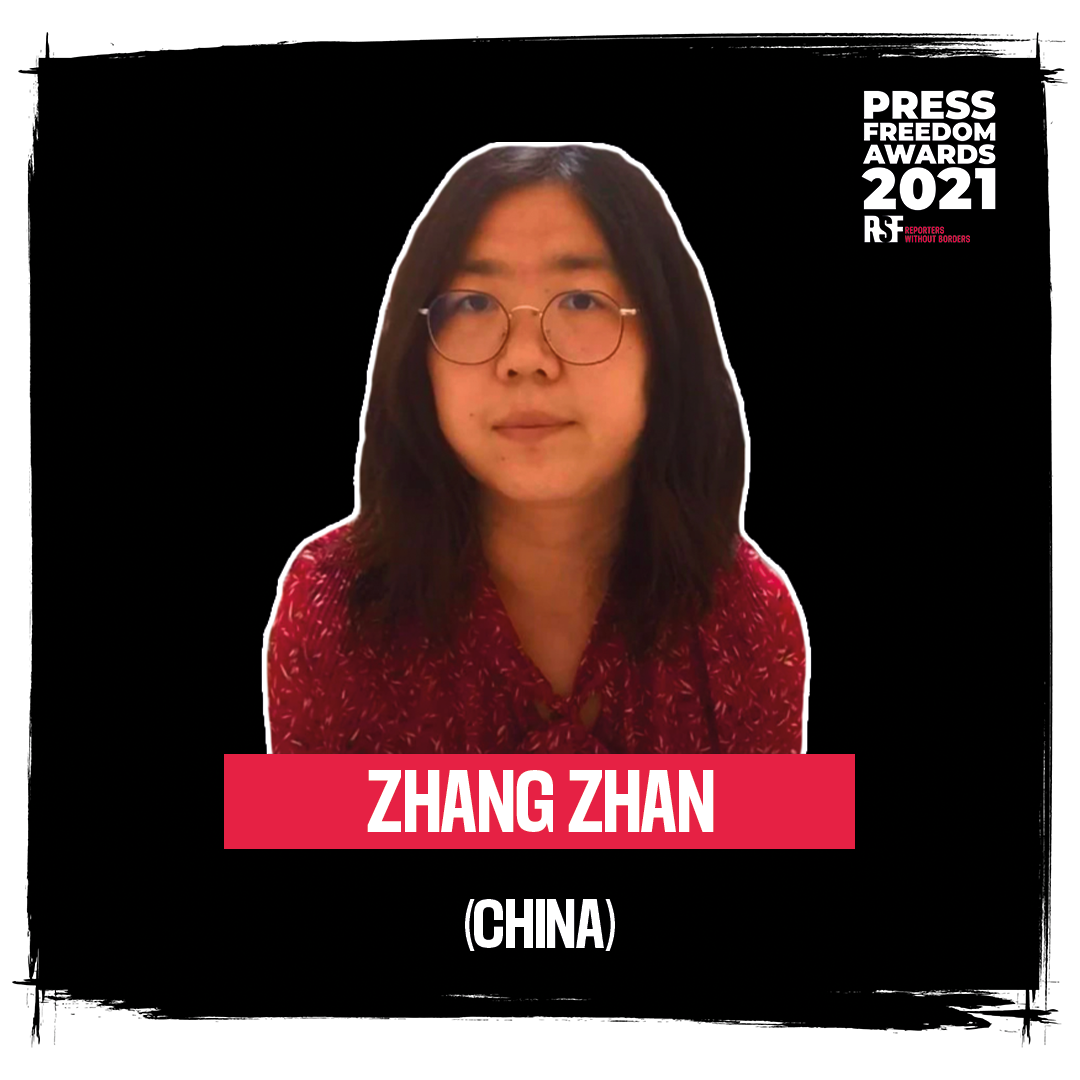
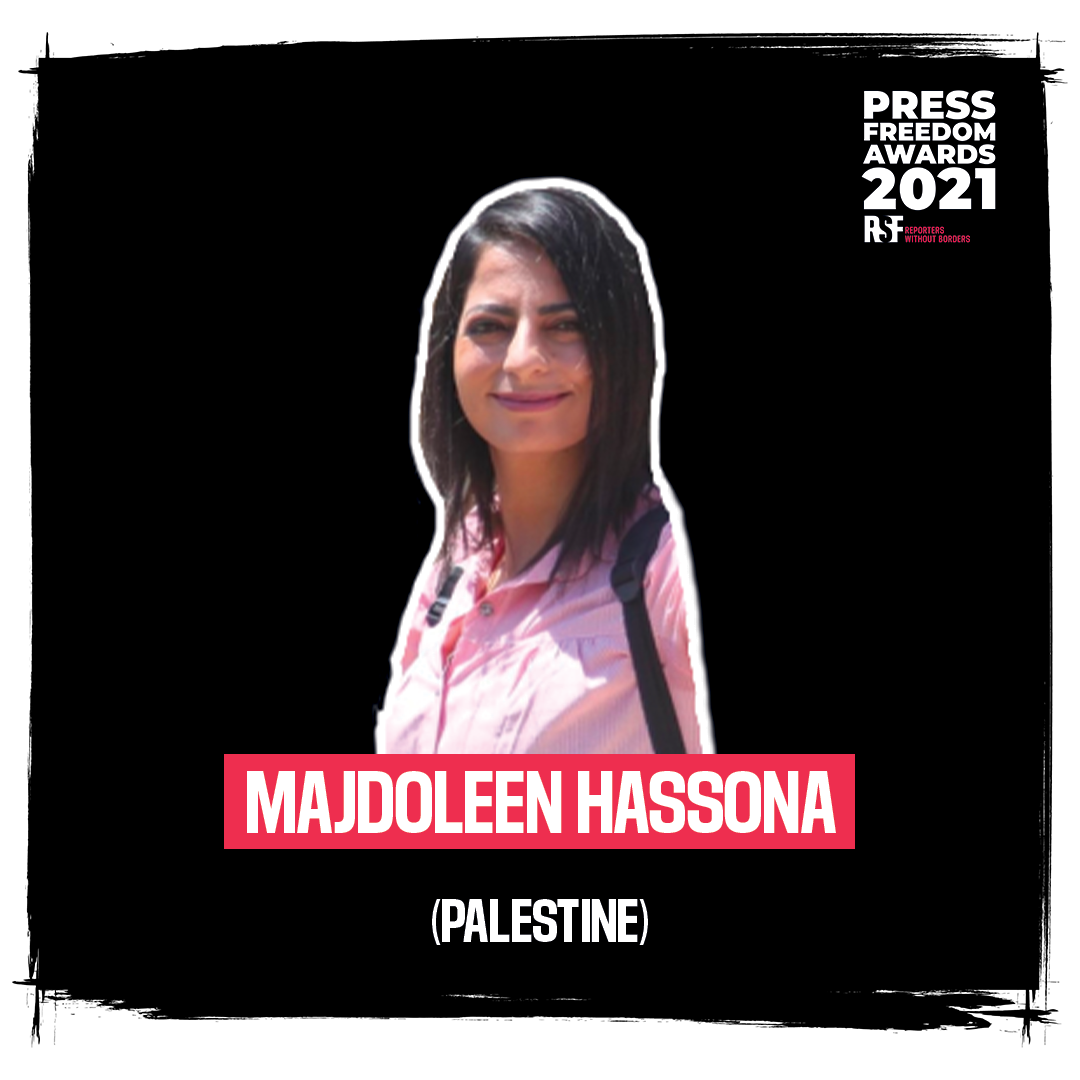
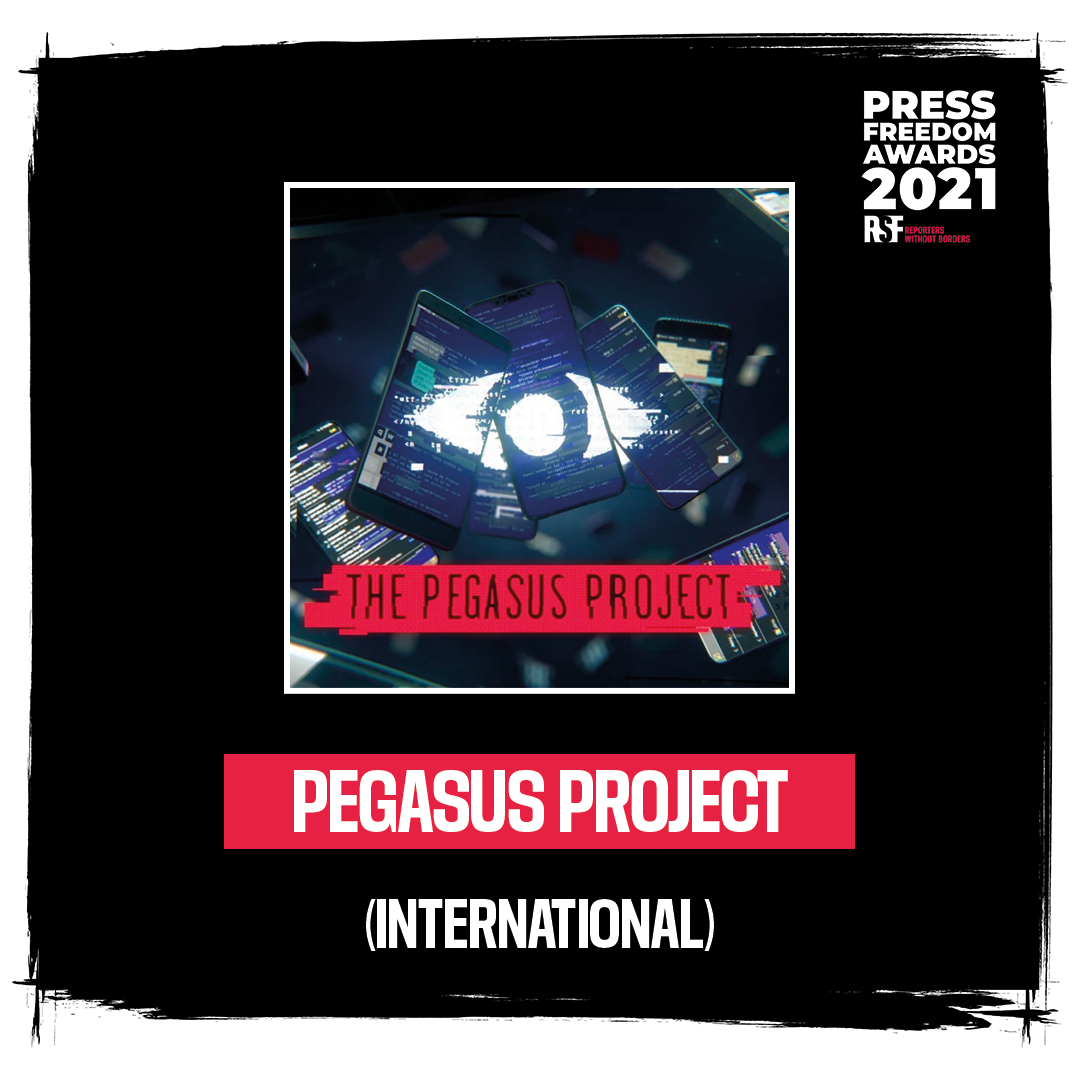
On 20 November 2021 Pacific Media Watch reported that the 2021 Reporters Without Borders (RSF) Press Freedom Awards have been given to Chinese journalist Zhang Zhan in the courage category, Palestinian journalist Majdoleen Hassona in the independence category, and the Pegasus Project in the impact category.

RSF president Pierre Haski announces the 29th RSF Press Freedom Awards in Paris. Video: RSF

RSF’s press freedom prizes are awarded every year to journalists or media that have made a notable contribution to the defence or promotion of freedom of the press in the world. This is the 29th year they have been awarded. The 2021 awards have been given in three categories — journalistic courage, impact and independence.

Courage Prize
The 2021 Prize for Courage, which aims to support and salute journalists, media outlets or NGOs that have displayed courage in the practice, defence or promotion of journalism, has been awarded to Chinese journalist Zhang Zhan.

Zhang Zhan

Despite constant threats, this lawyer-turned-journalist covered the covid-19 outbreak in the city of Wuhan in February 2020, live-streaming video reports on social media that showed the city’s streets and hospitals, and the families of the sick. Her reporting from the heart of the pandemic’s initial epicentre was one of the main sources of independent information about the health situation in Wuhan at the time.

After being arrested in May 2020 and held incommunicado for several months without any official reason being provided, Zhang Zhan was sentenced on 28 December 2020 to four years in prison for “picking quarrels and provoking trouble”. In protest against this injustice and the mistreatment to which she was subjected, she went on a hunger strike that resulted in her being shackled and force-fed. Her friends and family now fear for her life, and her health has worsened dramatically in recent weeks. See also: https://humanrightsdefenders.blog/2021/11/06/chinese-journalist-zhang-zhan-at-imminent-risk-of-death/

Independence Prize
The 2021 Prize for Independence, which rewards journalists, media outlets or NGOs that have resisted financial, political, economic or religious pressure in a noteworthy manner, has been awarded to Palestinian journalist Majdoleen Hassona.

Majdoleen Hassona
Majdoleen Hassona

Before joining the Turkish TV channel TRT and relocating to Istanbul, this Palestinian journalist was often harassed and prosecuted by both Israeli and Palestinian authorities for her critical reporting. While on a return visit to the West Bank in August 2019 with her fiancé (also a TRT journalist based in Turkey), she was stopped at an Israeli checkpoint and was told that she was subject to a ban on leaving the territory that had been issued by Israeli intelligence “for security reasons”. She has been stranded in the West Bank ever since but decided to resume reporting there and covered the anti-government protests in June 2021 following the death of the activist Nizar Banat.

Impact Prize
The 2021 Prize for Impact, which rewards journalists, media outlets or NGOS that have contributed to clear improvements in journalistic freedom, independence and pluralism, or increased awareness of these issues, has been awarded to the Pegasus Project.

The Pegasus Project
The Pegasus Project

The Pegasus Project is an investigation by an international consortium of more than 80 journalists from 17 media outlets* in 11 different countries that was coordinated by the NGO Forbidden Stories with technical support from experts at Amnesty International’s Security Lab. Based on a leak of more than 50,000 phone numbers targeted by Pegasus, spyware made by the Israeli company NSO Group, the Pegasus Project revealed that nearly 200 journalists were targeted for spying by 11 governments — both autocratic and democratic — which had acquired licences to use Pegasus. This investigation has made people aware of the extent of the surveillance to which journalists are exposed and has led many media outlets and RSF to file complaints and demand a moratorium on surveillance technology sales. See also: https://humanrightsdefenders.blog/2021/11/10/palestinian-ngos-dubbed-terrorist-were-hacked-with-pegasus-spyware/

“For defying censorship and alerting the world to the reality of the nascent pandemic, the laureate in the ‘courage’ category is now in prison and her state of health is extremely worrying,” said RSF secretary-general Christophe Deloire.

“For displaying a critical attitude and perseverance, the laureate in the ‘independence category has been unable to leave Israeli-controlled territory for the past two years. “For having revealed the scale of the surveillance to which journalists can be subjected, some of the journalists who are laureates in the ‘impact’ category are now being prosecuted by governments.

https://rsf.org/en/news/chinese-journalist-palestinian-journalist-and-pegasus-project-receive-2021-rsf-press-freedom-awards

Thomson Reuters Foundation’s conference 2021 focuses on the protection of free media and civil liberties

November 11, 2021

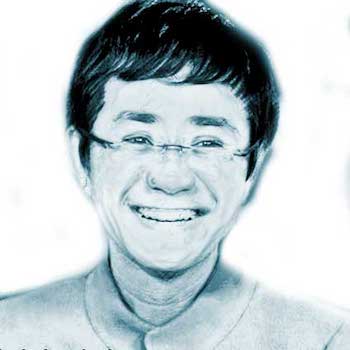
Nobel Peace Laureate Maria Ressa, Economist Jeffrey Sachs and Philanthropist Craig Newmark Amongst Speakers To Address World-leading Human Rights Forum Thomson Reuters Foundation is to host a two-day conference on 17 and 18 November focused on a post-pandemic roadmap to inclusive growth and the protection of free media and civil liberties. Nobel Peace Prize winner Maria Ressa, and an Afghan reporter who fled the Taliban, Zahra Joya, will join a distinguished line-up of speakers that also includes world-renowned Professor of Economics Jeffrey Sachs, Executive Director of Aspen Digital Vivian Schiller and founder of craigslist, philanthropist Craig Newmark. 
They will join human rights defenders, innovators, media experts, policymakers and business leaders at the online forum, which brings together thousands of delegates from around the world. The event comes at a critical juncture of the COVID-19 crisis and the UN climate summit, and will address how the pandemic has deepened longstanding social and economic inequalities, has revitalised the drive for a sustainable future and has triggered an alarming spike in media freedom and human rights violations.

With 18 hours of live-streamed talks, plenaries and insight sessions, leading experts from a variety of disciplines will share new insights on shifting the post-pandemic economy onto a more inclusive and sustainable path, one built on the principles of human rights, media freedom and climate justice. They will weigh in on cutting-edge solutions to tackle the world’s most consequential challenges, including the business case for economic inclusion, the path to zero emissions, the human cost of internet shutdowns and a legal network for journalists at risk.

This year’s diverse speakers also include Dr Hilda C. Heine, Senator and former President of the Marshall Islands; Yvonne Aki-Sawyerr OBE, Mayor of Sierra Leone’s capital, Freetown; Zahra Joya, Journalist and founder of Rukhshana Media in Afghanistan; Javier Pallero, Policy Director at Access Now; Shamina Singh, Executive VP for Sustainability at Mastercard; Jorge Rubio Nava, Global Head of Social Finance at Citi; Danielle Belton, Editor-in-Chief of the Huffington Post; Lina Attalah, Co-founder of independent Egyptian news outlet Mada Masr; Alessandra Galloni, Editor-in-Chief of Reuters; Kanbar Hossein Bor, UK Coordinator Media Freedom Campaign & Deputy Director Democratic Governance, FCDO; Ma Jun, Founding Director of the Institute of Public and Environmental Affairs and Caoilfhionn Gallagher QC, Barrister at Doughty Street Chambers, specialising in human rights and civil liberties.

The converging economic, health and climate crises are putting our democracies, people and planet under an existential threat,” said Thomson Reuters Foundation CEO Antonio Zappulla. “But there is also a great opportunity for a coordinated global response – the success of which depends on how well we work with and learn from each other.

In response to the ongoing, drastic deterioration of media freedoms, the Foundation will also be launching a new Legal Network for Journalists at Risk (LNJAR) at Trust Conference, an initiative in partnership with the Committee to Protect Journalists (CPJ) and Media Defence.

The LNJAR comprises 15 organisations, and strategically coordinates different types of legal support to enable journalists and independent media outlets to continue to cover public interest stories and hold power to account without fear of retribution.

Additionally, the Foundation will unveil its partnership with UNESCO, the International Women’s Media Foundation and the International News Safety Institute (INSI) through which it has developed practical and legal tools for journalists, media managers and newsrooms to counter harassment.

Now in its ninth year, Trust Conference reflects the Thomson Reuters Foundation’s work in tackling the world’s most complex societal issues, with a focus on socio-economic inclusion, sustainability, media freedom and human rights.

The programme and the speaker line-up of Trust Conference are available here. Register for your complimentary ticket here.

Trust Conference Agenda

The 2021 forum will address urgent global challenges through a series of talks, debates and high-profile exchanges. Themes include:

  • Climate change as a human rights risk
  • Making a ‘Just Transition’
  • The impact of financial vulnerability on editorial independence
  • The race for cyber sovereignty
  • Defending media freedom
  • Newsroom diversity

https://www.albawaba.com/business/pr/nobel-peace-laureate-maria-ressa-economist-jeffrey-sachs-and-philanthropist-craig

https://www.trustconference.com/

Nobel Peace Prize in 2021 for freedom of expression

October 8, 2021

On 8 October 2021 the Norwegian Nobel Committee decided to award the Nobel Peace Prize for 2021 to Maria Ressa and Dmitry Muratov for their efforts to safeguard freedom of expression, which is a precondition for democracy and lasting peace. Ms Ressa and Mr Muratov are receiving the Peace Prize for their courageous fight for freedom of expression in the Philippines and Russia. At the same time, they are representatives of all journalists who stand up for this ideal in a world in which democracy and freedom of the press face increasingly adverse conditions.

Maria Ressa uses freedom of expression to expose abuse of power, use of violence and growing authoritarianism in her native country, the Philippines. In 2012, she co-founded Rappler, a digital media company for investigative journalism, which she still heads. As a journalist and the Rappler’s CEO, Ressa has shown herself to be a fearless defender of freedom of expression. Rappler has focused critical attention on the Duterte regime’s controversial, murderous anti-drug campaign. The number of deaths is so high that the campaign resembles a war waged against the country’s own population. Ms Ressa and Rappler have also documented how social media is being used to spread fake news, harass opponents and manipulate public discourse. Maria Ressa has received earlier recognition with 5 human rights awards [see: https://www.trueheroesfilms.org/thedigest/laureates/c048da20-ba0f-11ea-a77e-f524f6fc9aaa]

Dmitry Andreyevich Muratov has for decades defended freedom of speech in Russia under increasingly challenging conditions. In 1993, he was one of the founders of the independent newspaper Novaja Gazeta. Since 1995 he has been the newspaper’s editor-in-chief for a total of 24 years. Novaja Gazeta is the most independent newspaper in Russia today, with a fundamentally critical attitude towards power. The newspaper’s fact-based journalism and professional integrity have made it an important source of information on censurable aspects of Russian society rarely mentioned by other media. Since its start-up in 1993, Novaja Gazeta has published critical articles on subjects ranging from corruption, police violence, unlawful arrests, electoral fraud and ”troll factories” to the use of Russian military forces both within and outside Russia.

Novaja Gazeta’s opponents have responded with harassment, threats, violence and murder. Since the newspaper’s start, six of its journalists have been killed, including Anna Politkovskaja who wrote revealing articles on the war in Chechnya. Despite the killings and threats, editor-in-chief Muratov has refused to abandon the newspaper’s independent policy. He has consistently defended the right of journalists to write anything they want about whatever they want, as long as they comply with the professional and ethical standards of journalism.

Muratov dedicated his award to six contributors to his Novaya Gazeta newspaper who had been murdered for their work exposing human rights violations and corruption. “Igor Domnikov, Yuri Shchekochikhin, Anna Politkovskaya, Stas Markelov, Anastasia Baburova, Natasha Estemirova – these are the people who have today won the Nobel Prize,” Muratov said, reciting the names of slain reporters and activists whose portraits hang in the newspaper’s Moscow headquarters.

Free, independent and fact-based journalism serves to protect against abuse of power, lies and war propaganda. The Norwegian Nobel Committee is convinced that freedom of expression and freedom of information help to ensure an informed public. These rights are crucial prerequisites for democracy and protect against war and conflict. The award of the Nobel Peace Prize to Maria Ressa and Dmitry Muratov is intended to underscore the importance of protecting and defending these fundamental rights.

For more on the Nobel Peace Prize and many other awards on freedom of expression see: https://www.trueheroesfilms.org/thedigest/awards/F8EA8555-BF30-4D39-82C6-6D241CC41B74

https://www.nobelprize.org/prizes/peace/2021/press-release/

https://www.reuters.com/world/philippines-journalist-ressa-russian-journalist-muratov-win-2021-nobel-peace-2021-10-08/