Posts Tagged ‘journalists’

Breaking news: Reuters journalists Wa Lone and Kyaw Soe Oo freed in Myanmar

May 7, 2019

All the mainstream media (here Al Jazeera) are reporting that today the Reuters journalists Wa Lone and Kyaw Soe Oo were freed from Myanmar jail.

Earlier on Tuesday, Myanmar said it will release 6,520 prisoners in an amnesty, according to a statement from the president’s office.  President Win Myint pardoned thousands of prisoners in two mass amnesties last month. It is customary in Myanmar for authorities to free prisoners around the time of the traditional New Year, which began on April 17.

We are enormously pleased that Myanmar has released our courageous reporters,” Reuters editor-in-chief Stephen Adler said in a statement. “Since their arrests 511 days ago, they have become symbols of the importance of press freedom around the world. We welcome their return.” Reuters has said the two men did not commit any crime and had called for their release.

https://www.aljazeera.com/news/2019/05/jailed-reuters-journalists-freed-prison-myanmar-190507024627552.html

World Press Freedom Day celebrated on 3 May 2019

May 6, 2019

Friday 3 May was World Press Freedom Day. Read the rest of this entry »

Women human rights defenders and journalists in Iraq receive training in Safety and Digital Security

April 29, 2019

To strengthen the resilience of Iraqi women journalists and women human rights defenders against online and offline gender-based attacks, Internews conducts workshops and other activities that focus on digital and physical security:

Iraq is one of the world’s most dangerous countries for journalists according to Reporters without Borders, ranking 160 out of 180 countries in the World Press Freedom Index. Women journalists and activists in Iraq have a particularly difficult time due to online threats and attacks that adversely affect their ability to express themselves freely and advocate effectively. Women have witnessed an escalation in online abuse over the past few years, not just in numbers, but also in methods and sophistication. The risk of harassment and gender-based attacks online is not limited to the digital space as research has shown that online abuse and stalking often escalate into real world physical violence if left unaddressed.

In an interview with The New Arab, Hala ‘Asif, a 24-year-old journalist working as a correspondent for the channel NRT in Baghdad, noted that, “Foreign journalists often investigate political affairs in Iraq, which sometimes is impossible for us to cover as it would be too dangerous and would prevent us from working safely in our country. I would like to go to other provinces in Iraq and carry out investigations about relevant issues, but as a young woman it would cost too much to take care of my safety.”

To address the issue of women’s safety in Iraq, Internews, with funding from the US State Department’s Bureau of Democracy, Human Rights and Labor (DRL), is using a multi-pronged approach – building local networks, coordinating advocacy, and conducting targeted journalism trainings on gender-sensitive issues. Internews’ program, Women Voices (Aswat Al-Maraa), aims to challenge societal attitudes that stigmatize survivors of sexual and gender-based violence (SGBV) by supporting journalists and women human rights defenders to shed light on sensitive issues through coordinated reporting and advocacy. The program works with female Iraqi journalists and media outlets to create a nationwide coalition of women journalists and human rights defenders to strengthen their resilience against gender-based attacks and build the capacity of journalists to report on sensitive human rights and SGBV.

Within the Women’s Voices project, Internews has conducted so far two training-of-trainers (TOT) workshops that focus on the digital and physical security of the project participants. Through a peer-to-peer program, TOT trainees have trained eighty women from Erbil, Najaf, and Halabja how to protect themselves from threats online and in their everyday lives.

….Another participant, from the Erbil workshop, said, “Females often have to face extreme scrutiny of their presence online, and are threatened with death in some instances for photos posted online without family consent or that are considered inappropriate; these kinds of workshops are incredibly important for every female in this country.”

To support the voices and participation of women in some of the world’s most challenging places, Internews’ MENA team ensures the implementation of digital as well as a physical security trainings in all of its projects across the region. ​

See also: https://humanrightsdefenders.blog/2017/05/09/defenddefenders-launched-new-security-manual-for-human-rights-defenders-in-africa/

https://reliefweb.int/report/iraq/uplifting-voices-women-supporting-their-physical-safety-and-digital-security

The 2019 World Press Freedom Index launched on 18th of April

April 20, 2019

Published every year since 2002 by Reporters Without Borders (RSF), the World Press Freedom Index is an important advocacy tool based on the principle of emulation between states. Because it is well known, its influence over governments is growing. Many heads of state and government fear its annual publication. [for 2018 see: https://humanrightsdefenders.blog/2019/01/30/world-press-freedom-index-2018-is-out-colorful-but-disheartening/]

The Index ranks 180 countries and regions according to the level of freedom available to journalists. It is a snapshot of the media freedom situation based on an evaluation of pluralism, independence of the media, quality of legislative framework and safety of journalists in each country and region. (It does not rank public policies even if governments obviously have a major impact on their country’s ranking. Nor is it an indicator of the quality of journalism in each country or region.)

Along with the Index, RSF calculates a global indicator and regional indicators that evaluate the overall performance of countries and regions (in the world and in each region) as regards media freedom. It is an absolute measure that complements the Index’s comparative rankings. The global indicator is the average of the regional indicators, each of which is obtained by averaging the scores of all the countries in the region, weighted according to their population as given by the World Bank.

The degree of freedom available to journalists in 180 countries and regions is determined by pooling the responses of experts to a questionnaire devised by RSF. This qualitative analysis is combined with quantitative data on abuses and acts of violence against journalists during the period evaluated. The criteria used in the questionnaire are pluralism, media independence, media environment and self-censorship, legislative framework, transparency, and the quality of the infrastructure that supports the production of news and information. Click here for more information

The press freedom map, which is distributed in print and digital versions, offers a visual overview of the situation in each country and region in the Index. The colour categories are assigned as follows: good (white), fairly good (yellow), problematic (orange), bad (red) and very bad (black).

https://rsf.org/en/ranking

EU Parliament ‘improves’ proposed Terrorist Content Regulation

April 18, 2019

After my earlier piece about the risks in the draft EU regulation on terrorism content [see: https://humanrightsdefenders.blog/2019/01/31/ngos-express-fear-that-new-eu-terrorist-content-draft-will-make-things-worse-for-human-rights-defenders/], I am happy to report that some NGOs have welcomed the changes now made in the latest version.

On 17 April 2019 eub2 reports that “EU Parliament deletes the worst threats to freedom of expression proposed in the Terrorist Content Regulation”: Read the rest of this entry »

Mozambique: Joint Statement by NGOs Calling for the release of journalist Amade Abubacar

April 13, 2019

Council of Europe’s Dunja Mijatović presents her first annual report

April 9, 2019

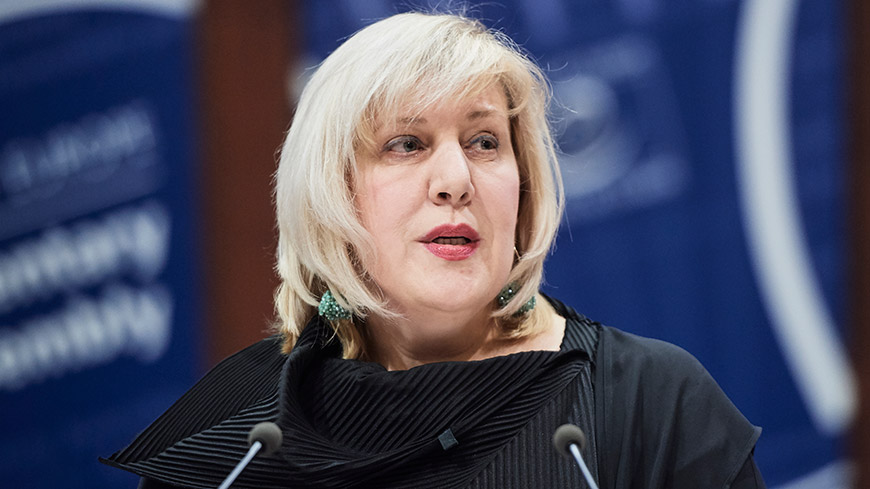
Dunja Mijatović

Dunja Mijatović

Today the Council of Europe Commissioner for Human Rights, Dunja Mijatović, presented her first annual activity in a debate before the Parliamentary Assembly of the organisation. [see also: https://humanrightsdefenders.blog/2018/04/03/dunja-mijatovic-starts-her-term-as-council-of-europe-commissioner-for-human-rights/]

While the report covers a variety of the most pressing human rights issues in the Council of Europe member states, the Commissioner highlights migration, women’s rights, human rights of persons with disability, the protection of human rights defenders and the safety of journalists as the most recurrent topics of her work.

Migration is among the most pressing human rights issues on my agenda”, she says. “National authorities should improve the treatment of immigrants, asylum seekers and refugees, and put human rights and the principle of responsibility sharing at the centre of their migration and asylum policies”.

Amnesty UK media awards sets good example

April 9, 2019

Amnesty International UK runs a successful series of (national) media awards. Amnesty’s Media Awards, which have been running annually since 1992, celebrate excellence in human rights journalism and applaud the courage and determination of journalists who often put their lives on the line to report on vital human rights issues. Kate Allen, Director of Amnesty International UK, said at the 3 April 2019 ceremony: “Media work is vitally important for Amnesty and everything we do. This evening we’ve seen some brilliant journalism that has had enormous human rights impact…Without a free press, it’s extremely difficult to expose wrong-doing and hold leaders to account. But even here in the UK we’re seeing it being threatened – especially with the sinister arrest of Trevor Birney and Barry McCaffrey in Northern Ireland last year…That’s why our awards are about congratulating the achievements of the media and championing its role in creating a fairer, more open world.” The awards, hosted by Channel 4 News presenter Cathy Newman, held a moment of silence for the approximately 90 journalists imprisoned last year for doing their jobs. Canada and the USA are undertaking similar events.

The winners of the 2019 AI UK Media Awards include:

News (Broadcast)

Features

Regional Media

  • BBC Northern Ireland – Spotlight: Buried Secrets

Documentaries

  • BBC Two – Escape from Dubai: The Mystery of the Missing Princess

Impact Award

Investigation

For jailed Reuters reporters Wa Lone and Kyaw Soe Oo this means yet another award for their work as they continue to fight an appeal against their conviction. The men, who have been behind bars in Myanmar since December 2017. [see also: https://humanrightsdefenders.blog/2018/11/06/50-human-rights-ngos-address-joint-letter-to-aung-san-suu-kyi-on-reuters-journalists/]

—-

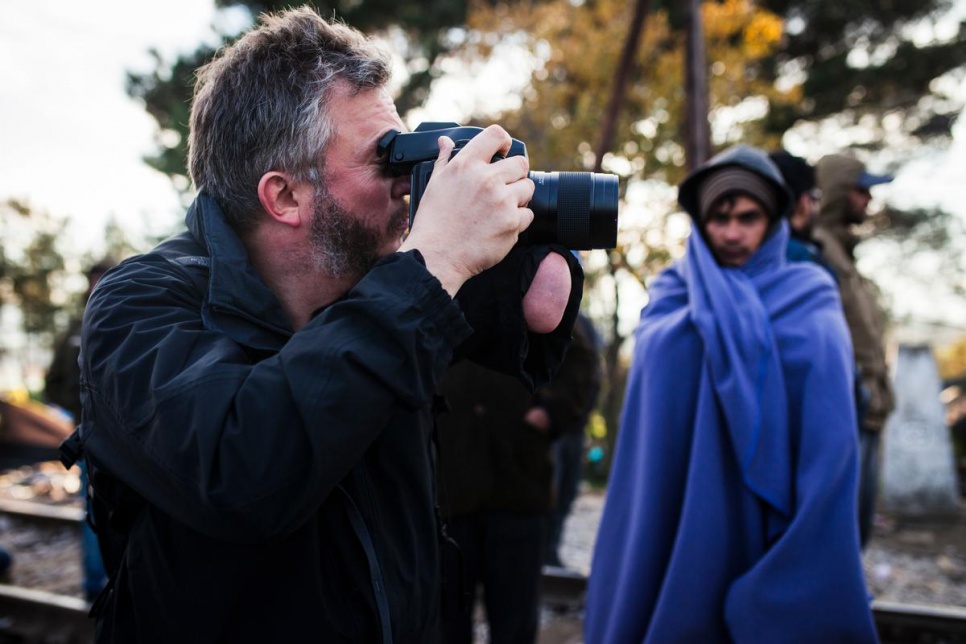
Giles Duley, on assignment for UNHCR, photographs refugees and migrants in Greece in 2016.  © UNHCR/Achilleas Zavallis

Humanitarian photographer Giles Duley won a Media Award for his powerful series depicting the plight and resilience of Congolese female refugees in Angola. His photo essay, “We Are Here Because We Are Strong”, was commissioned by UNHCR and published in Humanity magazine. The subjects of his project were forced to flee the Kasai region of Democratic Republic of the Congo after violence erupted in March 2017, triggering massive displacement.

The full Media Awards 2019 shortlist can be found here.

https://www.amnesty.org.uk/press-releases/amnesty-media-awards-2019-winners-announced

https://www.pressgazette.co.uk/jailed-reuters-reporters-wa-lone-kyaw-soe-oo-honoured-with-amnesty-media-award-during-appeal/

https://www.unhcr.org/news/latest/2019/4/5ca5ff704/unhcr-photographers-essay-congolese-women-refugees-wins-prestigious-award.html

Silvana Meixner winner of Ari Rath Prize for Critical Journalism 2019

April 8, 2019
Vindobona announced on 4 April 2019 that ORF journalist and presenter Silvana Meixner will be awarded the second Ari-Rath Prize for Critical Journalism on 5 May 2019, the Day of Freedom of the Press. This prize was established to honour journalists who have rendered outstanding services to critical reporting on immigration, expulsion and asylum, committed to respect for human rights, in the spirit of the former editor-in-chief of the Jerusalem Post, Ari Rath who died in January 2017. [see https://humanrightsdefenders.blog/2018/05/04/world-press-freedom-day-a-good-time-for-honoring-journalists/] For more on this award and 7 other awards for journalists see: http://www.trueheroesfilms.org/thedigest/awards/ari-rath-prize-for-critical-journalism.

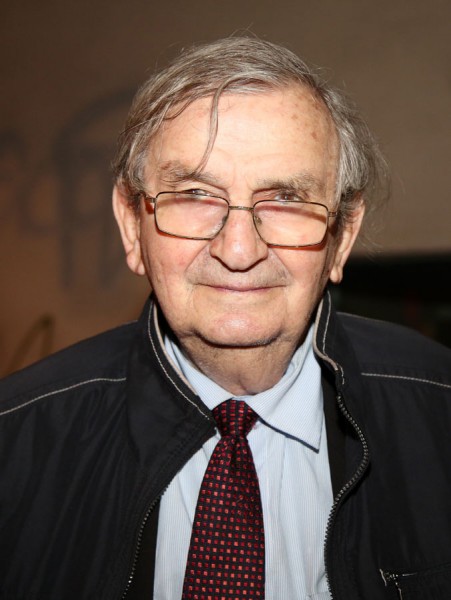
Former editor-in-chief of the Jerusalem Post, Ari Rath, who died in January 2017. / Picture: © Wikimedia Commons

Silvana Meixner is the head of the ORF minority editorial office (Minderheitenredaktion) and presenter of the magazine “Heimat Fremde Heimat”. In the spirit of the late Ari Rath, she is honoured as a journalist who has rendered outstanding service in her work to critical reporting on flight, expulsion and asylum, committed to the protection of human rights. Silvana Meixner was born on March 16, 1958 in Split, Croatia; she lives in Vienna since 1986. After graduating from high school, she studied sociology and pedagogy in Zadar. Since 1988 she has been working for the Austrian Broadcasting Corporation (Österreichischer Rundfunk), where she was involved in setting up the minority editorial office. On 3 December 1993 Silvana Meixner, who moderated the television programme Heimat, fremde Heimat together with Lakis Iordanopoulos, was injured by a letter bomb from Franz Fuchs. She continued her journalistic work for refugees, ethnic minorities and human rights.

———

https://www.vindobona.org/article/silvana-meixner-receives-ari-rath-prize-for-critical-journalism-2019

Press Emblem Campaign (PEC) reports to Human Rights Council on media casualties

March 13, 2019

Press Emblem Campaign (PEC), a nongovernmental organization presented a statement on press freedom and journalist killings duringUnited Nations Human Rights Council 40th session in Geneva on 13 March 2019.

The Press Emblem Campaign (PEC) documented last year the killing of 117 journalists, an increase of 17 percent in media casualties compared to the previous year. In five countries journalists paid an unacceptable toll: Afghanistan with 17 killed, Mexico also with 17 killed, Syria with 11 killed, Yemen and India, with 8 journalists killed in each of those countries. The PEC urged the Members of the Human Rights Council to fight more firmly impunity and to bring the responsible of those crimes to justice.

The PEC is also worried by the large number of arrests among journalists in the recent turmoilin Sudan, the repression of press freedom in Nicaragua and Venezuela, the statement reads. PEC expressed itsspecial concern with the continuous judicial harassment of journalists in Turkey in the statement.

PEC was one of the organizers of the panel discussion on human rights violations in Turkey, which the Turkish government mobilized its entire diplomatic corps to prevent during 40th Regular Session of the UN Human Rights Council on 5 March. The move prompted an outcry from human rights defenders.[see: https://stockholmcf.org/erdogan-govt-fails-to-cancel-un-human-rights-council-event-on-turkey/%5D

Turkey is the biggest jailer of journalists in the world. The most recent figures documented by SCF (Stockholm Centre for Freedom) show that 211 journalists and media workers were in jail as of March 11, 2019, most in pretrial detention. Of those in prison 134 were under arrest pending trial while only 77 journalists have been convicted and are serving their time. Detention warrants are outstanding for 167 journalists who are living in exile or remain at large in Turkey. The government also closed down some 200 media outlets.

See also: https://humanrightsdefenders.blog/2019/02/20/european-parliament-rapporteur-on-turkey-kati-piri-it-makes-no-sense-to-continue-talks-on-eu-membership/