Posts Tagged ‘Journalist’

Ukrainian human rights defender Maksym Butkevych wins CoE’s 2025 Václav Havel Prize

September 30, 2025
2025 Václav Havel Prize awarded to Ukrainian journalist and human rights defender Maksym Butkevych

The thirteenth Václav Havel Human Rights Prize – which honours outstanding civil society action in defence of human rights – has been awarded to Ukrainian journalist and human rights defender Maksym Butkevych. The prize was presented at a special ceremony on the opening day of the autumn plenary session of the Parliamentary Assembly of the Council of Europe (PACE) in Strasbourg on 29 September 2025

Mr Butkevych is a co-founder of the Zmina Human Rights Centre and of Hromadske Radio. Despite his lifelong pacifism, he volunteered for the Ukrainian Armed Forces at the start of the 2022 Russian invasion and became a platoon commander. Captured and sentenced to 13 years in prison by Russian forces, he endured over two years of harsh imprisonment before being released in a prisoner exchange in October 2024. He remains a powerful symbol of courage and resilience in defence of justice and freedom.

The two runners-up for the 2025 Prize are Georgian journalist Mzia Amaghlobeli and Azerbaijani journalist Ulvi Hasanli. Both of them are currently detained in their home countries.

Opening the ceremony, PACE President Theodoros Rousopoulos said it was no coincidence that all three shortlisted candidates this year were journalists. Urging the immediate release of Ms Amaghlobeli and Mr Hasanli, he said: “Your voice may be silenced, but your testimony is heard loud and clear.” The President – himself a former journalist – also thanked all three candidates for their courage in opposing authoritarianism and for acting as role-models for a whole generation of journalists and human rights defenders: “Governments should not be afraid of the truth,” he declared.

For more on the Václav Havel Human Rights Prize, and its laureates, see: https://www.trueheroesfilms.org/thedigest/awards/7A8B4A4A-0521-AA58-2BF0-DD1B71A25C8D.

IPS at this occasion published a post critical of the lack of follow up to free the laureates:

The Václav Havel Prize is an important international recognition for those who stand up for human rights and against autocracy, but while recognition through such awards and solidarity matters deeply, it is not enough. The Council of Europe must match its willingness to recognise the courage of human rights defenders with efforts to stand courageously up to autocrats and dictators, even and especially those within its own membership ranks.

For PACE leadership and members, the recognition given to human rights defenders through the Václav Havel Prize must be matched with tireless, persistent and coordinated action to put pressure on the other political bodies of the Council of Europe. This includes adopting resolutions demanding the release of imprisoned laureates; organising visibility campaigns within PACE through side events, exhibitions and public initiatives; building stronger connections and networks with families of prisoners; and consistently deploying all available diplomatic tools to keep political prisoners at the forefront of European media and diplomacy.

At the same time, CoE leaders, including the Secretary General and Commissioner for Human Rights (currently Alain Berset and Michael O’Flaherty, respectively), must put the release of political prisoners at the top of the organisation’s priority list. These leaders have important public platforms that must consistently and relentlessly raise the profile of human rights defenders at risk. Leaders must work to mobilise member states to apply pressure for the release of political prisoners.

Finally, Council of Europe member states – signatories to the European Convention on Human Rights – need to recognise that the continued detention of human rights defenders poses a great risk to the long-term credibility of the institutions. Member states – on their own and through the organisation’s powerful Committee of Ministers – have to use all tools at their disposal to address the rising cases of political prisoners and crackdowns against civil society across the broader region. The Committee of Ministers needs to put enhanced enforcement pressure on member states regarding the judgments of the European Court of Human Rights on fundamental freedoms. These judgements, after all, often affect the fate of political prisoners.[https://www.ips-journal.eu/topics/democracy-and-society/prizes-without-freedom-risk-becoming-trophies-of-hypocrisy-8573/]


 Last year’s winner 

 Václav Havel Prize film

https://www.coe.int/en/web/portal/-/2025-v%C3%A1clav-havel-prize-awarded-to-ukrainian-journalist-and-human-rights-defender-maksym-butkevych-1

https://www.kyivpost.com/post/61106

Mali: UN experts demand activist El Bachir Thiam’s release, four months after enforced disappearance

September 23, 2025
United Nations logo

On 9 September 2025 UN experts called on authorities in Mali to disclose the fate and whereabouts of journalist and activist El Bachir Thiam, who disappeared four months ago.

Mali must immediately and unconditionally release El Bachir Thiam and other victims of enforced disappearance, and cease the crackdown on civil society actors, human rights defenders, and political opponents or those perceived as such,” the experts said.

El Bachir Thiam is a journalist for the MaliActu website and a member of several civil society organisations and political movements, including the political party Yelema – Le Changement, led by former Prime Minister Moussa Mara, the Collectif Sirako, and a youth movement calling for a return to constitutional order, for which he serves as spokesperson and communications officer.

Thiam was allegedly kidnapped on 8 May 2025, in front of several witnesses in Kati town, by a group of at least five hooded and unidentified men suspected of being Malian intelligence agents – more specifically from the the Agence Nationale de la Sécurité d’Etat (ANSE) – or elements of the Bamako gendarmerie du Camp I, who were traveling in a gray TOYOTA V8 4×4 vehicle with tinted windows and no license plate. His relatives and colleagues reportedly searched for him in vain in police stations and gendarmeries of Bamako and Kati. Since then, Thiam’s fate and whereabouts have remained unknown.

“As time goes by, Thiam’s condition risks deteriorating further and will take a profound toll on his physical and psychological health,” the experts said.

On 17 July 2025, Thiam Mariam Dagnon, wife of El Bachir Thiam, filed a complaint for kidnapping and disappearance with the Public Prosecutor of the Kati Court of First Instance. Thiam’s alleged kidnapping and enforced disappearance took place in the context of peaceful protest movements initiated in early May 2025 by several political movements and parties, as well as civil society actors and organisations, following the adoption of draconian laws further restricting civic space by Malian transitional authorities in April 2025.

The experts stressed that Malian authorities are allegedly making increased use of enforced disappearance as a weapon to instill fear and silence civil society actors, human rights defenders, political opponents or those perceived as such.

“These actions have a pattern. The frequency of the practice, its organised nature and the methods used indicate a systematic character,” they said.

“Thiam’s case reflects the persistent and escalating pattern of human rights violations against members of opposition political parties, civil society organisations, journalists and human rights defenders in Mali,” the experts said, recalling that several mandate holders had expressed similar concerns in 2021, 2024 as well as in February, April and August 2025.

They noted that the situation has continued to further deteriorate, as illustrated by the signature or adoption of several draconian laws, including a presidential decree on 13 May which dissolved all political parties and “organisations of a political nature” in Mali.

The experts have written to the Government of Mali and will continue to closely monitor the situation.

https://www.ohchr.org/en/press-releases/2025/09/mali-un-experts-demand-activist-el-bachir-thiams-release-four-months-after

Enforced disappearances: UN expert group to review 1317 cases from 44 countries at 137th Session

I owe Alaa Abd el-Fattah my life, which is why I am going on a hunger strike to help free him

January 19, 2025

If anybody represents the very British values of democracy, respect for human rights, justice and due process, it is the Egyptian activist, says Peter Greste in the Guardian of 15 January 2025. The piece is so rich in detail that I give here in full:

I first encountered Alaa Abd el-Fattah 11 years ago, as a disembodied whisper of reassurance from outside the bars of my grubby prison cell in Cairo. I had just been tossed in the box by Egypt’s El Mukhabarat– the malevolent general intelligence service responsible for internal security – and I was facing an indeterminate run in solitary confinement after being arrested on bogus terrorism charges for my work as a journalist.

Alaa knew the drill. Then just 32, he’d been imprisoned by each of the four previous regimes, and he understood both the institutional meat grinder we were confronting and the psychological stresses I’d have to grapple with.

“Welcome to Ward A, Political, in Tora prison,” he told me in a hushed voice through the door. “Here, you are surrounded by people who have been fighting for justice and democracy. We are a collection of activists, trade unionists, judges, writers and now you – a journalist. This is a very prestigious place, and you are with friends.”

A significant part of the prestige came from Alaa himself. He was – and remains – Egypt’s most prominent political prisoner. That also makes him the one the government fears the most. I owe him my life, which is why I am helping step up the campaign to free him.

When the country erupted in its chapter of the Arab spring revolution in January 2011, it was driven by a loose collection of young, middle-class, secular activists – including Alaa – who understood the power of social media.

He was already well known in Egypt as a software developer, online publisher and prolific writer from a long line of campaigners. His late father was a human rights lawyer, and his mother is a mathematics professor and pro-democracy activist. His aunt is a novelist and political activist. One sister helped set up a group fighting against military trials for civilians, and another is a film editor who co-founded a newspaper. Before the 2011 revolution, Alaa learned coding and built his own award-winning blog publishing site where he wrote about national politics and social justice.

In short, activism is in his DNA.

At the time we met, Egypt was still convulsing with revolutionary turmoil. The military had installed an interim administration after ousting the elected Muslim Brotherhood government. The streets were filled with police rounding up protesters who were fighting to stop the country sliding back into autocracy, and Alaa found himself in prison on charges of rallying, inciting violence, resisting authorities and violating an anti-protest law.

After my period in solitary ended, we would use the precious hours of exercise to stride up and down a dusty walled yard discussing Egyptian history and society, political theory, and his ideas of resistance and reform. I found him to be an extraordinarily intelligent political thinker and humanitarian dedicated to turning his country into a functioning, pluralist democracy, and whose powerful writing from prison inspired millions. But more than that, I found a good friend.

In our conversations, he helped me understand the politics of my own imprisonment. I and two Al Jazeera colleagues had been charged with broadcasting terrorist ideology, conspiring with a terrorist organisation, and broadcasting false news to undermine national security. I struggled to reconcile those very serious allegations with the relatively straight reporting we had actually been doing. But as we talked, I came to see that our arrest had nothing to do with what we had done, and everything to do with what we represented – a press freely reporting on the unfolding political crisis. Inspired by his writing, I wrote two letters of my own that we smuggled out and that helped frame the campaign that ultimately got me free.

In March 2019, Alaa was released from prison but ordered to spend 12 hours each night in a police cell, “not free … even in the sense of imperfect freedom common in our country,” he wrote at the time.

Six months later, he was once again arrested, this time for spreading “false news to undermine security”, and sentenced to five years.

By rights, his prison ordeal should have ended on 29 September last year, including the time he spent in pre-trial detention. But in an act of extraordinary cynicism and callousness, the authorities decreed that they’d count his stretch from the day he was sentenced, violating their own laws and adding another two years to his time behind bars.

In protest, his 68-year-old mother, Laila Soueif, began a hunger strike on the day he was supposed to walk free. She has vowed not to eat until he is once again out of prison, and she is now 108 days into the fast. That is an extraordinarily risky undertaking for anybody, let alone someone her age, and although she is showing remarkable resilience she is in serious danger.[see https://humanrightsfirst.org/library/dr-laila-souiefs-downing-street-hunger-strike-continues-as-her-son-alaa-remains-in-egyptian-prison/]

Laila is a British national now living in London, and through her, Alaa also has British citizenship. That gives the British government consular responsibility, and powerful diplomatic leverage to get him released.

If anybody represents the very British values of democracy, respect for human rights, justice, rule of law and due process, it is Alaa Abd el-Fattah.

That is why I feel compelled to join Laila, in London and in solidarity, also on a hunger strike for the next 21 days. It may not work – at least in the short term – and Alaa might not walk free. But I don’t think that matters.

While we were in prison together, Alaa’s father passed away. At a later memorial service, here is what he told the audience: “All that’s asked of us is that we fight for what’s right. We don’t have to be winning while we fight for what’s right, we don’t have to be strong while we fight for what’s right, we don’t have to be prepared while we fight for what’s right, or to have a good plan, or be well organised. All that’s asked of us is that we don’t stop fighting for what’s right.”

This injustice has gone on far too long. Alaa Abd el-Fattah is one of the most remarkable people I know, and he deserves to be free. I am determined to do whatever I can to help.

see also: https://humanrightsdefenders.blog/2024/11/28/ngos-appeal-to-un-working-group-on-arbitrary-detention-for-egyptian-alaa-abd-el-fattah/

  • Peter Greste is a professor of journalism at Macquarie University and the executive director for the Alliance for Journalists’ Freedom. In December 2013, he was arrested on terrorism charges while working for Al Jazeera and he was eventually convicted and sentenced to seven years. Under intense international pressure, the Egyptian president ordered his release after 400 days. He is undertaking this protest in his personal capacity

https://www.theguardian.com/commentisfree/2025/jan/16/i-owe-alaa-abd-el-fattah-my-life-which-is-why-i-am-going-on-a-hunger-strike-to-help-free-him

https://www.jurist.org/news/2025/05/un-panel-finds-detention-of-british-egyptian-activist-alaa-abd-el-fattah-illegal/
Soltan Achilova again banned from traveling to receive her award

November 21, 2024

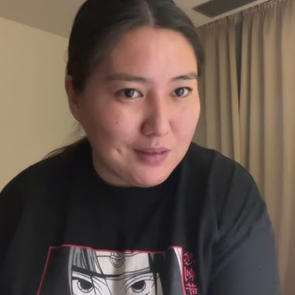
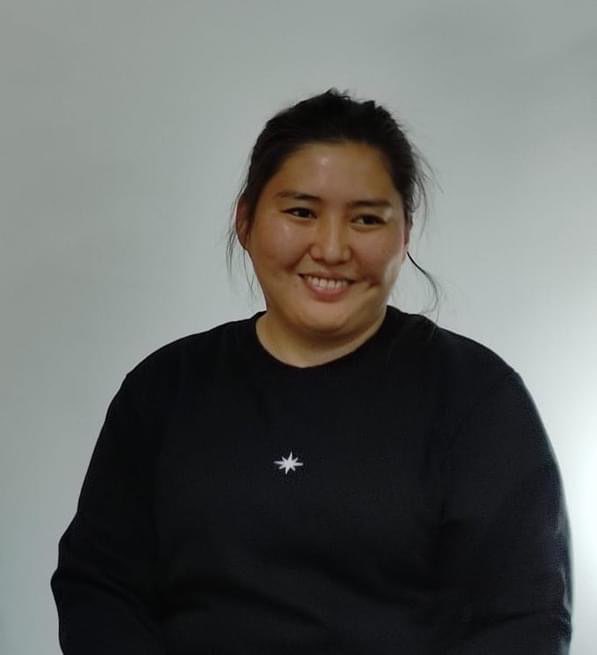
The undersigned human rights organisations, which together represent the Jury for the Martin Ennals Award for Human Rights Defenders, condemn the continued harassment against 2021 Martin Ennals Award Finalist and woman human rights defender from Turkmenistan, Soltan Achilova. This morning, Soltan Achilova and her daughter were once again prevented from travelling to Geneva. As in 2023, Soltan Achilova was set to be recognized for her valuable contributions to the documentation of human rights violations in Turkmenistan by the Martin Ennals Foundation.

Soltan Achilova is a woman human rights defender and journalist, who continues to work in Turkmenistan, one of the most repressive and isolated countries in the world, ranking 176th out of 180 countries in terms of press freedom and working conditions for journalists. She has been reporting about her country for over a decade. Her pictures of daily life are one of the few sources of documentation of human rights violations occurring in Turkmenistan. As a result of this work, she remains under constant surveillance by Turkmen authorities and has suffered numerous incidents of harassment, intimidation, and threats. Despite the challenges, Soltan Achilova persists in her human rights work, regularly sending information and pictures outside the country so that government authorities can be held accountable. [see: https://humanrightsdefenders.blog/tag/soltan-achilova/]

On the morning of 20 November 2024, Soltan Achilova and her daughter Maya Achilova were scheduled to travel from Ashgabat to Geneva, to participate in the Martin Ennals Award ceremony. At 6:30 a.m. local time, according to the information received by the Martin Ennals Foundation, a group of law enforcement officers pushed Soltan Achilova, her daughter and her daughter’s husband into an ambulance and brought them to the specialised hospital “Infectious Disease Control Centre” in the Choganly neighbourhood of Ashgabat, located near the Ashgabat International Airport. Maya Achilova reported to the Foundation that her husband, her mother and herself are being retained at the medical facility, guarded by the security forces, and that one of the security service agents is in possession of the keys to Soltan Achilova’s apartment. Thereby, Turkmen authorities have once again prevented Soltan Achilova from travelling to Geneva, Switzerland, where she would finally be recognized as a Finalist of the 2021 Martin Ennals Award for her documentation of land grabs and forced evictions of ordinary citizens in Ashgabat.

Turkmen authorities have prevented woman human rights defender Soltan Achilova from traveling freely outside of her country on several occasions; the latest occurring as recently as November 2023. In the early hours of 18 November 2023, Soltan Achilova and her daughter were stopped by Turkmen government officials from boarding their flight to Switzerland. A customs official took their passports, wet them with a damp rag and declared the passports to be ruined, preventing Soltan and Maya Achilova from boarding the plane. Despite receiving assurances at high-level from Turkmen authorities that Soltan Achilova would not be prevented from traveling once again, the authorities continue to harass the woman human rights defender with travel restrictions and arbitrary detention.

The human rights organisations that make up the Jury of the Martin Ennals Award, as well as the Martin Ennals Foundation, once again condemn Turkmen authorities for their continued harassment of woman human rights defender and photojournalist Soltan Achilova and her family members and call for their immediate release. The organisations jointly call upon the Turkmen authorities to provide all the necessary assistance to enable her travel outside of Turkmenistan. Finally, the organisations renew their calls for Turkmenistan to fully implement their human rights obligations, including, inter alia, allowing human rights defenders and journalists to conduct their work without fear of reprisals.

Following the writing of this statement, an article containing further details was published by the Chronicles of Turkmenistan, an online publication of the Turkmen Initiative for Human Rights, which, according to its author, has also been in contact with Soltan Achilova’s family.

Signatories:

Amnesty International

Human Rights Watch

World Organisation Against Torture (OMCT)

International Service for Human Rights (ISHR)

International Federation for Human Rights (FIDH)

HURIDOCS

Human Rights First

Front Line Defenders

Brot für die Welt

International Commission of Jurists

The Martin Ennals Foundation

https://www.frontlinedefenders.org/en/statement-report/turkmen-authorities-yet-again-prevent-woman-human-rights-defender-and-2021-martin

https://www.reuters.com/world/journalist-seized-turkmenistan-ahead-swiss-award-ceremony-say-rights-groups-2024-11-21/

Story of human rights defender Marcela de Jesus Natalia

November 19, 2024

In June 2017, Indigenous Ñomndaa’ journalist Marcela de Jesus Natalia found herself fighting for her life. A gunman waited for her outside the radio station where she worked and shot her three times.

“I didn’t think he wanted to kill me,” she said. “I turned around. The first bullet went to my forehead. I put my hand up, [and] the bullet went in and came out. The second one shattered my jaw. Then this guy held me, dragged me, gave me a final shot in my head and laid me on the pavement.”

Though at first presumed dead, Marcela de Jesús survived the attack and, with the support of lawyers and advocates, as well as of UN Human Rights, continues to fight for justice for the crime perpetrated against her. Marcela de Jesús was attacked because she angered powerful people by informing Indigenous Peoples about their rights, such as the importance of education, justice, and in particular, violence against women, thus empowering them to fight against historical discrimination against them.

Journalists who expose wrongdoing and show us the horrific reality of conflict are human rights defenders,” said Volker Türk, UN Human Rights Chief, in a statement commemorating the International Day to End Impunity for Crimes against Journalists, observed every year on November 2. “Attacks against them affect everyone’s right to freedom of expression and access to information, leaving us all less well informed.”

In 2023, 71 journalists and media workers were killed and over 300 imprisoned around the globe, Türk said.

Marcela de Jesús is an Indigenous Ñomndaa’ woman born in Xochistlahuaca, in the state of Guerrero, on Mexico’s Pacific coast. From a young age, Marcela de Jesús witnessed violence and attacks by men in positions of power and even the military. It was there that her desire to defend her people was born and she realised that to confront abusers she needed to learn Spanish.

Marcela de Jesús migrated to the state of Oaxaca, and by her own efforts, she managed to continue studying and encountered a radio station that was looking for an Indigenous person from Guerrero who spoke Ñomndaa’ and Spanish and had completed middle school.

“I went behind my husband’s back, took the exam and passed,” she said. “I remember that the director [of the radio station] said to me, ‘Why do you want to be an announcer?’ ‘I always wanted to be the voice of my people,’ I answered.” Later, she returned to the state of Guerrero and got a precarious job as a radio announcer, but with patience and hard work she managed to become the radio manager.

It was after her return to her home state that she began to encounter opposition to her “voice.” Marcela de Jesús was told by powerful people in her town that she was not supposed to inform Indigenous Peoples; that the only thing they were interested in was whether a goat or a cow was lost, and not to get into trouble. She fought against and won lawsuits filed against her for giving Indigenous Peoples news.

It is my conviction that my people should be guaranteed the right that is enshrined in the Constitution and in international treaties, that we have the right to information.

“They couldn’t [silence me] because what is legal is legal. What is morally good is morally good. And that is the reason for the attack against me,” said Marcela de Jesús.

According to UN Human Rights in Mexico, at least five journalists and one media worker have been killed and one more media worker was disappeared this year because of their work. This continuous danger in which journalists have had to operate for years, led universal and regional human rights mechanisms to recommend to the Mexican State the creation of a Mechanism for the Protection of Human Rights Defenders and Journalists.

…The gunman who shot Marcela de Jesus has been arrested and sentenced for his crime, but the ones who called for her shooting are still out there. She is hopeful for them to be brought to justice.

I have a lot of faith that the alleged intellectual author will forget about me. I have faith that nothing is forever,” said Marcela de Jesús. She added: “Nothing and no one, not jail, not this attack with three bullets, takes away my desire to continue being the voice of my people, to continue with my activism, my defence of human rights. I am fulfilling my dream of being the voice of my people at the national and international level.

https://www.ohchr.org/en/stories/2024/11/i-always-wanted-be-voice-my-people

Anna Politkovskaya-Arman Soldin Prize for Courage in Journalism 2023 and 2024

November 12, 2024

Established jointly by the Ministry and Nobel Peace Prize laureate Dmitry Muratov in 2023 this prize honors the work of reporters and photojournalists who are continuing their vital mission of spreading free, reliable, quality information in crisis and conflict areas. Journalist Anna Politkovskaya was working in Russia for Novaya Gazeta, whose investigations into corruption, attacks on human rights and the war in Chechnya cost the lives of six of its reporters. Despite the threats she received, she never stopped working to inform the public. Despite the risk to his life, AFP reporter and photojournalist Arman Soldin helped inform the entire world about the reality of the Russian aggression in Ukraine through the photos he took on the front lines of the conflict, starting in February 2022.

PLEASE NOTE: the new award [https://www.trueheroesfilms.org/thedigest/awards/63b130ab-84e4-41c0-aa9c-3bed6254deb3 ] shares in part the name with the older: [https://www.trueheroesfilms.org/thedigest/awards/1599D542-7B24-47EF-8D55-CE248EE07356]

The second Anna Politkovskaya-Arman Soldin Prize in 2024 has been awarded to Israeli journalist Yuval Abraham and Palestinian journalist Basel Adra for their whole body of work on the Israeli occupation and settlement-building in the West Bank and in Palestinian territories.

Yuval Abraham and Basel Adra belong to an Israeli-Palestinian collective that made the documentary, No Other Land, which won an award at the 2024 Berlinale. In it, the Palestinian journalist Basel Adra filmed evictions of Palestinians in the West Bank over five years and meets the Israeli journalist Yuval Abraham. The film tells the story of their friendship that was built over the years of their collaboration.

The first 2023 Anna Politkovskaya-Arman Soldin Prize for Courage in Journalism, was awarded to the Mexican journalist Marcela Turati for her commitment to reporting on violence related to drug trafficking and the social consequences of the war waged against cartels, despite the risks that have often cost Mexican journalists their lives.

https://www.diplomatie.gouv.fr/en/french-foreign-policy/human-rights/freedom-of-expression/article/anna-politkovskaya-arman-soldin-prize-for-courage-in-journalism

UN experts call for justice for Tunisian human rights defender Sihem Bensedrine

August 12, 2024

UN experts called on the Tunisian authorities to respect the right to judicial guarantees and judicial protection of Sihem Bensedrine, who was arrested on 1 August 2024.

“In a context marked by the suppression of numerous dissenting voices, the arrest of Ms Bensedrine raises serious concerns about the respect of the right to freedom of opinion and expression in Tunisia and has a chilling effect on journalists, human rights defenders and civil society in general,” the experts said.

https://www.trueheroesfilms.org/thedigest/laureates/5A2E5622-80B0-425E-A2AE-2703983126B4

Bensedrine is the former President of the Truth and Dignity Commission (TVD) which documented the crimes committed under previous regimes, and a journalist who has long denounced human rights violations in the country.

Since 2021, she has been involved in a judicial investigation into the alleged falsification of a chapter in the TVD´s final report regarding corruption in the banking system. The independent human rights experts have already held discussions with the Tunisian government concerning this investigation.

“This arrest could amount to judicial harassment of Ms Bensedrine for work she has undertaken as President of the Truth and Dignity Commission,” the experts said. “It appears to be aimed at discrediting information contained in the Commission’s report, which could give rise to legal proceedings against alleged perpetrators of corruption under the previous regimes.”

The Special Rapporteurs urged Tunisia to uphold its obligation to protect members of commissions of enquiry into gross human rights violations from defamation and civil or criminal proceedings brought against them because of their work, or the content of their reports.

“We call for strict respect for Ms Bensedrine’s right to judicial guarantees, including the right to a fair trial by due process, impartiality and independence, and for an end to abusive proceedings and reprisals against her.”

The experts: Bernard Duhaime, Special Rapporteur on the promotion of truth, justice, reparation and guarantees of non-recurrence; Irene Khan, Special Rapporteur on freedom of opinion and expression; Mary Lawlor, Special Rapporteur on the situation of human rights defenders.

https://www.miragenews.com/un-experts-demand-justice-for-tunisian-rights-1292532/

https://www.ohchr.org/en/press-releases/2024/08/un-experts-call-justice-tunisian-human-rights-defender

https://www.hrw.org/news/2024/08/12/tunisia-hollows-out-its-media-landscape-ahead-elections

but then in February2025 comes the good news over releases:https://www.france24.com/en/live-news/20250219-tunisia-court-orders-release-of-top-rights-activist

Human rights defender’s profile: Óscar Calles from Venezuela

July 24, 2024

Óscar Calles is a journalist and human rights defender from Venezuela. Since 2019, he has been working for PROVEA, one of the country’s most prominent rights groups.

In an interview with ISHR, he recalled his experience of witnessing and broadcasting mass protests in his country in 2017, and how harshly these were repressed. This, he said, led him to take direct action in the defence of human rights and civil liberties.

Human rights organisations, activists and defenders only exist to ensure that all persons can live with dignity,’ says Oscar Calles. ‘Do not turn your backs on the hundreds of victims who are still awaiting justice to this day,’ he further urges States at the UN Human Rights Council, calling on to renew a key accountability mechanism for Venezuela.

In June 2024, Óscar was also one of 16 defenders who participated in ISHR’s Human Rights Defender Advocacy Programme (HRDAP)

https://ishr.ch/defender-stories/human-rights-defenders-story-oscar-calles-from-venezuela

Kadar Abdi Ibrahim human rights defender from Djibouti.

February 16, 2024

Kadar Abdi Ibrahim is a human rights defender and journalist from Djibouti. He has drawn inspiration from iconic figures in the human rights movement in the hopes of building a genuine and lasting democracy in his country.

Speaking to ISHR, he shared his vision for a future where the youth of Djibouti would no longer see its dreams and aspirations stifled by fear and censorship, as well as his admiration for his fellow human rights defenders whose actions ‘pave the way for future generations’. see also: https://humanrightsdefenders.blog/2023/09/11/human-rights-defenders-at-the-54th-session-of-the-un-human-rights-council/

Kadar Abdi Ibrahim has also been the subject of acts of reprisals by his government for his engagement with international bodies. In 2018, days after returning from Geneva where he carried out advocacy work ahead of Djibouti’s Universal Periodic Review, intelligence service agents raided his house and confiscated his passport.

https://ishr.ch/defender-stories/human-rights-defenders-story-kadar-abdi-ibrahim-from-djibouti

Soltan Achilova – finalist MEA 2021 – denied travel to Geneva Human Rights Week

November 21, 2023

On 21 November, 2023 the Martin Ennals Foundation, joined by HRW and the ISHR, issued the following statement:

The Martin Ennals Foundation condemns the harassment of Soltan Achilova and her daughter by government authorities at Ashgabat airport and calls for Turkmen authorities to stop their reprisals against journalists for their human rights work.

In the early hours of November 18th, 2023, Mrs. Soltan Achilova and her daughter were stopped by Turkmen government officials from boarding their flight for Switzerland. A customs official took their passports, wet them with a damp rag and declared the passports to be ruined, effectively obstructing Soltan from traveling to Geneva where she would feature as a keynote speaker at the University of Geneva’s Human Rights Week 2023.

This act of harassment and denial of freedom of movement is particularly reprehensible in that it comes only a few days after Turkmenistan’s 4th Universal Periodic Review, during which high-level government representatives expressed their “support for …the promotion and protection of fundamental freedoms and human rights“, giving multiple examples of their progress in terms of respect for freedom of expression.

Soltan Achilova believes she was not allowed to leave the country because of the authorities’ fear that negative information might be heard during the Human Rights week in Geneva. Yet, the obstruction from travel of an internationally recognized human rights defender is more striking evidence of the lack of freedoms in the country and the bad faith with which the Turkmenistan government engages with the Human Rights Council.  

Turkmenistan is one of the most repressive and isolated countries in the world, ranking 176th out of 180 countries in terms of press freedom and working conditions for journalists. Soltan has been reporting about her country for more than a decade. Her pictures of daily life are one of the few sources of documentation of human rights violations occurring in this most secretive nation. In 2021, Soltan was recognized by the Martin Ennals Award for her documentation of land grabs and forced evictions of ordinary citizens in Ashgabat.

Soltan has not been allowed to travel freely outside of her country on several occasions. She is under constant surveillance by Turkmen authorities and has suffered numerous incidents of harassment, intimidation, and threats. Despite the challenges, Soltan persists in her human rights work, regularly sending information and pictures  outside of the country so that government authorities are held to account.

We renew calls for Turkmenistan to fully implement their human rights obligations, including, inter alia, allowing human rights defenders and journalists to conduct their work peacefully. We invite Member States accompanying the 4th Universal Periodic Review of Turkmenistan to strongly sanction the silencing of Soltan Achilova and other Turkmen journalists.

For more on Soltan: https://youtu.be/7xkSvMXaZUU?si=JhWOrMxs4yQQ2wz8

https://www.hrw.org/news/2023/11/21/turkmenistan-journalist-prevented-travelling-abroad

https://www.frontlinedefenders.org/en/statement-report/turkmenistan-whrd-soltan-achilova-denied-travel-geneva-human-rights-week

https://www.rferl.org/a/turkmenistan-achilova-stopped-flying-europe/32692666.html