Gabriel Ewepu in the Vanguard of 5 March 2020 reports that 95 Civil Society Organisations (CSOs), under the auspices of Coalition of Civil Society Organizations for Protection of Civic Space, called on the Nigerian Senate to reject the Anti-Social Media Bill. This call was contained in a statement signed by leaders of the 95 during a media conference in Abuja. The statement reads in part:
At the 43rd session of the Human Rights Council, States will consider a resolution extending for three years the mandate of the Special Rapporteur on the situation of Human Rights Defenders. Civil society organisations from across the world are calling on all States to support the consensus renewal of the mandate, and to resist any attempt to undermine the mandate and States’ obligations. This is a key opportunity for States and the Council to demonstrate their support and recognition for the indispensable role defenders play to ensure that all people enjoy freedom, dignity, justice and equality. Despite their vital contribution, both some governments and non-State actors are still seeking to silence defenders as they expose injustices and demand accountability for all.
The mandate of the Special Rapporteur on the situation of human rights defenders is integral to their protection and recognition, globally. It gathers and responds to information on the situation of defenders around the world, engages constructively with governments and non-State actors and provides expert recommendations to promote the effective implementation of the Declaration on human rights defenders (‘the Declaration’). See also: https://humanrightsdefenders.blog/2019/09/11/what-should-michael-forsts-successor-as-rapporteur-on-hrds-look-like/
In 2019, the Human Rights Council and the General Assembly supported the vital work of defenders. The Human Rights Council recognised the critical role of environmental human rights defenders in protecting natural ecosystems, addressing climate change, attaining the sustainable development goals (SDGs). The General Assembly passed by consensus a resolution focusing on implementation of the Declaration and some key elements of protection policy; the resolution also attracted a record number of co-sponsors.
More than 50 Civil society organisations from across the world are calling on all States to support the extension of the mandate of the Special Rapporteur by:
Participating positively in the negotiations on the resolution,
Presenting early co-sponsorship of the text,
Resisting any attempts to dilute the mandate or State obligations, and
On 24 February, 2020 over 50 NGOs and individuals reminded the UAE authorities that “ Freedom of expression must be upheld at all times, not only tolerated during Hay Festival Abu Dhabi”
As the Hay Festival Abu Dhabi opens on February 25–28, 2020 in the United Arab Emirates, we the undersigned call on the Emirati authorities to demonstrate their respect for the right to freedom of expression by freeing all human rights defenders imprisoned for expressing themselves peacefully online, including academics, writers, a poet, and lawyers. In the context of the Hay Festival, the UAE’s Ministry of Tolerance is promoting a platform for freedom of expression, while keeping behind bars Emirati citizens and residents who shared their own views and opinions. We support the efforts of festival participants to speak up in favor of all those whose voices have been silenced in the UAE. We further support calls for the UAE authorities to comply with international standards for prisoners, including by allowing prisoners of conscience to receive books and reading materials.The country’s most prominent human rights defender, Ahmed Mansoor, is currently serving a 10-year prison sentence after being convicted on the spurious charge of “insulting the status and prestige of the UAE and its symbols including its leaders” in reprisal for his peaceful human rights activism, including posts on social media. [see also: https://humanrightsdefenders.blog/tag/ahmed-mansoor/]……
Other prisoners have been tortured in prison in the UAE. A Polish fitness expert, Artur Ligęska, was held in the same isolation ward as Mansoor, in conditions he described as “medieval.” After his charges were dismissed and he was freed in May 2019, Ligęska wrote a book in which he recounted the prison conditions in Al-Sadr’s isolation wing, where prisoners were held without running water for many months in very unhygienic conditions, and some were subjected to torture, abuse, and sexual assault. He was instrumental in getting the news about Mansoor’s hunger strike out to the world from prison in March 2019, at great personal risk.
Other human rights defenders have faced similar mistreatment in prison, where they are often held in isolation, resorting to hunger strikes to try to bring attention to their unjust imprisonment and ill-treatment in detention, such as human rights lawyersDr. Mohammed Al-Roken and Dr. Mohammed Al-Mansoori...
,,,
The Hay Festival Abu Dhabi is supported by the UAE’s Ministry of Tolerance in a country that does not tolerate dissenting voices. Regrettably, the UAE government devotes more effort to concealing its human rights abuses than to addressing them and invests heavily in the funding and sponsorship of institutions, events, and initiatives that are aimed at projecting a favorable image to the outside world.
With the world’s eyes on the Hay Festival Abu Dhabi, we urge the Emirati government to consider using this opportunity to unconditionally release our jailed friends and colleagues, and in the interim, to at least allow prisoners of conscience to receive books and reading materials, to have regular visits with family, to be allowed outside of their isolation cells to visit the canteen or go outside in the sun. In particular, we ask that Ahmed Mansoor be given a bed and a mattress so that he no longer has to sleep on the floor, and that prison officials cease punishing him for public appeals that are made on his behalf. We ask the authorities to improve their prison conditions as a sign of goodwill and respect for people who wish to organize and participate in events in the UAE, such as the Hay Festival Abu Dhabi or the upcoming Expo 2020 Dubai, in the future. By doing so, the UAE would demonstrate that the Hay Festival is an opportunity to back up its promise of tolerance with actions that include the courageous contributors to freedom of expression who live in the country. [see also: https://humanrightsdefenders.blog/2019/10/26/celebrity-endorsements-and-the-dubai-expo-on-the-one-hand-and-the-other/]
Miriam Jackson writes for the Union Journal of 7 28 NGOs on Tuesday 5 February prompted the European Parliament to delay permission for the EU-Vietnam Free Trade Agreement (EVFTA) and Investment Protection Agreement (IPA) until Vietnam’s federal government agrees to protect the rights of workers and implement certain civils rights. The FTA must be approved by the European Parliament on Tuesday 11 February.
The signing NGOs include Human Rights Watch, Defend the Defenders, The 88 Project, and the Independent Journalists Association of Vietnam.
“There are notable precedents of the European Parliament setting human rights benchmarks to be met before giving their consent to bilateral deals in order to promote human rights progress,” the NGOs claim pointing to a 2016 case in Uzbekistan and the EP’s rejection in March 2019 of the EU-Turkmenistan Partnership and Cooperation Agreement. “The European Parliament needs to take the exact same strategy with Vietnam, withholding Parliament’s permission and authorizing an identical resolution outlining the civils rights problems that Vietnam must satisfy for MEPs to greenlight the offer,” the NGOs claimed.
Only once a series of human rights concerns have been duly addressed by the state authorities, MEPs should give their consent to the deals.
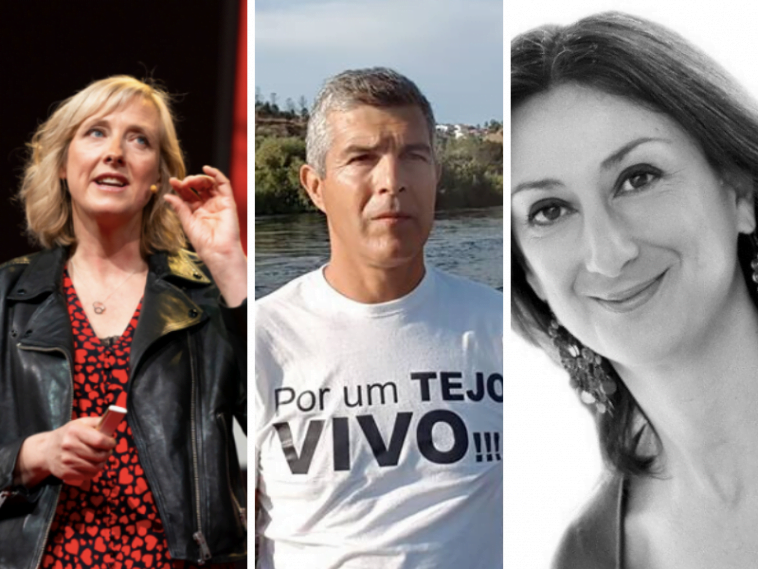
Journalist Carole Cadwalladr, activist Arlindo Marquês and slain journalist Daphne Caruana Galizia have all being victims of SLAPP.
.Joanna Demarco to European Commissioner Vice President Věra Jourová ahead of proposed new laws. The NGOs want to ensure that EThe organisations include the Daphne Caruana Galizia Foundation, Reporters Without Borders, Greenpeace and Friends of the Earth Europe.
Jourová is preparing legislation which will work to deter such lawsuits.
“In essence, SLAPPs are used to silence individuals and organisations that play a watchdog role and hold those in positions of power to account,” they wrote. Naming journalists within the European Union affected by SLAPP, the groups called the lawsuits received by assassinated journalist Daphne Caruana Galizia one of “the most striking examples which include journalists”. “Maltese reporter Daphne Caruana Galizia had 47 law suits pending against her at the time of her assassination,” they said. (The Maltese government has refused to ban the use of SLAPP suits in Malta, rejecting a motion by the Opposition in parliament).
The Shift, which works with international organisations to fight the threats against journalists, has also itself faced threats of SLAPP suits twice – one by a Russian banker and another by Henley & Partners, Malta’s concessionaire for the cash for passports scheme. The same firm also targeted Caruana Galizia prior to her assassination. In both cases, The Shift did not back down. Journalist Carole Cadwalladr, who exposed the Cambridge Analytica data-harvesting scandal, is also facing SLAPP action, the organisations noted. British co-founder of the Leave.EU campaign Arron Banks is refusing to drop the final two SLAPP lawsuits against the journalist who now started a crowdfunding campaign to cover the massive legal costs.
The organisations said that SLAPP lawsuits are not limited to journalists, but are also targeted at academia, trade unionists, activists, civil society organisations and individual citizens, including human rights defenders. Strong EU anti-SLAPP measures, including legislation and legal funds for victims, at a time when there is no such legislation in force in any EU member state will help protect those who are vulnerable to this type of legal harassment, they said. Such measures would also “send a strong political message that the EU is ready to stand up for its citizens and protect fundamental rights,” they continued.
On 13 January 2020 Amnesty International has released a joint statement, along with Transparency International and Civicus, [https://www.amnesty.org/en/documents/ior30/1649/2020/en/] explaining why it will not be engaging in this year’s C20 process, a cycle of preparatory meetings leading up to the annual G20 summit, which started yesterday with a three-day “kick-off meeting”.
“The C20 is supposed to provide a platform for civil society voices from around the world to influence the G20 agenda. Since Saudi Arabia has locked up most of its own independent activists, the only domestic organizations present will be aligned with the government – which makes a mockery of the whole process,” said Netsanet Belay, Research and Advocacy Director at Amnesty International. “The C20 in Riyadh is a sham. We cannot participate in a process which is being abused by a state which censors all free speech, criminalizes activism for women’s and minority rights, as well as homosexuality, and tortures and executes critics.”
The country’s leading women’s rights activists remain behind bars and on trial for their promotion of women’s rights in the country. Scores of other individuals, including human rights defenders, have been serving lengthy prison terms for their peaceful activism or have been arbitrarily detained for up to a year and a half without charges. The Saudi Arabian authorities have also carried out executions following unfair trials and routine torture and other ill-treatment in custody.
The Saudi-led C20 process has already failed to guarantee the C20’s fundamental principles. The appointment of the Chairs of working groups and various committees was opaque and non-consultative, while arbitrary decisions have excluded experienced international groups. The C20 process is led by the King Khalid Foundation, which is connected to the Saudi Royal Family, and cannot be considered as transparent, inclusive and participatory. Since the Saudi authorities ban political parties, trade unions and independent human rights groups, there is no way the C20 meetings can be the free and open discussions they are designed to be.
The Amaury Sport Organisation should use its decision to move the Dakar Rally to Saudi Arabia to denounce the persecution of women’s rights advocates in the country, Human Rights Watch, MENA Rights Group,FIDH and 10 other international human rights organizations said on 3 January 2020. The 2020 Dakar Rally – formerly known as the Paris-Dakar Rally – will begin on January 5, 2020, in Jeddah, and finish on January 17, 2020, 9,000 kilometers later, in Al-Qiddiya.
“The Amaury Sport Organisation and race drivers at the Dakar Rally should speak out about the Saudi government’s mistreatment of women’s rights activists for advocating for the right to drive,” said Minky Worden, global initiatives director at Human Rights Watch. “Fans, media, and race teams shouldn’t be blinded by the rally’s spectacle while Saudi Arabia ‘sports-washes’ the kingdom’s jailing of peaceful critics.” [for more posts on sports washing: https://humanrightsdefenders.blog/tag/sports-washing/]
Sponsors, broadcasters, and athletes are affected by sports organizations’ choices to hold major events in countries that violate basic human rights, the groups said. By agreeing to a five-year relationship with Saudi Arabia, the Amaury Sport Organisation should also agree to adopt and carry out a human rights policy that would identify risks and make use of its leverage to promote respect for human rights in Saudi Arabia and across its operations. FIFA, the global football organization, and other major companies have adopted such policies in accordance with the United Nations Guiding Principles on Business and Human Rights.
“More than a dozen women drivers will take part in the Dakar Rally while Saudi women activists languish in jail for promoting the right to drive,” said Inès Osman, director of MENA Rights Group. “Saudi Arabia should not get a free lane because it is hosting a prominent sporting event like the Dakar Rally.”
Human rights activists Razan Zaitouneh, Samira al-Khalil, Wael Hamada and Nazim Hammadi, called the “Douma 4”. Photo credit: Free #Douma4/Facebook
A very large number of human rights groups issued a joint statement on the missing, detained and forcibly disappeared human rights defenders in Syria, calling for their release, and an end to the culture of impunity for perpetrators of crimes against humanity. This statement was originally published on scm.bz on 9 December 2019.
The groups pledge to fight impunity, as a basic guarantee for building a democratic state based on the separation of powers, the protection of human rights and citizenship, a state governed by law. We remind the parties and guarantors of the political solution negotiations in Syria that revealing the fate of the missing, releasing the detainees, ensuring justice and holding the perpetrators of major crimes against humanity accountable is the best guarantee to end the culture of impunity and lay the first cornerstone for any future stability and peace in Syria and the region.
The organizations, emphasize the following:
We will continue to defend the fundamental rights of all Syrian citizens, seek truth and establish justice and work to hold those responsible for major crimes accountable.
We will continue to pursue the establishment of a transparent, fair and national accountability mechanism with international guarantees that investigate crimes and ensure accountability, reparation, and non-repetition, as only this guarantee will ensure sustainable peace in Syria.
We reaffirm our call on the countries and guarantors involved in the building of a political solution in Syria to face their responsibilities towards producing a political solution that establishes sustainable peace. By giving priority to restoring trust between parties to the conflict, first and foremost we urge those responsible to reveal the fate of the disappeared and detained in Syria, and pressure all parties of the conflict to commit to justice and to cooperate.
We call upon the international community and the United Nations to fulfill their responsibilities to defend human rights and work hard to uncover the fate of the missing and detained in Syria and ensure the freedom and safety of human rights defenders in order to ensure the launch of a political process that establishes a democratic state in Syria.
A bill before the Russian parliament that would expand the status of “foreign agents” to private persons, including bloggers and independent journalists, is a source of serious concern, state 10 major human rights organizations on 18 November 2019. This legislative initiative will have a detrimental impact on the already restrictive environment for independent journalism in Russia and should be dropped they say. For some alternative campaign ideas see the end of this post.
Russia’s legislation on “foreign agents” already covers nongovernmental organizations (NGOs) and media outlets that receive any amount of funding from foreign sources. It requires them to indicate their ‘foreign agent’ status in publications and creates onerous reporting requirements and restrictions and non-compliance carrries haevy penalties. In November 2017, human rights organizations criticized Russia for its adoption of legislation amendments that extended “foreign agent” regulations to media outlets.
The proposed expansion of the legislation would allow authorities to also label individuals as “foreign agents” if they disseminate information to an unspecified number of people and receive funding for this from abroad. This definition would cover bloggers and independent journalists who may receive grants, salaries, or payment for specific pieces of work from any foreign source. Bloggers and independent journalists who fall under the law will be required to register with the Ministry of Justice, and those living abroad would also have to create and register a legal entity inside Russia in order to publish in Russia. All information published by the “foreign agent” blogger or journalist would then have to be marked with the “foreign agent” label. The proposed amendment passed the first reading in January 2018 and could become law by the end of 2019.
A proposed amendment to Russia’s Code of Administrative Violations also stipulates that the media, and therefore bloggers, should be fined between 10,000 (approximately US$160) and five million rubles ($79,000) for non-compliance with “foreign agent” regulations. These new amendments make the “foreign agents” legislation, which already violates international standards on freedom of expression and association, unjustifiably tough, said Galina Arapova, senior media lawyer at the Mass Media Defense Center in Russia.
“Journalists collaborating with foreign editorial offices will be the ones most affected by the law,” she said. “If they receive remuneration through foreign bank transfers to Russian banks, then this will formally be a sufficient basis for recognition as a foreign agent, so there is no guarantee that the regulatory authorities will be able to determine ‘foreign funded’ work from their other journalism.”
It will also become a strong tool to silence opposition voices. Bloggers have an important role in informing public opinion in Russia and this is an attempt to control this inconvenient source of information.
The 10 NGOs call on the Russian government to drop the proposed amendments and bring the existing legislation in line with Russia’s obligations under international human rights law, including the right to freedom of expression (article 10) and the right to freedom of assembly and association (article 11) of the European Convention on Human Rights. The government should end its continued efforts to throttle online debate and silence independent journalism in the country.
Signed by: Amnesty International ARTICLE 19 Civil Rights Defenders Committee to Protect Journalists Human Rights Watch International Federation for Human Rights (FIDH) International Media Support International Partnership for Human Rights Norwegian Helsinki Committee Reporters Without Borders (RSF)
Still, one wonders whether the battle should not be fought also in the public domain as the ‘foreign agent campaign’ by the authorities is clearly not about financial control (there is enough of that already to satisfy any suspicious prosecutor) or political control (in which case registration as simple lobbyist would suffice) but about ‘framing’ the human rights defenders as traitors, unpatriotic people. The requirement to identify oneself as foreign agent on every paper or poster is a clear indication of what the Government wants to achieve. This kind of action by governments (not just Russia) is a deliberate (mis)information effort that should be fought in the same arena of public perception. Admittedly far from easy and costly but there are things that COULD be done, I think:
bumper stickers and T-shirts with “I am a foreign agent” (in Russian of course, but supporters abroad could have it in English)
well-known Russian celebrities could make statements such as: “IF …is a foreign agent ,in that case I am also one!”
production of video clips that poke fun at the idea, etc
As a concrete example: on 21 November 2013, a year after the law came into effect, Amnesty International Norway, LLH (the Norwegian LGBT Organisation) and the Norwegian Helsinki Committee called themselves for one day foreign agents in solidarity with Russian organisations who struggle to keep their work going (see also in Norwegian: http://www.amnesty.no/agent). Of course, people on the ground know best what will work, but I think some form of ‘counter-defamation’ should be tried. It would benefit Russia and could de-motivate the authorities in other countries watching what happens in Russia.
which followed the GA, reported this unprecedented move: a cross-regional group of countries called on all States and the UN to prevent, respond to, and ensure accountability for cases of intimidation and reprisals against those who engage or seek to engage with the UN. In this joint statement presented to the Third Committee of the General Assembly in Octber 2019, 71 countries (listed below) highlighted that the UN must ensure that civil society organisations and human rights defenders who wish to engage with the UN are able to do so without fear of reprisal or intimidation. That same week the Assistant Secretary-General in his mandate as the senior official on reprisals held an event to discuss the annual reprisals report of the Secretary General.
This welcome move led by the Permanent Mission of the United Kingdom to the UN is in line with the call made, just last month, in resolution 42/28 at the Human Rights Council for the General Assembly to remain seized of all work in this area. ‘The statement highlighted that beyond the immediate impact on victims, these acts of intimidation and reprisals undermine the credibility and effectiveness of the UN as a whole, including the human rights system,’ said ISHR’s Tess McEvoy.
The integral role played by civil society and human rights defenders in encouraging openness, transparency and dialogue between people and those in power was also acknowledged. While highlighting positive steps that have been taken by the UN, including the Secretary-General’s annual report on reprisals and the work done by the Assistant Secretary-General in his mandate as the senior official on reprisals, the 71 countries strongly condemned any act of intimidation and reprisal, whether online or offline, against individuals and groups who cooperate or seek to cooperate with the UN, and expressed alarm about the growing number of cases.
‘While positive responses by some States to cases of reprisals were acknowledged, critically, the statement acknowledged the primary obligation of States to prevent and address reprisals. Moreover, all States were called on to prevent and ensure adequate protection against such acts by raising awareness, investigating and ensuring accountability and effective remedy by both State or non-State actors,’ added McEvoy. The statement also made clear the duty of the UN to address reprisals and called on the UN to strengthen the collective response to reprisals.
The full statement as delivered is available here. The statement was made by the United Kingdom on behalf of Afghanistan, Albania, Andorra, Australia, Austria, the Bahamas, Belgium, Bosnia and Herzegovina, Bulgaria, Canada, Chile, Colombia, Costa Rica, Croatia, Cyprus, the Czech Republic, the Dominican Republic, Denmark, Ecuador, El Salvador, Estonia, Fiji, Finland, France, Georgia, Germany, Greece, Guatemala, Iceland, Ireland, Italy, Japan, Jordan, Latvia, Lebanon, Liechtenstein, Lithuania, Luxembourg, Malta, the Marshall Islands, Mexico, Monaco, Mongolia, Montenegro, the Netherlands, New Zealand, North Macedonia, Norway, Panama, Poland, Portugal, the Republic of Korea, the Republic of Moldova, Romania, Samoa, San Marino, Seychelles, Slovakia, Slovenia, South Africa, Spain, Sweden, Switzerland, Tunisia, Turkey, Tuvalu, Ukraine, the United States, Uruguay and Vanuatu.
 Joanna Demarco