Posts Tagged ‘ISHR’

Without more extra-budgetary funding human rights work in the UN is in trouble

March 1, 2018
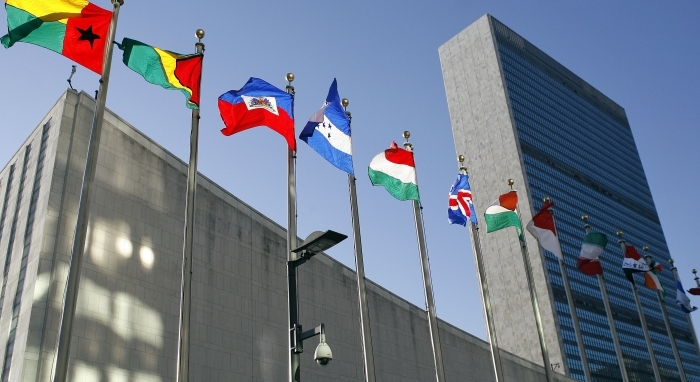
In a year that deep cuts were made to UN budgets, resourcing for human rights also activities took a big hit. The UN General Assembly’s approved approximately 50% less funding for some human rights posts than requested. Funds to support the work of treaty bodies were cut, but the need to adequately fund treaty bodies was reaffirmed, establishing a mandate for future resource requests.

Decisions directly affecting human rights activities were caught up in a powerful push – particularly by the US – for deep cuts to the proposed biennium budget. The approved UN regular budget for 2018 -2019 of $5.397 billion, is almost $200 million below what the Secretary General had sought, and 5% less than the budget approved for 2016-2017.

The percentage of the UN budget directed to support the human rights pillar is already tiny. To then carve off funding for posts already agreed as essential, makes no sense,’ she added. ‘The General Assembly ignores the fact that investing in human rights protection is a smart choice. ISHR’s Tess McEvoy said on 4 January 2018. (for more information on the budget cuts see https://www.ishr.ch/news/unga72-human-rights-funding-takes-hit-key-mandate-reaffirmed).

On 27 February 2018 the OHCHR announced that Norway has pledged to increase its funding for the UN Human Rights Office, giving some USD 18m dollars – a year over four years. Generally there is impressive support for human rights from Scandinavia (Denmark is doubling its funding for 2018 USD 10m, and in 2017, Sweden was the second biggest donor with some USD16m).

However, even with a record USD142.8m in voluntary contributions last year, the UN Office still fell short of the funds needed to respond to all requests for assistance. Therefore it has just launched  appeal for extra-budgetary funding for 2018 – with as most ambitious target yet, amounting to USD278.3m.

The OHCHR hopes that the 70th anniversary of the Universal Declaration of Human Rights will encourage all UN Member States to make voluntary contributions. If you want to see how much individual States gave to the UN Human Rights Office in 2017, please see: http://www.ohchr.org/Documents/AboutUs/FundingBudget/VoluntaryContributions2017.pdf

http://www.ohchr.org/EN/NewsEvents/Pages/DisplayNews.aspx?NewsID=22715&LangID=E

Somewhere in a prison in the Emirates is Ahmed Mansoor but authorities claim not to know where

February 27, 2018

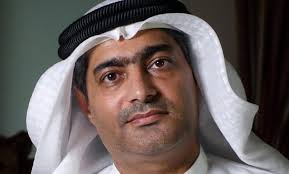
 Two Irish lawyers attempt to reach human rights defender Ahmed Mansoor, who is held incommunicado in United Arab Emirates, but in vain.

Today the Martin Ennals Foundation reports that on 26 February 2018, two lawyers from Ireland approached the Ministry of the Interior in the United Arab Emirates (UAE) to try to gain access to distinguished human rights defender Ahmed Mansoor, who has been detained since 20 March 2017 for his human rights activities. Mansoor, who received the Martin Ennals Award for Human Rights Defenders in 2015, is a member of the advisory boards of the Gulf Centre for Human Rights (GCHR).

Given the widely documented use of torture and solitary confinement by UAE authorities, and the lack of any independent information regarding Mansoor, there are grave fears for his safety. Numerous organisations have expressed concern that he may be tortured and subject to ill treatment in detention.

See also: https://humanrightsdefenders.blog/2017/03/28/ahmed-mansoor-under-arrest-emirates-under-pressure/

In Abu Dhabi, the Irish lawyers approached the Ministry of the Interior headquarters, which is the authority controlling and running prisons. The Ministry referred the lawyers to the police, who are not responsible for prisons. The police then advised them to approach the Al-Wathba prison, which they did, only to be told Mansoor is not being held there. The inability of the authority responsible to provide any information on Mansoor is remarkable given that he has been detained for almost a year.

The mission was mandated by GCHR, the Martin Ennals Foundation, Front Line Defenders, the International Service for Human Rights (ISHR) and the Observatory for the Protection of Human Rights Defenders, a partnership of FIDH and the World Organisation Against Torture (OMCT).

Background

Ahmed Mansoor was arrested by a dozen security officers at his home in Ajman in the pre-dawn hours of 20 March 2017 and taken to an undisclosed location. The security officials conducted an extensive search of his home and took away all of the family’s mobile phones and laptops, including those belonging to his young children. The family had no information about Mansoor until a statement was issued on the Ministry of Foreign Affairs website on 29 March 2017 saying that he was in detention in the Central Prison in Abu Dhabi. Since his arrest, his family were allowed to visit him only twice – on 3 April and 17 September 2017, and he has had no access to a lawyer.

In their public statements, the UAE authorities have said that Mansoor is accused of using social media websites to “publish false information that harms national unity.” On the day of his arrest, the UAE’s official news agency, WAM, announced that he was arrested on the orders of the Public Prosecution for Cybercrimes and detained pending further investigation on charges of “using social media [including Twitter and Facebook] sites to publish false and misleading information that harms national unity and social harmony and damages the country’s reputation” and “promoting sectarian and hate-incited agenda”. The statement classified these as “cybercrimes,” indicating that the charges against him may be based on alleged violations of the UAE’s repressive 2012 cybercrime law, which authorities have used to imprison numerous activists and which provides for long prison sentences and severe financial penalties

In the weeks leading up to his arrest, Mansoor had used Twitter to call for the release of activist Osama Al-Najjar, who remains in prison, despite having completed a three-year prison sentence in 2017 on charges related to his peaceful activities on Twitter; as well as prominent academic and economist Dr Nasser bin Ghaith, arrested in August 2015 and sentenced to 10 years in 2017. Both men have been convicted of charges related to peaceful messages they posted on the social media platform Twitter. Mansoor had also used his Twitter account to draw attention to human rights violations across the region, including in Egypt and Yemen. He had also signed a joint letter with other activists in the region calling on leaders at the Arab Summit who met in Jordan in March 2017 to release political prisoners in their countries.

As a result of his selfless and tireless efforts to defend the rights of migrants and Emirati nationals in the UAE, he had become a thorn in the side of the UAE authorities and consequently the object of years of government harassment and persecution.

Since his arrest, a group of United Nations human rights experts have called on the UAE to release Mansoor, describing his arrest as “a direct attack on the legitimate work of human rights defenders in the UAE.” They said they feared that his arrest “may constitute an act of reprisal for his engagement with UN human rights mechanisms, for the views he expressed on social media, including Twitter, as well as for being an active member of human rights organizations.” The experts include special rapporteurs on human rights defenders, on the promotion and protection of the right to freedom of expression and opinion, along with the Working Group on Arbitrary Detention and the Working Group on Enforced or Involuntary Disappearances.

The lengths the UAE authorities will go to silence Mansoor are shown by their efforts to hack his iPhone. In a widely documented case, the UAE were exposed after Mansoor’s suspicions were raised and he contact the Citizen Lab at the University of Toronto in Canada. Citizen lab released the following report: https://citizenlab.ca/2016/08/million-dollar-dissident-iphone-zero-day-nso-group-uae/

Mansoor, along with Dr Nasser bin Ghaith, and online activists Fahad Salim Dalk, Ahmed Abdul-Khaleq, and Hassan Ali al-Khamis were arrested in April 2011 and charged with “publicly insulting” UAE rulers. On 27 November 2011, a panel of four judges of the Federal Court found all five men guilty and sentenced Mansoor to three years in prison, and the others to two years. The four men were released the next day, after the UAE president, Sheikh Khalifa bin Zayed Al-Nahyan, issued a pardon.

For more information: khambatta@martinennalsaward.org or visit www.martinennalsaward.org

Preview of Human Rights Defenders issues at the 2018 session of the UN Human Rights Council starting Monday

February 24, 2018

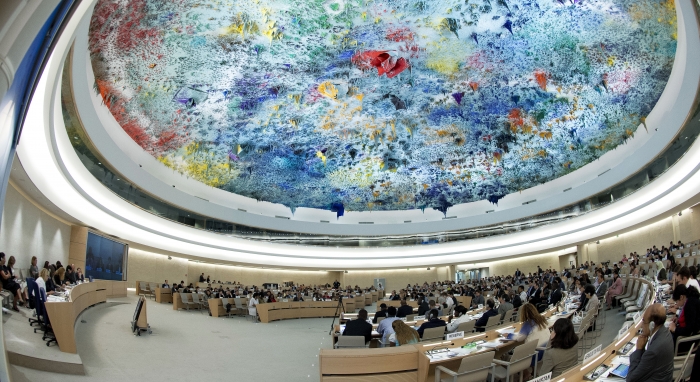
Thanks to the International Service for Human Rights I am able to give you a short overview of what issues directly relevant to human rights defenders are coming up in the 37th session of the UN Human Rights Council starting on Monday 26 February 2018. For the broader human rights view please follow the link at the end of this post.

Thematic

Protection of human rights defenders working in the context of people on the move

A few days ago I posted https://humanrightsdefenders.blog/2018/02/20/michel-forst-empowering-defenders-on-the-move-is-crucial-to-the-prevention-of-further-tragedy/ which refers to:

– the Global Compact for Migration which States will negotiate (in an open letter sent on 21 February, High Commissioner for Human Rights Zeid urged States to develop a compact that ‘explicitly recognizes and fully conforms to the existing international human rights framework as the authoritative protection agenda for all migrants’)

–  a thematic report on the situation of defenders of the rights of people on the move by the Special Rapporteur Michel Forst (read  ISHR’s detailed analysis)

– the OHCHR Principles and Practical Guidance for the protection of the Human Rights of Migrants in Vulnerable Situations (Principle 18 which states that States should ‘respect and support the activities of human rights defenders who promote and protect the human rights of migrants’)

– the Special Rapporteur on Torture’s report which is expected to focus on torture and other forms of ill-treatment in the context of migration.

Reprisals

During its last session, the Council adopted a resolution on reprisals. The resolution established a dedicated dialogue to address acts of intimidation and reprisals at each September Council session. Through the resolution, the Council also affirmed the particular responsibilities of its Members, President and Vice-Presidents to investigate and promote accountability for reprisals and intimidation.Reports of cases of reprisals not only continue, but grow in spite of the passage of this resolution, and the appointment of the UN Assistant Secretary General as the Senior Official on addressing Reprisals. As requested by Council Resolution 12/2, the General Debate under Item 5 of the Council is a key moment for States and civil society to raise and follow up cases of reprisals, and to push for accountability for such acts. [one of my favorite topics: https://humanrightsdefenders.blog/tag/reprisals/]

Other key thematic report will be the one by the body working on developing a treaty on business and human rights. The open-ended inter-governmental working group on transnational corporations and other business enterprises (known as IGWG), will present its third report to the Council. ISHR is concerned about the limited protection for human rights defenders in the current elements discussed at the last session. Any process towards drafting a business and human rights treaty should effectively prevent and respond to cases of reprisals.

Country-specific developments relating specially to HRDs:

Burundi. During the 36th session, the Council passed two resolutions on Burundi; one led by the European Union extending the mandate of the Commission of Inquiry and a second resolution by the African Group that requested OHCHR to urgently dispatch a team of three experts to engage with the Burundian authorities and all other stakeholders. Read here ISHR’s analysis of the two resolutions. At the 37th session, the Commission of Inquiry on Burundi will present an oral briefing to the Council. In addition, the High Commissioner will give an oral briefing of the Council on the mission of the OHCHR. Furthermore, the Secretary-General’s report on Burundi noted that OHCHR continued to receive allegations of serious human rights violations and abuses, primarily by the State and affiliated actors, including killings, enforced disappearances, torture and ill-treatment, more than 1,000 arbitrary arrests and detentions and restrictions on the freedoms of association, expression and movement. Burundi’s vice president criticised the report, suggesting that the Secretary-General has been transformed into an opposition member. ISHR and other NGOs continues to remain highly concerned about the human rights situation in Burundi and its refusal to cooperate with the Council’s mechanisms, which both clearly warrant an invitation to the General Assembly to consider the suspension of Burundi as a member of the Council. [see also: https://humanrightsdefenders.blog/2016/02/08/what-is-burundi-doing-in-the-un-human-rights-council/] For more information on the situation of human rights defenders in Burundi, check ISHR Briefing Paper for the UPR here.

China. Since Xi Jinping’s assumption of power in 2013, the situation for human rights defenders in China has gone from bad to worse. Five current cases illustrate the sense of impunity with which Chinese authorities trample on the rights of civil society actors. ISHR has discussed many of them in detail, but in short they include:

  • the baseless house arrest since 2010 of Liu Xia, a poet and the widow of Nobel Peace Prize Laureate Liu Xiaobo;
  • the prolonged detention of rights lawyer Wang Quanzhang, who has been held incommunicado, and without charge or access to lawyers since July 9, 2015;
  • the seizure and disappearance in January 2018 of bookseller Gui Minhai, a Swedish citizen previously forcibly disappeared from Thailand in October 2015;
  • the detention and prosecution for inciting separatism of Tashi Wangchuk, a Tibetan cultural rights and education advocate; and
  • the punitive disbarment in January 2018 and, later that month, arbitrary detention of Yu Wensheng, a prominent human rights lawyer.

see also: https://humanrightsdefenders.blog/2018/01/10/more-on-residential-surveillance-in-a-designated-location-rsdl-in-china/

Other country situations:

The Council will hear reports on and is expected to consider resolutions addressing a range of country situations, in many instances involving the renewal of the relevant expert mandates and the situation of human rights defenders. They include:

  • The High Commissioner will present his reports on Guatemala, Honduras and Colombia, Afghanistan and give oral updates on the situation of human rights in Haiti, Yemen, Ukraine, Libya, Democratic Republic of Congoand Democratic People’s Republic of Korea.
  • OHCHR will present its report on Cyprus and an oral update on Eritrea.
  • The Council will consider the written update of OHCHR on promoting reconciliation, accountability and human rights in Sri Lanka.
  • The Council will consider the report of the Commission of Inquiry on Syria and renew its mandate.
  • The Council will consider the report of the Commission on Human Rights in South Sudan and the report of the Special Rapporteur on the Democratic People’s Republic of Korea.
  • The fact-finding mission on the situation of human rights in Myanmar will present an oral update to the Council and the Special Rapporteur on Myanmar will also present her report to the Council.
  • The Council will consider the interim report of the Secretary-General on the situation of human rights in Iran and Cambodia.
  • The Council will hold an interactive dialogue with the Independent Expert on the Central African Republic.
  • The Independent Expert on Mali will present his report to the Council, who will also hold an interactive dialogue on the human rights situation in Mali.
  • The Council was intending to consider the report of the Special Rapporteur on Iran, Asma Jahangir, however due to her death, it is currently unclear whether and how the report will be considered. {see also: https://humanrightsdefenders.blog/2018/02/11/asma-jahangir-one-of-the-worlds-most-outstanding-human-rights-defenders-dies-at-age-66/]

The High Commissioner will present his annual report in the last interactive dialogue of his term. Read here ISHR and other regional and international human rights organisations’ open letter to the Secretary General on the selection process of the next High Commissioner. [see also https://humanrightsdefenders.blog/2017/12/22/bound-to-happen-but-still-high-commissioner-zeid-announces-he-will-not-seek-second-term/]

Universal Periodic Review (UPR): States to be reviewed

During this session the Council will adopt the UPR reports which list the recommendations the State under review is expected to implement of the following 14 countries: Czechia, Argentina, Gabon, Ghana, Peru, Guatemala, Benin, the Republic of Korea, Switzerland, Pakistan, Zambia, Japan, Ukraine and Sri Lanka. ISHR submits briefing papers regarding the situation facing human rights defenders in some States under review and advocates for the UPR to be used as mechanism to support and protect human rights defenders on the ground.

Appointment of mandate holders

The President of the Human Rights Council has proposed candidates for the following a number of vacancies of mandate holders to be filled at this session, including:

  • Special Rapporteur on the rights to freedom of peaceful assembly and of association
  • Special Rapporteur on the promotion of truth, justice, reparation and guarantees of non-recurrence
  • Independent Expert on the situation of human rights in Mali


Panel discussions

During each Council session, panel discussions are held to provide member States and NGOs with opportunities to hear from subject-matter experts and raise questions. All panel discussions will be broadcast live and archived on http://webtv.un.org. Seven panel discussions are scheduled for this upcoming session, including:

  • The annual high-level panel discussion on human rights mainstreaming will take place on 26 February 2018 from 16:00 to 18:00. This panel will discuss the challenges and opportunities of the promotion and protection of human rights in the light of the UPR mechanism. The concept note of the panel is available here.
  • High-level panel discussion on the seventieth anniversary of the Universal Declaration of Human Rights and the twenty-fifth anniversary of the Vienna Declaration and Programme of Action will take place on 28 February 2018 at 16:00 to 18:00. The concept note of the panel is available here.
  • Annual full-day meeting on the rights of the child will take place on 5 March 2018 from 09:00 to 11:00 and from 16:00 to 18:00. This panel will discuss the protection of the rights of the child in humanitarian situations. The concept note of the panel is available here.
  • Debate on promoting tolerance, inclusion, unity and respect for diversity in the context of combating racial discrimination will take place on 16 March 2018 at 09:00 to 11:00. This panel will be held in commemoration of the International Day for the Elimination of Racial Discrimination. The concept note will soon be made available here.

Side events. States and NGOs are holding a series of events. You can download the list of State events here and NGO events here. I will post on some of these separately.

https://www.ishr.ch/news/hrc37-key-issues-agenda-march-2018-session

Michel Forst: “Empowering defenders on the move is crucial to the prevention of further tragedy”

February 20, 2018

The ISHR in a piece of 16 February 2018 draws attention to tow complementary reports on the situation of human rights defenders in a migration context. They fit admirably with the outcry of 250 NGOs concerning Hungary referred to in my earlier post of today [https://humanrightsdefenders.blog/2018/02/20/250-ngos-address-letter-to-hungarian-parliament-regarding-restriction-on-the-work-of-human-rights-defenders/].

The first is the report, by UN Special Rapporteur Michel Forst, which examines the many ways in which human rights defenders are impacted by the current environment related to migrant and refugee flows. For example, defenders may become migrants or refugees as a result of the harassment and violence they face in their own communities or countries. ‘Empowering defenders on the move is crucial to the prevention of further tragedy‘.

The second is the OHCHR Principles and Practical Guidance for the protection of the Human Rights of Migrants in Vulnerable Situations, especially Principle 18 which states that ‘States must respect and support the activities of human rights defenders who promote and protect the human rights of migrants’.

Both document will be considered at the upcoming session of the UN Human Rights Council.

The two documents are fully complementary’, Sarah Brooks of the ISHR says. ‘The recommendations of the OHCHR and the UN expert have no daylight between them – their message is quite simple. In order for lives to be saved, States must ensure that human rights defenders and civil society can operate safely and without hindrance.’

Migrants – including migrant workers – who seek to stand up for their rights and those of others face unique threats, including deportation.  The case of Sujana Rana and Rose Limu Jee, two migrant domestic workers from Nepal who were detained and deported after advocating for freedom of association in Lebanon, is a prime example. And defenders in countries of destination – whether the Gulf, the United States, or many Member States of the European Union (e.g. Hungary) – find that their own governments may rollback protections or even funding for civil society and defenders when migration-related issues are the focus, or in the worst cases criminalise assistance to migrants and refugees.

Main challenges

  • Limits on access to migrant and refugee populations. This can appear as overt limits on physical presence in border areas or due to the remote nature of some areas where populations on the move are concentrated. This includes securitised border zones and offshore facilities.  In both cases, the real impact is to increase physical and financial barriers to access, preventing people on the move from accessing independent services and much-needed legal counsel.
  • Criminalisation. Some defenders struggle against risks of criminal prosecution both nationally and as a result of local bylaws, particularly registration requirements (based on geographic areas of work, for example). The overzealous application of existing law has also been sued to accuse people of harbouring or smuggling, when in reality the individual was engaged in humanitarian activity. This threat of criminal charges has a chilling effect, as does the decrease in funding for organisations working in this area (both anti-racism work and traditional legal aid centres).
  • The growing role of non-state actors.  Especially in some parts of Latin America, organised crime poses significant threats to defenders, as well as to States should they try to protect them. Businesses are also implicated, as the report notes particular types of private employment contracts which ‘gag’ service providers and impose outsized fines or criminal penalties for discussing the situation.  Finally, in cases where governments have outsourced certain services, tools like access to information requests (normally directed at public authorities) are no longer available.

http://www.ishr.ch/news/hrc37-global-community-must-recognise-defenders-people-move-says-un-expert

Click to access 201802_ohchr_principles_and_practical_guidance.pdf

Profile of Yaxue Cao of ChinaChange.org

February 9, 2018

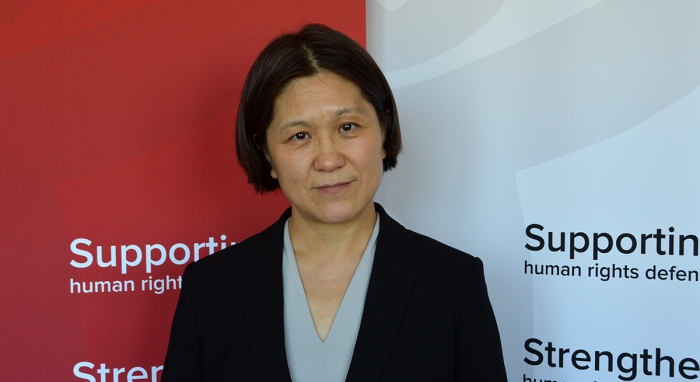
On 9 November 2017 ISHR met Yaxue Cao, the founder and editor of ChinaChange.org, an English-language website devoted to news and commentary related to civil society, rule of law, and human rights activities in China. She works to help the rest of the world understand what people are thinking and doing to effect change in China. Reports and translations on China Change have been cited widely in leading global news outlets and in U.S. Congressional reports. Yaxue Cao grew up in northern China during the Cultural Revolution and studied literature in the US. She lives in Washington, DC.

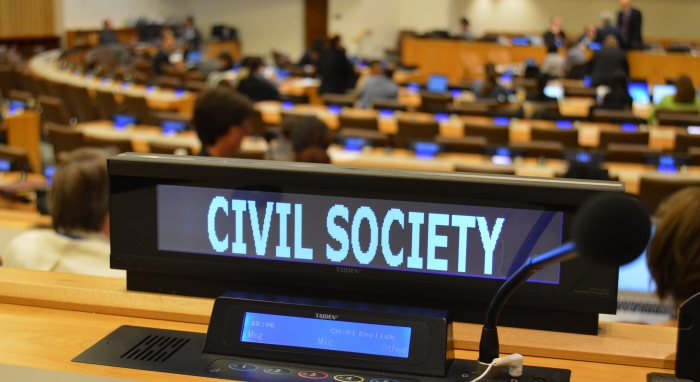
The saga of the “anti-NGO” committee in the UN continues

February 9, 2018

This blog has several times paid attention to the rather weird situation that the UN “NGO Committee” (at NY level) has a rather negative attitude towards the very NGOs that it is supposed to assist. See e.g.:

https://humanrightsdefenders.blog/2016/06/01/ngo-committee-of-the-un-shows-its-bizarre-bias-against-human-rights-ngos/

https://humanrightsdefenders.blog/2016/05/04/ishr-starts-campaign-to-monitor-committee-that-throttles-ngo-access-to-the-un/

https://humanrightsdefenders.blog/2016/02/08/un-committee-on-ngos-denies-ngo-the-right-to-speak/

https://humanrightsdefenders.blog/2015/06/07/uns-ngo-committee-seems-not-very-fond-of-ngos/

https://humanrightsdefenders.blog/2015/05/04/jean-daniel-vigny-hopes-to-improve-ngo-participation-at-the-un/

Now, on 29 January 2018, the International Service for Human Rights (ISHR) came out with the video above as well as the following statement:

A group of regional and international human rights NGOs was blocked from making a statement at the UN NGO Committee session today.  Despite a precedent set two years ago for the delivery of a general statement, all requests since have been refused.  Read here the NGOs’ call for leadership and reform:

Today a group of NGOs sought to deliver a general statement  urging the Committee to embrace the principles of transparency, accountability and accessibility in its work to ensure its practice is fair, expeditious and apolitical. The ECOSOC NGO Committee reviews applications for accreditation, providing a gateway for NGOs into the UN.  It has been much criticised – by States, UN officials and NGOs – for practices including repeated questioning of applicants and multiple deferrals of applications for no good reason. The NGOs’ attempt to speak was blocked.

ISHR along with Amnesty International, Civicus, Conectas Diretos Humanos, Human Rights Watch, Jacob Blaustein Institute for the Advancement of Human Rights, International Commission of Jurists and Outright Action International came with two key calls for Committee and observer States, related to participation and membership.

1/  The NGO Committee must provide for remote participation by accredited NGOs:

ECOSOC recently requested the NGO Committee to institute regular meetings with accredited NGOs in regard to the ‘evolving relationship’ between NGOs and the UN. Despite the fact that these have been required since 1996, the meeting scheduled to take place in the next months, will be the first. The NGOs urge that provision be made for remote participation by accredited NGOs unable to travel to New York for the meeting. ‘Clearly, access to UN conversations should not be limited to those who have resources to travel to New York or Geneva or other major UN hubs.  A diversity of voices should be heard,’ they note.  ‘We hope that States will ensure that the principle of accessibility to UN processes will be applied when defining working methods for the upcoming meeting.’

2/  States with good records on key freedoms should stand for membership of Committee:

Safeguarding civil society space at the UN is an essential component in the struggle to protect civil society space globally.  With this in mind, the NGOs call on all States with a commitment to defending the work of civil society to put themselves forward as candidates for the elections to the Committee in April. ‘Action to defend civil society space at the UN starts here at this very Committee’, say the NGOs.

Uruguay invokes ‘right to be heard’ as statement is blocked:

In response to China and Russia’s objections to the presentation of the NGO statement, Uruguay spoke forcefully in favour of hearing from civil society.  Opposition to the NGOs’ ‘right to be heard’ went against the principle of transparency in Committee practice, Uruguay said.  It also represented a step back by a Committee whose very mandate speaks to strengthening links between NGOs and the UN system.

Through their statement, civil society could provide insights that contribute to improving the work of the Committee,’  Uruguay noted. Hearing the statement ‘would allow the Committee to understand civil society’s ideas, experiences and expectations.’ The EU, UK and US also made statements of support.  These were not enough to overcome the opposition.

As we were not permitted to deliver our statement to the Committee today, we shall now request a written version be circulated to all ECOSOC members,‘ said ISHR’s Eleanor Openshaw, reflecting on the morning’s events. ‘We shall also look into ways to ensuring NGOs can make general statements at the Committee in future.

https://www.ishr.ch/news/ngo-committee-ngos-blocked-delivering-statement

NGOs in Geneva preparing for the 2018 Human Rights Council sessions

January 19, 2018

– in collaboration with the members of HRCnet – is hosting a welcome reception for Vojislav Šuc, the new President of the Human Rights Council on Wednesday 31 January 2018. This is a regular opportunity for civil society staff, human rights experts and diplomats to meet and greet the new President and Vice-Presidents of the Council in a relaxed atmosphere. Those who won’t be in Geneva that evening, can give their thoughts about what the Human Rights Council’s priorities for 2018 should be. Share them on Twitter using #HRC2018 and Michael Ineichen, Human Rights Council Advocacy Director of the ISHR, will share a selection with the HRC President.

See also: https://humanrightsdefenders.blog/2017/10/31/ishr-2018-training-for-human-rights-defenders-is-now-open-for-application/for 

https://humanrightsdefenders.blog/2017/02/24/34th-human-rights-council-ishr-guide-to-key-issues-for-human-rights-defenders/

Mark Thompson – old hand in APT – leaves in 2018

December 15, 2017
Thursday, 14 December 2017, the Association for the Prevention of Torture (APT, founded in 1977 by the Swiss banker and lawyer Jean-Jacques Gautier) announced that its Secretary-General, Mark Thomson, will retire on the 31st of July 2018. Mark, who has served as Secretary General since 2001, says that this is the right time for him to hand over the reins to someone else and that, whilst he intends to remain active in torture prevention and access to justice issues, this will be on a voluntary and ad hoc basis and that his main goal is to seize the opportunity to focus his time and energy on his young family. The President of the APT, Martine Brunschwig Graf expressed her own and the Board’s sincere appreciation for the work Mark has done over the past seventeen years, stating that: “Mark has provided first-class leadership to the APT and during that time he has played a guiding role in some immensely important developments in torture prevention across the globe. He is held in high esteem by public oversight bodies and governmental and non-governmental partners in many countries who will be as sorry as we are to see him move on.” Before 2001 Mark Thompson worked at the International al Service for Human Rights (ISHR)

The APT’s Board, taking into account the quality of the existing team, has chosen not to make a public call and will instead appoint his successor at the next board meeting, on the 13th of April 2018.

https://www.apt.ch/en/news_on_prevention/upcoming-change-in-apt-management/

Side event on human rights defenders working on Business and Human Rights issues

November 23, 2017

This side event will take place during the UN Forum on Business and Human Rights. The event will bring together multiple stakeholders to discuss how to remedy, redress and prevent attacks against human rights defenders working on business and human rights.

Interview with Karla Avelar, human rights defender from El Salvador

November 10, 2017

A former ISHR trainee, Karla Avelar defends the rights of LGBTI people. She is a finalist of this year’s Martin Ennals Award for Human Rights Defenders. In an exclusive interview with ISHR, on 6 November, she talked about her award nomination and what it means to be a trans woman and human rights defender in El Salvador. See also the THF film on her work:


see also: https://humanrightsdefenders.blog/2017/05/16/trans-defenders-karla-avelars-life-is-under-constant-threat/