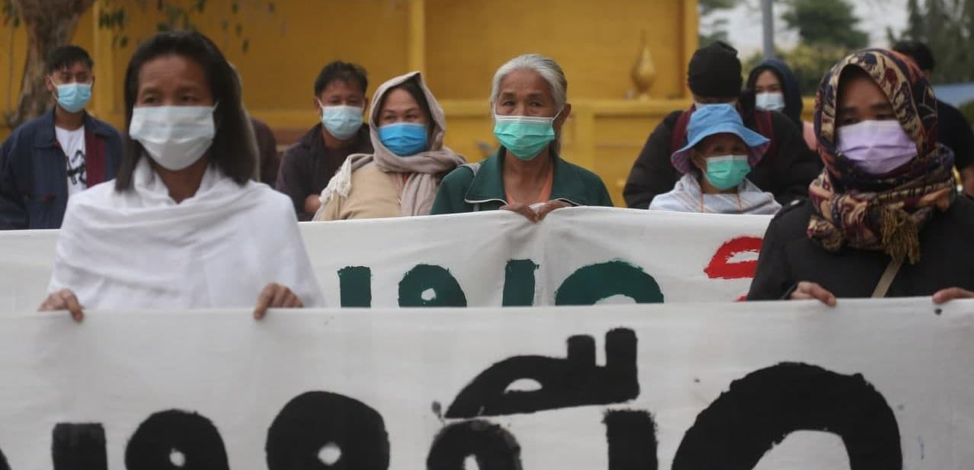
For years, Colombia has led the dismal ranking of countries with the highest number of murders of human rights defenders worldwide. Members of indigenous communities who defend themselves against the intrusion of armed groups, organized crime, and the overexploitation of natural resources on their ancestral territories are especially affected. With the 8th Werner Lottje Lecture, we therefore honor the Guardia Indígena de Cauca – Kiwe Thegnas, winners of the 2020 Colombian Human Rights Award and the 2020 Front Line Defenders Award (Americas), who impressively demonstrate how effective the collective peaceful defense of their territories can be. What particular threats do indigenous communities face in Colombia and around the world? [see: https://www.trueheroesfilms.org/thedigest/laureates/26619974-ee3f-42ff-9e94-3e34ebc5ba9b
What effects did the COVID-19 pandemic have? What strategies have these communities developed to defend themselves? What kind of support is required from the international community to protect indigenous communities? We discuss these and other questions with:
• Guardia Indígena de Cauca– Kiwe Thegnas, Indigenous human rights collective, Colombia • Mary Lawlor, UN Special Rapporteur on the situation of human rights defenders • Dr. Peter Ptassek, Ambassador of the Federal Republic of Germany in Colombia
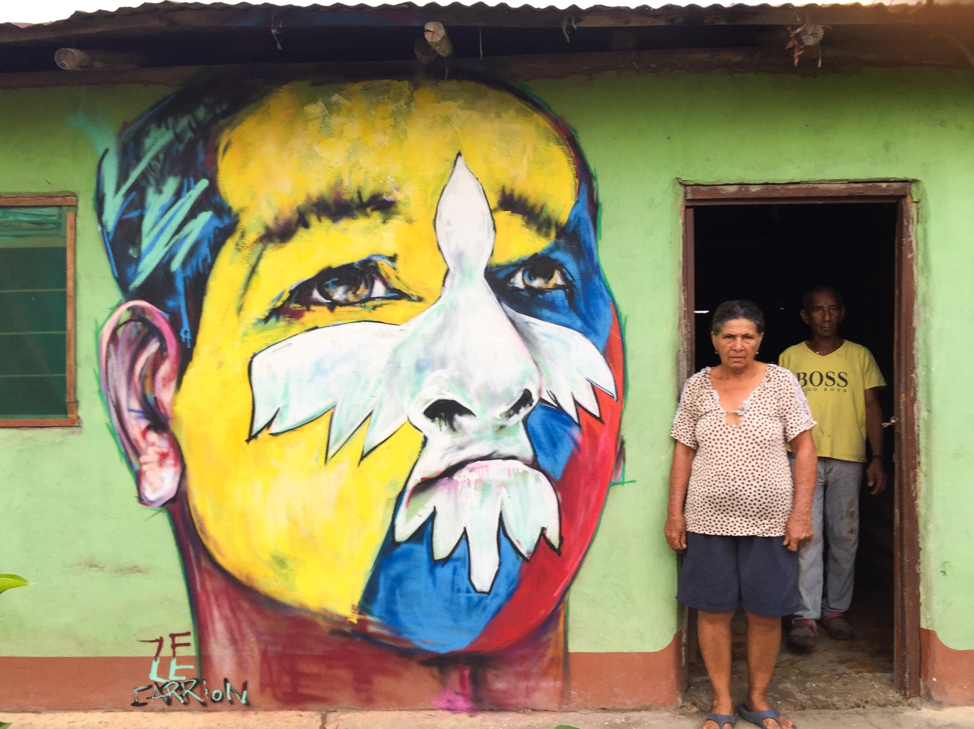
Sunday March 7 2021 an initial hearing was held in the court at Trujillo, Colón, in which Marianela Solórzano and Jennifer Solórzano, women human rights defenders belonging to the Black Fraternal Organization of Honduras (OFRANEH), are on trial. Both were arrested by the Public Security Force (FUSEP) on March 3rd, and charged with damages, threats, robbery and usurpation of lands.
In the trial records they are incriminated for the offenses of land usurpation, involving other Garifuna defenders, as well. The charges against them are related to the historic process of resistance by the Garifuna people to the plunder of their lands. Private businesses and governments alike have participated in the illegal appropriation of the ancestral territory of the Garifuna people, particularly the ownership of more than seven thousand hectares of land in the Cristales and Rio Negro communities confirmed by ancestral property deeds.
Marianela is a defender of the rights of the LGBTI Garifuna community, and Jennifer, a defender of the ancestral Garifuna territories. Their arrests took place in the context of the continuous persecution and attacks against the Garifuna people organized in OFRANEH.
Historically, the communities belonging to OFRANEH have been the target of harassment, threats by armed groups, assassinations, and the disappearance of community leaders, among other highly serious rights violations. During the last ten years, these have only worsened due to the authoritarian criminal government model headed by Juan Orlando Hernández. Eight months ago, five Garifuna comrades were disappeared by armed men wearing uniforms of the Office of Police Investigations (DPI) of Honduras. As of now, their whereabouts are unknown.
National Network of Women Human Rights Defenders in Honduras, the Mesoamerican Initiative of Women Human Rights Defenders (IM-Defensoras), and many other groups and networks of women human rights defenders in Mesoamerica, as well as the FIDH call on all feminist and LGBTI social movements and the international community to stay on the alert for developments in this case and to demand a hearing with full guarantees for the rights of the criminalized Garifuna defenders.
Stan Swamy and the adivasis he supports in an impossible battle for their own ancestral lands are pawns pitted against mammoth mining companies. Falsely branding activists as Maoists is the easiest way to condemn to enable vested interests to finish them off.
A file photo of human rights activist Stan Swamy. Photo: PTI
Mari Marcel Thekaekara wrote in the Indian Wire of 10 October 2020 a detailed and personal piece about “The Indomitable Spirit of Father Stan Swamy”
“No, it’s not possible,” were my first thoughts when I heard that Father Stan Swamy, an 83-year-old Jesuit priest and activist had been arrested – for the second time. His crime? He defended the rights of adivasis being exploited in their homeland Jharkhand.
Father Swamy has been accused of having links to a Maoist plot connected to the Bhima Koregaon case and was arrested by the National Investigation Agency on Thursday night. The rights activist is one of the gentlest and kindest men I have ever met. So the entire premise – for anyone who knows him – is entirely ludicrous. Funny even, if it were not so tragic. He has Parkinson’s disease. His hand shakes when he raises a cup of tea to his lips. He speaks so softly, you have to strain to hear him.
Social activists hold a protest after the arrest of Father Stan Swamy by the NIA in the Bhima Koregaon case, in Ranchi, October 9, 2020. Photo: PTI
He assures his interrogators that he has no connection with Maoists. He believes in peaceful, non-violent protest. I believe him. Because I know that his integrity is above reproach.
I heard of Father Stan Swamy in the early seventies, because he was among the first people I knew who advocated living with the adivasi community in Jharkhand to understand their lives and their problems; to help find solutions and a way forward. I went there in the early seventies while still in college to write a story for our student magazine.
On a more personal note, Stan Swamy, introduced my husband, also named Stan, to the adivasi world. He shared Father Swamy’s hut in a Ho village in Jharkhand. My husband always told young activists:
“Gandhiji’s non violence was not merely moral or religious. It was strategic. Gandhi was a brilliant general. Oxymoronic though that sounds. He understood that the fight for freedom could not be won by violence because mere ordinary Indians, even if they poured out on the streets with justice on their side, with God on their side, could never win. Even if there were thousands or lakhs of people marching in protest, they could never match the might of the state. Before 1947, the British could bring out the artillery and finish us off. One wrong step could have changed the course of our history. But the entire world watched India’s non violent battle for independence, open mouthed. Non violence was a new word, a new tactic, made in India. The world sympathised and empathised. Gandhi’s strategic non violence was the most brilliant weapon in our war for Independence’
The same scenario is playing out today. And the average activist understands that putting ordinary villagers, adivasis, Dalits or women in the line of fire is counterproductive and unfair. We learnt this strategy from Gandhi and Jayaprakash Narayan.
In recent times, it has become the norm to equate the word activist with ‘anti-national’. But who is an activist? What do they do?
It’s quite simple. All over India, there are thousands of people who took up the cause of fighting for social justice for the poor, the marginalised and the voiceless. These people were inspired by the brightest and best minds in our country – from Gandhiji to Vinobha Bhave to JP.
Post Independence, when the battle for freedom was won, Gandhi urged his followers to go out and continue the fight for freedom. This time, it was to free the poorest from hunger and poverty, to teach and educate, to weave and spin, to spread harmony and peace. Thousands rallied to his call and Gandhi ashrams were filled with people determined to continue the freedom struggle on a new battlefield – India’s villages.
The sixties saw the rise of the Dalit movement. New leaders emerged. Gandhi raised the question of untouchability in the early days of the Independence movement, but his ‘Harijan’ epithet was subsequently dismissed by Dalits as patronising. Dalit power became a clarion call, drawing inspiration from the African-American Black Panther movement. Dr B.R. Ambedkar showed the way.
The term activist gained popularity during the JP movement and during the fight against the Emergency in the mid seventies. After the Emergency, thousands of young patriots, drawing their inspiration from JPs charisma, accepted his challenge to go out and organise the poor, the under privileged and the vulnerable; to fight for their rights. This period saw a proliferation of human rights defenders, though the term was not used till later.
Women and men dedicated their lives to fighting for Dalit rights, adivasi rights, womens’ rights, farmers’ unions and fisherfolk movements. These activists evolved in their understanding of rights based movements. They often lived with the communities they worked with. They identified with the people and though many were middle class, they tried to live simpler lives than their parents, than the backgrounds and privileged upbringing they had been born into. They were pleased to be branded activists and wore the badge with pride.
From the fifties and sixties, when Gandhians prevailed, we moved into the seventies where a sea change took place. Global thinking wafted across the world to India. The 1968 student movement in France, Latin American thinking, Marxist ideology – all these gained ground and influenced grass roots workers. The focus changed from the passive Gandhian way – the giving of food, clothes, free education and medicine to changing unjust situations at the base. ’Daan’ or mere giving was now passe. Activists were trained to encourage people to ask who was cheating them and why? So if people were encroaching on adivasi or Dalit land, it was time to establish basic human rights; time to equip people to defend themselves, to fight injustice – non-violently, the Gandhian way, and the strategic way.
Soon, womens’ groups began to take action against dowry deaths and acid attacks, and took to the streets and courts to protest and demand justice. Dalit groups found lawyers willing to fight caste atrocity cases in court. Adivasis had activists urging them to defend their ancestral millennia old homelands from dominant caste landlords who shamelessly cheated them and usurped their lands. Environmentalists and eco-warriors hugged trees and stopped forests from being denuded. A huge green movement began. The protest movements grew from strength to strength.
In reality, these people are defending human rights and saving the Earth for future generations. When it comes to central India and defending tribal land from powerful mining companies, the battle assumes David versus Goliath proportions.
Stan Swamy and the adivasis he supports in an impossible battle for their own ancestral lands are tiny pawns pitted against mammoth mining companies. Falsely branding activists as Maoists is the easiest way to condemn them and to enable vested interests to finish them off.
The frail 83-year-old has trumped up charges levelled against him. Yet he has a core of steel, an indomitable strength that comes with moral conviction and a commitment to truth and to the powerless. As they took him to prison, Stan Swamy announced he would begin a fast. His fellow Jesuits who rushed to the prison with his medicines, say he has refused even a sip of water.
I kept asking why, they would arrest this gentle, kind man. Father Cedric Prakash, who is also a Jesuit and activist, said in a TV interview, “It’s to create a fear psychosis. If they can imprison an 83-year-old who has spent his life committed to the poor, who is safe?”
Asianet phoned to interview my husband Stan. People cautioned him, “You will draw attention to yourself. It can boomerang and have repercussions on your work in the Nilgiris.”
More than half the killings were in Colombia and the Philippines and indigenous people made up 40% of the victims, the Britain-based group said inn its report. It was a significant rise on 2018, when 164 killings were recorded.
The threat from mining and large-scale agriculture caused the most number of deaths, with these sectors also responsible for worsening climate change impacts, Global Witness said.
“Insecure land tenure, irresponsible business practices and government policies that prioritise extractive economies at the cost of human rights are putting people, and their land, at risk,” said Rachel Cox, a campaigner at Global Witness.
“Land and environmental defenders play a vital role in protecting climate-critical forests and ecosystems. When they take a stand against the theft of their land, or the destruction of forests, they are increasingly being killed,” she said.
Latin America accounted for more than two-thirds of all victims last year, with Colombia the deadliest country of all, with 64 killings.
In Asia, the Philippines had 43 killings compared to 30 the previous year, with six in India, three in Indonesia and one in Cambodia, according to Global Witness.
Many more were attacked, arrested, threatened and sued, said Global Witness, which recorded killings in 21 countries.
In the Philippines – which was the deadliest country in 2018 – “relentless vilification” of activists by the government and impunity for attackers may be spurring an increase in killings, it said.
A spokesman for President Rodrigo Duterte did not respond to requests for comment.
At least 119 activists and farmers have been killed since Duterte took office in 2016, according to Global Witness, while local campaign groups put the figure at about 200.
Dozens of United Nations experts last month called for an independent investigation into human rights violations in the Philippines, including killings of farmers and indigenous people.
The coronavirus pandemic has accelerated the “downward spiral of the human rights situation”, and a new anti-terrorism bill could be used to target activists, they said.
“Days after the act was signed, the harassment of human rights defenders has visibly worsened,” said Cristina Palabay, secretary general of Philippine human rights advocacy group Karapatan.
“While rural communities, including indigenous peoples, grapple with the impact of COVID-19, they are constantly hounded by military operations that benefit mining corporations encroaching on their ancestral land,” she said.
Two of the country’s biggest agribusiness brands – Dole Philippines and Del Monte Philippines – earlier this year said they would review their processes to better protect land rights.
But attacks against activists during coronavirus lockdowns signalled more violence worldwide, Cox said.
“Governments around the world have used the crisis to strengthen draconian measures to control citizens and roll back hard-fought environmental regulations,” Cox told the Thomson Reuters Foundation.
On 8 June qcostarica.com reported that a UN expert expressed grave concern for the lives of indigenous human rights defenders being attacked in Costa Rica, saying that impunity and lack of accountability are fuelling a continuation of violence against defenders in the country despite some positive steps by the Government.
Costa Rica has experienced an upsurge in attacks on indigenous leaders since the March 2019 killing of indigenous Bribri leader Sergio Rojas, who worked for decades defending the rights of indigenous peoples against the illegal occupation of their territories. “Now, over 14 months later, it is still not clear whether the authorities are any closer to identifying the perpetrators,” said Mary Lawlor, the new Special Rapporteur on the situation of human rights defenders.
The expert said other attacks against human rights defenders had gone fully or partially unpunished, and “until there are proper investigations and accountability for these crimes, we may witness further intimidation, injury and death”.
A change in Costa Rican law in 1977 established a legal framework for the redistribution of ancestral indigenous land occupied by non-indigenous persons but the law’s implementation has been slow, and indigenous leaders have carried out peaceful requisitions of lands back to indigenous peoples. This has caused significant violent backlash from non-indigenous illegal land occupants.
While the Costa Rican Government has increased police presence in affected communities, police investigations have been inadequate or inconclusive. As a result, both the victims and their family members continue to be threatened by the suspected perpetrators.
Since the February killing of indigenous leader Yehry Rivera, for example, his family has been repeatedly threatened and intimidated by the family of the perpetrator, who regularly passes close to their land holding a machete.
Pablo Sibar, a human rights defender of the same Broran tribe as Rivera has also been intimidated and subjected to arson attacks that have still not been investigated. Minor Ortíz Delgado, an indigenous land defender from the same Bribri community as Rojas, was shot in the leg in March. The perpetrator, who was released and handed down restraining measures, has since sent death threats to Ortíz and his family.
The expert’s call has been endorsed by the UN’s Special Rapporteur on the rights of indigenous peoples, Francisco Cali Tzay.
The experts are in a dialogue with Costa Rican authorities and will continue to closely monitor the situation.
The world has come together in the fight against a common enemy in COVID-19; a force so strong that it has knocked economies to the ground, turned our daily lives upside down and made us reflect on what really matters. Yetamidst the world’s lockdown, there are land grabbers and investors looking to take advantage of the situation. For them, there is no better time to strike than now.
This Earth Day, more than any other, it’s time to shine a spotlight on the everyday guardians of our planet, land and environment defenders, who stand at the front line to defend their land and territories from corporate or state abuse and unsustainable exploitation. They protect lands, forests and water sources, which provide their communities with good and healthy food, shelter and medicine.
By protecting such resources for the common good, they find themselves directly in the way of others who want to profit from these natural resources. If their lives were at risk before, this global pandemic has only exasperated an already difficult situation. When a community goes into lockdown, defenders not only become easier to target, they lose their right to protection and the world’s attention and that of the media, is elsewhere.
A Miskito woman in Nicaragua. Photo: Jason Taylor/ILC.
Defending land, ecosystems, and Indigenous rights has always come with immense risks.
More than three people were murdered each week in 2019 for defending their land and environment. Countless more were attacked or threatened. Only a year ago, the United Nations Human Rights Council adopted a landmark resolution, recognizing the importance of environmental human rights defenders and urging States to ensure their protection. Yet, as governments call states of emergencies and enforce new containment measures, even where national protection mechanisms for defenders exist, they are rendered futile.
Even worse, lockdowns are being used by irresponsible companies to further suppress defenders and by governments to give industries a free pass.
We saw evidence of this as the first cities in Colombia went into lockdown and three social activists were killed. Marco Rivadeneira, a high-profile activist, was murdered in the southern Putumayo province, Ángel Ovidio Quintero was shot dead in the western Antioquia region, and Ivo Humberto Bracamonte was killed on the eastern border with Venezuela. These follow more than six hundred murders of social activists in Colombia since the Peace Accords were signed.
While in Indonesia, two local land defenders have been killed and four arrested in connection with land disputes in Sumatra and Borneo, as mining and palm oil operations in rural areas continue on with business as usual and activists are told to stay home.
In Brazil, the country’s environment agency is withdrawing its enforcement staff because of the risk of contracting the virus. This move coincides with a 70 percent increase in deforestation compared to 2019. Many fear that loggers and land grabbers will take advantage of the lax policing, hoping for impunity. We are observing the same trend in other countries, all over the world.
The increased vulnerability of these defenders is palpable, and what’s happening, alarming. We must ask ourselves how we can ensure and promote their safety. UN Human Rights Experts have expressed grave concern on “the rise of reports of killings and other instances of excessive use of force targeting in particular people living in vulnerable situations”. Amnesty International has issued a series of recommendations to states in the Americas to ensure that their responses to COVID-19 are in line with their international human rights obligations.
In addition to appealing to States to maintain and reinforce their promises and protection schemes, there are some urgent steps that we need to take.
Develop an urgent real-time alert system for crisis situations to help people in danger. Where data is available, 80 percent of killings are preceded by a non-lethal attack or a threat on the affiliated group or community. So while environmental human rights defenders receive daily death threats, usually a sign for what’s to come, who will hear their cries for help?
A group of organizations belonging to the Defending Land and Environmental Defenders Coalition – among them, the Business and Human Rights Resource Centre, Frontline Defenders, Global Witness, the World Resources Institute and the International Land Coalition – are systematically monitoring COVID-related incidents in order to identify trends. Cases can be securely collected beginning Friday via LANDex, a global monitoring system dedicated to democratizing land data.
Particularly vulnerable are many of the world’s 320 million Indigenous peoples, whose territories are often rich in natural resources. Despite protecting more than 50% of the world’s land surface, they have formally recognized ownership over just 10%, which leaves them especially exposed. Governments and corporations should heedcalls for a moratorium on external activities in Indigenous territories without their express consent.
Beyond urgent measures, building longer-term resilience for these communities is essential so that they are not as vulnerable to increased harassment, threats, criminalization and eventually, killings. Secure land rights for local communities gives greater control over their own territories, and provides them with legal recourse when faced with harassment and attacks.
On this Earth Day, as we look forward to re-building a more sustainable world, we cannot forget those who have dedicated their entire lives – putting themselves and their families at risk – to do just that.
On 4 February 2020Marisa O. Ensor wrote in the New Security Beat an informative piece “Unsung Sheroes, Climate Action, and the Global Peace and Security Agendas“.
The December 2019 workshop on Gender, Peace and the Environment convened by the London School of Economics’ Centre for Women, Peace and Security and the University of Rosario’s Law School in Bogotá, Colombia, brought all of these interrelated perspectives together. Among other conclusions, the workshop acknowledged that indigenous women and girls are vital to more effective climate solutions, including building climate resilience in communities affected by violent conflict. However, their work is becoming increasingly fraught with danger. Criminal gangs, paramilitary groups, and private security forces from industries like mining, logging, dam construction, and agribusiness often target these indigenous environmental and human rights activists……
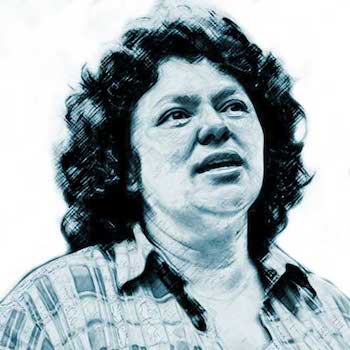
London School of Economic’s Keina Yoshida, one of the participants in the workshop on Gender, Peace and the Environment, reminded us of the “gender power structures, which result in violence against environmental, indigenous and women’s rights defenders such as Berta Cáceres.” Yet, as Ambassador Melanne Verveer notes in her Foreword to the Georgetown Institute for Women, Peace and Security’s report on Women and Climate Change, women are contributing to both adaptation and mitigation efforts and are creating innovative and localized solutions to build resilient communities. There is a reason for hope.
The article contains a helpful listing of relevant reports and documents on the role of women human rights defenders and climate change:
Indigenous women and girls are making significant contributions to the parallel Women, Peace and Security (WPS) and Youth, Peace and Security (YPS) global agendas. With their traditional knowledge of natural resource management, they can offer valuable insights on how to cope with the negative impacts of climate change. Yet, they are often the targets of violence.
Resolution 1325 on Women, Peace and Security (WPS), which the Security Council adopted in 2000, was the first resolution to link women’s experiences of conflict to international peace and security. Seven related resolutions have been adopted since then. Among them, Resolution 2242 (2015) is particularly relevant, given that it was the first to recognize that climate change connects with the WPS framework.
Resolution 2250 on Youth, Peace and Security (YPS) adopted in 2015 was the first international policy framework to recognize young people’s positive role in this field. It was followed by Resolution 2419 (2018), which stressed the need to consider young people’s views in security‑related discussions.
The United Nations’ mission chief told the Security Council on Monday 13 January that Colombia will not achieve peace “if the brave voices of social leaders continue to be silenced” and urged government action. In his address to the council, UN mission chief Carlos Ruiz dismissed President Ivan Duque‘s recent claim that violence against human rights defenders and community leaders dropped 25% last year. In the course of 2020, already 15 social leaders have been assassinated in an exceptional spike in political killings, according to independent think tanks. “On December 23, artist and social leader Lucy Villareal was killed in the Nariño department after conducting an artistic workshop for children and the killings of former FARC-EP combatants resumed on the very first day of the year with the death in the Cauca department of Benjamin Banguera Rosales,” Ruiz highlighted. Ruiz additionally warned that “the pervasive violence in conflict-conflicted areas continues to threaten the consolidation of peace as illustrated by several profoundly worrying developments in the last few weeks.”
According to conflict expert Camilo Gonzalez of think tank Indepaz, 368 community leaders and human rights defenders have been assassinated since Duque took office in August 2018. Gonzalez confirmed social organizations’ claims that “there is an omission or even complicity by elements of the public force, by agents of the state” with illegal armed groups accused of many of the killings. While Duque has blamed drug trafficking for the killings, think tanks and the United Nations have said that also land disputes and mining are among the main motives for the killings.
Three Brazilian women protest in the Netherlands against Brazil’s rainforest destruction Photo: Ana Fernandez / SOPA Images/Sipa USA
Samantha Aidoo – Campaigns Engagement Manager at CAFOD – explains the Messages to the Brave campaign:
Indigenous governor Cristina Bautista from Northern Cauca, Colombia, was passionate about defending the rights of the Nasa people and protecting their land and territory. But her courage and determination came at great personal cost. On 29 October, the 42-year-old and four unarmed indigenous guards who were with her were killed in a brutal attack near their Tacueyó reserve. Five other people were injured. The organisation which Cristina and her colleagues were part of, ACIN – the coordinating council for 22 indigenous reserves in the area which is supported by CAFOD – is no stranger to tragedy.
Just a few weeks earlier, Glabedy Gómez who worked alongside ACIN, her daughter, Karina, and four other people were ambushed and killed on their way back from a political event. Karina, 32, strongly believed that debate and political participation were important paths for building peace in Colombia and had been campaigning to stand in a local election. It is people like Cristina and her colleagues – known as human rights defenders – who are responding most acutely to what Pope Francis referred to in his 2015 encyclical Laudato Si’ as “the cry of the earth and the cry of the poor”.
Across the world, indigenous communities are trying to stop big businesses from fencing off their land, tearing down forests and polluting rivers in the pursuit of mining, logging or large-scale agribusiness. But community members who dare to speak out and organise others to do the same may be harassed, threatened or even killed. To anyone here who has been following the climate strikes, or perhaps even taken part in one, it may seem unfathomable that people speaking out for the environment, peace and human rights could pay with their lives, but that is exactly what is happening. [see e.g. https://humanrightsdefenders.blog/2019/01/09/global-witness-report-2018-on-environmental-defenders-bad-but-2017-was-worse/]
..
Their courage is helping to keep greenhouse gases in check and preserve key values like peace and human rights, but these communities are often left defending “our common home” on their own. In many countries, corruption, a lack of political will, or simply the fact that they live in a remote place means that communities who speak out often have no legal protection and no recourse for justice. That’s why this Advent, CAFOD is inviting people across England and Wales to send Christmas cards to those facing threats and attacks around the world in Brazil, Colombia, Uganda or the Occupied Palestinian Territory.
The Messages to the Brave campaign highlights the tireless work of men and women like Jose Batista Afonso from Brazil. Born in the countryside to rural worker parents, Jose grew up deeply connected to the land. He hadn’t planned to be a lawyer, but this changed after he saw rural leaders around him being routinely assassinated. Despite receiving death threats, for more than 20 years Batista has worked for the Pastoral Land Commission, defending the rights of landless communities in the Brazilian Amazon with support from CAFOD.
.. a simple card will show them that they aren’t alone in their fight to protect “our common home”, they have a community of people in the UK who are praying and standing with them. Perhaps members of the Fuerza Mujeres Wayuu women’s movement in Colombia, who have received more than six threats already this year, put it best when they say that together, we can “weave little by little for the future, a world more just than the one we had to live in”.
The Opening statement by UN High Commissioner for Human Rights, Michelle Bachelet, at the 42nd Session of the UN human Rights Council in Geneva on 9 September 2019 was widely reported in the media as having an exceptionally strong focus on climate change and human rights.
The crucial paragraph on environmental human rights defenders is quoted below: