Posts Tagged ‘India’

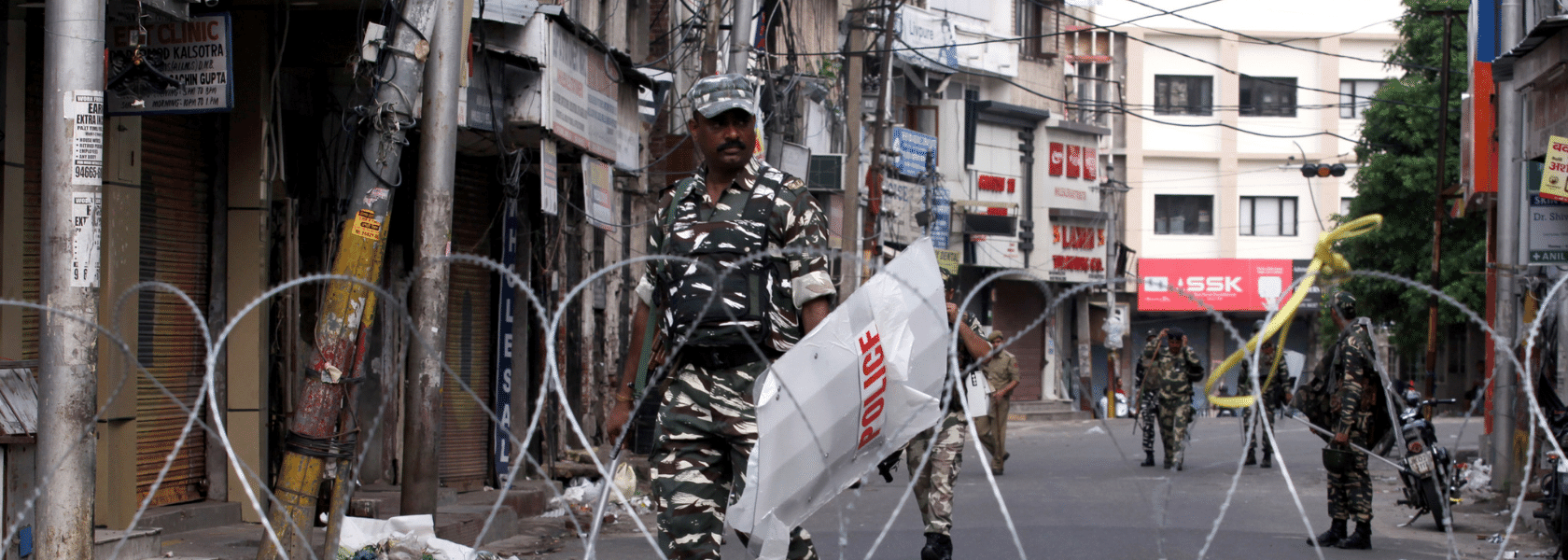
India: complex picture growing darker

May 3, 2020

Government responses to the COVID-19 pandemic have heightened the dangers to human rights across the world. In this podcast by Front Line Defenders, four human-rights defenders active in various parts of India share the challenges and concerns they have confronted since the start of the country-wide lockdown. The four are Gayatri Kandhadai, the Asia policy coordinator at the Association for Progressive Communications; Anindya Hajra, from the Pratyay Gender Trust in Kolkata; Sadam Hanjabam, from Ya All, an LGBT organisation in Manipur; and a human-rights defender in Kashmir who asked to remain anonymous for reasons of security.

Condemning the Modi government’s “misuse” of the Unlawful Activities (Prevention) Act (UAPA) during the Covid-19 crisis, more than 60 human rights activists, student leaders and academics, in a solidarity statement, have said that the recent arrests of human rights defenders across India have been taking place in order to save the “real culprits” involved in inciting communal and caste disturbances in the recent past. UAPA is being invoked, alleges the statement, to “engineer the attempt to save indictable people affiliated to the right-wing ruling party like Kapil Mishra, Anurag Thakur, Parvesh Verma, Sambhaji Bhide and Milind Ekbote, who are still at large”, the statement says, adding, “We firmly believe that the extremely draconian and regressive amended UAPA law has been strategically put in place to exterminate both dissent and dissidents during the lockdown.” For the text and signatories Click here.

UN Rapporteurs concerned about detention of Miyan Abdul Qayoom of Kashmir Bar Association

April 28, 2020

Qayoom, who is also a human rights lawyer, was arrested on the night of 4 and 5 August during the clamp down. Qayoom was accused of being a “most staunch advocate of secessionist ideology”. [see also: https://humanrightsdefenders.blog/2020/02/09/forgotten-kashmir-something-has-to-be-done/]

Dated 27 February 2020, the UN has released the letter after 2 months. Qayoom was moved to Agra Central Jail, Uttar Pradesh, on 8 August and was kept in solitary confinement, as per the letter, adding that he is suffering from multiple health issues — including a scheduled open heart surgery at the time of his detention. On 29 January, the letter states, Qayoom suffered a heart attack. Next day, he was taken back to the jail’s dispensary. On 1 February 2020, he was transferred from Agra Central Jail to the All India Institute of Medical Science (AIIMS) in New Delhi, for a medical check-up. “He was then transferred to Tihar Jail, New Delhi,” the letter added.

The Special Rapporteurs also claimed in the letter that Qayoom is being denied “the right to a fair trial… and the right of everyone to hold opinions and to freedom of expression.”

We also express concern that Mr. Qayoom’s deprivation of liberty appears to be a reprisal for his opinions, the legitimate and peaceful exercise of his freedom to express them and his human rights work,” the letter added, citing various previous cases and relevant articles of ICCPR that entitles anyone who is deprived of liberty by arrest or detention to take proceedings before a court. “Arrest or detention as punishment for the legitimate exercise of other rights, as guaranteed by the ICCPR, is arbitrary, including the right to freedom of opinion and expression,” it mentioned.

The Special Rapporteurs stated:

“Please provide detailed information about the factual and legal grounds for the arrest and detention of Mr. Qayoom, including the charges brought against him. Please explain how his arrest and continued detention are in conformity with India’s international human rights obligations under the conventions it has acceded to.

Please provide detailed information on the treatment by the court of the habeas corpus petition initiated by Mr. Qayoom. Please explain how the absence of a decision on his petition more than six months after it was made is compatible with the requirement that the lawfulness of his detention’s petitioner is adjudicated as expeditiously as possible, and with India’s obligations under ICCPR.

Please provide detailed information on the present medical situation of Mr. Qayoom and explain how his medical concerns have been duly taken into account and addressed since he was arrested and placed in detention. Please explain what measures are being taken to ensure Mr. Qayoom’s access to appropriate medical care on a reliable and regular basis.

Please indicate what measures have been taken to ensure that human rights defenders in India are able to carry out their legitimate work in a safe and enabling environment without fear of threats or acts of intimidation and harassment of any sort.

Please provide detailed information, included disaggregated data to the extent possible, as to the number of persons from Jammu and Kashmir who have been detained under the Public Security Act since August 2019.”

https://thekashmirwalla.com/2020/04/un-special-rapporteurs-express-concern-over-detention-of-bar-president-mian-qayoom/

Internet shutdowns in times of COVID-19 could cost lives

April 2, 2020
Intentionally shutting down or restricting access to the internet violates multiple rights and can be deadly during a health crisis such as the COVID-19 pandemic, Human Rights Watch said on 31 March 2020. Governments that are currently imposing an internet shutdown, such as Bangladesh, Ethiopia (it just announced restoring service), India, and Myanmar, should lift them immediately to save lives. During a health crisis, access to timely and accurate information is crucial. People use the internet for updates on health measures, movement restrictions, and relevant news to protect themselves and others.

Four women human rights defenders with a mission

March 25, 2020

The Bandera County Courrier of 7 March 2020 referred to the following four women human rights defenders from four non-European countries who should serve as examples for the many who are tirelessly fighting for their rights.

Mexico: Norma Librada Ledezma

Norma Librada Ledezmas 15 – year-old daughter Paloma disappeared on2  March 2002 in Chihuahua, Mexico. 27 For days, the mother searched desperately for her daughter . The police did not give her any support. At the 29. March 2002 Paloma’s body was found. Ledezma is convinced that if the police had investigated earlier and more thoroughly, their daughter could have been saved. That day, the Mexican founded the organization “Justicia para nuestras hijas”, which means: justice for our daughters. This provides legal advice and support in cases of feminicide (murder of women). The same applies to human trafficking and kidnapping. Ledezma wants justice for the victims and the families affected. The Mexican has already supported more than 200 investigations into cases of feminicide and kidnapping. The death of her daughter Paloma is not an isolated case in Mexico. According to UN Women, around ten women are killed in Mexico every day. Ledezma has been able to improve the investigation of feminicides in the country with her work. The Mexican woman has also set up a public prosecutor’s office in Chihuahua that specializes in crimes against women as victims. For her commitment, Ledezma has been nominated for the Martin Ennals Human Rights Award, an award for people and organizations who are committed to protecting human rights. [see also: https://humanrightsdefenders.blog/2019/12/05/daughters-murder-motivated-norma-ledezma-to-hunt-for-mexicos-disappeared/]

Norma Librada Ledezma
Norma Librada Ledezma Photo: Martin Ennals Foundation

India: Malti Tudu

Malti Tudu has a mission: she wants to end child marriage in her homeland, the state of Bihar, India. In the tribe the number of child marriages is particularly high. 74 percent of women get married under 18 year  For the young activist, one thing is certain: children should not be forced to marry. According to Unicef, child marriage violates the rights of girls and boys, with girls being affected five times more often. The married girls have to drop out of school. Teenage mothers also die more often than mature women from complications during pregnancy or childbirth. Tudu has been fighting child marriage in Bihar for more than two years. The activist has partnered with other women. Together they educate the residents in the surrounding villages and try to prevent as many child marriages as possible. The women also get a lot of headwind in their actions. But Tudu remains persistent – with success. She has already saved several girls from getting married. In the meantime, she has become a role model for many young women in India. In recent years, more and more women have come together to fight child marriage in India. And there is progress: In the past ten years, the proportion of child marriages in India has gone from 50 percent to 27 percent.

Kenya: Christine Ghati Alfons

Christine Ghati Alfons, a young Kenyan, is fighting for the circumcision of girls to stop. That is not easy. Many in their homeland are still convinced that circumcised women have better chances of marriage and are better integrated into the community. Officially, genital mutilation has been official in Kenya since 2011 forbidden. Nevertheless, according to the United Nations, one in five women is still between 15 and 49 years in Kenya – the mutilation happens in private clinics or at home.

Christine Ghati Alfons.
Christine Ghati Alfons. Photo: private

Had her father not stood up for her then, Alfons would have been circumcised. His involvement broke a taboo in the community – and had consequences. He was killed because he wanted to protect his eight-year-old daughter. Alfons didn’t know anything about her father’s courage for a long time. Because all of her friends were circumcised, she wanted that too. The vehemence with which her mother forbade her surprised her. When they talked about the risk of contracting HIV during circumcision at school, Alfons decided against it. Only then did she learn from the mother why her father died. “I want to make my father proud,” says Alfons today. She is committed to girls who have no one to stand up for them. The 27 year-old founded the organization “Safe Engage Foundation ”with which she goes to the communities to talk to children, parents and teachers, to convince them of the cruelty. When genital mutilation occurs, the clitoris and labia become partially or completely away. In particularly severe cases, the entire external genitalia is cut off and sewn back up except for a hole the size of a matchstick. The circumcised women torture themselves throughout their lives with physical and psychological pain. Not only in Africa, but also in Asia and the Middle East.

Saudi Arabia: Manal al Sharif

Manal al Sharif becomes famous in Saudi Arabia in 2011 with a shaky cell phone video that she films in an apparently banal activity: she is behind the wheel of a car. At the time, the autocratic monarchy was the last country in the world where women were prohibited from driving a car.

Manal al Sharif.
Manal al Sharif. Photo: Andreas Gebert / dpa

The eight-minute recording shows Sharif, an IT consultant, driving through the streets of the Saudi city of Khobar. She speaks to her friend and co-activist Wajeha al Huwaider, says things like: “We want change in our country” and: “A woman deserves the same rights as every man.” And she is optimistic. “Things will change – God willing.” A lot has happened since the video went viral. Initially, the Sharif admission jailed for eleven days. The repressive regime accuses her of “inciting public opinion against the state”. When she is released, she leaves the country because of death threats. But Sharif’s video fired the Saudi “Women2Drive” movement. And even after her emigration, the activist remains part of the movement, campaigning for women’s rights in Saudi Arabia. 2018 the Saudi Crown Prince Mohammed bin Salman – de facto the most powerful man in the country – allows women to drive. Nevertheless, he continues to take decisive action against critics of the Kingdom. According to Amnesty, some women’s rights activists, such as Loujain al Hathloul, have been detained for several years, relatives report torture. Sharif now lives in Sydney, has written a book about her experiences and is committed to Women in their country of origin…Manal al Sharif is now considered one of the most important women rights activists in Saudi Arabia.

https://www.bccourier.com/these-four-women-have-a-mission/

India’s overblown notion of sovereignty: NO to UN advice for Supreme Court

March 5, 2020
The Wire (India) and other news outlets have written about the controversy ‘created’ around the UN High Commissioner for Human Rights’ intervention (Amicus Brief) in the Indian Supreme Court against the Citizenship Amendment Act (CAA). In response, the Indian government has claimed that no foreign party has “locus standi” on CAA as it pertains to Indian sovereignty.

In a statement on Tuesday, ministry of external affairs spokesperson Raveesh Kumar said that India’s permanent mission in Geneva was informed “yesterday evening by the UN High Commissioner for Human Rights that her Office had filed an Intervention Application in the Supreme Court of India in respect to the 2019 Citizenship Amendment Act (CAA)”. The CAA, passed by the Indian parliament in December 2019, seeks to grant fast-track citizenship to non-Muslim migrants from Pakistan, Bangladesh and Afghanistan who arrived in India on or before December 31, 2014. The CAA had led to widespread protests in India, starting with northeastern states. The UN human rights commissioner has highlighted several times that CAA would be discriminatory and violates India’s commitments made under international law. The UN stated that the High Commissioner has “has great respect for the Indian Supreme Court’s independence and importance, and in accordance with similar interventions in domestic jurisdictions by the High Commissioner and her predecessors, the amicus curiae  will focus on providing an overview of relevant and applicable international human rights standards and norms to support the Court’s deliberations in the context of its review of the CAA”.

After India was informed about OHCHR’s intention, Kumar asserted CAA was an “internal matter of India and concerns the sovereign right of the Indian Parliament to make laws”. “We strongly believe that no foreign party has any locus standi on issues pertaining to India’s sovereignty,” he added.

That reaction seems rather overblown. The Supreme Court is hearing a total of 143 petitions seeking to examine the constitutional validity of the Citizenship Amendment Act. Foreign governments and nationals have been parties to several legal cases in the Indian court system. (The Supreme Court is currently hearing a petition filed in 2017 against the Indian government’s plan to deport all Rohingya Muslims, estimated to be around 40,000, back to Myanmar. On January 10, UN special rapporteur on contemporary forms of racism, racial discrimination, xenophobia and related intolerance E. Tendayi Achiume filed an application seeking to intervene in the ongoing case, which is being heard by a three-judge bench headed by Chief Justice S.A. Bobde. Earlier in the Italian marines case, the Italian ambassador had filed a petition challenging the jurisdiction of the Indian police after the arrests of the marines for the killing of Indian fishermen off the coast of India.)

In her draft application, Bachelet sought to intervene as an amicus curiae “by virtue of her mandate to inter aria protect and promote all human rights and to conduct necessary advocacy in that regard, established pursuant to the United Nations General Assembly resolution 48/141”. She noted that the office of the UN human right chief had filed amicus curiae briefs within proceedings before diverse jurisdictions, including International Criminal Court, US Supreme Court and final appeal courts in Asia and Latin America.

—–

https://thewire.in/diplomacy/un-human-rights-chief-intervention-application-supreme-court-caa

https://www.thehindu.com/opinion/editorial/rights-or-wrong-the-hindu-editorial-on-un-rights-body-moving-supreme-court-against-caa/article30984751.ece

Human Rights Defenders issues on the agenda of 43rd Human Rights Council

February 24, 2020

On 17 February 2020 the International Service for Human Rights (ISHR) published – as usual – its excellent “HRC43 | Key issues on agenda of March 2020 session”. Here some excerpts that relate directly to human rights defenders in the 43rd session of the UN Human Rights Council, which runs from 24 February to 20 March 2020.  If you want to stay up-to-date: with all issues follow @ISHRglobal and #HRC43 on Twitter.

Here are some highlights of the session’s thematic discussions

Protection of human rights defenders including women human rights defenders. The Council will consider a resolution, presented by Norway, to renew the mandate of the Special Rapporteur on the situation of human rights defenders. The mandate gathers and responds to information on the situation of defenders around the world, engages constructively with governments and non-State actors and provides recommendations to promote the effective implementation of the Declaration on human rights defenders. In 2019, the Council and the General Assembly unanimously affirmed the vital work defenders play. The Council recognised the critical role of environmental human rights defenders in protecting vital ecosystems, addressing climate change, attaining the sustainable development goals (SDGs). The General Assembly passed by consensus a resolution focusing on implementation of the Declaration and some key elements of protection policy; the resolution also attracted a record number of co-sponsors. The Special Rapporteur on the situation of human rights defenders will present his report on human rights defenders operating in conflict and post-conflict situations on 4 March, and country visits to Colombia and Mongolia.

Reports of cases of intimidation and reprisal against those cooperating or seeking to cooperate with the UN not only continue, but grow. Intimidation and reprisals violate the rights of the individuals concerned, they constitute violations of international human rights law and undermine the UN human rights system. [for some of my ealrier posts on reprisals, see: https://humanrightsdefenders.blog/tag/reprisals/]. During the 42nd session, the Council adopted a resolution which listed key trends such as the patterns of reprisals, increasing self-censorship, the use of national security arguments and counter-terrorism strategies by States as justification for blocking access to the UN. The resolution also acknowledged the specific risks to individuals in vulnerable situations or belonging to marginalised groups, and called on the UN to implement gender-responsive policies to end reprisals. The Council called on States to combat impunity and to report back to it on how they are preventing reprisals, both online and offline. [see also: https://humanrightsdefenders.blog/2019/11/08/michel-forst-in-last-address-to-general-assembly-pleads-to-fight-reprisals/]. Item 5 of the Human Rights Council’s agenda provides a key opportunity for States to raise concerns about reprisals, and for governments involved in existing cases to provide an update to the Council on any investigation or action taken toward accountability to be carried out.

At this 43rd session, the Council will discuss a range of economic, social and cultural rights in depth through dedicated debates with mandate holders alongside the annual report of the Secretary-General on the realisation of economic, social and cultural rights globally. These include interactive dialogues with the following:

  • The Special Rapporteur on the right to adequate housing on her annual report and country visits reports to Nigeria and France.
  • The Special Rapporteur in the field of cultural rights on her annual report on cultural rights defenders and country visit report to the Maldives and Poland.
  • The Special Rapporteur on human rights and the environment on his annual report and country visits to Fiji and Norway.

The Council will discuss a range of civil and political rights through dedicated debates with the mandate holders, including interactive dialogues with:

  • The Special Rapporteur on torture on his annual report and visit to Comoros.
  • The Special Rapporteur on freedom of religion or belief on his annual report and visits to the Netherlands and Sri Lanka.
  • The Special Rapporteur on the promotion and protection of human rights while countering terrorism on her annual report and visit to Kazakhstan.
  • The Special Rapporteur on the right to privacy on his annual report.

Country-specific developments

China Confronted with mounting evidence of serious human rights violations in China, specifically the mass internment, ‘re-education’, surveillance and harassment of Turkic Muslims in the western province of  Xinjiang, the view of many parts of the UN is incontrovertible. Beginning with a major UN review in August 2018, the UN High Commissioner has pressed for access, while the Special Procedures have expressed serious concerns about protection of freedom of religious belief, the impacts of counter-terrorism and counter-extremism measures, and the imposition of the death penalty in at least one case, that of university president Tashpolat Tiyip. In light of these concerns and the continued deterioration of the situation for human rights lawyers and defenders; the attacks on cultural rights and other freedoms in Tibet; and criminalisation of peaceful assembly and excessive use of police force in Hong Kong, it is high time for the Council to act. Member States should take concrete steps to call for independent, expert monitoring and reporting on the situation in Xinjiang, including access to the region, and urge accountability for actions by public authorities. [see also: https://humanrightsdefenders.blog/2019/07/12/joint-letter-by-22-states-to-human-rights-council-re-chinas-uighurs/ and https://humanrightsdefenders.blog/2019/07/20/china-coalition-anti-human-rights-un/]

Saudi Arabia The Council’s action on Saudi Arabia has contributed to the provisional release of at least seven women’s rights activists from detention. However, they are still facing trial and many remain in detention. Recent revelations of phone hacking, surveillance and possible blackmail and extortion of the owner of the Washington Post demonstrate the measures that the State is prepared to take to silence any form of criticism or dissent. The joint statement delivered by Australia in September sets out benchmarks for the Saudi government to take to demonstrate its willingness to improve the human rights situation. These benchmarks have not been met. States should ensure that Council scrutiny is maintained and in particular establish a monitoring and reporting mechanism over the situation. [for other posts on Saudi Arabia, see: https://humanrightsdefenders.blog/tag/saudi-arabia/]

Egypt The lack of action by the international community has emboldened the Egyptian government to continue to violate fundamental rights of its citizens. Special Procedures have rung the alarm bell regarding the pattern of reprisals against individuals and groups who sought to or engaged with the UN. In the last quarter of 2019 alone, more than 3,000 people were arbitrarily arrested and prosecuted under counter-terrorism laws in a nationwide crackdown against all forms of peaceful expression. The Committee against Torture has found that torture in Egypt is widespread and systematic and the situation meets all of the objective criteria for situations requiring the Council’s attention. States should initiate Council action on the situation before it further deteriorates. [see also: https://humanrightsdefenders.blog/tag/egypt/ ]

India The High Commissioner expressed concern over India’s Citizenship (Amendment) Act 2019 (CAA) for being ‘fundamentally discriminatory’ as it fails to extend protections to Muslim asylum seekers. Nationwide demonstrations and protests have been met with police brutality and arbitrary detentions. Vigilante groups allegedly affiliated with right-wing Hindu nationalist groups close to the government have physically attacked student protestors. Human rights defenders involved in organising peaceful assemblies have been detained and faced online harassment. ISHR calls on States to raise these concerns in their national statements including during the high level segment. [See also: https://humanrightsdefenders.blog/2019/06/27/ngos-come-out-in-support-of-indias-lawyers-collective/]

Burundi. At the last Council session, the Council renewed the mandate of the Commission of Inquiry on Burundi, which will present its oral briefing on 10 March at 10:00. ISHR remains highly concerned about the human rights situation in Burundi and its refusal to cooperate with the Council’s mechanisms. For more information on the situation of human rights defenders in Burundi, check ISHR Briefing Paper for the UPR here. See also: https://humanrightsdefenders.blog/2019/03/29/ngo-statement-condemns-new-irregularities-in-the-case-of-germain-rukuki-burundi/

Sri Lanka. Civil society groups are concerned over the backsliding on the commitments made by Sri Lanka in Human Rights Council Resolution 30/1. The recently elected president, Gotabaya Rajapaksa, along with his brother Mahinda Rajapaksa, who has been appointed prime minister, have been implicated in war crimes and numerous human rights violations when they were defence secretary and president respectively from 2005 to 2015. The new Government has made clear its intention to walk away from the Council process on Sri Lanka, a process that is currently the only hope for victims of human rights violations that truth, justice, reparations, and guarantees of non-recurrence are possible. [see https://www.nwaonline.com/news/2020/feb/23/sri-lanka-details-un-case-pullout/] Meanwhile, the relatively open climate for human rights defenders and journalists of the past few years seems to be rapidly closing. More than a dozen human rights and media organisations have received intimidating visits by members of law enforcement and intelligence agencies, while death threats against journalists have resumed. ISHR calls on States to urge for continued cooperation of the Government of Sri Lanka with OHCHR and the Special Procedures. The Council should reiterate the reference in Resolution 40/1 to “the adoption of a time-bound implementation strategy” for implementation of all elements of Resolution 30/1. [see also: https://humanrightsdefenders.blog/2020/01/22/sri-lankan-government-accused-of-embarking-on-process-to-silence-critics/]

Other country situations:

    • Interactive dialogue with the High Commissioner on the Occupied Palestinian Territories
    • Interactive dialogue with the Special Rapporteur on Eritrea
    • Interactive dialogue with the Special Rapporteur on Myanmar
    • Interactive dialogue with the Special Rapporteur on the Democratic People’s Republic of Korea
    • Interactive dialogue with the High Commissioner on Libya
    • High-level interactive dialogue on the Central African Republic
    • Interactive dialogue with the Commission on human rights on South Sudan
    • Interactive dialogue with the Special Rapporteur on Iran
    • Interactive dialogue with the Commission of Inquiry on Syria
    • Enhanced interactive dialogue on the High Commissioner’s report on the Democratic Republic of Congo
    • Interactive dialogue with the Independent Expert on Mali 
    • Interactive dialogue on the High Commissioner’s oral report on Ukraine
    • High Commissioner briefings on the following countries: Guatemala, Honduras, Colombia, Nicaragua, Yemen, Venezuela, Myanmar, Cyprus, Sri Lanka, Iran, Eritrea, Afghanistan

During this session, the Council will adopt the UPR working group reports on Italy, El Salvador, the Gambia, Bolivia, Fiji, San Marino, Kazakhstan, Angola, Iran, Madagascar, Iraq, Slovenia, Egypt and Bosnia and Herzegovina. This session of the Council will provide an opportunity for Angola, Egypt and Fiji  to to accept recommendations made in relation to human rights defenders, as proposed in ISHR’s briefing papers.

Council programme, appointments and resolutions

The President of the Human Rights Council will propose candidates for the following mandates:

  1. Two members of the Expert Mechanism on the Rights of Indigenous Peoples (one from Asia and one from the Arctic);
  2. Independent Expert on the situation of human rights in Somalia;
  3. Special Rapporteur on adequate housing as a component of the right to an adequate standard of living, and on the right to non-discrimination in this context;
  4. Special Rapporteur on contemporary forms of slavery, including its causes and its consequences;
  5. Special Rapporteur on the rights of indigenous peoples;
  6. Special Rapporteur on the sale and sexual exploitation of children, including child prostitution, child pornography and other child sexual abuse material;
  7. Special Rapporteur on the situation of human rights defenders;
  8. Special Rapporteur on the situation of human rights in Myanmar.

Some resolutions werealready announced (States leading the resolution in brackets):

  1. Prevention of genocide (Armenia)
  2. Special Rapporteur on Torture, mandate renewal (Denmark)
  3. Freedom of religion or belief (EU)
  4. Situation of human rights in Myanmar (EU)
  5. Situation of human rights in the Democratic People’s Republic of Korea, mandate renewal (EU)
  6. Mandate renewal of the Special Rapporteur on the human rights of migrants (Mexico)
  7. Protecting the rights of human rights defenders, mandate renewal (Norway)
  8. Technical assistance and capacity-building to improve human rights in Libya (African Group)
  9. Combating intolerance, negative stereotyping and stigmatization of and discrimination, incitement to violence and violence against persons based on religion or belief (Pakistan on behalf of the OIC)
  10. The human rights situation in the Syrian Arab Republic (France, Germany, Italy, Jordan, Kuwait, Morocco, Netherlands, Qatar, Turkey, United Kingdom of Great Britain and Northern Ireland)
  11. Situation of human rights in South Sudan, mandate renewal (Albania, Norway, United Kingdom of Great Britain and Northern Ireland)
  12. Situation of human rights in the Islamic Republic of Iran, mandate renewal (North Macedonia, Republic of Moldova, Sweden, United Kingdom of Great Britain and Northern Ireland)
  13. Freedom of Expression, mandate renewal (Netherlands, Canada)

Officers of the Human Rights Council

Newly appointed members of the Bureau for the 14th cycle comprises of the following Ambassadors:

  • Ms. Elisabeth Tichy-Fisslberger (Austria), President of the Human Rights Council
  • Mr. Yackoley Kokou Johnson (Togo), Vice-President and Rapporteur
  • Mr. Nasir Ahmad Andisha (Afghanistan), Vice-President
  • Ms. Socorro Flores Liera (Mexico), Vice-President
  • Mr. Juraj Podhorský (Slovakia), Vice-President

Panel discussions

During each Council session, panel discussions are held to provide member States and NGOs with opportunities to hear from subject-matter experts and raise questions. All panel discussions will be broadcast live and archived on http://webtv.un.org. Four panel discussions are scheduled for this upcoming session:

  1. Annual high-level panel discussion on human rights mainstreaming titled “Thirty years of implementation of the Convention on the Rights of the Child: challenges and opportunities” will take place on 24 February at 16:00
  2. High-level panel discussion commemorating the twenty-fifth anniversary of the Beijing Declaration and Platform for Action with a particular focus on their implementation will take place on 25 February at 09:00
  3. Annual interactive debate on the rights of persons with disabilities, titled “Article 8 of the Convention on the Rights of Persons with Disabilities, on awareness-raising”, will take place on 6 March at 16:00
  4. Debate on the midterm review of the International Decade for People of African Descent will take place on 13 March at 16:00.

NOTE: The UN’s liquidity crisis is having a serious impact on this session and the next one (44th in June) and ISHR – jointly with 26 other NGOs – have expressed their concerns to the UNSG that in light of the special emergency measures and ongoing budget constraints, further measures may be imposed to restrict civil society participation at the Council. Despite the adoption of a number of measures by the Council over the years to address the budgetary constraints faced by the United Nations Office at Geneva (UNOG), the Director General of UNOG informed the Council’s President that the Council may not be able to carry out all its mandated activities in 2020. This is due to the special emergency measures instituted by the UNSG to respond to the UN’s liquidity crisis which prohibit all lunch-time meetings, thus making it impossible for UNOG to provide conference services to all the Council’s required meetings. The President of the Council requested the UNSG to issue an exemption of these measures to ensure that the Council can hold all its meetings. The UNSG issued an exemption for meetings during the High-level Segment and voting on resolutions, but not for other meetings in the March session. [see also: https://humanrightsdefenders.blog/2019/05/20/lack-of-funds-forces-lack-of-oversight-by-un/]

For more information contact: Salma El Hosseiny at s.hosseinyATishr.ch 

For a survey of the 42nd session, see: https://humanrightsdefenders.blog/2019/10/02/result-of-the-42nd-session-of-the-un-human-rights-council/

See also CIVICUS advisory on this Council session: https://www.civicus.org/index.php/media-resources/news/united-nations/geneva/4282-advocacy-priorities-at-43rd-session-of-un-human-rights-council

https://www.ishr.ch/news/hrc43-key-issues-agenda-march-2020-session

Forgotten Kashmir: something has to be done

February 9, 2020

...After more than 70 years of terror, killings, torture, and disappearances, the international community must renew its efforts to end the conflict in Kashmir. In 2018 and 2019, the Office of the United Nations High Commissioner for Human Rights released reports that documented a wide range of abuses – including kidnappings, the killing of civilians, and sexual violence – perpetrated by both sides in the conflict. The UN needs to take the lead in stopping Kashmir’s torment. ……The conflict has consumed resources that should have been used for development; instead, they were channeled to arms purchases or a regional race to develop weapons of mass destruction. Everyone, regardless of age, religion, or ethnicity, has suffered, whether as a result of displacement, family separation, loss of property, the death or disappearance of friends and close relatives, grinding poverty, or simply the prospect of a future as bleak and constricted as the present.The international community has, at times, attempted to mediate between India and Pakistan. The UN has adopted resolutions demanding a referendum on Kashmir’s future status. But, even though it has long been evident that there is no military solution to the conflict – temporary ceasefire initiatives have never resulted in a lasting agreement – India to this day has resisted a plebiscite. In 2003, Pakistan’s then-president, Pervez Musharraf, formulated a four-step approach to a political solution. Without insisting on a referendum, India and Pakistan would begin a dialogue; recognize Kashmir as the main source of bilateral hostility; identify and eliminate what was unacceptable to each side; and strive for a solution acceptable to both countries – and especially to the people of Kashmir. Subsequently, a ceasefire was declared, and high-level meetings took place, but, following a terrorist attack, India terminated the talks. In 2012, Pakistani President Asif Ali Zardari and Indian Prime Minister Manmohan Singh tried unsuccessfully to revive the process.

I have been personally engaged with the Kashmir issue for some time. Last year, I held meetings with senior politicians in Pakistan and India. I am well aware that India wants to treat the Kashmir conflict solely as a bilateral issue. But in that case, it should take the initiative in starting talks with Pakistan. If that does not happen, the international community must demand that the parties come together to negotiate a peaceful solution.

Again, it is not up to the UN or anyone else to impose a solution on the parties. The current situation is rooted in a highly complex mix of history and politics, and any viable settlement must reflect Kashmir’s unique circumstances. A major issue to be addressed is the “line of control” separating Indian- and Pakistani-administered Kashmir, which hinders the free movement of people, divides families, and impedes business and trade. And, of course, Kashmir’s future status is the main question that must be resolved. During my last visit to Kashmir, I saw firsthand the level of violence and the severity of human-rights violations. Conditions have deteriorated further since India repealed Jammu and Kashmir’s special status in October 2019, dissolved it as a state, and reorganized it as two “union territories” – all enforced by the security forces with a wave of arrests, a ban on assembly, and an Internet and media blackout.At a time of war in Syria and Yemen, and heightened tensions between the United States and Iran, it is difficult to get the international community to focus on Kashmir. But it is crucial that the conflict not be allowed to spiral out of control, especially given that both countries are nuclear powers. Above all, the people of Kashmir deserve a ceasefire, reconciliation, and stability, and it is the duty of the UN to advance this goal. I urge the UN to appoint a special envoy to Kashmir. And I appeal to UN Secretary-General António Guterres to seize the initiative and help deliver a long-overdue and lasting peace to this region…

“The Indian government must immediately end all draconian restrictions on fundamental freedoms in Jammu & Kashmir, and fully reinstate communications”, FIDH and its member organization People’s Watch urged on 5 February 2020. In conjunction with its call, FIDH released a briefing note that highlights some of the human rights concerns that have remained unaddressed since 5 August 2019. For the past six months, the people of Jammu & Kashmir have been living under siege and denied their fundamental rights under the most draconian of measures. These grave violations of human rights must come to an end, and accountability must be established for the serious violations that have occurred since 5 August.Adilur Rahman Khan, FIDH Secretary-General
Since the evening of 4 August 2019, internet communications, and initially telephone lines, have been cut in Jammu & Kashmir, effectively isolating residents from the rest of the world. Although phone lines were gradually reinstated and internet access restored in certain places, personal internet connections are limited to 301 government-approved websites through a very slow 2G connection. Although accurate figures are unavailable, thousands of arbitrary detentions have been reported since 5 August 2019, including hundreds of detentions under the abusive 1978 Public Safety Act (PSA). Many detainees, particularly youth and low-ranking political activists, have been transferred to jails outside of Jammu & Kashmir, the location of which is unknown in many cases. There have also been numerous reports of excessive use of force by army and police forces, including reports of deaths and injuries as a result of the improper use of pellet guns and teargas. The reorganization of Jammu & Kashmir has also resulted in a number of measures that will have long-term implications for the human rights situation in the region, including the disbanding of the State Human Rights Commission (SHRC) of Jammu & Kashmir – one of the few avenues for justice available to local people – at the end of October 2019. More than 500 cases of alleged enforced disappearances were pending before the SHRC at the time of its disbandment. [see also: https://humanrightsdefenders.blog/2019/03/17/fidh-dares-to-publish-a-report-on-key-human-rights-issues-of-concern-in-kashmir/]

Human rights violations of the gravest nature are nothing new in Jammu & Kashmir, and have gone unpunished for decades. But taking away the little autonomy the state had will only make the situation worse, especially when the people most affected by these changes have been denied their right to express their opinions. added Henri Tiphagne, People’s Watch Executive Director

On 5 February the Observatory for the Protection of Human Rights Defenders, a partnership of FIDH and the World Organisation Against Torture (OMCT), requested an urgent intervention in the case of Mr. Miyan Abdul Qayoom, a human rights lawyer and President of Jammu & Kashmir High Court Bar Association. Mr. Qayoom, 70,  suffers from multiple health conditions, including diabetes, double vessel heart disease, and kidney problems.
According to the information received, during the evening of January 29, 2020, Mr. Qayoom’s family received a phone call from Agra Central Jail’s authorities, in Uttar Pradesh State, informing them that Mr. Qayoom had been transferred to Sarojini Naidu Medical College after complaining of chest pain, breathlessness and his pulse rate had significantly gone down to 44pm, and asking them to visit him. On January 30, 2020, upon reaching Agra Central Jail, Mr. Qayoom’s relatives discovered that Mr. Qayoom had been taken back to the jail’s dispensary, even though his health condition had not improved.  On February 3, 2020, Jammu & Kashmir High Court Srinagar bench, after hearing the final arguments, reserved its judgement regarding Mr. Qayoom’s habeas corpus request. The scheduled date of the judgement was not known as of the publication of this Urgent Appeal…..
————-
https://www.project-syndicate.org/commentary/united-nations-must-mediate-political-solution-in-kashmir-by-kjell-magne-bondevik-2020-02

Daniel Ravindran; a voice of reason in India’s human rights debate

January 16, 2020

A protest in Srinagar in December 2016.

A protest in Srinagar in December 2016.

With the evolution of international law in the last 100 years, the concept of unrestricted sovereignty has weakened

The human rights situation in Jammu and Kashmir (J&K) following the dilution of Article 370 and the passage of the Citizenship (Amendment) Act (CAA) have brought renewed international focus on India’s human rights practice. Responding to criticism made by the United Nations agencies and others, the Indian state asserted that both J&K and CAA are entirely internal matters and there cannot be any interference in such sovereign decisions.

What is remarkable about modern international human rights law is its recognition of individuals as subjects. Classic international law governed the conduct between states and did not recognise the rights of individuals. Countries made agreements on the premise that a sovereign state had the exclusive right to take any action it thought fit to deal with its nationals. Such a notion of absolute sovereignty was challenged in 19th century with the emergence of humanitarian intervention to protect minorities living in other states. Later, in 1919, the evolution of labour standards led to the establishment of the International Labour Office (ILO). In 1926, the Slavery Convention adopted by the League of Nations prohibiting slave trade heralded the first human rights treaty based on the principle of dignity of a human being. The Universal Declaration of Human Rights, adopted in 1948 by the United Nations, was the first comprehensive international human rights document. The Universal Declaration has acquired the force of law as part of the customary law of nations. It has provided the basis for binding human rights treaties and non-binding guidelines/principles that constitute a distinct body of law known as international human rights law.

Unsustainable claim

This progress of international law in the last 100 years makes the Indian state’s assertion of its sovereign right unsustainable. The evolution of international human rights law is also about the gradual weakening of the concept of unrestricted sovereignty. The Indian government has ratified several international human rights treaties and submits periodic reports to the respective treaty bodies. By doing so, it has acknowledged the principle that the treatment of its citizens is not entirely an internal matter, and such measures do not enjoy an absolute sovereignty.

The Indian government’s response to concerns about its human rights practice has always been that international scrutiny is unwarranted since the country is the largest democracy in the world with an independent judiciary, free media, and an active civil society. These claims sound less credible after the recent developments in J&K and the passage of the CAA.

Non–discrimination is a fundamental principle of human rights. Discrimination in various forms occurs in all societies, but what is of concern is institutionalised discrimination. Apartheid was pronounced as a crime against humanity since it institutionalised discrimination based on race. Similarly, for the first time in post–Independence India, a religious group has been excluded from the purview of a law dealing with citizenship.

The Office of the High Commissioner for Human Rights (OHCHR), which is the lead agency within the UN system on all aspects related to human rights, has expressed its concern stating that the CAA “is fundamentally discriminatory in nature”. It has also said that “although India’s broader naturalization laws remain in place, these amendments will have a discriminatory effect on people’s access to nationality.”

International human rights law includes safeguards against unwarranted foreign intervention and stresses the exhaustion of domestic remedies before an issue is considered by an international body. The Indian state always assured the international community that the judiciary, mainly its Supreme Court, would provide adequate remedies to victims of human rights violations. However, of late, the faith of the common people in the higher judiciary has been weakened. In the face of serious allegations about human rights violations in J&K, the Supreme Court has “ducked, evaded and adjourned”, as put across by advocate Gautam Bhatia.

Weakening of civil society

While responding to criticism against its human rights practices, the Indian government also refers to the role of free media and civil society in protecting the human rights of vulnerable groups. However, in the context of J&K and the ongoing struggle against the CAA, the media has not come out any better. As for civil society organisations, the government since 2014 has systematically targeted them, including by making it difficult for them to receive funds from foreign donors. Since 2014, the government has cancelled the registration of about 14,000 NGOs under the Foreign Contribution Regulation Act (FCRA). It has also mainly targeted its own critics.

Indian and international human rights groups are getting increasingly concerned about the actions of people associated with the ruling party who are engaged in the intimidation of critics, attacks against minorities, and restrictions on the freedoms of artistes. The brazen attack on JNU students on January 5 by armed goons and the total lack of response by the police is emblematic of free reign given to non-state actors in various parts of the country.

The international community is sympathetic to governments that are committed to upholding human rights but lack human and other resources to pursue it. In the case of India, it is not a question of resources but an unwillingness to uphold human rights. The government’s action in J&K, the passage of the CAA, and its response to protests on the CAA demonstrate that the present regime is not fully committed to upholding human rights and does not respect international human rights standards. Of course, it is possible for the Indian government, due to its diplomatic clout, to avoid robust intervention by the UN Human Rights Council and other UN human rights mechanisms. However, it would not be able to avoid scrutiny by the international community, which would complement the struggle of the Indian civil society to reclaim the Indian Constitution and advance human rights.

For transparancy reasons: https://humanrightsdefenders.blog/2013/12/14/who-should-be-the-new-un-rapporteur-for-human-rights-defenders-ravindram-is-my-choice/

https://www.thehindu.com/opinion/lead/human-rights-are-not-solely-an-internal-matter/article30537443.ece

Acquitted journalist Santosh Yadav about his ordeal in India

January 10, 2020

In a blog post by Kunal Majumder, CPJ India Correspondent on 8 January 2020, Indian freelance journalist Santosh Yadav says “I feel like a weight has been lifted’ as Chhattisgarh court ends four-year legal nightmare.

Freelance journalist Santosh Yadav, left, with human rights defender Shalini Gera and CPJ India Correspondent Kunal Majumder, during a convention on journalist safety in Raipur, Chhattisgarh, in February 2019. A court on January 2 acquitted Yadav of several charges, ending a four-year legal battle. (CPJ)

Freelance journalist Santosh Yadav, left, with human rights defender Shalini Gera and CPJ India Correspondent Kunal Majumder, during a convention on journalist safety in Raipur, Chhattisgarh, in February 2019 (CPJ)

On January 2, 2020 freelance journalist Santosh Yadav got his life back when the National Investigation Agency court in Jagdalpur acquitted him of charges of helping Maoists militants. The ruling marked the end of a legal nightmare that lasted over four years for Yadav, who says that he was threatened and beaten in custody, before being released on bail under restrictive conditions.

Yadav’s ordeal started in September 2015, when police in India’s Chhattisgarh state arrested him on accusations of aiding and abetting Maoist militants. The journalist’s colleagues and his lawyer, who spoke with CPJ at the time, said they believed the arrest was in connection to his reporting on alleged human rights abuses by police.

The journalist, who at the time was a contributor to the Hindi-language newspaper Navbharat in Bastar district, was charged with 28 counts including associating with a terrorist organization, supporting and aiding terrorist groups, taking part in a Maoist-led ambush against security forces, rioting with a deadly weapon, unlawful assembly, wrongful restraint, attempt to murder, public mischief and criminal conspiracy. He was held in pre-trial detention for one and a half years. Yadav told CPJ that during that time, police beat him regularly and threatened to have him killed. When he was released on bail, the court imposed several restrictive measures.

The day after the January 2 ruling that exonerated Yadav, the journalist spoke with CPJ about his struggle during the four years since his arrest. Here some excerpts from this interview :

Congratulations. So does this court ruling mean you are a free man?

Yes, all charges have been dropped. The judge said that I’m innocent and have been exonerated of all charges. He added that there is no evidence to prove the police charge that I’m a Maoist.

Prior to your 2015 arrest, had police contacted you about your reporting? Were there any signs or warning that police were unhappy with your journalism?

There were numerous incidents when local police officials would express displeasure over my reporting. I never thought it was anything serious. However, before my arrest, police started picking me up from my home at random hours, once at 3 a.m. They would threaten to arrest me, kill me. They even offered money in exchange for information on Maoists. They would keep me in lock-up the whole day and release me in the evening. I had a feeling that my life was at threat. I informed several journalists and human rights defenders including Malini Subramaniam [one of CPJ’s 2016 International Press Freedom Awardees], Shalini Gera and Isha Khandelwal that the police might arrest me.

……..
Previously, you told CPJ and other outlets that you were beaten and threatened even inside jail. Could you describe your time in prison?

I was beaten repeatedly, especially when I would go for bathing. I even started a protest fast, which several prisoners supported. The prison guards retaliated by beating us with batons. At that point, I didn’t know if I would live or die. After beating me mercilessly, I was stripped and put in solitary confinement for 11 days. Then they moved to me Kanker jail. [Kanker is 122 miles from Yadav’s hometown of Darbha.] Even there I was beaten up. The prison guards singled me out for my protests in the Jagdalpur jail and targeted me…

……..


Annual reports 2019: CIVICUS Global Report

December 27, 2019

The end of a year usually means looking back and many human rights NGOs issue reports of this kind. Here is the first by CIVICUS, through its Monitor:

Civic space – space for civil society – is the bedrock of any open and democratic society. When civic space is open, citizens and civil society organisations (CSOs) are able to organise, participate and communicate without hindrance. When people are free to participate, they are able to claim their rights and influence the political and social structures around them. This can only happen when a state holds by its duty to protect its citizens and respectsand facilitates their fundamental rights to associate, assemble peacefully and freely express their views andopinions. These are the three key rights that civil society depends upon.

The CIVICUS Monitor analyses the extent to which these three civil society rights are being respected and upheld, and the degree to which states areprotecting civil society. In an attempt to capture these dynamics on a global scale, over 20 organisations from around the world have joined forces on the CIVICUS Monitor to provide an evidence base for action to improve civic space. In order to draw comparisons at the global level and track trends over time, the CIVICUS Monitor produces civic space ratings for 196 countries. Each country’s civic space is rated in one of five categories – open, narrowed, obstructed, repressed, or closed – based on a methodology that combines several sources of data on the freedoms of association, peaceful assembly and expression. Civic space updates from our research partners contain qualitative, narrative information related to the situation for civil society in a country. This qualitative information is directed by a set of guiding questions and the resulting data is gathered from a variety of primary and secondary sources. In many cases, country-specific updates have come directly from national civil society themselves. (Methodology: In countries where it does not have a research partner, the CIVICUS Monitor relies on a variety of other sources produced at the national, regional and international levels to arrive at country ratings. These civic space updates are then triangulated, verified and tagged by the CIVICUS team. Together, the research partners posted 536 civic space updates from 1 October 2018 to 11 November 2019 which form the basis for the analysis presented in this report. For the time period assessed, these civic space updates cover 153 countries. This report analyses trends and developments since its previous report, published in November 2018. As well as global-level trends, it analyses trends in five regions: Africa, Americas, Asia and the Pacific, Europe and Central Asia and Middle East and North Africa (MENA).

Following an update of ratings in November 2019, the CIVICUS Monitor continues to tell a worrying story. The data shows that there are 24 countries with closed civic space, 38 countries with repressed space and 49 with obstructed space. Just 43 countries receive an open rating, and 42 countries are rated narrowed. Since our previous report, published in November 2018, space for activism has reduced: only three per cent of the world’s population now live in countries with open civic space. Nine countries have changed their civic space rating since our November 2018 update: two have improved their ratings, while seven have worsened. This indicates that repression of peaceful civic activism continues to be a widespread crisis for civil society in most parts of the world. Worrying signs for civic space continue to be seen in Asia, where two countries, Brunei and India, dropped their rating from obstructed to repressed. Given the size and global role of India, the decline in the quality of its civic space must be of particular concern. One country in the Pacific – Australia – dropped from an open to narrowed rating, partially due to increased restrictions on the freedom of expression and government surveillance

See also: https://humanrightsdefenders.blog/2018/12/06/20-human-rights-defenders-under-attack-one-for-each-year-of-the-declaration/

Click to access GlobalReport2019.pdf