Posts Tagged ‘India’

HRW submission to Special Rapporteur focuses on child and youth human rights defenders

November 13, 2023

Human Rights Watch’ submission discusses the risks climate activists have faced in Australia, India, and Uganda. It focuses on examples of activists under age 32, as requested by the UN Special Rapporteur on Human Rights Defenders.

Australia

Following increased climate protest activity in New South Wales (NSW), the government in March 2022 established a new police unit known as the Strike Force Guard. The unit is designed to “prevent, investigate and disrupt unauthorized protests across the state.” On April 1, the state parliament introduced new laws and penalties specifically targeting protests that blocked roads and ports. Protesters can now be fined up to AU$22,000 (US$15,250) and be jailed for up to two years for protesting without permission on public roads, rail lines, tunnels, bridges, and industrial estates.

In 2022, Human Rights Watch interviewed three climate protesters who had been arrested and charged under the new laws. These cases indicate that climate protesters are being targeted for disproportionate punishment.

Violet (Deanna) Coco, a 31-year-old activist, took part in a climate protest on April 13, 2022, that stopped traffic in one lane on the Sydney Harbor Bridge. Coco climbed on the roof of a parked truck and stood holding a lit emergency flare. After approximately 25 minutes, NSW police forcibly removed her and the other protesters from the road. Coco was charged with disrupting vehicles, interfering with the safe operation of a bridge, possessing a bright light distress signal in a public place, failing to comply with police direction, and resisting or hindering a police officer. She was also charged under explosives regulations for holding the emergency flare; with an incitement offense for “encouraging the commission of a crime” by livestreaming the protest on Facebook; and for uploading a video of a climate protest she took the previous week, and with disrupting traffic during three previous protests.

Coco pleaded guilty to two charges – blocking traffic and failing to comply with police direction – and not guilty to the other charges. She was released on AU$10,000 (US$6,940) bail, but the magistrate ordered her not to leave her apartment for any purpose except for emergency medical assistance or to attend court. She was also ordered not to associate with any other Fireproof Australia member. Coco spent 21 days under what amounted to house arrest. On May 5, 2022, a magistrate amended her bail and, while she was allowed to leave her property, the authorities imposed a curfew banning her from leaving her address before 10 a.m. and after 3 p.m.

In March 2023, Coco was issued with a 12-month conditional release order after a district court judge heard she had been initially imprisoned on false information provided by the New South Wales police.

In August 2022, the state of Victoria followed New South Wales with harsh new measures targeting environmental protesters at logging sites with up to 12 months in jail or $21,000 in fines. In Tasmania, environmental activists now face fines of $13,000 or two years in prison, while nongovernmental organizations that have been found to “support members of the community to protest” face fines of over $45,000.

On May 18, 2023, the South Australia government introduced harsh new anti-protest measures in the South Australian lower house in the morning and then rushed them through after lunch with bipartisan support after just 20 minutes of debate and no public consultation. The bill would increase the punishment for “public obstruction” 60-fold, from $750 to $50,000 or three months in jail, with activists also potentially facing orders to pay for police and other emergency services responding to a protest or action. On May 30, the laws were passed after a 14-hour debate in the South Australian upper house.

India

In February 2021, Indian authorities arrested Ravi who was sent to police custody for five days. Indian authorities also issued arrest warrants against Nikita Jacob, a lawyer, and Shantanu Muluk, an activist, who were granted pre-arrest bail. The authorities alleged Ravi was the “key conspirator” in editing and sharing an online toolkit shared by the Swedish Fridays for Future founder Greta Thunberg on social media, including Twitter, aimed at providing information to those seeking to peacefully support ongoing farmers protests. In granting bail to Ravi, the Delhi court said the evidence on record was “scanty and sketchy,” and that citizens cannot be jailed simply because they disagreed with government policies. It added: “The offense of sedition cannot be invoked to minister to the wounded vanity of governments.”

The Indian government has enforced Information Technology Rules that allow for greater governmental control over online content, threaten to weaken encryption, and seriously undermine media freedoms, rights to privacy, and freedom of expression online. These rules put youth and other human rights defenders and journalists at further risk of being targeted by the authorities for their online content.

Uganda

Young people from across Uganda have faced reprisals for fighting for climate justice. On September 25, 2020, Ugandan police arrested and detained for eight hours eight youth climate activists while participating in the global climate strike in Kampala. The police told them election campaigns were not allowed, although the activists repeatedly explained that they were an environmental—not a political—movement. The activists, only two of whom were above the age of 18, were detained in a room for eight hours, questioned, and then allowed to leave.

Human Rights Watch published a report that documented a range of restrictions on freedom of expression, association, and assembly related to oil development, including the planned East African Crude Oil Pipeline (EACOP) by the government. Civil society organizations and environmental defenders regularly report being harassed and intimidated, unlawfully detained, or arbitrarily arrested. Human Rights Watch interviewed 31 people in Uganda between March and October 2023, including 21 environmental defenders, and several of whom were under 32 years old.

Many student climate activists protesting EACOP have been arrested and charged with various offences in Kampala since 2021. These protests have been largely peaceful and usually small in scale. Since 2021, there have been at least 22 arrests, largely of students, at anti-EACOP protests in Kampala. Nine students were arrested in October 2022 after demonstrating support for the European Parliament resolution on EACOP and charged with “common nuisance.” Their case was finally dismissed on November 6, 2023, after more than 15 court appearances. Another four protesters were arrested on December 9, 2022, as they marched to the National Environmental Management Authority (NEMA) to demand a re-evaluation of the environmental damage caused by EACOP. One of the detainees was kept at an unknown location until the morning of December 12 when all four were released.

Another protesting student was arrested in Kampala on June 27, 2023, after trying to deliver a petition to the Speaker of the House of Uganda’s parliament. He told Human Rights Watch he was taken to an unlawful place of detention known as a “safe house” with his hands tied behind his back, questioned by plain-clothed security officials about who was providing the funding for the protests, before he was knocked to the floor. He said he awoke two days later in the hospital with serious injuries. On July 11, 2023, five individuals were arrested after protesting EACOP in downtown Kampala.

On September 15, 2023, four student protesters were arrested after a “Fridays for Future” and “StopEACOP” joint protest at the Ugandan parliament as part of the “Global Fight to End Fossil Fuels,” a global mobilization and day of action. They were released on bond five days later and have been charged with “common nuisance.” Their next hearing is scheduled for November 27, 2023. One of the students described to Human Rights Watch being held in a room inside parliament and beaten by uniformed parliamentary security officials and others in civilian clothes with “batons, gun butts, and using their boots to step on our heads” before being taken to Kampala’s Central Police Station (CPS). At the CPS he described plainclothes intelligence officers asking: “Who are your leaders? Among us, who is your leader? How many are you? Who are your leaders in different universities? Who is managing your social media accounts?” They then described being beaten further in CPS cells by other prisoners, one of whom said, “We have order from above to discipline you. You need to stop working on EACOP.”

See also: https://globalpressjournal.com/africa/uganda/ugandan-pipeline-project-begins-landowners-navigate-crooked-road-compensation/

Human Rights Watch encourages the Special Rapporteur to call on governments to:

  • Promote and protect universally recognized human rights and fundamental freedoms, respect, and protect the work of climate activists, in line with their human rights obligations.
  • Publicly condemn assault, threats, harassment, intimidation, and arbitrary arrests of activists, and direct security and other government officials to stop arresting, harassing, or threatening activists for protesting or on false accusations.
  • End arbitrary arrests and prosecutions of human rights defenders, anti-EACOP activists, and peaceful protesters.
  • Respect and protect the rights of all human rights defenders and civil society organizations to exercise freedoms of association, assembly, and expression, in accordance with international human rights norms.
  • Where applicable, ratify and implement regional human rights agreements to ensure public participation in environmental decision-making and to protect environmental defenders.

Submission to the Special Rapporteur on the situation of human rights defenders
Human rights NGOs use Financial Action Task Force (FATF) review to help human rights defenders in India

November 7, 2023

Amnesty International, C&SN and HRW accuse Indian government of harassing human rights activists and NGOs; the organisations seek FATF’s intervention days before the India’s performance with respect to action taken against money laundering and terrorist funding is up for review

On 6 November 2023, The Hindu newspaper (TH) reports that NGOs are accusing the Indian government of prosecuting, intimidating, and harassing human rights defenders, activists, and non-profit organisations on the pretext of countering terrorist financing, Thus Amnesty International, Charity & Security Network (C&SN), and Human Rights Watch (HRW) have sought the intervention of the Financial Action Task Force (FATF).

FATF mutual evaluations are in-depth country reports analysing the implementation and effectiveness of measures to combat money laundering, terrorist and proliferation financing. The reports are peer reviews, where members from different countries assess another country. Mutual evaluations provide an in-depth description and analysis of a country’s anti-money laundering and counter-terrorist financing system, as well as focused recommendations to further strengthen its system. During a mutual evaluation, the assessed country must demonstrate that it has an effective framework to protect the financial system from abuse.

The FATF conducts peer reviews of each member on an ongoing basis to assess levels of implementation of the FATF Recommendations, providing an in-depth description and analysis of each country’s system for preventing criminal abuse of the financial system.

The joint statement of the 3 NGOs came on November 3, days before the start of FATF’s periodic review of India’s performance with respect to the action taken against money laundering and terrorist funding. They have accused the authorities of exploiting FATF’s recommendations “to restrict civic space and stifle the rights to freedom of expression, association, and peaceful assembly”. “Draconian laws introduced or adapted to this end include the Foreign Contribution (Regulation) Act (FCRA), the Unlawful Activities (Prevention) Act (UAPA), and the Prevention of Money Laundering Act (PMLA)…,” the groups said. See also: https://wordpress.com/post/humanrightsdefenders.blog/22074

“During its third FATF review, in 2010, the Indian government itself recognised the risk posed by the non-profit sector as ‘low’. However, since the Bharatiya Janata Party (BJP) came to power in 2014, the authorities have used overbroad provisions in domestic law to silence critics and shut down their operations, including by cancelling their foreign funding licences and prosecuting them using counterterrorism law and financial regulations,” the groups alleged.

https://www.thehindu.com/news/national/amnesty-international-csn-and-hrw-accuse-indian-govt-of-harassing-human-rights-activists-and-ngos/article67504479.ece

https://www.fatf-gafi.org/en/topics/mutual-evaluations.html

Meet Samreen, who is empowering women in India

October 3, 2023

In their series “Activists Up Close” the American Jewish World Service (AJWS) focuses on Samreen, who grew up in Lucknow, India, in a household where her mother wasn’t allowed to do anything without her father’s permission. But when her father passed away, Samreen began to question the patriarchal norms that ruled her family. When she connected with AJWS partner Sadbhavna Trust, her world opened entirely.

Sadbhavna Trust runs leadership workshops and job training for women and girls in Lucknow, creating a world in which early marriage is not their only option. Today, Samreen is one of the organization’s leaders, inspiring others to follow in her footsteps.

https://ajws.org/blog/activists-up-close-meet-samreen-whos-empowering-women-in-india-to-find-work-and-follow-their-dreams/

UN Special Rapporteurs express serious concern about Kashmiri human rights defenders

September 5, 2023

The Pakistan Observer of August 11, 2023 carries the story which I wished Indian newspapers would also cover..:

The UN Special Rapporteur on Human Rights Defenders and other UN experts have expressed their serious concern at the arrest, detention and accusations brought against Kashmiri human rights defenders Irfan Mehraj and Khurram Parvez, which they said are “designed to delegitimize their human rights work and obstruct monitoring of the human rights situation in” Indian occupied Jammu and Kashmir

A joint communication released by the UN Special Rapporteur on Human Rights Defenders and other UN experts, and which is available at the website of the UN Special Rapporteur on Human Rights Defenders [https://srdefenders.org/india-arrest-detention-of-kashmiri-human-rights-defenders-irfan-mehraj-khurram-parvez-joint-communication/], said, “We underline the legitimacy of their work and of the activities of the JKCSS and express our fear that the arrest and detention of Mr. Mehraj, as well as the continued detention of Mr. Parvez since 2021 and his involvement in the second case at hand, are designed to delegitimize their human rights work and obstruct monitoring of the human rights situation in India-administered Jammu and Kashmir. [see: https://www.trueheroesfilms.org/thedigest/laureates/81468931-79AA-24FF-58F7-10351638AFE3]

“As we have repeatedly stressed in the past, counter-terrorism legislation should never be used to sanction human rights defenders. We express our abhorrence at the continued instrumentalization of national-security measures and discourse to undermine, obstruct and persecute those peacefully promoting, defending and seeking the advancement of human rights in the country, as well as to frustrate accountability for human rights violations.”

Disagreeing with the definition of a terrorist by the Modi government, the joint communication said, “As we previously raised in OL IND 7/2020, we are deeply concerned about the definition of ‘terrorist act’ in the UAPA, which substantially departs from the model definition offered by the Special Rapporteur on the promotion and protection of human rights and fundamental freedoms while countering terrorism and provides broad powers to the executive, without oversight or control from the judiciary. We further remind your Excellency Government that the definition of terrorism and terrorism offences must be ‘genuinely’ terrorist in nature in accordance with the elements identified by the Security Council in its resolution 1566 (2004).”

The statement warned that “Conflation of human rights work with terrorism is inconsistent with the obligations of State affirmed by the Security Council that counter-terrorism activities by States should not conflict with other international law obligations, particularly human rights, and with the agreed consensus of Member States contained in the Global Counter-Terrorism strategy opposing the misuse of counter-terrorism measures against civil society (A/RES/60/288).”

“We also note our deep concerns about allegation of ‘terror funding’ and highlight that the Financial Action Task Force (FATF) has set forth international practices and guidelines aimed at preventing global money laundering and terrorist financing. The FATF recommendations, while non-binding, provide recognized international guidance for the countering of terrorism financing. Recommendation (1) states that ‘countries should apply a risk-based approach (RBA) to ensure that measures to prevent or mitigate money laundering and terrorist financing are commensurate with the risks identified’ Recommendation (8) provides guidance to States on the laws and regulations that should be adopted to oversee and protect NPOs that have been identified as being vulnerable to terrorist financing concerns.”

“Such measures must be ‘focused and proportionate’; ‘ ‘one size fits all’ approach to address all NPOs is not appropriate.’ FATF has reaffirmed that State compliance with Recommendation (8) and the other FATF Recommendations ‘should not contravene a country’s obligations under the Charter of the United Nations and international human rights law to promote universal respect for, and observance of, fundamental human rights and freedoms, such as freedom of expression, religion or belief and freedom of peaceful assembly and of association.”

Blaming India for targeting civil society, the joint statement said, “We are concerned that these arrests appear to contravene a “risk-based” approach to countering terrorism finance and appear to demonstrate a misuse of countering terrorism finance laws and practice to disproportionately target civil society.”

It is worth mentioning here that the “communication written by the UN Special Rapporteur on Human Rights Defenders and other UN experts to the Government of India on 5 June 2023. The communication remained confidential for 60 days before being made public, giving the Government time to reply. Regrettably, the Government did not reply within this time frame.

The communication stated that “If a reply is received it will be posted on the UN Special Procedures communications database”.

“Since the communication was sent, the detention of Mr. Mehraj and Mr. Parvez has twice been extended following petitions by the National Investigation Agency (NIA), with the latest extension granted on 27 July 2023. Both human rights defenders remain detained in Rohini Prison in Delhi”.—KMS.

see also: https://humanrightsdefenders.blog/2020/02/09/forgotten-kashmir-something-has-to-be-done/

https://www.ohchr.org/en/press-releases/2023/03/india-un-expert-demands-immediate-end-crackdown-kashmiri-human-rights

https://spcommreports.ohchr.org/TMResultsBase/DownLoadPublicCommunicationFile?gId=28286

Mary Lawlor urges India to release HRD Saibaba

August 29, 2023
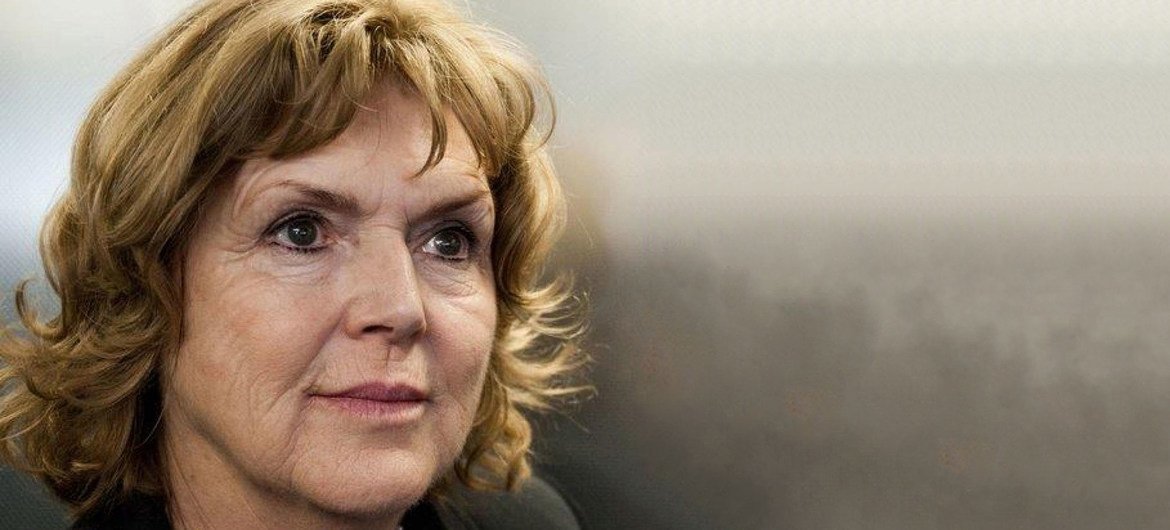
Mary Lawlor, UN Special Rapporteur on the situation of human rights defenders.

Mary Lawlor, UN Special Rapporteur on the situation of human rights defenders.

An independent UN human rights expert has called for India to release an activist imprisoned since 2017, expressing concern over his persistent detention and deteriorating health. GN Saibaba, a former English professor at Delhi University, was arrested in 2014 and accused of links to banned Maoist groups, according to media reports. See: https://humanrightsdefenders.blog/2023/07/07/g-n-saibaba-in-india-continues-from-his-cell/

He was sentenced to life imprisonment three years later for multiple offences under the country’s Unlawful Activities Prevention Act.

GN Saibaba is a long-standing defender of the rights of minorities in India, including the Dalit and Adivasi people,said Mary Lawlor, UN Special Rapporteur on the situation of human rights defenders on 21 August “His continued detention is shameful. It bears all the hallmarks of a State seeking to silence a critical voice,” she added.
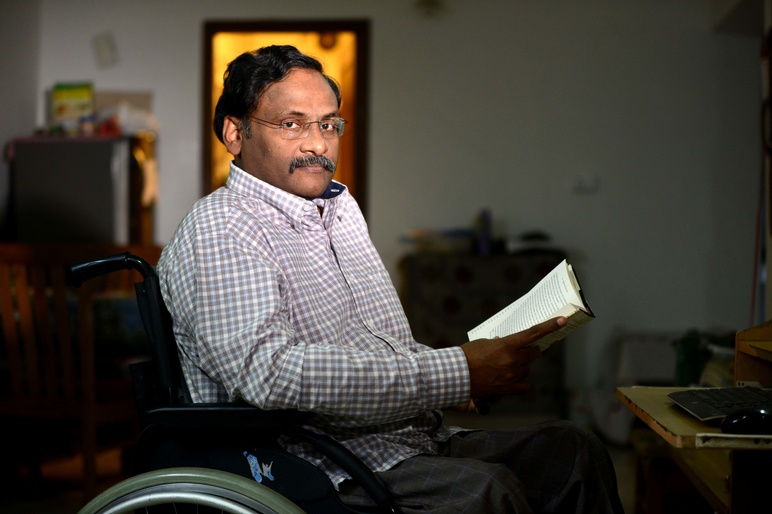
UN human rights experts have repeatedly raised grave concerns about the prosecution of Mr. Saibaba, who has suffered from a spinal disorder and polio since childhood and uses a wheelchair. 

His detention was declared arbitrary by the UN Working Group on Arbitrary Detention in an opinion issued in 2021.

In March 2024 came the good news: The Nagpur bench of Bombay High Court set aside the conviction, Read more at:
http://timesofindia.indiatimes.com/articleshow/108246679.cms?utm_source=contentofinterest&utm_medium=text&utm_campaign=cppst

https://news.un.org/en/story/2023/08/1139932

https://english.mathrubhumi.com/news/world/un-expert-pitches-for-ex-delhi-university-professor-g-n-saibaba-s-release-1.8840381

Pressure on India continues to clear father Stan Swamy’s name

July 10, 2023

On 6 July 2023 UCA News reporter reported on efforts at the second death anniversary of the Jesuit priest Father Stan Swamy, who was falsely charged with terror-related laws, See also: https://humanrightsdefenders.blog/2020/10/11/the-indomitable-father-stan-swamy-defending-the-adivasis-and-the-dalits-a-cause-of-arrest/

A group of rights activists in India have urged President Droupadi Murmu to withdraw terror-related cases against late Jesuit Father Stan Swamy and 15 other accused in the 2018 Bhima Koregaon violence case.

“It is a false case registered against Father Swamy and others and it should be withdrawn,” said Father Antony P.M, a social activist at a gathering to mark the second death anniversary of the priest, on July 5 in the eastern Jharkhand state. Tributes were paid to the Swamy across the country.

He said a group of activists is appealing to the president, who hails from an indigenous community in eastern India, to use her good office to withdraw “the totally false case registered against right defenders,” Antony told UCA News on July 6.

The activists had gathered in front of the Raj Bhavan, the official residence of the Jharkhand governor, in the state capital Ranchi. It was organized by the Shahid Father Stan Swamy Nyaya Morcha (Martyer Stan Swamy Justice Forum). 

“Father Swamy, who fought for the rights of indigenous people in Jharkhand finally had to die for want of medical care as a prisoner,” said Antony, the director of Bagaicha, a Jesuit social center in Jharkhand, where Swamy lived and worked.

Murmu served as the governor of Jharkhand when Swamy’s residence in Ranchi was raided twice and the federal terror investigative agency arrested him in 2020.

He was accused of having links with outlawed Maoists along with 15 well-known human rights activists accused in a case linking them to a violent clash in Bhima-Koregaon village in western Maharashtra state in 2018. 

The late priest and others including rights activists, lawyers, academicians, and writers, were also charged under the provisions of a draconian anti-terror law, the Unlawful Activities Prevention Act (UAPA), alleging they had conspired to unleash violence in Bhima-Koregaon.

The priest was also accused of sedition and conspiring with Maoist rebels to overthrow the federal government. 

The 85-year-old activist priest died as an under trial prisoner in a private hospital in Mumbai, the capital of Maharashtra.

“We hereby request Your Excellency to take cognizance of the entire Bhima-Koregaon case wherein the intention of the state and the investigation agencies is highly suspicious and does not inspire any confidence in common citizens,” they said in a memorandum.

“Several independent investigations, including by US-based Arsenal Consultancy, have exposed how the case, based on fabricated evidence, is just a witch-hunt by the state,” it said.

“We request that all the human rights activists be immediately released on bail, the case and prosecution be withdrawn and criminal proceedings be initiated against those responsible for fabricating and planting evidence,” the memorandum added.

It also briefly provided details of the findings from Arsenal Consultancy, a digital forensic lab, that said digital evidence was planted on the computer of Father Swamy and others, leading to their arrest and incarceration.

Antony further demanded the scrapping of the draconian UAPA, under which Swamy was arrested.

“Once a person is charged under the UAPA, he/she is not treated well in jail even if there is no connection with the case remotely,” the priest said, citing the example of Swamy.

Despite suffering from Parkinson’s and other age-related diseases, Swamy was denied bail by both the trial court and the high court before his death.

“If the jail authorities cared for him well or the courts had granted bail in time, I think he would have been with us,” Antony, also a Jesuit, observed.

“The investigating agency has still not filed the charge sheet and activists are languishing in jail. This is a gross violation of human rights,” the priest said. 

Indian Jesuits have approached the Mumbai High Court seeking “to clear his name from the false cases” that led to his arrest, imprisonment and death in custody.

https://www.ucanews.com/news/activists-urge-indian-president-to-clear-stan-swamys-name/101875

“G. N.” Saibaba in India continues from his cell

July 7, 2023

INPA02121512

A wheel-chair using, human rights activist and former university lecturer of English, G. N. Saibaba has endured years of cruel, inhumane solitary confinement ©DR

I still stubbornly refuse to die
The sad thing is that
They don’t know how to kill me
because I love so much
The sound of growing grass

OMCT published this impressive story in calling for the immediate release of G. N. Saibaba:

These are the defiant words of Gokarakonda Naga “G. N.” Saibaba, written from his cell in Nagpur Central Jail in the Indian state of Maharashtra. A wheel-chair using, human rights activist and former university lecturer of English, Sai has endured years of cruel, inhumane solitary confinement. Still, his irrepressible resilience shines through. And Sai’s poetry fills a recently published anthology. But he did not write it in verse. In order to evade the prison’s punishing censors, and to disguise his messages of equality, positivity and love, Sai penned letters to friends and his partner of 30 years. These were transcribed, and became his book entitled, Why Do You Fear My Way So Much?

Prison conditions

Now, G. N. Saibaba is much less able to write. Since his erroneous conviction for terrorism-related crimes in 2017, and a sentence of life imprisonment, Sai’s health has progressively deteriorated. Suffering from a heart condition, a brain cyst, a lump in the abdomen and breathing difficulties, his multiple medical conditions require specialised treatment only available in New Delhi. And his disability as a result of childhood polio has been compounded by untreated nerve damage in his left arm, that has spread to his right, leaving him with no strength in his upper limbs. Sai needs support to perform any simple human function like sitting up, eating, drinking or using the toilet, a task which has been assigned to two fellow detainees. His dependency has been underlined by the constant monitoring of his cell. It was only recently – after Sai went on another hunger strike – that the prison authorities agreed to change the direction of CCTV cameras, giving him some semblance of privacy. Before that, his bed and toilet were recorded 24/7. This was a small victory. Despite repeated advocacy by the UN and human rights groups on G. N. Saibaba’s behalf, he is forced to inhabit a small, egg-shaped cell exposed to extreme weather conditions and with little space to move, particularly for someone in a wheelchair as Sai. Given his disability, some commentators believe the conditions of his detention may amount to torture.

Arrest in Delhi

It was 9th May 2014, and G. N. Saibaba was returning home for lunch from his lecturing duties at Delhi University. Without warning, a van jack-knifed in front of the car he was travelling in, forcing it to stop. Sai’s driver was pulled roughly from the vehicle, and replaced by a man in civilian clothing. Two others flanked their captive in the back. G N Saibaba was driven directly to the airport. He was never shown an arrest warrant, and nobody informed Sai’s relatives about his arrest. He was put on a plane to Nagpur, Maharashtra. On arrival, he was transported in an anti-landmine vehicle, in a convoy of commandos armed with automatic weapons. The military clearly wanted to send a message they had detained a hard-core terrorist – not a committed campaigner who has fought most of his life against discrimination and caste-based oppression, and for the rights of women and indigenous Indians.

Activism

G. N. Saibaba grew up in a small, rural community in southern India. Disabled by polio as a young child, he understood early on how unfairness and prejudice are perpetrated. Excelling in school, Sai went on to university where he became involved in student politics. His appointment as a professor of English did not dilute his outspoken criticisms of injustice.

In particular, he became a leading detractor of what became known as ‘Operation Green Hunt’ – a military campaign in central India, home to a large population of several indigenous communities (known as Adivasis), to eliminate Maoists, also called Naxals. Central India has witnessed numerous people’s movements opposing forceful occupation of indigenous land, and the exploitation of ancient forests and rich mineral resources. This military campaign against Naxals was used to quash such movements, leading to numerous human rights violations against civilians.

Conflict in this region dates back to the 1960s. ‘Operation Green Hunt’ began in 2009 – an all-out, on-going offensive by the Indian armed forces to rid the area of Naxals. G. N. Saibaba led the Forum Against War on the People – a solidarity organisation, and an attempt to shine a light on human rights abuses in the region. These atrocities – committed for the most part by the military and paramilitaries – have been well documented. They include extrajudicial killings, multiple rapes, and the deeply disturbing desecration of civilian corpses. It has been estimated more than 2,000 people have lost their lives since 2009.

Conviction

G. N. Saibaba’s advocacy certainly gave pause for thought to national and transnational mining corporations thinking about investing in the region. So, it was inevitable perhaps he would become a target. His persecution began under the Congress government – his Delhi home was raided more than once – and then continued under the BJP, and the prime ministership of Narendra Modi.

At G. N. Saibaba’s trial in 2017, with the courthouse fortified by hundreds of police officers to reinforce the impression of a dangerous extremist, he was tried under India’s anti-terror legislation – the Unlawful Activities (Prevention) Act. With five others, Sai was convicted of alleged links to the banned Maoist organisation.

Judicial rollercoaster

In October this year, the Nagpur Bench of the Bombay High Court ruled G. N. Saibaba’s initial trial had been flawed. The case against him was discharged. The elation he, his family and supporters felt quickly turned to disbelief. The government – infuriated, no doubt by the court’s decision to release an ‘urban Naxal’, a term regularly used to stigmatise human rights defenders – applied for a special sitting of the Supreme Court. The very next day, on a non-working day the special bench of the Supreme Court suspended the decision of the Bombay High Court. This leaves G N Saibaba still in that heavily monitored isolation cell, struggling to negotiate its curved walls in his wheelchair.

Above all, love

G. N. Saibaba’s hope of liberty has once more been dashed. Even so, his spirit is strong. The untreated infections in his hands, and the pain he experiences, means Sai cannot write more than two or three pages a month. But letters from home, especially from his partner, help sustain him.

I defeat the purpose
of the solitary confinement
by drowning myself
in your letters of love.

https://www.omct.org/en/resources/news/an-academic-is-caged-his-thoughts-are-still-free-resilient-and-undefeated

Breaking news: Laureates of the MEA for 2023 announced

January 19, 2023

Today the three Martin Ennals Award Laureates 2023 were announced !

The 2023 Laureates — Delphine Djiraibé (Chad), Feliciano Reyna (Venezuela), and Khurram Parvez (Jammu and Kashmir) — have each dedicated over 30 years of their lives to building movements which brought justice for victims, accountability from leaders, or medicines to the marginalized. They have made human rights real for thousands of people in their communities, despite the ongoing, sometimes life-threatening, challenges they endure.  For more on this award and its laureates, see: https://www.trueheroesfilms.org/thedigest/awards/043F9D13-640A-412C-90E8-99952CA56DCE

———————

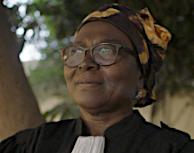
Delphine Kemneloum Djiraibé was one of the first female lawyers in Chad and a pioneer of the human rights movement in one of the poorest countries in the world, fraught with corruption and human rights abuses. Convinced that her role is to “challenge the power”, Delphine has advocated on behalf of victims and the democratic process for over 30 years. She was a key figure in bringing the former dictator Hissène Habré to justice. Djiraibé heads the non-governmental organisation Public Interest Law Center (PILC), which trains volunteers and accompanies citizens seeking justice for violations of their rights. In recent years she has been particularly active in combating gender-based violence and is in the process of establishing the first women’s counselling center in Chad, which will include an emergency shelter for women affected by domestic violence. See also: https://www.trueheroesfilms.org/thedigest/laureates/5B701F71-12FD-B713-9F99-5E09B9AFD6DA

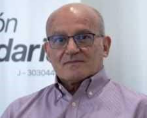
After the death of his partner Rafael from AIDS in 1995, Feliciano Reyna, then an architect, founded Acción Solidaria to provide much needed medication and treatment to Venezuelans living with HIV & AIDS. Feliciano and Acción Solidaria began advocating for access to health for the marginalised LGBTQI population in a country where healthcare was on the decline and corruption on the rise. They created the first national AIDS Help Line in Venezuela and ran a national awareness campaign on HIV & AIDS, which aired on TV and in movie theaters, and received radio and magazine coverage. Feliciano Reyna went on to found CODEVIDA, a coalition of Venezuelan organisations promoting the rights of Venezuelan citizens to health and life. As he put it: “We walked directly into the complex humanitarian emergency in Venezuela”. Despite ongoing threats, since 2006, he has worked closely with UN mechanisms to defend human rights in his country. In 2019 his advocacy was instrumental in establishing the Independent International Fact-Finding Mission on Venezuela. 

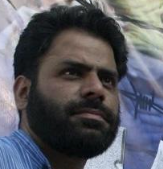
At the age of 13, when Khurram Parvez witnessed the shooting of his grandfather during a protest demonstration against the molestation of women outside his house in Kashmir, he chose to “not incite violence and become part of some revenge” , but rather to become a “nonviolent activist“. He founded the Jammu and Kashmir Coalition of Civil Society (JKCCS) and is the Chair of the Asian Federation Against Involuntary Disappearances. For 15 years he has travelled to the most remote parts of the region to sit with victims of abuse, collect documentation and report on their stories. Under his leadership, the JKCCS has been highly effective in translating the protections guaranteed in international human rights law into local realities. Despite continued attacks on his right to freedom of expression by the Indian government, being jailed in 2016 and losing a leg to landmines, Khurram relentlessly spoke the truth and was an inspiration to civil society and the local population. In November 2021, he was arrested under the Unlawful Activities Prevention Act (UAPA) on politically motivated charges. He remains detained without trial in India.  See also: https://www.trueheroesfilms.org/thedigest/laureates/81468931-79AA-24FF-58F7-10351638AFE3

You can watch them take questions from the press at the Club Suisse de la Presse, livestreamed on February 14th, 2023 from 12h CET.

A celebration of the Laureates 2023 will take place on 16 February at the Salle communale de Plainpalais in Geneva, at 6:30pm. The event is open to the public and livestreamed from the Martin Ennals Foundation’s website and Facebook page. Sign-up to the Ceremony

Global Witness report 2021: continued disaster

October 5, 2022

Stuti Mishra in the Independent of 29 September 2022 summarises and analyses the report “A Decade of Defiance: Ten years of reporting land and environmental activism worldwide” by Global Witness

More than 1,700 environmental defenders have been killed around the world in the last decade with one death reported every other day on average…The report titled A Decade of Defiance: Ten years of reporting land and environmental activism worldwide, released by Global Witness, reveals the increasing threats environmental activists are facing as the climate and biodiversity crisis worsens.

The research states that a total of 1,733 people have been killed over the past 10 years trying to protect their land and resources. That is an average of one defender killed approximately every two days over 10 years.

The report shows Brazil has been the deadliest country for environmental defenders with 342 lethal attacks reported since 2012 with over 85 per cent of killings within the Brazilian Amazon.

The data found within the report also shows that over half of the attacks over the 10-year period have taken place in three countries — Brazil, Colombia, and the Philippines — with around 300 killings reported in these countries.

Mexico and Honduras witnessed over 100 killings while Guatemala and India saw 80 and 79 respectively, remaining one of the most dangerous countries. The report also reports 12 mass killings, including three in India and four in Mexico.

Mexico was the country with the highest recorded number of killings in 2021, totalling 54 killings, up from 30 the previous year. Almost half of those killed were again Indigenous people while over a third were forced disappearances, including at least eight members of the Yaqui community.

The report also reveals that over three-quarters of the attacks recorded in 2021 took place in Latin America. In Brazil, Peru and Venezuela, a big majority of 78 per cent of these attacks occurred in the Amazon.

Meanwhile, the biggest increase in lethal attacks was witnessed in Brazil and India in 2021 with 26 deaths reported in Mexico, up from 20 and 14 in India, up from four.

Both Colombia and the Philippines saw a drop in killings to 33 in 2021 from 65, and 19 from 30 in 2021 respectively. Yet overall they remain two of the countries with the highest numbers of killings in the world since 2012.

2021 Highlights from Global Witness report

  • Around 200 Land and Environmental Defenders were killed in 2021 – nearly four people a week
  • Over three-quarters of the attacks recorded in 2021 took place in Latin America
  • Nearly 40 per cent of all attacks reported were against Indigenous people
  • Mexico recorded the highest number of killings in 2021
  • Brazil and India both saw a rise in lethal attacks in 2021
  • 50 of the victims killed in 2021 were small-scale farmers
  • Around 1 in 10 of the defenders recorded killed in 2021 were women, nearly two-thirds of whom were Indigenous [see also: https://humanrightsdefenders.blog/2021/09/13/global-witness-2020-the-worst-year-on-record-for-environmental-human-rights-defenders/]

In Africa, the Democratic Republic of Congo remained the country with the highest number of attacks — eight defenders were killed there in 2021. All eight of these killings were in Virunga National Park, which remains extremely dangerous for the park rangers protecting it.

The organisation began collecting data on attacks against those defending land and the environment in 2012 and found that the control and use of land and territory is a central issue in countries where defenders are threatened. Much of the increasing killing, violence and repression is linked to territorial conflicts and the pursuit of economic growth based on the extraction of natural resources from the land, it states. The research has also highlighted that Indigenous communities in particular face a disproportionate level of attacks — nearly 40 per cent — even though they make up only 5 per cent of the world’s population.

However, the research found that the figures also do not capture the true scale of the problem, as tightened control on media has led to severe underreporting in some countries where environmental defenders are most vulnerable. Research has also found that few perpetrators of killings are rarely ever brought to justice due to the failures of governments to properly investigate these crimes.

While a majority of these attacks are not properly investigated or reported on, a big proportion of these attacks were linked to sectors like mining and infrastructure, including large-scale agribusiness and hydroelectric dams.

Many authorities ignore or actively impede investigations into these killings often due to alleged collusion between corporate and state interests, the report says.

All over the world, Indigenous peoples, environmental activists and other land and environmental defenders risk their lives for the fight against climate change and biodiversity loss.

They play a crucial role as a first line of defence against ecological collapse, yet are under attack themselves facing violence, criminalisation and harassment perpetuated by repressive governments and companies prioritising profit over human and environmental harm.

a spokesperson for Global Witness said

With democracies increasingly under attack globally and worsening climate and biodiversity crises, this report highlights the critical role of defenders in solving these problems,” a spokesperson for Global Witness said, adding that the organisation makes an “urgent appeal for global efforts to protect and reduce attacks against them.”

Apart from killings, the report also reveals a number of tactics being used to silence them, like death threats, surveillance, sexual violence, or criminalisation – and that these kinds of attacks are even less well reported.

https://www.globalwitness.org/en/campaigns/environmental-activists/decade-defiance/

https://www.independent.co.uk/climate-change/news/global-witness-report-environment-defenders-threat-b2176247.html

Sedition law suspended by India’s Supreme Court

May 12, 2022

Having posted before about this nefarious law [see also: https://humanrightsdefenders.blog/2021/06/16/delhi-high-court-re-establishes-that-criticism-is-not-sedition/], it is good news that on 11 May 2022 India’s Supreme Court suspended this law which activists say is often used by Prime Minister Narendra Modi’s government to target free speech and dissent.

Mr Modi’s critics say that the law, which was once used by Britain to target independence hero Mahatma Gandhi, has been abused by his government against many journalists, activists, and students. Section 124A of the Indian penal code gives wide-ranging powers to the police to arrest people, who can even face life imprisonment, for an act or speech that “brings or attempts to bring into hatred or contempt, or excites or attempts to excite disaffection towards the government”.

India’s official crime data says 236 people faced sedition charges between 2018 and 2020. India sparked global outrage last year after 22-year-old climate change activist Disha Ravi was arrested for sedition for allegedly creating a “toolkit” to aid anti-government farmer protests.

See also:

The rigours of Section 124A (are) not in tune with the current social milieu, and was intended for a time when this country was under the colonial regime,” India’s chief justice N V Ramana, part of a three-judge bench hearing a petition against the law, said. Mr Ramana asked the government not to file any new sedition cases and pause ongoing sedition investigations.

All pending trials, appeals and proceedings” under sedition, the court said, “be kept in abeyance” until the “re-examination of the provision is complete“.

The government had said Monday that it had decided to “re-examine and reconsider” the law but it remained in force. The top court also urged people jailed for sedition to approach local courts for bail.

Amnesty International welcomed the Supreme Court’s order “For far too long, authorities have misused the sedition law to harass, intimidate, and persecute human rights defenders, activists, journalists, students, filmmakers, singers, actors, and writers for peacefully exercising their right to freedom of expression,” Aakar Patel, Chair of Amnesty International India’s Board, said. “Sedition has been used as a tool of political repression by successive governmens”i

Nagpur-based lawyer Nihalsingh Rathod, who represents many accused in the Elgar Parishad case said the legislature should have re-examined the relevance of sedition a long time ago. The Supreme Court’s interim order was an important step in rights jurisprudence, he said.

“It won’t bring complete respite as no state invokes an isolated provision. In present cases too they invoke many provisions, including UAPA. But still, it brings hope that the process of looking at sedition and jurisprudence around it is being re-examined. It offers some hope that sedition law will undergo some churn that has never happened,” he said…

https://www.sbs.com.au/news/article/indias-top-court-suspends-use-of-controversial-sedition-law/wy0racqs4
https://economictimes.indiatimes.com/news/india/sedition-law-lawyers-and-free-speech-activists-welcome-sc-order/articleshow/91500777.cms?utm_source=contentofinterest&utm_medium=text&utm_campaign=cppst