Posts Tagged ‘Independence of Lawyers’

Human rights lawyers and indigenous people in the Philippines endangered

January 24, 2015

Human rights lawyers and their clients stage a picket at the Supreme Court to mark the ‘Day of the Endangered Lawyer’ (photo courtesy of NUPL)

Human rights lawyers in the Philippines on Friday 23 January 2015 protested publicly against the growing death toll within their ranks as they marked the “Day of the Endangered Lawyer” by trooping to the Supreme Court. The protest spearheaded by the National Union of Peoples’ Lawyers [NUPL] and joined by the Integrated Bar of the Philippines was joined by lawyers’ and support groups that staged pickets or held dialogues at Philippine embassies and consulates in 23 cities in 11 European countries.

Figures show that, since attacks on legal professionals began being recorded in 1977, “100 lawyers have been attacked (57 since 2001) while 50 lawyers have been killed (41 since 2001).” “Nineteen judges have been murdered, 18 since 2001”

Government must simply do its job: protect its citizens, categorically condemn these attacks on lawyers as human rights defenders; seriously and credibly investigate, prosecute and punish the perpetrators; and uphold human rights because the attacks on lawyers is not only an attack on the individual lawyer, it is an attack on the legal profession, and most fundamentally — in the context of the targeted assaults on human rights and public interest lawyers — an attack itself on the rights and interests of the mostly poor and oppressed in our country” 

http://www.interaksyon.com/article/103685/a-deadly-profession–human-rights-lawyers-count-the-costs-on-day-of-the-endangered-lawyer

A petition <http://www.advocatenvooradvocaten.nl/wp-content/uploads/Petition-Day-of-Endangerd-Lawyer-2015.pdf> signed by lawyers organizations from Asia, Canada Europe and the United States  calls on the Aquino government  to prevent extrajudicial killings and all forms of harassment of lawyers and to end impunity by prosecuting perpetrators of rights violations. The petition also calls on the Aquino government  to protect the safety of lawyers as provided for in the Basic Principles on the Role of Lawyers adopted by the General Assembly of the United Nations in 1990.  Underlying causes for extrajudicial killings. The practice of labeling (classifying victims as ‘enemies of the state’), the involvement of the military in politics, the proliferation of private armies and vigilante groups and the culture of impunity have been identified by national and international fact-finding bodies as the main root causes for the alarming rate of extrajudicial killings, including the extrajudicial killings of lawyers, in the Philippines.

Away from the capital human rights violations against indigenous people and their human rights defenders also continue as demonstrated in 2 film documentaries:

Gikan sa Ngitngit nga Kinailadman” (From the Dark Depths) records grave rights violations using interviews and recollections of the survivors and witnesses. The cases featured in the film remains unresolved; the perpetrators waiting for the next human rights defender to hunt. The film shows the atrocities of the military and paramilitary troops, including the armed agents of the agro-industrial corporations in the hinterlands of Mindanao.

-The first case presented in the film is the assassination of Gilbert Paborada—a Higaonon farmer in Bagocboc, Opol, Misamis Oriental. Daisy Paborada, the wife of Gilbert, and Joseph Paborada, his brother, reiterates how the struggle of their community against the entry of palm oil plantations of A Brown Company led to Gilbert’s death.

-The film also shows interviews about the harassment of the Lumad community in Opol as they suffer from the goons of A Brown Company. The harassments and intimidation breed the culture of fear and terror among the people who opt to protect their ancestral domain vis-à-vis the environment over money.


PHOTO taken during the shooting of “Gikan sa Ngitngit nga Kinailadman” in the mountains of Pantaron in Bukidnon. (RMP-NMR)

Dalena is also the director of Alingawngaw ng mga Punglo (Echo of Bullets) that exposed the criminal acts of the military under the infamous General Jovito Palparan, also known as ‘The Butcher.’ Palparan now is in jail, facing allegations of murder against human rights defenders.

Sr. Maria Famita Somogod, regional coordinator of Rmp-Nmr, said the film highlights political repression. The spate of human rights violations featured in the film is the reaction of the government to quell the legitimate dissent of the lumads against the entry of agro-industrial corporations in their ancestral domain. Somogod said the dissent of the lumads and farmers is legitimate. Their demands are to protect their ancestral domain against the encroachment of foreign corporations in the hinterlands. “Instead of seeds, bullets. Instead of food, bombs. Instead of peace, forcible evacuation. Instead of life, death,” Somogod said, adding this is what the ordinary lumads and farmers get for protecting the land of promise.

In the words of the author Anjo Bacarisas, in Sunstar of 25 January: at the end of the film one asks: How should we stop this appalling cruelty against the lumads and farmers?

http://www.sunstar.com.ph/cagayan-de-oro/feature/2015/01/25/underbelly-land-promise-388461

Persecution of Lawyers and Journalists in Turkey: side event in Geneva on 27 January

January 23, 2015

L4L logo Lawyers for Lawyers, the Law Society of England and Wales,  Lawyers Rights Watch Canada, Privacy International, Fair Trial Watch and Media Legal Defence Initiative organise  a panel discussion on the “Persecution of Lawyers and Journalists in Turkey” on Tuesday, 27 January, in Geneva, Immediately after the Universal Periodic Review (UPR) on Turkey,

 At this event fundamental rights of lawyers and journalists that are regularly being violated will be discussed, including freedom of expression, privacy, confidentiality between lawyers and their clients and the protection of sources by journalists. This event comes at a time when the rule of law in Turkey is under serious threat.

[Turkey has adopted new laws and judicial reform packages, allowing for even more internet censorship, data collection, surveillance and the censoring of critical views on the pretence of protecting national security, which are directly undermining the freedom of expression, but also other fundamental rights such as privacy. In particular, journalists and lawyers are negatively impacted. They are subject to surveillance and legal harassment. The last couple of years large groups of lawyers and journalists have been arrested on the suspicion of terrorism related offences. Lawyers face stigmatisation by being continuously identified with their clients’ causes. Journalists are accused of not being independent. For both groups it is hard, if not impossible, to work freely, independently and securely.]

Speakers:

Ayse Bingol – Lawyer from Turkey

Tayfun Ertan – Journalist from Turkey

Marietje Schaake (by Skype) – Member European Parliament

Alexandrine Pirlot de Corbion – Privacy International

Tony Fisher – The Law Society of England and Whales

Moderator:  Irma van den Berg – Turkey expert of Lawyers for Lawyers

The event takes place from 12h45 – 14h30 in Room XXIII, Palais des Nations. Those wishing to attend, send email – before 23 January – to : bp[at]lawyersforlawyers.nl

Turkey 27 January in Geneva; side-event Persecution of Lawyers and Journalists in Turkey Lawyers for Lawyers.

The Plight of China’s Human Rights Lawyers Worsened

January 19, 2015

Under the title “The Plight of China’s Rights LawyersFrances Eve, in Chinafile of 16 January 2015, has made an excellent compilation of the travails of the Chinese human rights lawyers in 2014. It was one of the worst years for civil society and human rights defenders in particular.

Pu Zhiqiang, center, pictured in 2011 talking with the media while he was serving as artist Ai Weiwei’s lawyer – Peter Parks/AFP/Getty Images

At least 9 lawyers either are currently facing criminal charges or began serving prison sentences in 2014: Ding JiaxiPu ZhiqiangQu ZhenhongTang JinglingXia LinXu ZhiyongYu WenshengChang Boyang and Ji Laisong (the last 2 now released). The unprecedented scale of criminal prosecution against rights lawyers sharply contradicts the goal of “governing the country by law,” which was proclaimed at October’s Fourth Plenum meeting. Here the whole piece for those interested:

“As the year came to a close, at least seven prominent Chinese human rights lawyers rang in the New Year from a jail cell. Under President Xi Jinping, 2014 was one of the worst years in recent memory for China’s embattled civil society. Bookending the year were the cases of two prominent legal advocates: in January, Xu Zhiyong was sentenced to four years imprisonment for his moderate criticism of government policy and leading the “New Citizens’ Movement,” a group advocating for political reforms in China. Outspoken free speech lawyer Pu Zhiqiang, who turns 50 tomorrow, has spent the past six months in detention as authorities continue to build a case against him.

The past year has been distinctly bad for a band of crusading lawyers, who for the past decade or so, since their movement first emerged, have described their mission asweiquan, “safeguarding rights.” According to several Chinese rights lawyers, more members of their ranks—which have grown from just a handful to over 200—are currently in detention than at any time since 2003, when lawyers involved in this kind of work first began to face criminal detention.

Among the first to be arrested was Gao Zhisheng, a feisty and outspoken defender of everyone, from factory workers and peasants to journalists and underground Christian and Falun Gong practitioners, who was sentenced to three years in 2006 on the politically motived charge of “inciting subversion of state power.” Suspending his sentence, authorities instead held Gao several times in detention incommunicado—where he was brutally tortured—until 2011, when judges ordered Gao to be sent to prison for “violating” his parole. Gao, who was released into a form of house arrest in August 2014, was a prominent case, yet imprisoning lawyers was still unusual at the time. Since then, rights lawyers who have taken on cases involving politically “sensitive” issues have increasingly faced threats, harassment, administrative punishments, the revocation of their law licenses, and, as in a few widely publicized cases, disappearance and eventorture.

But since President Xi Jinping came to power, the government’s war on rights lawyers has escalated. At least nine prominent lawyers either are currently facing criminal charges or began serving prison sentences in 2014: lawyers Ding JiaxiPu ZhiqiangQu ZhenhongTang JinglingXia LinXu Zhiyong, and Yu Wensheng, as well as Chang Boyang and Ji Laisong who were both released on bail awaiting trial after months in detention. The unprecedented scale of criminal prosecution against rights lawyers sharply contradicts the goal of “governing the country by law,” which was proclaimed at October’s Fourth Plenum meeting, a gathering of senior Chinese Communist Party leaders.

A student leader in the 1989 pro-democracy movement, Pu Zhiqing had gone on to represent several high profile free-speech cases, including an anti-defamation ruling in favor of the magazine China Reform in 2004 and a much heralded defence of the authors of a widely read exposé of rural corruption. More recently, he defended activist artist Ai Weiwei and petitioner Tang Hui—who was sent to a re-education through labor (RTL) camp for petitioning for stronger punishment for her daughter’s rapists—in a case which garnered widespread public sympathy. State media evenfeatured Pu in reports on RTL, an unusual platform for a government critic. But now Pu has been detained on charges of “creating a disturbance” and “illegally obtaining personal information” after attending a seminar in May discussing the June Fourth Massacre. Police later tacked on additional charges of “inciting ethnic hatred” and “inciting separatism,” reportedly over a blog post Pu had written criticising the government’s version of the Kunming knife attack in March 2014. Lawyer Qu Zhenhong, who initially served as Pu’s lawyer, was arrested in June in connection with his case.

Tang Jingling, arrested after taking part in a commemorative “June Fourth Meditation” last summer, was a lawyer who defended victims of government land grabs, counterfeit medicine, and village corruption until authorities refused to renew his law license in 2006. He then became a “citizen representative,” continuing to give legal assistance, and later a member of a non-violent civil disobedience movement that works on labor rights, the hukou system, and equal education. At the end of the year, Guangzhou police transferred Tang’s case to the local prosecutor, an indication that he may be indicted and tried soon. If convicted, Tang faces a lengthy prison sentence for “inciting subversion of state power.” Meanwhile, his wife has faced harassment forspeaking out on his case.

In November, authorities arrested two lawyers, Yu Wensheng and Xia Lin, after they were hired by families to represent activists detained for expressing support for the protests in Hong Kong. Yu faces a charge of “creating a disturbance” and Xia, a former member of Pu Zhiqiang’s legal team and partner at Pu’s Huayi Law Firm, is accused of committing fraud. Those imprisoned last year include the lawyer Ding Jiaxi, who is serving a 42-month sentence after demanding government transparency and anti-corruption measures with the New Citizens’ Movement, alongside Xu Zhiyong, whose advocacy and election to his district’s People’s Congress made him another former darling of the Chinese press. Xu missed the birth of his daughter while he awaited his January trial.

While incarcerated, these lawyers have all been granted only limited access to their attorneys. The PRC Law on Lawyers (2007) authorizes lawyers to meet with their clients starting on the very day when they are put under detention, as does China’s Criminal Procedure Law. But, according to lawyers and family members of detainees, such provisions are rarely respected on the ground and often overridden by local administrative or Party orders, especially in political cases.

Family members of the jailed lawyers have reason to fear, since rights lawyers are no strangers to torture in detention and police brutality. Tang Jingling told his lawyer he was assaulted at Guangzhou No. 1 Detention Center, and in an open letter to Xi Jinping Pu Zhiqiang’s wife decried the “inhumane mental and physical torment” her husband has been subjected to at the Beijing No. 1 Detention Center. In Heilongjiang province in March, four lawyers were taken into custody and severely beaten after they requested to meet with their clients; according to their family members, the four suffered 24 broken ribs among them. Gao Zhisheng suffered such ill-treatment in prison that he lost almost all his teeth and remains very frail.

China’s leaders are far from governing the country under a system based on the rule of law. Instead, they are paying lip service to the idea in order to give legitimacy to the Communist Party’s rule while building a legal system that serves their political interests. This includes manipulating the criminal justice system to silence dissent and rein in human rights lawyers who push for judicial independence, fair trials, and protection of their clients’ legal rights. Chinese law bars a convicted lawyer from practising law for good. This is at the heart of what makes the currently growing trend of criminalizing rights lawyers particularly troubling.

Allowing lawyers and the judiciary to carry out their work without political interference is a key indicator of a country’s success in promoting rule of law. In November, China’s nominal legislative body, the National People’s Congress, posted online for “public consultation” several amendments to the country’s Criminal Code. Among these draft amendments is Article 35, which would revise the Criminal Law on the disruption of court proceedings by giving authorities overly broad powers to interpret speech in court as insulting, threatening, or disruptive and includes the vague provision prohibiting “anything else that seriously disrupts court proceedings.” The effect of these changes would be to criminalize lawyers’ speech during trials if they challenge the court, punishable by up to three years in prison. More than 500 rights lawyers across China have signed an open letter to the NPC, demanding they drop this amendment as it runs “counter to the direction of judicial reform.”

China’s embattled rights lawyers, however, have refused to be coerced into submission. On the contrary, they are increasingly challenging authorities for failing to practice the respect for the law that they preach. More young lawyers are joining the movement. Trained professionals, they strongly believe that all suspects should be afforded a fair and public trial, and they see no reason why ruling élites should be above the law. Many are paying a heavy price, but see it as a part of the struggle for a “better future.” Facing the charges against him, Pu Zhiqiang is fully aware of what awaits him. As he said to his lawyer from jail: “If we lose, I probably can’t be a lawyer after I get out, so what can I be?”

The Plight of China’s Rights Lawyers | ChinaFile.

Glimmer of hope for Sotoudeh and Iran crashed by Tehran Bar Association

October 21, 2014

The glimmer of hope for Nasrin Sotoudeh and Iran which I saw in my post of 6 September [https://thoolen.wordpress.com/2014/09/06/glimmer-of-hope-in-iran-nasrin-sotoudehs-ban-to-practice-overruled/] seems to have been crushed already. Yesterday, 20 october, the Observatory for the Protection of Human Rights Defenders, the joint programme of FIDH and OMCT, has received new information that on 18 October 2014, a three-member disciplinary investigation panel of Tehran’s Bar Association has now suspended Nasrin Sotoudeh’s law license for three years, based on a complaint filed by the Islamic Revolution Court’s Prosecution Office (unlike the first disciplinary panel of the Tehran Bar Association which rejected a similar request). Read the rest of this entry »

Papua: human rights defender Gustaf Kawer at risk of arrest

September 19, 2014

Several NGOs (i.a. Front Line and Asian Human Rights Commission) have expressed concern about the human rights defender Gustaf Kawer in Papua, Indonesia.

On 17 September 2014 a plain-clothed police officer visited the home of Mr Gustaf Kawer to deliver a summons in relation to his actions during a court hearing on 12 June 2014. This is the third summons he received since 19 August 2014. Allegedly, the human rights defender threatened and insulted a judge and was therefore subject to an investigation for “crimes against public authority”. As Gustaf Kawer was absent from his home, his wife refused to accept the summons, insisting that it should not be delivered to her.

[Gustaf Kawer received the first summons to appear before the police, to give a testimony, on 19 August 2014. However, according to an agreement between the Indonesian National Police and the Indonesian Bar Association (PERADI) on “Investigatory Procedures for Carrying Out The Profession As Advocate“, any summons issued to lawyers in relation to their work should be directed to PERADI. Since the summons on 19 August had been sent to Gustaf Kawer directly, he declined to appear. On 25 August 2014, a police investigator submitted a second summons to PERADI requesting that Gustaf Kawer appear before the Papua Regional Police headquarters for interrogation on 1 September 2014. The human rights lawyer had to leave his house for a while due to the risk of possible arrest. If prosecuted and found guilty, he could face up to 4 years in prison.]

This is not the first time that Gustaf Kawer has been targeted in connection to his work but after international campaign of solidarity and support, the authorities dropped the case against him (http://www.frontlinedefenders.org/node/27159).


Killing of human rights lawyer Rehman in Pakistan leads to low level response

May 17, 2014

The recent killing of the lawyer Rashid Rehman (or Rahman) in a case of blasphemy in Pakistan has created a lot of media attention. This report from the local newspaper The News International of 17 May throws an interesting light on the follow up within the police and alleges that two lower level policemen have been made the scapegoats:

“Police bosses have held their subordinates responsible for their incompetence and negligence in the murder of human rights activist Rashid Rahman. The Multan CPO has transferred Chyllyak SHO Ghulam Abbas and Shah Shamas SHO Akbar Kamboh for their negligence in providing security to Rashid Rahman. On the other hand, a senior police official has contradicted receiving any sort of application from Rashid Rahman for security protection. The official said the government could not provide security to each citizen on demand. The government only provides security to the accused and complainant in all cases, including in blasphemy cases, instead of providing security to counsels. Rashid Rehman was gunned down in his chamber on May 7 evening just a month after he had been threatened by the prosecution during a court hearing. No progress could be made on his murder after eight days of the high profile assassination, which had been condemned across the world. The UN and the US have urged the government to ensure the arrest of killers. Sources in the CPO office disclosed that the route of providing security shelter passed through the SSP Operations. “When someone seeks security, he submits his request to the CPO office who forwards it to the SSP Operation for looking into the matter whether the applicant is deserved for security or not,” they added. They said the HRCP Task Force had informed the Multan CPO office on receiving life threats. The CPO office directed Cantonment SP Mehmoodul Hassan to ensure security to Rashid Rehman. The SP asked Shah Shamas SHO Akram Kamboh to ensure security in jail while Chyllyak SHO Ghulam Abbas was directed to ensure security in his chamber at District Courts. They said that both the SHOs had been suspended in this regard. On the other hand, the Punjab IGP office had directed the Multan CPO to ensure security for Rashid Rahman at any cost on the report submitted by Punjab Special Branch on April 21. However, the CPO office did not comply with the IGP office order and assigned a task to SSP Operation to provide security to rights activist. The sources said that the senior officers had suspended two SHOs to save their skin. CPO Sultan Ahmed Chaudhry was repeatedly contacted on Friday, but his gunman Abdur Razaaq promised every time to ring back, but to no avail. Multan SSP Operations Shaukat Abbas, however, denied that the application was sent to the police by the slain for security. “The government does not provide security to everyone in blasphemy cases. The government only provides security to the complainant and the accused,” he said. The government cannot provide security to the defence counsel even in blasphemy cases, he added. Meanwhile, human rights activists criticised the police for adopting dual standards. The police did not provide security to Rashid Rahman despite his application, but security was provided to a Muhammad Latif Ansar Sial alias Prof Lajpal. He is not an academician but always shows himself as professor. Lajpal had contested in all general elections or local bodies held in the past. He participated in the 2013 elections from NA-151 and PP-198, securing only 59 and 9 votes as an independent candidate. He contested the 2008 elections from NA-151 and secured 183 votes. Rights activists observed police were not taking one of the valuable assassinations seriously and using delaying tactics. The United Nations declared it a cold-blooded murder and strongly condemned it on May 9, right after the second assassination. They urged the government to ensure prompt investigation into the matter so that lawyers, human rights defenders and journalists could work without any fear. The spokesperson for UN High Commissioner for Human Rights Rupert Colville in Geneva said the murder of Rashid Rahman had “brought into stark focus the climate of intimidation and threats that permeates the work of human rights defenders and journalists in the country.“ The UN had urged the government last month to investigate the threats and ensure security for Rehman. “We condemn the killing of Rehman and urge the government to ensure a prompt investigation and bring the perpetrators to justice,” the UN spokesman said.

via MULTAN City News – thenews.com.pk.

Lawyers for Lawyers raises the alarm: Filipino lawyers at risk

April 24, 2014


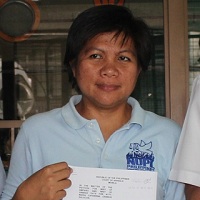
Cathy Salucon, Philippines via L4L

Cathy Salucon, Philippines via L4L

On 23 April 2014 Amsterdam-based Lawyers for Lawyers (L4L) and Lawyers’ Rights Watch Canada (LRWC) warn in an open letter to President Aquino of the Philippines for the continued labeling of lawyers as enemies of the state by the military. Since March, Atty. Maria Catherine L. Dannug-Salucon has been the subject of death threats, labeling, surveillance and verbal intimidation by military officers. Mrs Dannug-Salucon is reportedly on the Filipino military’s Watch List of so-called ‘Communist Terrorist’ supporters providing legal services.  She has also been under the surveillance of the Intelligence Services of the Armed Forces. The surveillance is particularly worrisome in view of the killing – reportedly by members of the Intelligence Services – on 25 March 2014 of Mr. William Bugatti, a human rights defender who was also working as a paralegal for Atty. Dannug-Salucon.
Read the rest of this entry »

Alarming disbarments and suspensions of lawyers in Ukraine

February 13, 2014

While most attention is focused on the demonstration in Ukraine, a recent report by the respected International Commission of Jurists [ICJ] casts light on alarming trend of disbarments and suspensions of lawyers.  The report casts light on a conflict in the legal profession, which has led to apparently arbitrary disciplinary action against a significant number of lawyers. The report reveals the escalating dispute in the legal profession following the implementation of a new law, signed by the President on 5 July 2012, which significantly changed the organization of the profession and provides for the establishment of a new bar association. The law,icj_logo_pantone Read the rest of this entry »

Haiti: Judicial harassment against human rights lawyers continues

October 28, 2013

Frontline NEWlogos-1 condensed version - croppedreports that on 22 October 2013, human rights lawyer André Michel in Haiti was arbitrarily held in police custody after police attempted to carry out a search on his vehicle. He was eventually released the next morning but remains at risk of arrest. André Michel is involved, as legal representative of the complainant, in a case of corruption and embezzlement of public funds allegedly implicating members of the President’s family. Read the rest of this entry »

Lawyers for Lawyers object to false charges against peoples’ lawyers in the Philippines

August 1, 2013

 Yesterday I had a post “Philippines Chief Human Rights Defender, Rosales, asked to resign for ‘incompetence’”. In reaction I received from Lawyers for Lawyers (L4L) an update on the continued pressure on ‘opposition lawyers’ who are labeled as “enemies of the state”.  L4L logoThe Dutch foundation Lawyers for Lawyers warns in an open letter to Read the rest of this entry »