Posts Tagged ‘imprisonment’

Journalists from Belarus and Georgia winners of European Sakharov Prize 2025

October 23, 2025

Two journalists, one imprisoned in Belarus and the other in Georgia, have won the European Union’s top human rights honor, the Sakharov Prize, European Parliament President Roberta Metsola announced on Wednesday 22 October 2025.

Andrzej Poczobut is a correspondent for the influential Polish newspaper Gazeta Wyborcza. He was convicted of “harming Belarus’ national security” and sentenced to eight years, which he is serving in the Novopolotsk penal colony.

Mzia Amaghlobeli, a prominent journalist who founded two of Georgia’s independent media outlets, was in August convicted of slapping a police chief during an anti-government protest. She was sentenced to two years in prison in a case that was condemned by rights groups as an attempt to curb media freedom.

Both are journalists currently in prison on trumped up charges simply for doing their work and for speaking out against injustice. Their courage has made them symbols of the struggle for freedom and democracy,” Metsola said at the parliament in Strasbourg, France.

For more on the annual EU award, named after Soviet dissident Nobel Peace Prize laureate Andrei Sakharov, see: https://www.trueheroesfilms.org/thedigest/awards/BDE3E41A-8706-42F1-A6C5-ECBBC4CDB449

The winner is chosen by senior EU lawmakers from among candidates nominated by the European Parliament’s various political groups. [see: https://humanrightsdefenders.blog/2025/10/02/2025-nominees-for-the-european-sakharov-prize/]

https://abcnews.go.com/International/wireStory/journalists-imprisoned-belarus-georgia-win-eus-top-human-126748980

https://spring96.org/en/news/118943

https://www.rferl.org/a/sakharov-prize-2025-andrzej-poczobut-mzia-amaglobeli-/33566711.html

https://euneighbourseast.eu/news/latest-news/2025-sakharov-prize-parliament-honours-andrzej-poczobut-and-mzia-amaglobeli/

Green human rights defenders of Mother Nature jailed in Cambodia

July 3, 2024

Five Cambodian activists record a podcast.
Five Mother Nature activists, from left to right Ly Chandaravuth, Thun Ratha, Yim Leanghy, Phuon Keoraksmey, and Long Kunthea on June 11, 2024. © 2024 Private

Cambodia has jailed 10 environmental activists who had sounded the alarm on river pollution for plotting against the government – a case critics have decried as politically motivated. Members of the group Mother Nature were charged in 2021 after they documented waste run-off into Phnom Penh’s Tonle Sap river, near the royal palace. [see: https://www.trueheroesfilms.org/thedigest/laureates/d41428d8-4b96-4370-975e-f11b36778f51]

Three of them, including Spanish co-founder Alejandro Gonzalez-Davidson, who were also convicted of insulting the king, were sentenced to eight years’ jail and fined $2,500 (£1,980). The seven others were handed six-year terms. Prosecutors have never explained how the activists had violated the law against insulting the king or conspiring against the government.

Since its founding in 2013, Mother Nature has campaigned against environmentally destructive projects and raised questions on how natural resources are managed in the South East Asian country. They document their findings in playful and informative videos that they post on Facebook, where they have 457,000 followers.

Environmental groups have long accused Cambodia’s leaders of profiting from the country’s natural resources. The government denies this and says Mother Nature is encouraging social unrest. Gonzalez-Davidson, who was earlier banned from entering Cambodia, called the verdict a “disastrous decision by the Hun family regime”.

Opposition political parties were dismantled, independent media outlets were shut and dozens of activists were jailed under the decades-long rule of former prime minister Hun Sen, who stepped down last year to pave the way for his son, Hun Manet, to assume leadership.

Under Hun Manet, Mother Nature activists have continued to criticise what they describe as an unequal enforcement of laws in favour of companies and the wealthy elite.

Four of the convicted activists attended the hearings and were immediately arrested following the verdict. Representatives of local NGO the Cambodian League for the Promotion and Defence of Human Rights (Licadho) who were present outside the Phnom Penh court said the arrests were violent, with “at least two of [them] dragged by their necks”. Arrest warrants have been issued for the six others, including Gonzalez-Davidson.

Earlier in the day, dozens of Mother Nature supporters marched towards the court where the activists were due to receive the verdict. Dressed in white – the traditional colour of mourning in the country – some of the supporters held up hand-written posters that read “We need freedom” and “We need rights”. Others held white flowers.

The verdict “sends an appalling message to Cambodia’s youth that the government will side with special interests over the environment every chance it gets,” said Human Rights Watch’s deputy Asia director Bryony Lau.

“It is astounding to criminalise activities of youths who are advocating for clean water in Phnom Penh, protecting mangrove forests in Koh Kong and warning against the privatisation of land in protected areas and characterising it as an attack against the state,” said Licadho’s outreach director Naly Pilorge.

Several of those convicted today had already served jail terms in the past. One of them, Long Kunthea, told BBC in an interview last year that she is willing to take on the risks of her activism to “for positive change”.

Kunthea was previously jailed for more than a year for organising protests to protect the Mekong river from further pollution. See also: https://humanrightsdefenders.blog/2021/06/22/continued-harassment-of-mother-nature-defenders-in-cambodia/

https://www.bbc.com/news/articles/c1340lze6ppo

https://www.hrw.org/news/2024/07/02/cambodia-environmental-activists-sentenced-6-8-years

https://www.reuters.com/world/asia-pacific/cambodian-court-jails-environmental-activists-plotting-against-government-2024-07-02/

About the ‘Stand As My Witness’ campaign which advocates on behalf of imprisoned Human Rights Defenders Around the World

August 12, 2023

Photo by Markus Spiske on Unsplash

On 4 August 2023, Jaxx Artz in Global Citizen explains the Stand As My Witness’ campaign:

Stand As My Witness was created in response to a growing trend in which civil society actors were arrested for their human rights work. Formerly known as Civil Society Behind Bars, the initiative is one of CIVICUS’ most effective strategies when it comes to sounding the alarm about the plights faced by HRDs around the world. According to the global alliance, hostile government actors and authoritarian regimes often use flawed legal processes with little oversight in order to prosecute activists. “[There are targeted attacks] against people uncovering high-level corruption, exposing very serious human rights violations, calling for accountability, and seeking to drive change in their societies,” Mandeep Tiwana, chief programs officer at CIVICUS, told Global Citizen.

As part of the campaign’s goal to spread awareness about some of the world’s imprisoned activists, CIVICUS profiles a handful of detained HRDs on their website. In actuality, these names and cases represent just a small percentage of people who are currently in prison because of their activism, and whom CIVICUS is trying to get released.

Abdulhadi al-Khawaja, founder and president of the Bahrain Center for Human Rights, who was forcibly arrested by Bahraini authorities. [see: https://humanrightsdefenders.blog/tag/abdulhadi-alkhawaja/ and https://www.trueheroesfilms.org/thedigest/laureates/4d45e316-c636-4d02-852d-7bfc2b08b78d]

As the global conditions for civic society worsen — with only 3.2% of the world’s population living in countries where civic space is considered open, according to the international global alliance CIVICUS — human rights defenders (HRDs) like al-Khawaja increasingly face the risk of government retaliation. 

The detention of HRDs is often arbitrary and a form of reprisal for the work [they] do,” David Kode, advocacy and campaigns lead at CIVICUS, told Global Citizen. “Take al-Khawaja, for example, who has been in prison since 2011 and is serving a life sentence. Despite many advocacy efforts, the Bahraini authorities seem to be bent on ‘punishing’ him and his family for calling for democratic reforms more than a decade ago.

Made up of civil society organizations and activists across more than 175 countries, CIVICUS has been campaigning on behalf of HRDs since its founding in 1993. As part of their work, the Stand As My Witness campaign — launched over 10 years ago — has sought to encourage investigations into unlawful imprisonments and bring global attention to cases like al-Khawaja’s.

Belarus has been restricting civic space and activists for years, with attacks increasing since the 2022 elections. [see also; https://humanrightsdefenders.blog/tag/belarus/]

How Are Human Rights Defenders Being Targeted?

CIVICUS has found that the tactics used to target HRDs are eerily similar across national borders and, over the years, the trends have only become more apparent and concerning.

“[The imprisonment of HRDS] is often preceded by stigmatization about their work, which includes branding activists as security risks. We saw this happen a lot after the [Arab Spring] in the Middle East and North Africa in 2011,” Tiwana said. “A lot of authoritarian regimes became fearful of people organizing and coming out into the streets to engage in civil society.”

To limit public support of pro-democracy movements and ostracize activists from society, government officials may twist the narrative surrounding an HRD’s arrest and accuse them of being spies for other nations. They may also invoke counter-terrorism or security legislation to pressure judges and quickly detain organizers or protestors without arrest warrants.

Take Khurram Parvez, an HRD from Northern India who was arrested in 2021 on charges of conspiracy and terrorism, for example. Parvez’s work documenting human rights violations — which include instances of disappearance, torture, and unlawful killing — in the Jammu and Kashmir region of India caught the attention of Indian authorities who wanted to silence his advocacy work.

See: https://www.trueheroesfilms.org/thedigest/laureates/81468931-79AA-24FF-58F7-10351638AFE3 and https://humanrightsdefenders.blog/tag/khurram-parvez/

CIVICUS currently advocates on behalf of Parvez through various strategies, such as raising concerns about his detention with the UN, holding meetings with diplomats in India, and encouraging the Human Rights Council in Geneva to put pressure on Indian officials to release him.

“We continue to raise concerns about his detention on social media, telling his story as a human rights defender and highlighting the gaps left by his detention in relation to the amazing work he does promoting human rights in Kashmir and supporting those who are forcibly disappeared in Asia,” Kode told Global Citizen. 

The private sector also plays an increasing role in silencing HRDs. Businesses may file strategic lawsuits against public participation (fittingly known as SLAPPs) against activists when their human rights work interferes with corporate profits or interests. [see: https://humanrightsdefenders.blog/tag/strategic-lawsuits-against-public-participation-slapps/]

In recent years, environmental activists and Indigenous land defenders have faced the brunt of the attacks as corporations file lawsuit after lawsuit restricting the right to protest, leading many activists to face house arrest, financial ruin, or imprisonment.

How Does Stand As My Witness Help Imprisoned HRDs?

Despite the myriad challenges that HRDs and civil society organizations face in their day-to-day work, CIVICUS’ Stand As My Witness campaign has been able to raise the profile of many activists who have been unjustly imprisoned.

Loujain al-Hathloul, for instance, is an HRD from Saudi Arabia who is well known for leading the campaign to legalize a woman’s right to drive. While in prison for nearly three years, al-Hathloul was subjected to severe torture from Saudi Arabian authorities, including electric shocks, flogging, and sexual assault, and denied regular access to see her family while in prison. See: https://www.trueheroesfilms.org/thedigest/laureates/1a6d84c0-b494-11ea-b00d-9db077762c6c

CIVICUS and other human rights organizations were able to mount an international campaign to bring attention to the years-long persecution faced by al-Hathloul and other women activists. The hashtag #FreeLoujain popped up across social media platforms, with global citizens around the world speaking up to urge Saudi Arabian authorities to release al-Hathloul.

While a national court initially sentenced al-Hathloul to five years and eight months for “conspiring against the kingdom,” she was released after 1,004 days. According to Tiwana, international pressure played a significant role in her release.

How Can Global Citizens Take Action?

The Stand As My Witness campaign relies on advocacy efforts from every part of civil society — when Global Citizens take action, for example, their voices can put an immense amount of pressure on world leaders.

“Hostile governments may have [HRDs] locked up for years, and it takes a concerted effort from relevant agencies, state actors, non-state actors, organizations, civil society, the media, and others to put enough pressure that leads to their release,” Tiwana said. “But justice often moves very slowly.”

One of the biggest challenges CIVICUS experiences with the Stand As My Witness campaign is engaging people during the life cycle of a case, which can often last several years. To fight against indifference, CIVICUS encourages Global Citizens everywhere to pay attention to the humanity of each activist who has dedicated their lives to the realization and protection of human rights.

You can get involved with the Stand As My Witness campaign by engaging with CIVICUS on social media, writing letters to government officials, and sharing information about HRDs who are not currently represented on CIVICUS’ interactive map. 

You can also demand that governments release HRDs from unjust imprisonment by taking action with Global Citizen on civic space issues.

https://www.globalcitizen.org/en/content/stand-as-my-witness/

BIG question: what to do with long-term detention of Human Rights defenders?

May 21, 2022

Event on 1 June 2022, 12:00-14:00: “Don’t forget about us: Strategies for resisting long-term detention of Human Rights Defenders”. Location: Cassese Room,  Villa Moynier, 120B Rue de Lausanne, Geneva (and online)

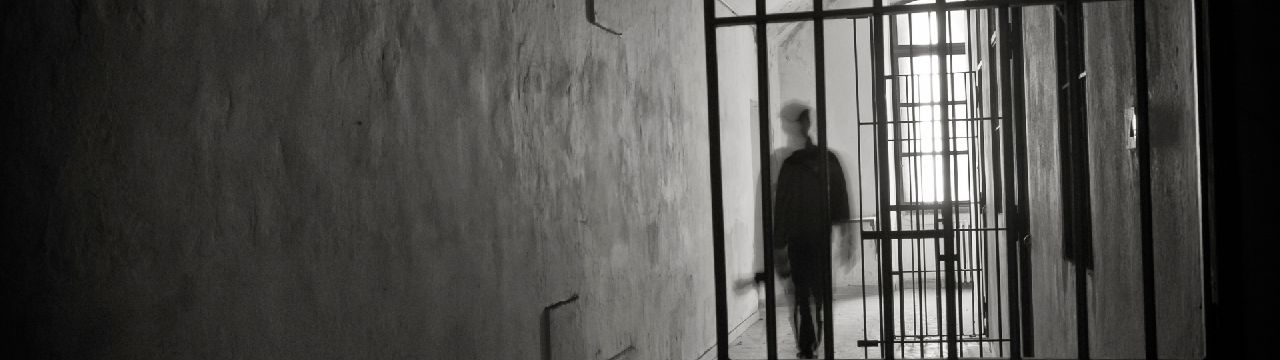
Figure of a person in a prison hallway

Logo Ennals

In 2021, the UN Special Rapporteur on Human Rights Defenders published a report on cases of long-term detention of activists, which were estimated to number hundreds or thousands worldwide. This report confirms the terrible treatment and conditions many defenders bear in prison. However, while an objective of long-term detention may be to discourage defenders, many cases result in perennial campaigns and increased publicity for the defenders themselves.

How can governments, civil society and international mechanisms work together to keep the pressure on long-term detention cases? What strategies have proven successful in improving respect for defenders’ rights and physical integrity while imprisoned?

This event is co-organized by Geneva Human Rights Platform and the Martin Ennals Awards, which has a long experience with its laureates being detained. This year, two of its three winners are in prison! See: https://humanrightsdefenders.blog/2022/04/20/save-the-date-and-come-to-the-mea-ceremony-2022-or-watch-online/

Opening

  • Gloria Gaggioli, Director, Geneva Academy of International Humanitarian Law and Human Rights

Moderation

  • Brian Dooley, Senior advisor on human rights, Human Rights First

Panelists

  • Maryam Al-Khawaja, Human Rights defender and daughter of Abdul-Hadi Al-Khawaja, detained in Bahrain since 2011
  • Quynh Vi Tran, Journalist and colleague of Pham Doan Trang, detained in Vietnam since 2020
  • Fr. Xavier Soreng SJ, Lecturer, Ranchi Social Sciences Institute, on behalf of Father Stan Swamy (1937-2021), India
  • Gerald Staberock, Secretary-General, World Organisation Against Torture
  • Tor Hodefield, Vuka! Coalition Coordinator, CIVICUS

Registration

This event will take place in a hybrid format:

  • Register here to attend the event at Villa Moynier (places are limited and will be allocated on a first-come-first-served basis) until 26 May 2022
  • Register here to join online via Zoom.

https://www.geneva-academy.ch/event/all-events/detail/336-don-t-forget-about-us-strategies-for-resisting-long-term-detention-of-human-rights-defenders

New shocking report by AI re prisoners’ abuse in Iran

September 3, 2020

Iran’s police, intelligence and security forces, and prison officials have committed, with the complicity of judges and prosecutors,  a catalogue of shocking human rights violations, including arbitrary detention, enforced disappearance, torture and other ill-treatment, against those detained in connection with the nationwide protests of November 2019, said Amnesty International in a new report published today.

The report, Trampling humanity: Mass arrests, disappearances and torture since Iran’s 2019 November protests, documents the harrowing accounts of dozens of protesters, bystanders and others who were violently arrested, forcibly disappeared or held incommunicado, systemically denied access to their lawyers during interrogations, and repeatedly tortured to “confess”. They are among the 7,000 men, women and children arrested by the Iranian authorities within a matter of days during their brutal repression of the protests.

Victims include children as young as 10 and injured protesters and bystanders arrested from hospitals while seeking medical care for gunshot wounds, as well as human rights defenders including minority rights activists, journalists, and individuals who attended ceremonies to commemorate those killed during the protests. Hundreds have since been sentenced to prison terms and flogging and several to the death penalty following grossly unfair trials which were presided over by biased judges behind closed doors, frequently lasted less than an hour, and systematically relied on torture-tainted “confessions”.

“In the days following the mass protests, videos showing Iran’s security forces deliberately killing and injuring unarmed protesters and bystanders sent shockwaves around the world. Much less visible has been the catalogue of cruelty meted out to detainees and their families by Iranian officials away from the public eye,” said Diana Eltahawy, Amnesty International’s Deputy Regional Director for the Middle East and North Africa.

Instead of investigating allegations of enforced disappearance, torture and other ill-treatment and other crimes against detainees, Iranian prosecutors became complicit in the campaign of repression by bringing national security charges against hundreds of people solely for exercising their rights to freedom of expression, association and peaceful assembly, while judges doled out guilty verdicts on the basis of torture-tainted ‘confessions’. This litany of crimes and violations, committed with total impunity, has been accompanied by a wave of forced televised ‘confessions’ in state propaganda videos and grotesque statements from top officials who have praised intelligence and security forces as heroes for their role in the brutal crackdown.

Amnesty International has recorded the names and details of more than 500 protesters and others, including journalists and human rights defenders, who have been subjected to unfair criminal proceedings in connection with the protests.

Prison terms meted out to those convicted have ranged from between one month and 10 years for vague or spurious national security charges such as “gathering and colluding to commit crimes against national security”, “spreading propaganda against the system”, “disrupting public order” and “insulting the Supreme Leader”.

Of these, at least three, Amirhossein Moradi, Mohammad Rajabi and Saeed Tamjidi, were sentenced to death for “enmity against God” (moharebeh) through acts of vandalism, and another, Hossein Reyhani, is awaiting trial on a charge carrying the death penalty.

More than a dozen known to Amnesty International have received flogging sentences, in addition to prison terms, and at least two have had their flogging sentences implemented.

The organization believes that the real number of individuals prosecuted and sentenced in connection with the November 2019 protests is far higher, given the large number of arrests carried out and the patterns of prosecution and sentencing in the country in cases of arbitrary arrests and detention involving intelligence and security bodies.

Amnesty International is urging member states of the UN Human Rights Council and the Office of the UN High Commissioner for Human Rights to address the prolonged, systematic impunity for gross violations of human rights in Iran, including by supporting the establishment of a UN-led inquiry with a view to ensuring accountability and guarantees of non-repetition.

The organization is also urging all UN member states to forcefully call on the Iranian authorities to immediately and unconditionally release anyone who continues to be imprisoned solely for exercising their rights to freedom of expression, association and peaceful assembly in connection with the November 2019 protests; quash all convictions resulting from unfair trials, including those that relied on statements obtained through torture or other ill-treatment; and hold those responsible to account.

Torture epidemic

Amnesty International’s research found that there was widespread use of torture and other ill-treatment by police, intelligence and security agents and prison officials against men, women and children, both during arrest and later in detention.

Prosecution and judicial authorities failed in their legal obligations to conduct independent and impartial inspections of detention facilities, including those run by security and intelligence bodies, and to ensure that legal provisions banning the use of secret detention and torture and other ill-treatment against detainees are respected.

Torture was used to punish, intimidate and humiliate detainees. It was also routinely used to elicit “confessions” and incriminating statements, not just about their involvement in the protests, but also about their alleged associations with opposition groups, human rights defenders, media outside Iran, as well as with foreign governments.

The organization’s research found that victims were frequently hooded or blindfolded; punched, kicked and flogged; beaten with sticks, rubber hosepipes, knives, batons and cables; suspended or forced into holding painful stress positions for prolonged periods; deprived of sufficient food and potable water; placed in prolonged solitary confinement, sometimes for weeks or even months; and denied medical care for injuries sustained during the protests or as a result of torture.

Other documented methods of torture included stripping detainees and spraying them with cold water, and subjecting detainees to extreme temperatures and/or bombardment of light or sound; forcible extraction of the nails from fingers or toes; pepper spraying; forced administration of chemical substances; using electric shocks; waterboarding; and mock executions.

Information received by Amnesty International from primary sources also reveals that interrogators and prison officials perpetrated sexual violence against male detainees, including through stripping and forced nakedness, sexual verbal abuse, pepper spraying the genital area, and administering electric shocks to the testicles.

One victim from Khorasan Razavi province who was subjected to waterboarding told Amnesty International:

“They [my interrogators] would drench a towel in water and place it over my face. Then they would pour water slowly over the towel, which made me feel like I was suffocating… They would stop… until I started to feel better and then they would start torturing me this way again. They also punched, kicked and flogged me on the soles of my feet with a cable.”

One man who was subjected to electric shocks recounted:

“The electric shocks were the worst form of torture… It felt like my entire body was being pierced with millions of needles. If I refused to answer their questions, they would raise the voltage levels and give me stronger electric shocks. I would shake violently and there would be a strong burning sensation coursing through my whole body…. The torture has had lasting effects on my mental and physical health. To this day, I still can’t sleep at night.”

A victim from Tehran province who was suspended from his hands and feet from a pole in a painful method his interrogators referred to as “chicken kebab” told the organization:

“The pain was excruciating. There was so much pressure and pain in my body that I would urinate on myself… My family know that I was tortured, but they don’t know how I was tortured. I feel choked with tears because there is no one here I can speak to.”

In all cases documented by Amnesty International, victims reported various forms of psychological torture to give forced “confessions”, including the use of degrading verbal insults and profanities; the intimidation and harassment of their family members; threats to arrest, torture, kill or otherwise harm their family members, including elderly parents or spouses; and threats to rape detainees or their female family members.

Enforced disappearances

Amnesty International’s research shows that many detainees were subjected to enforced disappearance for weeks or even months while held in undisclosed locations run by the security and intelligence bodies including the ministry of intelligence or the Revolutionary Guards. Other detainees were held in overcrowded prisons or police stations, military barracks, sports venues and schools.

Distressed relatives told the organization that they visited hospitals, morgues, police stations, prosecution offices, courts, prisons and other known detention centres to enquire about the fate or whereabouts of their loved ones, but the authorities refused to provide them with information and threatened them with arrest if they kept seeking information or publicly spoke out about them.

In one case documented by Amnesty International, the authorities arrested a family member of two people who were forcibly disappeared for enquiring about their fate and whereabouts.

Amnesty International is aware of three ongoing cases of enforced disappearance, where the authorities continue to conceal their fate and whereabouts from their families. They include brothers Mehdi Roodbarian and Mostafa Roodbarian from Mahshahr, Khuzestan province.

On 11 September followed this: https://en.radiofarda.com/a/human-rights-organizations-call-for-un-investigation-into-suppressing-iranian-protesters/30833918.html

https://www.amnesty.org/en/latest/news/2020/09/iran-detainees-flogged-sexually-abused-and-given-electric-shocks-in-gruesome-post-protest-crackdown-new-report/


Ali Gharavi of the “#Istanbul10” speaks about his experience and his hope

May 6, 2020

Ali Gharavi is a consultant working with human rights defenders, their organisations and communities. He is one of ten people who were arrested in Turkey in July 2017 at an information management and well-being workshop on Buyukada island. The hashtag #Istanbul10 was used in the sustained advocacy efforts that called for the dropping of all charges against them and their immediate release. [see: https://humanrightsdefenders.blog/2020/02/16/turkey-who-will-defend-the-human-rights-defenders/]

In March 2020, ahead of an anticipated – but since postponed – verdict hearing, Ali spoke with IFEX Regional Editor Cathal Sheerin about how his experience being arrested in Turkey and jailed for four months has affected his life and informed his work. “While I breathe, I hope: In conversation with Ali Gharavi of the #Istanbul10″ (interview published through a partnership between Global Voices and IFEX).

Ali Gharavi. Credit Annie Game
CS: How do you feel about the upcoming hearing? I feel a combination of anticipation and anxiety. It’s been a roller coaster of emotions over the last almost three years and the verdict was supposed to have been reached at the last hearing. In terms of realistic outcomes, we’ve talked about two or three possibilities with our families, lawyers and the authorities in Sweden. I’ve been trying to keep my wits about me and not putting all my eggs in one basket, but we’re pretty optimistic that the outcome could be acquittal.

What makes you optimistic for acquittal? I’m only nominally optimistic really because these things can turn on a dime. At the hearing before the last one, the prosecutor said that – of the ten of us plus Taner Kılıç – he would accept acquittal for five because of lack of evidence, but the rest he wanted to convict. I was in the acquittal group. All of us are quite adamant, however, about not having this ‘split’ decision.

Why do you think you were divided into two groups? It’s really hard to say. Two of us in the acquittal group – Peter Steudtner and I – are not Turkish, so it’s possible that they want to remove the international angle from all of this. However, that’s just my speculation. It’s actually quite arbitrary, and I think this is partly because they have no evidence. It might even be a way to ramp this down: Let’s acquit half of them now and then acquit the rest in a trickle.

…..
How aware were you when you were detained of the advocacy that was taking place on your behalf? What impact did it have on your morale? Maintaining my morale was one of the biggest challenges for me. I was held at four different sites. At one point, they transferred us to the anti-terrorism headquarters for interrogation, which sounds like – and was – quite a harrowing experience. ……

I’ve done letter-writing campaigns in the past, and I never knew for sure if they had any effect on the people who were in jail, but having been on the inside, I can say that those moments were life-saving. Sometimes my lawyer would search for my name on Twitter and print out all the tweets that had been posted that week about me; there was also this Twitter campaign, #haikusforAli, and demonstrations in Brussels, sit-ins in front of embassies. All of those moments reminded me that people on the outside were thinking of me and mobilising. I’m not exaggerating when I say that those were the things that saved me when I was in the depths of an abyss.

How has the experience affected how you work?  The kind of work I’d been doing was intended exactly for this kind of situation, where you need to pay attention to the whole person, not just their devices or the organisation’s activities. Because of my incarceration, I now understand that at a molecular level. For me, the whole experience has placed a higher premium on understanding people – who they are, where they are – as a big part of how we can actually help them regardless of whichever aspect of their work we’re trying to assist them with. One thing the experience revealed was how inadequately resourced and researched care and crisis response is: how do you care for not just the person incarcerated, but also his family, the community around him, his colleagues?

Once the crisis is ‘over’ the assumption is that life goes on as usual, whereas there’s actually recovery that needs to be done. Often there’s also a massive financial burden due to legal costs and the inability to work for a while. After my release I went to Berlin and arrived into a very supportive debriefing environment. It’s a very privileged situation to be in – those ten days were very helpful in making me understand that I’d be going through this trauma and recovery and that it’s not just business as usual. There was a crowd-funder created for me so that I didn’t just have to drop back into work, and there was physical and psychological therapy too. I knew it intellectually, but now I know it viscerally, that just because you get released the trauma doesn’t just go away. It takes years to be functional again. People assume that when you recover you’re going to go back to being who you were, but that’s not true.

Would you ever return to Turkey? It would be very difficult for me to feel safe there, but I would go, if only in order to ‘get back on the horse’. If the verdict doesn’t go the way we expect, then I’d be incarcerated if I turned up there, so I obviously wouldn’t return. I love Turkey – the people and the environment – and I feel like a big part of my life and friends is now off-limits to me. But I dream of when I’ll be able to go back, hug the people who were inside with me and eat baklava with them. As Cicero said: ‘While I breathe, I hope.’

The humanity of what I experienced in detention was humbling. Regardless of why those people were incarcerated with me, they – that young 19-year-old who spoke to me in German, and others – were an amazing source of inspiration and support. During the toughest times I’d be angry with them, but they were amazingly unwavering. I’ve heard via word of mouth that those two supposed ISIS members are now back with their families and all is well. I owe them a big debt of gratitude.

Most of the time I was incarcerated alongside political prisoners who faced trial on specious charges, or who had been (and continue to be) detained for years on end as they wait for an indictment. And now we hear that despite the mortal threat of COVID-19 sweeping through the prison system, those prisoners will stay behind bars.

[see also: https://humanrightsdefenders.blog/2020/03/20/corona-virus-threatens-human-rights-defenders-in-detention-egypt-and-turkey/]

‘While I breathe, I hope’: In conversation with Ali Gharavi of the #Istanbul10

While I breathe, I hope: In conversation with Ali Gharavi of the #Istanbul10

Filmmaker and human rights defender Shady Habash dies in Egyptian pre-trial detention

May 2, 2020
Shady Habash, 24, was a film director and cinematographer (Instagram/@ShadyHabash)

On 2 May 2020 the Middle East Eye reported that Egyptian film director and photographer Shady Habash reportedly passed away in Tora prison in the capital Cairo on Friday, according to human rights organisations.

Continuing Egypt’s revolution from exile: Ramy Essam and Ganzeer

[Habash and his colleague Mustafa Gamal were arrested following the release of Balaha, a song that indirectly poked fun at Sisi, the former defence minister who came to power after a military coup ousted president Mohamed Morsi in 2013. Essam, the singer who performed Balaha, is currently in exile in Sweden. The author of the song, Galal el-Beheiry, is also in jail.  “Balaha” is a derogatory nickname for Sisi, in reference to a character from a classic Egyptian movie known for being a compulsive liar. A statement by Essam after Habash’s arrest said that the director “doesn’t have anything to do with the content and message of the song”. Charges brought against Habash and Gamal include membership of a “terrorist group,” spreading false news, abuse of social media networks, blasphemy, contempt of religion and insulting the military. They have both been in pre-trial detention pending investigations since their arrests.]

Human Rights Watch has estimated that more than 60,000 political prisoners have been languishing in Egyptian jails since Sisi became president in 2014.  The former army general has routinely jailed critics, including secular and Muslim Brotherhood politicians, journalists, and human rights defenders. Hundreds have died in custody through medical negligence or other poor detention conditions.

On 5 May Egypt’s public prosecutor said that alcohol poisoning caused the death in jail of this young video maker after he drank liquid sanitiser he had mistaken for water.  https://news.yahoo.com/egyptian-video-maker-died-alcohol-poisoning-jail-prosecutor-015419633.html

For some older posts on Egypt, see: https://humanrightsdefenders.blog/tag/egypt/

Martin Ennals Award laureates rally to demand freedom for their imprisoned fellow award-winners

April 24, 2020

On 21 April 2020, – for the first time – a group of 14 former winners of the Martin Ennals Award for Human Rights Defenders rallied around their follow laureates lingering in jail.  They signed a joint letter to the Permanent Representatives to the UN of Bahrain, China, Iran and the United Arab Emirates:

Your Excellencies:

As the COVID-19 pandemic spreads, we the undersigned, winners of the Martin Ennals Award for Human Rights Defenders, are calling for the release of all imprisoned human rights defenders around the world, who are at tremendous risk due to the virus. We add our voices to the calls of international leaders, of hundreds of civil society organizations and thousands of mobilized citizens, to grant clemency towards vulnerable prisoners during this health crisis, including our fellow award-winners who are imprisoned for their defense of human rights in four countries:

…..

Today we are deeply concerned about the continued imprisonment of defenders across the world, despite their exposure to and high risk of contracting COVID-19. Numerous health authorities and human rights organisations have denounced the risks of COVID-19 for prisoners held in crowded conditions. …[ See e.g. also: https://humanrightsdefenders.blog/2020/04/23/civicus-and-600-ngos-dont-violate-human-rights-while-responding-to-covid-19/; https://humanrightsdefenders.blog/2020/04/14/un-guidelines-for-use-of-emergency-powers-in-time-of-covid-19-pandemic/%5D

Despite the tragedy of lives lost and significant economic damage, we believe this crisis will also present opportunities for a better world. Now is the time to remedy the unjust detention of these individuals. By releasing our brothers and sisters – Ilham, Ahmed, Nabeel, Abdullah, and Nasrin – the leaders of your nations would demonstrate their capacity for mercy and responsibility. We therefore call on your government to free our fellow Martin Ennals Award winners immediately, as well as all human rights defenders in detainment, so that their physical integrity is ensured, and they can receive appropriate medical and psychological support.

 Signed:

Huda al-Sarari
Yemen, Laureate 2020

Norma Librada Ledezma
Mexico, Finalist 2020

Sizani Ngubane
South Africa, Finalist 2020

Abdul Aziz Mohamat
Sudan, Laureate 2019

Eren Keskin
Turkey, Finalist 2019

Marino Córdoba
Colombia, Finalist 2019

Mohamed Zaree
Egypt, Laureate 2017

Karla Avelar
El Salvador, Finalist 2017

Asmaou Diallo
Guinea, Finalist 2015

Adilur Rahman Khan
Bangladesh, Finalist 2014

Mona Seif
Egypt, Finalist 2013

Bahrain Center for Human Rights, Finalist 2012

Arnold Tsunga
Zimbabwe, Laureate 2006

Clement Nwankwo
Nigeria, Laureate 1996

—-

https://www.martinennalsaward.org/the-mea-winners-are-calling-for-the-release-of-imprisoned-hrd-including-their-fellow-award-winner/

80 Media and Human Rights groups urge African Heads of State to release jailed journalists amid pandemic

April 9, 2020

On 9 April 2020, the Committee to Protect Journalists (CPJ) and 80 other media and human rights NGOs have urged ten African Heads of State to release journalists from detention in the context of the COVID-19 pandemic.

To:

President of Algeria Abdelmadjid Tebboune
President of Benin Patrice Talon
President of Burundi Pierre Nkurunziza
President of Cameroon Paul Biya
President of Chad Idriss Deby
President of Egypt Abdel Fattah el-Sisi
President of Eritrea Isaias Afwerki
Prime Minister of Ethiopia Abiy Ahmed Ali
Prime Minister of Morocco Saad-Eddine El Othmani
President of Rwanda Paul Kagame

Your Excellencies,

We the 81 undersigned media, press freedom, and human rights organizations are writing to call on your respective governments to release all jailed journalists amid the sweeping COVID-19 pandemic. Last week, the Committee to Protect Journalists published an open letter to world leaders urging the immediate release of all journalists imprisoned for their work. Given that a staggering number of these imprisoned journalists are held in jails across the African continent, we are reiterating that call to your respective countries at this time of grave public health concern.

According to CPJ’s most recent annual survey conducted on December 1, 2019, there were at least 73 journalists in prisons in Africa, including 26 in Egypt, 16 in Eritrea, seven in Cameroon, four each in RwandaBurundi, and Morocco, three in Algeria, and one each in BeninNigeriaChadTanzaniaEthiopiaSomaliaComorosDemocratic Republic of the Congo, and South Sudan.

As of March 31, at least 11 of these journalists have been released from jails in Somalia, Ethiopia, Tanzania, Nigeria, DRC, Algeria, Comoros, South Sudan, and Egypt, according to CPJ research. However, at least six more journalists and media workers have been jailed since December 1, and remain in prison as of March 31, including four inEthiopia and one each in Cameroon and Algeria.

Article 16 of the African Charter on Human and Peoples’ Rights states, “Every individual shall have the right to enjoy the best attainable state of physical and mental health.” These rights were extended to prisoners and detainees when the African Commission adopted the 1995 Resolution on Prisons in Africa. According to the World Health Organization, “People deprived of their liberty, and those living or working in enclosed environments in their close proximity, are likely to be more vulnerable to the COVID-19 disease than the general population.”

For journalists jailed in countries affected by the virus, freedom is now a matter of life and death. Imprisoned journalists have no control over their surroundings, cannot choose to isolate, and are often denied necessary medical care. Many of these journalists have been held in detention without trial for lengthy periods and are suffering from ill health exacerbated by underlying health conditions and overcrowded prisons, where they have contracted malaria, tuberculosis, and other diseases.

We urge you to release every jailed journalist in your respective countries and to protect the free press and the free flow of information at this crucial time. Journalism must not carry a death sentence.

Sincerely,

(for names of signing organisations see link below)

See also: https://humanrightsdefenders.blog/2020/03/20/corona-virus-threatens-human-rights-defenders-in-detention-egypt-and-turkey/

‘Just Mercy’ – starring Michael B. Jordan as human rights lawyer Bryan Stevenson – goes into premiere

December 26, 2019

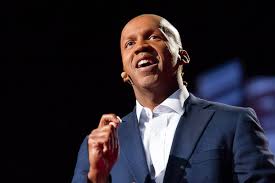
in Heavy.com of 25he film Just Mercy – starring Michael B. Jordan as lawyer Bryan Stevenson – will be released nation-wide as from 10 January 2020.  The movie is based on Stevenson’s best-selling memoir, Just Mercy: A Story of Justice and Redemption. [See also: https://humanrightsdefenders.blog/2019/03/20/equal-justice-initiative-founder-bryan-stevenson-winner-of-2019-thomas-dodd-prize/]

It tells the story of how the Harvard law graduated moved to Alabama in order to help inmates who were wrongly condemned as death row prisoners. The main court case in the film focuses on one of Stevenson’s first clients, Walter McMillian, aka “Johnny D.” who’s played by Jamie Foxx in the movie, a 41-year-old tree-trimmer who was charged for the 1986 murder of Ronda Morrison, a local white teenager.Stevenson’s story is lesson in justice, persistence, and pushing to do what’s lawfully right. McMillian was released from prison after seven years on death row, he passed away from early on-set Alzheimer’s in 2013. However, Stevenson is still very much alive, and still working as attorney for the Equal Justice Initiative, which he founded in 1989. As described on their official website, “EJI is committed to ending mass incarceration and excessive punishment in the U.S., challenging racial and economic injustice, and protecting basic human rights for the most vulnerable people in American society.” Stevenson, who recently celebrated his 60th birthday, has helped release 135 wrongly accused prisoners sentenced to death.

We don’t see those kinds of stories very often and I think that’s created a void in our consciousness about what’s happening,” Stevenson told Delaware Online. “We have the highest rate of incarceration in the world and most people in this country have no knowledge of that. That lack of knowledge and that lack of compassion is what’s made us so vulnerable to the abuse that is on display in this story.

Over his career, Stevenson has earned 40 doctoral degrees, including those from Harvard, Yale, Princeton, Oxford, and University of Pennsylvania. He’s also won a long list of awards, including the MacArthur Foundation “Genius” Prize, the ABA medal, which is the American Bar Association’s highest honor, and the National Medal of Liberty from the American Civil Liberties Union. As a professor, he’s racked up even more hardware. In 2003, the SALT Human Rights Award was presented to Mr. Stevenson by the Society of American Law Teachers. In 2004, he received the Award for Courageous Advocacy from the American College of Trial Lawyers and the Lawyer for the People Award from the National Lawyers Guild. In 2006, New York University presented Mr. Stevenson with its Distinguished Teaching Award.

https://www.justmercyfilm.com/https://www.facebook.com/JustMercyFilm/

The Real-Life Bryan Stevenson Now: Where Is He Today?