Mirbahari, a founding member of the organization, was arrested by security forces at his sister’s home in Tehran on October 15, 2025, and detained without charge. His whereabouts remain unknown, as does the status of his case, and he is being denied access to his family and lawyer. There are serious concerns about his state of health. Security agents also sealed the organization’s office and confiscated equipment and communication devices, effectively halting its operations.
“Mirbahari’s unlawful arrest and the closing of the organization mirror the Islamic Republic’s dismantling of other NGOs, and reflect its intensifying drive to wipe out independent civil society organizations,” said Hadi Ghaemi, executive director of the Center for Human Rights in Iran (CHRI).
In a pattern of increasing judicial harassment, Mirbahari was previously arbitrarily arrested on June 20, 2025, and released after 30 days in solitary confinement upon posting bail, again without lawful cause or disclosed charge.
This latest act of repression comes amid an escalating campaign by Iranian authorities to criminalize humanitarian work and silence independent voices advocating for social justice and the rights of children, women, and marginalized groups.
A knowledgeable source told CHRI that Mirbahari’s physical condition is fragile, following chemotherapy, and his whereabouts and charges against him remain unknown. His family and lawyer have had no contact with him since his arrest.
Two Decades of Children’s Rights Advocacy
Since its founding in 2002, the Society for the Protection of Child Laborers and Street Children has been a lifeline for working and street children across Iran, advocating for the eradication of child labor and all forms of exploitation, and promoting equal rights and humane living conditions for every child, regardless of gender, ethnicity, or religion.
Its activities included providing educational programs, health services, psychological support, and advocacy for social protections such as child and family insurance coverage. The organization also sought to raise public awareness about the plight of working children in Iran and to encourage community participation in child protection.
Operating through eight specialized units —public relations, health, arts, library, education, social work, finance, and research— the society was one of the few NGOs in Iran maintaining a consistent focus on children’s welfare amid tightening restrictions on civil society….
Reza Shafakhah, a prominent human rights lawyer, in an interview with Shargh newspaper on October 13, 2024, said:
“It is not possible for you to open a curtain and look out the window in the farthest reaches of Iran and not see a child going through a trash can. The fact that nearly 120,000 street children are active in Iran is a form of child abuse.”
On 12 September, 2025 the seven rights groups described Khalid’s prolonged imprisonment as a “violation of his rights” and an instance of “selective persecution”, asserting that he was arrested on “politically motivated and spurious charges” on 13 September 2020.
Alongside Amnesty International, the signatories include: CIVICUS, FORUM-ASIA, Front Line Defenders. International Commission of Jurists, International Federation for Human Rights (FIDH) and World Organisation Against Torture (OMCT).
The statement expressed deep concern over the invocation of the anti-terror law UAPA (Unlawful Activities Prevention Act) and the repeated denial of bail to Khalid.
“These repeated bail denials combined with persistent delays, and the continued absence of trial proceedings, amount to a violation of his right to a fair trial, including speedy trial, guaranteed under the International Covenant on Civil and Political Rights (ICCPR), to which India is a state party, as well as under the Constitution of India,” the statement read.
The groups further highlighted the unequal application of bail standards, particularly in cases related to the 2020 Delhi riots and anti-CAA protests, saying:
“We are further concerned about the discriminatory application of bail standards in cases arising from the violence surrounding the CAA protests and more broadly in cases involving the UAPA. While similarly situated accused have been granted bail, Khalid continues to be denied relief. Such unequal treatment violates the principle of equality before the law and sets a deeply troubling precedent.”
The rights organizations also drew attention to the role of the Delhi Police and political leaders during the 2020 Delhi riots, where Khalid and other Muslim activists were implicated.
“Independent investigations, including by Amnesty International India, Human Rights Watch and Delhi Minorities Commission, have documented the role of the Delhi Police in human rights violations during the CAA protests and the ensuing violence,” the statement said. “Police officers were recorded engaging in beatings, torture and other ill-treatment, and arbitrary arrests, and in some cases standing by as mobs attacked protesters.”
The statement noted that Indian courts have repeatedly criticized the police investigations, describing them as: “Very poor,” “callous,” and “fraught with multiple flaws,” with documented instances of fabricated cases and manipulated records.
It further condemned the role of senior political leaders, who were seen delivering inflammatory hate speeches, branding protesters as “traitors” or “anti-nationals”, and openly inciting violence.
“Despite the existence of video and documentary evidence, no meaningful accountability measures have been taken against implicated political figures or police officials,” the statement added.
The rights groups emphasized that Khalid’s prolonged detention is not an isolated incident, but part of a larger pattern of repression against those exercising their constitutional rights to freedom of expression and association.
“Other students and human rights activists, including Gulfisha Fatima, Sharjeel Imam, Khalid Saifi, Shifa-ur-Rehman and Meeran Haider, also remain in detention for their peaceful opposition to the CAA, while police officials and political leaders responsible for incitement or complicity in violence continue to enjoy impunity,” the groups noted. “This selective prosecution erodes public trust in the justice system, entrenches impunity for state actors, and criminalises free expression.”
The seven international organizations demand:
The immediate and unconditional release of Umar Khalid
The equal application of bail standards
An end to the discriminatory treatment of human rights defenders
Accountability for police officers and political leaders implicated in incitement and violence
On 5 August 2025, human rights defender Enes Hocaoğulları was detained at the Ankara Esenboğa Airport, on his return to Türkiye due to an arrest warrant issued by an Istanbul court, in connection with ongoing investigations into a speech he made at the 48th session of the Congress of Local and Regional Authorities of the Council of Europe on 27 March 2025.
Enes Hocaoğulları is a youth and LGBTI+ rights defender based in Ankara, Türkiye. Since 2022, he works as the International Advocacy and Fundraising Coordinator at ÜniKuir Association, an LGBTI+ rights organisation in Türkiye. His focus is on diplomatic engagement, monitoring youth rights, reporting and advocacy. His climate activism during his high school years eventually evolved into a fight for human rights and democracy. In February 2025, he was selected as the youth delegate from Türkiye for the Congress of Local and Regional Authorities of the Council of Europe.
On 5 August 2025, human rights defender Enes Hocaoğulları was detained at the Ankara Esenboğa Airport, on his return to Türkiye due to an arrest warrant issued by an Istanbul court, in connection with ongoing investigations into a speech he made at the 48th session of the Congress of Local and Regional Authorities of the Council of Europe on 27 March 2025.
The judgeship ruled for the pre-trial detention of Enes Hocaoğulları, justifying the decision by stating that there is strong suspicion that the human rights defender might flee. This is despite the fact that he returned to Türkiye aware of the risk of arrest upon arrival. Following the pre-trial arrest decision, he was transferred to Sincan Prison in Ankara.
In February 2025, Enes Hocaoğulları was selected as the youth delegate of Türkiye for the Congress of Local and Regional Authorities of the Council of Europe. On 24-27 March 2025, the human rights defender attended the 48th session of the Congress, where he delivered several speeches, including on 27 March 2025, when he gave a speech detailing police violence imposed on protesters in Türkiye, including attacks with tear gas, rubber bullets and water cannons, and the strip search of detained students. He called on the international community to act against the human rights violations in Türkiye.
The speech, which was recorded and posted online, went viral on social media. This led to a smear and hate campaign against the youth and LGBTI+ rights defender, accusing him of being a traitor, foreign agent and a queer who wants to “spread LGBTI+ ideology”. Additionally, investigations were initiated by Ankara and Istanbul Chief Public Prosecutors’ Office under articles 216 (inciting public to hatred and hostility) and 217/A (defamation law) of the Turkish Penal Code respectively, which were later consolidated under Ankara prosecutor’s office. An additional investigation was initiated by the Kırşehir Prosecutor’s Office under article 301 of the Turkish Penal Code (insulting the Turkish nation, the Republic of Turkey, or the institutions and organs of the state).
Front Line Defenders believes that the human rights defender was solely arrested for his peaceful human rights work and for exercising his right to free expression to explain the human rights violations that he has personally witnessed. It is particularly worrying that he was targeted for a speech that he made at the Council of Europe, which Türkiye is a member of.
We, the undersigned organizations, express deep concern over the continued arbitrary detention of the Saudi human rights defender Mohammed al-Bejadi more than two years beyond his sentence. His continuing detention, along with countless others, demonstrates that despite a recent spate of prisoner releases, the Saudi authorities’ severe repression of rights activists and critics remains. We call for his immediate release, along with all others arbitrarily detained in the kingdom for peacefully exercising their fundamental freedoms.
Al-Bejadi, a founding member in 2009 of the now-banned Saudi Civil and Political Rights Association (ACPRA), has been arrested and imprisoned three times for his peaceful human rights activism, most recently on 24 May 2018 during a crackdown on women’s rights defenders. He was subsequently sentenced to an egregious 10-year prison term, with five years suspended, which expired in April 2023.
More than two years later, he remains in Buraydah Prison, where he has been denied access to legal representation. According to ALQST, an independent Saudi human rights group, he has also experienced torture and other ill-treatment, including physical abuse and prolonged incommunicado detention.
The UN Special Rapporteur on human rights defenders, Mary Lawlor, highlighted al-Bejadi’s case in April 2025 to draw attention to a worrying trend in Saudi Arabia, in which the authorities continue to hold prisoners past their completed sentences, in violation of basic international standards and Saudi Arabia’s own laws.
Two other prominent human rights defenders, Mohammed al-Qahtani – another ACPRA co-founder –and Essa al-Nukheifi, were held arbitrarily for more than two years beyond their prison terms before being conditionally released in January 2025.
In other instances, when political prisoners have neared the end of their prison terms Saudi authorities have retried them and increased their sentences. Besides inflicting further injustice on these people after years of arbitrary imprisonment, the failure to release prisoners whose sentences have concluded creates fear that they too may be retried.
Saudi authorities have released dozens of people imprisoned for peacefully exercising their rights in recent months, yet continue to arbitrarily hold many more. Released prisoners continue to face heavy restrictions, such as arbitrary travel bans and having to wear an ankle monitor.
Meanwhile, the Saudi authorities’ record of rights violations continues to deteriorate, notably with their escalating use of the death penalty, including the recent execution of a prominent Saudi journalist Turki al-Jasser, and a notable surge in executions of foreign nationals for non-violent drug-related offences.
Al-Bejadi is one of several people arbitrarily imprisoned whose activism stretches back for decades. He spent four months in prison without charge or trial from September 2007 to January 2008, and was again jailed for more than five years, from March 2011 to April 2016, after taking part in a protest outside the Ministry of Interior. During that protest he said: “I do not have a family member in detention, but we must defend not only our own family but our whole country and all those who are oppressed. All prisoners of conscience are my family.”
The undersigned organizations call on the Saudi authorities to immediately and unconditionally release Mohammed al-Bejadi, all others detained beyond the completion of their prison sentences, and all individuals who are imprisoned for the peaceful exercise of their fundamental rights and freedoms.
Signatories:
ALQST for Human Rights
DAWN
European Saudi Organisation for Human Rights (ESOHR)
FairSquare
Freedom House
Gulf Centre for Human Rights (GCHR)
Human Rights Watch
HuMENA for Human Rights and Civic Engagement
International Federation for Human Rights (FIDH), within the framework of the Observatory for the Protection of Human Rights Defenders
MENA Rights Group
Middle East Democracy Center (MEDC)
World Organisation Against Torture (OMCT), within the framework of the Observatory for the Protection of Human Rights Defenders
On 3 July 2025, the undersigned 22 organizations, expressed their deep concern over the increasing use of criminal law without due process guarantees, the harassment, the stigmatization, and the persecution by Salvadoran authorities against human rights defenders, community leaders, environmental activists, university professors, lawyers, journalists, and other voices critical of the government.
Prominent journalists, activists, and lawyers, such as former prosecutor and defenderRuth López and professor and constitutional lawyerEnrique Anaya, have been arbitrarily detained in retaliation for their work documenting and denouncing corruption, human rights violations, and attacks on the rule of law in El Salvador. Both are in prolonged pretrial detention and face spurious and unfounded charges of embezzlement and money laundering, respectively. These detentions send an intimidating message to the rest of civil society and further erode public confidence in the impartiality and independence of the Salvadoran judicial system.
The Salvadoran state has intensified its attacks on civil society and the independent press through coordinated strategies in the legal, institutional, and media spheres to silence their work. It is extremely alarming that they are being persecuted under a prolonged state of exception that suspends fundamental rights and freedoms, a measure whose objective is to control organized crime gangs.
In a context of high concentration of power, the Foreign Agents Law was enacted, imposing severe restrictions on non-governmental organizations, including onerous registration requirements, a 30 percent tax on foreign funding, and broad powers to suspend their activities based on vague allegations of political activity. Together with the hostile rhetoric from senior officials led by President Bukele, these measures aim to delegitimize independent voices and restrict the legitimate activities of civil society organizations.
The persecution of defenders such as Ruth López and Enrique Anaya reflects a broader strategy to dismantle civic oversight and the rule of law, and to criminalize criticism and the defense of human rights. Other examples of criminalization include community leaders from La Floresta and the El Bosque cooperative, among them Fidel Zavala, Alejandro Henríquez, and Ángel Pérez, who have been detained during peaceful protests over land and evictions.
It is important to note that, throughout Nayib Bukele’s administration, dozens of human rights defenders, journalists, lawyers, former public officials, members of the political opposition, and businesspeople have been forced into exile outside the country. This trend, which is worrying in itself, has significantly increased in the last month, reflecting a growing climate of repression and persecution that severely restricts civic and democratic space in El Salvador.
The repression of civic space in El Salvador is taking place within a broader context of erosion of democratic institutions and the rule of law. As a result of the state of exception, more than 85,000 people have been detained without respect for basic due process guarantees, including the presumption of innocence and access to a fair and impartial trial, and in inhumane conditions of deprivation of liberty. Local organizations have documented at least 400 deaths of people in custody since the beginning of the exception regime.
We therefore call on the Salvadoran State to:
Immediately release lawyers Ruth López and Enrique Anaya, as well as all human rights defenders and community leaders who have been arbitrarily detained for political reasons; and respect due process guarantees, including the right to a public trial, in any proceedings against them.
Refrain from using pretrial detention as a form of advance punishment against human rights defenders and others detained for political reasons, in clear violation of due process guarantees and international human rights standards.
Protect human rights defenders from reprisals, harassment, torture, and threats, and ensure accountability for abuses committed.
Restore conditions that allow freedom of expression, association, and assembly, and harmonize national laws with El Salvador’s international obligations, including by repealing the Foreign Agents Law.
End the misuse and abuse of emergency measures and, in all cases, guarantee the right to a fair trial.
We also call on the international community, including the Organization of American States and the United Nations, to:
Urge the government of El Salvador to immediately cease the instrumentalization of the criminal justice system against human rights defenders or those who express criticism of the government.
Take urgent action, through diplomatic channels, assistance, and conditional cooperation, among other means, to protect civic space, the rule of law, democracy, and human rights in El Salvador.
Abogadas y Abogados para la Justicia y los Derechos Humanos (México)
Alianza Regional por la Libre Expresión e Información
Asociación Pro Derechos Humanos -APRODEH, Perú
Center for Gender & Refugee Studies (CGRS)
Centro de Documentación en Derechos Humanos “Segundo Montes Mozo SJ” (CSMM) / Ecuador
Centro por la Justicia y el Derecho Internacional (CEJIL)
Consultora Solidaria (Mexico)
Consultoría para los Derechos Humanos y el Desplazamiento – CODHES (Colombia).
Convergencia por los Derechos Humanos (CDH), Guatemala
Comité de Familiares de Víctimas de los Sucesos de Febrero y Marzo de 1989 (COFAVIC), Venezuela.
Due Process of Law Foundation (DPLF)
Equipo de Reflexión, Investigación y Comunicación (ERIC-SJ). Honduras
Global Strategic Litigation Council for Refugee Rights
Instituto de Defensa Legal (IDL), Peru
Latin America Working Group (LAWG)
Movimiento Autónomo de Mujeres
Robert F. Kennedy Human Rights
Synergía, iniciativas para los derechos humanos
Tejiendo Redes Infancia en América Latina y el Caribe
Dear Dr. Gillett, Dr. Yudkivska, Ms. Gopalan, Dr. Estrada-Castillo, and Dr. Malila,
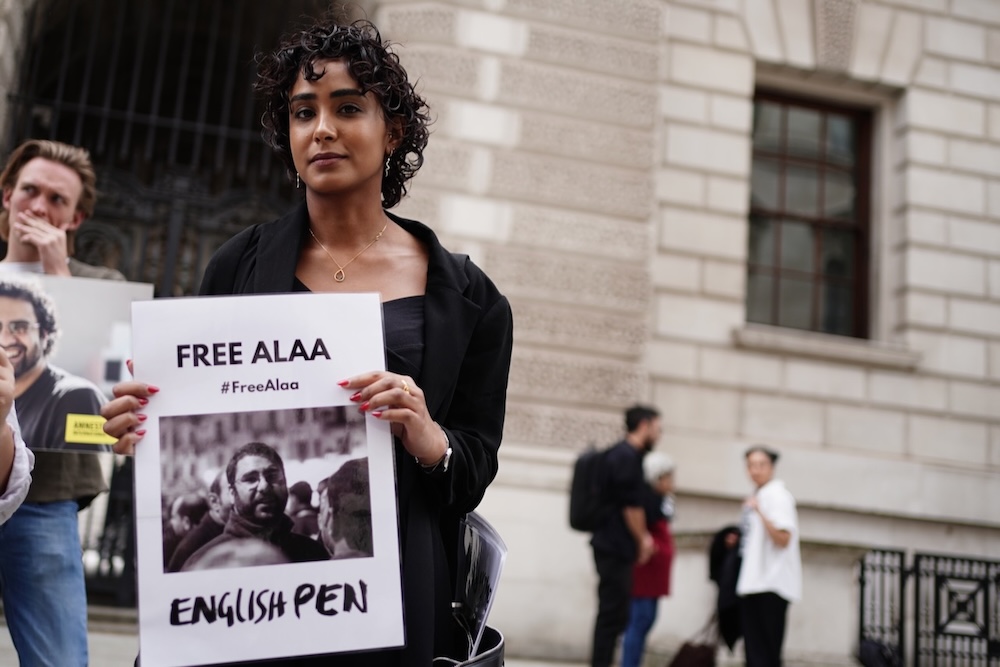
We are writing, as a coalition of human rights organisations, regarding the urgent submission made to you, as members of the United Nations Working Group on Arbitrary Detention (UNWGAD), on behalf of Alaa Abd el-Fattah, the award-winning British-Egyptian writer and activist. Alaa Abd el-Fattah remains arbitrarily detained in Egypt and we strongly urge you to announce your opinion on his case at the earliest opportunity.
An international counsel team, led by barrister Can Yeğinsu, filed an urgent appeal with the UNWGAD on behalf of Mr. Abd el-Fattah and his family one year ago, on 14 November 2023, submitting that his continued detention is arbitrary and violates international law. Shortly afterwards, on 23 November 2023, 34 freedom of expression and human rights organisations sent a letter to the UNWGAD supporting that submission and urging the UNWGAD promptly to issue its opinion on this matter. On 17 April 2024, 27 freedom of expression and human rights organisations sent a follow up letter to the UNWGAD, enquiring whether there was any update in respect of this urgent appeal.
Alaa Abd el-Fattah’s case remains of significant concern to our organisations. He has spent much of the past decade imprisoned in Egypt due to charges related to his writing and activism. He was most recently arrested in September 2019 and was sentenced in December 2021 to five years’ imprisonment, having already spent two years in pre-trial detention. Despite completing his unjust and arbitrary five-year sentence on 29 September 2024, the Egyptian authorities have refused to release him, ignoring the time he spent in pre-trial detention. This defies international legal norms and contradicts Egyptian law. Alaa Abd el-Fattah is currently being held at Wadi al-Natrun prison near Cairo and continues to be denied consular visits, despite his British citizenship. His mother, Laila Soueif, has been on hunger strike since 29 September 2024 in protest against her son’s unjust and prolonged detention.
In November 2022, UN Experts joined the increasing number of human rights voices demanding Alaa Abd el-Fattah’s immediate release. Yet two years later, having fully served his five-year sentence, he remains in prison.
Despite his ongoing incarceration, Alaa Abd el-Fattah’s writing and activism continue to be recognised worldwide: most recently, in October 2024, he was announced as the joint winner of the 2024 PEN Pinter Prize with Arundhati Roy, and recognised as the 2024 Writer of Courage, eliciting the following encomium from Naomi Klein at the ceremony:
Alaa Abd El-Fattah embodies the relentless courage and intellectual depth that Arundhati Roy herself so powerfully represents, making her selection of him as the Writer of Courage profoundly fitting. Despite enduring a series of unjust sentences that robbed him of over a decade of freedom, his liberation continues to be denied. This prize, shared between two vital voices, reminds us of the urgent need to continue to raise our own in a call to ’Free Alaa’ at long last.
Our organisations continue to call for Alaa Abd el-Fattah’s immediate and unconditional release and we request that the UNWGAD urgently announce its opinion on his case.
Yours sincerely,
Alejandro Mayoral Baños, Executive Director, Access Now
Ahmed Samih Farag, General Director, Andalus Institute for Tolerance and Anti-Violence Studies
Quinn McKew, Executive Director, ARTICLE 19
Neil Hicks, Senior Director for Advocacy, Cairo Institute for Human Rights Studies (CIHRS)
Gypsy Guillén Kaiser, Advocacy and Communications Director, Committee to Protect Journalists (CPJ)
Chris Doyle, Director, Council for Arab-British Understanding (CAABU)
Jillian C. York, Director for International Freedom of Expression, Electronic Frontier Foundation
Ahmed Attalla, Executive Director, Egyptian Front for Human Rights
Samar Elhussieny, Programs Officer, Egyptian Human Rights Forum (EHRF)
Daniel Gorman, Director, English PEN
Rasmus Alenius Boserup, Executive Director, EuroMed Rights
James Lynch, Co-Director, FairSquare
Khalid Ibrahim, Executive Director, Gulf Centre for Human Rights
Mostafa Fouad, Head of Programs, HuMENA for Human Rights and Civic Engagement
Matt Redding, Head of Advocacy, IFEX
Baroness Helena Kennedy LT KC, Director, International Bar Association’s Human Rights Institute (IBAHRI)
Alice Mogwe, President, International Federation for Human Rights (FIDH), within the framework of the Observatory for the Protection of Human Rights Defenders
Liesl Gerntholtz, Managing Director, PEN/Barbey Freedom To Write Center, PEN America
Mark Allen Klenk, Writers at Risk Committee Chair, PEN Austria
Grace Westcott, President, PEN Canada
Romana Cacchioli, Executive Director, PEN International
Rupert Skilbeck, Director, REDRESS
Antoine Bernard, Director of Advocacy and Assistance, Reporters Sans Frontières
Ricky Monahan Brown, President, Scottish PEN
Ahmed Salem, Executive Director, Sinai Foundation for Human Rights (SFHR)
Menna Elfyn, President, Wales PEN Cymru
Gerald Staberock, Secretary General, World Organisation Against Torture (OMCT), within the framework of the Observatory for the Protection of Human Rights Defenders
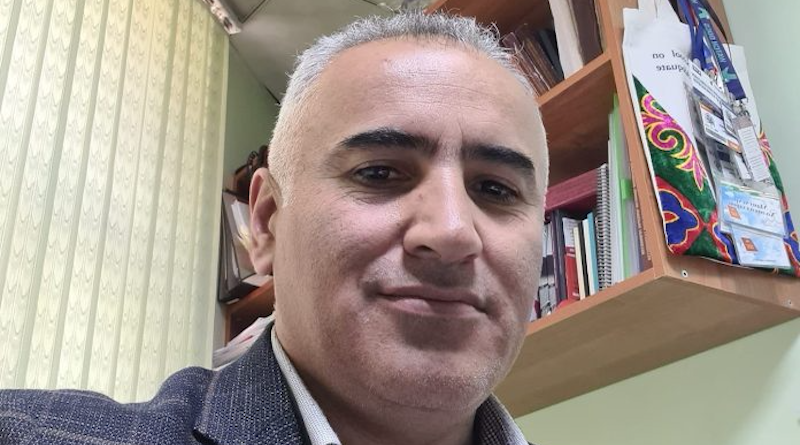
Manuchehr Kholiqnazarov. Photo from personal Facebook page
On 29 May 2024, IPHR (International Partnership for Human Rights – an independent, non-governmental organization founded in 2008 in Brussels) published an Op-ed about Human Rights Defender Manuchehr Kholiqnazarov.
Tuesday marked the sad anniversary of the arrest of lawyer and human rights defender Manuchehr Kholiqnazarov in Tajikistan. First arrested on 28 May 2022, he has now spent two years behind bars, serving a 16-year-long prison sentence in retaliation for his human rights work.
The organisations issuing this statement – International Partnership for Human Rights (IPHR), the Tajikistan Civil Society Coalition against Torture and Impunity, Helsinki Foundation for Human Rights (HFHR, Poland), Norwegian Helsinki Committee (NHC), as well as International Federation for Human Rights (FIDH) and World Organisation against Torture (OMCT) within the framework of the Observatory for the Protection of Human Rights Defenders – are increasingly worried about Manuchehr’s state of health and call again on the Tajikistani authorities to immediately and unconditionally release him.
“Manuchehr was arrested and imprisoned for no other reason than his tireless work to help the most vulnerable victims of human rights violations. We will not give up fighting against his unjust sentence until he is released and allowed to return home to his family,” said Brigitte Dufour, Director of IPHR.
On 9 December 2022 Tajikistan’s Supreme Court found Manuchehr guilty under articles 187, part 2 (participation in a criminal organisation) and 307 (3), part 2 (participating in the activities of a banned organisation due to its extremist activities) of the Criminal Code, sentencing him to 16 years’ imprisonment in a strict regime penal colony.
Manuchehr is the Director of the Lawyers Association of Pamir (LAP), one of the few civil society organisations in Tajikistan’s Gorno Badakhshan Autonomous Region (GBAO) that works to promote and protect human rights.
On 25-28 November 2021, mass protests erupted in Khorog, GBAO, over the extrajudicial killing of a young man, Gulbiddin Ziyobekov. After the protests settled, Manuchehr joined the “Commission 44”, consisting of representatives of local civil society and law enforcement agencies, to investigate the events. Given his professional experience, Manuchehr was included in the Joint Investigation Team headed by the Prosecutor General’s Office and helped secure lawyers for victims of indiscriminate violence during the November 2021 protests.
However, May 2022 saw a renewed crackdown on protests in Khorog and Rushan District of GBAO. On 28 May 2022, Manuchehr was arrested along with a dozen members of Commission 44 for alleged “participation in a criminal association” and “publicly calling for violent change of the constitutional order”. Their trial began on 20 September 2022, and was held behind closed doors at a detention facility of the State Committee for National Security (SCNS) in Dushanbe. Following his conviction, Manuchehr was transferred to a prison facility in the capital.
Manuchehr’s health has deteriorated significantly in detention. In particular, he suffers from back problems. The authorities should ensure that he has access to adequate medical assistance for these health problems and that his treatment complies fully with international standards as long as he remains behind bars.
In addition to human rights NGOs, the United Nations Special Rapporteur on Human Rights Defenders and other international human rights experts have repeatedly raised concerns about Manuchehr’s imprisonment and called for his release. The Tajikistani authorities should heed to these calls, promptly release him and allow him to reunite with his family.
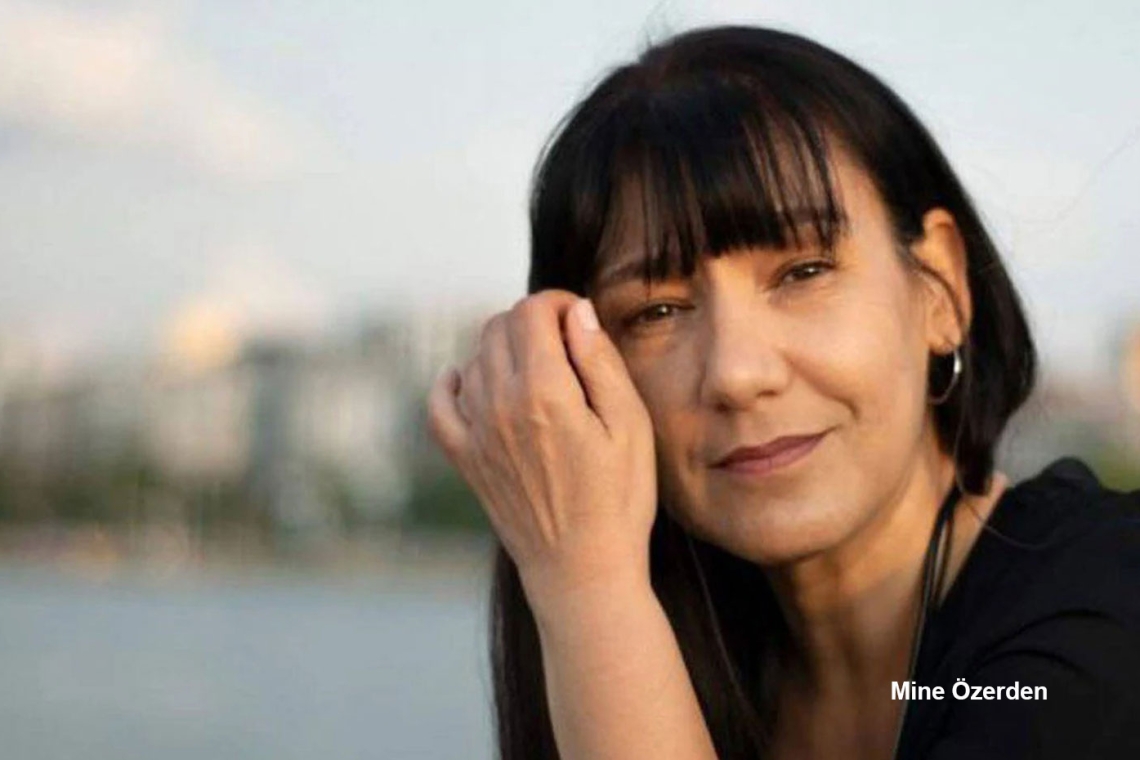
On 1 April 2024, Media and Law Studies Association (MLSA is a human rights organization committed to protecting freedom of expression, press freedom, the right to assemble and protest, and access to information in Turkey. It serves as a vital platform where journalism and legal expertise merge to safeguard these freedoms, particularly for journalists, lawyers, and human rights defenders facing increasing challenges). SEMRA PELEK wrote about Mine Özerden, a human rights defender now detained for 700 days. The detailed statement if woth reading in full:
From Mine Özerden’s standpoint, the Gezi Trial began with an unsubstantiated criminal complaint. Despite efforts, no informant was identified. Tax inspectors investigated the allegations but couldn’t confirm them. The court ruled the phone taps used as evidence were illegal. Nonetheless, Özerden was sentenced to 18 years and has been in prison for nearly two years.
“I’ve said this repeatedly, and I’ll say it again: I still can’t comprehend why I’m here, and there hasn’t been anyone who could logically explain it to me yet.”
With these words, Mine Özerden began her defense during the session of the Gezi Trial held at the Istanbul 13th Heavy Penal Court on October 8, 2021. She posed the same question during her defense at the session held on January 17, 2022. Özerden has been asking the same question at every hearing since the initial session of the Gezi Trial on June 25, 2019. However, in the years that have passed, she has received no answer to her question throughout the entire legal process.
Mine Özerden’s lawyer requested an explanation from the prosecutor through the court regarding this matter. However, the court rejected the request: “The request for a statement from the Public Prosecutor regarding which acts and crimes are being attributed to the defendant Mine Özerden by the defense attorney has been rejected…”
The court failed to provide any justification or further clarification of the rejection. However, according to the Code of Criminal Procedure, every defendant has the right to effectively present their defense, and the right to “be informed.” This means that prosecutors and courts are obligated to inform the defendant of the accusations against them to ensure a fair trial. The laws clearly state this right, however, Mine Özerden was not granted this right throughout the entire trial, and the judiciary system did not provide any logical explanation for this.
Let’s ask a question of our own here: Is there no answer to Ozerden’s question in the 657-page indictment written by the prosecution, which led to Osman Kavala’s aggravated life sentence and the 18-year sentences that Mine Özerden, Çiğdem Mater, Tayfun Kahraman, and Can Atalay have been given in the Gezi Trials? They are currently convicted of serious charges such as “attempting to overthrow the Republic of Turkey by force and violence” and “aiding this attempt,” which means the higher Court of Cassation also signed off on the decision. In the document of approval released by the Court of Cassation, is there any answer to the aforementioned question? No, there isn’t!
Scrutinizing the Gezi Trial files, one question remains: Why is Mine Özerden in prison?
And you can’t find the answer to that question. After poring over the files line by line, one can’t help but be reminded of Kafka’s novel, The Trial. So much so that you could replace the protagonist Josef K.’s name with Mine Özerden’s: “Somebody must have made a false accusation against Mine Özerden, for she was arrested one morning without having done anything wrong.”
This is exactly how the Gezi Trial, which today stands like a specter against the freedom of expression and assembly not only of the defendants but of the whole society, began for Mine Özerden.
Let’s start from the beginning: On September 26, 2013, a “criminal complaint” was sent via email to the Istanbul Communication Electronics Branch Directorate. According to the indictment, the person, who didn’t provide their name in “criminal complaint number 11167,” claimed to have “important information regarding the Gezi protests” and alleged that “before the protests began in Taksim, Mine Özerden opened bank accounts for several individuals under the direction of Osman Kavala from the Open Society Foundation.” According to the informant’s claim, the money collected in these accounts was intended to purchase “gas masks, bandages, and goggles,” which would then be “distributed to protesters.”
In the thousands of pages of the Gezi Trial file, this is the sole allegation concerning Mine Özerden.
Following up on this allegation requires due diligence in seeking the facts. Unlike Kafka’s novel, Özerden’s experiences are not allegorical but real; she has been held in Bakırköy Women’s Prison for nearly two years due to this unsubstantiated criminal complaint.
In the indictment, the prosecutor – after quoting the informant’s claim in quotation marks and bold black letters – immediately indicates in the next sentence that they “could not locate the informant”: “Upon the instruction of our Republic Prosecutor’s Office, an investigation was conducted into the IP address to obtain a detailed statement from the informant, however, no identification was made.”
In other words, the informant could not be found. So, were the bank accounts alleged by the informant opened?
No!
That, in fact, is the following sentence, where the prosecutor offers his admission that the informant could not be found. In the indictment, Istanbul Foundation’s 1st Regional Directorate’s investigation of the accounts of the Open Society Foundation, eventually preparing a report on this inquiry, but the report clearly stated that “no determination could be made regarding these allegations.”
In other words, the claim of an unidentified informant could not be substantiated.
On April 22, 2022 Mine Özerden’s lawyer submitted Tax documents, which proved that the informant’s claim was false to the file.
The court dismissed the Tax Inspectorate report and did not consider it as evidence.
Fact Two: No bank accounts opened; no purchase was made
Typically (in any rule-of-law state), when an informant cannot be found and an unsubstantiated criminal complaint is involved, the case is closed with a verdict of non-prosecution.
Moreover, according to the established jurisprudence of the Court of Cassation, evaluating a purely unsubstantiated complaint on its own is also unlawful. Thus, this jurisprudence also warranted closing the case at this stage. The law is clear: you cannot prosecute anyone with a non-existent crime and an unsubstantiated allegation.
However, instead of closing the file at this point, the prosecutor opened another investigation completely unrelated to the Gezi inquiry. Mine Özerden was incidentally wiretapped within the scope of this investigation. It wasn’t until much later, when the Gezi Trial indictment was prepared, that the fact Özerden had been coincidentally wiretapped in this investigation emerged. When her lawyer officially questioned this, it was revealed that Özerden had never been a suspect in this investigation. Furthermore, there was no wiretap order issued against her in this investigation. Her lawyer had requested wiretap orders from the court, neither the police nor the prosecution had submitted these orders to the file.
In one of these coincidental wiretaps included in the Gezi Trial indictment despite having no relevance to the Gezi investigation, Mine Özerden had a conversation with Osman Kavala on May 30, 2013. In this conversation, Mine Özerden mentioned to Osman Kavala that she had received “some offers.” Someone suggested, “Let’s buy gas masks and distribute them to the youth.” The conversation continued with discussions on how this could be done, such as “maybe opening a bank account.” It was nothing more than an exchange of ideas, with the conversation ending with the suggestion, “One of the volunteers could probably do that.”
The claim of the unidentified informant was based on this conversation. Özerden, who was coincidentally wiretapped in an investigation, where she was not a suspect, was accused on the basis of this wiretap turned into a criminal complaint. Özerden’s lawyer requested the full resolution of this wiretap. However, neither the complete resolutions of wiretaps nor the wiretap recordings were found by the prosecution and were never submitted to the file.
The conversation between Mine Özerden and Osman Kavala remained at the level of ideas because the content of the conversation was not substantiated during the investigation and trial process. No bank account was found to have been opened. Something that doesn’t exist can’t be found in the first place.
There is no evidence in the file that gas masks, bandages, or goggles were purchased. Not a single invoice exists, nor is there any evidence anywhere that these items were found.
So, suppose even one piece of evidence existed in the file – for example, if a bank account had been opened or if an invoice for goggles had been found – what would happen? Opening a bank account and buying gas masks, bandages, or goggles is not a crime under any law. Therefore, Özerden’s lawyer brought goggles, gas masks, and bandages to the trial and asked the panel, “Is acquiring these items a crime?”
Fact Three: No Press Statements or Meetings were Found to Constitute a Crime or Incitement to Commit a Crime
Despite the lack of concrete evidence, the indictment directed the accusation of “aiding an attempt to overthrow the Government of the Republic of Turkey by force and violence” against Mine Özerden. To strengthen such a serious accusation, the prosecutor highlighted Özerden’s voluntary coordination of the Taksim Platform and her continued membership in the board of directors of Anadolu Kültür, where she had worked years ago.
The Taksim Platform was established as a peaceful dialogue platform, holding weekly exchange of ideas meetings, and organizing art events. Although the activities of the platform fell within the scope of freedom of assembly and expression, it was criminalized in the indictment, yet no crime associated with the platform can be found.
Not a single press statement by the platform was included in the indictment. There was not any piece of evidence regarding which press statement or meeting of the platform, on which date, would constitute a crime according to the law. There was also no evidence that any post or statement released by the Taksim Platform could constitute a crime or incitement to violence in the indictment or the file.
The rationale behind the establishment of the Taksim Platform and all updates, statements and press releases ever released by the platform is still accessible today on the website taksimplatformu.com. So, if there had been even the slightest evidence that Taksim Platform was inciting violence, it would be easy for the prosecution to find and include in the indictment.
Moreover, the accusations against Özerden based on her membership in the board of directors of Anadolu Kültür were already refuted explicitly by the Tax Inspectorate report.
Fact four: Özerden was not in Istanbul during the Gezi protests.
It gets even stranger from here. In the indictment, Özerden is accused of organizing meetings of the Taksim Platform in Istanbul during the Gezi protests, attending the platform’s meetings, and even participating in violent actions in Gezi Park.
But the problem here is this: Mine Özerden was not in Istanbul during the Gezi protests.
The Gezi protests began on May 31, 2013. However, Özerden was working at a language school in Fethiye from June 1 to July 31, 2013. Furthermore, not a single video, photograph, or technical surveillance recorded by the police indicating Özerden’s presence in Istanbul during that period has been included in the case file.
However, official Social Security Institution (SGK) records proving Özerden’s presence in Fethiye during that period were submitted to the court. But neither the prosecutor during the investigation process nor the Istanbul 13th Heavy Penal Court during the trial took this into account. The Court of Cassation 3rd Criminal Chamber, which upheld the 18-year prison sentence, also did not. .
Even if it were the opposite, if Mine Özerden were in Istanbul during that time, it still wouldn’t prove anything. Being in Istanbul during the Gezi protests, organizing a meeting, or attending one is not a crime. On the contrary, the right to assembly and freedom of expression are protected by the Constitution.
Fact Five: Wiretapping is Illegal
So, what was written about Mine Özerden on all those pages in the indictment whenthere was no concrete evidence of a crime against her?
The indictment merely contains pages of phone conversations between Özerden and her friends! These conversations delve into personal matters, discussing, for instance, the exhaustion of life and the beauty of getting away from some stressors of life. In one conversation, for instance, Mine Özerden advises a friend to attend a conference in Istanbul where world-renowned philosophers Slavoj Žižek and Alain Badiou are speakers. The conference, titled ‘Globalization and the New Left,’ was organized by Bakırköy Municipality and MonoKL publications. However, this advice was included in the indictment as if it were a crime.
Similarly, Özerden’s response of “enjoy the beautiful weather, how lovely” to a friend saying “the weather was even better two or three days ago” is also included in the indictment as part of these casual conversations. None of the phone taps contain any reference to the organization of the Gezi protests. Instead, they clutter the file. Moreover, these wiretaps are illegal!
The Istanbul 13th High Criminal Court, which handled the case, determined that the wiretaps were illegal. In its decision dated February 18, 2020, acquitting 16 defendants in the Gezi trial, including Osman Kavala, Mücella Yapıcı, Can Atalay, Yiğit Aksakoğlu, Tayfun Kahraman, Çiğdem Mater, Mine Özerden, Yiğit Ekmekçi, and Ali Hakan Altınay, the court made the following legal assessment:
“We have 53 wiretap orders in our file. It is understood that the first wiretap order was issued for the offense of ‘forming and leading a criminal organization,’ not for the offense of ‘crimes against the government.’ Later, it was observed that Article 312 of the Turkish Penal Code (crimes against the government) was added to the requests and decisions for extending the wiretapping. However, Article 312 was not among the crimes subject to legal wiretapping as listed in Article 135/8 of the Criminal Procedure Code at that time. There is no wiretap order issued after that date. Therefore, it is accepted that the wiretap recordings are in violation of the law and are illegal evidence, considering the established precedents of the Court of Cassation and the principle that ‘the fruit of the poisonous tree is also poisonous.’ Hence, the wiretaps included in the indictment are considered as prohibited evidence.”
In other words, all phone conversations used as evidence against Mine Özerden, along with other defendants, were the fruits of the poisonous tree. In summary, the real crime was the wiretapping of phones.
But as if that weren’t enough, a new term called ‘revaluation’ was coined to justify the inclusion of wiretap recordings in the indictment. The indictment stated that “the revaluation of all evidence concerning the investigation, especially the wiretaps, was ordered.” However, there is no procedure called ‘revaluation’ in the Code of Criminal Procedure. Mine Özerden asks: “Isn’t this openly insulting to use the word ‘revaluation’?”
They Were Convicted with the “Poisonous Fruit of the Poisonous Tree”
Ultimately, the acquittal verdicts were overturned. Despite no additional evidence being presented to substantiate the allegations, the convictions handed down by the Istanbul 13th High Criminal Court on April 25, 2022, against Osman Kavala, Can Atalay, Çiğdem Mater, Mine Özerden, and Tayfun Kahraman were upheld by the Court of Cassation’s 3rd Criminal Chamber.
Osman Kavala, who was sentenced to an aggravated life sentence for the allegation of “attempting to overthrow the Government of the Republic of Turkey,” has been in prison for over six years. Can Atalay, Çiğdem Mater, Mine Özerden, and Tayfun Kahraman, who were each sentenced to 18 years in prison for “aiding this attempt,” have been deprived of their freedom for 700 days.
Responding to our questions from prison, Mine Özerden made the following comment regarding the entire legal process:
“Not only do the institutions and decision-makers of the country I am a citizen of fail to protect our rights, but they also increasingly violate our fundamental, constitutional, and legal rights more and more everyday. For nearly two years, we have been deprived of our physical freedom without reason, evidence, or truth…
I find myself involuntarily caught in a senseless quarrel of irrationality and illogic. We are continuously instrumentalized by different political segments with various affiliations. My wish is for people from all walks of life to stand up against injustice and for a collective will demanding basic human rights to emerge.”
Mine Özerden still awaits a logical explanation as to why she is being tried, why she is being punished, and why she has been held at Bakırköy Women’s Prison for years.
Instead of explaining, the judiciary merely extends to her the poisonous fruit of a poisonous tree.
Less well-known is the name of painter Xiao Liang, although “Bitter Winter” reported in December 2022 that he had been detained for “painting the portrait of a dangerous person.” The “dangerous person” was Peng Lifa. At that time, neither “Bitter Winter” nor the painter’s wife and friends knew what exactly happened to Xiao Liang after the police took him away from his home in Nanchang city, Jiangxi province. But the repressive system of the CCP did not forget him.
On December 7, 2022, Xiao was formally arrested by the Donghu District Procuratorate of Nanchang City with the accusation of “picking quarrels and provoking trouble,” now a popular charge against all kind of dissidents. His wife was submitted to long interrogations as the police tried to prove that Xiao was part of an organized anti-CCP group.
Relatives and friends have now learned and posted on social media that Xiao was sentenced to one year and three months in jail for the crime of “picking quarrels and provoking trouble.” In addition to his portrait of Peng Lifa, the painter was considered a “troublemaker” by the authorities for his paintings and posters supporting the Ukrainian resistance against Russia, a staunch ally of the Chinese regime.
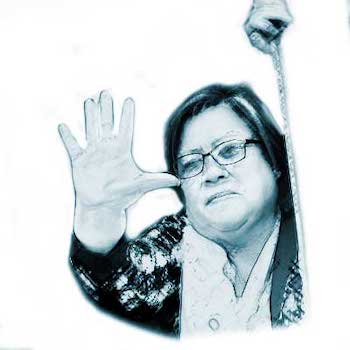
In response to the news that the court granted former Philippine Senator Leila de Lima bail for the third and last drug-related charge against her, Butch Olano, Amnesty International’s Philippines Director, said: “This is a welcome development and a step towards justice.
As a human rights activist and former Senator, she has been one of the staunchest critics of the human rights violations under the administration of former President Rodrigo Duterte. Since her arrest, Amnesty alongside many other organisations have repeatedly said that the charges against her were fabricated and that the testimonies by witnesses against her were manufactured. See: https://www.trueheroesfilms.org/thedigest/laureates/35cd51c0-93fb-11e8-b157-db4feecb7a6f
The authorities arrested de Lima after she sought to investigate violations committed in the context of the so-called “war on drugs” under the former Duterte administration, including the extrajudicial execution of thousands of people suspected of using or selling drugs, which Amnesty has said may amount to crimes against humanity. As in the case of de Lima, there has been almost no justice or accountability for the victims of these abuses and their families.
Court proceedings against de Lima in the last six years have been marked by undue delays, including the repeated failure of prosecution witnesses to appear in court and changes in judges handling the cases against her. In 2018, the UN Working Group on Arbitrary Detention concluded that the detention of de Lima was arbitrary because of the lack of legal basis and the non-observance of international norms relating to the right to a fair trial.
The arbitrary detention of de Lima reflects the broader context of increasing impunity for human rights violations in the Philippines. These violations include killings, threats and harassment of political activists, human rights defenders, members of the media and other targeted groups.



 Hans Thoolen on Human Rights Defenders and their awards