Posts Tagged ‘human rights’

About the growing importance of images in the human rights world and the big challenges it poses

January 16, 2013

Yvette Alberdingk Thijm, executive director of the US-based NGO Witness, wrote a post in the Huffington Post of 15 January about this fascinating topic on the occasion of Witness’ 20th anniversary. Here are some quotes before making a more critical comment:

Twenty years ago, WITNESS was created because a world with many cameras — a world “where the eyes of the world are opened to human rights” — did not yet exist, a big bold vision at the time. Today, building on two decades of experience in creating tangible human rights change by exposing the truth through video, we are envisioning the next frontier: a world where video is not only ubiquitous, but has given millions the power to hold human rights abusers accountable, to deliver justice and to transform the human rights landscape.”….”So in 2013 and beyond, we are committed to building “video-for-change” communities, supporting networks of human rights defenders, from communities fighting forced evictions in Brazil to youth in the U.S. campaigning to protect the environment.”

In 2012, Witness launched the Human Rights Channel in partnership with YouTube and Storyful to ensure that important human rights stories are seen and contextualized. “We are committing in 2013 and beyond to take on the systems. The technology companies that run the platforms must create more human rights friendly spaces for all of us. And we decided to focus on the international legal systems to improve the understanding of how to authenticate citizen media to hold perpetrators of abuse accountable. We are working to achieve this vision by partnering and sharing in order to meet the challenge in front of us. We’ll join forces with technology mavens and mobile developers, with courageous human rights defenders worldwide, with brave bloggers, with witnessing citizens, with peer networks and effective organizations.”

Witness has indeed greatly advanced the use of images in the struggle for human rights and its future plans are daunting. What is missing – understandably in a piece that celebrates the achievement of a group’s anniversary – is the wider picture of what the human rights movement is doing with images. From the visualization of human rights defenders (the Martin Ennals Award, Front Line Defenders, Rights Livelihood Awards, Tulip Award, Civil Rights Defenders, HRF to mention just some who regularly make film portraits and/or stream their proceedings), the production of films on HRDs (e.g. True Heroes foundation),  the systematization of access to images (e.g. by HURIDOCS) and the showing of films by a myriad of human rights film festivals (HRW, AI, Movies that Matter, and some 30 others). This modest blog alone has made some 60 references to the use of film images for human rights, many by Witness and the organizations mentioned above.

I mentioning this not because of ‘fairness’ in the sense that others need to be mentioned also, but because the full scope of the challenges ahead needs to be seen and addressed. Human rights images face the same problems as documentation: (1) information overload; (2) finding the most relevant information (even more daunting for images as searching directly on images is still far away); (3) authenticity and veracity; (4) ensuring quantity and quality  of dissemination (what goes ‘viral’ is not necessarily what serves human rights) and (5) protecting of sources and participants (have the persons in the film given informed consent?). And I am sure there are quite a few other important issues.

So when the executive director of Witness states that it excites her “that we, together with so many allies, are taking the challenge for the future head on“, one must hope that it includes all those who can contribute to her vision of a world ” where many, many more citizens and human rights defenders have access to knowledge, skills and tools enabling them to create compelling, trustable videos and to make sure that their video is acted upon and human rights change happens.”

http://www.huffingtonpost.com/witness/human-rights-2013_b_2475221.html

Follow Witness on Twitter: www.twitter.com/witnessorg  see its annual report:  annual report

Yemen undertakes campaign of threats and judicial harassment against HRD Samia Al-Agbry

January 15, 2013

On 12 January 2013 the Gulf Centre for Human Rights expressed its concern at the campaign of defamation, threats, and harassment against journalist and human rights defender Samia Al-Agbry. In addition complaint was lodged against her at the Department of Public Prosecution in the city of Damt. The complainant accused Samia Al-Agbry of allegedly insulting religion in an apparently orchestrated ‘multi-tools’ smear campaign against her. 

On 31 December 2012, Samia Al-Agbry gave a speech at a peaceful gathering in which she said something to the effect that the reason for the elimination of the dreams of people in Yemen to build a civil state is some corrupt individuals who holed up behind religion, military and tribes. The GCHR thinks it is clear that some persons – for political purposes – have twisted her speech in order to target and stop her human rights activities.
It believes that this fierce campaign against Samia Al-Agbry is part of an ongoing trend of harassment of human rights defenders working in Yemen to stop them from continuing their work in defense of human rights.

http://gc4hr.org/news/view/318

“One Hour of Human Rights” broadcasts on private channel in Sweden

January 15, 2013

The Stockholm-based NGO Civil Rights Defenders hosts regular morning seminars called “One Hour of Human Rights” at its head office in Stockholm. These seminars are broadcasted live on its Bambuser channel and are also available to be viewed afterwards. The next one will be on 23 January 2013 on Burma/Myanmar: “Strengthened or weakened rights in the advancement of foreign investment?” [Burma/Myanmar is opening up after decades of military dictatorship, isolation and conflict. Rich natural resources and low production costs attract international companies. In the process there is a real risk that human rights may be disregarded. Hear Donna Guest, leading expert on human rights in Burma, speak about the challenges facing investors.]

The latest was on 28 November 2012: Silence over Eurovisionland

Civil Rights Defender’s meeting in BakuAs the Eurovision Song Contest 2012 was disappearing from people’s minds, the Azeri government has put all its efforts on controlling freedom of expression, assembly and association in the country. Rasul Jafarov is Chairman of the Human Rights Club and Campaign Coordinator for Sing for Democracy, spoke about human rights in Azerbaijan. Special guest: Loreen.

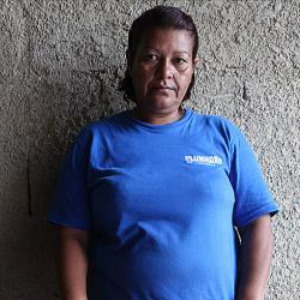
HRD Eloísa Barrios In Venezuela under threat following the killing of another member of her family

January 12, 2013

Following the killing, on 15 December 2012, of the ninth member of her family since 1998, the NGO Front Line Defenders is extremely concerned for the safety of human rights defender Eloísa Barrios and her family. Eloísa Barrios has previously submitted petitions to the Inter-American Commission (IACHR) and Court of Human Rights (IACtHR), on 16 March 2004 and 30 December 2005, requesting protection measures for the family as a result of persecution, allegedly by members of the Police of Aragua State.eloisa_barrios_cropped_0

Eloísa Barrios,together with local NGOs, has publicly denounced human rights violations in Aragua State. She has also actively promoted the committees of victims and families of victims in Aragua, and in particular has mobilised mothers of those extrajudicially killed by the state police and accompanied them through the process of filing complaints, the court process and speaking out in social media. Eloísa Barrios has been vocal in speaking out about the Venezuelan State’s failure to effectively protect her family from extrajudicial killings and other human rights violations and has reported an increase in the threats made against her and her family after she denounced the killings before the Inter-American system. She has been threatened by state police officials in retaliation for the constant complaints to the 20th Prosecutor’s Office of the Public Ministry in Aragua concerning her son’s detention on three occasions and ill-treatment in custody. In January 2012 the human rights defender moved from her home as a result of the intimidation.

Since 1998 nine members of the Barrios family have been murdered and several others have been detained and subjected to illegal and arbitrary searches of their homes, suffered threats against their lives and personal integrity, and been forced to move from their place of residence.

The IACHR and the IACtHR have followed the case through all available mechanisms after concluding that Venezuela has violated the rights to life, physical integrity and freedom of several members of the Barrios family, including some minors, however the State has failed to comply with the recommendations of either institution and the Barrios family continue to be at risk.Frontline NEWlogos-1 condensed version - cropped

Angolan journalist and HRD António Capalandanda in trouble

January 11, 2013

One month after being physically assaulted, human rights defender and journalist  António Capalandanda continues to be subjected to threats and acts of surveillance and intimidation. António Capalandanda is a journalist at on-line news and radio site Voz da América (Voice of America) in Angola. His work has focused on human rights and political violence in the country, as well as investigation of corruption cases involving public officials.

On various occasions in early January 2013, António Capalandanda was reportedly followed by unidentified men in a vehicle, who parked close to his residence and followed him as soon as he left for work. During the same period the email of António Capalandanda was hacked by unknown individuals according to his email service provider, which registers the time and Internet Protocol (IP) address when his account is accessed.

On 7 December, 2012, two unidentified men on a motorbike assaulted the journalist and stole his camera, a voice recorder and two notepads. One of the men also attempted to take his backpack, unsuccessfully. On the same day, António Capalandanda filed a complaint at Huambo Provincial Police Directorate for Criminal Investigation. The officer who registered the case stated that this type of assault was unusual in the region and added that it seemed the human rights defender was being subjected to surveillance.

António Capalandanda has previously received a number of death threats from individuals identified as state security agents and has been offered to work for the Government in return for the ceasing of his journalism work. The human rights defender’s family members and friends have also been reportedly subjected to acts of harassment.

On 5 December 2012, two days prior to the abovementioned assault, António Capalandanda was approached by a man who identified himself as an agent of the state security services, and issued death threats against the journalist.

Front Line Defenders expresses serious concern at the continued acts of threats, surveillance and intimidation directed at António Capalandanda, as well as his family members and persons close to him, and believes that these acts are motivated by the legitimate and peaceful activities of António Capalandanda as an investigative journalist and human rights defender in Angola.  Frontline NEWlogo-2 full version - cropped

Short video with summary portraits of the winners of the Tulip award

January 11, 2013

A short documentary about the five winners of the Human Rights Tulip Award, the award of the Dutch government for human rights defenders. The winners are from Honduras, Congo, Iran, China and India. The films were done by the True Heroes Foundation (THF).


Tulip human rights award given in absentia to Dalit leader

January 10, 2013

Dutch newspapers and human rights groups concerned with the Dalits (untouchables) report that the winner of the Dutch Human Rights Tulip of 2012 has been barred from traveling to the Netherlands to receive his award in person on  Wednesday 9 January. Marimuthu Bharathan, a Dalit human rights defender from Tamil Nadu, was refused a passport by the Indian authorities, according to a press release by International Dalit Solidarity Network (IDSN).This is the second year in a row that the recipient of the Dutch Human Rights award will not be present at the ceremony in The Hague [Last year, Chinese activist Ni Yulan was in custody awaiting trial during the award ceremony.]The  jury of the Tulip has recognised Marimuthu Bharathan as a “tireless champion of better living and working conditions for his country’s Dalits”. Himself a Dalit, he works against caste discrimination by supporting Dalits who as manual scavengers are condemned to clean dry latrines with their bare hands. He also sets up Dalit organisations, campaigns for reforms of the corrupt police system, and fights for compensation and rehabilitation of Dalits who suffer human rights violations. Mr Bharathan’s work as director of the Human Rights Education and Protection Council in Tamil Nadu has put him on a collision course with the state’s authorities who consistently prohibit demonstrations for Dalit rights organised by him and disrupt his work.

According to Indian human rights organisations, this refusal appears to be connected with a false murder charge. “The passport refusal is yet another example of the disenfranchised position of the 200 million Dalits and the defenders of their rights in India. The Indian authorities clearly fail in combating discrimination and exclusion of Dalits and are themselves often the perpetrator of crimes against them. The systemic abuse and torture in police stations is an example of that,” said Gerard Oonk, director of the India Committee of the Netherlands and co-ordinator of the Dalit Network Netherlands.


LARGEST EVER TRIAL OF HUMAN RIGHTS DEFENDERS IN VIETNAM

January 10, 2013

ARTICLE 19 staff imageAND VIET TAN ON 9 JANUARY REPORT ON THE TRIAL AND CONDEMNATION OF 14 ACTIVISTS IN VIETNAM

  • Ho Duc Hoa (13 years in prison, 5 years house arrest)
  • Dang Xuan Dieu (13 years in prison, 5 years house arrest)
  • Paulus Le Son (13 years in prison, 5 years house arrest)
  • Nguyen Van Duyet (6 years in prison, 4 years house arrest)
  • Nguyen Van Oai (3 years in prison, 2 years house arrest)
  • Ho Van Oanh (3 years in prison, 2 years house arrest)
  • Nguyen Dinh Cuong (4 years in prison, 3 years house arrest)
  • Nguyen Xuan Anh (5 years in prison, 3 years house arrest)
  • Thai Van Dung (5 years in prison, 3 years house arrest)
  • Tran Minh Nhat (4 years in prison, 3 years house arrest)
  • Nong Hung Anh (5 years in prison, 3 years house arrest)
  • Nguyen Dang Vinh Phuc (probation)
  • Nguyen Dang Minh Man (9 years in prison, 3 years house arrest)
  • Dang Ngoc Minh (3 years in prison, 2 years house arrest)

The men and women were convicted of “carrying out activities aimed at overthrowing the people’s administration” under Article 79 of the penal code. The criminal activities the group are said to have engaged in include writing commentary that is critical of the Government and distributing this on the internet, and both participating in and encouraging peaceful protest. ARTICLE 19 believes that these activities should not be considered to be criminal. The Vietnamese authorities have failed to recognise basic human rights and these convictions fail to meet international standards freedom of expression. “Thirteen people [one was given probation – ed] are now behind bars for doing nothing more than expressing legitimate political concerns.  They have been locked away for sharing views about matters of public importance on the internet and for taking part in peaceful demonstrations. These are not things which should be considered criminal. It seems that the real crime here is the appalling abuse of fundamental rights, including the right to freedom of expression, by the state” said Agnes Callamard, Executive Director of ARTICLE 19.

The group, many of them bloggers and citizen journalists, were arrested between August and December 2011 and held for more than a year before standing trial.

UN Watch and Human Rights Watch – two very different animals but how clear does one make it?

January 9, 2013

Phyllis Bennis, a Fellow of the Institute for Policy Studies and of the Transnational Institute in Amsterdam, wrote in her blog through Al-Jazeera, on 9 January 2013, a very informative piece under the title: “Human Rights Watch: Time to stand with human rights defenders” with the provocative byline: It is disappointing to see HRW’s unwillingness to stand with those who are working to promote and defend human rights.

The full article one should certainly read at: http://www.aljazeera.com/indepth/opinion/2013/01/20131781532514238.html but what matters here is the policy question to what extent a (decent) NGO (i.c. HRW) should take to task another (very biased) NGO (i.c. UN Watch).

In short, the pro-Israeli, UN-bashing UN Watch discovered that the UN Special Rapporteur for Human Rights in the Occupied Palestinian Territory, US lawyer Richard Falk, was still ‘on the Board’ of HRW. HRW quickly replied that he was only a member of HRW’s local support committee in Santa Barbara, California, where he lives and that it was an oversight that he still held this honorary position and that it was rectified (“longstanding policy, applied many times, that no official from any government or UN agency can serve on any Human Rights Watch committee or its Board. It was an oversight on our part that we did not apply that policy in Richard Falk’s case several years ago when he assumed his UN position”).  UN Watch of course cried victory implying that Falk was expelled an enemy of human rights or because he is anti-Semitic.

The author of the blog finds fault with HRW’s meek response that did indeed not amount to a strong defense of Richard Falk’s credentials, impartiality and expertise. Should HRW not have made clear that substantively it stands with Richard Falk, that he was removed for technical reasons only and would be welcomed back as soon as he ceases to be UN Rapporteur? These are policy question that each NGO should answer for itself but in the context of UN Watch’s obsession to undermine the work of the UN in general and Richard Falk in particular a more robust stance would have been useful. I think that the similarity – even confusion –  in name should also have led HRW to take a tougher public stand.

Phyllis Bennis concludes with: “Given his Middle East staff’s consistent work, there is no question that Ken Roth and the HRW board understand that human rights criticism of Israeli occupation is well-grounded in fact, and that such criticism remains a crucial element in changing the public, media and policymaking discourse in the United States. If we are ever to have any hope of changing US government policy in Palestine-Israel towards one grounded in human rights and international law, consistent human rights criticism and a willingness to stand with human rights defenders like Richard Falk when they face attack, remain crucial tools – for all human rights activists, including the leadership of Human Rights Watch.


13th of February will now be “World Radio Day”

January 9, 2013

Geneva-based NGO “Media and human rights” reports that the United Nations Educational, Scientific and Cultural Organization (UNESCO) has proclaimed the 13th of February “World Radio Day”. It is a moment to pay homage to one of the most important and resilient media. A  time also to remember that local radio journalists are often in the firing line, especially in regions where citizens do not have access, due to lack of infrastructure or resources, to other media like TV or the Internet.

For more information, go to the UNESCO World Radio Day page http://www.unesco.org/new/en/communication-and-information/events/prizes-and-celebrations/celebrations/world-radio-day/why-the-world-radio-day/ and to http://www.unesco.org/new/en/communication-and-information/events/prizes-and-celebrations/celebrations/world-radio-day/safety-of-radio-journalists/radio-in-the-line-of-fire/ for an overview of attacks against radio journalists.

 from: Media and human rights: February 13 World Radio Day.