Photo: Freedom of Speech Includes The Press by Narih Lee under CC 2.0
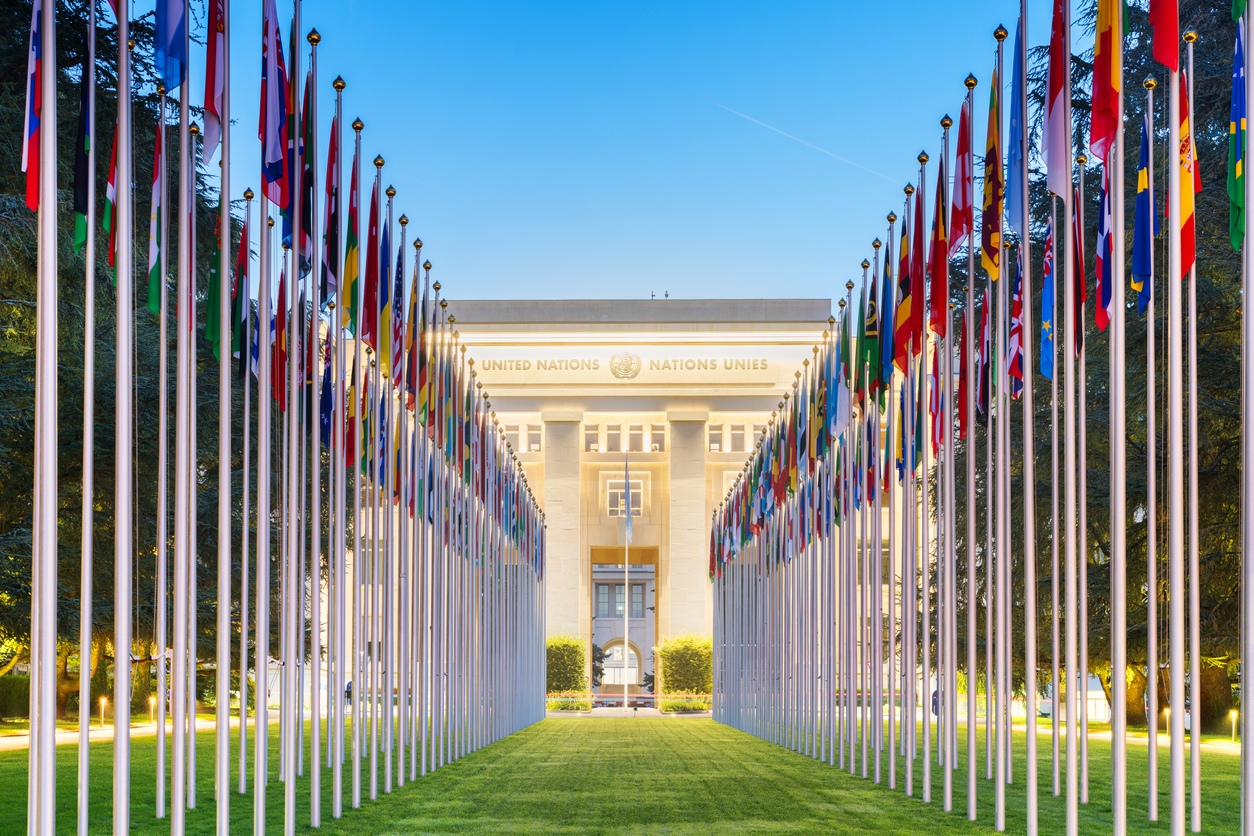
INVITATION to the side event: IN DEFENCE OF CIVIC SPACE AND DEMOCRACY SUPPORTING THE WORK OF HUMAN RIGHTS DEFENDERS on Monday 26 February 2024, 1pm – 2pm CET, Room XXII, Palais des Nations, Geneva
Human rights defenders promote democracy and a vibrant civic space, too often, in dangerous circumstances. This event aims to discuss the crucial work of defenders, how the international community can best support them and how crucial gender equality is for the full realisation of democracy.
Speakers:
Sviatlana Tsikhanouskaya, Leader of democratic forces (Belarus)
Dr. Sara Abdelgalil, Paediatric Consultant NHS UK, Democracy & Governance Advocate, Active member of Sudanese Diaspora
Phil Lynch, Executive Director, International Service for Human Rights
Elina Valtonen, Minister for Foreign Affairs, Finland
Moderator: Imogen Foulkes, BBC Geneva
A light lunch will be served. The event will be recorded and published as a podcast (Inside Geneva, produced by Swiss Broadcasting).
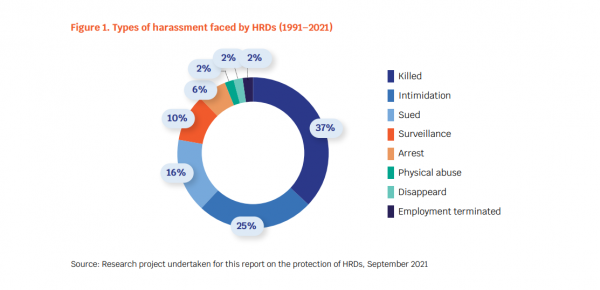
A new UN report claims that, between 2001 and 2021, 30% of outspoken Thai activists experienced violence resulting in a loss of life, by the businesses against which they had campaigned. Released by the United Nations Development Programme (UNDP), on 11 February 2024, the report says that businesses have used legal action, intimidation and violence to silence human rights defenders.
The categories of abuse faced by human rights defenders, per the report.
Activists, affected villagers and attorneys are among the groups considered to be human rights defenders in the report. Over the last 25 years, businesses filed 109 lawsuits against human rights defenders. 68.9% of these were by those with stakes in the mining, livestock and energy industries.
One anonymous interviewee said the lawsuits are used as strategic roadblocks and that they found themselves “going to court approximately once a month, incurring expenses and losing time.” Outside of the judicial system, human rights defenders were reportedly spied upon, or threatened with violence and job loss.
“After making a turn in my car, someone fired shots at me,” claims another anonymous interviewee, adding “I was in the orchard, a single home in the orchard. It was dark. Five shots were fired. I did not report the case, thinking it was an act of intimidation.”
4% of human rights defenders have died or been forcibly disappeared in the 25 years covered by the report, published on February 12th, the International Day for the Prevention of Violent Extremism.
In 2015, Thailand pledged to work towards the fulfilment of the UN’s 17 Sustainable Development Goals (SDGs), alongside other members of the organisation. SDG 16, one of the goals, asks countries to “uphold peace, justice and strong institutions,” and another, SDG 10, aims for “reduced inequalities”.
The report recommends that government and relevant agencies recognize the status and importance of human rights defenders and develop measures that protect them from violence and harassment.
On 16 February, 2024 Sandra Epal Ratjen & Nicolas Agostini in Global Rights reported on a UN consultation on law enforcement’s role in peaceful protests which brought together practitioners and human rights defenders.
Over two days in Geneva, the UN special rapporteur on freedoms of peaceful assembly and association, Clément Voule, the UN Human Rights Office (OHCHR), and the UN Office on Drugs and Crime (UNODC) convened a consultation on the facilitation of peaceful protests by law enforcement. The event followed several regional workshops, organized in accordance with Human Rights Council resolution 50/21, which requested that the special rapporteur develop “technical and practical tools . . . to assist law enforcement officials in promoting and protecting human rights in the context of peaceful protests.” There was nothing unusual in this format—or in the event’s title. But despite its attractive feel (at least for human rights geeks), it ran the risk of turning into yet another academic discussion replete with theorizing but offering little in the way of practical solutions.
It turned out to be one of the most refreshing, engaging, and action-oriented human rights dialogues we’ve attended.
It’s about the makeup
What made the event rather unusual was its makeup. In addition to civil society members (public assembly, law enforcement, torture, and rule of law specialists attended), the consultation brought together practitioners from all over the world. By “practitioners,” we mean not just police watchdogs (oversight bodies and disciplinary authorities) but police officers and commanders, all on active duty.
While some activists would draw back with a wince, those human rights defenders and organizations who were present engaged with an open mind, as did law enforcement personnel. Participants weren’t going to talk amongst themselves or only preach to the converted. They were going to try to bring about an actionable outcome. After all, their aim was to devise how law enforcement can facilitate peaceful assemblies and protect rights in such contexts.
Peer pressure was minimal. On all sides, there was nothing to “prove”: no need to adopt an intransigent position, no need to show you’re smart, no need to cajole anyone—there were only incentives to share expertise and experience.
Sure, there were precedents. Recent workshops brought together practitioners and outlined best practices. For instance, the “Istanbul Process” meeting on promoting religious tolerance held in Singapore was practitioner-centric. Since then, however, the Istanbul Process has collapsed as the Organization of Islamic Cooperation (OIC) revived the “defamation of religions” agenda.
Without naïveté but considering the “real-world” nature of the outputs of this process, we’re confident that the work done under the auspices of Clément Voule, OHCHR, and UNODC will, to some extent, enhance human rights compliance in police practice and benefit both peaceful protesters and law enforcement officials. Notably, the outcome documents are less technical than most human rights documents.
It’s also about the substance
The consultation was also innovative because of its hands-on approach. In addition to the main working document, a “Model Protocol” for the law enforcement facilitation of peaceful protests, the project led by Clément Voule and his team, OHCHR, and UNODC will produce a “Handbook” and a “Checklist” for law enforcement professionals. The latter two will be practical documents guiding police practice.
The magnitude and diversity of experiences in the room meant that discussions were light-years away from sterile sloganeering or divisive debates—the kind we see on social media. On civil society’s side, no one advocated “defunding the police.” On the police side, no one advocated for qualified immunity. All participants created a fertile ground for dialogue on how to ensure human rights-compliant, competent, and respected law enforcement that is able to facilitate, not hinder, public assemblies.
Civil society participants recognized the need for well-funded, well-trained police. We kept in mind (and were reminded of) the realities of the job—what the average law enforcement officer faces daily. The challenges include understaffing, lack of adequate training, and, quite simply, fear (facing a crowd, even peaceful, will never feel like sitting on your sofa sipping a Whiskey Sour). Law enforcement participants, for their part, recognized the need for accountable police behavior and to confront discrimination and abuses of power. They kept in mind (and were reminded) that to be respectful is a sine qua non to be respected.
Also reviewed were “prior to protest,” “during protest,” and “after protest” issues, plus the situation of specific groups and accountability for violations. One section addressed police well-being, which is essential to human rights compliance, as strained police officers are much more likely to engage in misconduct. We didn’t shy away from addressing sensitive issues—police brutality, accountability, or budgeting.
It wasn’t an echo chamber, but participants agreed on key points. Among others: the role of police vs. the role of prosecution; the need for effective communication between protesters and police, de-escalation, and adequate training for police officers; or the fact that a clear distinction must always be made between peaceful and non-peaceful elements of an assembly.
It was a far cry from the way these conversations unfold online, and once again, one can see the toxicity of social media. Instead of fostering healthy discussions (differences aren’t that wide between most people), social media algorithms artificially promote simplistic views, entrench positions, and elevate the most divisive topics. This process distracts those seeking solutions from problem-solving. No one benefits from this situation—certainly not rights-holders.
Don’t forget political will
Assuredly, the outcomes of this consultation will go unheeded in many countries, where protests are rare or police have total impunity. Elsewhere, not much will happen without political will.
But the beauty of this consultation is that political will to facilitate assemblies won’t need to come from the highest level. Once publicly available, the outcome documents—particularly the Handbook and Checklist, with their guidelines on communication, de-escalation, and risk assessment regarding protests—will be available for law enforcement agencies and officers at all levels to use. The ideal scenario, of course, will be governments publicly committing to using the outcome documents.
The final documents will stem from a dialogue that brought together people with hands-on experience who tried to build bridges and maximize their chances of having an impact on the ground. This model should inform future human rights dialogues.
The Protocol, Handbook, and Checklist will be presented at the next session of the UN Human Rights Council, February 26–April 5, 2024. Clément Voule will make his last appearance as special rapporteur. For his successor—and for all people of goodwill who want to see peaceful protests proceed without hindrance, as well as rights-compliant law enforcement, joint work will be needed to popularize, operationalize, and implement the documents.
‘Our impact may be large, may be small, and may be nothing. But we must try. It is our duty to the dispossessed and it is the right of civil society.’ – Cao Shunli
Ten years ago, Chinese woman human rights defender Cao Shunli was a victim of deadly reprisals for engaging with the United Nations.
The International Service for Human Rights (ISHR) and partners invite you to attend a photo exhibition on 14 March 2024, at Place des Nations to honour her memory.
Cao Shunli was a brave Chinese woman human rights defender and lawyer. She campaigned for the meaningful consultation and contribution of independent civil society to the Chinese government’s national reports for its first and second Universal Periodic Reviews (UPR). On 14 September 2013, one month before this review, while on her way to Geneva to attend a human rights training organised by ISHR and CHRD, she was detained and forcibly disappeared by Chinese authorities for five weeks. When she resurfaced in custody in October 2013, she had been charged with ‘picking quarrels and provoking trouble’, and it was evident that she was experiencing serious medical issues in detention. Despite repeated international calls for her urgent release over months of being denied adequate medical treatment, Cao Shunli died of multiple organ failure on 14 March 2014, having been granted bail for medical reasons just days before her death. Cao Shunli was one of the finalists of the prestigious Martin Ennals Award for Human Rights Defenders in 2014. [see also: https://humanrightsdefenders.blog/tag/cao-shunli/ as well as https://www.martinennalsaward.org/hrd/cao-shunli/]
To this day, Chinese authorities have ignored appeals seeking accountability for Cao’s death, including repeated calls by UN Special Procedures experts in 2014 and 2019 for a full investigation into this ‘deadly reprisal’. Her case remains the longest-standing unresolved case in the UN Secretary-General’s annual reports on reprisals. March 2024 marks the 10th anniversary of Cao Shunli’s death. A decade ago, when ISHR and many other human rights groups sought to observe a moment of silence at the Human Rights Council in her memory, the Chinese delegation, together with other delegations, disrupted the session for an hour and a half. China is consistently one of the most frequent perpetrators of reprisals against individuals or groups engaging with the United Nations. Frequently mentioned alongside Saudi Arabia, it has the second highest number of reprisals cases and situations reported by the UN Secretary-General since 2010.
Cao Shunli’s story is a paradigmatic case of reprisals, not only because of her belief in the importance of civil society participation in UN mechanisms, but also due to the array of severe human rights abuses she endured because of this belief, ranging from being barred from exiting her own country, enforced disappearance, arbitrary detention, lack of due process, torture, ill-treatment, and denial of adequate medical care, to subsequent death in custody without any accountability for these abuses.
On 5 February 2024, the Swedish Government adopted a new five-year strategy for development cooperation for human rights and freedoms, democracy and the rule of law. This strategy is an important part of the implementation of the Government’s new reform agenda for development assistance and contributes to free and inclusive democratic societies built on respect for human rights and freedoms.
Democracy, human rights and freedoms, and the rule of law are essential for freedom, security and the continued development of society. At the same time, we see storm clouds gathering. Democracy is in decline for the seventeenth consecutive year, which gives rise to increased oppression and conflicts. Russia’s full-scale invasion of Ukraine is a clear example of this.
Another is the way authoritarian states are undermining fundamental human rights and freedoms and using new digital technology for oppression and to spread disinformation.
“With this strategy, the Government is placing greater emphasis on the individuals around the world who fight for their freedom every day. We want to help those living under oppressive systems. Unfortunately, we see that democracy is headed in the wrong direction. That’s why Sweden has to do its part. We will do what we can to support the positive forces that exist,” says Minister for International Development Cooperation and Foreign Trade Johan Forssell.
The strategy outlines the Swedish Government’s increased focus on supporting defenders of human rights and democracy, free elections and independent journalism, in comparison with the previous strategy. The allocated budget for the strategy in 2024 is SEK 900 million. This budget is set out by the Government each year.
Justice & Peace Netherlands is launching its new call for applications for human rights defenders at risk to participate in Shelter City Netherlands. The deadline for applications is 28 February 2024 . Shelter City is a global movement of cities, organizations and people who stand side by side with human rights defenders at risk. Shelter City provides temporary safe and inspiring spaces for human rights defenders at risk where they re-energize, receive tailor-made support and engage with allies. The term ‘human rights defender’ is intended to refer to the broad range of activists, journalists and independent media professionals, scholars, writers, artists, lawyers, civil and political rights defenders, civil society members, and others working to advance human rights and democracy around the world in a peaceful manner. From June and September 2024 onwards, several cities in the Netherlands will receive human rights defenders for a period of three months. At the end of their stay in the Netherlands, participants are expected to return with new tools and energy to carry out their work at home.
Application forms must be submitted by 28 February 2024. An independent commission will select the participants. Note that selected human rights defenders will not automatically participate in Shelter City as Justice & Peace is not in control of issuing the required visas to enter the Netherlands. For more information, please contact us at info[@]sheltercity.org.
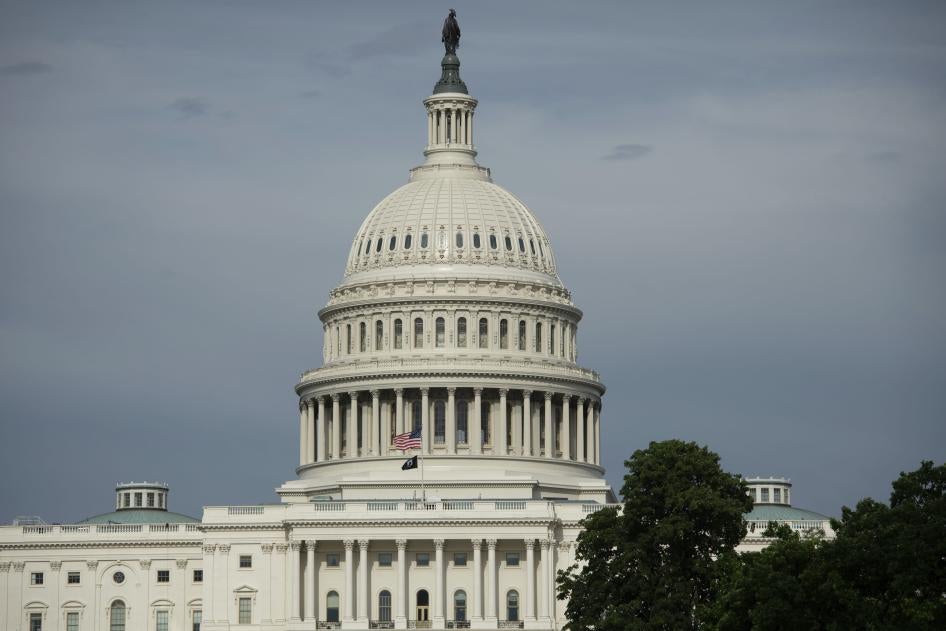
On 31 January 2024 several NGOs – including HRW and AI -came out in support of a bill in the US Senate. Senator Ben Cardin introduced the Human Rights Defenders Protection Act of 2024, which aims to protect individuals abroad “who face reprisals for defending human rights and democracy.” The law, if enacted, would strengthen the US government’s ability to “prevent, mitigate, and respond” to such cases.
Senator Cardin said this legislation “will help elevate, guide, and enhance US efforts to support these courageous individuals globally at a time when their efforts are more important than ever.”
HRW said: The bill would integrate support for rights defenders into various US policies and programs and encourage engagement with the private sector. It aims to improve assistance for rights defenders living in exile from their home countries and strengthen US tools to hold perpetrators of rights abuses accountable.Human Rights Watch has long documented the risks, threats, and attacks that rights defenders across the globe face. In Rwanda, for example, the government for many years has targeted with impunity rights defenders at home and extended its repression beyond its borders to silence Rwandan critics living abroad. Last December, the Emirati government brought new charges under its counterterrorism law against 87 activists and dissidents, including imprisoned rights defender Ahmed Mansoor.
The proposed legislation would create a new US visa for rights defenders who face a “credible fear of an urgent threat,” allowing those who qualify to reach safety before they are detained or harmed. It would also increase the number of US government personnel dedicated to democracy and human rights issues in the federal government and at embassies in countries with a high risk of rights abuses.
Andrew Fandino, Advocacy Director for the Individuals at Risk Program at Amnesty International USA. stated: “The Human Rights Defenders Protection Act of 2024 is a critical piece of legislation that will help strengthen and improve the U.S. government’s ability to support human rights defenders around the world,” ..“With over 401 human rights defenders killed globally in 2022 alone, now more than ever, human rights defenders need this additional support and protection.”
If passed, the legislation would require the US government to establish a “Global Strategy for Human Rights Defenders.” The strategy would survey current tools and resources to support human rights, identify how the government would prioritize and bolster protections for rights defenders, and establish specific goals for implementing the legislation’s policy objectives. This would link to the existing EU Guidelines on Human Rights Defenders (2008), and the OSCE Guidelines on the Protection of Human Rights Defenders (2014) and those of a small group of European countries.
To mark the Day of the Endangered Lawyer, the Law Society of England and Wales issued a press release on 24 January honouring legal professionals who are targeted for upholding the rule of law and defending a strong justice system.
The Law Society has published its annual intervention tracker which shows that the Society took 40 actions relating to 17 countries in 2023. Most of these actions were initiated by concerns relating to arbitrary arrest or detention (58%) followed by harassment, threats and violence (27%).
Law Society president Nick Emmerson said: “Across the world, lawyers continue to face harassment, surveillance, detention, torture, enforced disappearance and arbitrary arrest and conviction...
We use this day to draw attention to the plight faced by countless lawyers across the globe, as they fight for their right to freely exercise their profession and uphold the rule of law.
A recent example comes from Amnesty International on 25 January 2024: On 31 October 2023, human rights lawyer, Hoda Abdelmoniem, was due to be released after serving her unjust five-year prison sentence stemming solely from the exercise of her human rights. Instead, the Supreme State Security Prosecution (SSSP) ordered her pretrial detention pending investigations into similar bogus terrorism-related charges in a separate case No. 730 of 2020. During a rare visit to 10th of Ramadan prison on 4 January, her family learned that her health continues to deteriorate and that she developed an ear infection, affecting her balance and sight. She must be immediately and unconditionally released. [see also: https://humanrightsdefenders.blog/2020/11/29/2020-award-of-european-bars-associations-ccbe-goes-to-seven-egyptian-lawyers-who-are-in-prison/]
‘Making a movement: The history and future of human rights“. To mark the 75th anniversary of the Universal Declaration of Human Rights, The Carr Center for Human Rights Policy asked 90 Harvard faculty and affiliates to offer thoughts on a document that changed the world.
“THE CREATION OF SUCH A DOCUMENT— its mere existence—must count among the greatest achievements in human history.” That is how Mathias Risse, the Berthold Beitz Professor in Human Rights, Global Affairs and Philosophy, and faculty director of the Carr Center for Human Rights Policy at HKS, describes the impact of the Universal Declaration of Human Rights (UDHR), which turns 75 this year. Yet Risse and other human rights defenders say the UDHR has done much more than exist—it paved the way for more than 70 enforceable human rights treaties around the globe and marked the first time the world had a documental agreement that all humans were equal and free. That global standard is vital even if the world community continues to fall short of achieving the UDHR’s promise, Risse says. “The human rights movement will always register shortfalls much more than achievements and would miss its purpose otherwise,” he says. “Regardless, the change that these decades of developments have brought is very real.”
To honor the UDHR, the Carr Center commissioned short essays from 90 scholars, fellows, and affiliates across HKS, Harvard, and beyond to explore the past, present, and future of the human rights movement it inspired. A selection of excerpts follows below. The complete collection of essays in their entirety can be found on the Carr Center website.
On 27 January 2024, Olivia Biliunaand Madison Whittemore in the Davis Vanguard produced a useful summary of the 2024 Human Rights Watch Report
After reflecting on the formidable human rights challenges of 2023, it has become evident that changes in how human rights are approached will be needed in 2024 to prevent the atrocious suppression and human rights crises that have been prominent in the past year, according to Human’s Rights Watch’s “World Report 2024: Our annual review of human rights around the globe.” [see: https://www.hrw.org/world-report/2024]
However, despite the human rights atrocities seen in 2023, the group added that there appears to be some hope for upholding human rights in 2024 through enforcing principles of international human rights law.
Looking back on 2023, the 2024 World Report reflects on renewed conflicts between Israel and Hamas that resulted in the abuse of many and a tragic loss of life, and other countries such as Ukraine and Myanmar that continue to struggle with their own intense conflicts.
Human Rights Watch notes that in accordance with the aforementioned conflicts, “Economic inequality rose around the world, as did anger about the policy decisions that have left many people struggling to survive.”
However, while many are quick to blame the government for being complicit in these human rights crises, the report maintains action is needed outside of just government action alone to help diminish these threats, since they “often transcend borders and cannot be solved by governments acting alone.”
In fact, the report notes the often forgotten importance of universal principles of international human rights and the rule of law which are more critical now than ever.
The 2024 World Report argues governments have the ability to help improve human rights and that they have double standards in “applying the human rights framework,” as stated in the 2024 World Report, and “chips away at trust in the institutions responsible for enforcing and protecting rights.”
The legitimate laws and universality of human rights are weakened when governments that are vocal about denouncing the Israeli government war crimes against Gaza citizens do not speak up about the crimes against humanity in Xinjiang, China, according to the 2024 World Report.
Governments have found it is easier to disregard international human rights matters because internationally there is no challenge to human rights nationally, writes Tirana Hassan, the executive director.
Hassan also noted that autocrats across regions have taken away both the independence of key institutions to protect human rights and the freedom of dissent, as stated by the 2024 World Report, “with the same endgame in mind: to exercise power without constraint.”
Hassan explains that with campaigning of civil rights groups and years of diplomatic negotiations, 83 countries were able to protect their citizens by adopting a political declaration that provided protection from explosive weapons in populated areas.
The international pledge to recognize the “long-standing practice of warring parties to use aerial bombing, artillery, rockets, and missiles in villages, towns, and cities” is the first to address this issue as the 2024 World Report states.
Some countries are addressing long-marginalized communities. With years of pressure, the Japanese government parliament has passed its first law to protect LGBT people from “unfair discrimination,” the 2024 World Report states.
With the humanitarian crises there has been questioning on the effectiveness of the human rights framework in the realm of protection, notes the 2024 World Report, adding, “especially in the face of selective government outrage, transactional diplomacy seeking short-term gain, growing transnational repression, and the willingness of autocratic leaders to sacrifice rights to consolidate their power.”
With that, the 2024 World Report also suggests the human rights framework will continue to be the plan to build “thriving, inclusive societies” and governments need to be persistent and, with urgency, defend human rights to handle the global and existential threats to humanity.
As also highlighted by Hassan in the report, the assault on Israel by Hamas-led fighters on Oct. 7 that deliberately killed hundreds of vulnerable civilians led to swift condemnation from many countries around the world.
In retaliation to the Oct. 7 attack, the Israeli government ceased all running water and electricity in the Gaza strip, “blocking the entry of all but a trickle of fuel, food, and humanitarian aid – a form of collective punishment that is a war crime,” the 2024 World Report noted.
The Israeli government and military continue frequently bombing the Gaza strip. Following these attacks, countries were outraged after they found out that Israel used a chemical called white phosphorus during the indiscriminate attacks on Gaza, with many countries even highlighting the attacks as “apparent war crimes,” stated by Human Rights Watch.
However, despite world-wide outrage after Israel’s war crimes on Gaza, countries have failed to publicly call the Israeli government out on its war crimes resulting in severe human rights abuses, the report detailed, noting even the U.S. and the European Union have acknowledged Israel’s human rights abuses on Gaza citizens, yet have continued to be complicit in the “ongoing crimes against humanity of apartheid and persecution against Palestinians.”
The report asserted the repercussions of governments failing to intervene undermine the legitimacy of the rules system designed 75 years ago to safeguard all citizen’s rights. In response to the inconsistencies, Hassan cites that governments like Russia and China aim to take advantage of the shaky legitimacy by attempting to infringe on human rights and take advantage of the system that is supposed to punish both countries.
Another example used by the 2024 World Report that displays these inconsistencies is the power battle between two influential generals in Sudan, Gen. Abdelfattah al-Burhan and Gen. Mohamed Hamdan Dagalo.
This conflict resulted in civilians facing deadly abuses and human rights infringements in the Darfur region—with numerous countries listed in the 2024 world report allegedly ignoring the horrendous abuses and abstaining from intervening.
Despite nations such as Gabon, Ghana, and Mozambique being on the Security Council, “the UN, under pressure from the Sudanese government, shuttered its political mission in Sudan.” the 2024 World Report stated, also concluding that “This marked the conclusion of the UN’s limited capacity in the country to safeguard civilians and openly address the human rights situation.”
Regardless of African governments refusing to hold the Sudanese government accountable, the report highlights that many have been strong advocates for resolving the human rights issues in other places like Palestine, even leading a full-fledged effort to investigate its human rights abuses last November and recently asserting that “Israel violated its obligations under the 1948 Genocide Convention in its military operations in Gaza.”
Domestic policies and foreign policies should hold value in human rights and their rules of laws at the forefront of governments, charged the 2024 World Report.
Even rights-respecting governments hold these principles as “optional, seeking short-term, politically expedient “solutions” at the expense of building the institutions that would be beneficial for security, trade, energy, and migration in the long term,” according to the 2024 World Report, adding transactional diplomacy carries a human cost that extends past borders, the group adds.
The 2024 Report writes that without awareness while making transactional diplomacy, risks are created. Removing human rights and the rule of law from a sensible direction creates leverage for right-violating governments too, the 2024 World Report adds, arguing, “It can also contribute to further human rights violations, including transnational repression,” which governments do when they commit human rights abuses against their nationals abroad or to those families living at home, the report continues.
According to the World Report of 2024, India, a democracy, under its Prime Minister Narenda Modi has moved toward an autocracy “with authorities targeting minorities, tightening repression, and dismantling independent institutions, including federal investigative agencies.”
Additionally, as cited in The Report, the US, Australia, the UK, and France chose trade and security over raising human rights concerns.
As reported by Executive Director Hassan, the Modi government’s repressive tactics went past borders and were empowered to do so from the Indian government’s “silence on the Indian government’s worsening rights record…including to intimidate diaspora activists and academics or restrict their entry into India.”
Rwandan’s government has had three decades of no punishment for their repression of civil and political rights at home, the 2024 World Report states, writing “to stifle dissent beyond its borders,” and noting, Rwanda, despite having risen on the international stage, has failed to recognize its problematic human rights violations.
Similarly, Chinese government abuses in Beijing escalate its repression against both Chinese and non-Chinese with failure of resistance from other countries, according to the 2024 World Report, explaining a Laos lawyer and human rights defender, Lu Siwei, received pressure from the Chinese government to return and authorities pushed out warrants.
The 2024 World Report claims nowhere is safe if repressive governments can get away with “strong approaches to silence human rights defenders, exiled politicians, journalists, and critics beyond their borders.”
As reported by the Human Rights 2024 World Report, with almost half of the global population being eligible to vote in 2024, both citizens and independent institutions need to participate in order to effectively have leaders who defend human rights, regardless of society and many institutions having “become renewed battlegrounds for autocratic leaders around the world looking to eliminate scrutiny of their decisions and actions.”
According to Hassan, the nations of Guatemala and Nicaragua are two stories of autocratic leaders consolidating power and failing to prioritize civil society.
For example, after Guatemala’s President-elect Bernardo Arévalo ran on an anti-corruption platform, a corrupt judiciary attempted to overturn Arévalo’s election triumph.
Similarly, the report refers to Nicaragua, where corrupt and authoritarian President Daniel Ortega uses “abusive legislation to shut down over 3,500 nongovernmental organizations” in order to dominate the political landscape and wield unchecked power.
The Human Rights report insists these “vital” checks and balances continue to be eroded, it poses great harm to human rights.
Judicial independence has also been drastically sabotaged in Poland, the report alleges, with the Polish government suppressing civil society groups through law enforcement and incarceration. Polish freedom and independence are extremely threatened, with the Law and Justice party most notably encroaching on women’s reproductive rights and essentially banning abortion, Hassan suggested in the report.
“In May 2023, an abortion rights activist was convicted of helping a woman to get abortion pills and was sentenced to eight months of community service – the first known prosecution of its kind in the EU,” the 2024 World Report noted.
On an environmental note, with the impending issue of global warming, the 2024 report highlights activists being shot by governments across the globe who want to “deter the climate movement.”
In another example, the report cites how one of the largest oil producers, the United Arab Emirates (UAE), continues to expand its production of fossil fuels; however, people are discouraged from exposing the UAE unless they are willing to face grave punishment.
Apart from punishing dissent, governments are using technology and social media platforms to “silence critics and censor dissent,” the 2024 World Report notes, citing a 54-year-old retired Saudi Arabian teacher named Muhammad al-Ghamdi, who received the death penalty after he expressed his opinions on X and Youtube and allegedly went against the country’s counterterrorism law.
Despite everything that occurred in 2023, there were also positive moments for human rights where institutions and movements succeeded, the 2024 World Report states, arguing, “Indeed, these successes illustrate why self-serving politicians and repressive governments work so hard to curtail them – and why all governments should recognize and support these fragile successes.”
Additionally, according to the Executive Director Hassan, the ICC issued warrants for Russia’s President Vladimir Putin and his children’s rights commissioner for war crimes related to deporting and transferring children and a court ruled that South Africa had a commitment to arrest Putin.
According to the 2024 World Report, the Xokleng Indigenous people succeeded when the Brazil Supreme Court, as noted by the 2024 World Report, “upheld all Indigenous peoples’ rights to their traditional lands,” despite efforts by the Santa Catarina state.
The 2024 World Report said, “These victories highlight the tremendous power of independent, rights-respecting, and inclusive institutions and of civil society to challenge those who wield political power to serve the public interest and chart a rights-respecting path forward” and that “all governments, in their bilateral relations and at the multilateral level, should redouble efforts to uplift key institutions and protect civic space wherever it is under threat.”
The human rights crisis highlights the importance for “mutually agreed principles of international human rights law everywhere,” the 2024 World Report notes.
It also points out that through governments centering their human rights obligations through moral governing, it will provide a diligent change to those affected.
The 2024 World Report concludes that consistently upholding human rights, “across the board, no matter who the victims are or where the rights violations are being committed, is the only way to build the world we want to live in.”





 “THE CREATION OF SUCH A DOCUMENT— its mere existence—must count among the greatest achievements in human history.” That is how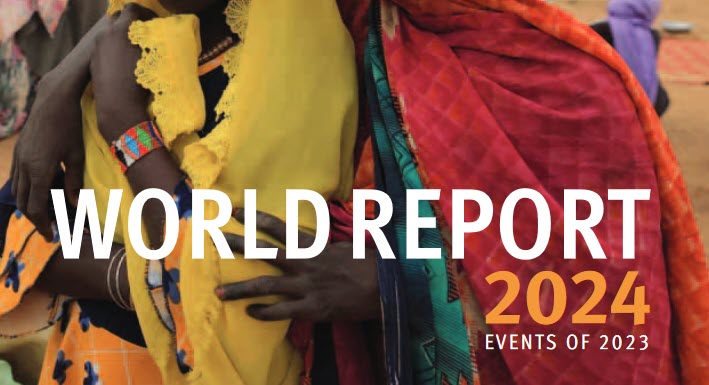
 Hans Thoolen on Human Rights Defenders and their awards