Posts Tagged ‘human rights monitoring’

Sudanese Human Rights Defenders risk their lives to document the war

March 13, 2024

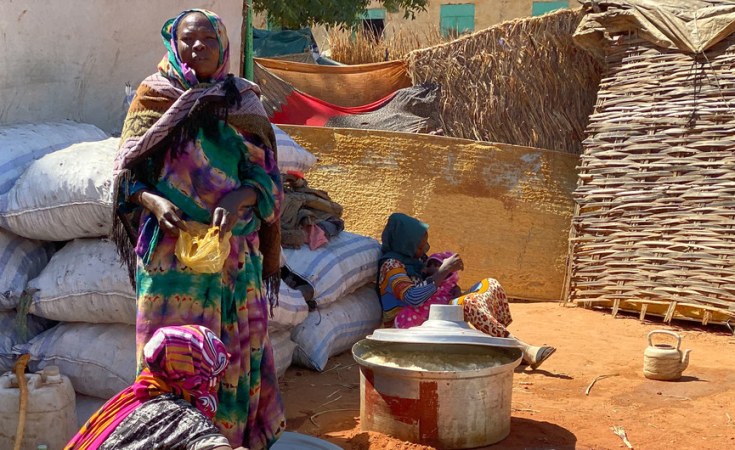
Internally displaced families gather at a temporary gathering point outside a school in El Geneina town following recent intercommunal conflict in West Darfur. Modesta Ndubi/UNHCR

Ela Yokes in The New Humanitarian (Geneva) of 11 March 2024 reports on the role of young people documenting the abuses in the war in the hope that it will contribute to justrice in the future.

Sudanese civil society groups are playing a pivotal role in documenting human rights abuses committed during 10 months of conflict, even as volunteers risk being arrested by the warring parties and are struggling with a month-long internet blackout. Youth groups, legal associations, and civilians acting in a personal capacity have all been involved in cataloguing the human rights impacts of the conflict that commenced in April 2023 and sets the army against the paramilitary Rapid Support Forces (RSF).

Documentation is a pathway to justice,” Noon Kashkoush of the Emergency Lawyers, a legal group monitoring abuses, told The New Humanitarian. She said she hopes the evidence her group has gathered will be used one day in the Sudanese justice system….

Access challenges for international aid agencies mean local mutual aid groups have shouldered the bulk of the relief effort in the most conflict-affected places. And likewise, civil society initiatives have carried the burden of human rights documentation. Despite the volatile security situation, local groups have led efforts to document sexual violence and killings, monitor ceasefire violations, track down missing persons, and report on the makeshift detention sites run by both the army and the RSF.

The findings of these civil society groups have fed into numerous human rights reports, including a detailed report last month by the UN, which charges both sides of the conflict of committing widespread abuses, some of which may amount to war crimes.

The report accuses RSF fighters of occupying residential buildings to shield themselves from army attacks, of massacring thousands of people in the Darfur region, and of committing extensive sexual abuse, including cases of rape and gang rape.

For its part, the army is accused of killing more than 100 civilians in airstrikes that were ostensibly targeting RSF positions but carried out in densely populated urban areas, or on public buildings including churches and hospitals.

The report also documents attacks on human rights defenders. It states that activists have been kidnapped and subjected to death threats and smear campaigns organised by army supporters, while several Darfuri rights monitors have been killed by the RSF.

Many groups documenting rights violations were active during the 2018-2019 Sudanese Revolution that toppled dictator Omar al-Bashir, and during the protests that followed the 2021 army-RSF coup that ended the post-Bashir democratic transition. Prior to the war, the Emergency Lawyers group was providing legal assistance to the families of pro-democracy protestors and activists who had been arbitrarily arrested, tortured, or killed by security forces.

Kashkoush said the group is now focused on war-related abuses, including the bombardment of civilian areas and the detention centres set up by the army and RSF in the capital, Khartoum, and the neighbouring cities of Omdurman and Bahri.

Kashkoush said the publication of the group’s reports and announcements have helped secure the release of hundreds of detainees – including some from the Emergency Lawyers network itself – though she described facing many difficulties.

“All of those documenting violations face the issue that movement on the ground is very challenging,” she said. “We depend a lot on open-source [information], such as video footage, and we work to verify it using witness statements.”

Another group involved in documenting abuses is the Youth Citizens Observers Network (YCON). It was established in late 2021 by volunteers wanting to shed light on violations committed against pro-democracy protesters and civil society activists. After the current conflict broke out, the network relaunched its platform under an anti-war stance, according to one of the group’s volunteers, who requested to remain anonymous to ensure their safety.

The volunteer said YCON has observers across Sudan and releases monthly reports on the impact of the war and the human rights situation. It also monitored several army-RSF truces that were violated last year. “In any given region, civilian monitors who are trained in documentation and verification methods are present on the ground and have a very wide network of connections,” said the volunteer. “Any event happening in a specific area, they would know about it.”

In cases where access to places affected by fighting has been too difficult for civil society groups, civilians already on the ground have taken it upon themselves to document what they are witnessing and publish evidence on social media.

When clashes between the RSF and the army first broke out in Khartoum, Hassan Abd al-Rauf, a local shop owner who ran a travel agency and a men’s clothing store, found himself caught in the epicentre.

Instead of escaping or complying with an RSF order that civilians should leave his neighbourhood, al-Rauf decided to stay, guard his properties, and offer assistance to others who were struggling to flee.

Walking through deserted streets, al-Rauf began recording live broadcasts on his Facebook page. His footage revealed the extent of the destruction and showed unarmed civilians who had been killed in the crossfire or targeted by snipers.

“When I started with the broadcasts, the aim was to connect people with what was happening on the ground and send photos [of the damage] back to the property owners in the area,” al-Rauf said in an interview after escaping Sudan for Qatar.

Two weeks after starting the broadcasts – which were getting hundreds of thousands of views – al-Rauf’s uploads suddenly stopped. He said he was captured by RSF fighters in the capital and held in a detention centre for 25 days.

“[The RSF] were certainly aware and it was the reason for my arrest,” al-Rauf said. “[One of my videos showed] a number of RSF vehicles after they had robbed the Bank of Khartoum and were hit by army aircraft.”

The volunteer at YCON said members of their group have faced harassment and the threat of detention from security forces as they attempt to move across different locations to document violations.

Similar threats were also described by Thouiba Hashim Galad, a member of the Missing Initiative, a local group with a platform that lets people post information about missing people. The group has a Facebook page with hundreds of thousands of followers.

“On a personal level, I receive private messages that include threats and very bad language,” Galad said. “Before the war, [the military authorities] were trying to hack our page many times,” she added.

On top of the security risks, volunteers told The New Humanitarian they are also struggling with a nationwide communication blackout that began in early February and has been blamed on the RSF.

Kashkoush of the Emergency Lawyers group said her organisation is unable to receive daily updates about human rights abuses, and instead gets a flurry of reports during the brief moments when they have an internet connection.

Kashkoush called for an international investigation into the blackout, which she described as a “constitutional violation” and a “deliberate attempt by one or both sides” to restrict access to information and thwart documentation efforts.

Documenting rights abuses has also had a psychological impact on volunteers, according to Galad of the Missing Initiative, which was founded in 2019 shortly after the RSF killed over 120 pro-democracy protesters at a Khartoum sit-in.

Galad, who currently volunteers for the initiative from outside Sudan, said the most difficult aspect of her work is delivering bad news to families when she learns that a missing person has been found dead.

During the first few weeks of the conflict, the Missing Initiative’s Facebook page was flooded with requests for information about people who had gone out to buy groceries or fuel and hadn’t returned.

Between April and August 2023, Galad said the group received over 600 reports of missing persons. She added that they stopped publishing statistics when they realised the actual number of cases was likely much greater than those reported to them.

Despite the challenges the group faces, Galad told The New Humanitarian she is determined to keep the initiative alive, especially as the conflict slips out of international focus.

“The main reason I am doing this is because I am a defender of human rights,” Galad said. “This is a continuation of the work we began after the [2019 Khartoum sit-in] massacre, on the basis that, in the future, both sides will be held accountable.”

The volunteer from YCON shared a similar view: “The fundamental motivation that allows us to continue monitoring the situation… is that this will provide accurate, recorded information for the institutions that will later work on [justice].”

Read this report on The New Humanitarian. The New Humanitarian puts quality, independent journalism at the service of the millions of people affected by humanitarian crises around the world.
FIFA Broke Human Rights Rules: Saudi Arabia Shouldn’t be Rewarded for Its Repression

November 6, 2023

On 27 October, 2023 Human Rights Watch stated that FIFA has broken its own human rights rules in announcing a plan for hosting the next two men’s World Cups that effectively eliminates bidding and human rights due diligence.

Within hours after FIFA published its arrangements for the 2030World Cup, Saudi Arabia announced its ambitions to host the 2034 World Cup.  

Barely a year after the human rights catastrophes of the 2022 Qatar World Cup, FIFA has failed to learn the lesson that awarding multi-billion dollar events without due diligence and transparency can risk corruption and major human rights abuses,” said Minky Worden, director of global initiatives at Human Rights Watch “The possibility that FIFA could award Saudi Arabia the 2034 World Cup despite its appalling human rights record and closed door to any monitoring exposes FIFA’s commitments to human rights as a sham.” 

In February 2023, Human Rights Watch contacted FIFA to request details on its due diligence and stakeholder consultation for selection of future World Cup hosts and awarding commercial sponsorship contracts. FIFA has not responded.

Because of regional rotation requirements, the six-country 2030 World Cup means that FIFA will only accept bids from Asia or Oceania for 2034, opening the way for Saudi Arabia to be the host. FIFA instead needs to keep open bidding for the 2034 World Cup and apply the same human rights benchmarks to all bidders in advance of selection, Human Rights Watch said.

FIFA’s Human Rights Policy, adopted in 2017, outlines its responsibility to identify and address adverse human rights impacts of its operations, including taking adequate measures to prevent and mitigate human rights abuses. Article 7 of FIFA’s Human Rights Policy states that “FIFA will constructively engage with relevant authorities and other stakeholders and make every effort to uphold its international human rights responsibilities.” This should include consulting a wide range of stakeholders, including potentially affected groups, domestic human rights monitors, athletes, fans, migrant laborers, and unions, before making major hosting decisions. [see also: https://humanrightsdefenders.blog/2022/04/17/fifa-world-cup-the-human-rights-plans-of-host-cities/]

Under FIFA’s human rights policies, countries bidding to host games must commit to strict human rights and labor standards. In the introduction to FIFA’s “Key Principles of the Reformed Bidding Process,” FIFA President Gianni Infantino writes: “Whoever ends up hosting the FIFA World Cup must …formally commit to conducting their activities based on sustainable event management principles and to respecting international human rights and labour standards according to the United Nations’ Guiding Principles.” 

FIFA has so far failed to apply these principles in the award of the 2030 and 2034 World Cups. 

In June, FIFA cancelled its planned announcement about the bidding process for the 2030 World Cup, instead announcing that:

in line with the principle of confederation rotation and of securing the best possible hosting conditions for the tournaments, the bidding processes for both the 2030 and 2034 editions would be conducted concurrently, with FIFA member associations from the territories of the Asian Football Confederations and the Oceania Football Confederation invited to bid to host the FIFA World Cup 2034

FIFA’s Overview of the Bidding Processes document sets a deadline for any member associations to confirm bidding by October 31, 2023, an unreasonably tight deadline for the 2034 World Cup 11 years away that should include national stakeholder consultation and could ultimately cost billions of dollars. Saudi Arabia’s appalling human rights record has deteriorated under Crown Prince Mohammed Bin Salman’s rule, including mass executions, continued repression of women’s rights under its male guardianship system, and the killing of hundreds of migrants at the Saudi-Yemen border. Torture and imprisonment of peaceful critics of the government continues, and courts imposed decades-long imprisonment on Saudi women for tweets. Sex outside marriage, including same-sex relations, is a crime, with punishments including death. Lesbian, gay, bisexual and transgender (LGBT) people in Saudi Arabia practice extreme self-censorship to survive their daily lives. LGBT players and fans visiting Saudi Arabia could face censorship, stigma, and discrimination on the basis on their sexual orientation and gender identity. See e.g.: https://humanrightsdefenders.blog/tag/saudi-arabia/]

Independent human rights monitors, journalists, women’s rights activists, and other peaceful critics are jailed, under house arrest, and cannot safely work in Saudi Arabia. Saudi Arabia has severe restrictions on journalists and free expression, a basic requirement for World Cup hosts, Human Rights watch said. In October 2018, Saudi agents murdered and dismembered the Washington Post columnist Jamal Khashoggi, who had been critical of the Saudi government, an assassination apparently approved by the crown prince himself.

In Saudi Arabia, independent human rights monitoring is not possible due to government repression. This makes it effectively impossible for FIFA to carry out the ongoing monitoring and inspection of human rights its human rights policy requires,” Worden said. 

While welcoming the Saudi bid to host the World Cup in 2034, FIFA has not said anything about how it proposes to assess its human rights conditions.

“With Saudi Arabia’s estimated 13.4 million migrant workers, inadequate labor and heat protections and no unions, no independent human rights monitors, and no press freedom, there is every reason to fear for the lives of those who would build and service stadiums, transit, hotels, and other hosting infrastructure in Saudi Arabia,” Worden said.

“FIFA is failing in its responsibility to the world of football to conduct World Cup bidding and selection procedures in an ethical, transparent, objective, and unbiased way,” Worden said. “If there’s to be any integrity in what remains of this process, FIFA needs to immediately delay and open the bidding process for the 2034 World Cup, make public its labor, human rights, and environment policies, and then make sure protections are fully carried out.”

https://www.hrw.org/news/2023/10/27/fifa-broke-own-human-rights-rules-world-cup-hosts

https://www.forbes.com/sites/minkyworden/2023/11/02/rights-at-risk-as-saudi-arabia-sole-bidder-to-host-2034-world-cup/?sh=394e4fb123de

https://www.ft.com/content/7f86882f-6cc6-4259-9520-6fa07e9669be?segmentId=3f81fe28-ba5d-8a93-616e-4859191fabd8

Human Rights Measurement Initiative (HRMI) explained

June 16, 2023

The New-Zealand-based Human Rights Measurement Initiative tracks the human rights progress of countries, producing robust data that anyone can use to push for improvements in how governments treat people. They are independent and non-profit.

What gets measured gets improved: if something isn’t being systematically measured, it can be more easily overlooked and undervalued. HRMI data make it easier for decision-makers to monitor their progress, and prioritise human rights. Advocacy based on sound information is one of the key drivers of change.

Eventually, HRMI aims to measure all human rights as defined in international law but they have begun with two core sets of data measuring five economic and social rights and eight civil and political rights. The scores are published annually on the Rights Tracker. see: https://rightstracker.org. 

In this world, all governments seek advice not just on how to grow their economies and increase their GDPs, but also on how to improve people’s lives by better respecting, protecting, and fulfilling their human rights obligations. The main use is in the context of the Universal Periodic Review (UPR) of the UN.

HRMI’s mission: is to produce world-changing human rights data tools that track the human rights performance of countries. 

https://rightstracker.org/page/about

RFK Human Rights Award 2022 goes to two Cameroonians

May 9, 2022
Robert F. Kennedy Human Rights Logo (PRNewsfoto/RFK Center for Justice and Human Rights)

On 5 May 2022 Robert F. Kennedy Human Rights announced Cameroonian human rights defenders Maximilienne C. Ngo Mbe and Felix Agbor Nkongho (Balla) as the 2022 recipients of its annual Human Rights Award. A ceremony honouring the two laureates will take place Tuesday, 7 in Washington, D.C.

For more on the RFK Human Rights Award and its laureates, see: https://www.trueheroesfilms.org/thedigest/awards/69FD28C0-FE07-4D28-A5E2-2C8077584068.

A Cameroonian human rights defender with over 30 years of experience, Ngo Mbe is Executive Director of the Central African Human Rights Defenders Network (REDHAC). Since 2010, she has led REDHAC in its efforts to promote civic space and protect fundamental freedoms throughout Central Africa through investigations of human rights abuses, advocacy before regional human rights bodies, monitoring of democratic processes, and demanding state accountability. She was previously named an International Woman of Courage in 2021 by the U.S. Department of State [see: https://humanrightsdefenders.blog/2021/03/09/state-department-hands-out-21-international-women-of-courage-awards-2021/] and received the Franco-German Prize for Human Rights and the Rule of Law in 2016.

Receiving the RFK Human Rights Award 2022 still feels like a dream,” said Ngo Mbe. “I am humbled by this recognition and dedicate it to my family, my colleagues at REDHAC, the members of the REDHAC Board of Directors, in particular Me Alice Nkom, and the Human Rights Defenders who have been my source of strength over the years. I look forward to working alongside Robert F. Kennedy Human Rights as we continue our struggle for justice, human rights, and peace in Cameroon and Central Africa.

Nkongho is a Cameroonian lawyer and human rights defender. He is the director of the Centre for Human Rights and Democracy in Africa (CHRDA) and a leading advocate for human rights of Cameroonians in the conflict-stricken Anglophone region. Nkongho’s work focuses on the promotion of democracy, good governance, access to justice, and rule of law. His reputation as a devoted human rights defender is evidenced by his tireless work for human rights in Cameroon and throughout Africa, despite state sanctioned pushback, including his arbitrary detention in 2017. In 2019 he won the African Human Rights Defenders Shield Award.

When I got news of the award, I was staring at portraits of my late parents and crying tears of joy. This is the best gift I could ever offer them, and I am sure they will be celebrating in heaven,” said Nkongho. “I am truly honored, and I sincerely thank Robert F. Kennedy Human Rights for considering me worthy of this award. It is dedicated to all those who advocate for the promotion and protection of human rights, to all the human rights defenders who continue to put their lives and liberty on the line to fight against injustice.

See also: https://humanrightsdefenders.blog/2021/10/29/haitian-guerline-jozef-wins-robert-f-kennedy-human-rights-award-2021/

https://rfkhumanrights.org/awards/human-rights-award-2022.

https://www.prnewswire.com/news-releases/robert-f-kennedy-human-rights-announces-2022-human-rights-award-laureates-301541320.html

Sudan: providing information against sexual violence to the UN equals “leaking state secrets”

April 26, 2022

Mat Nashed in Al-Jazeera of 18 April 2022 reports how Sulima Ishaq’s work against sexual violence is now being used against her.

On March 28, Volker Perthes told the United Nations’ Security Council that Sudanese government forces had raped 16 female protesters since last December’s anti-coup protests. He added that as UN envoy for Sudan, he was working with the Combating Violence Against Women (CVAW) Unit under the Ministry of Social Affairs and civil society to mitigate sexual violence in the country.

The next week, Sulima Ishaq, head of the unit, was interrogated by security services. Her lawyers say she is being investigated for accusations of “leaking state secrets” to the UN envoy under Article 47 of the country’s criminal act.

The information I gave to the [UN] had already been broadcasted on television channels and media outlets,” Ishaq, who is now worried that she’ll go to prison on trumped-up charges, told Al Jazeera over the phone. “But because the information was presented to the Security Council and the [coup forces] are afraid of getting sanctioned, they are [targeting] me now.”

In March, a Khartoum office – belonging to a commission investigating a June 3, 2019 incident in which security forces reportedly murdered at least 120 people to break up a sit-in – was raided by security forces.

According to Emma DiNapoli, a legal officer focusing on Sudan for Redress, a London-based non-profit advocating an end to torture worldwide, activists cooperating with the organisation have recently reported more security officers stalking them outside their homes. In some cases, this has resulted in unlawful arrests.

None of our partners has had arrest warrants issued against them, but I think there is a general sentiment that there is higher surveillance,” DiNapoli told Al Jazeera. “Even if they are not really being surveilled, [the arrests] are having a chilling effect.”

However, experts and rights groups say Ishaq’s case represents an escalation of a broader campaign to intimidate activists and put human rights defenders on high alert.

Kholood Khair, manager of Khartoum-based think-tank Insight Strategy Partners, told Al Jazeera that the coup government is trying to make an example out of Ishaq. The authorities, she said, are particularly irked since Ishaq is a civil servant, which gives her allegations more credibility in the eyes of the international community.

In Sudan, rape victims are traditionally harassed by the public and even punished by the police, so the number of people coming forward to Ishaq was seen as a big deal, Khair explained.

“Sulima was trying to highlight that rape is a weapon of war and a weapon of repression and the number of cases [documented] shows that it is a state tactic … not a case of just individual rapists,” she said.

Mohamed Osman, Sudan researcher at Human Rights Watch (HRW), said activists have always feared that they could be targeted for documenting human rights violations against protesters. He cited the recent arrests of journalists, lawyers and doctors who appear to have been targeted for tracking unlawful arrests and killings in the country.

But the targeting of a high-profile person like Ishaq suggests that security forces are even more sensitive to scrutiny following the United States’ decision to impose sanctions on the Central Reserve Police last month, said Osman. The US cited the unit’s excessive force against protesters – including the use of live ammunition – as the reason for the decision.

Ishaq told Al Jazeera that she wished the UN envoy had been more subtle by not mentioning her unit at the Security Council meeting, given the level of repression in Sudan. “I feel that the way [the information] was stated was a little bit insensitive,” she said.

In response, Fadi Al Qadi, the spokesperson for the UN envoy, told Al Jazeera that “the special representative to the secretary-general did not name any individual in the Security Council as a source”.

And now, an atmosphere of fear is slowly enveloping the country, causing dissidents, activists and civil society to beef up personal security and take more precautions to protect themselves and sources from the eye of the authorities.

One of them is Nabil Adeeb, the septuagenarian human rights lawyer heading the investigation into the June 2019 massacre.

After government forces stormed the tribunal’s office, there were fears that evidence could be compromised and that the names of witnesses – who provided testimonies that possibly implicated specific security branches in the massacre – could be exposed.

“Our records are secure and we know that nobody would be able to access them, but we are concerned that if we resume our activities in the same place then we might expose the investigation to unwanted people since the office could be bugged,” he said.

Adeeb  – who is also Ishaq’s lawyer – told Al Jazeera that she is currently being charged for defaming the security forces under Sudan’s cybercrime law, an accusation he believes has little merit.

He is concerned that Ishaq could still face more harassment and graver accusations for simply doing her job from the state, which should naturally be helping her instead. Ishaq too fears that the worst is yet to come.

”I think that I will be scapegoated to kick out Volker [from Sudan],” she said.  “I will then be charged for jeopardising national security for providing [him] with sensitive information.”

https://www.aljazeera.com/features/2022/4/18/sudan-investigates-social-worker-fo-leaking-state-secrets-to-un

Monitoring and documenting violations in Ukraine

April 22, 2022

HURIDOCS has been working with urgency to meet the needs of our Ukrainian partners to enable effective, comprehensive and safe documentation of human rights violations. The HURIDOCS Team on 19 April 2022 tells how:

A maternity ward and children’s hospital are hit by an airstrike. Schools and apartment blocks are shelled. A psychiatric facility is attacked. Residential areas are targeted by cluster bombs. Critical infrastructure is struck by missiles. Mass civilian graves are discovered.

These horrendous attacks on civilians in Ukraine, some of them on healthcare facilities, are labelled by the United Nations as ‘acts of unconscionable cruelty’. Russia’s invasion of Ukraine, which started on 24 February 2022, is unfolding as a series of atrocities committed against civilians.

Indiscriminate attacks using missiles, heavy artillery shells, rockets and airstrikes on civilians and non-combatants are in contravention of international humanitarian law and may amount to war crimes. Apart from attacks on civilians, Russia is reported to be shelling agreed-upon humanitarian corridors from conflict zones and therefore halting mass evacuations. 

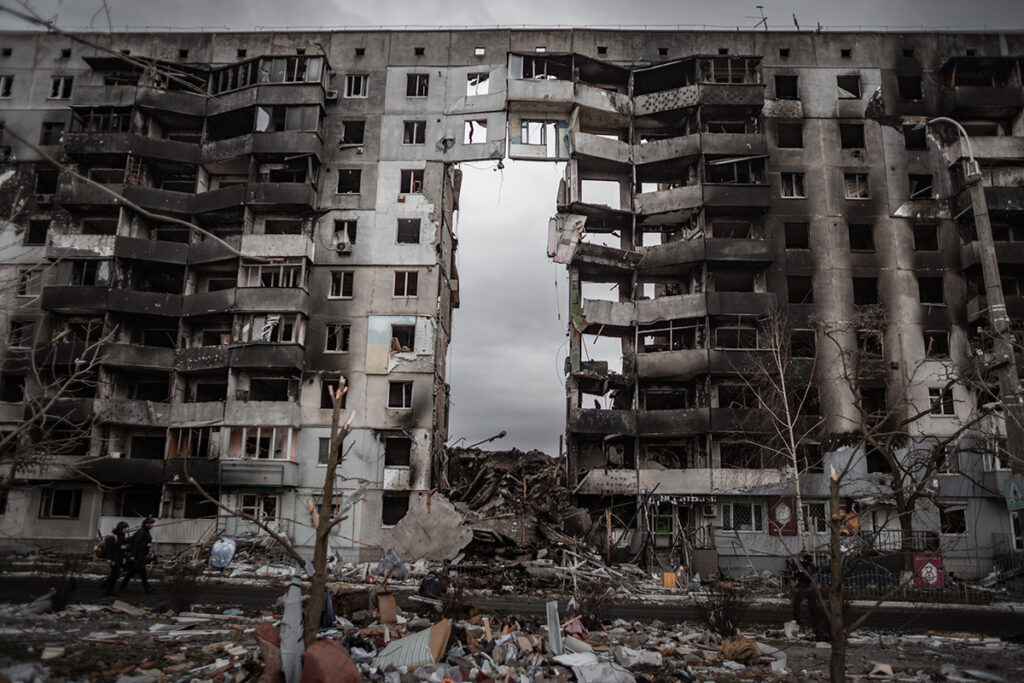
Borodyanka, a Ukrainian commuter town near Kyiv, was among the first places to be hit by Russian airstrikes.

Kyiv Declaration calls for support to groups actively documenting violations

Leaders of more than 100 Ukrainian civil society organisations have published the Kyiv Declaration, which defines the invasion as “a war against the fundamental principles of democracy”. The #KyivDeclaration asks for solidarity and immediate action, and outlines six urgent appeals to the international community. The organisations are collectively calling for the creation of safe zones in Ukraine, military aid, sanctions against Russia, humanitarian aid, freezing assets and revoking visas of prominent Russian families, and providing equipment to track war crimes. This includes technology and support to groups who are actively documenting the events in Ukraine, as well as human rights groups and lawyers who will be supporting accountability efforts in the long run.

An appeal from 100 Ukrainian civil society leaders

HURIDOCS has been working with urgency to meet the needs of our Ukrainian partners to enable effective, comprehensive and safe documentation of human rights violations. 

“When Russia started its full-scale invasion in February this year, we revived the work of EuromaidanSOS. We are faced with a large number of war crimes that need to be documented. Among these are indiscriminate attacks on civilians and civilian objects, deliberate killings, torture, cruel and inhumane treatment, enforced disappearances and other crimes listed in the Rome Statute. Such acts are not justified by any circumstances of the war. Russia is simply using war crimes as a way of waging war.

Our volunteers from EuromaidanSOS are based in different parts of the country, and some of them work directly in hot spots, where they face constant connectivity issues. This is why usable technical solutions are indispensable. As this work is undertaken in the context of war, it is important to have qualified technology support. We are very grateful to the organisations, such as HURIDOCS, providing it in this difficult time for us.”– Oleksandra Matviychuk, Head of the Center for Civil Liberties and Board Member of HURIDOCS

Documenting violations is vital for accountability

Four days into the Russian invasion, the International Criminal Court (ICC) Prosecutor opened an investigation into war crimes being committed in Ukraine. In conjunction with the investigation, the ICC launched a contact portal and anyone with relevant information is urged to come forward and share the details with the ICC. The United Nations Human Rights Council expressed that it is gravely concerned about the escalating human rights and humanitarian crisis and passed a resolution to establish a Commission of Inquiry. The Commission will first and foremost collect evidence of violations and those responsible, and subsequently submit reports to the Human Rights Council and General Assembly. The Federal Prosecutor’s Office in Germany has launched an investigation by collecting evidence of suspected crimes on civilians and critical infrastructure. Germany’s probe is based on the principle of universal jurisdiction, which allows countries to prosecute crimes against international law outside of its borders.

The United Nations High Commissioner for Human Rights released a statement where she expressed horror by the images of civilian bodies on the streets and in improvised graves in the town of Bucha. She stated that reports of egregious crimes raise serious questions about possible war crimes and grave breaches of international and humanitarian law. She urged that “it is vital that all efforts are made to ensure there are independent and effective investigations into what happened in Bucha to ensure truth, justice and accountability, as well as reparations and remedy for victims and their families”.

In addition to these and other measures already underway to investigate possible war crimes and breaches of international and humanitarian law, some of the most authoritative civil society organisations in Ukraine have established a global initiative to seek justice and hold perpetrators accountable. The ‘Breaking the Vicious Circle of Russia’s Impunity for Its War Crimes’  initiative was jointly established by the Ukrainian Helsinki Human Rights Union, the Kharkiv Human Rights Protection Group and the Center for Civil Liberties, and is also known as the ‘Tribunal for Putin’.

The Tribunal for Putin aims to document events which can be classified as genocide, crimes against humanity and war crimes under the Rome Statute of the International Criminal Court. The Tribunal for Putin will also collect evidence and facts on the crimes committed and will work with existing international mechanisms of the United Nations, Council of Europe, OSCE, EU and the International Criminal Court. The initiative has called for support from various actors such as international organisations, networks, government agencies, public associations, volunteer initiatives and groups who all share the common goal of restoring peace in Ukraine and ensuring that justice will prevail.

Civil society plays a crucial role in seeking justice

In this context, it is clear that the systematic documentation of human rights violations, irrespective of who is committing the transgression, is critical to achieving justice and accountability. Documentation should not only be undertaken to assist future justice and accountability mechanisms but also to support the process of reckoning and healing.

Civil society plays a key role in efforts to document and monitor violations, and to build and strengthen cases for accountability. Civil society actors are usually the first to respond to crises, have the deepest community reach and can mobilise the people who are living through these experiences. Documenting human rights violations as they happen is imperative in the process of restoring justice. To effectively and safely assist the community there is a need for strong digital tools to gather, process, preserve, manage, protect and analyse the rapidly growing bodies of potential evidence, including large amounts of storage-intensive video. In addition, deterrence against the worst violations can also be established through credible documentation strategies.

HURIDOCS is a longtime supporter of civil society organisations and human rights defenders who use human rights documentation strategies and tools as a means to strengthen accountability and advocate for justice. We are already supporting a number of groups working on documenting human rights violations in Ukraine and HURIDOCS invites other initiatives who need support with their documentation efforts to contact us. We value diverse approaches to documenting violations, as it may strengthen accountability measures and aid in articulating narratives during the process of memorialisation. 

Support for documenting violations in Ukraine

With the increased need for support to document violations in Ukraine to strengthen accountability, the Alfred Landecker Foundation has partnered with HURIDOCS to increase our capacity to support civil society-led initiatives where our expertise can be helpful. HURIDOCS is grateful to the Foundation for the support, as it comes at a time when documenting threats to peace, justice and democracy is critical. The support from the Alfred Landecker Foundation will be used to assist groups who are already participating in documentation efforts, and to aid other initiatives related to documenting violations in Ukraine. 

HURIDOCS is currently supporting our partners in the following ways:

  • Training and consultation on information collection, protection and management techniques and associated tools, such as Uwazi;
  • Setting up digital information repositories to securely store sensitive data;
  • Refinement and integration of existing technology solutions to document, protect and analyse evidence of human rights violations; and
  • Hardening and scaling infrastructure to preserve and protect large amounts of information.

There is a significant and growing need to support organisations with their efforts to gather, process, preserve, manage, protect and analyse information on abuses. Reliable documentation of violations is essential for the restoration of justice in the pursuit of upholding democracy and human rights.

US State Department’s report 2021 is out

April 14, 2022

On 12 April, 2022, the annual Country Reports on Human Rights Practices was made public. The Human Rights Reports 2021 cover internationally recognized individual, civil, political, and worker rights, as set forth in the Universal Declaration of Human Rights and other international agreements. The U.S. Department of State submits reports on all countries receiving assistance and all United Nations member states to the U.S. Congress in accordance with the Foreign Assistance Act of 1961 and the Trade Act of 1974. For nearly five decades, the United States has issued the Country Reports on Human Rights Practices, – in 2021, covering 198 countries and territories.  The preface states that: “The Biden Administration has put human rights at the center of U.S. domestic and foreign policy.  We have also recognized our nation has not always succeeded in protecting the dignity and rights of all Americans, despite the proclamations of freedom, equality, and justice in our founding documents.  It is through the continued U.S. commitment to advance human rights, both domestically and internationally, that we best honor the generations of Americans who are Black, Brown, or other people of color, indigenous peoples, persons with disabilities, LGBTQI+ persons, immigrants, women and girls, and other historically marginalized groups whose advocacy for their rights and for others has pushed America toward a “more perfect union.

President Biden has called the defense of democracy and human rights the defining challenge of our time.  By convening the first Summit for Democracy in December 2021 – bringing together representatives from 100 governments as well as civil society and the private sector – he sparked global attention and vigor toward democratic renewal and respect for human rights.  Participating governments made significant commitments to revitalize democracy at home and abroad at the first Summit on which we expect meaningful progress during the current Year of Action and before the time of a second Summit.

The reports paint a clear picture of where human rights and democracy are under threat.  They highlight where governments have unjustly jailed, tortured, or even killed political opponents, activists, human rights defenders, or journalists, including in Russia, the People’s Republic of China, the Democratic People’s Republic of Korea, Nicaragua, and Syria.  They document abuses of peaceful protestors demanding democracy and fundamental freedoms in countries such as Burma, Belarus, Cuba, Hong Kong, and Sudan.  They highlight worrying cases of transnational repression – where governments reach across borders to harass, intimidate, or murder dissidents and their loved ones – as exemplified in the dangerous forced diversion by Belarus of an international commercial flight for the sole purpose of arresting a critical independent journalist.

But they also contain signs of progress and glimmers of hope, as the indomitable will to live freely can never be extinguished.  In Iraq, people cast their votes to shape the future of their country in more credible and transparent parliamentary elections than in 2018.  In Botswana, a court advanced the human rights of LGBTQI+ persons by upholding the decriminalization of same-sex relations.  In Turkmenistan, all imprisoned Jehovah’s Witnesses conscientious objectors to military service were pardoned, a win for freedom of religion or belief.  The stability, security, and health of any country depends on the ability of its people to freely exercise their human rights – to feel safe and included in their communities while expressing their views or gender, loving who they love, organizing with their coworkers, peacefully assembling, living by their conscience, and using their voices and reporting from independent media to hold governments accountable.  There is much progress to be made, here in the United States and globally.  But I know that by working together in the Year of Action and using resources like the Country Reports on Human Rights Practices, we can come closer to building a world where respect for human rights is truly universal.

In a reaction on the report human rights activists focused on China said theat they want the State Department to reboot the report’s format to address documentation blind spots and connect it to policy and initiatives to stop the violations and provide accountability for victims.

“It’s a descriptive, objective document but largely of human rights developments that had been already extensively reported by the media, by NGOs, and by human rights bodies within the UN and in many cases at greater detail and length. … It is essentially a recap,” said Sharon Hom, executive director of the New York City-based nonprofit Human Rights in China. “Since it appears to take quite a bit of resources to produce each year, I’d say that going forward, they reference and aggregate some of the developments within three very important, bigger trends like digital authoritarianism, [foreign] influence operations, and [China’s] growing extraterritorial reach.” [from https://www.politico.com/news/2022/04/13/china-activists-state-dept-human-rights-00024876]

https://www.state.gov/reports/2021-country-reports-on-human-rights-practices/embed/#?secret=ICAePzAuB5#?secret=IVCGC9q7rK

The Unfreedom Monitor: Global Voices adds to the monitoring toolbox

April 5, 2022

On 5 April 2022 Nanjala Nyabola, Advox Director at Global Voices introduced The Unfreedom Monitor, a methodology for tracking digital authoritarianism worldwide

The Unfreedom Monitor is an Advox research initiative that examines the growing phenomenon of networked authoritarianism or digital authoritarianism. “Digital authoritarianism” describes the use of technology to advance repressive political interests. It is not purely confined to authoritarian regimes. Democratic states also use and sell advanced technology to track and/or surveil citizens, spread mis-/disinformation, and disempower citizens’ civic and political participation. Nor is it only states that perpetrate digital authoritarianism—corporations located in democratic countries are key suppliers of the technology that is used. 

The Unfreedom Monitor

Authoritarian regimes have long had a complicated relationship with media and communications technologies. The Unfreedom Monitor is a Global Voices Advox research initiative examining the growing phenomenon of networked authoritarianism or digital authoritarianism.

Download a PDF of the briefing document.

..One major aim of this project is to provide richer context that transcends unique national or thematic situations. It would be an omission to focus solely on the internet and ignore, for example, the effects of the mechanisms of growing repression on press freedom and human rights. In the countries we studied, we found a strong correlation between declining press freedom and growing digital authoritarianism. Information, after all, is the raw material of governance, and both online spaces and traditional media serve the important function of making information available to people and communities to enable them to make independent evaluations of their governments. The impetus to control information on the internet is directly connected to the impetus to control information shared by the press. 

The briefing document provides an overview of key developments in digital authoritarianism in 11 countries and explains the theoretical framework and methodology behind The Unfreedom Monitor project. The document also provides a basis for expanding this research to other countries to deepen our understanding of digital authoritarianism globally, as well as its crucial implications for the future. The preliminary sample of 11 countries was chosen to reflect a range of factors: system of government, approach to human rights (including rankings in indexes), and corporate relations. The countries are: Brazil, Ecuador, Egypt, India, Morocco, Myanmar, Russia, Sudan, Tanzania, Turkey, and Zimbabwe.  

Desk research supplemented qualitative study of a dataset comprising media items exploring issues, events, actors, narrative frames, and responses, to identify trends and patterns of digital authoritarianism. We also conducted weekly seminars with the research team to gain a sense of any cross-cutting themes and commonalities that emerged. One interesting outcome was finding that while clients and their interests may be varied, only a handful of companies—many based in nominally democratic countries—were selling the technology that makes some digital authoritarian practices possible.

Another four researchers also worked with four cross-cutting themes concerning digital authoritarianism to develop an approach that can be used across contexts. These themes were: data governance, speech, access, and information. The tendency with internet research is to think about ideas or development in thematic isolation, and we encouraged this cohort of researchers to think both broadly and deeply about what unites all these separate ideas. 

The report finds that digital authoritarianism is not confined to authoritarian states. Rather, it is a culture—of increasing executive power, legislation, and global capital flows—that allows the state to interfere in citizens’ lives and to stifle or frustrate civic engagement. There is no single predictive factor, but digital authoritarianism is closely related to the contraction of press freedom, and resistance to political transitions. Moreover, it is a transnational process, and the availability of technology in one part of the world will eventually have political consequences in another.

This adds to existing efforts such as: https://humanrightsdefenders.blog/2021/10/12/report-freedom-on-the-net-2021/

https://humanrightsdefenders.blog/2021/04/24/world-press-freedom-index-2021-is-out/

https://humanrightsdefenders.blog/2021/12/26/to-counter-domestic-extremism-human-rights-first-launches-pyrra/

https://globalvoices.org/2022/04/05/introducing-the-unfreedom-monitor-a-new-project-of-global-voices-advox/

India sinking in civic freedoms survey

March 21, 2022

While the world’s attention is understandably focused on the war in Ukraine, other major countries should not stay outside the limelight, e.g. India (conspicuously absent in the condemnation of the aggression) which continues to flaunt human rights. [See e.g. https://humanrightsdefenders.blog/2022/01/28/anti-terror-laws-in-india-keep-being-used-against-human-rights-defenders/].

On 10 March 2022, The Wire in New Delhi reported that India has been added to CIVICUS’ watchlist of countries that have seen a “rapid decline” in civic freedoms by an independent monitor, highlighting the drastic measures taken by Prime Minister Narendra Modi to silence critics of his Bharatiya Janata Party (BJP).

India and Russia were added to CIVICUS Monitor’s Watchlist. CIVICUS Monitor is an online platform that tracks the latest developments to civic freedoms, including the freedoms of expression, association and peaceful assembly, across 197 countries and territories.

India has remained a “repressed” nation in the ‘People Power Under Attack 2021’ report by the CIVICUS Monitor, along with 48 other countries including Afghanistan, Russia and Hong Kong. Its rating was first downgraded in 2019, “due to a crackdown on human rights activists, attacks on journalists and civil society groups, and the assault on civic freedoms in Indian administered Jammu and Kashmir”.

This rating is typically given to countries where civic space is heavily contested by power holders, who impose a combination of legal and practical constraints on the full enjoyment of fundamental rights.

In its report, CIVICUS highlighted several developments that it saw as cause for concern.

In January, the Central Bureau of Investigation conducted raids on Madurai-based human rights watchdog, People’s Watch. The raid came against the backdrop of 6,000 other civil society organisations, including Oxfam, losing their foreign funding licenses under the controversial Foreign Contribution (Regulation) Act. Greenpeace and Amnesty International are among the civil society groups that have had to close their offices in India.

Meanwhile, scores of human rights defenders and activists remain in detention under the draconian Unlawful Activities (Prevention) Act (UAPA) and other laws. They include the 15 human rights defenders linked to the 2018 Bhima Koregaon incident who have been accused of having links with Maoist organisations, based on evidence believed to be “fabricated”.

Waiting for bail, 84-year-old tribal rights activist Stan Swamy, who remained in custody since October 2020 in the Elgar Parishad case under UAPA, died in July last year. [Update on this case: The death of Jesuit priest and Adivasi rights activist Stan Swamy in judicial custody will “forever remain a stain on the human rights record of India”, says a new brief by the United Nations’ Working Group on Arbitrary Detention. The group had formally adopted its opinion on Swamy’s death during its 92nd session on November 16, last year but made its comments public just this week. The Working Group transmitted to the Indian Government a communication concerning Swamy on May 12 last year, but did not receive any response. India is a party to the International Covenant on Civil and Political Rights [ICCPR]. In its communication, the Working Group urged the Government to prioritize the use of non-custodial measures at all stages of criminal proceedings, including during the pretrial phase, in the current context of a global pandemic. Furthermore, its source submitted that placing Father Swamy in prison increased his risk of contracting COVID-19 and thus put his life at risk. The failure of the Government to heed these prescient warnings led to his avoidable death in custody, the opinion states.] [https://theleaflet.in/un-working-group-asks-india-to-accord-stan-swamys-family-with-compensation-and-reparations-under-international-law/]

Further, at least 13 activists who were arrested under the UAPA for their work against the Citizenship (Amendment) Act (CAA) 2019 remain in detention. The slow investigative processes and extremely stringent bail provisions ensure that those detained under the law are held in pre-trial detention for long periods.

“The office raids and foreign funding bans are part of the government’s strategy to harass and silence their critics,” said Josef Benedict, Civic Space Researcher for the CIVICUS Monitor. “The use of broadly worded anti-terrorism laws against activists, journalists, academics, and students, reflect a multi-year decline in the state of civic and democratic freedoms in the country.”

Journalists have continued to be targeted in India for their work in recent months and there have also been concerns about the widespread surveillance of activists, journalists and others critical of the Modi government following the Pegasus spyware expose.

The government must release all human rights defenders detained and come clean about its surveillance of activists and journalists as well as establish an independent and effective oversight mechanism to monitor all stages of interceptions of communications,” said Henri Tiphagne, national working secretary of HRDA – India.

In a letter addressed to Prime Minister of India Narendra Modi, 21 members of European Parliament stated, “We, the undersigned Members of the European Parliament, are writing to express our concern over the treatment of human rights defenders (HRDs) in India.” “We have followed cases of HRDs being jailed for their peaceful work, targeted under anti-terror laws, labeled as terrorists, and facing increasing restrictions on their ability to safely mobilize and access funds due to restrictive legislation. We are especially concerned about the safety of unjustly jailed defenders with emphasis on 15 HRDs accused in what is known as the Bhima Koregaon case and 13 defenders currently in jail for their campaign against the Citizenship Amendment Act (CAA).”

They expressed worry that the prominent human rights defender Khurram Parvez remained in detention under the UAPA in one of the most overcrowded and unsanitary prisons in the country for his documenting of rights violations in Indian-administered Kashmir.

Echoing calls by UN experts, they viewed their case as emblematic of the way the Indian government “continues to use the UAPA as a means of coercion to restrict human rights defenders’ fundamental freedoms in the country.” [see also: https://humanrightsdefenders.blog/2021/11/23/india-arrests-khurram-parvez-again/]

See also 31 March: https://www.hrw.org/news/2022/03/31/human-rights-watch-submission-universal-periodic-review-india

https://thewire.in/rights/for-rapid-decline-in-civic-freedoms-india-added-to-civicus-monitors-watchlist

Animated video clip on work of UN Special rapporteur on Human Rights Defenders

March 8, 2022

On 7 February 2022, the UN Special Rapporteur on Human Rights Defenders released an animated video explaining how to raise concerns about threats to HRDs and human rights abuses by governments and businesses.

Communications are the main tool used to addressed attacks, such as criminalization, smear campaign, threats and killings. Communications will remain confidential for up to 60 days, giving governments and businesses the time to respond to the allegations. The SR also makes two official country visit every year, and writes two thematic reports.

The UN Special Rapporteur has a mission to promote and protect the work of Human Rights Defenders (HRDs). Find out how she does this, and how you can send information about a Human Rights Defender at risk.

See also: https://humanrightsdefenders.blog/2021/05/20/special-rapporteur-mary-lawlor-starts-new-website/

Visit: https://srdefenders.org/

Follow: https://twitter.com/MaryLawlorhrds