On 18 July, the world celebrates the birth and legacy of Nelson Mandela: In prison for 27-years, South Africa’s first democratic president, resilient spirit, and compassionate advocate for human rights for all. It’s been 30 years since the world rejoiced his release from prison as a global icon of peace. Yet, all around the world people are still imprisoned, persecuted, and harassed for their stand for freedom, rights and democratic values, and for calling out corrupt governments and multinational companies.
They are asking you to #StandAsMyWitness.
Thousands are in jail following unfair trials and trumped-up charges. Many are currently in pre-trial detention, facing long prison sentences for their human rights activities. For defenders locked up in overcrowded prisons, the COVID-19 pandemic threatens their already precarious health and welfare. They need you to use your voice so they are not silenced.
Launching on Nelson Mandela’s birthday, the campaign calls for rights defenders’ immediate release from jail and persecution, and for states, authorities and multinational corporations to guarantee peaceful human rights activities – without fear of reprisals and intimidation.
Adding your voice will give human right defenders, families, friends and colleagues a reason to renew their hopes for a better future during these unprecedented times.
We’re featuring 6 activists to shine a spotlight on their cases and demand their immediate release. They are from 6 countries, and you will find 6 template letters for each of them! Take a look. Choose 1, or if you have time 2. Write to their respective governments and demand their release:
3. Share the details of HRDs not mentioned in our Interactive Map.
Do you know any human rights defenders in detention or facing judicial harassment that you would like us to profile? Tell us about them by following the link below.
Interactive Map of Human Rights Defenders in Detention
The case argued that the Israeli defence ministry should revoke the group’s export licence in light of numerous allegations that its phone-hacking Pegasus spyware has been used by governments (including Mexico, Saudi Arabia, Morocco and the UAE) to spy on civilians including an Amnesty International employee, human rights activists, lawyers and journalists..
The district court judge Rachel Barkai wrote in a statement that there was not enough evidence to “substantiate the claim that an attempt was made to monitor a human rights activist”. She wrote that in reviewing materials provided by the Ministry of Defence and Ministry of Foreign Affairs, she was persuaded that export licences were granted as part of a “sensitive and rigorous process”, and closely monitored and revoked if conditions were violated, “in particular in cases of human rights violations.”
Amnesty International decried the court’s decision. Danna Ingleton, acting co-director of Amnesty Tech, said in a statement: “Today’s disgraceful ruling is a cruel blow to people put at risk around the world by NSO Group selling its products to notorious human rights abusers. […] The ruling of the court flies in the face of the mountains of evidence of NSO Group’s spyware being used to target human rights defenders from Saudi Arabia to Mexico, including the basis of this case – the targeting of one of our own Amnesty employees.”
NSO said: “Our detractors, who have made baseless accusations to fit their own agendas, have no answer to the security challenges of the 21st century. Now that the court’s decision has shown that our industry is sufficiently regulated, the focus should turn to what answer those who seek to criticise NSO have to the abuse of encryption by nefarious groups.”…
Joint statements by groups of UN experts are becoming more frequent, with at least three this month. When it comes to major powers like the USA, China and India – who are rather sensitive when criticised – there must be safety in numbers:
Addressing the USA after George Floyd..
On 5 June 2020 nearly 30 independent experts appointed by the UN Human Rights Council called for the United States to reform its criminal justice system in the wake of a recent spate of killings of African Americans, including at the hands of the police. In their statement they urged the US authorities to address systemic racism and racial bias, and to conduct independent investigations into cases of excessive use of force by police officers.
The UN human rights experts charged that these killings involved impunity, disregard or depravity toward human life, and the use of public spaces to assert racial control, with each characteristic of a modern-day lynching. “The latest videos to surface showing white men chase, corner, and execute a young man who was out jogging, or showing an officer kneeling with his weight on a man’s neck for eight minutes shock the conscience and evoke the very terror that the lynching regime in the United States was intended to inspire”, they said.
With millions of Americans taking to the streets, the experts also expressed concern about police response to these protests. They said demonstrations have been marked by violence, arbitrary arrest, militarisation and the detention of thousands of protesters. Journalists of colour have also been targeted and detained, some of whom have faced violence and harassment.
UN Experts Urge India To Release Protest Leaders
On 26 June 2020 13 UN experts jointly called on India to immediately release human rights defenders who have been arrested for protesting against changes to the nation’s citizenship laws. “These defenders, many of them students, appear to have been arrested simply because they exercised their right to denounce and protest against the CAA (Citizenship Amendment Act), and their arrest seems clearly designed to send a chilling message to India’s vibrant civil society that criticism of government policies will not be tolerated,” the experts said.
“Authorities should immediately release all human rights defenders who are currently being held in pre-trial detention without sufficient evidence, often simply on the basis of speeches they made criticising the discriminatory nature of the CAA,” they said. (Meeran Haider, Gulfisha Fatima, Safoora Zargar, Asif Iqbal Tanha, Devangana Kalita, Natasha Narwal, Khalid Saifi, Shifa Ur Rehman, Dr. Kafeel Khan, Sharjeel Imam, Akhil Gogoi.)
The experts also highlighted their concern that the authorities’ response to the protests seemed discriminatory. It appears they have not similarly investigated allegations of incitement to hatred and violence made by CAA supporters, some of whom are reported to have chanted “shoot the traitors” at counter-rallies.
UN experts call for decisive measures to protect ‘fundamental freedoms’ in China
On 26 June 2020 almost 50 UN independent experts on Friday to express their continuing alarm, urging the country to “abide by its international legal obligations”.
After having “repeatedly communicated” their concerns, they highlighted the repression of protests and democracy advocacy in the Hong Kong; impunity for excessive use of force by police; the alleged use of chemical agents against protesters; the alleged sexual harassment and assault of women protesters in police stations; together with the alleged harassment of health care workers.
The experts also raised their “grave concerns” on issues ranging from the collective repression of specific communities – “especially religious and ethnic minorities, in Xinjiang and Tibet” – to the detention of lawyers and prosecution – in addition to disappearances – of human rights defenders across the country. .
They urged China to invite civil and political rights monitors to conduct independent missions “in an environment of confidentiality, respect for human rights defenders, and full avoidance of reprisals” and encouraged the UN Human Rights Council (HRC) to urgently monitor Chinese human rights practices.
On 23 June 2020 Ulande Nkomesha reported in News Diggers that the Alliance for Community Action (ACA) has partnered with like-minded organisations and individual activists to set up a legal and humanitarian fund for human rights defenders in Zambia. In a statement issued by (ACA) information and advocacy officer Jimmy Maliseni, the NGO explained that the fund had been necessitated by the continued shrinking space for civic actors, and that the detention of critical voices had prompted well-wishers to partner with ACA to offer financial and material support to human rights advocates.
On 19 June 2020 Human Rights Watch and Amnesty International addressed a joint letter to Russia’s Prosecutor General
….We write to you to express our concern about the unfounded criminal prosecution and imprisonment of Emir-Usein Kuku, an ethnic Crimean Tatar human rights defender from Crimea, and his five co-defendants – Muslim Aliev, Vadim Siruk, Enver Bekirov, Arsen Dzhepparov and Refat Alimov. They were convicted and sentenced on 12 November 2019 to prison terms ranging from seven to 19 years on groundless terror-related charges. On 22 June 2020, their appeal against the decision will be considered by the Military Court of Appeals.
All six men should be immediately and unconditionally released, with their convictions and sentences quashed, and we call on you to take all necessary measures in your authority to ensure this happens. This case exemplifies the persecution of human rights defenders and other activists in Crimea.
Amnesty International considers Emir-Usein Kuku, who has been sentenced to 12 years in prison, and all his co-defendants prisoners of conscience.
The terrorism-related charges against Emir-Usein Kuku and his co-defendants stem from accusations of membership of Hizb ut-Tahrir, an organization banned as “terrorist” in the Russian Federation (Article 205.5 of the Criminal Code of the Russian Federation), but not in Ukraine. All six have also been accused of conspiring to seize power by violent means (Article 278 of the Criminal Code of the Russian Federation).
…..
Emir-Usein Kuku is a member of the Crimean Human Rights Contact Group – a grassroots initiative created to monitor investigations into enforced disappearances in Crimea. As a human rights defender, Emir-Usein Kuku was continually harassed and threatened by the Russian authorities prior to the launch of the criminal proceedings against him, an indication that his prosecution is politically motivated and intended to stop his legitimate human rights activities.
When Emir-Usein Kuku joined the Crimean Human Rights Contact Group in October 2014, his activities soon brought him to the attention of the FSB, and according to him one of their officers unsuccessfully tried to recruit him as an informant on several occasions. The officer allegedly threatened Emir-Usein Kuku with reprisals, including criminal prosecution, for his refusal to cooperate.
On the morning of 20 April 2015, several FSB officers attacked Emir-Usein Kuku from behind while he was on his way to work, and severely beat him. They repeatedly kicked and punched him in the head, torso and kidney area. Then, in front of witnesses, they placed him in a vehicle and drove him to the local FSB headquarters where he was interrogated. He was later released without charge and they brought him back to his house.
On 11 February 2016, FSB officers arrested Emir-Usein Kuku at his house and detained him for questioning. On 12 February, Emir-Usein Kuku was charged under Article 205.5 of the Criminal Code of the Russian Federation (“membership of a terrorist organization”) and placed on remand. Kuku has been in detention since that date – over four years and four months.
On the same day, the FSB detained Muslim Aliev, as well as Vadim Siruk and Enver Bekirov, who are accused of membership of the same group. On 18 April 2016, the FSB detained Arsen Dzhepparov and Refat Alimov as part of the investigation of the same case. All six deny any involvement with Hizb ut-Tahrir and the charges against them.
…… Under international fair trial norms, civilians should not be tried before military courts. We call on you to take all necessary steps to address the human rights violations suffered by Emir- Usein Kuku and his co-defendants, Muslim Aliev, Enver Bekirov, Vadim Siruk, Arsen Dzhepparov and Refat Alimov, including harassment, their transfer from Crimea to the Russian Federation in violation of the international humanitarian law, and their ultimate unsound and wrongful conviction following an unfair trial. Emir-Usein Kuku and his five co-defendants must be immediately and unconditionally released, with their convictions and sentences quashed.
Marie Struthers, Director, Eastern Europe and Central Asia Regional Office, Amnesty International
Hugh Williamson, Director, Europe and Central Asia Division, Human Rights Watch
Courtesy of Reliefweb of 15 Jun 2020, here the introduction to the EU’s annual report on human rights
1. INTRODUCTION
The 2019 EU annual report on human rights and democracy in the world marks the final phase of implementation of the EU Action Plan on Human Rights and Democracy (2015-2019) 1 . It presents the progress achieved to date, by means of a comprehensive set of actions taken by the European External Action Service (EEAS), the European Commission and EU delegations and offices around the world. In 2019, the EU demonstrated once again that it is a reliable, cooperative and principled global player, working for a better world where all human rights are fully protected and respected.
However, in many parts of the world, challenges remain. Human rights defenders (HRDs), journalists and media workers are under threat and attack because of their daily work, civic and democratic space continues to be restricted, women’s and girls’ human rights are being violated, and vulnerable groups are often left behind and exposed to further discrimination and inequality.
Against this background, the international community celebrated in 2019 the 10th anniversary of the Charter of Fundamental Rights, the 30th anniversary of the UN Convention on the Rights of the Child, the 70th anniversary of the Council of Europe and the 100th anniversary of the International Labour Organisation. These anniversaries gave great impetus to the EU’s continuous efforts to translate its legal and policy frameworks on human rights into reality. The EU worked with all partners to turn challenges into opportunities for all human beings, at any time, in any place.
The 21st EU-NGO Forum on Human Rights, held in Brussels on 3-4 December, put the human rights and environment nexus in the spotlight as an emerging challenge and gained unprecedented traction. On 9 December 2019, the Foreign Affairs Council agreed on the political appropriateness of establishing an EU global human rights sanctions regime to tackle serious human rights violations worldwide committed by state and non-state actors.
In 2019, the first ever EU guidelines focusing on economic, social and cultural rights were adopted: the EU Human Rights Guidelines on safe drinking water and sanitation. These guidelines opened new horizons in promoting the indivisibility of civil, political, economic, social and cultural rights. The Council also adopted Guidelines on non-discrimination in external action and revised Guidelines on EU policy towards third countries on torture and other cruel, inhuman or degrading treatment or punishment. Moreover, the Council conclusions on Democracy adopted in October provided a comprehensive framework to advance democratic governance.
This report focuses on thematic issues, using a number of country-specific examples, and aims to be a practical tool for all stakeholders. Reporting on human rights and democracy at country level can be found on the EEAS2 and EU delegations’ webpages.
Alice Morby in Dezeen Magazine of 26 January 2018 (this is not a typo – I came accross it only recently and thought it contained interesting thoughts as we often feel that there should be more design expertise available to human rights defenders)
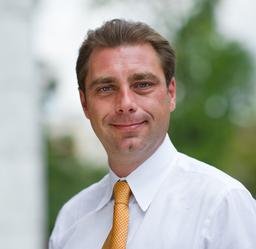
Lenger, pictured at Dezeen’s Good Design For A Bad World talk, believes designers can only make a difference if paired with other “changemakers”
“Think of it as a kind of consultant agency, an organisation that people, governments or NGOs can turn to and get support,” Lenger explained. “By combining the experts in two fields, design and human rights, unique and relevant projects will be the outcome – as the context of the projects is set by the culture and human rights issue of the human rights defender.“
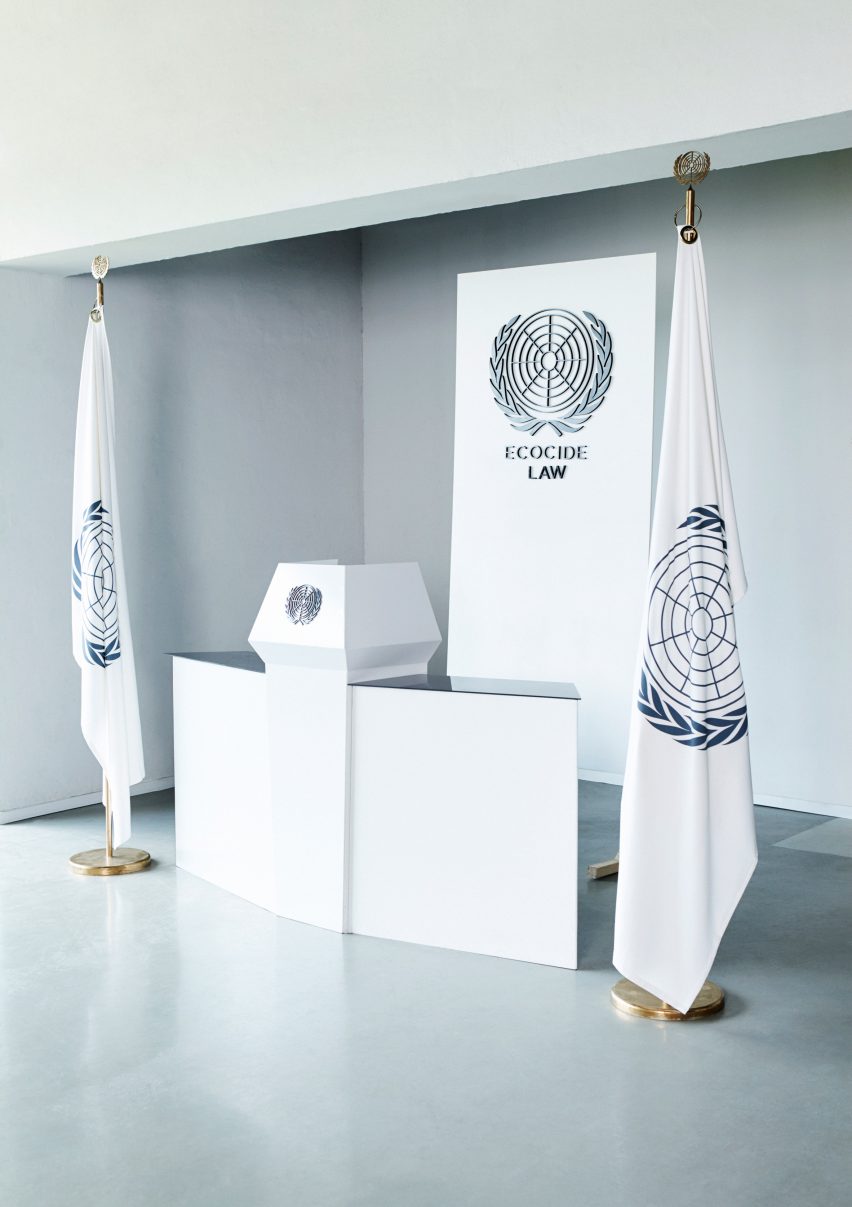
…Lenger was one of the speakers for Dezeen’s Good Design for A Bad World talks programme at Dutch Design Week 2017, where panellists – mainly designers – were invited to discuss how design could help tackle real-world issues. Speaking during a talk focused on pollution, Lenger presented another project he has been involved in, called This is Ecocide. Developed while he was studying at Design Academy Eindhoven, This is Ecocide saw Lenger partner with environmental lawyer Polly Higgins to develop a campaign to make ecocide – the destruction of the environment – illegal.
Lenger often takes a political stance with his work. His previous project, This is Ecocide, saw him try to criminalise the destruction of the environment
This project started with the discovery that ecocide was once recognised by the International Criminal Court as a crime, but was removed. With help from Higgins, he found that this was a result of lobbying from four countries: the USA, the UK, France and the Netherlands. “I was like, what should I do? I was 25 years old graduating from Design Academy, how could I work on a field of international law?” he told the audience.
Young designers are taking on more responsibility
According to Lenger, he isn’t unique in wanting to use to design to solve bigger problems. He said he had noticed a shift in the degree of responsibility felt by young designers. “Some people just want to make pretty things, some feel like there’s something missing if they just make pretty things,” he said.
On 11 June 2020 Visiting Fellow William Burke-White posted on the website of Brookings an informative piece “Order from Chaos” in which he reviews the danger of Trump’s new sanctions on the International Criminal Court and human rights defenders. It is worth reading and studying in full….:
In March, the Appeal’s Chamber of the International Criminal Court (ICC) authorized an investigation of potential war crimes alleged to have occurred more than a decade ago in Afghanistan, including those by the United States. While the U.S. military under President Obama did conduct investigations of its activities in Afghanistan, there remain concerns that those investigations did not go far enough up the chain of command and did not adequately include conduct by the U.S. intelligence community. In a post on this blog just after the decision, I argued that the Trump administration’s threats to prevent such a case may have actually pushed the court toward such an investigation.
Today, the Trump administration issued unprecedented sanctions against the ICC, as well as the international lawyers and human rights investigators involved in the case. This sanctions regime is fundamentally misguided. It will do little to stop the ICC’s investigation, erodes the U.S. longstanding commitment to human rights and the rule of law, and may undermine one of the most powerful tools in the U.S. foreign policy arsenal — economic sanctions.
What emergency? In a moment of real national emergencies — ranging from the COVID-19 pandemic, to police misconduct, to the highest unemployment rate in a generation — the fact that President Trump, in an executive order on June 11, “declare[d] a national emergency to deal with” the threat posed by the ICC investigation in Afghanistan seems almost farcical. An underfunded court with relatively little to show for two decades of work trying to end impunity would likely be surprised to learn that, in Trump’s view, it has the power to “impede the critical national security and foreign policy work of United States Government and allied officials, and thereby threaten the national security and foreign policy of the United States.” Admitting that a duly authorized investigation of U.S. conduct in Afghanistan constitutes such a threat is both a recognition of the power of international law and a suggestion that the U.S. has something to hide.
Of course, declaring a national emergency is a necessary precondition for the sanctions imposed on the ICC and its officials. While the U.S. has had a complicated history with the ICC — from President Bill Clinton’s signing of its founding treaty to President George Bush’s early efforts to undermine the court — the new sanctions go further than any past U.S. actions in their direct attack on the ICC and its staff. Bush’s “unsigning” of the Rome Statute was largely symbolic. So, too, was the American Service members Protection Act that threatened to invade the Netherlands to rescue any U.S. citizens that might be prosecuted in The Hague.
In contrast, today’s sanctions directly target individual international lawyers and investigators working for a legitimate international organization undertaking lawful actions under its statute. More specifically, today’s sanctions seize the property of to-be-designated ICC officials who undertake investigation or prosecution of U.S. personnel and any other foreign nationals who are deemed to have assisted such efforts. So too, the new sanctions prohibit the entry into the United States of such individuals and their immediate family members.
The sanctions language is sufficiently broad that it could, in theory, apply to a victim or witness who provided information incidental to the court’s investigation or an academic whose scholarship the court relied upon in framing a legal argument. This new sanctions regime draws strong parallels to those imposed by the U.S. in the past against terrorist groups, dictators, and human rights abusers. Those same sanctions are now turned on international lawyers and human rights defenders.
The sanctions imposed today on ICC officials are unlikely to achieve Trump’s objective of blocking the investigation of U.S. conduct in Afghanistan. If anything, the sanctions will redouble those efforts. Unlike most corrupt dictators or terrorist organizations, individuals who choose to work for the ICC or in international human rights more generally are motivated by conscience, not wealth. They rarely have significant assets in U.S. bank accounts or meaningful real property for the U.S. to seize. Similarly, the foreign victims of crimes in Afghanistan who might testify before the ICC are not likely to have assets subject to seizure.
Hence, the threat of such a seizure under this new sanctions regime will do little to deter investigation or cooperation. Even blocking ICC employees from entering the U.S. will have minimal impact. Effective investigation of crimes in Afghanistan more than a decade ago does not require on-the-ground presence in the U.S. today. In fact, given the moral compass of most human rights advocates and international criminal prosecutors, treating them like terrorists under this new sanctions regime will more likely be a call to action under the law than an effective threat.
This new sanctions regime is a direct affront to international human rights and, particularly, individuals who have dedicated their lives to enforcing international law and ending impunity. President Trump has a long history of attacking international institutions that he doesn’t like. His recent criticisms of the World Health Organization are case in point. This new attack on the ICC is, however, different because it targets not just another international institution, but also the individuals who work for that institution. As such, it is an effort to directly sanction human rights defenders and officials of international justice for doing their jobs. The new sanctions regime seeks to punish those individuals, working for an international organization created by a treaty the United States signed in 2000, and undertaking a legal investigation authorized by a panel of international judges. It flies in the face of every U.S. and international effort to protect human rights defenders and offers a powerful example for despots around the world to follow suit.
Other, better tools
Finally, the use of U.S. sanctions against ICC personnel is a dangerous step toward undermining one of the most powerful and important tools of U.S. foreign policy — international sanctions. In a world where the use of force is difficult and often ineffective, carefully crafted and strategically applied sanctions are a key tool of U.S. power. For sanctions to work, however, they must be used judicially and viewed as broadly legitimate. Overuse of sanctions creates incentives for actors to find work-arounds to avoid the pain. Sanctions that are seen as illegitimate fail to garner international cooperation for enforcement and compliance. Applying tough sanctions against the personnel of an international organization undermines their efficacy and legitimacy for times when they could actually advance U.S. national security.
So, what should Trump have done instead? Simply investigate and prosecute any crimes that the U.S. may or may not have committed in Afghanistan years ago. The Rome Statute of the ICC makes clear that the court is a backstop to national prosecutions and that it will not investigate or prosecute when national governments have held themselves and their soldiers accountable. If the U.S. did nothing wrong in Afghanistan, it could simply submit to the ICC evidence of a genuine investigation with respect to both military and intelligence agency activities that reached that conclusion. And if there are violations of the laws of war in Afghanistan that have yet to be adequately investigated and prosecuted, then the U.S. has a legal and moral duty to ensure that those perpetrators are held accountable. To do so would uphold the rule of law and provide a concrete step toward renewing America’s human rights leadership.
The work of human rights defenders (HRDs) to expose harm by companies around the world has never been more important, but the space to do so is increasingly under threat as unscrupulous companies and governments around the world use the legal and judicial system to harass critics.
Strategic Lawsuits Against Public Participation (SLAPPs) are a powerful tool to silence by forcing defendants in a costly fight for their freedom of expression and their organisations’ existence. This year’s Corporate Legal Accountability Annual Briefing by the Business & Human Rights Resource Centre provides an in-depth analysis of nine emblematic case studies from Southeast Asia, and outlines the legal framework in which these lawsuits are brought, including emerging anti-SLAPPs regulation. The briefing also examines the legal and other tactics companies have used to silence HRDs; and analyses the legal strategies that lawyers have employed to successfully defend against SLAPPs while highlighting the role that courts have played in the region in either allowing or dismissing SLAPPs.
Key Findings
SLAPPs take place in a broader context of judicial harassment. 40% of all attacks on business-related HRDs globally [2015-2019] were judicial harassment, with numbers growing at an annual rate of 48%.
Judicial harassment appears to be the tactic of choice deployed by businesses operating in Southeast Asia to punish or silence defenders. Nearly half (44 %) of all attacks against HRDs in South East Asia constitute judicial harassment.
We recorded 127 cases of judicial harassment against HRDs in Southeast Asia between 2015 and 2019, including at least 30 SLAPPs, making Southeast Asia one of the most dangerous regions in the world for HRDs facing such threats.
In order to effectively fight SLAPPs in Southeast Asia and globally, we need robust legal frameworks that prevent companies from filing SLAPPs in the first place and allow courts to identify, call out and dismiss them as soon as they are filed. To make this happen, governments, businesses and investors, alongside defenders and civil society (and the lawyers who defend them), need to act decisively for the protection of civic freedoms and human rights defenders.
Chau Van Kham’s family has lost contact with him for nearly four months and fear the Australian government has ‘forgotten about him’ writes the Guardian on 6 June 2020.
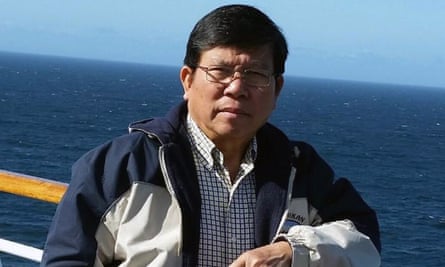
Vietnamese-born Australian, Chau Van Kham, was arrested in January 2019 and sentenced to 12 years imprisonment on ‘financing terrorism’ charges. Photograph: HRW/HANDOUT/EPA
Ben Doherty reports that the 70-year-old Australian Vietnamese-born Chau has “disappeared” inside Vietnam’s prison system and that no one from his family or the Australian government has been allowed to see or speak with him for nearly four months. Human rights advocates, lawyers and Chau Van Kham’s family said the charges against him are baseless and politically motivated, his single-day multiple-defendant trial was grossly unfair, and his failing health means his 12-year prison sentence is “effectively a death sentence”.
Chau’s son Dennis told the Guardian his family feared his failing health will be exacerbated by his isolation. Chau’s sister, who lives in Vietnam, had previously been allowed to visit once a month to give her brother money, medicine and letters from home. But she has been refused access and phone calls to him since 10 February. Consular visits scheduled for February, March, April and May were all cancelled out of concerns over the spread of Covid-19. Permission for a visit in June is pending.
“He has literally disappeared,” Australian lawyer Dan Phuong Nguyen, who is acting pro bono for the Chau family, told the Guardian.
[Chau, an Australian citizen, was born in Vietnam and served in the army of the Republic of Vietnam before 1975. After the war, he was sent to a re-education camp for three years before he fled Vietnam by boat, arriving in Australia in 1983. In Sydney, he worked as a baker for decades, rising before dawn to work at a modest suburban bakery. In 2010, he became a member of the Viet Tan pro-democracy organisation, and became a key Australian organiser of pro-reform rallies and an outspoken advocate for democratisation in Vietnam. The United Nations describes Viet Tan as “a peaceful organisation advocating for democratic reform”, but it was formally proscribed as a terrorist organisation by the Vietnamese government in 2016, which said it was “a reactionary and terrorist organisation, always silently carrying out activities against Vietnam.]
Chau sought to return to Vietnam in 2019 to meet fellow pro-democracy advocates but was refused a visa. He crossed into Vietnam via a land border with Cambodia in January, carrying a false identity document. He was arrested after meeting a democracy activist who, it is believed, was under surveillance, along with Vietnamese nationals Nguyen Van Vien and Tran Van Quyen, who were sentenced to 11 and 10 years prison respectively.
Chau was convicted and sentenced at his first appearance in the people’s court of Ho Chi Minh City after more than 10 months in detention.
The single-day judge-only trial, held simultaneously with four other people, saw him tried and convicted on charges of “financing terrorism”, and sentenced to 12 years in jail, all within four hours.
The court was effectively closed – open only for approved people, his family was excluded – for the entirety of the trial. Viet Tan condemned Chau’s hearing as a “sham trial” and said it would “continue to support human rights defenders on the ground”. Chau’s appeal was dismissed in March.
Dennis Chau told a human rights summit in Geneva this year: “With a 12-year sentence, [my father will] be 82 when he is released … I don’t believe I’ll ever see him alive, a free man. It’s effectively a death sentence.”