Posts Tagged ‘Human rights defender’

Santiago Canton leaves RFK to become Secretary for Human Rights in Buenos Aires

January 16, 2016

Santiago Canton will be leaving his post as Executive Director of RFK Partners for Human Rights at the end of this week as he has accepted the position of Secretary for Human Rights for Buenos Aires in Argentina. He started in 2012.Santiago Canton
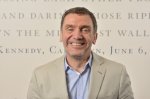
[Santiago Canton is also an Adjunct Professor at American University’s Washington College of Law, the Georgetown University Law Center, and the Universidad de Buenos Aires. In 2013, Mr. Canton served as a member of the World Bank Panel of Experts on Human Rights, part of a process that reviewed the bank’s environmental and social safeguard policies. From 2001 to 2012, Mr. Canton was the Executive Secretary of the Inter-American Commission on Human Rights. In 1998, he was elected as the first Special Rapporteur for Freedom of Expression in the Inter-American System. From 1994 to 1998, Mr. Canton was Director for Latin America and the Caribbean for the National Democratic Institute for International Affairs. Mr. Canton was a political assistant to President Carter in democratic development programs in countries in Latin America. In 2005, Mr. Canton was awarded the Chapultepec Grand Prize for freedom of expression throughout the Americas.]

Sombath Somphone: third anniversary of his disappearance in Laos

January 4, 2016

The first Newsletter of Michel Forst, the UN Special Rapporteur on Human Rights Defenders, recalls the case of Sombath Somphone, who is a founder of non-governmental organisations in the field of education and rural development He is one of the best-known defenders of social rights in Laos. For all his works and his actions he has received numerous international awards including the Ramon Magsaysay Award for Community Leadership.

Since 15 December 2012, Sombat Sombone is missing. A CCTV footage shows his last moments before his disappearance. According to these images, a motorcycle policeman asks him to get off his vehicle before two men in a vehicle took him. Various international actors, including delegations from the European Parliament and members of the Association of Southeast Asian Nations, went on-site during official visits and used these occasions to question authorities about the situation of Sombath Sompone. According to the feedbacks of these visits, no progress has been made in the investigation into his disappearance and no concrete answer was given to their questions. Thus, many calls were made both by civil society organisations and international institutions in order to have answers on the disappearance of Sombath Sompone and the ones of many others political opponents and other disappeared persons. [https://thoolen.wordpress.com/2015/12/31/happy-new-year-that-2016-may-be-a-better-year-for-human-rights-defenders/]

A year after the disappearance of Sombath Sompone, several Special Rapporteurs, including the Special Rapporteur on the situation of human rights defenders, issued a statement encouraging the Laotian authorities to intensify their efforts in the investigation process into his disappearance. See also: https://thoolen.wordpress.com/2014/12/24/laos-un-experts-on-two-year-old-disappearance-of-human-rights-defender-sombath-somphone/

Justin Bahirwe: a lawyer trying to reduce torture in the DRC

December 24, 2015


OMCT-LOGOOMCT did the following interview in its series “10 December, 10 Defenders” with Justin Bahirwe , a lawyer from the DRC.

When listening to a soft-spoken, articulate, impeccably dressed 34-year-old Justin, you would think he is promoting human rights in a peaceful, predictable, functioning State. You cannot tell he lives in Bukavu, in the eastern Democratic Republic of the Congo (DRC), a desolate place where the world’s deadliest conflict since WW2 has not relented for over two decades, killing some 5.4 million people, where tens of thousands of children are recruited as soldiers – if they do not die of diarrhoea or malaria – political opponents are killed, corruption is rampant and deeply-rooted, the infrastructure nonexistent and extreme poverty pervasive. Read the rest of this entry »

Attila Mraz: Human rights defenders in Hungary have their work cut out

December 23, 2015
Attila Mraz works for the Hungarian Civil Liberties Union (HCLU) on political participatory rights, while also completing a PhD in political theory focusing on the required conditions for a State to be qualified ‘democratic’. Talking with the International Service for Human Rights in the series Defenders Profiles (25 September 2015) about the reasons for his commitment to political participatory rights he said: ‘Democratic rights fascinate me because they are such an important feature of human life – we have to live together and solve certain problems despite having diverse perspectives. Political participatory rights provide necessary guarantees for equal and fair participation which facilitates the resolution of different societal views – that is what I care about.’

Read the rest of this entry »

Salah Abu Shazam keeps hope for redress amid civil war in Libya

December 7, 2015

Torture is certainly practised in all societies, but the problem in Libya is the frequency of its occurrence,” explains Salah Abu Khazam, who founded and heads the Libyan Network for Legal Aid. “That’s because the Government is only concerned with its own security.” This comes from OMCT’s profile “Libya: Meet Salah: Keeping hope for redress in the absence of a State, amid a civil war“.

Salah doesn’t have it easy. He works in a country with two governments, non-existent police force, a defunct judicial system and no rule of law, where human rights defenders like him, prime targets of scores of armed groups, regularly get kidnapped or killed. Two volunteer human rights lawyers working for his organization were directly threatened, and chances are he himself is on the black list for promoting democratic ideals, gender equality, or any value opposed to those upheld by Islamist armed groups. Yet, he still gets up every morning thinking that Libya is going to become a better place: “The day will come when the culprits will be held accountable for their crimes and victims will receive reparation,”.

While most of his peers are in exile, Salah, 31, holds onto his country. He is proud to say he has rescued two people from death under torture, and a third one from a death sentence for having stolen a military vehicle. He is convinced no one can enjoy any wellbeing or lead a proper life while such violations are tolerated by the social and political system, until the universal values of human rights are enforced in Libya. One has to say, though, that the light at the end of the tunnel still seems very far at this stage.

After the 2011 attacks and uprising that led to the downfall of the Qadhafi regime after 24 years of dictatorship, many Libyan intellectuals and lawyers such as Salah engaged in the defence of human rights. With the backing of international NGOs including OMCT, Amnesty International, and the Red Cross a number of local networks and civil society organizations sprung up to better protect citizens from routine human rights violations. Yet this hopeful period of building up democratic institutions and restoring civil rights was short-lived as another wave of widespread violence overtook the country, home to the world’s 10th-largest oil-reserves, as numerous belligerents fuelled political, racial, ethnic, religious and interregional conflicts.

The country has been divided since June 2014, when a number of factions refused to accept the legislative election results and the establishment of a new Parliament, leaving Libya with two Governments: one recognized by the international community based in al-Bayda, and another loyal to the former General National Congress based in Tripoli. To make things worse, many regions have ties to Islamist groups while other areas are self-governing, and rival armed groups have spread across the territory, creating additional lines of fracture.

The result was complete chaos, with a collapse of state institutions and deteriorating economic, social and health conditions, which forced the European Union and United Nations Support Mission to Libya to leave the country. The escalation of violence since in August 2014 – when Islamist militias took over Tripoli and its civilian airport – was so ferocious that the UN Security Council called for the application of sanctions against violators of humanitarian and human rights law. The violence also led to at least 400,000 internally displaced Libyans and to hundreds of thousands migrant workers fleeing the country.

It is in this improbable context that Salah’s organization, founded in 2014 with OMCT’s help, has documented 90 torture cases, forced disappearances, arbitrary detentions and abuses. It has filed 15 complaints with local courts for torture, detention and extra-judiciary executions. It is working with other partners on how to use international mechanisms to seek redress for victims of torture in the face of an incompetent national judicial system. Society must free itself from passivity and dependence and participate collectively to demand the respect of its rights,” explains Salah.

https://thoolen.wordpress.com/2015/12/01/10-december-10-defenders-profiles-of-human-rights-defenders-against-torture/

– By Lori Brumat in Geneva

Source: Libya: Meet Salah: Keeping hope for redress in the absence of a State, amid a civil war / December 5, 2015 / Links / Human rights defenders / OMCT

Alkarama human rights award 2015 for Omani MP Talib Al Ma’amari

December 3, 2015

On 8 December 2015 at 18:00, Alkarama will present its 2015 Alkarama Award for Human Rights Defenders in the Arab World to Talib Al Ma’amari a Member of the Omani Parliament who stands up for human rights.  The event will be held at the Ecumenical Centre in Geneva (Switzerland). “Talib Al Mamari is a prisoner of conscience and a courageous human rights defender. By his unwavering non-violent fight against harmful environmental policies in Oman, he has become a model in the region as a dedicated militant who is genuinely close to the citizens’ concerns. Alkarama is proud to honour him,” says Mourad Dhina, Executive Director at Alkarama. The ceremony will be live-streamed on: http://www.youtube.com/AlkaramaHR/live.

Read the rest of this entry »

Human Right Defender Jean-Pierre Okenda, Democratic Republic of Congo

November 29, 2015

On 26 October 2015, the ISHR published a profile of human rights defender Jean-Pierre Okenda, Democratic Republic of Congo. It was conducted on the margins of a meeting of the African Commission. ISHR-logo-colour-high

Jean-Pierre Okenda has taken his own route toward improving human rights impacts of extractives projects in his country. His role, as coordinator for a platform of civil society organisations in the mining sector, involves a great deal of immersion in books and texts, but also with people.

In the context of the DRC, it was absolutely critical that I redirect my work to make clear the connection between human rights and the extractive sector, and that meant research. It means understanding the global stakes of the issue. It meant explaining how bilateral relations and investment treaties really impact ordinary citizens and their rights.” Research for research’s sake is not Mr Okenda’s goal. He aims to develop networks, training, and tools to empower affected communities and other organisations to better document, understand, and evaluate the human rights impacts of a project.  He also emphasises the role of research in strengthening peoples’ understanding of the links between human rights, extractives industries, and taxation, incomes, and other ‘technical’ issues. He also urged legal reforms to help protects human rights at the local level.

Building relationships with the government and enterprises is a challenge – but it is possible, if one understands where they start from. I sent a questionnaire on human rights to local and national authorities, and you know what? There was, aside from a small amount of general familiarity at the central level, a total gap in terms of human rights knowledge. This made it clear that – sometimes – violations arise because of this lack of awareness or training. And yet, they are still responsible for protecting and realising these rights!” It is important,’ he added, ‘that they know what we are looking for when we come and ask for such and such a document’.

With corporations, it is the same. They limit themselves to two things: to the legal framework, and to the business’s internal priorities and policies. If they don’t have an internal policy, it’s likely that they don’t know a thing about human rights. To get them to think about human rights, it is critical to use another language they will understand, the language of professionalism.To further insist on empowering local communities and civil society to act, Mr Okenda noted the critical importance of having decentralized human rights institutions, so that even communities far from Kinshasa could seek resources and assistance to combat violations and abuses. ‘There is a growing global move toward more participation of civil society, in decisions related the politics and planning, in addition to the implementation. We need to see this apply in the area of extractives as well.’ The participation at the global level of local communities in the conversation about human rights and businesses is important. But the ability to participate is limited, says Mr Okenda, and so while human rights are central to the resolution of the issue, they will always be limited by governments’ hypocrisy, by neoliberalism, the financial crisis, and other geostrategic concerns.

Mr Okenda is clear: risks do exist, for all human rights defenders, including intimidation, violent attacks, denunciation, and abusive prosecutions. For those working on investment and extractives issues, the problem is that these might sometimes be the very same individuals or institutions (e.g., government agencies) that are meant to be protecting the people.So, according to Mr Okenda, defenders face every day a personal dilemma – to do what they think is right and defend a community’s interests, or to protect their property and the lives of themselves and their families.  In addition to overt risks, some defenders face pressure from their families themselves, who worry about the impact of rights defence work on safety and security. ‘When the family becomes vulnerable, you are really weakened, too.’ Nonetheless, concludes Mr Okenda: Even if there are risks, even if we human rights defenders face failure or lose patience, it is essential to keep speaking out. Silence is the biggest threat.Mr Okenda remains optimistic in his work. Efforts to encourage the government to recognize human rights defenders, and – along with corporate actors – see defenders as partners as opposed to adversaries, will be key.

Source: Defender Profile: Jean-Pierre Okenda, Democratic Republic of Congo | ISHR

EU Parliament says Snowden is human rights defender

October 30, 2015

Media reported on the EU Parliament’s vote to drop criminal charges against Edward Snowden and to encourage members to block his extradition Read the rest of this entry »

Eulogy of deceased Indian human rights defender Dr R.M.Pal

October 21, 2015

How broad the human rights movement is nowadays, is demonstrated by this eulogy of Dr R M Pal by Vidya Bhushan Rawat, a social and human rights activist in India. It is a very personal story and I provide the text in toto below. The writer states that at this crucial moment is a great blow to all the right thinking secular forces as Pal was the man who always believed in the idea of a secular inclusive India and spoke regularly against the Hindutva’s communalism.

Dr R.M.Pal: Human Rights of The Most Marginalised Was His Uncompromising Passion

By Vidya Bhushan Rawat

20 October, 2015
Countercurrents.org

It was Prof Y.P.Chibbar, the PUCL General Secretary for years, who introduced me to Dr R.M.Pal when I visited him at ARSD College where he was teaching. ‘Dr Pal is the right person for you. He is the editor of PUCL Bulletin and lives in Greater Kailash. You must meet him,’ suggested Prof Chibbar. And after that it was a relationship that grew up every passing day. As a young aspiring boy from a nondescript town of Uttarakhand, I had come to Delhi ‘incidentally’, during the tumultuous years of anti Mandal agitation where most of our ‘intellectuals’ had been exposed. Staying with Dr Mulk Raj Anand, pioneer of English writing in India, there was a period of great personal churning for me and Dr Pal made it clear to me to earn to learn. ‘What are you doing there’, he asked. Jee, I am looking after his work, typing his scripts and accompany him to various places where he moves, I said. My aim is to do social work and it is a great honor to be with a man who calls himself a ‘Gandhian’. For a young person like me who had so many fantasies about Gandhism as perhaps we did not have the opportunity to know and understand ‘others’ and it seemed the only way to fight against oppression particularly untouchability which Gandhi had claimed to be the biggest ‘sin’ of Hinduism. So for me any one who had seen Gandhi or worked with him became a hero and ‘Lokayat’ where Dr Mulk Raj Anand stayed became my ‘sabarmati’. Dr Pal was a no nonsense person who could speak fearlessly without being hypocritical in front of you and he remained unimpressed. ‘Well, I can tell you Mulk Raj Anand will not help you’, he said. ‘ Don’t live under the romance of ‘Gandhian’ fame as it is good to do ‘social work’ but you need to be independent and earn to do things, he suggested. I know you came from Dehradun and may face prejudices here because of your village background. Better you do some evening courses as you plan and earn for your living and hopefully you will be able to contribute to society as you wish. And I can say with firm conviction that after coming to Delhi and staying here as meek and submissive person for over two and half years, Dr Pal gave me the confidence in myself and helped me become independent and rebuild my self respect and confidence.

Over the years our interaction grew and he became fond of me. He would guide me and ask me write in particular way. He suggested diverse topics to me and so much was the trust that many times he would send me to go on fact finding on particular issues and get direct information for him. It was not just he would ask to write but he would call me and discuss with me the issue in detail and point out those particular references which he would wish me to focus. I was fortunate to have met and acquaint with a number of eminent, Human Rights activists, Ambedkarite scholars and writers at young age and all of them respected me and appreciated my courage and enthusiasm but Dr Pal remain the one who mentored me and guided me. He would appreciate a number of my elderly friends but unlike them he would guide me and even point to me the grammatical mistakes in my writings. I knew them very well and the fact was that being a teacher, it was like a student sitting in his class as if he is dictating and then checking our assignment. Many times, he warned me of being neutral in my criticism and asked me to be as ruthless to Muslim fanatics too who try to defame the community but one thing was clear that he made a distinction between minority communalism and majoritarian communalism and cautioned India of the dangers of the Hindu communalism. He was afraid of the fact that India might become victim of the majoritarian communalism and for that all the like-minded parties and people have to join hand. He would often quote that no movement will succeed unless it is preceded by a political philosophy.

I still remember how he guided me to write a paper for a seminar being organized by Indian Social Institute, Delhi, in collaboration with UGC, on Ambedkar and M N Roy’s relationship and Roy’s thought on rationalism and Buddhism. He was determined despite my own feeling that it was a misfit for a seminar on Human Rights education issue yet he felt only I could have done justice to this and he guided me. Yes, that paper took me to various files including that information where Dr Ambedkar had, as a minister in Viceroy’s Council, sanctioned an amount of Rs 13,000 for anti war efforts of M N Roy and on the basis of this information ‘inspired’ Arun Shourie to write ‘Worshipping the False God’, a book based on hard prejudices and lies. I met Justice Tarkunde several time and got those letters where he mentioned that it was he who took the money many time on behalf of the Party and that Roy never took the money himself. Ambedkar was in deep appreciation of MN Roy and his intellectual honesty and that is why there are lots of similarities on their thoughts and philosophy, which need further elaborations. I can say with conviction that if Dr Pal had not guided me in this regard, I would have missed the great opportunity and work of M N Roy related to caste, religion and fascism.

As the editor of PUCL Bulletin he was able to focus a lot on atrocities against Dalits and issue of communalism in India. Both the issue of caste violence against Dalits and communalism were matter of great concern for him and he remained uncompromising in his condemnation of them. At the various national and international forums he always focused on the issue that Human Rights are not just state laws and their steady implementation which of course are important, but what he spoke and emphasized was ‘societal violation of human rights’ which he always felt, got out of the scrutiny of the human rights defenders and the organsations working for the human rights. It was his conviction that Dalits, Muslims and other marginalized people should join Radical Humanist and Human Rights Movement to raise their issues. As he became president of Delhi PUCL, he ensured that these segments are fairly represented and we know personally many of the radical humanists and PUCL ‘leaders’ were not very happy with his ‘casteist’ approach.

For long he listened to many youngsters claiming that ‘human rights’ organisations in India have no space for the Dalits. He always mentioned to me this point that PUCL is a membership based organisations and if the Dalits, Muslims wanted to lead it, they need to become member and increase their numbers. He introduced many eminent persons in the human rights and said that there is no point complaining if you are unable to be member of it. People’s organisations are led by people and need further understanding and working of the organisations and its structures. Merely blaming the organisations for being representative of ‘upper castes’ was not correct according to him though we knew that many activists became members but frankly speaking the functioning of the organisations like PUCL did not change. The dark fact is that he was not liked inside the PUCL as well as in the Radical Humanists circle for his ‘overemphasis on caste and communalism. His unambiguity and openness made many people his enemy who would be jealous of his forthrightness. The man always enjoyed being with young activists, guiding them and providing ideas to write on particular issues. I can vouch with my own experience having met numerous people of eminence how they just use you. The dirty secret of the ‘intellectual’ world is that it does not want to engage in dialogue with people but work on ‘networking’.

We had lots of disagreement particularly on the issue of Gandhi and Ambedkar. He knew it well that I have no liking for Gandhian philosophy, which I called humbug and absolutely patronizing as far as Dalits are concern. He would always say that though Gandhi made eradication of untouchability and fight against communalism pivot of his philosophy, he failed in both count yet he felt that Gandhi’s intention were not wrong but lots of discussions and debate on the issue actually saw his opinion changing. He said any one who read ‘annihilation of caste’, will only find Gandhi on the wrong side and Ambedkar fighting for the rights of the people. He felt Ambedkar was wronged.

His personal association with M N Roy and later working on the human rights issues had broadened his horizon much bigger than many of his contemporaries who remained very narrow in their personal lives. There are very few who would spare time for you and guide you whatever possible ways and feel good at your achievements. He loved speaking Bangla and always followed the incidents happening in East Bengal or what we call today Bangladesh. The pain of division and migration was always with him and that is why he was always warm to people like me who left home in search of a new identity and to fulfill their commitments. He would always warn me like a teacher of what to do and what not to do. There are so many things to remember where he asked me to write on and suggested me to attend particular programmes.

The last togetherness of mine with him was at a seminar that he has been trying to organize for years in Mumbai on Dr Ram Manohar Lohia but always felt lacking supporting hands there as he would have them in Delhi as it was the city he always missed and left after he had paralytic stroke that confined him on wheelchair and external help. Many of my friends actually spoke to me after visiting him and felt pained to see a vibrant man depended on people for help, a man who was always active doing things at his own. But it was his strong willpower that despite being confined to bed he could do a lot of work, which is highly impossible for many of us to do. I never saw him complaining about himself whenever I spoke to him on phone as it was work work and work. He would ask for certain book or speak to certain person or provide the phone numbers of some friends. He complained that being in Mumbai has curtailed his freedom as he always enjoyed his friendship circle in Delhi and felt that he has got isolated in Mumbai.

The seminar on Ram Manohar Lohia in Mumbai reflected how he wanted to do things so fast. Academics saw him speaking passionately on Lohia-Ambedkar relationship where he quoted Lohia saying that he wanted Dr Ambedkar to lead the entire Indians and not confined to the leadership of the Dalits even when people like me questioned Lohia suggesting his vision ended at Gandhsim, Dr Pal remain open to new ideas which supported freethinking and secular democratic traditions in India.

There are so many fond memories of him. I can only say that he was the one on whom I could count for guidance and support. He never failed and once promised would go to any extent to finish the task. I grew up admiring him for his courage and forthrightness as whenever he spoke he was to the point and blunt. At a seminar, a leading human right academic, who happened to be a Muslim, actually supported practice of Sati as cultural practice and therefore outside the purview of human rights laws in the name of ‘personal laws’ of Hindus. I got up and objected saying whether he feel that veil and Burqa should be put beyond the limit of human rights laws. It became heated and Dr Pal came for my rescue saying that he always wanted human rights defenders and organisations to speak against societal violation of human rights as human rights in South Asia are not just violated by the state but majority of violation happen because of cultural practices and we need to come out in open against such rigid and inhuman practices such as caste system and untouchability.

The demise of Dr R M Pal at this crucial moment is a great blow to all the right thinking secular forces as we would often go to him and seek his advice on many issues confronting us. He was the man who always believed in the idea of a secular inclusive India and spoke regularly against the Hindutva’s communalism. Though he is no longer with us, his writings will always inspire us to work for a secular democratic India. We promise to carry on his legacy for our better future.

Vidya Bhushan Rawat is a social and human rights activist. He blogs at http://www.manukhsi.blogspot.com twitter @freetohumanity Email: vbrawat@gmail.com

Source: Dr R.M.Pal: Human Rights of The Most Marginalised Was His Uncompromising Passion By Vidya Bhushan Rawat

Martine Anstett honored with own human rights award

October 16, 2015

Martine Anstett (born on 15 March 1969) was a French human rights defender who worked for a variety of organizations. For NGOs such as APT and AI, for the UN and the French diplomatic service. Her last post was with the Organisation Internationale de la Francophonie. She died at a young age on 29 April, 2015

Friends of hers decided to create an association to remember Martine and honor her memory so that her outstanding commitment should not be lost. The main activity of the association is to award every year – on 29 April – a remarkable human rights defender who deserves to be noticed and supported with the Martine Anstett Prize. The award comes with a prize of a minimum 1,500 euros.  The website http://www.prixmartineanstett.org/En-PrixModeEmploi.html gives ample instructions on how to apply and on the life and work of Martine Anstett.