See what has motivated Gladys Acevedo, a Colombian mother who has lost her son in the war, to become a human rights activist and help other victims.
Posts Tagged ‘Human rights defender’
Gladys Acevedo, a Colombian mother who has lost her son, became a human rights defender
December 13, 2021Nicholas Opiyo Laureate of the 2021 Tulip award
December 7, 2021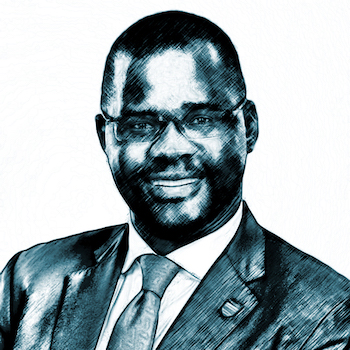
Ugandan human rights lawyer Nicholas Opiyo was awarded the 2021 Human Rights Tulip. The Dutch Ministry of Foreign Affairs awards the honour, which is accompanied by a cash prize of 100,000 euros to help the recipient continue or expand their work. For more on this award and its laureates, see: https://www.trueheroesfilms.org/thedigest/awards/D749DB0F-1B84-4BE1-938B-0230D4E22144
Opiyo opposed a controversial anti-gay law that included a life sentence for homosexuality. According to the ministry, the human rights defender also played an important role in criminalizing torture in his country. His work often leads to him being accused of criminal violations with no evidence to back up the charges, and he is often closely monitored by security forces. “Human rights activists see the charges against Nicholas as a way to hinder his work as a human rights lawyer. Even in jail, he used his time to talk to prisoners who sought advice,” the ministry stated. [see also: https://humanrightsdefenders.blog/2020/12/23/ugandan-human-rights-defender-nicholas-opiyo-arrested-like-a-criminal/]
“His work has made the LGBTI community in Uganda feel stronger, knowing that there are allies who support them,” said caretaker Foreign Minister Ben Knapen.
Opiyo beat out two other finalists for the prize. Nunca Más and Russian lawyer Mari Davtyan. See: https://humanrightsdefenders.blog/2021/11/22/the-3-nominees-for-the-2021-tulip-are-known/
Last year the Human Rights Tulip went to Lilit Martirosyan [see: https://humanrightsdefenders.blog/2020/12/11/armenian-lilit-martirosyan-receives-human-rights-tulip-2020/] who said: “Since winning the Human Rights Tulip in 2020 I’ve felt stronger and more protected, knowing that the Dutch government is on my side and that I’m no longer on this journey alone“.
https://nltimes.nl/2021/12/06/ugandan-lawyer-receives-dutch-human-rights-prize
https://chimpreports.com/ugandas-nicholas-opiyo-wins-global-human-rights-award/
Humaira Rasuli is the recipient of the 2021 Asia Democracy and Human Rights Award
December 7, 2021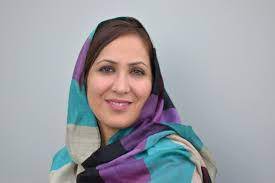
The Taiwan Foundation for Democracy (TFD) has named Afghan human rights lawyer and feminist Humaira Rasuli as the recipient of the 2021 Asia Democracy and Human Rights Award. [For more on this award and its laureates, see: https://www.trueheroesfilms.org/thedigest/awards/607BB850-4813-489B-A47D-3965F2078E1F]
It is hoped that the award will “further inspire the world to pay closer attention to human rights in Afghanistan, especially women’s rights” and “encourage human rights defenders and those who have been deprived of human rights,”
According to the TFD, Rasuli has been actively involved in social activism and the promotion of women’s rights at a young age and thorough her years of work, “Afghan women have gradually been able to receive justice from judicial procedures.”
As the co-founder and executive director of the Women for Justice Organization, Rasuli has led lawyers, gender experts and activists in efforts to increase women’s access to justice, uphold the rule of law in Afghanistan, and investigate some of the most emblematic sex crime cases in the country over the years, the TFD said in its statement.
She also previously served as director of Medica Afghanista, another organization that provides psychosocial counseling and legal support to female survivors of sexual violence. However, in an interview with the European public broadcaster, Arte, aired in September, Rasuli revealed that she has relocated to the U.S. following the U.S. military pull-out from Afghanistan.
The TFD on Tuesday declined to confirm Rasuli’s current whereabouts, but said she would deliver her acceptance speech in a pre-recorded video that would be published on its website on 10 December.
The foundation said it would not host a physical award ceremony this year due to COVID-19.
Inter-American Court holds Colombia responsible in the case of Jineth Bedoya
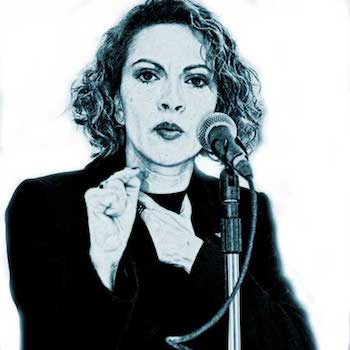
October 19, 2021The Inter-American Court of Human Rights on Monday 19 October 2021 ruled that the state of Colombia bears responsibility for the ordeal of a female journalist who was kidnapped, raped and then tortured in 2000 by paramilitaries. Jineth Bedoya was working for the El Espectador newspaper at the time, investigating a weapons smuggling ring, when she was abducted and assaulted by far-right militia members. [see: https://www.trueheroesfilms.org/thedigest/laureates/6f49a0f6-7dd6-4f95-902c-9d9f126e0bcc]
The paramilitaries, some of whom have since been convicted, were among the forces that fought left-wing guerrillas in Colombia until their official demobilization in 2006.
The acts against Bedoya “could not have been carried out without the consent and collaboration of the (Colombian) State, or at least with its tolerance,” the court, an autonomous part of the Organization of American States (OAS), ruled on Monday.
Bedoya, now 47, hailed the decision. “October 18, 2021 goes down in history as the day when a struggle that began with an individual crime has led to the vindication of the rights of thousands of women who have been victims of sexual violence and of women journalists who leave a part of their lives in their work,” tweeted Bedoya,
Colombia “fully accepts the decision,” President Ivan Duque tweeted.
Bedoya had implicated agents of the state, in particular an “influential” general of the police force, in the attack, which started when she was kidnapped in front of La Modelo prison in the capital Bogota. The paramilitaries tortured and raped her for 16 hours before leaving her lying naked by the side of a road. Bedoya has said she has suffered two decades of “persecution, intimidation and constant threats.”
The failure to investigate violated Bedoya’s “rights to judicial guarantees, judicial protection and equality before the law,” the court ruled. It also ordered Colombia to “punish those remaining responsible for the acts of violence,” and called for other measures including the creation of a training program for public officials and security forces focused on violence against women.
The Colombian state had apologized to the journalist before the same court in March, when it also ordered the government to immediately ensure the safety of Bedoya and her mother, who had both been victims of threats — including a 1999 attack on both that the state failed to investigate.
The Press Freedom Foundation (FLIP) welcomed Monday’s “dignified” decision for a woman who “has tirelessly sought justice for more than 20 years.” And the Committee to Protect Journalists (CPJ) called it “a historic acknowledgment of the deadly dangers that Colombia’s female journalists face.”
https://www.cbsnews.com/news/jineth-bedoya-journalist-rape-torrture-colombia-responsible-court-ruling/
Congolese Julienne Lusenge wins 1 million $ 2021 Aurora Prize
October 11, 2021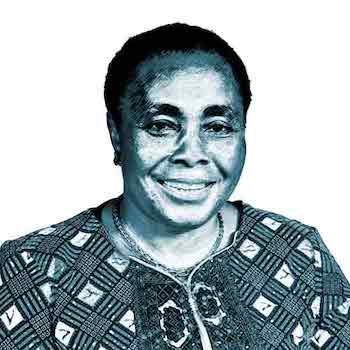
The sixth annual Aurora Prize for Awakening Humanity was awarded on 9 October 2021 to Julienne Lusenge, a human rights defender, co-founder of Women’s Solidarity for Inclusive Peace and Development (SOFEPADI) and Fund for Congolese Women (FFC), who has been helping the victims of wartime sexual violence for years. Her boundless courage and tireless activism have shone a light on the desperate plight of thousands of Congolese women subjected to horrific sexual abuse amidst the civil war in the country, exposing the perpetrators and bringing them to justice. She was named the 2021 Aurora Prize Laureate at the Ceremony titled “Reviving Together” that was held in Venice, Italy. For more on the Aurora Prize and its laureates, see: https://www.trueheroesfilms.org/thedigest/awards/35D4B5E3-D290-5DF9-08E1-14E6B3012FFA
“Julienne Lusenge’s exceptional achievements remind us of the impact one person can have, even when encountering the seemingly insurmountable pressure and risks. By recognizing her courage, commitment and selflessness, we are hopeful that she can also inspire each one of us to think about what we can do to stand up on behalf of those whose rights are abused and who are in dire need of our solidarity and support,” noted Lord Ara Darzi, Chair of Aurora Prize Selection Committee and Co-Director of the Institute of Global Health Innovation at Imperial College London. Julienne Lusenge won 4 earlier awards: see https://www.trueheroesfilms.org/thedigest/laureates/d373dbdb-b269-4ecd-810c-bfd05b18859c
As the 2021 Aurora Prize Laureate, Julienne Lusenge will receive a $1,000,000 grant and a chance to continue the cycle of giving by supporting organizations that help people in need. This year, considering the acute needs of the people of Artsakh (Nagorno-Karabakh) affected by the 2020 war, Aurora will recommend her to direct 25% of the award funds to addressing urgent humanitarian issues in Artsakh. The Aurora Co-Founders are committed to matching this contribution to bring the total amount to $500,000. Besides this, Ms. Lusenge has nominated three organizations that support grassroots women’s organizations, empower survivors of gender-based violence and reintegrate internally displaced persons:
- Fund for Congolese Women;
- League for Congolese Solidarity;
- Association of Mothers for Development and Peace.
“The outstanding work carried out by Julienne Lusenge and her organizations that help women, as well as her courage and perseverance in going against powerful local forces to protect them, is an example of empathy, kindness and dedication. One of the most important goals of Aurora is empowering such heroes, and we are grateful for the opportunity to do just that,” said Hina Jilani, Aurora Prize Selection Committee member and Former United Nations Special Representative of the Secretary-General on Human Rights Defenders..
https://hetq.am/en/article/136528
https://www.urdupoint.com/en/world/armenian-humanitarian-prize-awarded-to-congol-1372496.html
Erik K. Ward Wins 2021 Civil Courage Prize
October 5, 2021
New York, NY – Eric K. Ward, a nationally-recognized expert on the relationship between authoritarian movements, hate violence, and preserving inclusive democracy, will receive the 21st annual Civil Courage Prize virtually on Friday, October 29, 2021.
This is the first time in the award’s history that an American has won the prize, revealing the dangerous proliferation of hate crimes and political violence by authoritarian and extremist movements in the United States.
In his 30+ year civil rights career, Ward has worked with community groups, government and business leaders, human rights advocates, and philanthropists to combat white supremacy, extremism, and anti-democratic activities of the far right. The recipient of the Peabody-Facebook Futures Media Award, Ward’s widely quoted writings and speeches are credited with key narrative shifts in the fight to take white supremacist violence seriously. He currently serves as Executive Director of Western States Center, Senior Fellow with Southern Poverty Law Center and Race Forward, and as Chair of The Proteus Fund.
“There are few with more experience in the realm of civil courage in the United States than Eric Ward. Eric understands the deep connections between creating and sustaining inclusive, democratic institutions and combating extremism, bigotry and racism in all its forms,” said George Biddle, Train Foundation Trustee. “We commend Eric for spending his career and life demonstrating how extremism can only be mitigated through non-violent action and facilitating common ground.”
“The fact that I am the first ever American to win this prize is a clear and jarring message from The Train Foundation to governments and civil society domestically and internationally: the rise of authoritarianism and violent extremism has ended all illusions of ‘American exceptionalism.’ America’s dream of achieving a multiracial and inclusive democracy is in danger, said Eric Ward. “Bigoted and authoritarian ideological movements are now an active threat to the very structures of our democracy established by the 1960s Civil Rights movement. I am grateful and proud to accept this honor on behalf of all those who continue the struggle towards a strong, multicultural democracy.”
For more on the Civil Courage Prize see: https://www.trueheroesfilms.org/thedigest/awards/B1359DF3-B0A3-4AE5-B8E3-50599E0665FF
Eric Ward has a special interest in the use of music to advance inclusive democracy. In 2020 he helped to launch the Western States Center Inclusive Democracy Culture Lab which works with musicians to create new narratives about anti-bigotry and inclusion, puncture the myths driving our political and social divisions, and invite people who don’t always trust politicians and movement leaders into the safe and trusting conversational space that exists between a performer and their audience.
Ward began his civil rights career at a time when the white nationalist movement was engaged in violent paramilitary activity that posed a threat to democracy and democratic participation in the Pacific Northwest. He founded and directed a community project designed to expose and counter hate groups and respond to bigoted violence before joining the staff of the Northwest Coalition Against Malicious Harassment, where he worked with government leaders, civil rights campaigners, businesses leaders and law enforcement officials in establishing over 120 task forces focused on human rights and anti-violence in Colorado, Idaho, Montana, Oregon, Washington, and Wyoming.
Ward considers himself ‘lucky’ to have had the experience of working closely side-by-side with people who decided to leave any movements which pose a threat to democracy. “I can’t take a lot of claim for that,” he said in an interview with Floss Media earlier this year. “What I think I presented was a doorway out. The truth is when we break this binary of white supremacy and the white nationalism that is trying to turn it into something new, what we find out is we have a lot of problems in common. We also have a lot of dreams in common.”
see also: https://humanrightsdefenders.blog/2017/10/17/mbonimpa-wins-also-the-2017-civil-courage-prize/
Rohingya human rights leader Mohibullah murdered in Bangladesh refugee camp
September 30, 2021
Illustration: Fortify Rights
Fortify Rights, a human rights organisation on Thursday urged the Bangladesh government to immediately investigate the assassination of Rohingya human rights leader Rohingya human rights leader Mohibullah
In a written statement the organisation called on the authorities to get to the bottom of the murder and hold the perpetrators accountable. No one has claimed responsibility for his murder, but a Rohingya leader claimed that Ullah was killed by the extremist group Arakan Rohingya Salvation Army, which was behind several attacks on Myanmar security posts in recent years.
“This is a devastating loss for everyone who knew and loved Mohib Ullah, and it is also a tremendous loss for Myanmar, the Rohingya people, and the human rights movement more broadly,” said Matthew Smith, chief executive officer at Fortify Rights.
He also said Mohibullah was committed to truth, justice, and human rights and had been facing serious and sustained threats in Bangladesh. Smith further said the Rohingya leader had needed protection.
“Dhaka must prioritize the protection of Rohingya people, including human rights defenders, who routinely experience heightened threats to their personal security,” he added.
Mohibullah, 46, who led the Arakan Rohingya Society for Peace and Human Rights, was shot dead at around 8:30pm at a Kutupalong camp office in Cox’s Bazar on Wednesday.
He had represented the Rohingya community at the United Nations Human Rights Council in 2019. In his address to UNHRC, he said: “Imagine you have no identity, no ethnicity, no country. Nobody wants you. How would you feel? This is how we feel today as Rohingya …”
“For decades we faced a systematic genocide in Myanmar. They took our citizenship. They took our land. They destroyed our mosques. No travel, no higher education, no healthcare, no jobs … We are not stateless. Stop calling us that. We have a state. It is Myanmar.”
Mohibullah came to the limelight on 25 August 2019 when a rally organised by Arakan Rohingya Society to observe two years of the latest Rohingya exodus from the Rakhine state of Myanmar, drew more than 100,000 people.
https://www.theguardian.com/world/2021/sep/29/rohingya-leader-shot-dead-in-bangladesh-refugee-camp
https://www.bnionline.net/en/news/mohibullahs-murder-sends-deadly-message-human-rights-defenders
Abdul Rahman Al-Shamiri, after 15 years, released in Saudi Arabia
September 28, 2021![Abdul Rahman Al-Shamiri [m3takl/Twitter]](https://i1.wp.com/www.middleeastmonitor.com/wp-content/uploads/2021/09/saudi.jpg?resize=1199%2C800&quality=85&strip=all&zoom=1&ssl=1) Abdul Rahman Al-Shamiri
Abdul Rahman Al-Shamiri

On 24 September 2021 the Middle East Monitor reported that the ALQST and the Prisoners of Conscience Twitter account quoted sources as saying that Al-Shamiri was released “following the expiry of his sentence.”
Al-Shamiri is a retired Saudi academic who worked at Umm Al-Qura University, he was also a consultant in the kingdom’s Shura Council for years.
He was arrested in 2007, and sentenced to a 15-year prison term on charges including “disobeying the ruler”.
In December 2003, Al-Shamiri was one of the signatories of a reform document sent to the Saudi monarch at the time, King Abdullah Bin Abdulaziz, demanding Saudis be allowed to participate in the political system. The document was followed by others, including one which demanded the release of three rights defenders, including the late Abdullah Al-Hamid.
European Court of Human Rights calls probe into murder of Natalia Estemirova ineffective
September 1, 2021Tanya Lokshina of Human Rights Watch wrote on 31 August 2021 “Justice for Murder of Chechen Rights Defender Remains Elusive”
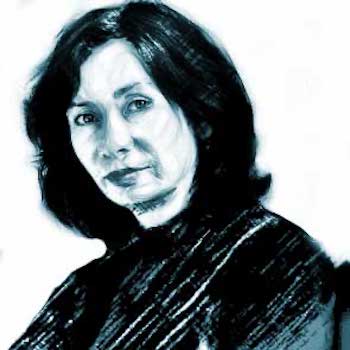
Today, the European Court of Human Rights ruled on the case of Natalia Estemirova, Chechen human rights defender murdered in July 2009. It found that Russia had violated their obligations to protect her right to life by “fail[ing] to investigate effectively [her] abduction and killing.” [see: https://www.trueheroesfilms.org/thedigest/laureates/BA7B3FCE-AFE7-4B72-9156-EA257B3BC205]
Natalia – Natasha to me and many others – was a colleague and very close friend. I last saw her 36 hours before the murder, while staying at her place in Grozny, as I always did when in Chechnya. We’d spent a week interviewing people whose homes police had torched because of their alleged involvement with militants, and whose relatives had been rounded up, disappeared, or killed by security officials.
We said goodbye just past midnight on July 14. When I woke up later that morning, Natasha had already left for an early meeting, so I went to the airport without getting to see her again. The next day, armed men pushed her into a car as she was running to catch a bus to the city center. They drove her into neighboring Ingushetia and shot her near the forest.
In 2011, having lost hope for an effective investigation by Russian authorities, Natasha’s family filed a complaint with the European Court, alleging a violation of her right to life because Russian authorities failed to protect human rights defenders in Chechnya, Chechnya’s leadership repeatedly threatened Natasha, and her abduction was apparently carried out by security officials.
Ten years later, the court ruled today that Russia had failed to investigate but also held that there wasn’t sufficient evidence to conclude that state agents had murdered Natasha.
[see also: https://humanrightsdefenders.blog/2019/07/15/ngos-remember-10th-anniversary-of-natalia-estemirovas-murder/]
The ECHR noted that Russian authorities promptly opened a probe into Estemirova’s killing and identified a suspect, but emphasized that Moscow’s failure to provide full materials of the case made the court “unable to conclude that the investigation had been carried out thoroughly.” It noted some contradictions in the expert evidence led it to doubt that the investigation had been effective.
The victim’s sister, Svetlana Estemirova, alleged in her appeal that state agents were behind the killing but the Strasbourg-based court ruled that the evidence didn’t support the claim.
The court required Russia to pay 20,000 euros ($23,600) to Estemirova’s sister and urged Russian authorities to track down and punish the perpetrators of her murder.
“I had very high hopes and it would be an understatement to say that I’m disappointed,” Natasha’s daughter Lana, who was 15 when she lost her mother, told me today.
The lack of sufficient evidence the court cited is a direct result of Russia’s brazen determination to protect the perpetrators of this outrageous murder. Natasha was killed for fearlessly exposing abuses by Chechen authorities. An effective investigation would leave no doubt about official involvement in her murder.
https://www.eng.kavkaz-uzel.eu/articles/56609/
https://www.hrw.org/news/2021/08/31/justice-murder-chechen-rights-defender-remains-elusive
UN experts demand release of human rights defender Dawit Isaak, imprisoned without trial in Eritrea since 2001
August 19, 2021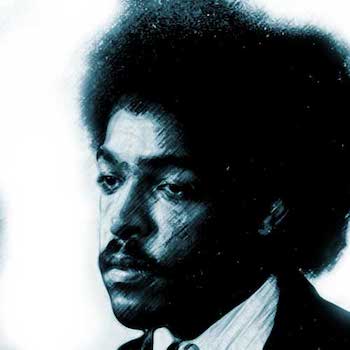
On 18 August 2021 UN experts demanded the release of journalist and human rights defender Dawit Isaak, imprisoned without trial in Eritrea since 2001, amid uncertainty about whether he is even still alive.
“To this day, Dawit Isaak has never been charged with a crime, spent a day in court or spoken to his lawyer,” said Mary Lawlor, UN Special Rapporteur on the situation of human rights defenders. “The level to which the Eritrean Government is ignoring Mr. Isaak’s basic, fundamental human rights is appalling. He must be released at once.”
In the first years of his detention, “we received information that Mr. Isaak was often taken to hospital, which was concerning in itself,” Lawlor said, “Now we receive no news, and that’s worse. We fear for his life. At an absolute minimum, Eritrea must immediately present evidence that he is alive and well.”
Dawit Isaak, 56, a dual Swedish-Eritrean national, established one of Eritrea’s first independent media outlets in the 1990s, the Setit newspaper. In May 2001, it published open letters written by a group of politicians known as the G15 urging the Government to hold open elections and implement a newly drafted Constitution. With the world’s attention diverted by the September 11 terrorist attacks, Mr. Isaak was arrested on 23 September 2001.
According to a credible source, Mr. Isaak was alive in September 2020, the first sign of life in seven years. He is reportedly being held in Eiraeiro prison, a detention centre infamous for its conditions, where torture is allegedly common practice and where many inmates have reportedly died in custody.
“The enforced disappearance of Mr. Isaak for almost two decades is extremely concerning,” said Mohamed Abdelsalam Babiker, Special Rapporteur on Eritrea. “The Government of Eritrea has not confirmed his whereabouts or provided any solid evidence about his state of health in all these years. It has denied torture allegations but has not allowed anyone to visit Mr. Isaak.”
Lawlor said she had rarely witnessed such disregard for human life as she documents cases of human rights defenders in long-term detention around the world.
“Locking up human rights defenders for long periods of time may feel like a guarantee against internal scrutiny,” Lawlor said. “But we have not forgotten.”
Mr. Isaak’s work has been recognised by a number of prestigious awards, including UNESCO’s Freedom of Press Award {see: https://www.trueheroesfilms.org/thedigest/laureates/9329f937-0d8b-4543-8664-2263e968adbf] and he was a finalist for the Sakharov Award in 2017
The Special Procedures mandate holders are in contact with the Eritrean authorities on this matter.
The experts’ call is endorsed by: Ms. Tlaleng Mofokeng, Special Rapporteur on the right to physical and mental health; the Working Group on Enforced or Involuntary Disappearances: Mr. Tae-Ung Baik (Chair), Mr. Henrikas Mickevičius (Vice Chair), Ms. Aua Balde, Ms. Gabriella Citroni and Mr. Luciano Hazan; and Mr. Morris Tidball-Binz, Special Rapporteur on extrajudicial, summary or arbitrary executions.
https://www.miragenews.com/un-experts-demand-release-of-human-rights-615941/

