For those who are confused by the large number and variety of human rights awards…..there is hope….soon
share information on human rights defenders, with special focus on human rights awards and laureates
For those who are confused by the large number and variety of human rights awards…..there is hope….soon


Jody Williams, Mairead Maguire, Rigoberta Menchu Tum, Shirini Ebadi and Tawakkol Karman have come to address the 900 attendees about their work fighting totalitarianism and fundamentalism in its many global guises in order to build a more peaceful just and equal world. The public event took place on the final evening of the sixth international conference of the Nobel Women’s Initiative. Over the last three days, more than 50 women human rights defenders have been in Mönchengladbach to discuss the future of the feminist movement in collaboration with Initiativikreis Mönchengladbach.
….
The global response to refugees has been a key theme of the conference over the past three days and is a concern of all the laureates. One of the reasons the delegates decided to hold the conference in Germany was to come and congratulate Germany for its policies, explained Tawakko Karman, Yemeni human rights activist and 2011 Nobel Peace laureate. Since the beginning of the so-called ‘refugee crisis’ in Europe, Germany has welcomed more than one million refugees, more than any other country in Europe. For 2016 and 2017 alone, the government has set aside 28.7 billioneuros of funding for their accommodation and integration.
….Many of the young people here have been politicised to defend human rights more broadly because of personal experiences of getting to know refugees in Germany. It heartens me because I know this experience will stay with them for life. I saw the same transformation time and time again myself as a national coordinator with the UK NGO Student Action for Refugees which supports students to set up volunteering and campaigning projects in their local communities. But unlike Germany, the UK – and other countries who are now turning their backs on refugees – are training the next generation to look inwards rather than out. They’re turning away from fostering international consciousness among citizens. This Jody Williams, who won the 1997 Nobel Peace prize for her work to ban antipersonnel landmines, has repeated over the last three days, is “the real fake news”.
Germany’s decision to welcome refugees has nevertheless not come without challenges, especially in terms of the far right explains Brigitte Schuster, a German teacher who has come along to hear the Nobel laureates speak. She teaches as part of a network of state funded programmes run by BAMF (the Federal for Migration and Refugees). Despite some “teething problems” in the provision of services, Bridgette insists, people are nevertheless now moving forward with their lives. They are contributing a lot to the community, she explains, including through sharing their stories and fostering consciousness of totalitarianism in other parts of the world.
After the event in the foyer the laureates message appears to have got through. Attendees have been issued a call to action. The laureates have thanked the German people for welcoming refugees but also asked them to keep up the pressure on the totalitarian regimes that they have fled and to fix the gaps in their own democracies. Tawakkol Karman, Yemeni human rights activist has called on those present not to victimise people but to “be close to people’s dreams, their aspirations and their suffering.” And she’s issued an order. “You will fight for a society of equal citizenship for men and women.
Five boys, all aged 15, jump over one another to tell me what they found most inspiring when I ask them in the foyer after the event. They’ve been brought along by their English teacher Meike Barth from the Gymnasium an der Gartenstraße which has around 900 students. They are also curious to learn about human rights struggles other parts of the world and how they can support them, in part because of the new refugee friends they have made at their school.
Ahmet says he was especially touched when Shirin Ebadi, who received the Nobel Peace Prize in 2003 for her efforts to promote human rights in Iran, mentioned the Berlin wall: “She said that that physical wall and the wall Trump wants to build is like the Berlin wall and we can bring it down,” he recounts. But Ahmet’s also struck by her message about breaking down the walls between people ideologically. “It’s not just physical walls but walls in our hearts. People can always find ways to talk across physical walls, but what’s more hard is what she said about solidarity and people, the politicians trying to stop that connection. Actually,” he reflects, “I was thinking of this different metaphor of a different kind of wall we all build together with that hope, like bricks but you also need cement….It’s a metaphor in progress!”
Ahmet is also inspired by Jody William’s work to erase landmines. “There are still landmines in Vietman”, he tells me, “actually I read about that just last week and I was sat there thinking we need to do something about that.” I ask him what he’s going to do: he’s going to organise a local event and write to politicians.
Sebastian meanwhile tells me what stuck with him was the message advanced by Northern Irish peace activist and 1976 Nobel Peace Prize laurate Mairead Maguire to use academic studies to advance the cause of peace, whatever the discipline. He enjoys chemistry, biology and maths and wants to help tackle climate change. “People thing human rights is just a subject but it’s actually about everything, the whole environment. It’s not just politicians saying this and that.” He’s been inspired by the public meeting tonight to organise his own event. Benjamin, another student, wants to get active on social media and says he is going to help him.
…
Source: Fight fundamentalism in all its guises: a call to action from Yemen to Germany | openDemocracy

Call for nominations for the North-South Prize 2017 is now open. The North-South Prize distinguishes each year two personalities, one from the north, the other from the south, who have excelled in their commitment to human rights, democracy and rule of law, contributing to the north-south dialogue and interdependence. Deadline 15 September 2017.
Source: Centre Nord-Sud – Prix Nord-Sud
On 4 April 2017 the European Court of Human Rights rendered a judgment1 in the case of Milisavljević v. Serbia (application no. 50123/06) in which it unanimously held that there had been a violation of Article 10 (freedom of expression) of the European Convention on Human Rights. What makes the case particularly interesting is that it concerns Natasa Kandic a well-known human rights defender who has won several awards including the Martin Ennals Award for Human Rights Defenders (MEA) in 1999. [see also : https://humanrightsdefenders.blog/2013/04/07/serbian-natasa-kandic-receives-first-civil-rights-defender-of-the-year-awar/] Nothing is simple when it comes to human rights……
A journalist, Ms Milisavljević, had published in September 2003 an article in Politika about Kandic in which this journalist quoted another journalist who said that Kandic had been called a witch and a prostitute. Natasha Kandic sued for libel and the Serbian courts held that by failing to put one particular sentence – “Ms Kandić [had] been called a witch and a prostitute” – in quotation marks the journalist had tacitly endorsed the words as her own.
The European Court found that it was evident, even without the quotation marks, that that sentence, written by another journalist and previously published in a different magazine, had not been Ms Milisavljević’s personal opinion of Ms Kandić, but that she had merely been transmitting how Ms Kandić was perceived by others. Moreover, the domestic courts, limiting their reasoning to the lack of quotation marks, had completely failed to balance Ms Kandić’s right to reputation against Ms Milisavljević’s freedom of expression and duty, as a journalist, to impart information of general interest.
CASE OF MILISAVLJEVIĆ v. SERBIA – Application no. 50123/06)
The Jury has selected human rights defenders from Ukraine, Nicaragua, Vietnam, South Africa and Kuwait as finalists for the 2017 Front Line Defenders Award for Human Rights Defenders at Risk:
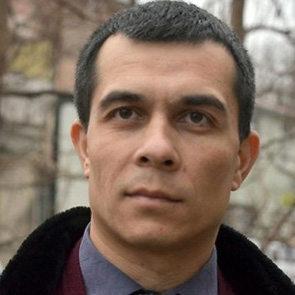
Emil Kurbedinov is a Crimean Tatar and human rights lawyer. Since the occupation of Crimea by the Russian Federation, Emil has been defending the persecuted Crimean Tatar minority, civil society activists and journalists. He also provides emergency response and documentation of rights violations during raids and searches of activists’ homes. In January 2017, masked representatives from Crimea’s Centre for Counteracting Extremism detained Emil and took him to a local directorate of the Russian Federal Security Service (FSB) for interrogation. A district court found him guilty of “propagandizing for extremist organisations” and sentenced him to ten days in detention.
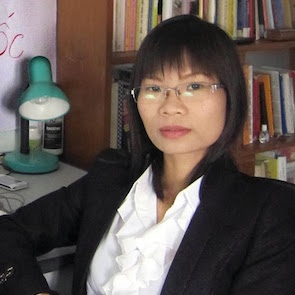
Vietnamese blogger Pham Thanh Nghien spent four years in prison for her work publicising violations against and defending the rights of relatives of fishermen killed by Chinese patrols. Following her release, she was kept under house arrest, during which time she spearheaded numerous human rights campaigns and co-founded the renowned Vietnamese Bloggers’ Network. Nghien has had her home raided, been blocked from attending medical appointments, had a padlock placed on her door from the outside, and been refused a marriage certificate. Nghien has also survived numerous physical assaults aimed at stopping her powerful, peaceful work uncovering and publicising human rights violations in Vietnam.
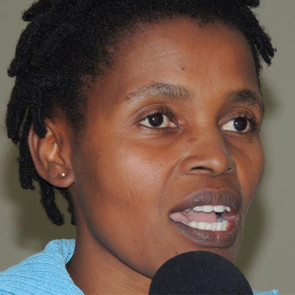
Nonhle Mbuthuma has persisted in her struggle for land and environmental rights in South Africa’s Eastern Cape despite assassination attempts, ongoing death threats and the murder of her colleague. She is a founder and current member of the Executive Committee of the Amadiba Crisis Committee, formed to unite community members in five villages of the Amadiba Tribal Authority region opposing destructive mining projects. In July 2016, Nonhle and other activists successfully forced the biggest shareholder in a titanium mining project to withdraw, but threats to activists continue as the community now fears the project will continue with funding from local “front” companies.
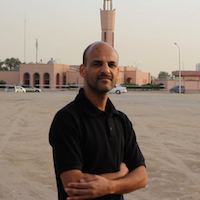
Abdulhakim Al Fadhli is currently imprisoned for his peaceful activism on behalf of Kuwait‘s stateless Bedoon and other minority communities in Kuwait. The term Bedoon, meaning “without” in Arabic, refers to the community of stateless persons, native to Kuwait, who are prohibited from obtaining any official state documents including, but not limited to, birth, death and marriage certificates. Abdulhakim is currently serving a one-year prison sentence and faces deportation upon release. Throughout his imprisonment, he has protested and staged hunger strikes against the inhumane and unsanitary conditions in the Anbar 4 prison facility, where he has also been subjected to solitary confinement. [see also https://humanrightsdefenders.blog/2014/02/27/car-chase-in-kuwait-bedoun-human-rights-defender-the-target/]
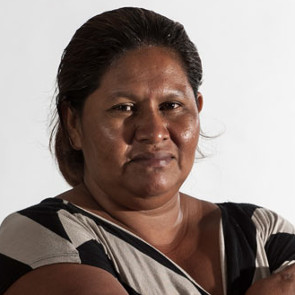
Human rights defender Francisca Ramírez Torres‘ children were attacked in attempt to stop her powerful work advocating against a destructive inter-oceanic canal in Nicaragua. Francisca is the coordinator of the Council for the Defence of Land, Lake and Sovereignty, which educates communities on their rights, campaigns for the repeal of laws allowing land-grabbing. The proposed canal would displace thousands of small farmers and indigenous peoples, without respecting their right to free, prior and informed consent. Francisca has been detained, harassed, and had her home and family attacked for her peaceful resistance to this destructive canal project.
The annual Front Line Defenders Award seeks to focus international attention on the human rights defender’s work, thus contributing to the recipient’s personal security, and a cash prize of €15,000 is awarded to the Award recipient and his/her organisation in an effort to support the continuation of this important work.
Source: 2017 Front Line Defenders Award for Human Rights Defenders at Risk | Front Line Defenders
Interesting example of how governments (here the EU) can work together to protect human rights defenders in a specific country (here Uganda). Since a few years there is an annual EU HRD Award to recognise and honour the achievements of an individual Human Rights Defender active in Uganda.
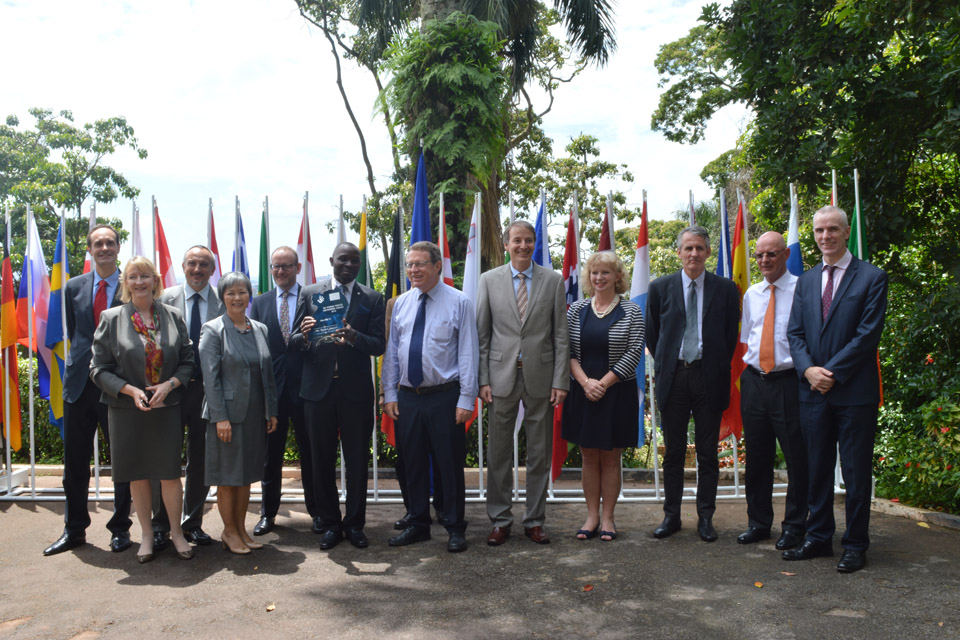
Now the British High Commission in Kampala, together with other European Union member states represented in Uganda, is inviting nominations for the 2017 EU Human Rights Defenders Award. The broad range of activities carried out by HRDs can include the following:
Nominations should be sent by e-mail to: Kampala.Reception@fco.gov.uk. Nominations should be a maximum of one page in length, and should use the following . The deadline for nominations is 14 April 2017. The winner will be announced on 25 May 2017 at a ceremony hosted by the Embassy of the Kingdom of the Netherlands in Uganda.
Source: 2017 EU Human Rights Defenders Award: Call for nominations – GOV.UK
I have written earlier about the wisdom of having purely governmental human rights awards. Now Canada adds to the discussion:
In my article for Oxford University Press (“Human Rights Awards for the Protection of Human Rights Defenders” J Hum Rights Pract (2013) 5 p552) I wrote: “A word of caution with regard to ‘governmental’ awards is in order. While it is one thing for a government to ‘support’ (e.g. financially) an otherwise independent award with an autonomous jury, the notion that governments (such as the USA, the Netherlands, France, Poland, Sweden, Canada) should run their own awards, select the winner, have the Minister hand it out and promote the award through the diplomatic service, does not sit well with the desire to protect HRDs from the charge of being ‘foreign agents’, a frequent claim by repressive governments trying to depict HRDs as being supported and funded from abroad… A degree of distance would benefit governments and would also serve the laureates themselves who usually want to be seen as spearheading the non-governmental human rights movement. Intergovernmental organizations face similar problems in having awards, as was demonstrated by the controversy surrounding UNESCO’s decision in 2010 to launch an award paid for and named after the president/dictator of Equatorial Guinea, Obiang Nguema.”
In a post of 2011 I expressed some doubt about the USA State Department giving an award to Cuba dissidents (see: https://humanrightsdefenders.blog/2011/04/24/us-state-department-gives-its-human-rights-defenders-award-to-cuban-ladies-in-white-how-wise/).
A recent article (5 March 2017) by Dean Beeby of the Canadian Broadcasting Corporation (CBC) entitled “Diefenbaker award missing in action after Liberals take over” brings home another aspect, namely that such an award becomes a ‘political tit-for-tat’. An award created by Stephen Harper’s government, which honoured former Progressive Conservative prime minister John Diefenbaker, was inaugurated in early 2011 and given out for four years running before ‘disappearing’ in 2015 and 2016. Read the rest of this entry »

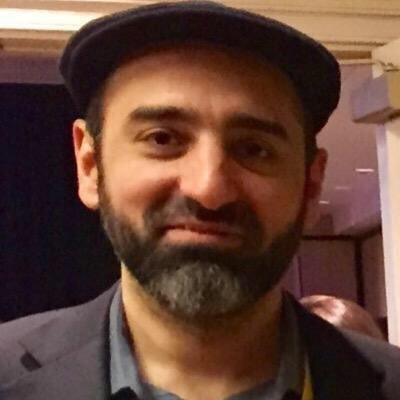
Saudi courts have convicted at least 20 prominent peaceful activists and dissidents since 2011. Many, like Abu al-Khair, have faced sentences as long as 10 or 15 years on broad, catch-all charges – such as “breaking allegiance with the ruler” or “participating in protests” – that do not constitute recognizable crimes. “Every day Waleed Abu al-Khair spends in prison compounds the injustice Saudi Arabia has imposed on him and his family,” said Sarah Leah Whitson, Middle East director at Human Rights Watch.
[Abu al-Khair has been one of Saudi Arabia’s leading human rights advocates for years. In July 2014, the Specialized Criminal Court (SCC), Saudi Arabia’s terrorism tribunal, convicted him on a number of broad and vaguely worded charges, including for comments to news outlets and on Twitter criticizing Saudi human rights violations. In addition to sentencing him to prison, the court banned him from traveling abroad for another 15 years. Abu al-Khair played no active part in his trial. He refused to recognize the legitimacy of the court or to defend himself. He also refused to sign a copy of the trial judgment or to appeal either his conviction or sentence. In January 2015, an appeals tribunal within the SCC overturned part of the earlier ruling following a prosecution appeal of the court’s suspension of five years of his term, and ruled instead that Abu al-Khair should serve all 15 years in prison.]
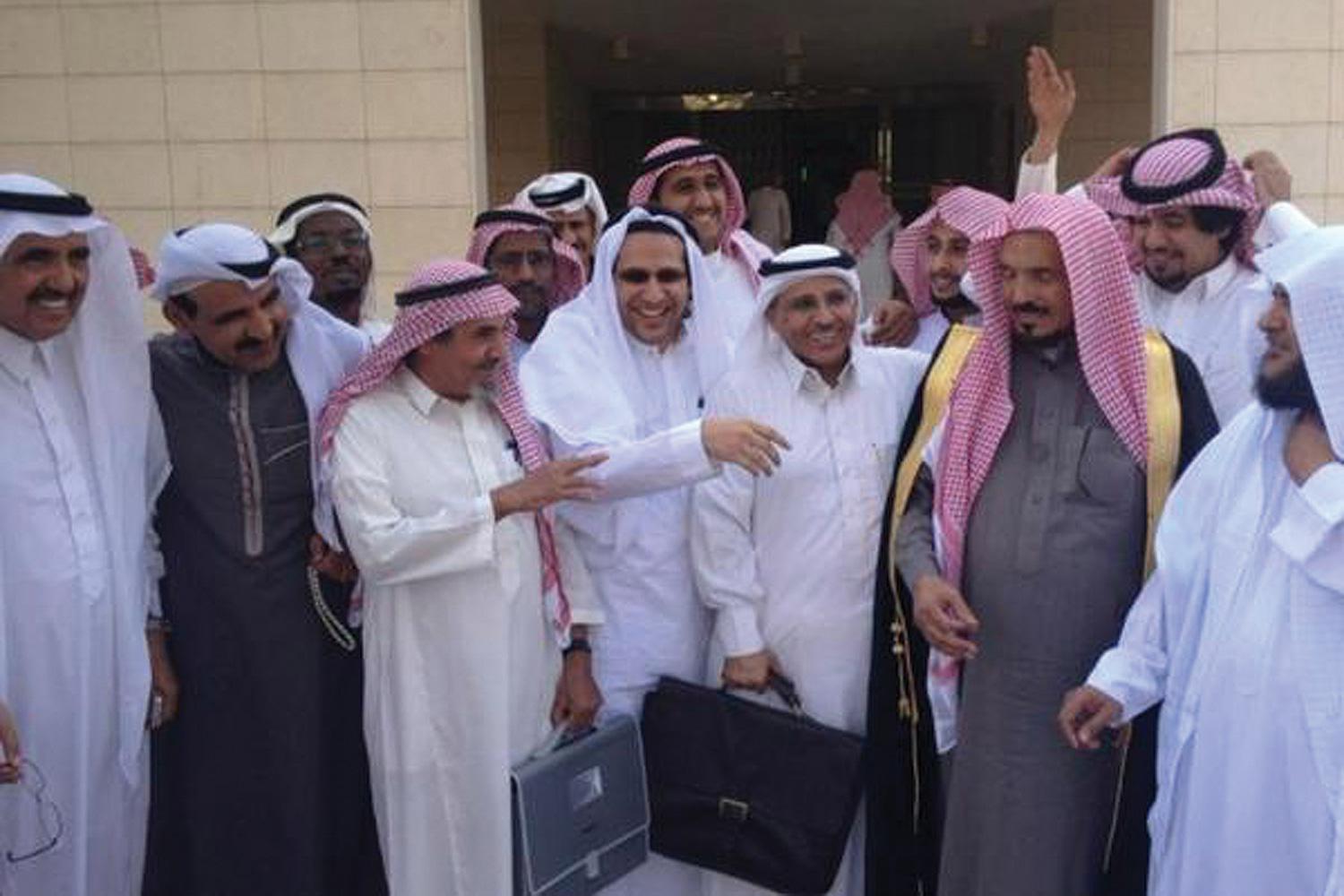
Saudi authorities regularly pursue charges against human rights activists based on their peaceful exercise of freedom of expression, in violation of international human rights obligations. Other Saudi activists and dissidents currently serving long prison terms based solely on their peaceful activism include Mohammed al-Qahtani, Abdullah al-Hamid, Fadhil al-Manasif, Sulaiman al-Rashoodi, Abdulkareem al-Khodr, Fowzan al-Harbi, Raif Badawi, Saleh al-Ashwan, Abdulrahman al-Hamid, Zuhair Kutbi, Alaa Brinji, and Nadhir al-Majed. Saudi authorities arrested activists Issa al-Nukheifi and Essam Koshak in December 2016 and January 2017 respectively, and they may face trial. Others, including Abdulaziz al-Shubaily and Issa al-Hamid, are free while appealing long sentences the SCC handed down in 2016. Mohammed al-Oteibi and Abdullah Attawi are currently on trial for forming a human rights organization in 2013.
Source: Saudi Arabia: Imprisoned Activist Earns Human Rights Award | Human Rights Watch


The Robert F. Kennedy Human Rights Award invites nominations of human rights defenders who are leading efforts to secure dignity for all people, especially those who have demonstrated an ongoing commitment to bringing justice and human rights to the people who need them the most, despite serious personal risk or sacrifice. Robert F. Kennedy Human Rights often forges strategic partnerships with the recipients of the Award and for this reason it is important to nominate someone who could find the support of Robert F. Kennedy Human Rights useful. For last year’s award see: https://humanrightsdefenders.blog/2016/12/14/2016-rfk-human-rights-award-went-to-two-criminal-reform-advocates-in-the-usa/ Read the rest of this entry »
Republished as some readers could not properly see the post: This blog has a special interest in human rights awards, so I noted with dismay that according to some obscure sources President Duterte of the Philippines had been given an international human rights award. The announcement looked like this:

Unable to find any confirmation elsewhere I wrote to the American Bar Association which has an award and an ‘International Human Rights Committee’. No reply received yet but in the meantime I saw yesterday the “Fake news alert!” published on December 14, 2016 in Busted. And indeed it seems that fake news has also entered the human rights awards arena:
Various Facebook Duterte supporter groups such as “Duterte Warriors”, “Duterte News Global”, and “Duterte Media” have been sharing news of President Duterte being awarded by the International Human Rights Committee. According to the news article sourced from Trending News PH, President Rodrigo Duterte was named as one of the honorees in the annual Human Rights Award held by the International Human Rights Committee. This “committee” was said to have bestowed this award to Duterte for his “exemplary service in the promotion of human rights.” However, the said article is not linked to any other source and no major news outlets have reported on the headline. Furthermore, upon closer inspection, there are numerous inconsistencies on the dates the groups posted the article. The article itself was posted 4 months ago while the groups posted on September and October, with the “Duterte Warriors” group sharing the post twice, once in August and another in September. What was the point of posting the same news article more than once and on different months?
Moreover, the photo used in the article was originally a photo taken during LPU’s Quality Awards Convocation wherein Duterte, still a mayor that time, was awarded as the Most Outstanding Alumnus of Lyceum of the Philippines University in 2015. [http://newsinfo.inquirer.net/677750/duterte-is-lpus-outstanding-alumnus]
Even if it would turn out that some biased or incompetent committee did bestow a minor award, it does not change the fact that Duterte has issues with human rights defenders for the way he is conducting his war on drugs. In fact, recently, Human Rights Watch and other NGOs demanded that Duterte should renounce his earlier statement that seemed to threaten the lawyers of alleged drug dealers. “Duterte’s threats against lawyers and human rights defenders constitute a dangerous extension of his abusive ‘war on drugs’ that has already resulted in more than 5,000 killings,” HRW deputy Asia director Phelim Kine said. See also: https://humanrightsdefenders.blog/2016/11/02/duterte-is-wrong-human-rights-defenders-are-beautiful/
See also Front Line Defenders on 1 December: “On 28 November 2016, President Rodrigo Duterte threatened (<http://newsinfo.inquirer.net/848933/duterte-threatens-to-kill-human-rights-activists-if-drug-problem-worsens)> to kill human rights defenders in the Philippines in his speech in Malacañang. “The human rights (defenders) said I ordered the killings. I told them, ‘OK Let’s stop. We’ll let them (drug users) multiply so that when it’s harvest time, more people will die, I will include you because you are the reason why their numbers swell,” referring to human rights defenders.`
Sources:
Busted: International Human Rights award given to Duterte? Fake news alert!
 Hans Thoolen on Human Rights Defenders and their awards