Lotte Leicht ,director of Human Rights Watch’s Brussels office, wrote about “Five Names to Listen for at the EU-China Summit”. She writes that “under President Xi Jinping, whose senior officials arrive in Brussels this week for the European Union-China Summit, courageous human rights defenders, lawyers and academics in China have sustained an extraordinary body blow.”
The EU has pledged to “throw its full weight behind advocates of liberty, democracy and human rights” and to “raise human rights issues” including “at the highest level.” If that’s the case, the summit is an ideal opportunity for the EU’s highest officials to explicitly call for these people’s release. After all, the EU’s human rights pledges will only be meaningful if applied in real situations, with determination and conviction. The EU has acknowledged that human rights improvements in China are key to the future of their bilateral relationship, and calling for the freedom of those unjustly imprisoned is an obvious place to start. That the summit falls just ahead of the anniversary of the 1989 Tiananmen Massacre – an event that galvanized China’s contemporary human rights community – places a responsibility on EU leaders to call for accountability from Beijing.
From left to right: Ny Chakrya, Yi Soksan, Ny Sokha, Lim Mony and Nay Vanda. RFA
On 27 April 2017, the Phnom Penh Municipal Court extended the pre-trial detention of senior ADHOC staff and human rights defenders, Lim Mony, Ny Sokha, Nay Vanda, Yi Soksan and Ny Chakrya by an additional six months, purportedly to further investigate their case. The five human rights defenders have already spent a year in pre-trial detention! The Cambodian Human Rights and Development Association (ADHOC) [https://www.frontlinedefenders.org/en/profile/adhoc] is a human rights organisation founded in December 1991 by a group of former political prisoners aiming to address the absence of basic rights and freedoms in Cambodia. The organisation assists human rights victims and disseminates information on human rights, law and democracy to the Cambodian public.
Many NGOs and the UN (including an opinion by the UN Working Group on Arbitrary Detention last November) have called on he Cambodian government to immediately release five the human rights defenders and urge all to participate in the #FreeThe5KH campaign at https://freethe5kh.net/. “Cambodia’s donors should publicly call for the release and dropping of bogus charges against the ‘ADHOC Five,’ which were instigated by Prime Minister Hun Sen to intimidate and suppress human rights work,” said Brad Adams, Asia director of HRW. “These human rights defenders are in jail as part of a campaign to destroy the opposition and scare Cambodian human rights workers into silence.”
Radio Free Asia reported on 28 April that the children of two of the human rights defenders said that their families faced serious hardship during the year their parents have spent in prison and expressed hope they might be freed.
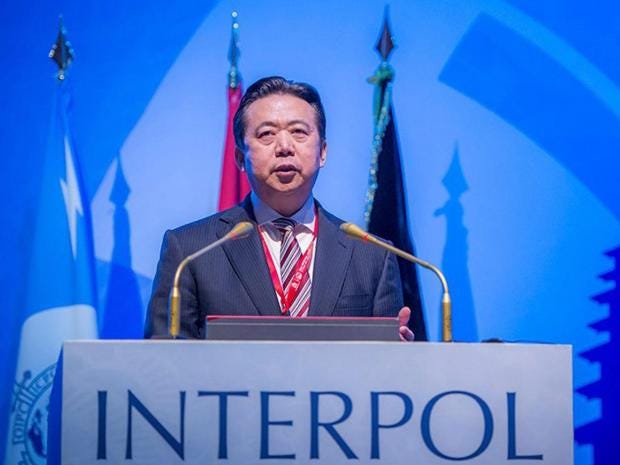
‘Old’ but underreported news is that Meng Hongwei – a top Chinese police official – has been elected president of Interpol, which worries some human rights NGOs. The Independent had an article on 10 November 2016.
Chinese President Xi Jinping has waged a four-year campaign against corruption, which includes a push to return former officials and other suspects who fled abroad. China filed a list of 100 of its most-wanted suspects with Interpol in April 2014, about one third of which have since been repatriated. The country’s police and judicial systems have been routinely criticised for abuses, including eliciting confessions under torture and the disappearance and detention without charges of political dissidents and their family members. Many Western nations have been reluctant to sign extradition treaties with China or return suspects wanted for non-violent crimes.
Given those circumstances, Mr Meng’s election is an “alarming prospect“, said Maya Wang, Hong Kong-based researcher at Human Rights Watch. “While we think it’s important to fight corruption, the campaign has been politicised and undermines judicial independence,” Ms Wang added. Mr Meng’s election “will probably embolden and encourage abuses in the system,” she said, citing recent reports of close Chinese ally Russia’s use of Interpol to attack President Vladimir Putin’s political opponents.
“This is extraordinarily worrying given China’s longstanding practice of trying to use Interpol to arrest dissidents and refugees abroad,” Nicholas Bequelin, east Asia director at Amnesty International wrote on Twitter.
Recently, 5 April 2017, Wei Jingsheng, a well-known human rights defender in exile, said while visiting Lyon (the HQ of Interpol) that the election of Meng Hongwei as chief of the global police organisation could give Beijing new leverage over its critics. “The Chinese government’s message to all political opponents like me or party officials who have fled the country is: ‘Wherever you are, the international police work with us and we will find you’,” “That’s frightening,” he said, adding that Meng “is still vice-minister of public security in China. He has led the secret police.”
While Interpol’s charter officially bars it from undertaking “any intervention or activities of a political, military, religious or racial character,” critics say some governments, primarily Russia and Iran, have abused the system to harass and detain opponents of their regime.
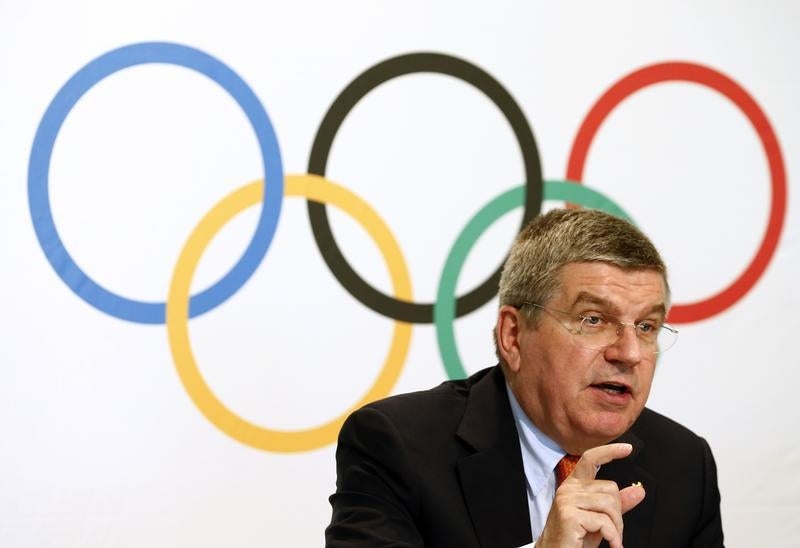
For the first time, the IOC has included explicit reference to the United Nations Guiding Principles on Business and Human Rights (UNGP), which outline the human rights responsibilities of businesses, as well as references to anti-corruption standards. The Guiding Principles explain how commercial enterprises should assess human rights risks, take effective steps to avoid human rights problems, and ensure a remedy for abuses that occur in spite of those efforts.
“This is an important step by the IOC for the future,” said Sharan Burrow, International Trade Union Confederation general secretary. “Implementing the UN Guiding Principles across all major global sporting events could help break the cycle of human rights abuses, and this example from the IOC should be applied to all such events, starting now.”
The SRA’s mission is to ensure that sports bodies and mega-sporting events respect human rights, the environment, and anti-corruption requirements at all stages of the process. “Time after time, Olympic hosts have gotten away with abusing workers building stadiums, and with crushing critics and media who try to report about abuses,” said Minky Worden, director of global initiatives at Human Rights Watch. “The right to host the Olympics needs to come with the responsibility not to abuse basic human rights.”
The revised contract requires host cities to “protect and respect human rights and ensure any violation of human rights is remedied in a manner consistent with international agreements, laws and regulations applicable in the Host Country and in a manner consistent with all internationally-recognized human rights standards and principles, including the United Nations Guiding Principles on Business and Human Rights, applicable in the Host Country.”
“If implemented, the revised Host City Contract will help ensure that Olympic hosts respect ‘human dignity’ as required by the Olympic Charter,” said Brendan Schwab, head of UNI World Athletes. “This should have a ripple effect across all mega-sporting events such as the World Cup, and wherever abuses tied to sport still occur.”
[Key provisions of the revised Olympic Host City Contract include:
13. Respect of the Olympic Charter and promotion of Olympism
13.1. The Host City, the Host NOC and the OCOG undertake to abide by the provisions of the Olympic Charter and the IOC Code of Ethics and agree to conduct their activities related to the organisation of the Games in a manner which promotes and enhances the fundamental principles and values of Olympism, as well as the development of the Olympic Movement.
13.2. Pursuant to their obligations under §13.1, the Host City, the Host NOC and the OCOG shall, in their activities related to the organisation of the Games:
a. prohibit any form of discrimination with regard to a country or a person on grounds of race, colour, sex, sexual orientation, language, religion, political or other opinion, national or social origin, property, birth or other status;
b. protect and respect human rights and ensure any violation of human rights is remedied in a manner consistent with international agreements, laws and regulations applicable in the Host Country and in a manner consistent with all internationally-recognised human rights standards and principles, including the United Nations Guiding Principles on Business and Human Rights, applicable in the Host Country; and
c. refrain from any act involving fraud or corruption, in a manner consistent with any international agreements, laws and regulations applicable in the Host Country and all internationally-recognised anti-corruption standards applicable in the Host Country, including by establishing and maintaining effective reporting and compliance.
13.3. The IOC, through its Coordination Commission referred to in §27, shall establish a reporting mechanism to address the obligations referred to in §13.1 and §13.2 in connection with the activities of the Host City, the Host NOC and the OCOG related to the organisation of the Games.
15. Sustainability and Olympic legacy
15.1. The Host City, the Host NOC and the OCOG undertake to carry out all activities foreseen under the HCC in a manner which embraces sustainable development and contributes to the United Nations’ Sustainable Development Goals.]
The Voice of America (3/3/17: Tillerson in Background as State Department Issues Human-Rights Report) and other media reported on the low-key way in which the US State Department launched the2016 Country Reports on Human Rights Practices.
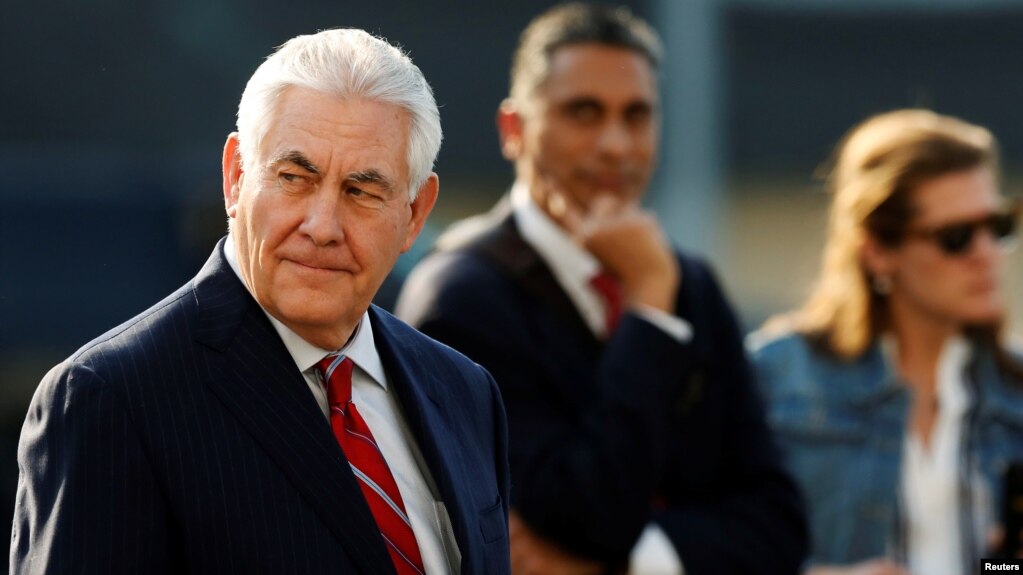
U.S. Secretary of State Rex Tillerson arrives in Mexico City, Mexico, Feb. 22, 2017.
A senior Trump administration official briefed reporters on the 2016 Country Reports on Human Rights Practices and rejected criticism from some human-rights groups and lawmakers that the briefing was not announced a day in advance, was not on camera and did not feature Tillerson. “The report speaks for itself. We’re very, very proud of it. The facts should really be the story here,” the senior official said Friday. “Secretary Tillerson spoke quite clearly in his confirmation hearing about his views of the impact of human rights on, and the importance to, U.S. interests.” When questioned by reporters, the senior administration official did not explain why Tillerson did not unveil the report, but did say that the State Department wanted to get it out without delay.
Human Rights Watch and Human Rights First both issued statements sharply criticizing the low-key rollout of the report, which reflects thousands of hours of painstaking work. The annual effort is read carefully by both governments and human-rights defenders around the world. Sarah Margon of Human Rights Watch noted in a statement that Tillerson’s absence “reinforces the message to governments, rights activists and at-risk minorities that the State Department might also be silent on repression, abuse, and exploitation.”
In an overview, the 2016 report did not specifically highlight any countries. As is customary, it does not rank or compare countries’ human-rights records. The report offers country-by-country analysis of 199 countries, and it paints a devastating picture of conditions in Syria:
Waleed Abu al-Khair, prominent lawyer and human rights activist, speaks to Human Rights Watch over Skype from Jeddah, Saudi Arabia on September 19, 2013.
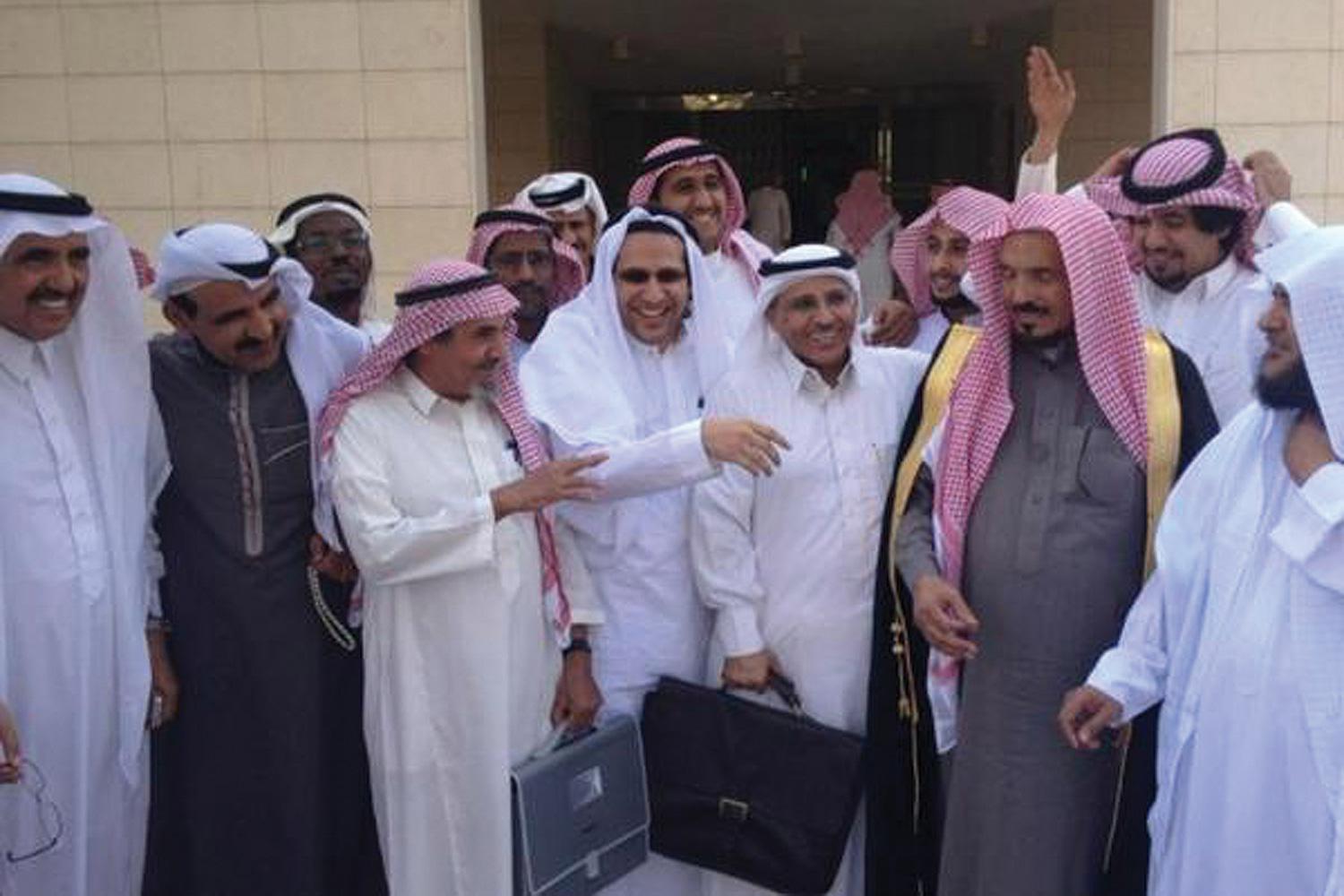
Saudi courts have convicted at least 20 prominent peaceful activists and dissidents since 2011. Many, like Abu al-Khair, have faced sentences as long as 10 or 15 years on broad, catch-all charges – such as “breaking allegiance with the ruler” or “participating in protests” – that do not constitute recognizable crimes. “Every day Waleed Abu al-Khair spends in prison compounds the injustice Saudi Arabia has imposed on him and his family,” said Sarah Leah Whitson, Middle East director at Human Rights Watch.
[Abu al-Khair has been one of Saudi Arabia’s leading human rights advocates for years. In July 2014, the Specialized Criminal Court (SCC), Saudi Arabia’s terrorism tribunal, convicted him on a number of broad and vaguely worded charges, including for comments to news outlets and on Twitter criticizing Saudi human rights violations. In addition to sentencing him to prison, the court banned him from traveling abroad for another 15 years. Abu al-Khair played no active part in his trial. He refused to recognize the legitimacy of the court or to defend himself. He also refused to sign a copy of the trial judgment or to appeal either his conviction or sentence. In January 2015, an appeals tribunal within the SCC overturned part of the earlier ruling following a prosecution appeal of the court’s suspension of five years of his term, and ruled instead that Abu al-Khair should serve all 15 years in prison.]
Image of Israeli security forces [Issam Rimawi – Anadolu Agency]
The Israeli occupation authorities have denied a work permit for the director of Human Rights Watch (HRW) in Israel and Palestinian territories, they said on Friday 24 February 2017. Israel accused the organisation of “engaging in politics in the service of Palestinian propaganda, while falsely raising the banner of ‘human rights’.” In response, HRW said that this comes as the Israelis seek to limit the space for local and international human rights groups to operate in Israel and the Occupied Palestinian Territories. “This decision and the spurious rationale should worry anyone concerned about Israel’s commitment to basic democratic values,” commented Deputy Executive Director of Programmes at HRW, Lain Levine. “It is disappointing that the Israeli government seems unable or unwilling to distinguish between justified criticisms of its actions and hostile political propaganda.” The next day sixteen NGOs working in Israel issued a statement deploring the decision not to allow Omar Shakir of Human Rights Watch (HRW). “We stand in solidarity with him and our colleagues at HRW.” “Neither closing Israel’s borders to human rights organizations and activists nor other measures by the Israeli government against organizations that criticize the occupation will deter us from continuing to report human rights violations in the territories controlled by Israel. Attempts to silence the messenger will not suppress our message,” concluded the NGOs that include: Adalah – The Legal Center for Arab Minority Rights in Israel, Akevot, Amnesty International Israel, Bimkom, Breaking the Silence, B’Tselem, Coalition of Women for Peace, Emek Shaveh, Gisha, Hamoked: Center for the Defense of the Individual, Haqel-Jews and Arabs in Defense of Human Rights, Human Rights Defenders Fund, Machsom Watch, Physicians for Human Rights Israel, The Public Committee Against Torture in Israel and Yesh Din.
Moreover, Palestinian rights defenders have received anonymous death threats and have been subject to travel restrictions and even arrests and criminal charges.[see also: https://humanrightsdefenders.blog/2016/12/21/palestinian-human-rights-defenders-continue-to-be-persecuted/]. Front Line Defenders reported on 25 January 2017 that Israeli occupation forces arrested human rights defenders Ms Lema Nazeeh and Mr Mohammed Khatib – along with four other peaceful protesters – near the illegal Israeli settlement of Ma’ale Adumim in the Occupied Palestinian Territory. Israeli forces then went on to ill-treat Lema Nazeeh throughout her four days in detention at Al-Maskubiyyah prison in Jerusalem. On 23 January 2017, Israeli occupation forces also arrested human rights defender Mr Abdallah Abu Rahma as he attended the court hearing of the two aforementioned defenders. Lema Nazeeh and Mohammed Khatib were arrested while participating in a peaceful protest against illegal settlement construction in Bab Al-Shams in East Jerusalem, otherwise known as the E1 area/settlement bloc. The protest was also against US President Donald Trump’s suggested plan to move the US embassy in Israel from Tel Aviv to Jerusalem. Three days after the protest, Abdallah Abu Rahma was arrested on suspicion that he had also taken part in the peaceful protest. All human rights defenders were released on bail, pending trial. (https://www.frontlinedefenders.org/en/profile/lema-nazeeh; https://www.frontlinedefenders.org/en/case/case-history-mohammed-khatib and https://www.frontlinedefenders.org/en/profile/abdallah-abu-rahma)
Human Rights Watch is an independent, international, nongovernmental organisation and monitors rights violations in more than 90 countries across the world.” It also has staff who work legally in its registered offices in some 24 countries around the world, including Lebanon, Jordan and Tunisia. “While the Israeli government is hardly the only one to disagree with our well-researched findings,” concluded Levine, “its efforts to stifle the messenger signal that it has no appetite for serious scrutiny of its human rights record.”
Amnesty International (AI) on Tuesday 21 February 2017 released its Annual Report 2016/17. It contains a summary of an international human rights survey that discusses the role “rhetoric of fear, blame and hate” have played in rolling back human rights around the world. AI analyzed major political leaders that identify as anti-establishment, such as US President Donald Trump and Turkish President Tayyip Erdoğan, arguing that their rhetoric has led to dangerous impacts on policy. AI’s conclusion is for individuals to come together and push governments to respect human rights, stating, “we cannot rely on governments to protect our freedoms, and so we have to stand up ourselves.” AI said that inspiration should be found in the “civil rights activists in the USA, anti-apartheid activists in South Africa,” or things as recent as the International Women’s March and pro-democracy protests in Gambia. Beyond localized efforts, AI said that “global solidarity is crucial if we are to protect each other from those governments quick to portray dissent as a threat to national security and economic development.”
On 12 January 2017, Human Rights Watch (HRW) released its World Report on global human rights violations in 2016 and on the dangers the world will be facing in 2017. HRW shines its spotlight on the global rise of authoritarian populism and the concomitant toughening and broadening of anti-terrorism legislation around the world, which endangered throughout 2016 – and must be expected to keep challenging in 2017 – the very foundations of human rights law and the personal dignity inherent in every human being just as much as the despicable extremist attacks, to which they are a direct reaction.
Below the UNPO‘s (stand for the UNREPRESENTED NATIONS AND PEOPLES ORGANIZATION) reading of the report which notes with satisfaction that HRW does not neglect to emphasize in its country reports the persisting human rights abuses directed against indigenous peoples and ethnic and religious minorities around the world, but also sees some shortcomings (from its own perspective): Read the rest of this entry »
Republished as some readers could not properly see the post: This blog has a special interest in human rights awards, so I noted with dismay that according to some obscure sources President Duterte of the Philippines had been given an international human rights award. The announcement looked like this:
Philippine President Rodrigo Duterte has been named as one of the honorees in the annual Human Rights Award by the International Human Rights Committee.”
Unable to find any confirmation elsewhere I wrote to the American Bar Association which has an award and an ‘International Human Rights Committee’. No reply received yet but in the meantime I saw yesterday the “Fake news alert!” published on December 14, 2016 in Busted. And indeed it seems that fake news has also entered the human rights awards arena:
Various Facebook Duterte supporter groups such as “Duterte Warriors”, “Duterte News Global”, and “Duterte Media” have been sharing news of President Duterte being awarded by the International Human Rights Committee. According to the news article sourced from Trending News PH, President Rodrigo Duterte was named as one of the honorees in the annual Human Rights Award held by the International Human Rights Committee. This “committee” was said to have bestowed this award to Duterte for his “exemplary service in the promotion of human rights.” However, the said article is not linked to any other source and no major news outlets have reported on the headline. Furthermore, upon closer inspection, there are numerous inconsistencies on the dates the groups posted the article. The article itself was posted 4 months ago while the groups posted on September and October, with the “Duterte Warriors” group sharing the post twice, once in August and another in September. What was the point of posting the same news article more than once and on different months?
Moreover, the photo used in the article was originally a photo taken during LPU’s Quality Awards Convocation wherein Duterte, still a mayor that time, was awarded as the Most Outstanding Alumnus of Lyceum of the Philippines University in 2015. [http://newsinfo.inquirer.net/677750/duterte-is-lpus-outstanding-alumnus]
Even if it would turn out that some biased or incompetent committee did bestow a minor award, it does not change the fact that Duterte has issues with human rights defenders for the way he is conducting his war on drugs. In fact, recently, Human Rights Watch and other NGOs demanded that Duterte should renounce his earlier statement that seemed to threaten the lawyers of alleged drug dealers. “Duterte’s threats against lawyers and human rights defenders constitute a dangerous extension of his abusive ‘war on drugs’ that has already resulted in more than 5,000 killings,” HRW deputy Asia director Phelim Kine said. See also: https://humanrightsdefenders.blog/2016/11/02/duterte-is-wrong-human-rights-defenders-are-beautiful/
See also Front Line Defenders on 1 December: “On 28 November 2016, President Rodrigo Duterte threatened (<http://newsinfo.inquirer.net/848933/duterte-threatens-to-kill-human-rights-activists-if-drug-problem-worsens)> to kill human rights defenders in the Philippines in his speech in Malacañang. “The human rights (defenders) said I ordered the killings. I told them, ‘OK Let’s stop. We’ll let them (drug users) multiply so that when it’s harvest time, more people will die, I will include you because you are the reason why their numbers swell,” referring to human rights defenders.`