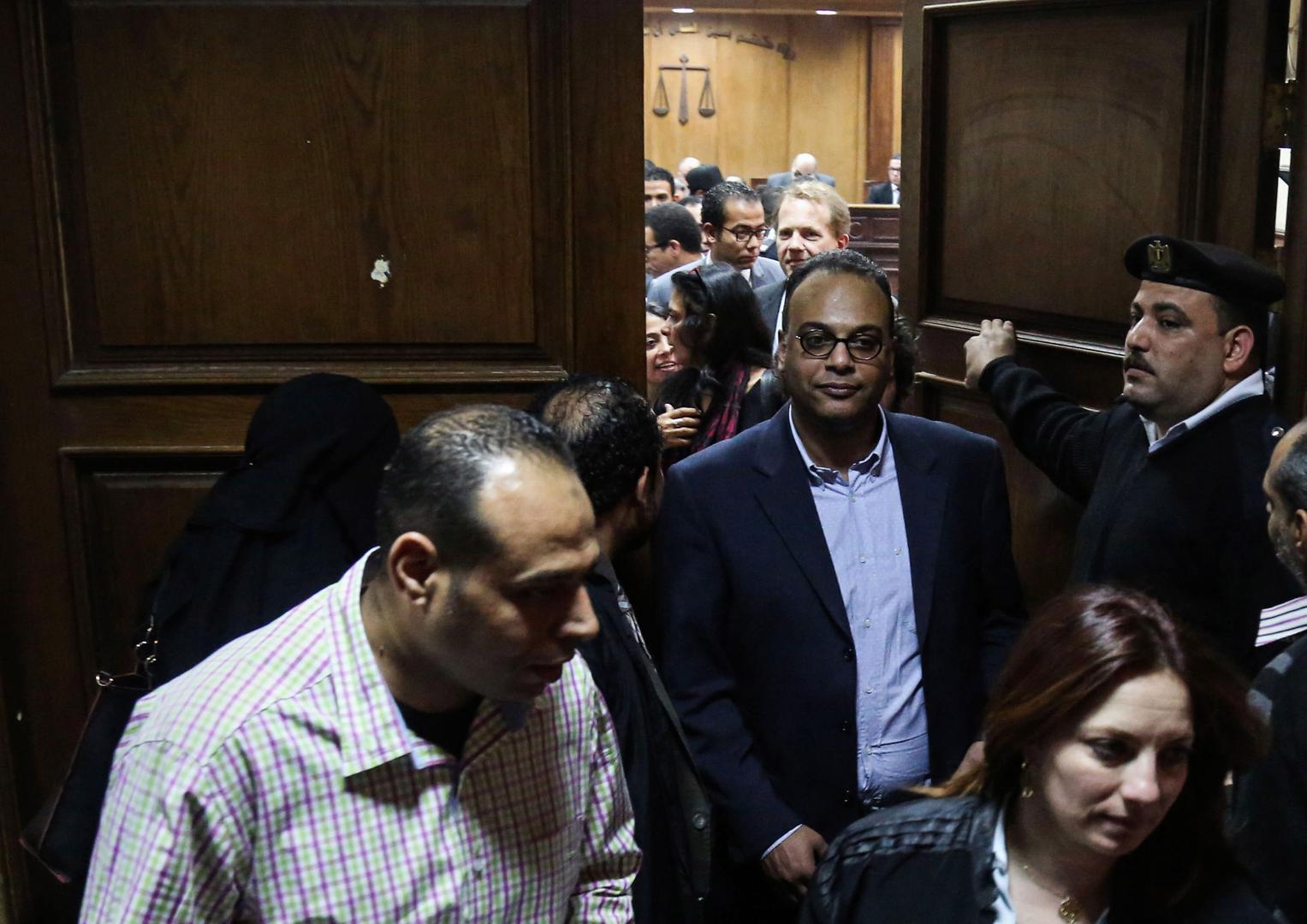
Egypt’s parliament approved a new law governing nongovernment organizations on July 14, 2019 that would maintain many of the existing restrictions on their work, Human Rights Watch said today. President Abdel Fattah al-Sisi should not approve the law and instead should return it to parliament for amendments. Egypt faced intense internal and external pressure to repeal a draconian 2017 law that threatened to crush the independent work of nongovernment organizations, including provisions to imprison their workers for their peaceful work. While lawmakers removed prison penalties from the new law, they have maintained severe restrictions over the groups’ work.
……..
The new law prohibits a wide range of activities, such as to “conduct opinion polls and publish or make their results available or conduct field researches or disclose their results” without government approval. The law states that the government must “ensure the integrity and neutrality of the polls and their relevance to the activity of the Association.” The law completely prohibits other activities under vaguely worded terms such as any “political” work or any work that undermines “national security.” It would also allow the government to dissolve organizations for a wide range of “violations” and would impose fines of up to one million Egyptian pounds (US$60,000) for organizations that operate without a license or send or receive funds without government approval. The law sets fines at up to half a million Egyptian pounds (US$30,000) on organizations that spend their funds in ways the government deems to be “activities other than specified or in violation of laws and regulations” or for refusing to provide any data or information the government requests about the organization’s activities.
The new law will also prohibit cooperation with foreign organizations or experts, impose a strict system of prior approval for foreign organizations to be able to work in the country, and allow for government surveillance and monitoring of organizations’ daily activities. Facing international and local criticism, President al-Sisi promised to amend the draconian 2017 law during a November 2018 speech. He admitted that the 2017 law stemmed from a “[security] phobia.”
Al-Sisi’s government has continued to relentlessly prosecute several leading human rights organizations and their staff for their peaceful work under several charges in the protracted prosecutions of the notorious 2011 “foreign funding case” as well as several other cases. In the foreign funding case, the government froze the assets of at least 7 organizations and 10 human rights defenders. The government has also placed 28 of them on travel ban lists for the past several years. [see also: https://humanrightsdefenders.blog/2018/12/20/acquittals-in-bogus-foreign-funding-case-in-egypt-welcome-but-long-overdue/]
…….
Registration Restrictions……
Severe Restrictions on Funds, Activities Similar to the 2017 law, the new law would prohibit a wide range of peaceful activities that normally fall within the work of nongovernmental groups. For example, the law would prohibit organizations from conducting any surveys or field research without government approval. The law would prohibit all “political” work, as well as any work that undermines “public order, public morals, national unity or national security.” The law would also prohibit cooperation with any “foreign entity inside or outside.” Egyptian organizations would not be allowed to hire or consult or cooperate with foreign volunteers or staff members of foreign organizations without ministerial approval.
In recent years, the Egyptian government has sought to criminalize communication with international organizations and has summoned for interrogations victims who allegedly gave accounts of abuses against them to such organizations. [see also: https://humanrightsdefenders.blog/2018/12/07/egypt-denounced-for-reprisals-against-human-rights-defenders-who-talked-to-visiting-un-delegation/]
Surveillance. …….In recent years, the Egyptian government has increasingly used terrorism accusations and charges against peaceful dissidents and seized the assets of thousands of individuals, businesses, and associations and placed them on terrorism lists without any due process.
Foreign and International Organizations
The law would also impose draconian restrictions on the work of foreign and international organizations. It requires international organizations to obtain a license from the Foreign Ministry, valid for a specific period, before doing any work on Egypt. The license would cost up to 50,000 Egyptian pounds (US$3,000). License applications would have to match “Egyptian society priorities and needs according to the development plans.” International organizations would be required to submit any “reports, data or information” about their activities upon request by the “administrative body.” The law also prohibits international organizations from granting or receiving any funds without ministerial approval. The law would allow the relevant minister to cancel the license of an international organization without due process under the guise that an organization undermined “public safety, national security or public order” or for violating terms of its license.