In commemoration of International Human Rights Day, the Aditus foundation (a non-governmental organisation established in 2011 by a group of young lawyers who monitor, report and act on access to human rights by individuals and groups; the focus is primarily Malta, but also covers the regional & international dimensions of human rights in Malta) noted the precarious situation of Malta’s human rights defenders and called for a broader respect for their central role in promoting and contributing towards Malta’s overall well-being. [see also: https://humanrightsdefenders.blog/2017/12/04/the-new-normal-rising-attacks-on-human-rights-defenders/]
In a statement released to the media, the foundation said that Malta’s human rights defenders are …are present where State interventions are either absent or insufficient, where the risk of human rights violations is high. It continued to say that without human rights defenders, Malta would probably not be able to boast today’s’ levels of social wellbeing. As activists dedicated to ensuring human rights enjoyment for all persons, most of us push for stronger legal and policy standards, support the training of public officials, provide public information, support victims of violations and strive to hold the State accountable and responsible for its failures. “In return, many of us are bullied, harassed, insulted, threatened and stigmatised. Many of us are denied access to important dialogue with State entities, or exploited by the State as we provide those public services the State refuses or is unable to provide. As the community of Malta’s human rights defenders is still mourning the brutal assassination of Daphne Caruana Galizia, we are uncertain of the security of our working environment and are concerned for the physical and psychological safety of our staff and volunteers.”
“We are not satisfied that our concerns are being taken seriously by the competent authorities, especially in view of the fact that we are often victims of hatred perpetuated by those entities responsible for our protection.”
“Understanding the importance of human rights defenders is fundamental for the fostering of a society that is geared towards respecting, protecting and fulfilling everyone’s human rights.”
“By tolerating this on-going abuse of its human rights defenders, Malta is not only offending the principles human rights embody – equality, non-discrimination, individual and social empowerment – but it is also further marginalising those communities and themes human rights defenders so vehemently stand up for.”
“On International Human Rights Day, we therefore urge Malta to rethink its relationship with human rights defenders. This means to not merely refrain from activities that instil fear and insecurity, but to take steps towards actively supporting human rights defenders.”
Four UN human rights experts*(including Michel Forst, the Rapporteur on Human Rights Defenders) have called on states to address pressing human rights issues during the 31st ASEAN Summit being held from 10-14 November in the Philippines. Recognising the important work of the many active civil society organisations across the region, the experts expressed concern about “a worrying deterioration in the environment in which they operate.”
“Human rights defenders, social activists, lawyers, journalists, independent media and even parliamentarians trying to speak out and protect the rights of others, increasingly face a multitude of risks ranging from judicial harassment and prosecution to threats, disappearances and killings,” said the experts. They observed rising numbers of cases of serious human rights violations affecting among others, people working on women’s rights, environmental and land issues and lawyers dealing with drug cases.
The experts called on the 10 ASEAN Member States to amend or repeal existing legislation and to reconsider draft laws that are being or could be applied to criminalize or restrict the vital work of civil society. “We condemn the public vilification, harassment, arrests and killings of members of civil society, and call on Member States to rigorously uphold their duty to ensure the freedom and protection of those exercising their fundamental rights to freedom of expression, association and peaceful assembly,” the experts said. “Independent media, members of civil society and human rights defenders should be viewed as partners and as an essential element of democracy.”
“This summit should be seen as an opportunity to make real progress on these issues and to show the world that the Member States of ASEAN are fully committed to securing the human rights of all in the region,” the group said.
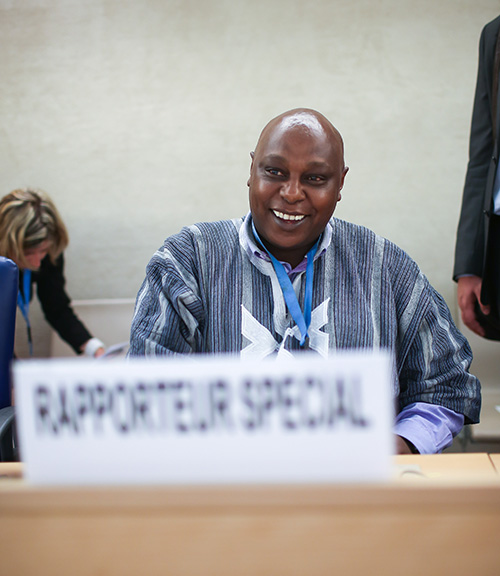
There are certainly worse violations to which human rights defenders are submitted than a short detention at the airport, but this case concerns Maina Kiai, who is former UN Special Rapporteur on the rights to freedom of peaceful assembly. Kiai, also Kenya Human Rights Commission (KHRC) board member. On 20 August 2017 he was stopped from catching his flight at Jomo Kenyatta International Airport to the US. This was after immigration officers demanded that he gets travel clearance before they could stamp his passport. He was held for about two hours before but was allowed to travel after Director of Immigration Major-General Gordon Kihalangwa (Rtd) intervened. Kihalangwa told the Star that Kiai was not detained but was taken through routine security checks that every traveler is subjected to. “Kiai was not restricted. It was a normal security check and not meant to demean him or anyone.”
That notoriety has protective value can be seen from what he added: “Kiai is a renown personality. He is even known to me. I spoke to him personally before he traveled“. [for more on Maina Kiai: https://humanrightsdefenders.blog/tag/maina-kiai/]
Still, human rights defenders such as Njonjo Mue termed the incident “disturbing and an attempt by the state to manage its citizens with a fist”. “We are dealing with a regime determined to silence all independent voices, its dictatorship and we back to 1990s”. Khelef Khalifa of Muslims for Human Rights (MUHURI) said it was not a coincidence but a deliberate attempt to silence all those voices that speak to power.
Last week, there were attempts by the state to shut down the NGOs KHRC and AfriCOG in what government termed as failure to comply with statutory obligations. The events climaxed by failed raid on AfriCOG offices. On 16 August 2017 this is what Front Line Defenders had to say about this:
Kenya Revenue Authority officials attempted to raid the African Centre for Open Governance’s offices. On 14 and 15 August 2017, the Executive Director of the NGO Co-Ordination Board notified the Kenya Human Rights Commission- KHRC and the African Centre for Open Governance- AfriCOG that the Board would be cancelling their registration. The NGO Co-Ordination Board also called for the freezing of their accounts and the arrest of the Board of Directors and members of AfriCOG ……
On 16 August 2017, Kenya Revenue Authority officials attempted to raid the AfriCOG offices, however, the search was called off in order to investigate complaints by the organisation. On 15 August 2017, the Executive Director of the NGO Co-Ordination Board sent a letter to the Director of Criminal Investigations stating that AfriCOG will be shut down and calling for the arrests of its directors and members. The NGO Co-Ordination Board has alleged that AfriCOG is not a registered organisation under the NGO Co-Ordination Act 1990 as required by law. The letter, in which AfriCOG and the Central Bank of Kenya were copied, also called for the freezing of accounts in the name of AfriCOG.
On 14 August 2017, the Kenya Human Rights Commission received a letter from the NGO Co-Ordination Board de-registering the NGO. In the letter, the Executive Director of the NGO Co-Ordination Board also asked the Central Bank of Kenya, who was copied in the correspondence, to freeze any accounts in the name of KHRC. The allegations by the Board include that the NGO has illegal bank accounts, that it illegally employs expatriates and that it is concealing illegal remuneration of board members.
These allegations are similar to those made by the NGO Co-Ordination Board about the KHRC in 2015 when the Board issued a press statement announcing that it had initiated the de-registration process for a number of NGOs, including the KHRC. In Kenya Human Rights Commission v Non-Governmental Organisations Co-Ordination Board [2016] eKLR, Judge Onguto found that the NGO Co-Ordination Board had violated Article 37 of the Constitution by not giving the KHRC a hearing before deciding to cancel its registration certificate and freeze its bank accounts.
The Home Minister in Malaysia has resorted to an old but persistent ‘canard’ often leveled at lawyers in general, namely that human rights defenders are siding with criminals in court. On Tuesday 15 August, 2017 themalaymailonline.com/ reported that Datuk Seri Ahmad Zahid Hamidi alleged that critics of the law often masquerade as human rights defenders.
Home Minister Datuk Seri Ahmad Zahid Hamidi has criticised human rights defenders today, accusing them of defending criminals instead. While launching his book on the Prevention of Crime Act (POCA) 1959 today, the deputy prime minister reportedly alleged critics of the law often masquerade as human rights defenders. “They defend crime syndicates. They are wolves in sheep’s clothing,” he was quoted saying by news portal Malaysiakini. “They claim to defend human rights, but in court, they defend criminals accused by the authorities.”
The Human Rights Commission of Malaysia (Suhakam) has put forth a definition of human rights defenders, two days after the deputy prime minister called them “wolves in sheep’s clothing who protect criminals”. Suhakam chairman Razali Ismail said such individuals were people who work towards the realisation of rights and freedoms contained in the Federal Constitution, the Universal Declaration of Human Rights and other human rights instruments through non-violent means. “The efforts of human rights defenders contribute to positive societal change and play an important role in the establishment of the rule of law. “They certainly cannot be said to be defending crime syndicates and criminals,” he said in a statement today.
Six times in two years. Human rights activist Karla Avelar has been forced to move home six times in the last two years after being physically threatened by individuals she believes are gang members and for her work as a human rights defender in El Salvador.
She’s a leading advocate for the human rights of LGBT people, founder and head of COMCAVIS TRANS, an organization known for its work for transgender people for nearly a decade. It’s dangerous, unpopular work, and Avelar is regularly targeted and threatened.
A couple of weeks ago she was forced to move home when people tried to extort from her possible prize money for the Martin Ennals Human Rights Defender Award, for which she is a finalist. The award’s winner will be decided and announced in October, but news of her nomination has prompted these latest threats.
It hasn’t been an easy life. She was shot in two separate incidents, spent five traumatic years in jail and has been a constant target of abuse for being a transgender woman. Avelar told my colleague Mariel Perez-Santiago at her office in San Salvador last year how she had been raped by more than a hundred men on her first day in prison, and that the attacks continued with the complicity of prison staff.
She became a formidable advocate for the rights of trans people in and out of prison, helping to win important reforms in the prison where she used to be an inmate. Thanks to her campaigning, transgender women are now separated from men in different wards, and human rights organizations are allowed access to the prisoners to educate them about their rights. She also represented El Salvador’s LGBT civil society at the country’s 2014 Universal Periodic Review at the United Nations in Geneva.
Her advocacy has led to international recognition including becoming a finalist for this year’s Martin Ennals Award. “Transgender persons, and the wider LGBT community, face widespread hostility and social rejection in El Salvador,” said the Martin Ennals organization in a statement. “Crimes against them are almost never brought to justice, which results in a climate of impunity. Sadly, this treatment of transgender people can be seen well beyond El Salvador. We aim to highlight Ms. Avelar’s bravery in continuing her work. We are encouraged that the authorities contacted her after the media coverage of the latest threats. This needs to be followed up with judicial proceedings against those responsible and, most importantly, effective protection for Karla Avelar.”
Her profile has meant that the threats against her are receiving attention, and the Attorney General’s office has been in touch with her to discuss issues of her safety. But for Avelar and others in El Salvador’s LGBT community the risks are daily and grave. She estimates around 600 cases of unsolved murders of LGBT people in the country over the last 25 years.
“Sadly, these most recent threats against me are not surprising and are part of a broader and systematic pattern of persecution of members of the LGBT community in El Salvador,” said Avelar. “I will not be silenced by these threats, but the Salvadoran government must guarantee my safety and that of all human rights defenders and activists, who work tirelessly to monitor and urge respect for the human rights of the most vulnerable.”
Forced to leave her home again and again, she’s asking for protection as well as international visibility. Making her more famous won’t guarantee her safety but we can try to help by sharing her story with whoever we know, by showing that we’re watching, and by saying that she should be protected and never be forced to move again.
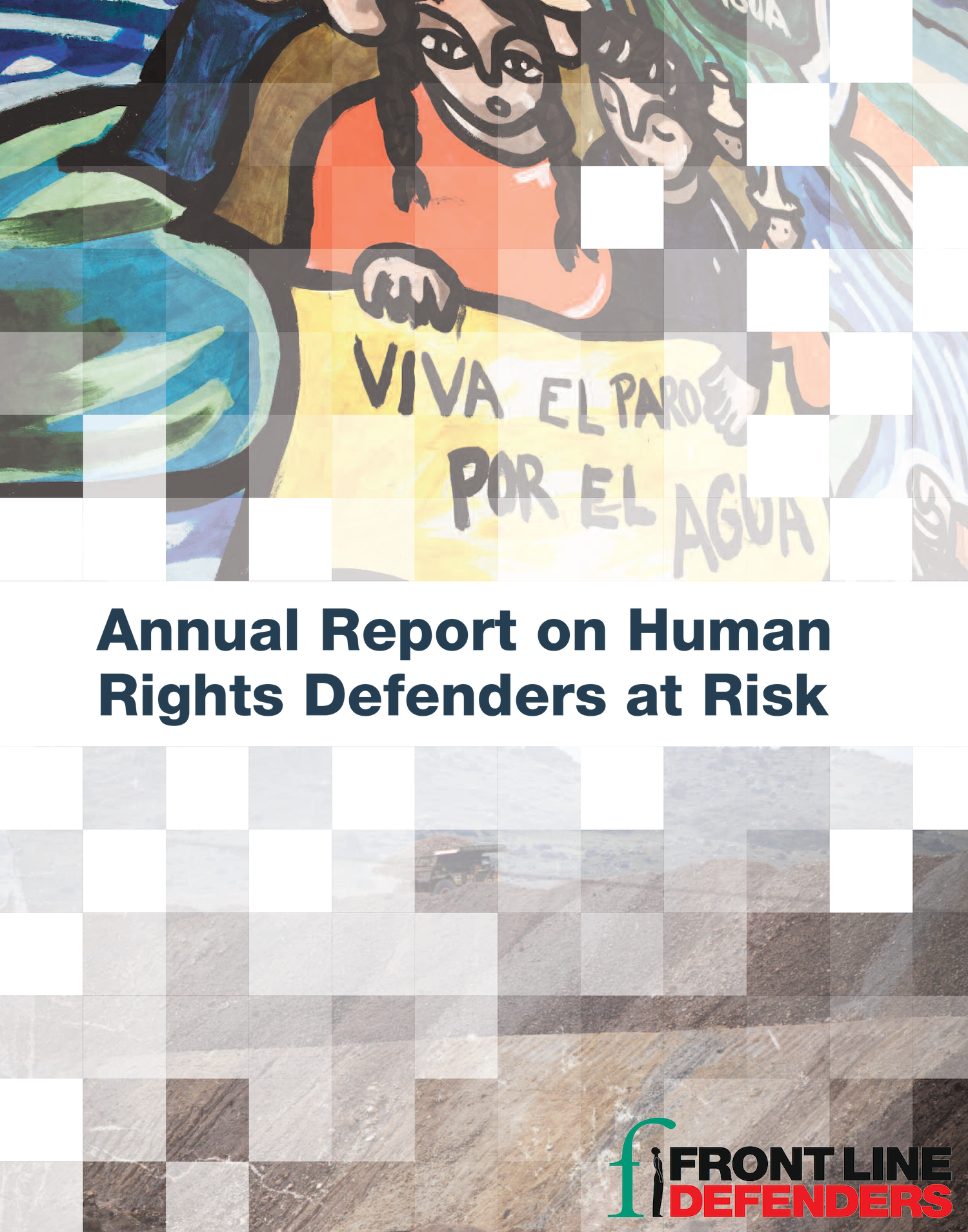
After a short break, this blog resumes its job of selecting and summarizing events related to Human Rights Defenders. 2016 was a horrible year for HRDs and the launch of the annual report of Front Line Defendersconfirms this by reporting that “more than 1000 human rights defenders were killed, harassed, detained, or subjected to smear campaigns and other violations in 2016″.
According to the report, 281 human rights defenders were murdered in 25 countries, 49 percent of whom were defending land, indigenous and environmental rights. Front Line Defenders found that in the vast majority of cases, killings were preceded by warnings, death threats and intimidation which, when reported to police, were routinely ignored. In addition to killings, over half of the cases reported by Front Line Defenders in 2016 concerned criminalisation, a tactic which the organisation calls “the first choice of governments to silence defenders and to dissuade others”.
The problem of reprisals against human rights defenders has been the subject of quite a few posts in this blog [see my earlier posts: https://thoolen.wordpress.com/tag/reprisals/]. On 3 October 2016 the SG of the United Nations, Ban Ki-moon, finally unveiled details about the long-awaited focal point against reprisals. This is a much-needed element to help combat the growing problem of governments preventing human rights defenders from engaging with the UN or punishing and even imprisoning them when they do so.
Assistant Secretary General, Andrew Gilmour, will be given a special mandate to receive, consider and respond to allegations of intimidation and reprisals against human rights defenders and other civil society actors engaging with the UN. In announcing the appointment Mr Ban said ‘These courageous individuals are often our only eyes and ears in extremely tough environments – and we owe them our best possible support’. ‘I have decided, in consultation with the High Commissioner for Human Rights, to designate my new Assistant Secretary-General for Human Rights, Mr. Andrew Gilmour, to lead our efforts within the UN system to put a stop to all intimidation and reprisals against those cooperating with the United Nations on human rights,’.
A recent report by the SG shows that reprisals take many forms, including travel bans, the issuance of arrest warrants on terrorism charges, detention and torture, surveillance, death threats, attempts to frame activists for criminal acts, defamation, and intimidation. In several cases defenders are tarnished as ‘terrorists’ or ‘traitors’, contributing to perceptions that engagement with the UN is an act of betrayal. In some cases reprisals have led to individuals fleeing their country, in others, to death.
This is an extremely welcome development. The ability of people or organisations to provide evidence or submit information or complaints to the UN is not a privilege – it is a fundamental right enshrined in the UN Declaration on Human Rights Defenders and it must be protected,’ said Ms Sinclair, ISHR’s legal counsel.
Michel Forst (right), the UN special rapporteur on the situation of human rights defenders (right), addressing reporters in Baku on 22 September 2016.
Michel Forst, the UN’s special rapporteur on the situation of human rights defenders, said on 22 September 2016 that Azerbaijani authorities have applied crippling pressure to journalists and rights activists critical of the government, and made it virtually impossible for nongovernmental organizations to operate. “Civil society has been paralyzed as a result of such intense pressure,” Forst saidas he wrapped up a nine-day visit to the South Caucasus nation to assess the situation. Observing that most of the recommendations by the international and regional human rights mechanisms have yet to be implemented by the Government of Azerbaijan, Mr Forst strongly called for establishing a mechanism that would result in a plan of action to implement those outstanding recommendations. He urged the Government to “to build bridges with civil society organizations, and to establish a regular and meaningful dialogue with human rights defenders, ensuring broad and inclusive participation. I believe such dialogue and partnership is ultimately in the interest of the Azerbaijani State”. [for the full end of mission statement see: http://www.ohchr.org/EN/NewsEvents/Pages/DisplayNews.aspx?NewsID=20544&LangID=E
“Human rights defenders have been accused by public officials to be a fifth column of the Western governments, or foreign agents, which has led to misperception in the population of the truly valuable role played by civil society,” Forst added.
He was served immediately by Azerbaijani MP and editor-in-chief of the New Azerbaijan newspaper, Hikmat Babaoghlu, who told APA that “the Western imperialism has launched an attack on Azerbaijan with its entire network, which includes radical opposition groups, numerous local and international “civil society instructions” and “human rights defenders”. All these are taking place before the eyes of the Azerbaijani people, who are well aware of what is happening. Therefore, the destructive plan of imperialist centers will never succeed in Azerbaijan” The main goal of the upcoming referendum is to better ensure the national security and the transition of development to a qualitatively new stage, he added. (Even more scathing is a piece written by Elmira Tariverdiyeva, the head of Trend Agency’s Russian news service – see link below.)
Forst’s report indeed comes just days ahead of a referendum (26 September) on changes to Azerbaijan’s constitution that critics say will tighten Aliyev’s grip on power, which he has held since 2003. The proposed amendments to the Constitution would further strengthen the already powerful president, including a longer presidential term, the authority to declare early presidential elections at will and dissolve parliament. The amendments will also lead to violations of the right to freedom of association. While in practice, public assemblies have already been prohibited in central Baku, the proposed amendments will grant the government even more power to interfere with the freedom of assembly in violation of international standards. The Council of Europe experts said on September 20 that the proposed changes would severely upset the balance of power and give “unprecedented” control to the president. (The head of the legal department in Aliyev’s administration called that assessment “hasty” and “politically driven.”)
The recent report SHACKLED FREEDOMS : WHAT SPACE FOR CIVIL SOCIETY IN THE EUROMED? depicts the obstacles and repression against civil society in the region and showcases first-hand accounts from Turkey, Egypt, Algeria, Syria, Israel and the Occupied Palestinian Territories among others. The report also features recommendations by CSOs for joint action and seeks to influence EU policies to that effect. The report also focuses on the impact of security and anti-terrorist policies and lists the growing arsenal of repressive measures – both in law and practice – that civil society organizations (CSOs) face on a daily basis: judicial harassment, surveillance, arbitrary arrests, torture and assassination.
Despite legal safeguards and the human rights “shared values” rhetoric in the EU, EuroMed Rights argues that European civil society is under increasing pressure. Austerity measures and anti-terrorism laws are increasingly used to legitimise practices that go against individual freedoms and rights of assembly, association and expression, such as in France, Spain or the UK, for instance. The report – published on 7 September 2016 – is the result of a seminar organised in April 2016 as an open dialogue between EU representatives, South Mediterranean activists and Brussels-based CSOs.
That reprisals also take place in a regional human rights context is made clear by a report on 21 June 2016 by the New-York based Human Rights Foundation (HRF). It condemns the arbitrary arrest of activists Oscar Luis Milian and Yoandrys Gutiérrez, members of the Cuba-based youth movementMesa de Diálogo de la Juventud Cubana. Both activists were detained for six hours last week at José Martí Airport in Havana when returning to the country after taking part in meetings with the Secretary General of the Organization of American States (OAS), Luis Almagro. The meetings — organized by the Latin American Youth Network for Democracy within the framework of the 46th General Assembly of the OAS in Santo Domingo — brought together human rights and democracy activists from all over the hemisphere.
“Bringing notepads and pens with slogans in favor of democracy and human rights into Cuba has always been considered a ‘subversive’ activity by Cuba’s 57-year-old dictatorship,” said Javier El-Hage, HRF’s chief legal officer. “Oscar and Yoandrys join an endless list of brave activists who are treated like criminals for daring to bring information from the outside world to ordinary citizens in Cuba. If Raúl Castro really wants to show tolerance and openness, he should begin by dismantling the regime’s repressive structure that prohibits people to think for themselves.”
Milian and Gutiérrez were released six hours after their arrival in the Cuban capital and were never informed of the reason for their arrest.