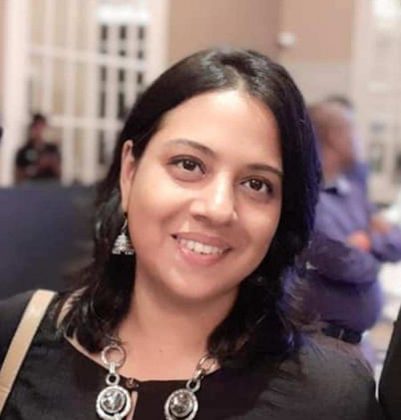
The Colombo Gazette on 15 September reported that a group of five UN special rapporteurs have expressed their serious concerns to the Government of Sri Lanka on the continued harassment of journalist Dharisha Bastians, the former editor of Sunday Observer and reporter for the New York Times in Colombo. [The joint letter was issued by David Kaye Special Rapporteur on the promotion and protection of the right to freedom of opinion and expression, Agnes Callamard, Special Rapporteur on extrajudicial, summary or arbitrary executions, Clement Nyaletsossi Voule, Special Rapporteur on the rights to freedom of peaceful assembly and of association, Mary Lawlor, Special Rapporteur on the situation of human rights defenders and Joseph Cannataci, Special Rapporteur on the right to privacy.]
In a joint letter to the Government dated 13th July 2020 the Special Rapporteurs said Bastians’ was being targeted for her writing and her work to defend human rights in Sri Lanka. The letter said the rapporteurs were concerned that the continued harassment of Bastians and the seizure of her computer and exposure of her phone records could endanger and compromise her sources and deter other journalists from reporting on issues of public interest and human rights. “We are particularly concerned that these measures may be aimed at discrediting her work, in an effort to stop her reporting on Sri Lankan political and human rights affairs,” the special rapporteurs letter to the Government noted.
In June 2020 the Criminal Investigation Department (CID) entered the home of Ms. Bastians in Colombo and seized her personal computer in connection with an ongoing investigation carried out over the alleged abduction of a Swiss embassy staffer in Colombo in November 2019. Bastians said the CID had arrived at her residence on two previous occasions to seize her laptop without a court order. The joint letter also noted that “pro-government media have reportedly conducted a smear campaign against Ms. Bastians and her family, supported by attacks on social media, labelling her as a traitor and a criminal.”
The Staff Correspondent of Newagebd published on 8 August 2020 an appeal by Amnesy Intenational to the Bangladeshi government to stop harassing and intimidating the family members of exiled blogger Asad Noorand other human rights defenders immediately.
The Human rights organisation also said that defending human rights in Bangladesh has become increasingly challenging as many bloggers and human rights defenders fled persecution at home and sought protection abroad in recent years while continuing their activism. The authorities are now targeting their families remaining in the country in an effort to silence them, said that statement.
In July, Asad Noor published several video blogs protesting against the persecution of the minority Buddhist community in Rangunia upazila in Chattogram. A local youth leader of the ruling Awami League sued Asad on 14 July 2020 under the draconian Digital Security Act, accusing him of ‘hurting religious sentiments’ and ‘running propaganda against the spirit of the liberation war.’ Amnesty found that the local police raided Asad’s parental house in Amtali village in the southern district Barguna times and again on July 14, 15, 16 and 18, and being unable to find Asad, harassed his parents.
The local police kept the family members in detention for 40 hours before releasing them in the night of July 19. ‘The harassment of Asad’s family is not an isolated incident. It is part of a worrying pattern targeting families of human rights defenders in exile,’ said Sultan Mohammed Zakaria.
Amnesty’s South Asia researcher Sultan Mohammed Zakaria said that harassment of families, to muzzle human rights defenders in exile from Bangladesh, was utterly reprehensible. Such tactics of intimidation must be stopped immediately. Instead, the authorities have the responsibility to prevent and effectively address allegations of human rights abuses and ensure a safe and enabling environment for human rights defenders, by carrying out prompt and independent investigations and bringing suspected perpetrators to justice, he said.
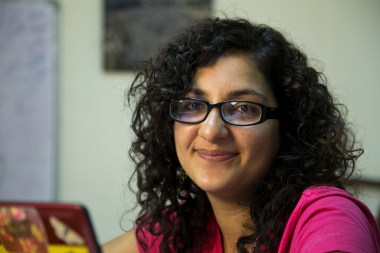
This is an open letter from MONA SEIF asking for your solidarity and support. It is long, but contains crucial details: My name is Mona Seif, I am an Egyptian HRD. Over the past few weeks the Egyptian regime has been escalating violent targeting of my family. If you are following the news from this art of the world then you know how most of the media platforms have been blocked and many journalists detained, harassed, or pushed into exile. So I am writing to you, hoping you will carry my voice and that of everyone facing injustice here.
Mona Seif, Egypt – Final Nominee MEA 2013
My brother Alaa Abdel Fattah has been in jail since last September. He was rearrested only 6 months after he got out of prison after completing a full five-years sentence. He has been in maximum security prison for 10 months in horrific conditions and daily violations of his rights, Egyptian laws and prison regulations. For the past months we have filed numerous official complaints, appealed to all sorts of entities here that have jurisdiction over the prison authorities, but none of them made any move to stop the violations or start a serious investigation. None of them made any attempt to bring us just a small bit of our rights.
On the night of Alaa’s arrival to Tora Maximum security prison 2 he was stripped of his clothes, blind folded, beaten and threatened that “He will never get out of here“, we have submitted an official report to the general prosecutor, we have repeatedly met with the head of his Human Rights adminstration, Alaa went on record in state security prosecution while reviewing his pretrial detention and testified in details on the torture he endured. Until now, not one serious move was taken regarding this horrific incident, and it was an intro to the kind of prison he will be locked in.
Since the crisis of Covid19 started, the Egyptian MOI has used it as an excuse to tighten the isolation of all prisoners, increase intimidation of prisoners and their families, and escalate in their deprivation of their basic rights. Since March 9th all visits have been completely banned in all prisons all over Egypt, however the families were not offered any alternative form of communication. We were not allowed phone calls with the prisoners, and most prisons are not allowing letters, even though both are explicit rights by the law, not to mention worrying times like these. Some prisoners were trying to get the word out about the deterioration of their health, about fear of Corona in prisons, the lack of proper information to help them understand the toll of the crisis and lack of sanitary measures indifferent Egypt, the only response the MOI had was clamping down even harder on those prisoners, punishing those who voiced out their concerns, all this while the arrests of more activists is ongoing and the arrest of doctors who talk publicly about their needs, problems and the reality of managing Covid19 within our health system.
With Alaa in particular, state security seems intent on preventing any sort of communication between us and him, even at times when they are allowing letters from other prisoners. Alaa went on a hunger strike on April12th and they did not even inform us. For a whole month during the covid19 emergency, my brother was on full hunger strike, my mother spent every morning at the prison’s gate and they did not allow us one letter to assure us of his well being. For every letter received we as a family paid a heavy price. We received a letter after Alaa ended his hunger strike on May 18th, and another on June 6th after my mother camped daily by Tora prison. Then the last one we got was on June 25th after we were violently assaulted and robbed right infront of Tora prison on the watch of their guards, and only after my younger sister Sanaa was abducted by plainclothed officers while entering the general prosecutor’s office- with her lawyer- to report the violent assault and officially document her injuries. Sanaa is now detained, and we haven’t been allowed any letters from her as well.
I think I’ve seen alot, I’ve witnessed so many violations committed by the current and previous regimes, but somehow I would have never imagined that a victim of a violent assault would be kidnapped by state security from the gates of the general prosecutor’s office as they are trying to seek his protection and file an official complaint regarding a very public incident like the one we were part of. And it definitely wouldn’t have occured to me that not only the general prosecutor would turn a blind eye on such a grave crime committed at his doorstep, but actually enable them to “legalize” her detention afterwards.
Both Sanaa and Alaa are in prison They, and thousands of prisoners, are at risk facing the combined danger of an epidemic and a brutal senseless regime. Please speak up on their behalf.. write about them, share their stories, add your name to the petition, or you can directly write a letter to Judge Hany Georgy the Head of Human rights administration at the general prosecutor’s office hanyfathy70@yahoo.com
This is an open letter from MONA SEIF asking for your solidarity and support. It is long, but contains crucial details: My name is Mona Seif, I am an Egyptian HRD. Over the past few weeks the Egyptian regime has been escalating violent targeting of my family. If you are following the news from this art of the world then you know how most of the media platforms have been blocked and many journalists detained, harassed, or pushed into exile. So I am writing to you, hoping you will carry my voice and that of everyone facing injustice here.
Mona Seif, Egypt – Final Nominee MEA 2013
My brother Alaa Abdel Fattah has been in jail since last September. He was rearrested only 6 months after he got out of prison after completing a full five-years sentence. He has been in maximum security prison for 10 months in horrific conditions and daily violations of his rights, Egyptian laws and prison regulations. For the past months we have filed numerous official complaints, appealed to all sorts of entities here that have jurisdiction over the prison authorities, but none of them made any move to stop the violations or start a serious investigation. None of them made any attempt to bring us just a small bit of our rights.
On the night of Alaa’s arrival to Tora Maximum security prison 2 he was stripped of his clothes, blind folded, beaten and threatened that “He will never get out of here“, we have submitted an official report to the general prosecutor, we have repeatedly met with the head of his Human Rights adminstration, Alaa went on record in state security prosecution while reviewing his pretrial detention and testified in details on the torture he endured. Until now, not one serious move was taken regarding this horrific incident, and it was an intro to the kind of prison he will be locked in.
Since the crisis of Covid19 started, the Egyptian MOI has used it as an excuse to tighten the isolation of all prisoners, increase intimidation of prisoners and their families, and escalate in their deprivation of their basic rights. Since March 9th all visits have been completely banned in all prisons all over Egypt, however the families were not offered any alternative form of communication. We were not allowed phone calls with the prisoners, and most prisons are not allowing letters, even though both are explicit rights by the law, not to mention worrying times like these. Some prisoners were trying to get the word out about the deterioration of their health, about fear of Corona in prisons, the lack of proper information to help them understand the toll of the crisis and lack of sanitary measures indifferent Egypt, the only response the MOI had was clamping down even harder on those prisoners, punishing those who voiced out their concerns, all this while the arrests of more activists is ongoing and the arrest of doctors who talk publicly about their needs, problems and the reality of managing Covid19 within our health system.
With Alaa in particular, state security seems intent on preventing any sort of communication between us and him, even at times when they are allowing letters from other prisoners. Alaa went on a hunger strike on April12th and they did not even inform us. For a whole month during the covid19 emergency, my brother was on full hunger strike, my mother spent every morning at the prison’s gate and they did not allow us one letter to assure us of his well being. For every letter received we as a family paid a heavy price. We received a letter after Alaa ended his hunger strike on May 18th, and another on June 6th after my mother camped daily by Tora prison. Then the last one we got was on June 25th after we were violently assaulted and robbed right infront of Tora prison on the watch of their guards, and only after my younger sister Sanaa was abducted by plainclothed officers while entering the general prosecutor’s office- with her lawyer- to report the violent assault and officially document her injuries. Sanaa is now detained, and we haven’t been allowed any letters from her as well.
I think I’ve seen alot, I’ve witnessed so many violations committed by the current and previous regimes, but somehow I would have never imagined that a victim of a violent assault would be kidnapped by state security from the gates of the general prosecutor’s office as they are trying to seek his protection and file an official complaint regarding a very public incident like the one we were part of. And it definitely wouldn’t have occured to me that not only the general prosecutor would turn a blind eye on such a grave crime committed at his doorstep, but actually enable them to “legalize” her detention afterwards.
Both Sanaa and Alaa are in prison They, and thousands of prisoners, are at risk facing the combined danger of an epidemic and a brutal senseless regime. Please speak up on their behalf.. write about them, share their stories, add your name to the petition, or you can directly write a letter to Judge Hany Georgy the Head of Human rights administration at the general prosecutor’s office hanyfathy70@yahoo.com
It takes place on Wednesday, 18 September 2019, 4:30 pm – 5:30 pm in Room VIII, Palais des Nations, Geneva
The event seeks to provide a space for human rights defenders and experts to shed light on the nature and extent of reprisals and intimidation against those cooperating with the UN; discuss and expand on the Secretary-General’s report; and consider efforts to date to address reprisals and intimidation against those cooperating with the UN as well as ways to further develop and strengthen policies and practices to prevent and address reprisals.
Panellists:
Andrew Gilmour, United Nations Assistant Secretary-General for Human Rights
Bahey Eldin Hassan, Director of the Cairo Institute for Human Rights Studies
On 31 July a number of and leading international and Brazilian free speech organizations appealed for support for the staff of The InterceptBrasil, a Rio de Janeiro-based investigative news website that has been the target of a fierce campaign of harassment and intimidation since 9 June. The Intercept Brasil’s revelations about the “Operation Car Wash” corruption case triggered a wave of verbal attacks and threats against the website’s representatives. The most serious recent attacks include Brazilian President Jair Bolsonaro’s public threat on 27 July to imprison The Intercept Brasil founder and editor Glenn Greenwald. [see also: https://humanrightsdefenders.blog/2014/12/15/edward-snowden-gets-another-human-rights-award-in-berlin/]
The 26press freedom and human rights organizations and media outlets named below strongly condemn the recent wave of attacks and threats against the investigative news website The Intercept Brasil. We call on the authorities to ensure respect for the constitutionally guaranteed right of journalists to protect the confidentiality of their sources.
The attacks began on 9 June after The Intercept Brasil published the first of a series of reports revealing apparent irregularities in the “Operation Car Wash” investigation, one of the most important corruption investigations in Brazilian history. To publish these revelations, which are based on documents provided by an anonymous source, The Intercept Brasil partnered with several Brazilian media outlets including the Folha de SãoPaulo newspaper and Veja magazine.
Since then, the staff of The Intercept Brasil and in particular, its founder Glenn Greenwald, have been subjected – especially on social networks – to countless insults, slurs and death threats accompanied by false information designed to undermine the credibility of its reporting. This harassment is symbolic and symptomatic of the difficulties encountered by all media workers who investigate sensitive stories in Brazil, where the journalists are often the targets of intimidation and persecution campaigns.
Regardless of their provenance, the attempts to undermine and attack the credibility of The Intercept Brasil and its partners are viewed by the signatories of this appeal as a grave threat to the freedom to inform. Not only are they designed to deflect the public’s attention from the content of the revelations but above all, they reinforce an increasingly hostile work environment for the media and especially for investigative journalism.
We remind the authorities that the Brazilian state has a duty to guarantee the protection of journalists and to investigate the serious threats received by the journalists at The Intercept Brasil and its partners.
Freedom of the press and information are pillars of democracy. They transcend political divisions and must be protected and guaranteed at all costs.
Signatories:
Agência Pública de Jornalismo Investigativo
Amnesty International Brazil
Article 19 Brasil
Asociación de la Prensa de Madrid (APM)
Associação Brasileira de Imprensa (ABI)
Associação Brasileira de Jornalismo Investigativo (Abraji)
Associação dos Correspondentes Estrangeiros (ACE) de São Paulo
Committee to Protect Journalists (CPJ)
Federação Nacional dos Jornalistas (FENAJ)
Federación de las Asociaciones de Periodistas de España (FAPE)
Press Progress blog of 3 July 2019 analyses the agressive tone of Alberta‘s Premier Jason Kenney, who talks of “war” on environmental defenders. Civil liberties groups and human rights organizations are warning that his new “war room” is an attempt to intimidate critics and put a chill on free expression rights in the province. Described as a “fully staffed, rapid response” unit mandated to respond to “all the lies” about the oil industry, the $30 million “war room” is part of Kenney’s so-called “fight back strategy” that aims to wage war against environmental groups. Kenney has also indicated he will launch a public inquiry into the activities of environmental groups like the David Suzuki Foundation, while Kenney’s energy minister has promised the government will assemble a team of lawyers to launch lawsuits against environmentalists.
“Talk of a war room, focused on targeting ‘offending’ environmentalists, seems determined to send a clear message,” Amnesty International Canada Executive Director Alex Neve told PressProgress. Cara Zwibel, director of the Canadian Civil Liberties Association’s Fundamental Freedoms program, agrees the campaign’s stated mission could be “very problematic from a free expression perspective.”
Standing behind Kenney at the press conference was Vivian Krause, a self-described “researcher” who focuses on “the money behind environmental campaigns.” Krause’s research, which is often panned by her critics as a “conspiracy theory,”claims environmental groups funded by the Rockefeller Brothers are secretly working to cap oil production in Alberta.
Also sharing the stage with Krause and Kenney was Tim McMillan, President and CEO of the Canadian Association of Oil Producers (CAPP) as well as Sandip Lalli, President and CEO of the Calgary Chamber of Commerce. Kenney was introduced at the press conference by Robbie Picard, an oil activist who has been involved with groups like Canada Action and Rally for Resources, but better known for creating the “I Love Oilsands” t-shirts. As Maclean’s notes, Picard is known to be “a bit too enthusiastic in his cheerleading” for the oil industry, as well — in a 2018 appearance on Rebel Media, Picard described environmentalists as “terrorists” who should face “six months in jail” for protesting the oil industry.
On 2 July 2019, Amnesty International said that the Department of Homeland Security (DHS) and the Justice Department are using the justice system to target illegal immigrant activists. “Amnesty International has found since 2018 that the United States (US) government has executed an unlawful and politically motivated campaign of intimidation, threats, harassment, and criminal investigations against people who defend the human rights of migrants, refugees and asylum seekers (‘migrant human rights defenders’) on the US–Mexico border,”
The London-based human rights organization interviewed 23 “human rights defenders” who claim they have being targeted by the U.S. government because of their work on behalf of immigrants. Of the 23 who were interviewed, 10 were put under a DHS watch list for their alleged involvement in human smuggling — criminal investigations that Amnesty International referred to as “dubious.” Others alleged instances of targeted harassment and intimidation at the hands of U.S. authorities. The people interviewed by human rights group included activists, lawyers and others who work to promote the interests of illegal aliens.
“The Trump administration’s targeting of human rights defenders through discriminatory misuse of the criminal justice system sets it on a slippery slope toward authoritarianism,” Erika Guevara-Rosasa, Americas director for Amnesty International, said in the report. “The US government is disgracing itself by threatening and even prosecuting its own citizens for their vital work to save the lives of people in a desperate situation at the border.”
On 12 October 2018 the UN General Assembly elected Eritrea to be one of 47 member states of the UN Human Rights Council (UNHRC), despite its appalling human rights record. UNHRC membership comes with certain commitments, including the requirement to “uphold the highest standards in the promotion and protection of human rights, [and to] fully cooperate with the Council […]”. The Eritrean government falls far short of these requirements in practice – both domestically and internationally. This briefing highlights the routine and widespread use of harassment and threats by the Eritrean government and its supporters against Eritrean human rights defenders. See also: https://humanrightsdefenders.blog/2017/05/04/eritrean-born-journalist-dawit-isaak-awarded-2017-unescos-guillermo-cano-world-press-freedom-prize/
On 24 April 2019, at the United Nations Permanent Forum on Indigenous Issues in New York, IWGIA released The Indigenous World 2019, an extensive yearbook presenting a comprehensive, global overview of the developments indigenous peoples experience. The book documents an increasing trend towards the harassment and criminalization of indigenous peoples and communities. It also highlights the rising tensions between states and indigenous peoples, shrinking civil society space, loss of land rights and lack of access to justice for indigenous peoples to enjoy their rights.
“Indigenous peoples make up 5% of the world’s population, yet they represent 15% of the world’s poorest, and in 2017, half of the approximately 400 environmental and human rights defenders killed. The numbers for 2018 are as-yet-unknown, but this troubling trend hasn’t seemed to stop,”Julie Koch, IWGIA Executive Director, says. “We need to do more to protect, learn from and support indigenous peoples and their traditional, sustainable practices as key actors in ensuring a safer and more equitable world.”
In 2018, there has been an increase in the documentation and reporting of illegal surveillance, arbitrary arrests, travel bans preventing free movement, threats, dispossession and killings of indigenous peoples. We have witnessed instruments meant to protect indigenous peoples being turned against them, through the use of legislation and the justice system, to penalize and criminalize indigenous peoples’ assertion of their rights. [see e.g. https://humanrightsdefenders.blog/2017/08/08/9-august-international-day-of-the-worlds-indigenous-peoples-un-experts-see-increasing-murder/]
“The intensification and exploitation of natural resources is leading to a global crisis for indigenous peoples’ rights,” Koch says. Many indigenous peoples live in the Earth’s last remaining biodiversity hotspots and are often called the “guardians of the forest”. Several studies have shown that tree cover loss is significantly reduced on indigenous land compared to non-indigenous controlled land.