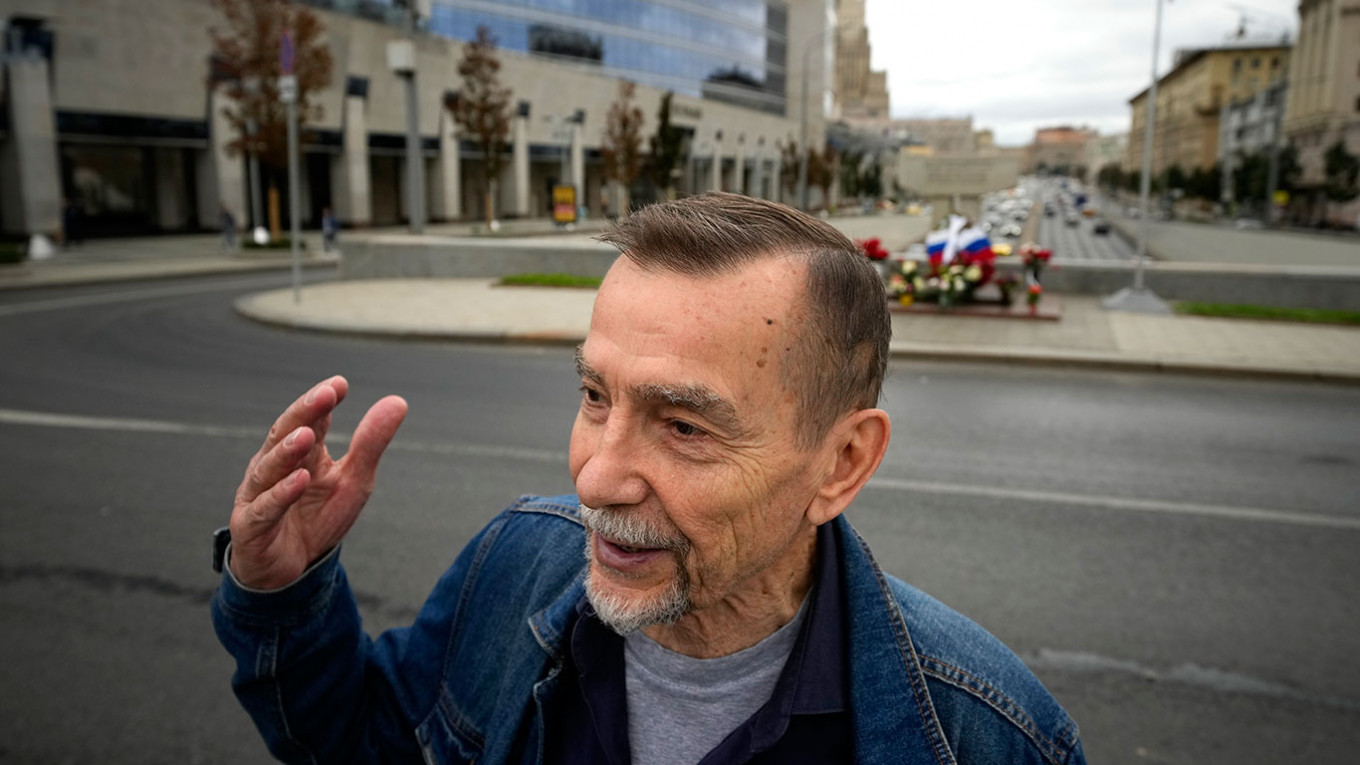
Kyrgyzstan must investigate death threats against human rights defender Kamilzhan Ruziev instead of harassing him for making complaints against the police, said Mary Lawlor, the UN Special Rapporteur on the situation of human rights defenders “It is extremely disturbing that authorities began laying criminal charges against Mr. Ruziev after he exposed police torture and ineffectiveness, when they should actually be investigating the death threats made against him,”
As director of the non-governmental human rights organisation Ventus, Ruziev defends victims of torture, domestic violence, and discrimination. In 2019, a police investigator, whom Ruziev exposed for committing torture, reportedly threatened to kill him. When the State Committee for National Security and the Prosecutor’s Office failed to investigate the threats, Ruziev took them to court, only to find himself facing seven criminal charges.
“Kyrgyz authorities must give Mr. Ruziev a fair trial and effectively investigate all allegations of threats and ill-treatment against him and other human rights defenders,” she said. The next hearing on Mr. Ruziev’s case will be on 11 November 2021.
Lawlor said she was also disturbed by reports that Mr. Ruziev was ill-treated while held in detention for 48 hours in May 2020, and denied access to his lawyer.
“Now I hear that his health is deteriorating, and complaints to the authorities about violations committed against him continue to fall on deaf ears,” she added.
In a report to the Human Rights Council earlier this year on threats and killings of human rights defenders, Lawlor warned: “when a human rights defender receives death threats, swift action must be taken to prevent the threats from escalating. Impunity fuels more murders.”
Lawlor is in contact with the authorities of Kyrgyzstan on this issue, and stressed that “Kyrgyzstan must do better to safeguard the environment for human rights defenders to carry out their work.”
In the Washington Post of 1 July 2021, Craig Williams and Alfred Brownell (winners of the Goldman Prize in 2006 and 2019 respectively) wrote: “He has worked to protect the Earth. Now we must protect him.”
As environmental activists and human rights defenders, we are alarmed by a spike in violent attacks on and killings of land rights activists across the globe and, most recently, in Latin America. The latest in this disturbing trend is a violent assault onAlberto Curamil, a leader of the Indigenous Mapuche people in southern Chile and an activist working to protect his people’s land, water and other resources. As we write, we fear Alberto could become the latest casualty in a global war against Earth’s front-line protectors. [see: https://www.trueheroesfilms.org/thedigest/laureates/4f845ff0-86d2-4b12-97af-1590f6ba8602]
On April 29, Alberto was attending a protest along with his son andnephew, both teenagers. They were there to show support for Elena Paine, another Mapuche leader, and her community a day after her house and crops in Koyam Montre were burned to the ground. Alberto, Paine and members of the Machupe community believe that the threat may have come from far-right-wing groups in the area.
As Alberto and his teenage relatives were driving away from the protest, the back window of their truck was shattered by a tear-gas canister. When they got out of the vehicle, police shot Alberto at point-blank range three times with buckshot, which lodged in his back, side, arm and the back of his leg. Then, police beat the teens with batons while yelling “Pinche Mapuche” (“Lousy Mapuche”). The three were arrested and charged with disorderly conduct at a public event and breach of sanitary provisions. Alberto was taken to a hospital three hours after being brought into custody, bleeding and in excruciating pain. The teens were bruised, battered and traumatized.
This was not the first time Alberto had been a target of the Chilean government. In 2018, he was arrested and jailed for 15 months on false charges of armed robbery based entirely on hearsay evidence. He was acquitted of all charges and released in December 2019. Due to his imprisonment, he had been unable to receive the Goldman Prize — known as the “green Nobel” — at ceremonies in April and May 2019 in D.C. and San Francisco. He was previously arrested after being violently beaten by police in 2014.
Our alarm has led us, along with several dozen of our fellow Goldman Prize winners from across the globe, to demand assurances from Chilean President Sebastián Piñera that Alberto’s safety will be given the highest priority. We are also seeking support through appeals to the U.S. Congress, the European Union and the United Nations.
We believe time is of the essence, especially given the broader context of violence against those who stand up to protect the Earth. In 2016, the internationally celebrated Honduran Indigenous activist and Goldman Prize winner Berta Cáceres was murdered by operatives for the power company Desarrollos Energéticos (Desa) for her opposition to a hydroelectric project on the Rio Gualcarque. Seven men accused of plotting Cáceres’s murder were convicted and sentenced to between 30 and 50 years in prison. An eighth suspect, Roberto David Castillo Mejía, president and chief executive of Desa, is currently on trial, accused of masterminding the murder-conspiracy plot.
In its latest report, Global Witness recorded the highest number of environmental defenders killed in a single year — more than 212 people killed in 2019, a rate of four a week. More than two-thirds of the killings took place in Latin America. [see also: Global]
The killings of and assaults on Earth’s defenders worldwide have accelerated in some of the most fragile pristine landscapes and biodiverse countries, jeopardizing the fight against climate change and species extinction. In Mexico, police are investigating the suspicious killings of two employees at a butterfly reserve in 2020. That same month, six members of an Indigenous community were killed at a nature reserve in Nicaragua. And in South Africa, environmental activist Fikile Ntshangase was killed last year in an attack local activists fear was related to her opposition to disruptive local mining operations.
In Chile, Indigenous communities’ push for human rights go hand in hand with their struggle for land and water rights, as government-backed companies try to run them off their land with threats, harassment and violence.
Attacks on environmental defenders in Latin America and worldwide are not only an affront to human rights, but also a cause for deep alarm at a time when the world must fight climate change and bring about a sustainable future. We are demanding that the Chilean government take immediate steps to stop these aggressive and often deadly attacks on the Mapuche community. There should also be a thorough, independent investigation into the destruction of Paine’s home.
We must act against this brutality, or we threaten the fight for a planet in crisis.
On 15 January 2021 The International Service for Human Rights (ISHR) published a long interview with Alicia Wallace, a human rights defender from the Bahamas. Here it is in full:
“I remember to be hopeful, not because it feels good or because I am waiting for something to happen on its own, but because I believe in my own power and the magic we create when queer people, Black people, women come together to channel our rage, righteous and raw, into sustained action.”
The year is 2050. What does the world look like – in particular for women, Black people, LGBTI people?
We are making strides toward equality and we are centered in all decision-making processes. We are protected and respected. It is a norm for us to be in positions of leadership. Diversity is expected. We are as safe at night as anyone is during the day. We have access to education, healthcare, food, and housing. All of our needs are met. Redistribution of wealth is in progress. Our survival is not dependent on or propping up the capitalist system. We are defining justice for ourselves. We recognise ourselves as the source of our own healing.
How did your work help achieve the vision you just described?
My work provoked conversation. It made information, from academic theory to changemaking methodologies, accessible to everyone. I created spaces where people have been comfortable to question, critique, challenge, learn, share, and create. I developed tools for all of us to be able to think outside of the reality we used to know. We knew we were not bound to it because I put significant emphasis on imagination and future-making. I found a way to fight the injustice we faced and facilitate collaborative visioning, imagining, and creating. We channeled our rage, weaponised hope (inspired by the work of artist Angelika Wallace-Whitfield), and we came together to co-create the futures. I helped to create tools and systems to enable that practice.
Was there a defining moment in your life that motivated you to defend human rights?
I am a queer Black woman. I have student loan debt. I am unwaged. I am a survivor of violence. My life is a collection of moments that make it necessary for me to defend and promote human rights if I am to survive and leave the world better than I met it. Perhaps what prompts me to action is recognition of another important fact—I have privilege. I have had experiences I may never speak of, and I know that my circumstances could be a lot worse. It is important for me to use what I have to help us all get what we ought to have had a long time ago. For me, the defining moment happens over and over again, when I feel rage threatens to control my body, and I remember to be hopeful, not because it feels good or because I am waiting for something to happen on its own, but because I believe in my own power and the magic we create when queer people, Black people, women come together to turn channel our rage, righteous and raw, into sustained action.
Do you face any threats and attacks because of your work?
I’ve been experiencing rape and death threats for the past six years. Most of it has been online. The most troubling threats come following participation in direct action or agitation from people in positions of influence. In 2018, when I participated in the 71st session of the Committee on the Elimination of Discrimination against Women (CEDAW) in Geneva, a radio personality made dangerous statements about me on the air. The same person incited the first threats of violence against me in 2014, so I knew I needed to take it seriously. I made a report to the CEDAW focal point on reprisals, but the outcome was not favorable. A government representative called me to suggest I report the incident to the police, but did not offer support in doing so and could not cite an offense, according to Bahamian law, that I would be reporting. It was a ridiculous suggestion that gave me no help. The government, of course, reported its “action” to the UN, even claiming that I said I no longer felt unsafe. I told the focal point that this was untrue and that, at the very least, the government should have been instructed to publicly state its support for human rights defenders, enact hate speech and hate crime legislation, and direct the radio personality to cease and desist all reference to me and any other human rights defenders. It would have cost the UN nothing to support me and other human rights defenders by making these recommendations to the government. Instead, I am left to fend for myself in a place where I continue to live and work without protection, legal or otherwise.
On this see what was stated by Andrew Gilmour in December 2019: “The Bahamas responded to the allegations of intimidation and reprisals against woman human rights defender Alicia Wallace after she engaged with the Committee on Elimination of all forms of Discrimination against Women (CEDAW). She and her colleagues were subjected to hate speech by a well-known radio personality, the effect of which was to create an unsafe environment for Ms. Wallace and other women human rights defenders. The Bahamas affirmed its commitment to protect human rights defenders and ensure that they can engage freely with the UN. The delegation told the Council that authorities proactively provided assistance to Ms. Wallace to guarantee her safety.”[from: https://humanrightsdefenders.blog/2019/09/23/andrew-gilmours-2019-report-on-reprisals-it-gets-worse-but-response-remains-mostly-rhetoric/]
What could be done for you to be able to work safely and effectively?
Institutions and people in positions of power need to rebuke violence, harassment, and threats of violence. The State needs to enact legislation against hate crimes and hate speech. It needs to publicly state its support of human rights defenders, make it clear that the relationship between itself and advocates is complementary, not adversarial, and assert that it will protect us. The United Nations and other bodies in control of international mechanisms and reporting processes need to take responsibility for the safety and security of the human rights defenders it depends on to monitor and evaluate State action. These organisations need to raise the bar, calling States to higher standards. They have to make it clear to States and the general public that the safety and security of human rights defenders are a matter of priority before we are detained, disappeared, or murdered.
How has the Covid-19 pandemic affected your work?
It has, as predicted, increased the volume of work. People, especially vulnerable people, are suffering. The pandemic has created crisis after crisis, from domestic violence and unpaid care work to unemployment and disruption of education. In anticipation of the effects of COVID-19 and State actions in response to it, Feminist Alliance for Rights (FAR)—where I am a steering committee member—produced guidelines for feminist policymaking during this time. This is one of the most critical pieces of work I have contributed to this year. In addition, I have been engaged in rapid response, working on policy recommendations to end gender-based violence, and continuing the regular programming of Equality Bahamas. It has been a busy year, but one of learning and where I have been able to see and strengthen my own agility. Human rights defenders have to be able to anticipate, prepare, respond, pivot, assess, and revise at all times, and especially during the crisis. The work has intensified and been taxing, but I believe that we have learned more this year than we have in years gone by, people are more aware of inequalities, and in addition to getting more people on our team, we can get institutions to make substantive change.
You are the producer of a monthly newsletter called The Culture RUSH. How does fusing pop culture with social justice help achieve your vision?
I want people to understand the movement for justice and equality. I want to see a broader understanding of feminism, women’s rights, LGBTQ+ people’s rights, and the importance of centering vulnerable people in decision-making processes, programmes, and activities. We need more people on our team. That requires two main actions: communicating in clear, accessible ways, and meeting them where they are in order to deliver the message. Academic text, feminist theory, and the language of institutions and advocacy are not as appealing or accessible as pop culture. People know what’s going on in Cardi B’s marriage, Megan Thee Stallion’s friend group, and the lives of real housewives. If WAP gets us talking about women’s pleasure, let’s talk about women in rap, lyrics, and music videos. In The Culture RUSH, I make connections between pop culture and social justice. In January 2021, I am starting Scorch, a paid subscription newsletter breaking feminist theory and academic text down into digestible bites (similar to Blinkist). I’m excited about making human rights and social justice accessible and interesting to wider audiences. When people are interested, they’re more likely to get invested, and when they’re invested, we can convince them to take action with us. People power is how we win.
Thank you, Alicia!
Alicia A. Wallace is a queer Black feminist, gender expert, and research consultant. She is the Director of Equality Bahamas which promotes women’s and LGBTQ+ rights as human rights through public education, community programming, and advocacy. Her work has included a two-year educational campaign ahead of a national referendum on gender and citizenship, the design and coordination of Women’s Wednesdays—a month event series bringing women together to share knowledge and ideas—and management of a disaster relief donation and distribution center. Alicia is also a steering committee member of Feminist Alliance for Rights (FAR). She has a weekly column on social and political issues in the Bahamian daily newspaper The Tribune and has published academic papers.
Photo credits in order of appearance: Blair J. Meadows, Equality and Justice Alliance, Equality Bahamas
Belarusian opposition leader Svyatlana Tsikhanouskaya has condemned ongoing mass searches of homes of journalists and rights defenders across the country. At least 25 homes of journalists, rights activists, and their relatives in Minsk and other towns and cities were searched by police and security service officers on February 16. The offices of the Vyasna (Spring) human rights center in Minsk [see https://www.trueheroesfilms.org/thedigest/laureates/7b5ccf60-bf81-11ea-b6a7-3533a3c74ec1] and the headquarters of the Association of Belarusian Journalists were also searched.
Tsikhanouskaya issued a statement on Telegram, saying that those who are looking for “criminals” among journalists and rights defenders should look for criminals among themselves.
“This is the real crisis. In its attempt to cling to power, the regime is repressing those who are defending human rights. As long as this continues, all Belarusians are in danger,” Tsikhanouskaya’s statement says, adding, “Belarusians know how to solve this crisis.“
“With such measures [Belarusian President Alyaksandr] Lukashenka is gathering material for his own trial in an international court together with his associates. We have already forwarded information to the European Union and the United Nations Human Rights Council, asking them to undertake corresponding measures,” Tsikhanouskaya continued.
On 29 September 2020, it was announced that Amnesty International has shut down its India operations, alleging ‘a ‘witch-hunt’ by the Government
Amnesty India shuts operations
The complete freezing of Amnesty International India’s bank accounts by the Government of India which it came to know on 10 September 2020, brings all the work being done by the organization to a grinding halt. The organisation has been compelled to let go of its staff in India and pause all its ongoing campaign and research work. This is latest in the incessant witch-hunt of human rights organizations by the Government of India over unfounded and motivated allegations, Amnesty International India said today. See below the CHRONOLOGY OF ATTACKS AND HARASSMENT OF AI INDIA, starting in October 2018:
“The continuing crackdown on Amnesty International India over the last two years and the complete freezing of bank accounts is not accidental. The constant harassment by government agencies including the Enforcement Directorate is a result of our unequivocal calls for transparency in the government, more recently for accountability of the Delhi police and the Government of India regarding the grave human rights violations in the Delhi riots and Jammu & Kashmir. For a movement that has done nothing but raises its voices against injustice, this latest attack is akin to freezing dissent,” said Avinash Kumar, Executive Director of Amnesty International India.
Amnesty International India stands in full compliance with all applicable Indian and international laws. For human rights work in India, it operates through a distinct model of raising funds domestically. More than four million Indians have supported Amnesty International India’s work in the last eight years and around 100,000 Indians have made financial contributions. These contributions evidently cannot have any relation with the Foreign Contribution (Regulation) Act, 2010. The fact that the Government is now portraying this lawful fundraising model as money-laundering is evidence that the overbroad legal framework is maliciously activated when human rights activists and groups challenge the government’s grave inactions and excesses.
The attacks on Amnesty International India and other outspoken human rights organizations, activists and human rights defenders is only an extension of the various repressive policies and sustained assault by the government on those who speak truth to power. “Treating human rights organisations like criminal enterprises and dissenting individuals as criminals without any credible evidence is a deliberate attempt by the Enforcement Directorate and Government of India to stoke a climate of fear and dismantle the critical voices in India. It reeks of fear and repression, ignores the human cost to this crackdown particularly during a pandemic and violates people’s basic rights to freedom of speech and expression, assembly, and association guaranteed by the Indian Constitution and international human rights law. Instead, as a global power and a member of the United Nations Human Rights Council, India must fearlessly welcome calls for accountability and justice,” said Avinash Kumar.
BACKGROUND: CHRONOLOGY OF ATTACKS AND HARASSMENT OF AMNESTY INTERNATIONAL INDIA:
On 25 October 2018, Amnesty International India endured a 10-hour-long raid as a group of officers from the Enforcement Directorate (ED), a financial investigation agency under the Ministry of Finance, entered its premises and locked the gates behind them. Most of the information and documents that were demanded during the search were already available in the public domain or filed with the relevant government authorities. The residence of a Director was also raided.
Immediately after the raid, the bank accounts were also frozen by the ED. As a result, Amnesty International India was forced to let go of a number of its staff, adversely affecting its work in India including with the marginalised communities. Despite the ongoing investigations and before the framing of charges, the Government of India started a smear campaign against Amnesty International India in the country through selective leaking of documents gathered by the ED, to government-aligned media outlets. This resulted in a malicious media trial against the organization.
In early 2019, the Department of Income Tax started sending investigative letters to more than 30 small regular donors. Apparently, the department did not find any irregularities but the process adversely affected the fundraising campaigns of Amnesty International India.
In June 2019, Amnesty International India was denied permission to hold the press conference launch in Srinagar to release its third ‘Lawless Law’ report on the misuse and abuse of Public Safety Act in Jammu and Kashmir. It was forced to digitally release it.
On 22 October 2019, Amnesty International testified at the US Congressional hearing on the situation of human rights in South Asia with a specific focus on Jammu and Kashmir since the unilateral abrogation of Article 370 of the Constitution of India.
On 15 November 2019, two weeks after the testimony and amid rumours of impending arrests of the organization’s top officials, the offices of Amnesty International India and the residence of one of its directors were raided again by the CBI. The raids were conducted on the basis of a First Information Report filed by the Ministry of Home Affairs over unsubstantiated allegations of suspected violations of Foreign Contribution Regulation Act. It suggested investigations be launched under other laws like the Prevention of Money Laundering Act.
On 13 April 2020, Amnesty International India called on the Uttar Pradesh Government to stop its intimidation of journalists through use of repressive laws during a pandemic. On 15 April 2020, the Cyber Crime Police Station, Lucknow, Uttar Pradesh notified Twitter to furnish information about Amnesty International India’s Twitter account @AIIndia which the organization uses to monitor and analyse developments in international human rights law and Indian constitutional and criminal law related to human rights issues.
On 5 August 2020, marking the first anniversary of the abrogation of Article 370 of the Constitution of India, Amnesty International India released an update on the situation of human rights in Jammu and Kashmir.
On 28 August 2020, marking the six-month anniversary of the riots that took place in North-East Delhi in February 2020, Amnesty International India released an investigative brief on the complicity of Delhi police in the riots which claimed the lives of at least 53 people, mostly from the minority Muslim community.
The release of the two publications has provided fresh impetus to the establishment to harass and intimidate Amnesty International India through its investigative agencies.
On 10 September 2020 Amnesty International India came to know that all its bank accounts were completely frozen by the Enforcement Directorate bringing most of the work of the human rights organization to a grinding halt.
The Colombo Gazette on 15 September reported that a group of five UN special rapporteurs have expressed their serious concerns to the Government of Sri Lanka on the continued harassment of journalist Dharisha Bastians, the former editor of Sunday Observer and reporter for the New York Times in Colombo. [The joint letter was issued by David Kaye Special Rapporteur on the promotion and protection of the right to freedom of opinion and expression, Agnes Callamard, Special Rapporteur on extrajudicial, summary or arbitrary executions, Clement Nyaletsossi Voule, Special Rapporteur on the rights to freedom of peaceful assembly and of association, Mary Lawlor, Special Rapporteur on the situation of human rights defenders and Joseph Cannataci, Special Rapporteur on the right to privacy.]
In a joint letter to the Government dated 13th July 2020 the Special Rapporteurs said Bastians’ was being targeted for her writing and her work to defend human rights in Sri Lanka. The letter said the rapporteurs were concerned that the continued harassment of Bastians and the seizure of her computer and exposure of her phone records could endanger and compromise her sources and deter other journalists from reporting on issues of public interest and human rights. “We are particularly concerned that these measures may be aimed at discrediting her work, in an effort to stop her reporting on Sri Lankan political and human rights affairs,” the special rapporteurs letter to the Government noted.
In June 2020 the Criminal Investigation Department (CID) entered the home of Ms. Bastians in Colombo and seized her personal computer in connection with an ongoing investigation carried out over the alleged abduction of a Swiss embassy staffer in Colombo in November 2019. Bastians said the CID had arrived at her residence on two previous occasions to seize her laptop without a court order. The joint letter also noted that “pro-government media have reportedly conducted a smear campaign against Ms. Bastians and her family, supported by attacks on social media, labelling her as a traitor and a criminal.”
The Staff Correspondent of Newagebd published on 8 August 2020 an appeal by Amnesy Intenational to the Bangladeshi government to stop harassing and intimidating the family members of exiled blogger Asad Noorand other human rights defenders immediately.
The Human rights organisation also said that defending human rights in Bangladesh has become increasingly challenging as many bloggers and human rights defenders fled persecution at home and sought protection abroad in recent years while continuing their activism. The authorities are now targeting their families remaining in the country in an effort to silence them, said that statement.
In July, Asad Noor published several video blogs protesting against the persecution of the minority Buddhist community in Rangunia upazila in Chattogram. A local youth leader of the ruling Awami League sued Asad on 14 July 2020 under the draconian Digital Security Act, accusing him of ‘hurting religious sentiments’ and ‘running propaganda against the spirit of the liberation war.’ Amnesty found that the local police raided Asad’s parental house in Amtali village in the southern district Barguna times and again on July 14, 15, 16 and 18, and being unable to find Asad, harassed his parents.
The local police kept the family members in detention for 40 hours before releasing them in the night of July 19. ‘The harassment of Asad’s family is not an isolated incident. It is part of a worrying pattern targeting families of human rights defenders in exile,’ said Sultan Mohammed Zakaria.
Amnesty’s South Asia researcher Sultan Mohammed Zakaria said that harassment of families, to muzzle human rights defenders in exile from Bangladesh, was utterly reprehensible. Such tactics of intimidation must be stopped immediately. Instead, the authorities have the responsibility to prevent and effectively address allegations of human rights abuses and ensure a safe and enabling environment for human rights defenders, by carrying out prompt and independent investigations and bringing suspected perpetrators to justice, he said.
This is an open letter from MONA SEIF asking for your solidarity and support. It is long, but contains crucial details: My name is Mona Seif, I am an Egyptian HRD. Over the past few weeks the Egyptian regime has been escalating violent targeting of my family. If you are following the news from this art of the world then you know how most of the media platforms have been blocked and many journalists detained, harassed, or pushed into exile. So I am writing to you, hoping you will carry my voice and that of everyone facing injustice here.
Mona Seif, Egypt – Final Nominee MEA 2013
My brother Alaa Abdel Fattah has been in jail since last September. He was rearrested only 6 months after he got out of prison after completing a full five-years sentence. He has been in maximum security prison for 10 months in horrific conditions and daily violations of his rights, Egyptian laws and prison regulations. For the past months we have filed numerous official complaints, appealed to all sorts of entities here that have jurisdiction over the prison authorities, but none of them made any move to stop the violations or start a serious investigation. None of them made any attempt to bring us just a small bit of our rights.
On the night of Alaa’s arrival to Tora Maximum security prison 2 he was stripped of his clothes, blind folded, beaten and threatened that “He will never get out of here“, we have submitted an official report to the general prosecutor, we have repeatedly met with the head of his Human Rights adminstration, Alaa went on record in state security prosecution while reviewing his pretrial detention and testified in details on the torture he endured. Until now, not one serious move was taken regarding this horrific incident, and it was an intro to the kind of prison he will be locked in.
Since the crisis of Covid19 started, the Egyptian MOI has used it as an excuse to tighten the isolation of all prisoners, increase intimidation of prisoners and their families, and escalate in their deprivation of their basic rights. Since March 9th all visits have been completely banned in all prisons all over Egypt, however the families were not offered any alternative form of communication. We were not allowed phone calls with the prisoners, and most prisons are not allowing letters, even though both are explicit rights by the law, not to mention worrying times like these. Some prisoners were trying to get the word out about the deterioration of their health, about fear of Corona in prisons, the lack of proper information to help them understand the toll of the crisis and lack of sanitary measures indifferent Egypt, the only response the MOI had was clamping down even harder on those prisoners, punishing those who voiced out their concerns, all this while the arrests of more activists is ongoing and the arrest of doctors who talk publicly about their needs, problems and the reality of managing Covid19 within our health system.
With Alaa in particular, state security seems intent on preventing any sort of communication between us and him, even at times when they are allowing letters from other prisoners. Alaa went on a hunger strike on April12th and they did not even inform us. For a whole month during the covid19 emergency, my brother was on full hunger strike, my mother spent every morning at the prison’s gate and they did not allow us one letter to assure us of his well being. For every letter received we as a family paid a heavy price. We received a letter after Alaa ended his hunger strike on May 18th, and another on June 6th after my mother camped daily by Tora prison. Then the last one we got was on June 25th after we were violently assaulted and robbed right infront of Tora prison on the watch of their guards, and only after my younger sister Sanaa was abducted by plainclothed officers while entering the general prosecutor’s office- with her lawyer- to report the violent assault and officially document her injuries. Sanaa is now detained, and we haven’t been allowed any letters from her as well.
I think I’ve seen alot, I’ve witnessed so many violations committed by the current and previous regimes, but somehow I would have never imagined that a victim of a violent assault would be kidnapped by state security from the gates of the general prosecutor’s office as they are trying to seek his protection and file an official complaint regarding a very public incident like the one we were part of. And it definitely wouldn’t have occured to me that not only the general prosecutor would turn a blind eye on such a grave crime committed at his doorstep, but actually enable them to “legalize” her detention afterwards.
Both Sanaa and Alaa are in prison They, and thousands of prisoners, are at risk facing the combined danger of an epidemic and a brutal senseless regime. Please speak up on their behalf.. write about them, share their stories, add your name to the petition, or you can directly write a letter to Judge Hany Georgy the Head of Human rights administration at the general prosecutor’s office hanyfathy70@yahoo.com
This is an open letter from MONA SEIF asking for your solidarity and support. It is long, but contains crucial details: My name is Mona Seif, I am an Egyptian HRD. Over the past few weeks the Egyptian regime has been escalating violent targeting of my family. If you are following the news from this art of the world then you know how most of the media platforms have been blocked and many journalists detained, harassed, or pushed into exile. So I am writing to you, hoping you will carry my voice and that of everyone facing injustice here.
Mona Seif, Egypt – Final Nominee MEA 2013
My brother Alaa Abdel Fattah has been in jail since last September. He was rearrested only 6 months after he got out of prison after completing a full five-years sentence. He has been in maximum security prison for 10 months in horrific conditions and daily violations of his rights, Egyptian laws and prison regulations. For the past months we have filed numerous official complaints, appealed to all sorts of entities here that have jurisdiction over the prison authorities, but none of them made any move to stop the violations or start a serious investigation. None of them made any attempt to bring us just a small bit of our rights.
On the night of Alaa’s arrival to Tora Maximum security prison 2 he was stripped of his clothes, blind folded, beaten and threatened that “He will never get out of here“, we have submitted an official report to the general prosecutor, we have repeatedly met with the head of his Human Rights adminstration, Alaa went on record in state security prosecution while reviewing his pretrial detention and testified in details on the torture he endured. Until now, not one serious move was taken regarding this horrific incident, and it was an intro to the kind of prison he will be locked in.
Since the crisis of Covid19 started, the Egyptian MOI has used it as an excuse to tighten the isolation of all prisoners, increase intimidation of prisoners and their families, and escalate in their deprivation of their basic rights. Since March 9th all visits have been completely banned in all prisons all over Egypt, however the families were not offered any alternative form of communication. We were not allowed phone calls with the prisoners, and most prisons are not allowing letters, even though both are explicit rights by the law, not to mention worrying times like these. Some prisoners were trying to get the word out about the deterioration of their health, about fear of Corona in prisons, the lack of proper information to help them understand the toll of the crisis and lack of sanitary measures indifferent Egypt, the only response the MOI had was clamping down even harder on those prisoners, punishing those who voiced out their concerns, all this while the arrests of more activists is ongoing and the arrest of doctors who talk publicly about their needs, problems and the reality of managing Covid19 within our health system.
With Alaa in particular, state security seems intent on preventing any sort of communication between us and him, even at times when they are allowing letters from other prisoners. Alaa went on a hunger strike on April12th and they did not even inform us. For a whole month during the covid19 emergency, my brother was on full hunger strike, my mother spent every morning at the prison’s gate and they did not allow us one letter to assure us of his well being. For every letter received we as a family paid a heavy price. We received a letter after Alaa ended his hunger strike on May 18th, and another on June 6th after my mother camped daily by Tora prison. Then the last one we got was on June 25th after we were violently assaulted and robbed right infront of Tora prison on the watch of their guards, and only after my younger sister Sanaa was abducted by plainclothed officers while entering the general prosecutor’s office- with her lawyer- to report the violent assault and officially document her injuries. Sanaa is now detained, and we haven’t been allowed any letters from her as well.
I think I’ve seen alot, I’ve witnessed so many violations committed by the current and previous regimes, but somehow I would have never imagined that a victim of a violent assault would be kidnapped by state security from the gates of the general prosecutor’s office as they are trying to seek his protection and file an official complaint regarding a very public incident like the one we were part of. And it definitely wouldn’t have occured to me that not only the general prosecutor would turn a blind eye on such a grave crime committed at his doorstep, but actually enable them to “legalize” her detention afterwards.
Both Sanaa and Alaa are in prison They, and thousands of prisoners, are at risk facing the combined danger of an epidemic and a brutal senseless regime. Please speak up on their behalf.. write about them, share their stories, add your name to the petition, or you can directly write a letter to Judge Hany Georgy the Head of Human rights administration at the general prosecutor’s office hanyfathy70@yahoo.com
It takes place on Wednesday, 18 September 2019, 4:30 pm – 5:30 pm in Room VIII, Palais des Nations, Geneva
The event seeks to provide a space for human rights defenders and experts to shed light on the nature and extent of reprisals and intimidation against those cooperating with the UN; discuss and expand on the Secretary-General’s report; and consider efforts to date to address reprisals and intimidation against those cooperating with the UN as well as ways to further develop and strengthen policies and practices to prevent and address reprisals.
Panellists:
Andrew Gilmour, United Nations Assistant Secretary-General for Human Rights
Bahey Eldin Hassan, Director of the Cairo Institute for Human Rights Studies