Posts Tagged ‘Global Witness’

COP30: Protecting human rights defenders is crucial for climate justice

November 7, 2025

On 5 November, 2025 Camilla Pollera, Human Rights and Climate Change Program Associate at the Center for International Environmental Law published a blog post about the upcoming COP30 and the role of human rights defenders:

There is no climate justice in a climate of fear.  As governments prepare to meet in Belém, Brazil for, COP30, attention turns to a country where defending nature still comes at a high cost. Deep-rooted and intertwined impunity and violence against environmental human rights defenders (EHRDs) — including Indigenous defenders, Afro-descendent communities, women, and defenders from LGBTQIA+ —persist in Brazil.  

COP30 decisions must recognize the efforts of those protecting the planet, in Brazil and beyond,  and ensure that they can do so safely, freely, and without fear.  

Around the world, EHRDs are on the frontlines of the climate crisis —  protecting land, water, communities, and their rights, often at great personal risk. Faced with an escalating climate crisis and the inaction of governments, a growing number of people are stepping up to defend their rights, the rights of future generations and the right to a clean, healthy and sustainable environment, exercising their fundamental freedoms of expression, peaceful assembly, and association, guaranteed under international human rights law.

…The violence and repression faced by defenders are intensified by intersecting forms of marginalization, especially affecting women defending the environment,  who often suffer gender-based violence that rarely appears in the data, including sexual violence, harassment, and rejection within their families and communities. They are targeted not only as defenders of rights and natural resources but also as women, in all their diversity, challenging discriminatory societal norms,  a combination that makes their work particularly dangerous and invisible. …The persistent violence and lack of effective guarantees for human rights protection are a stark reminder of what is at stake as COP30 comes to Belém.   

The Advisory Opinion of the Inter-American Court of Human Rights on the climate emergency and human rights made it clear: States must take proactive steps to ensure the effective protection of environmental defenders — including for those such as Indigenous and women EHRDs who are most at risk of retaliation. The Court recognized EHRDs are “allies of democracy”, whose work takes on even greater importance amid the urgency and complexity of the climate emergency. It reaffirmed the right to defend human rights as an autonomous right and declared that States have a special duty of protection toward those who exercise it, and recognized the double layer of risk faced by women environmental defenders, requiring an even higher duty of care. The Court also formulated very concrete recommendations on what this means at the national level. 

The Escazú Agreement and the Aarhus Convention both enshrine explicit provisions on the protection of EHRDs, setting legal and institutional frameworks to operationalize these duties. Recent work under these instruments has provided concrete guidance for States and businesses to uphold their obligations, safeguard civic space, and ensure defenders are protected and not penalized. The recent Action Plan under Escazú and the ad hoc rapid response mechanism under Aarhus are just a few examples marking concrete advances in protecting those facing threats. 

At COP30, Parties can no longer ignore their human rights obligations. They have a duty to ensure that the UN Framework Convention on Climate Change (UNFCCC)—the central forum for global cooperation on climate action—and its outcomes align with legal standards. Rightsholders have been obstructed from participating and silenced the climate talks, a process that is deciding on their future. Restrictions on the rights to freedom of expression and assembly, lack of transparency in the host country agreements, persistent visa barriers and financial burdens, continue to limit access. In recent COPs, civic space has continued to shrink, with obstruction often led by the very States hosting the negotiations.

Brazil has a chance to do things differently, by making civic space at COP30 and the protection of environmental defenders a true priority. This includes guaranteeing safe conditions for the meaningful participation before, during, and after COP30 and beyond. And it also means taking steps domestically, starting with the urgent ratification of the Escazú Agreement. Brazil has a key role to play in building upon its legacy of international environmental leadership and steering negotiations at the COP towards rights-based outcomes. 

COP30 indeed offers a  crucial moment to enhance the protection of defenders through critical decisions expected in Belém:  the Just Transition Work Programme (JTWP) and the Gender Action Plan (GAP). 

As highlighted by the recent report of the UN Special Rapporteur on Human Rights Defenders, Mary Lawlor, a just transition should be grounded in the protection of those who defend rights and call out false climate solutions, from Indigenous Peoples and land defenders opposing harmful mining projects to workers’ advocates demanding fair and equitable transitions.  All decisions, measures, and mechanisms designed to enable a just transition from the fossil fuel economy must protect a safe and enabling civic space, and ensure the meaningful participation of EHRDs.

..

There is no climate justice without human rights and without protecting those on the frontlines. EHRDs step in to protect what governments have neglected, and their courage exposes States’ failure to meet their climate and human rights obligations. Despite the risk, around the world, defenders continue to organize, resist, and demand climate justice, leading the way forward. In their resistance lies the chance of a just and sustainable future.

Since 1989, CIEL has used the power of law to protect the environment, promote human rights, and ensure a just and sustainable society.

With offices in Washington, DC, and Geneva, Switzerland, CIEL’s team of attorneys, policy experts, and support staff works to provide legal counsel and advocacy, policy research, and capacity building across our four program areas: Climate & Energy, Environmental Health, Fossil Economy, and People, Land & Resources.

On 5 November 2025 Amnesty international endorsed this kind of view under the title “What is COP and why is this year’s meeting in Brazil so important?”

https://www.business-humanrights.org/en/from-us/media-centre/ahead-of-cop-resources-for-reporting-on-the-just-energy-transition/

https://pbicanada.org/2025/11/09/can-cop30-stop-climate-change-aggressions-against-land-and-environmental-defenders-who-resist-destructive-megaprojects/

https://globalwitness.org/en/press-releases/new-global-initiative-aims-to-place-environmental-defenders-at-the-heart-of-climate-decisions/

https://www.oas.org/en/IACHR/jsForm/?File=/en/iachr/media_center/PReleases/2025/230.asp
Global Witness report 2024 documents killings and disappearances of environmental defenders

September 22, 2025

On 17 September 2025 Global Witness published its annual report , documenting killings and long-term disappearances of land and environmental defenders. 2024 shows continuing bad news.

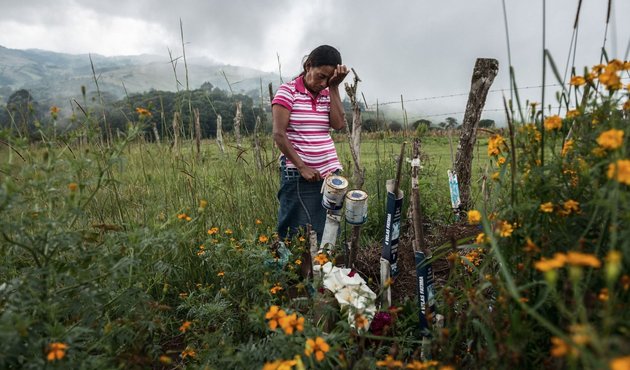
Julia Francisco Martínez stands at the graveside of her husband Juan, a Honduran Indigenous defender who was found murdered in 2015.

Julia Francisco Martínez stands at the graveside of her husband Juan, a Honduran Indigenous defender who was found murdered in 2015. Giles Clarke / Global Witness

Every year, Global Witness works with partners to gather evidence, verify and document every time a land and environmental defender is killed or disappeared. Our methodology follows robust criteria, yet undocumented cases pose challenges when it comes to analysing data

Global Witness documents killings and long-term disappearances of land and environmental defenders globally. In partnership with over 30 local, national and regional organisations in more than 20 countries, we produce an annual report containing these figures, and we have done so since 2012.

Our methodology involves a year-long process of cross-referencing data from different sources to ensure its credibility. Over 2,200 killings or long-term disappearances of defenders appear in our database since 2012 – with 146 cases documented in 2024.

Every year, we maintain a database to keep a record of these crimes and create a comprehensive global picture of the systematic violence defenders face.

The data provides a snapshot of the underlying drivers behind reprisals and indicates how some defenders and their communities face increased risks. Exposing these trends is the first of many steps to ensure that defenders and their communities are protected and can exercise their rights without fearing for their lives.

Killings and disappearances documented between 2012 and 2024

  • 2,253 defenders have been killed or disappeared since 2012 Global Witness
  • 146 of these attacks occurred in 2024 Global Witness

The accompanying press release goes into considerable detail on the methodology used.

For last year’s report see: https://humanrightsdefenders.blog/2024/09/18/global-witness-2023-2024-annual-report-violent-erasure-of-land-and-environmental-defenders/

https://globalwitness.org/en/campaigns/land-and-environmental-defenders/documenting-killings-and-disappearances-of-land-and-environmental-defenders/

https://www.rappler.com/philippines/deadliest-country-asia-environmental-defenders-2024/

Open Global Rights on creating pathways for environmental defenders in the trickiest places

October 26, 2024

Grassroots environmental defenders are building a variety of strategic, community-based approaches to environmental justice. Global actors can do more to support their work write Rebecca Iwerks & Ye Yinth & Otto Saki on 14 October 2024 in Open Global Rights.

Fighting for land, environmental, and climate justice is risky. Global Witness annually reminds us of the staggering number of people who are killed for defending their land—over 2,100 since 2012. And lethality is only the tip of the iceberg, one of a multitude of violent tactics that people face when they speak up for their community. [see also: https://humanrightsdefenders.blog/2024/09/18/global-witness-2023-2024-annual-report-violent-erasure-of-land-and-environmental-defenders/]

The last few years have seen encouraging steps to respond through global and regional policy. National governments have started to make specific commitments to protect environmental rights defenders, deeming it necessary to address the climate crisis. The Escazu agreement in Latin America has explicit requirements for the state protection of environmental rights defenders. [NOTE: On 16 October 2024 civil society in the Americas has issued an urgent call to accelerate the implementation of the Plan of Action on Human Rights Defenders, of the Escazú Agreement, adopted five months ago].Just this month, the UNFCCC Supervisory Body for Article 6.4 and the UN Secretary General’s Panel on Critical Energy Transition Minerals showed how global bodies can incorporate the protection of environmental rights defenders directly into climate policy. More broadly, hundreds of organizations have pooled their efforts to end retaliation against environmental defenders through the ALLIED network.

What do we do while we wait for momentum to build and for policy to translate into practice? We can draw hope from thoughtful, strategic examples of grassroots legal empowerment. Throughout the world, legal empowerment advocates—people helping individuals and groups know, use, and shape the law with the support of community paralegals—are assisting communities in registering their land, stopping corporate pollution of their water, and negotiating fair land use deals even in the most difficult places. 

Last year, we examined the experiences of environmental defenders who were able to continue their work in repressed environments, using tenets of legal empowerment to find pathways to justice in ways that reduce their risk. Here’s what we saw:

  1. Building community power.
  2. Changing paths to remedy.
  3. Building relationships with allies. …..
  4. Knowing, using, and shaping the law to respond to security concerns.

How do we super-charge support for this subtle, effective protection alternative? 

While grassroots justice advocates are continuing to seek remedies in tricky places, global actors can do more to support them. The primary shift that can support this type of innovative risk response is to provide flexible, unrestricted funding directly to grassroots justice advocates, whether through philanthropy or from pooled private sector funds that facilitate independent legal and technical support. Flexible funding allows the practitioners to shift their plans as pathways become riskier; it also allows them to invest in security equipment that may not clearly fit into a project-driven budget. Openness to different types of reporting can allow grassroots justice advocates to make decisions about what information is safest for them to reveal without concerns about financial security.

Secondly, those who influence global frameworks, such as the UN Sustainable Development Goals and the United Nations Framework Convention on Climate Change (UNFCCC), can do more to incorporate the security of environmental rights defenders into these frameworks. For example, the security of environmental rights defenders is integral to the access to justice encompassed by Sustainable Development Goal 16, and progress on that issue should be included in all SDG 16 reporting. Within the UNFCCC, the language protecting defenders from Article 6.4 Supervisory Body and the Secretary General’s Panel on Critical Energy Transition Minerals should be mirrored throughout climate policy frameworks and resourced during their implementation. 

While the actions against environmental defenders are shocking, there are significant steps the rights community can take now to support grassroots actors moving forward.

https://www.openglobalrights.org/creating-pathways-to-land-and-environmental-justice-in-the-trickiest-places/

Global Witness 2023-2024 Annual Report: Violent Erasure of Land and Environmental Defenders

September 18, 2024

According to a new report by Global Witness released on 10 September, more than 2,100 land and environmental defenders were killed globally between 2012 and 2023.

  • An estimated 196 land and environmental defenders were killed in 2023 around the world, according to a new Global Witness report published today
  • The new figures take the total number of defenders killed between 2012 to 2023 to 2,106
  • For the second year running, Colombia had the highest number of killings worldwide – with a record 79 defenders killed last year, followed by Brazil (25), Mexico (18) and Honduras (18)
  • Once again, Latin America had the highest number of recorded killings worldwide, with 166 killings overall – 54 killings across Mexico and Central America and 112 in South America
  • Environmental defenders are also being increasingly subject to range of tactics for silencing those who speak out for the planet across Asia, the UK, EU and US

The new figures bring the total number of defender killings to 2,106 between 2012 and 2023.

Overall, Colombia was found to be the deadliest country in the world, with 79 deaths in total last year – compared to 60 in 2022, and 33 in 2021. This is the most defenders killed in one country in a single year Global Witness has ever recorded. With 461 killings from 2012 to 2023, Colombia has the highest number of reported environmental defender killings globally on record.

See:https://humanrightsdefenders.blog/2023/09/25/global-witness-annual-report-2022-a-land-rights-defender-killed-every-other-day/

Other deadly countries in Latin America include Brazil, with 25 killings last year, and Mexico and Honduras, which both had 18 killings.

Central America has emerged as one of the most dangerous places in the world for defenders. With 18 defenders killed in Honduras, the country had the highest number of killings per capita in 2023. A total of 10 defenders were also killed in Nicaragua last year, while four were killed in Guatemala, and four in Panama.

Worldwide, Indigenous Peoples and Afrodescendents continue to be disproportionately targeted, accounting for 49% of total murders.

Laura Furones, Lead Author and Senior Advisor to the Land and Environmental Defenders Campaign at Global Witness, said:

“As the climate crisis accelerates, those who use their voice to courageously defend our planet are met with violence, intimidation, and murder. Our data shows that the number of killings remains alarmingly high, a situation that is simply unacceptable.

While establishing a direct relationship between the murder of a defender and specific corporate interests remains difficult, Global Witness identified mining as the biggest industry driverby far, with 25 defenders killed after opposing mining operations in 2023. Other industries include fishing (5), logging (5), agribusiness (4), roads and infrastructure (4) and hydropower (2).

In total, 23 of the 25 mining-related killings globally last year happened in Latin America. But more than 40% of all mining-related killings between 2012 and 2023 occurred in Asia – home to significant natural reserves of key critical minerals vital for clean energy technologies.

As well as highlighting the number of killings worldwide, the report unearths wider trends in non-lethal attacks and their harmful impacts on communities globally. It highlights cases of enforced disappearances and abductions, pointed tactics used in both the Philippines and Mexico in particular, as well as the wider use of criminalisation as a tactic to silence activists across the world.

The report also explores the crackdown on environmental activists across the UK, Europe and the US, where laws are increasingly being weaponised against defenders, and harsh sentences are more frequently imposed on those who have played a role in climate protests. The findings form part of a concerning trend of criminalisation cases emerging worldwide.

https://www.euronews.com/green/2024/09/11/european-governments-are-using-harsh-overly-broad-laws-to-silence-climate-protesters

Despite the escalating climate crisis – and governments pledging to achieve the Paris Agreement target of 1.5C – land and environmental defenders are being increasingly subject to a wide range of attacks to stop their efforts to protect the planet. At least 1,500 defenders have been killed since the adoption of the Paris Agreement on 12 December 2015.

Nonhle Mbuthuma, author of the report’s foreword and Goldman Environmental Prize Winner 2024, said:

“Across every corner of the globe, those who dare to expose the devastating impact of extractive industries — deforestation, pollution, and land grabbing — are met with violence and intimidation. This is especially true for Indigenous Peoples, who are essential in the fight against climate change, yet are disproportionately targeted year after year.

Download Report (PDF | 2.76 MB | Full Report)

Some thoughts on the 25th anniversary of the UN Declaration on Human Rights Defenders

December 14, 2023

Since its adoption, the U.N. established in 2000 a Special Rapporteur to report on the situation of HRDs, and more than 60 countries now have laws, policies, or protection mechanisms to protect HRDs.

Some countries, including the United States, sometimes sanction those who target HRDs with financial penalties and visa bans. Mechanisms like these are important, but they can be slow and used selectively, says Michael Breen of Human Rights First in Just Security of 9 December 2023.

Perpetrators often feel so protected from legal accountability that they openly threaten and attack HRDs. In 2022, more than 400 defenders were killed for their human rights work. This year the number killed is likely to be higher…In our work with HRDs, they often recommend public exposure of those who target them as one step that can be taken for their protection.

Breen states that It is on a reputational level that perpetrators can be most vulnerable and provides several examples.

We are working with HRDs to create a more international approach of social accountability. We will share research on the social circles in which their attackers move, or that they want to join. We will be compiling lists of who has received awards from where, engaging with institutions about publicly rescinding awards, and otherwise publicly causing embarrassment to perpetrators. This is largely new territory for human rights NGOs, and we will work closely with HRDs in assessing any additional risks produced by socially targeting their attackers.

———–

On 11 December 2023 Global Witness published a blog post: “Land and environmental defenders protect our planet – but they cannot halt climate change without access to justice

“For more than a decade, we’ve been documenting and celebrating the hard-fought wins of land and environmental defenders worldwide. Together, their efforts not only help to prevent environmental destruction and human rights harms by companies, but also help to protect the environment from the worst effects of climate change.”

“Defenders globally continue to face reprisals after speaking out to protect the environment. At least 1,910 land and environmental defenders around the world have been killed since 2012, with 177 cases in 2022 alone. Of these killings last year, 88% occurred in Latin America – a region consistently found to be the most dangerous place in the world for activists.”

“Impunity is consistently named as a key driver behind attacks on defenders by the UN Special Rapporteur on the situation of human rights defenders, Mary Lawlor, whose office has repeatedly noted how failures to properly prosecute perpetrators have fueled further attacks. This is no coincidence. Every perpetrator who walks free sends a fatal message to defenders and activists worldwide.”

“The future of our planet depends on the continued stewardship of Indigenous people over their ancestral land, with Indigenous practices cited as protecting 80% of the world’s biodiversity. We simply cannot meet the 1.5°C limit and prevent devastating consequences on human life without the efforts of environmental defenders.”

See also: https://ishr.ch/25-years-un-declaration-on-human-rights-defenders/

https://www.globalwitness.org/en/blog/land-and-environmental-defenders-protect-our-planet-but-they-cannot-halt-climate-change-without-access-to-justice/

Global Witness annual report 2022: a land rights defender killed every other day

September 25, 2023

Over the last decade, nearly 2,000 land and environment defenders have been killed around the world, and in 2022, a land defender was killed every other day, according to a report. [for last year’s see: https://humanrightsdefenders.blog/2022/10/05/global-witness-report-2021-continued-disaster/]

The study from Global Witness, a non-profit human rights environmental watchdog, shows that the killings of Indigenous peoples defending their territories and resources represented nearly 34 percent of all lethal attacks despite making up about 5 percent of the world’s population.

Governments where these violations are happening are not acting properly to create a safe environment for defenders and a civic space proper for them to thrive,” said Gabriella Bianchini, senior advisor for the land and environmental defenders team at Global Witness. “They are not reporting or investigating and seeking accountability for reprisals against defenders. And most importantly, they are not promoting legal accountability in the proper manner.”

Latin America has consistently ranked as the deadliest region for land defenders overall and saw almost 9 in every 10 recorded killings in 2022. More than a third of those fatal attacks took place in Colombia. In 2021, Brazil was named the deadliest country for land defenders by Global Witness and now sits at second; In July, activist Bruno Pereira and journalist Dom Phillips were murdered in the Brazilian Amazon.

Growing tensions from agribusiness, mining, and logging have led to consistent lethal attacks in the region. Between 2011 and 2021, for instance, more than 10,000 conflicts related to land rights and territories were recorded in Latin America alone. 

The worsening climate crisis and the ever-increasing demand for agricultural commodities, fuel, and minerals will only intensify the pressure on the environment — and those who risk their lives to defend it,” wrote the authors.

Earlier this year, Frontline Defenders, an international human rights organization, released a similar report to Global Witness’ with corresponding findings — including that Colombia was the most dangerous country for land defenders. [see: https://humanrightsdefenders.blog/2023/04/04/front-line-defenders-just-published-its-global-analysis-2022-new-record-of-over-400-killings-in-one-year/ . While Frontline Defenders reported that there were 186 land defender deaths in Colombia and Global Witness reported 60, Bianchini said differences in statistics are the result of different methodologies, which vary by organization. However, both organizations’ reports were united in findings: Indigenous people make up a disproportionate amount of the deaths among land and environment defenders, Latin America sees the highest rates of violence, and the number of killings is likely underreported.

“I am incredibly grateful and impressed to see the fight of all of these communities who are there living in these areas and who have been acting for thousands of years to protect the array of life,” said Bianchini. “I cannot believe that humanity right now is living in a moment where we are killing those who are protecting their own lands and civil rights.”

https://grist.org/indigenous/in-2022-a-land-defender-was-killed-every-two-days/

https://www.globalwitness.org/en/campaigns/environmental-activists/standing-firm/

Global Witness report 2021: continued disaster

October 5, 2022

Stuti Mishra in the Independent of 29 September 2022 summarises and analyses the report “A Decade of Defiance: Ten years of reporting land and environmental activism worldwide” by Global Witness

More than 1,700 environmental defenders have been killed around the world in the last decade with one death reported every other day on average…The report titled A Decade of Defiance: Ten years of reporting land and environmental activism worldwide, released by Global Witness, reveals the increasing threats environmental activists are facing as the climate and biodiversity crisis worsens.

The research states that a total of 1,733 people have been killed over the past 10 years trying to protect their land and resources. That is an average of one defender killed approximately every two days over 10 years.

The report shows Brazil has been the deadliest country for environmental defenders with 342 lethal attacks reported since 2012 with over 85 per cent of killings within the Brazilian Amazon.

The data found within the report also shows that over half of the attacks over the 10-year period have taken place in three countries — Brazil, Colombia, and the Philippines — with around 300 killings reported in these countries.

Mexico and Honduras witnessed over 100 killings while Guatemala and India saw 80 and 79 respectively, remaining one of the most dangerous countries. The report also reports 12 mass killings, including three in India and four in Mexico.

Mexico was the country with the highest recorded number of killings in 2021, totalling 54 killings, up from 30 the previous year. Almost half of those killed were again Indigenous people while over a third were forced disappearances, including at least eight members of the Yaqui community.

The report also reveals that over three-quarters of the attacks recorded in 2021 took place in Latin America. In Brazil, Peru and Venezuela, a big majority of 78 per cent of these attacks occurred in the Amazon.

Meanwhile, the biggest increase in lethal attacks was witnessed in Brazil and India in 2021 with 26 deaths reported in Mexico, up from 20 and 14 in India, up from four.

Both Colombia and the Philippines saw a drop in killings to 33 in 2021 from 65, and 19 from 30 in 2021 respectively. Yet overall they remain two of the countries with the highest numbers of killings in the world since 2012.

2021 Highlights from Global Witness report

  • Around 200 Land and Environmental Defenders were killed in 2021 – nearly four people a week
  • Over three-quarters of the attacks recorded in 2021 took place in Latin America
  • Nearly 40 per cent of all attacks reported were against Indigenous people
  • Mexico recorded the highest number of killings in 2021
  • Brazil and India both saw a rise in lethal attacks in 2021
  • 50 of the victims killed in 2021 were small-scale farmers
  • Around 1 in 10 of the defenders recorded killed in 2021 were women, nearly two-thirds of whom were Indigenous [see also: https://humanrightsdefenders.blog/2021/09/13/global-witness-2020-the-worst-year-on-record-for-environmental-human-rights-defenders/]

In Africa, the Democratic Republic of Congo remained the country with the highest number of attacks — eight defenders were killed there in 2021. All eight of these killings were in Virunga National Park, which remains extremely dangerous for the park rangers protecting it.

The organisation began collecting data on attacks against those defending land and the environment in 2012 and found that the control and use of land and territory is a central issue in countries where defenders are threatened. Much of the increasing killing, violence and repression is linked to territorial conflicts and the pursuit of economic growth based on the extraction of natural resources from the land, it states. The research has also highlighted that Indigenous communities in particular face a disproportionate level of attacks — nearly 40 per cent — even though they make up only 5 per cent of the world’s population.

However, the research found that the figures also do not capture the true scale of the problem, as tightened control on media has led to severe underreporting in some countries where environmental defenders are most vulnerable. Research has also found that few perpetrators of killings are rarely ever brought to justice due to the failures of governments to properly investigate these crimes.

While a majority of these attacks are not properly investigated or reported on, a big proportion of these attacks were linked to sectors like mining and infrastructure, including large-scale agribusiness and hydroelectric dams.

Many authorities ignore or actively impede investigations into these killings often due to alleged collusion between corporate and state interests, the report says.

All over the world, Indigenous peoples, environmental activists and other land and environmental defenders risk their lives for the fight against climate change and biodiversity loss.

They play a crucial role as a first line of defence against ecological collapse, yet are under attack themselves facing violence, criminalisation and harassment perpetuated by repressive governments and companies prioritising profit over human and environmental harm.

a spokesperson for Global Witness said

With democracies increasingly under attack globally and worsening climate and biodiversity crises, this report highlights the critical role of defenders in solving these problems,” a spokesperson for Global Witness said, adding that the organisation makes an “urgent appeal for global efforts to protect and reduce attacks against them.”

Apart from killings, the report also reveals a number of tactics being used to silence them, like death threats, surveillance, sexual violence, or criminalisation – and that these kinds of attacks are even less well reported.

https://www.globalwitness.org/en/campaigns/environmental-activists/decade-defiance/

https://www.independent.co.uk/climate-change/news/global-witness-report-environment-defenders-threat-b2176247.html

The nominees for the EU’s Sakharov Prize 2021

September 29, 2021
Sakharov Prize for Freedom of Thought Award Ceremony 2020
Last year’s Sakharov Prize ceremony  

This year’s nominations for the European Parliament’s Sakharov Prize for Freedom of Thought were presented in a joint meeting of the foreign affairs and development committees and the human rights subcommittee in Brussels on 27 September 2021. They are:

Alexei Navalny, nominated by the EPP and Renew Europe for his courage in fighting for freedom, democracy and human rights, is a Russian opposition politician, anti-corruption activist and major political opponent of the country’s president Vladimir Putin. Known through his LiveJournal blog, YouTube and Twitter, where he has millions of followers he came to international prominence by organising demonstrations, running for office and advocating reforms against corruption in Russia, Putin and his government. In August 2020, while on a trip to Siberia, he was poisoned. He spent months recovering in Berlin, but returned to Moscow in January 2021 where he was arrested. In February he was sentenced to 2½ years in prison. Now incarcerated in a high-security penal colony, he went on a 23-day hunger strike in April to protest the lack of medical care. In June 2021, a Russian court banned Navalny’s regional offices and his Anti-Corruption Foundation.

Afghan women, nominated by S&D and the Greens/EFA for their brave fight for equality and human rights. Under the previous Taliban regime, women experienced forced marriage, high maternity mortality, low literacy, forced virginity tests and couldn’t travel without a male. Following the Taliban’s return to power, women are again excluded from government and education and their rights and freedoms are threatened. The women included in the nomination are:

  • Shaharzad Akbar – chair of the Afghan Independent Human Rights Commission (AIHRC)
  • Mary Akrami – head of the Afghan Women’s Network [see: https://www.trueheroesfilms.org/thedigest/laureates/C78046E0-F42F-8A60-205C-CC55E54281CD]
  • Zarifa Ghafari – mayor of Maidan Shar since 2018
  • Palwasha Hassan – activist and the director of the Afghan Women Educational Centre (AWEC)
  • Freshta Karim – founder of a mobile library and advocate for education and learning
  • Sahraa Karimi – first female president of the Afghan state film company
  • Metra Mehran – women empowerment and education advocate and co-founder of the Feminine Perspectives Movement
  • Horia Mosadiq – human and women’s rights activist
  • Sima Samar – human rights advocate, former Minister of Women’s Affairs and former chair of the Afghan Independent Human Rights Commission [see: https://www.trueheroesfilms.org/thedigest/laureates/4AEEBC97-C788-49F5-8DE1-33F7855D2192]
  • Habiba Sarabi – member of the negotiating team of the Islamic Republic of Afghanistan
  • Anisa Shaheed – political reporter


Jeanine Áñez,
nominated by the ECR, is a Bolivian politician and symbol of repression against dissidents and deprivation of due process and rule of law in Latin America. She became interim president in November 2019, after alleged electoral fraud by incumbent Evo Morales. In November 2020, after free and fair elections there was a peaceful transfer of power. However, on 13 March 2021 she was arrested on charges of “terrorism, sedition and conspiracy”. Accused of plotting a coup d’état against Morales, she has been imprisoned ever since.

Sultana Khaya, nominated by The Left, is a Sahrawi activist and human rights defender based in the Western Sahara, promoting the right to self-determination for the Sahrawi people. She is the president of the organisation League for the Defence of Human Rights and against Plunder of Natural Resources in Boujdour/Western Sahara and member of the Saharawi Organ against the Moroccan Occupation (ISACOM). She has been under de facto house arrest without a warrant since 19 November 2020. Since 2005, she has suffered physical attacks, death threats, torture and sexual assaults. Over the last year, the Moroccan authorities have intensified repression against Saharawi activists and journalists, who are subjected to ill-treatment, arbitrary arrests and harassment in order to silence or punish them for non-violent action against the occupation of Western Sahara. On 1 July 2021, the UN Special Rapporteur on Human Rights Defenders Mary Lawlor strongly condemned the reprisals against Sultana Khaya.

Global Witness, nominated by Marie Toussaint and other 42 MEPs, is a UK-based NGO, which for more than 25 years has investigated and exposed environmental and human rights abuses in the oil, gas, mining and timber sectors, tracking money and influence through the global financial and political system. Nowadays, it also focuses on the issue of the climate emergency, attacks on public space and civic freedoms and the protection of environmental defenders throughout the world. Since 2011, Global Witness and its 22 local partners have addressed abuses of power to protect human rights, verifying and publishing each year the number of defenders killed worldwide. Sewe also: https://humanrightsdefenders.blog/2021/09/13/global-witness-2020-the-worst-year-on-record-for-environmental-human-rights-defenders/

For more on the Sakharov Prize for Freedom of Thought see: https://www.trueheroesfilms.org/thedigest/awards/BDE3E41A-8706-42F1-A6C5-ECBBC4CDB449 

https://www.europarl.europa.eu/news/en/headlines/eu-affairs/20210916STO12702/sakharov-prize-2021-the-nominees

https://www.aninews.in/news/world/asia/european-group-nominates-11-afghan-women-for-human-rights-award20210928181723/

https://www.reuters.com/world/russias-navalny-nominated-eu-rights-prize-2021-09-27/

Global Witness: 2020 the worst year on record for environmental human rights defenders

September 13, 2021

Since 2012, Global Witness has been gathering data on killings of land and environmental defenders. In that time, a grim picture has come into focus – with the evidence suggesting that as the climate crisis intensifies, violence against those protecting their land and our planet also increases. It has become clear that the unaccountable exploitation and greed driving the climate crisis is also driving violence against land and environmental defenders.

In 2020, we recorded 227 lethal attacks – an average of more than four people a week – making it once again the most dangerous year on record for people defending their homes, land and livelihoods, and ecosystems vital for biodiversity and the climate. [CF: https://humanrightsdefenders.blog/2020/07/29/global-witness-2019-worst-year-ever-for-land-rights-and-environmental-defenders/]

As ever, these lethal attacks are taking place in the context of a wider range of threats against defenders including intimidation, surveillance, sexual violence, and criminalisation. Our figures are almost certainly an underestimate, with many attacks against defenders going unreported. You can find more information on our verification criteria and methodology in the full report. Downloads

In 2020, over half of attacks took place in just three countries: Colombia, Mexico and the Philippines.

For the second year in a row, Colombia saw the highest number of killings in 2020, with 65 land and environmental defenders murdered. These took place in the context of widespread attacks on human rights defenders and community leaders across the country, despite the hopes of the 2016 peace agreement. Indigenous peoples were particularly impacted, and the COVID pandemic only served to worsen the situation. Official lockdowns led to defenders being targeted in their homes, and government protection measures were cut.

In Mexico, we documented 30 lethal attacks against land and environmental defenders in 2020, a 67% increase from 2019. Logging was linked to almost a third of these attacks, and half of all the attacks in the country were directed against Indigenous communities. Impunity for crimes against defenders remains shockingly high – up to 95% of murders do not result in prosecution.

In the Philippines, the deteriorating human rights situation has received increasing international condemnation. Opposition to damaging industries is often met with violent crackdowns from the police and military. In our data, over half of the lethal attacks were directly linked to defenders’ opposition to mining, logging, and dam projects.

President Duterte’s years in office have been marked by a dramatic increase in violence against defenders. From his election in 2016 until the end of 2020, 166 land and environment defenders have been killed – a shocking increase for a country which was already a dangerous place to stand up for the environment.

Forest defenders under threat

In instances where defenders were attacked for protecting particular ecosystems, 70% were working to defend the world’s forests from deforestation and industrial development. In Brazil and Peru, nearly three quarters of recorded attacks took place in the Amazon region of each country.

Almost 30% of the attacks were reportedly linked to resource exploitation (logging, mining and large-scale agribusiness), and hydroelectric dams and other infrastructure. Of these, logging was the sector linked to the most murders, accounting for 23 cases. Mexico saw a large rise in logging- and deforestation-related killings, with 9 in 2020.

An unequal impact

Much like the impacts of the climate crisis itself, the impacts of violence against land and environmental defenders are not felt evenly across the world. The Global South is suffering the most immediate consequences of global warming on all fronts, and in 2020 all but one of the 227 recorded killings of defenders took place in the countries of the Global South.

The disproportionate number of attacks against Indigenous peoples continued, with over a third of all fatal attacks targeting Indigenous people – even though Indigenous communities make up only 5% of the world’s population. Indigenous peoples were also the target of 5 out of the 7 mass killings recorded in 2020.

As has been the case in previous years, in 2020 almost 9 in 10 of the victims of lethal attacks were men. At the same time, women who act and speak out also face gender-specific forms of violence, including sexual violence. Women often have a twin challenge: the public struggle to protect their land, and the less-visible struggle to defend their right to speak within their communities and families.

[Defenders are] at risk because they find themselves living on or near something that some corporation is demanding. That demand – the demand for the highest possible profit, the quickest possible timeline, the cheapest possible operation – seems to translate eventually into the understanding, somewhere, that the troublemaker must go. – Bill McKibben

Business is responsible

Many companies engage in an extractive economic model that overwhelmingly prioritises profit over human rights and the environment. This unaccountable corporate power is the underlying force that has not only driven the climate crisis to the brink, but which has continued to perpetuate the killing of defenders.

In too many countries, rich in natural resources and climate critical biodiversity, corporations are operating with almost complete impunity. Because the balance of power is stacked in the favour of corporations, it’s rare that anyone is arrested or brought to court for killing defenders. When they are it’s usually the trigger-men – the ones holding the guns, not those who might be otherwise implicated, directly or indirectly, in the crime.

Governments must stop the violence

Governments have been all too willing to turn a blind eye and fail in providing their core mandate of upholding and protecting human rights. They are failing to protect land and environmental defenders, in many cases directly perpetrating violence against them, and in others complicit with business.

Even worse, states around the world – from the US to Brazil, Colombia and the Philippines – used the COVID pandemic to strengthen draconian measures to control citizens and close civic space.

There is a clear link between the availability of civic space and attacks against defenders – the most open and tolerant societies see very few attacks, whereas in restricted societies, attacks are much more frequent.

The majority of killings took place in states with limited civic freedoms

Data on civic freedoms via CIVICUS Monitor Open Narrowed Obstructed Repressed Closed 0 50 100 150 killings Killings in closed civic spaces are likely to be underreported about:blank

Recommendations

As the climate crisis intensifies, so too does its impact on people, including on land and environmental defenders. Meaningful climate action requires protecting defenders, and vice versa. Without significant change this situation is only likely to get worse – as more land is grabbed, and more forests are felled in the interest of short-term profits, both the climate crisis and attacks against defenders will continue to worsen.

Governments can turn the tide on the climate crisis and protect human rights by protecting civil society, and through passing legislation to hold corporations accountable for their actions and profits. Lawmakers have relied too much on corporate self-reporting and voluntary corporate mechanisms. As a result, companies continue to cause, contribute to, and benefit from human rights abuses and environmental harms, particularly across borders.

The United Nations, through its member states, must formally recognise the human right to a safe, healthy, and sustainable environment, ensure that commitments to meet the Paris Agreement integrate human rights protections, and implement the recommendations of the Special Rapporteur on human rights defenders and the UN Working Group on Business and Human Rights.

Statesmust ensure national policies protect land and environmental defenders and scrap legislation used to criminalise them, require companies to conduct human rights and environment due diligence in their global operations, and investigate and prosecute all actors involved in violence and other threats against defenders.

The European Commission is currently preparing to publish binding due diligence legislation, including an initiative on Sustainable Corporate Governance. They must ensure this initiative requires all companies doing business in the EU, including financial institutions, to identify and address human rights and environmental harms along their value chains. This legislation must include robust liability regimes and penalties to hold companies accountable for failing to do so.

Finally, companies and investors must publish and implement effective due diligence systems to identify and prevent human rights and environmental harms throughout their supply chains and operations, adopt and implement a zero-tolerance stance on reprisals and attacks on land and environmental defenders, and provide effective remedy when adverse human rights and environmental impacts and harms occur.

People sometimes ask me what I’m going to do, whether I’m going to stay here and keep my mother’s fight alive. I’m too proud of her to let it die. I know the dangers – we all know the dangers. But I’ve decided to stay. I’m going to join the fight. – Malungelo Xhakaza, daughter of murdered South African activist Fikile Ntshangase

Defenders are our last line of defence against climate breakdown. We can take heart from the fact that, even after decades of violence, people continue to stand up for their land and for our planet. In every story of defiance against corporate theft and land grabbing, against deadly pollution and against environmental disaster, is hope that we can turn the tide on this crisis and learn to live in harmony with the natural world. Until we do, the violence will continue.

Those murdered included South African Fikile Ntshangase, 65, who was involved in a legal dispute over the extension of an opencast mine operated by Tendele Coal near Somkhele in KwaZulu-Natal province. She was shot dead in her own living room. See also: https://humanrightsdefenders.blog/tag/fikile-ntshangase/

https://www.bbc.com/news/science-environment-58508001

Download the full report : Last line of defence (low resolution) (2.3 MB), pdf

Download the full report : Last line of defence (high resolution) (18.1 MB), pdf

Goldman Prize laureates express concern about colleague Alberto Curamil in Chile

July 3, 2021
Alberto Curamil. (Vicente Franco/Water For Life)

In the Washington Post of 1 July 2021, Craig Williams and Alfred Brownell (winners of the Goldman Prize in 2006 and 2019 respectively) wrote: He has worked to protect the Earth. Now we must protect him.”

As environmental activists and human rights defenders, we are alarmed by a spike in violent attacks on and killings of land rights activists across the globe and, most recently, in Latin America. The latest in this disturbing trend is a violent assault on Alberto Curamil, a leader of the Indigenous Mapuche people in southern Chile and an activist working to protect his people’s land, water and other resources. As we write, we fear Alberto could become the latest casualty in a global war against Earth’s front-line protectors. [see: https://www.trueheroesfilms.org/thedigest/laureates/4f845ff0-86d2-4b12-97af-1590f6ba8602]

On April 29, Alberto was attending a protest along with his son andnephew, both teenagers. They were there to show support for Elena Paine, another Mapuche leader, and her community a day after her house and crops in Koyam Montre were burned to the ground. Alberto, Paine and members of the Machupe community believe that the threat may have come from far-right-wing groups in the area.

As Alberto and his teenage relatives were driving away from the protest, the back window of their truck was shattered by a tear-gas canister. When they got out of the vehicle, police shot Alberto at point-blank range three times with buckshot, which lodged in his back, side, arm and the back of his leg. Then, police beat the teens with batons while yelling “Pinche Mapuche” (“Lousy Mapuche”). The three were arrested and charged with disorderly conduct at a public event and breach of sanitary provisions. Alberto was taken to a hospital three hours after being brought into custody, bleeding and in excruciating pain. The teens were bruised, battered and traumatized.

This was not the first time Alberto had been a target of the Chilean government. In 2018, he was arrested and jailed for 15 months on false charges of armed robbery based entirely on hearsay evidence. He was acquitted of all charges and released in December 2019. Due to his imprisonment, he had been unable to receive the Goldman Prize — known as the “green Nobel” — at ceremonies in April and May 2019 in D.C. and San Francisco. He was previously arrested after being violently beaten by police in 2014.

Our alarm has led us, along with several dozen of our fellow Goldman Prize winners from across the globe, to demand assurances from Chilean President Sebastián Piñera that Alberto’s safety will be given the highest priority. We are also seeking support through appeals to the U.S. Congress, the European Union and the United Nations.

We believe time is of the essence, especially given the broader context of violence against those who stand up to protect the Earth. In 2016, the internationally celebrated Honduran Indigenous activist and Goldman Prize winner Berta Cáceres was murdered by operatives for the power company Desarrollos Energéticos (Desa) for her opposition to a hydroelectric project on the Rio Gualcarque. Seven men accused of plotting Cáceres’s murder were convicted and sentenced to between 30 and 50 years in prison. An eighth suspect, Roberto David Castillo Mejía, president and chief executive of Desa, is currently on trial, accused of masterminding the murder-conspiracy plot.

In its latest report, Global Witness recorded the highest number of environmental defenders killed in a single year — more than 212 people killed in 2019, a rate of four a week. More than two-thirds of the killings took place in Latin America. [see also: Global]

The killings of and assaults on Earth’s defenders worldwide have accelerated in some of the most fragile pristine landscapes and biodiverse countries, jeopardizing the fight against climate change and species extinction. In Mexico, police are investigating the suspicious killings of two employees at a butterfly reserve in 2020. That same month, six members of an Indigenous community were killed at a nature reserve in Nicaragua. And in South Africa, environmental activist Fikile Ntshangase was killed last year in an attack local activists fear was related to her opposition to disruptive local mining operations.

In Chile, Indigenous communities’ push for human rights go hand in hand with their struggle for land and water rights, as government-backed companies try to run them off their land with threats, harassment and violence.

Attacks on environmental defenders in Latin America and worldwide are not only an affront to human rights, but also a cause for deep alarm at a time when the world must fight climate change and bring about a sustainable future. We are demanding that the Chilean government take immediate steps to stop these aggressive and often deadly attacks on the Mapuche community. There should also be a thorough, independent investigation into the destruction of Paine’s home.

We must act against this brutality, or we threaten the fight for a planet in crisis.

https://www.washingtonpost.com/opinions/2021/07/01/alberto-curamil-chile-environmental-defender-safety/