Posts Tagged ‘Gina romero’

UN experts are turning the spotlight on Kenya over a troubling pattern of human rights violations – the case of Bob Njagi and Nicholas Oyoo

October 30, 2025
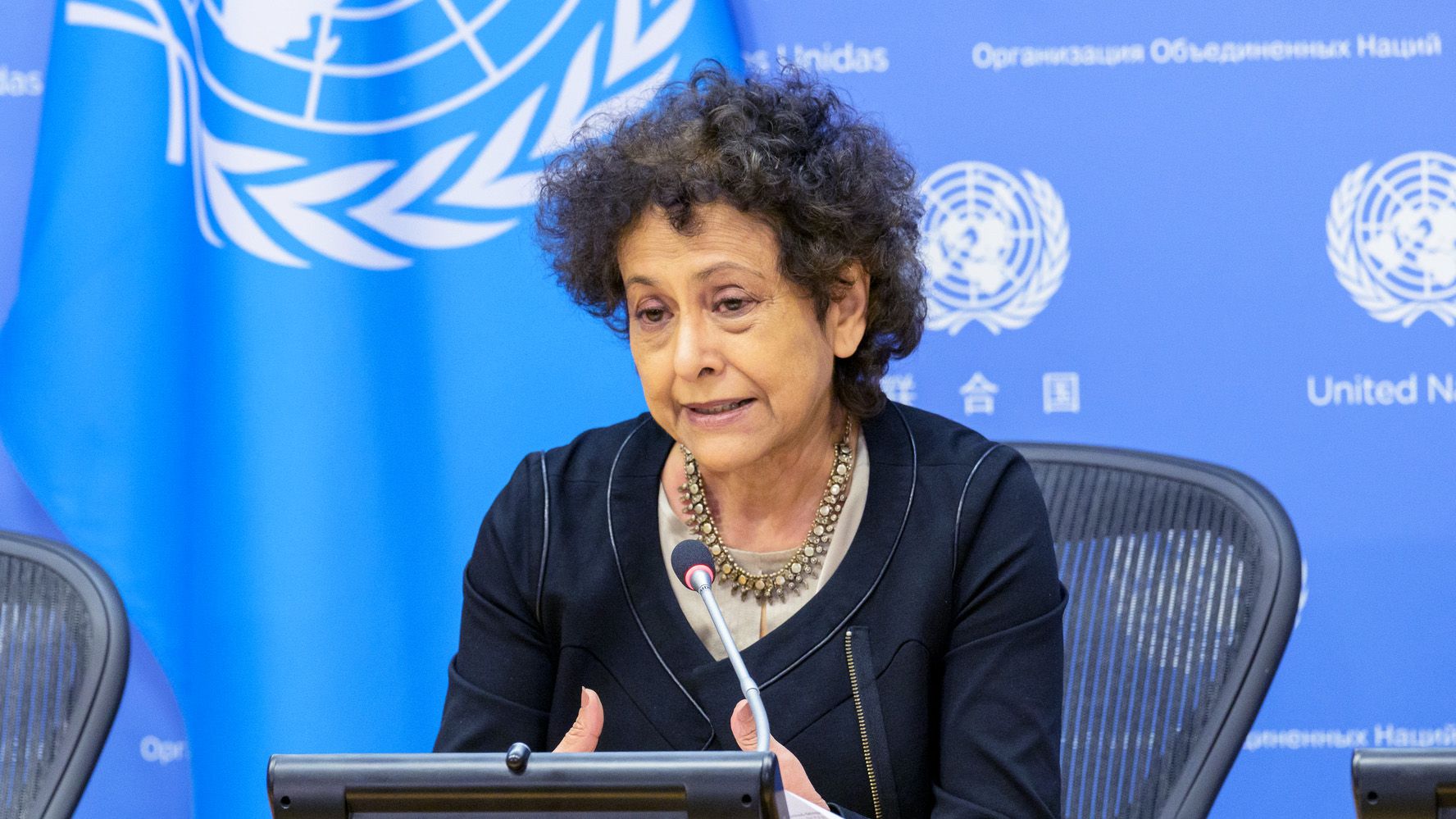
UN Special Rapporteur on Freedom of Expression and Opinion Irene Khan
Mary Lawlor UN Special Rapporteur for human rights defenders

On 5 August 2025 a group of United Nations human rights experts has written to the Kenyan government over allegations of serious human rights violations.  These violations include the killing of protesters, the arrest and detention of human rights defenders, the deportation of a Ugandan lawyer, and the suppression of media freedom during the June 25 protests across the country.

The letter (referenced AL KEN 3/2025,) was sent by four UN Special Rapporteurs, namely Mary Lawlor (Human Rights Defenders), Matthew Gillett (Arbitrary Detention), Irene Khan (Freedom of Expression), and Gina Romero (Freedom of Assembly and Association). 

Copies of the letter were also shared with the governments of Uganda and Tanzania, given their involvement in the alleged incidents. The Kenyan government was given 60 days to respond to the communication before being made public on the UN’s human rights website.

By October 22, Kenya had not responded to the contents of the letter. The experts expressed grave concern over what they described as “an emerging pattern of criminalisation and harassment of human rights defenders in Kenya.”

According to the communication, nationwide protests on June 25, 2025, left 16 people dead and hundreds injured. The demonstrations, which marked the first anniversary of the 2024 anti-Finance Bill protest, were allegedly met with excessive police force.

During the protests, several major media houses reportedly had their transmission centres raided by police and communication officials who switched off live broadcasts. The Communications Authority of Kenya allegedly issued a directive barring media outlets from airing live coverage of the protests,  a decision later suspended by the High Court in Milimani, which termed it “potentially unconstitutional” pending a hearing scheduled for October 24, 2025.

Kenyan youth confronts UN with tough questions in Geneva forum [VIDEO]

The letter cites the arrest of Mark Amiani, John Mulingwa Nzau, and Francis Mutunge Mwangi, all members of the Social Justice Centres Working Group, who were detained by police on June 27 while travelling to work in Mombasa.  They were later charged with incitement of violence, damage to property, and theft, though the experts said no credible evidence was presented in court.

They were held for five days before being released on bail on July 2, with conditions requiring them to report to the police twice weekly. Their next court hearing was scheduled for August 21, 2025.

Prominent activist and photojournalist Boniface Mwangi was also arrested at his Nairobi home on July 19, where police allegedly confiscated electronic equipment and even tear gas canisters.  He was charged with unlawful possession of ammunition and released on bail two days later.

The UN experts noted that Mwangi had previously been arrested several times and was abducted in Tanzania in May 2025, before being found in Kenya’s coastal town of Ukunda days later.

The letter further highlighted the deportation of Ugandan lawyer Martin Mavenjina, a senior legal advisor at the Kenya Human Rights Commission (KHRC), who was expelled from Kenya on July 5 despite having a valid residency and a Kenyan family. 

He was allegedly detained at Jomo Kenyatta International Airport and forced onto a flight to Kampala without being informed of the reason or given access to legal counselADVERTISEMENT

A day after Mavenjina’s deportation, armed men reportedly stormed a press conference hosted at the KHRC offices in Nairobi, where women and widows were calling for an end to police brutality and enforced disappearances.  The assailants allegedly destroyed journalists’ equipment and accused the women of organising protests. Despite reports being filed, no investigations have been launched, according to the letter.

UN calls for action and accountability: The UN experts urged the Kenyan government to clarify the legal basis for the arrests, detentions, and deportations, and to end the intimidation of journalists and human rights defenders. 

They also demanded investigations into the killings and injuries from the protests.

The experts warned that the events “constitute blatant violations” of international human rights laws, including the International Covenant on Civil and Political Rights, which guarantees freedoms of

But good news the two were found back after more than a month, see: https://www.monitor.co.ug/uganda/news/national/missing-kenyan-activists-freed-after-39-days-in-secret-ugandan-military-detention-5257852

and https://nation.africa/kenya/news/africa/kenyan-activists-bob-njagi-nicholas-oyoo-freed-after-diplomatic-pressure-on-uganda-5257840

and: https://k24.digital/411/activist-bob-njagi-opens-up-on-chilling-torture-he-faced-while-detained-in-uganda

https://www.pulselive.co.ke/articles/news/local/why-un-experts-are-calling-out-kenya-in-scathing-letter-to-government-2025102704150886531

https://nation.africa/kenya/news/abductions-kenya-risks-sanctions-for-ignoring-un-queries-on-human-rights-abuses-5245882

https://eastleighvoice.co.ke/national/231234/east-africa-law-society-warns-of-eroding-rule-of-law-as-kenyan-activists-tanzanian-diplomat-go-missing

https://nation.africa/kenya/news/kenya-responds-to-un-on-abductions-after-media-highlight-5249510

https://www.theeastafrican.co.ke/tea/news/east-africa/kenya-tells-un-it-acted-within-the-law-on-rights-5251392#google_vignette

https://www.msn.com/en-xl/africa/kenya/activist-reveals-possible-whereabouts-of-bob-njagi-and-nicholas-oyoo-claims-they-ve-been-tortured/ar-AA1PLNzW

https://www.the-star.co.ke/news/2025-11-08-activists-njagi-oyoo-freed-what-we-know-so-far

https://www.chron.com/news/world/article/kenyan-activists-released-from-ugandan-detention-21149624.php

Special Rapporteur: harmful narratives restricting freedom of assembly

November 29, 2024

In her latest report to the UN General Assembly, the Special Rapporteur on the rights to freedom of peaceful assembly and of association , Gina Romero, underscored the effects of a growing negative rhetoric directed at civil society and activists.

The Special Rapporteur presented her report ‘Protecting the Rights to Freedom of Peaceful Assembly and of Association from Stigmatization’ in an interactive dialogue with States at the UN General Assembly’s Third Committee.

The report highlights the growing number of harmful narratives that stigmatise civil society groups and activists engaged in association and peaceful assemblies, labeling them as ‘enemies or threats to security and values.’

The Special Rapporteur highlighted an alarming trend of harmful narratives that undermine the legitimacy of peaceful activism and target human rights defenders and the public for exercising their rights to freedom of assembly and association. She discussed how activists and organisations face stigmatising labels and accusations for organising peaceful protests, forming associations, and bringing urgent issues to the attention of authorities and the international community. Her report listed specific narratives and language used in various countries to stigmatise the work of civil society organisations and activists.

Particularly vulnerable to these harmful attacks are advocates for ethnic and religious minorities, women, children, young activists, LGBTIQ+ people, environmental and Indigenous activists, and defenders of democracy, transparency, and fair elections, with trade unions and labor rights groups also being targeted frequently.

These narratives result in the restriction of human rights. While most States participating in the interactive dialogue welcomed the report, some rejected  the references to  their country in the report, including China, India, Iran, and Russia. Several States asked the Rapporteur about best practices and concrete examples to support and protect the right to peaceful assembly and association.

Gina Romero responded that States should avoid stigmatising protesters and civil society, facilitate peaceful assembly and association, and ensure any restrictions are evidence-based and meet the requirements of legality, necessity and proportionality. She also responded to criticism from China, India, Iran and Russia by emphasising the challenges faced when there are no responses from States to inquiries, denial of requests for country visits, or lack of clear information about state actions and called on states to engage more openly with her mandate. 

The Special Rapporteur also noted that harmful narratives from both State and non-State actors restrict access to freedoms of assembly and association, leading to rights violations and shrinking civic space. She called on States to detect, monitor, and counter such cases to ‘prevent undue legal restrictions and repression of these freedoms, which create a cycle of repression and stigmatization’ and implement legal and policy reforms.

https://ishr.ch/latest-updates/unga79-special-rapporteur-reports-alarming-rise-in-harmful-narratives-restricting-freedom-of-peaceful-assembly-and-association

Lawlor: more than 400 human rights defenders, journalists in DRC targeted within a year

June 22, 2024

On 19 June 2024, Mary Lawlor, Special Rapporteur on the situation of human rights defenders expressed alarm at increasing targeting of human rights defenders in the Democratic Republic of Congo (DRC), particularly in villages and provinces in the east of the country, as the armed conflict intensifies.

Attacks, intimidation and killings of human rights defenders continue on a daily basis in the Democratic Republic of Congo, despite repeated calls for authorities to step up efforts to investigate human rights violations in the country and arrest and bring perpetrators to justice,” she said

From June 2023 to April 2024, the United Nations Joint Human Rights Office in the DRC documented incidents of intimidation, threats of physical violence, attacks and acts of reprisals targeting 387 human rights defenders and 67 journalists, perpetrated by both State agents and armed groups.

Lawlor noted that two women human rights defenders, members of the Youth Movement for Change (LUCHA), had been facing violence and death threats from Twigwaneho armed group since November 2023.

“When LUCHA organised public protests against recent attacks on their village in the South Kivu province, the rebel group sent armed forces to arrest them, forcing them to flee and go into hiding. To this day, they continue to receive death threats and live in hiding,” the expert said. One of the women’s mothers was abducted by the same rebel group in February 2024 and reportedly executed for not revealing her daughter’s whereabouts.

Obedi Karafuru, a human rights defender and head of the workers’ committee, was shot dead by unidentified men in his home village in rebel-held Rutshuru territory in North Kivu province. The Special Rapporteur noted that he had been working to secure fair compensation for former workers on a logging project and had been complaining to authorities for the past four years about death threats against him and his colleagues. “No investigation has been opened into the murder,” Lawlor said.

A human rights defender received death threats in February 2022 when he questioned the effectiveness of the Government’s state of emergency in North Kivu, stating that authorities had failed to guarantee the safety of the population. “The death threats forced him into hiding, as State authorities never responded to his call for protection,” the expert said. Four women human rights defenders from the women-led organisation Tous pour la Paix et la Cohésion Sociale, have been victims of kidnapping and violence following activities they organised around women’s rights.

The expert noted that the DRC adopted a law on the protection of human rights defenders in 2023, which meets the minimum international standards, and ensures special protection for women human rights defenders as well as physical protection of human rights defenders and their families.

“Many executions of human rights defenders are preceded by death threats,” Lawlor said, referring to the report she presented to the Human Rights Council in 2021. “Unless the physical integrity of human rights defenders is guaranteed, they will not be able to fully contribute to the construction of a just society that respects human rights,” she said.

“I call on authorities in the DRC to take all necessary measures to ensure a safe working space and protection for human rights defenders, as well as to guarantee the exercise of their rights to freedom of peaceful assembly and association and to effectively and reliably investigate all cases of executions in accordance with international standards, including the Minnesota Protocol, and bring those responsible to justice,” Lawlor said.

This statement is endorsed by Gina Romero, Special Rapporteur on the rights to freedom of peaceful assembly and of association; Morris Tidball-Binz, Special Rapporteur on extrajudicial, summary or arbitrary executions.

Distributed by APO Group on behalf of Office of the UN High Commissioner for Human Rights (OHCHR).

see also: https://humanrightsdefenders.blog/2022/05/13/floribert-chebeya-dr-congo-policeman-sentenced-to-death-for-murder/

https://www.news24.com/news24/africa/news/war-on-activists-more-than-400-human-rights-defenders-journalists-in-drc-targeted-within-a-year-20240620