The Geneva Human Rights Film Festival of 2020 (FIFDH – The Festival) dedicates its 20th edition to human rights defenders Pham Doan Trang and Ida Leblanc
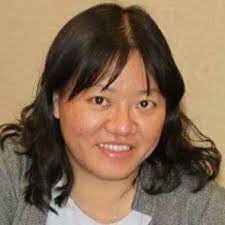
Journalist and blogger Pham Doan Trang has been in detention since October 2020 and was recently sentenced to 9 years in prison for “propaganda against the state”. The 43-year-old was accused by the Hanoi regime of “defaming the Vietnamese government and inventing fake news“. In one of the world’s most repressive countries towards civil society, where freedom of the press is non-existent, Pham Doan Trang – RSF 2019 Prize – has founded numerous independent media and publishing houses – including Nha Xuat Ban Tu Do or Law Magazine – and the NGO Green Trees, making her the target of a government that does not tolerate dissent. Despite intimidation, torture and repeated arrests, Pham Doan Trang is fighting to end systematic abuse of both human rights and freedom of the press in Vietnam. She won several awards including recently the Martin Ennals Award 2022. See: https://www.trueheroesfilms.org/thedigest/laureates/fe8bf320-1d78-11e8-aacf-35c4dd34b7ba
Trinidad and Tobago is home to more than 10,000 domestic workers, most of them without any social protection. Ida Leblanc fights daily for them to obtain rights similar to those of all workers, notably as General Secretary of the National Union of Domestic Employees (NUDE), which she founded. In 2011, the International Labour Organisation adopted the Convention on Domestic Workers thanks to Ida Leblanc’s active campaigning. Though the government of Trinidad and Tobago has never implemented the Convention, tireless Ida Leblanc remains undeterred.
She successfully campaigned for the decriminalisation of the Minimum Wage Act, giving unions the right to hear cases of non-compliance with the Act in the Labour Court. She has spearheaded many victories on behalf of low-income workers in cases of unfair dismissal, lay-offs and breaches of the Maternity Protection and Minimum Wage Acts.
On 8 February 2022, the Martin Ennals Foundation published an opening for a communication officer.
The Martin Ennals Foundation is a small organization run by a highly motivated staff, Board and Jury. At different points in the year, its work will be fast-paced, intense and challenging. The Communications Officer and Programme Officer work closely together. An entry-level position to support both communications and programmatic activities will be opened in 2022. Several interns complete the team. The Communications Officer reports to the Director of the Foundation. The Communications Officer will also have frequent contact with members of the Board, with colleagues of the Jury organisations, and with MEA winners themselves. The Communications Officer will oversee service providers to the Foundation.
JOB DESCRIPTION: The Communications Officer is responsible for formulating and leading the MEF communications strategy in support of the organisation’s mission, which includes corporate communication elements and the delivery of a high-quality outreach campaign for the annual MEA ceremony. The Communications Officer provide supervision to the Programs and Communications Associate and interns. The Communications Officer’s tasks include:
Designing and delivering MEA’s corporate communications, regularly adapting social media activity, our website and newsletter to Foundation activities and current events.
Designing and delivering an outreach strategy for the annual MEA ceremony:
Overseeing the production of bespoke films about MEA winners
Collaborating with the City of Geneva in the production of marketing material for the MEA campaign (posters, flags, banners, etc.
Overseeing the production and dissemination of digital social media assets (both visual and editorial content)
Organizing a press conference to announce the winners of the Award
Producing and disseminating press material and other written and audio-visual products on our website and social media channels
Enhancing the impact of MEF’s advocacy activities with targeted communications strategies.
Monitoring and evaluating the performance of the Foundation’s communication strategy and its contributions to our annual objectives.
Requirements:
7-10 years of relevant work experience in a communication function;
Familiarity with traditional media, media monitoring and media relations;
Strong background in digital communications (professional knowledge with WordPress, Mailchimp, Hootsuite, Canva, Tweedeck and Google analytics an asset);
Fluency or professional proficiency in both English and French;
A degree or work experience in journalism, communications, political science, international relations, law, or relevant subject;
Ability to work across organizations and collaborate easily with colleagues;
Ability to multi-task and coordinate the delivery of tasks by junior colleagues, service providers, or peers;
Ability to cope with pressure and challenging work periods. Self-starters, entrepreneurs, determined and creative types are welcome to apply.
Conditions of the position
Indefinite term contract at 40%
A competitive salary
Flexible working arrangements
25 days’ vacation pro-rata
Preferred start date: mid-March
To apply, please send your CV, a cover letter, and an example of your work to info@martinennalsaward.org by end of day, Sunday March 6th 2022.
The soon coming 20th edition of the FIFDH will be the last one of General and Artistic Director, Isabelle Gattiker. After eight years at the head of the Festival she will leave her position at the end of April, to take up her new responsibilities as General Director of the Cantonal Office for Culture and Sport (OCCS) on 1 May 2022.
« I am leaving to take up an exciting professional challenge, but these years with the FIFDH will always hold a special place in my heart. It is an honour to have contributed to such an important Festival, and I did so with tremendous enthusiasm and passion. The Festival is in good hands, and I would like to thank the Board, my co-directors, our partners and the outstanding teams who have accompanied me every day along the way and made this adventure possible. The future of this unique event in the world can only be exceptional.» – Isabelle Gattiker
Isabelle Gattiker joined the FIFDH in 2013 as deputy director before taking over as director in 2015. Under her leadership, the Festival has grown considerably and developed a vast network of 170 partners in Switzerland and abroad. In eight years, the FIFDH has seen its attendance double; it has organised events in 85 venues in the Geneva region and has toured the world in 60 countries.
Isabelle Gattiker and the Festival team are currently working on the 20th edition of the FIFDH, which will take place from 4 to 13 March 2022, an anniversary edition that will celebrate the commitment of human rights activists and filmmakers. The full programme will be revealed on 15 February, 2022.
«We are proud and grateful for the tremendous work accomplished by Isabelle Gattiker as head of the Festival team. She was able to develop the Festival not only in size and presence but also in depth and legitimacy, transforming it into an international platform for the defence of human rights, yet firmly rooted in Geneva. We regret her departure but look forward to working with her in the interest of Geneva’s culture and its influence.» – Bruno Giussani, President of the FIFDH Foundation Board.
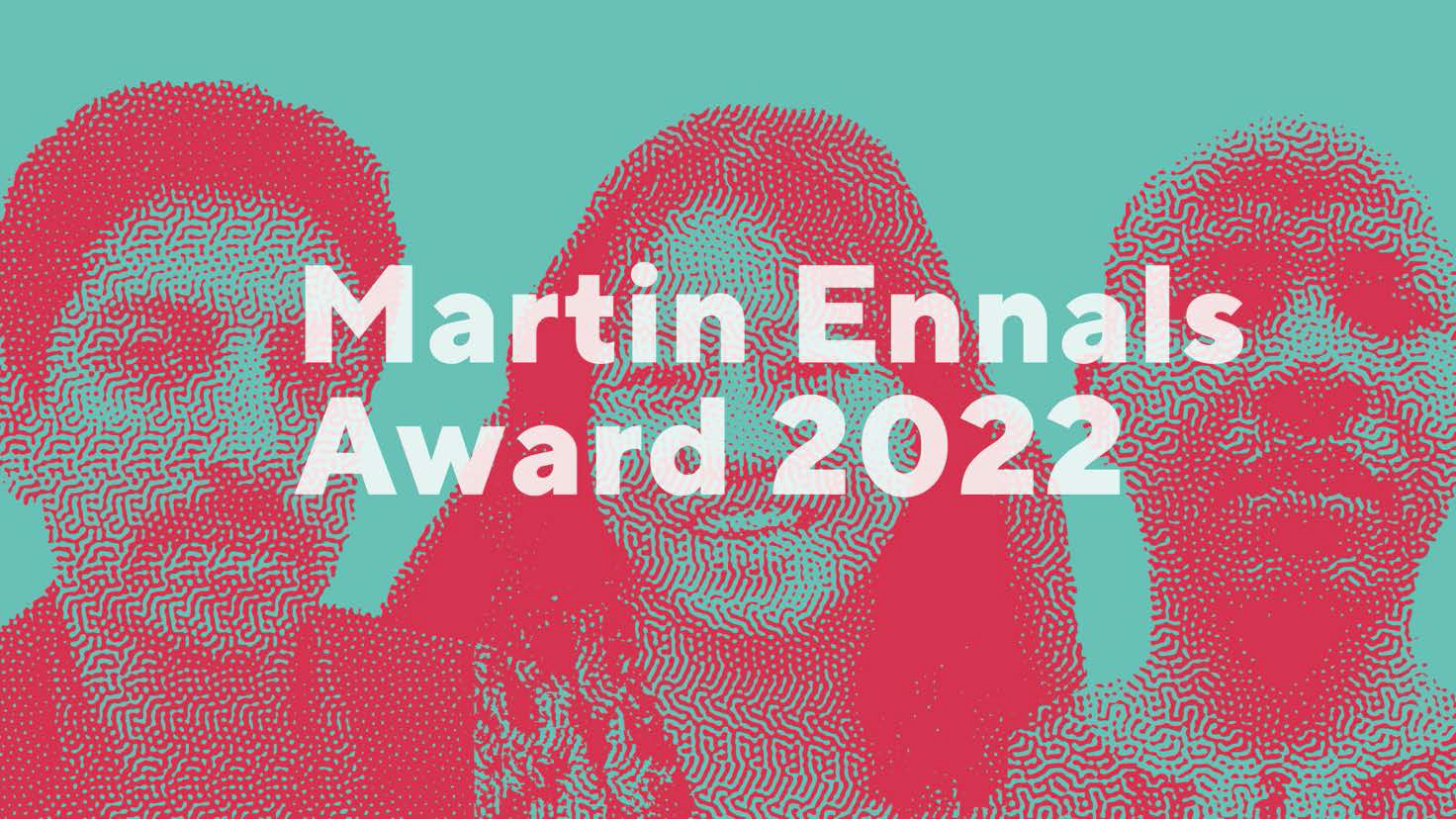
This morning, 19 January 2022, at a virtual press conference in Geneva three driving forces of the human rights movement were announced as the Laureates of the 2022 Martin Ennals Award for Human Rights Defenders. For more on the Martin Ennals Award and its laureates, see: https://www.trueheroesfilms.org/thedigest/awards/043F9D13-640A-412C-90E8-99952CA56DCE
Pham Doan Trang is a leading journalist, editor and democracy advocate in Vietnam, where the Communist Party has left little room for opposition voices to flourish. She directed several independent media outlets to raise awareness amongst Vietnam’s citizens of their fundamental rights galvanising many other journalists and human rights defenders to speak up. She was one of the most hunted activists in her country before being arrested in October 2020. On 14 December 2021, Pham Doan Trang was sentenced to nine years in prison for “conducting propaganda against the state”. There are growing concerns about her health. [see also: https://www.trueheroesfilms.org/thedigest/laureates/fe8bf320-1d78-11e8-aacf-35c4dd34b7ba]
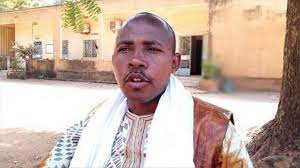
Dr. Daouda Diallo is a trained pharmacist-turned-human rights activist in Burkina Faso. The founder of the civil society coalition CISC, he dedicatedly documents human rights violations in a country rocked by violent crossfires between government forces, local paramilitary groups and Islamist factions. He carries the torch for justice and accountability to victims of the violence and their families. Dr. Diallo’s message of unity amongst different ethnic groups and faiths.
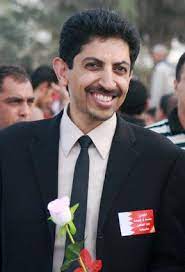
Abdul-Hadi Al-Khawaja is a charismatic architect of Bahrain’s human rights movement and a leader of the 2011 protests calling for democracy and greater freedom in the Gulf region. Al- Khawaja is not only an activist, but also a social entrepreneur who founded some of the first human rights research and defence organizations in the region, which still exist today. He inspires future generations in Bahrain to continue to fight despite his now decade-long imprisonment. See also: https://www.trueheroesfilms.org/thedigest/laureates/4d45e316-c636-4d02-852d-7bfc2b08b78d
It was also announced that due to the COVID-19 pandemic, the Award Ceremony is postponed until 2 June 2022. “As a city of human rights, Geneva is committed to supporting international cooperation on critical issues. Throughout the pandemic, many organizations have persisted in their human rights missions, demonstrating tremendous resilience. In this spirit, we are proud to co-organise another edition of the Martin Ennals Award ”, said Member of the City Executive Alfonso Gomez. (https://www.martinennalsaward.org/committed-to-a-better-world/)
AS Chair of the Martin Ennals Award Jury, I mentioned that the Jury had selected “three galvanizers of the human rights movement and that courage is the connecting dot between them ”.
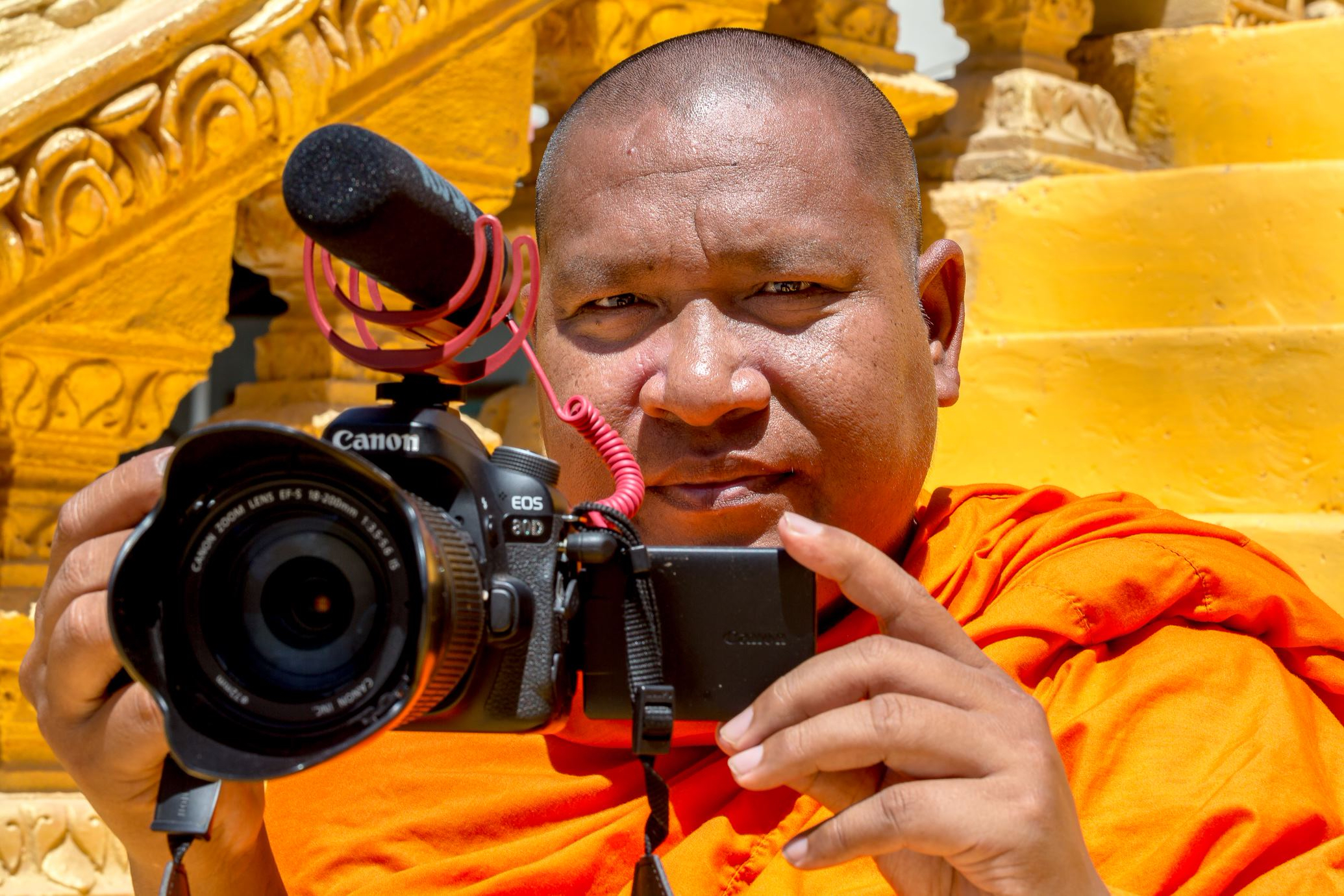
Venerable Sovath is a Buddhist monk and human rights activist from Siem Reap, Cambodia. In March 2009 he witnessed the forced eviction of his family and fellow villagers from their homes, without reason and in most cases without compensation. This unfortunate event pushed him towards human rights activism.
Venerable Sovath was compelled to flee his native Cambodia in May of 2020, after fake videos and accusations appearing on Facebook served as the bases for a decision to ‘de-frock’ him of his monk’s robes. In retaliation for his advocacy against land grabbing and in favour of human rights, Venerable Sovath and his loved ones have suffered years of threats and reprisals by the authorities of Cambodia. Finally, the prospect of losing his religious freedom convinced Venerable Sovath that his position in Cambodia was untenable and he sought a temporary safe haven in Switzerland.
Because the fake evidence used against Venerable Sovath circulated on Facebook, the case also has critical lessons for the role of social media in upholding human rights. During his segment, he will discuss the story of how he became a human rights activist, and how social media can be a double-edged sword in the fight for human rights; as it gives visibility to the defenders but also puts them at risk. He will focus on social media as a tool of liberation and repression; and also discuss how a lack of accountability by these social media companies can play a role in the repression of human rights defenders. See also: https://humanrightsdefenders.blog/2020/11/02/bbc-podcast-on-the-framing-of-video-monk-luon-sovath/
This master class is hosted by the Martin Ennals Foundation and the Geneva Center for Business and Human Rights.
Date: Tuesday, November 23, 2021 Time: 12:30 – 14:00 Location: UniMail, MS 150
Registration for this master class will open on November 11 with limited places available. COVID certificate is required.
The 19thGeneva’s International Film Festival and Forum on Human Rights (FIFDH) has wrapped its first digital edition with the announcement of its winners. Running from 5 to 14 March, the event gathered nearly 45,000 people who watched the films, debates and various content available online. “While we regret not having been able to open this Festival to a physical audience, some of the experiments carried out this year will be perpetuated. We must pay tribute to the FIFDH team, which has been able to adapt to many challenges with increased energy,” mentioned general director Isabelle Gattiker.
Starting with the Creative Documentary Competition, the jury headed by Ukrainian filmmaker Oleg Sentsov, and featuring Lamia Maria Abillama, Yulia Mahr, and Arnaud Robert, bestowed the Grand Prize of Geneva valued at CHF 10,000 – offered by the city and state of Geneva – upon Shadow Game by Eefje Blankevoort and Els Van Driel. The jury’s statement mentions that the film “deals with a crucial issue in modern time: young migrants alone on their road, trying to cross boundaries and as they say: ‘playing their game’.With the use of videos and social media material produced by the teenagers themselves, it has innovative filmmaking, and it is pushing cinematic boundaries in many ways.”
Shadow Game also picked the Youth Jury Prize, as it “brings to our attention the fact that we need not look far to find human rights’ violations. This confrontation makes it necessary to take greater responsibility at the sight of this injustice and to abandon the often-stereotypical image of migrants,” the jury stated.
The CHF 5,000 Gilda Vieira de Mello Prize in tribute to her son Sergio Vieira de Mello, went to Downstream to Kinshasa [+] by Dieudo Hamadi for its “powerful and brave character-orientated filmmaking, about reparations for forgotten communities who endured atrocities (the Six-Day War in the Democratic Republic of the Congo in 2000). This film is haunting and shows such a rage of the protagonists seeking justice and reparations.” Once Upon a Time in Venezuela [+] by Anabel Rodríguez Ríos received a Special Mention by the jury as the director “approaches the protagonists in a very crude and yet subtle way, showing brilliantly the inextricable relation between industrial pollution, political and electoral constraints as well as citizens’ welfare.”
In the Fiction Competition, the Grand Prize Fiction and Human Rights, valued at CHF 10,000 and offered by the Hélène and Victor Barbour Foundation, went to Veins of the World [+] by Byambasuren Davaa as it “points beyond itself, towards a formless totality, a shared human experience often forgotten and instantly remembered where the beauty and pain of a profoundly essential human longing is unearthed and laid bare,” according to the jury presided by American filmmaker Danielle Lessovitz, with Santiago Amigorena, Laïla Marrakchi and Philippe Cottier. The film also won the Youth Jury Prize.
The Special Mention went to Should the Wind Drop [+] by Nora Martirosyan, “an important film, especially in the current context where borders are moving and closing and where it is difficult to travel.”
Finally, in the Grand Reportage Competition, the CHF 5,000 Prize of OMCT (World Organisation Against Torture), went to Coded Bias by Shalini Kantayya which, according to the jury, “powerfully depicts the threats that artificial intelligence poses to our liberties, including by hardwiring into algorithms racist and sexist biases.” The Public Award went to Dear Future Children [+] by Franz Böhm, which received CHF 5,000 from the FIFDH.
Wolfgang Spindler reported on 0 March 2021 that the 19th edition of the International Film Festival and Forum on Human Rights in Geneva has gone virtual. Usually every year some 40 000 visitors attend to watch and discuss films that focus on human rights violations. Around 300 filmmakers, human rights defenders and politicians from 25 countries across the globe used to be invited. But, this year, the festival has been forced to change and adapt to the COVID-19 pandemic. Participants are now encouraged to click on ‘likes‘ instead of applauding, as physical presence is not possible.
Isabelle Gattiker is the FIFDH Festival Director. She said that the festival had to reinvent itself. They are proposing videos on demand, that she describes as not being able to replace real cinema theatres. But they have tried “to work on public participation despite the digital format”. Online audiences can comment and ask questions during the showings every evening from 8 pm (CET) from anywhere on the planet.
For the first time ever there will also be a public award, where the viewers can give a mark to the films they’ve watched. At the end of the festival, the film with the highest rating from the official selection will be awarded this prize.
With cartoons by Patrick Chappatte, music by Gaspard Sommer and choreography by the Ballet Junior of Genève. An evening hosted by the journalist Catherine Sommer – in French and English – and broadcast on https://www.martinennalsaward.org/
Today 18 January 2021, the Martin Ennals Foundation announced that three outstanding human rights defenders based in authoritarian states are nominated for the 2021 Martin Ennals Award.
In isolated Turkmenistan, Soltan Achilova documents human rights violations and abuses through photojournalism.
Imprisoned in Saudi Arabia, Loujain AlHathloul is a leading advocate for gender equality and women’s rights.
A lawyer, Yu Wensheng defended human rights cases and activists before his conviction and imprisonment in China.
The Finalists distinguish themselves by their bravery and deep commitment to the issues they defend, despite the many attempts to silence them by respective governmental authorities. The 2021 Martin Ennals Award Ceremony will celebrate their courage on 11 February during an online ceremony hosted jointly with the City of Geneva which, as part of its commitment to human rights, has for many years supported the Award. “Every year thousands of human rights defenders are persecuted, harassed, imprisoned, even killed. The Martin Ennals Foundation is honored to celebrate the 2021 Finalists, who have done so much for others and whose stories of adversity are emblematic of the precarity faced by the human rights movement today”, says Isabel de Sola, Director of the Martin Ennals Foundation.
“Authoritarian states tend to believe that by jailing or censoring human rights defenders, the world will forget about them. During the COVID-pandemic, it seemed like lockdowns would successfully keep people from speaking out. This year’s Finalists are a testament to the fact that nothing could be further from the truth”, says Hans Thoolen, Chair of the Jury.
In Turkmenistan, one of the world’s most isolated countries, freedom of speech is inexistent and independent journalists work at their own peril. Soltan Achilova (71), a photojournalist, documents the human rights abuses and social issues affecting Turkmen people in their daily lives. Despite the repressive environment and personal hardships, she is one of the very few reporters in the country daring to sign independent articles.
In Saudi Arabia, women still face several forms of gender discrimination, so much so, that the Kingdom ranks in the bottom 10 places according to the World Economic Forum’s Global Gender Gap Report 2020. Loujain AlHathloul (31) was one of the leading figures of the Women to drive movement and advocated for the end of the male guardianship system. She was imprisoned in 2018 on charges related to national security together with several other women activists. Tortured, denied medical care, and subjected to solitary confinement, Loujain was sentenced to 5 years and 8 months in prison on 28 December 2020. [see: https://humanrightsdefenders.blog/tag/loujain-al-hathloul/]
In China, more than 300 human rights activists and lawyers disappeared or were arrested in 2015 during the so called 709 Crackdown. A successful business lawyer, Yu Wensheng (54) gave up his career to defend one of these detained lawyers, before being arrested himself. Detained for almost three years now, Yu Wensheng’s right hand was crushed in jail and his health is failing. [see also: https://humanrightsdefenders.blog/2019/06/26/lawyers-key-to-the-rule-of-law-even-china-agrees-but-only-lip-service/]
Online Award Ceremony on 11 February 2021
The 2021 Martin Ennals Award will be given to the three Finalists on 11 February 2021 at an online ceremony co-hosted by the City of Geneva (Switzerland), a long-standing supporter of the Award. “The City of Genevareaffirmsits support to human rights, especially during these times of crisis and upheaval. Human rights are the foundation of our society, not even the pandemic will stop us from celebrating brave persons who have sacrificed so much”, says Member of the executive Alfonso Gomez.
Kyra Dupont for Geneva Solutions News of 20 November 2020 interviewed two environmental defenders: Vanessa Nakate, a 24-year-old Ugandan and and Solar Impulse founder Piccard to see how their actions resonated.
The Young Activists Summit (YAS) taking place online today aims to shine a spotlight on young activists who are advancing climate action – but also foster greater dialogue between generations. Young activists have become the face of today’s climate crisis. But the fight did not start with Generation Z – nor are they the only ones affected by the realities of global warming. The Young Activists Summit, hosted in Geneva, will give young people a platform to speak up on climate issues, while at the same time encouraging dialogue with an older generation of climate influencers, including Solar Impulse founder Bertrand Piccard.
Roots of a fight. Vanessa Nakate grew up in Kampala in a middle-class family inspired by a father trader in solar batteries and involved in community work as a member of the Rotary Club. “Like my father, I wanted to help out those in my community, find a way to change their lives.” As she was looking for a meaningful cause to dedicate herself, the student in business administration discovered climate change.
“I had already seen floods, landslides, droughts but I had never connected them to climate change because in schools in Uganda this is something we do not worry about: it either belongs to the past, or to the future. When I started reading about it, I grew to understand that this is the current threat humanity faces right now. I decided that I had to take action and be part of the climate movement.”
Like Nakate, Piccard – the son of oceanographer Jacques Piccard – was also inspired by family members. While studying at medical school (he became psychiatrist) he started fighting for cleaner aviation and ultralight airplanes.
“I was horrified by how human beings could pollute and all the disrespectful way of treating the environment.”
The power of youth. Worried by the unusually high temperatures hitting Uganda, Nakate began protesting against climate inaction in front of Ugandan parliament in 2019. She also staged hunger strikes every Friday for three months. It did not have much impact nor did it attract much attention being the sole protester outside the government gates. But an activist was born. Eventually, other young Ugandans started responding to her calls on social media.
For Piccard too, beginnings were hard. To his great surprise, his fiercest opponents were the ecologists who did not want cleaner aviation, only fewer planes. It took a good 35 years to win his case. Today, he is respected for realising the impossible: he is the visionary initiator of Solar Impulse, the first zero-fuel aircraft with perpetual autonomy. Thanks to his round-the-world flight, the “explorer for sustainability” was able to launch the Solar Impulse Foundation and its 1,000 solutions to protect the environment in a profitable way. He is now listened to by chiefs of state and respected institutions like the European Commission or the United Nations.
Swiss psychiatrist and pilot Bertrand Piccard receives the Knight of the Legion d’Honneur insignia from French President François Hollande. (Credit: Keystone / Etienne Laurent)
Injustice as a driving force. Nakate’s energy comes from her desire to end the injustice afflicting her country and the African continent in general. In Uganda, 90 per cent of the population depends on agriculture for their survival, “a matter of life and death”.
This is why she is not afraid to tell the truth and speak up in front of decision-makers. Convinced young people can make a difference, she founded Youth for Future Africa and the Rise Up Movement Africa before joining the ranks of a handful of activists at the UN climate summit, COP25, in Madrid in December 2019 where she met Greta Thunberg. She was also invited by Arctic Basecamp in Davos where she co-wrote a letter to the participants of the World Economic Forum (WEF).
Climate activists Isabelle Axelsson, Loukina Tille, Vanessa Nakate, Greta Thunberg, and Luisa Neubaue, from left, arrive for a news conference in Davos on 24 January 2020. (Credit: Keystone / Markus Schreiber)
Thousands of young people mobilised for climate change, a powerful grassroots movement that did not exist in the same way when Piccard started to voice his concerns.
“They are very fortunate to be such a big group with such a loud voice. When I was their age, I was very lonely and not a lot of people were speaking about these climate issues. It gives us strength. It gives power. People listen to them. But it also gives them responsibility.”
The keys to sucess. In order for youth aspirations to bear fruit, their message must be practical and concrete with very targeted requests, says Piccard. Development aid should help incentivise developing countries to be cleaner, more efficient and sustainable so donors and investors know that they are not losing their money.
“To say they want to fight climate change is too vague (…) By being practical and voicing specific and understandable claims, they will have a much more positive outcome than if they just protest and say “we are paying the cost of rich countries”.”
Refusing economic growth is purely idealistic, according to Piccard. Its reduction would lead to social chaos, the bankruptcy of thousands of companies and the unemployment of millions of people. The decision-makers must find an advantage in investing in developing countries. Solidarity, yes, but with good leverage.
“To fight poverty in developing countries, you need to localize the production of energy and give energy access to everybody. And you can only do that with renewable energies. If you put solar energy in a village in Uganda, it will create a local economy. People who have solar energy will sell the electricity to people charging their phones, doing business, pumps for irrigation. They will store it in batteries and sell the electricity further…”
Nakate says she is fighting for the fact that the impacts of climate change are not borne equally or fairly between rich and poor, women and men, and older and younger generations. Many victims of climate change have disproportionately low responsibility for causing the emissions responsible for global warming. Meanwhile the $1bn promised by the Green Climate Fund is still underfunded. A balance still needs to be found between the young activist’s call for climate justice and proper use of funds seniors like Piccard insist on.
The power of education. Well aware of the interactions between climate and social justice, Nakate started to work on the Green Schools Project, a renewable energy initiative which aims to transition schools to solar energy and install eco-friendly stoves. This way, she hopes to bring transition to renewable energy in rural schools and give them access to electricity and a better education.
“I never had the opportunity to learn about it, to understand the danger that our planet is facing. If you know that you are in a burning house, you will do everything you can to stop the fire. So, I believe in creating awareness, and this awareness only comes through education.”
Nakate especially believes in educating girls, the number six tool to fight the climate crisis on the list of the DrawDown project.
“There are a lot of different technologies to move towards sustainability but most of them need so much funding. Educating girls is something we can do right now. When you educate these girls from the most affected communities, it also benefits their families and cascades into their communities. They will make better decisions in their lives, have fewer children, survive the risk of hunger, resist school drop-outs, know how to build resilience. They are tomorrow’s leaders, tomorrow’s campaigners, tomorrow’s scientists who will make the best decisions for their countries.”
“Women leaders make the best decisions for their countries. We need more girls in decision-making positions,” says Nakate (Credit: Ronald Meyna)
Africa’s contribution to the world’s greenhouse gas emissions is less than four per cent of the total. But despite being one of the lowest emitters, it is the continent most vulnerable to the impacts of climate change. Yes, those who are the least responsible are suffering the most and yes, it comes as an injustice, says Nakate. But like Piccard in his own time, she resorted to take control of her own destiny.
“We cannot lay back and feel comfortable because our emissions are limited. If we do not speak up for ourselves, we will continue experiencing direct impacts of climate change.”