Posts Tagged ‘freedom of expression’

Legal fund in Malaysia to protect freedom of expression of human rights defenders

December 10, 2020
Centre for Independent Journalism executive director Wathshlah Naidu said the fund will be financed by a number of international groups. (Facebook pic)

Imran Ariff – on 9 December 2020 reports that a coalition of NGOs has joined forces to launch a legal defence fund to protect individuals who speak out on issues of human rights. This is to ensure their freedom of expression is not suppressed. Organised by the CSO cluster on Freedom of Expression (FOE), the fund is the first of its kind in Malaysia. It is currently being financed by a number of international groups which have funded similar overseas initiatives, including hosting crowdfunding efforts

At a press conference to announce the launch, Centre for Independent Journalism executive director Wathshlah Naidu said the fund comes at an important time as she believes the government has allowed the reform agenda to “take a backseat” to prioritise its own “political survival at all costs”.

She added that “what we have seen for the last eight to nine months is a government that is focused primarily on initiating all efforts to silence dissent or those who are critical and completely shutdown alternate discourses or narratives that challenge or question their positions and policies.”

The fund will cover legal fees and other expenses incurred by human rights defenders and members of the public facing investigation or prosecution due to them exercising their right to free speech.

Applications will go to a committee which will rule on the eligibility of the individuals and decide on the amount of assistance that needed to be meted out..

In addition to the fund, the CSO cluster called for the Sedition Act 1948, the Official Secrets Act 1972 and the Printing Presses and Publications Act to be repealed and for the Finas Act 1981, Film Censorship Act 2002 and Section 233 of the Communications and Multimedia Act 1998 to be reviewed.

They said these legal reforms will allow for greater freedom of expression across various mediums. These will allow the public to better hold the government accountable for their actions and policies.

See also: https://humanrightsdefenders.blog/2020/06/23/zambian-ngo-establishes-fund-to-assist-human-rights-defenders/

https://www.freemalaysiatoday.com/category/nation/2020/12/09/legal-fund-to-protect-freedom-of-expression-of-human-rights-defenders/

Virtual Side Event on Freedom of Opinion and Expression and Academic Freedom today 9:00-10:00 EST in New York

October 21, 2020

Co-organizers:

●UN Special Rapporteur on the promotion and protection of the right to freedom of opinion and expression

●Permanent Mission of Finland to the UN

●Permanent Mission of the State of Qatar to the UN

●Open Society Foundations’ Education Program

●Scholars at Risk

Context: On Friday 23 October 2020 the Third Committee of the UN General Assembly will consider the report on academic freedom presented by the Special Rapporteur on the promotion and protection of the right to freedom of opinion and expression. The report focuses on the ways in which the freedom of opinion and expression protect and promote academic freedom, and the special role played by academics and academic institutions in democratic society when assured of institutional autonomy and self-governance. Without academic freedom, societies lose their capacity for self-reflection, for knowledge generation and for a constant search for improvements of people’s lives and social conditions. Drawing on examples from all regions of the world, the report highlights the repression and harassment of scholars and students, unlawful restrictions on freedom of opinion and expression that interfere with research, teaching, debate and discussion by the academic community in their institutions or in other fora, and various measures, from funding of research to hiring of professors and administrators, that are used to erode and attack the autonomy of academic institutions.The report provides clear guidance on the scope of academic freedom, recognizing that it is protected by a wide range of human rights norms and principles, including the right to freedom of opinion and expression. It encourages individuals and organizations to articulate their claims as violations of academic freedom, and concludes with a set of recommendations to States, academic institutions and civil society. The side event is aimed at discussing how the report’s findings and recommendations can be used to ensure the realization of the freedom of opinion and expression to seek, receive and impart information and ideas of all kinds, regardless of frontiers as an integral aspect of academic freedom and enhance the ability of academics and institutions to contribute to democracy and development around the world.Objectives

This side event will provide a forum to discuss the challenges to academic freedom, including social harassment and political repression of scholars, students, and institutions around the globe, as well as legal protections offered by international human rights law, including in particular the right to freedom of opinion and expression, and how the report’s analysis and recommendations can be used to protect the freedom of opinion and expression aspects of academic freedom worldwide.Modalities.

The one-hour moderated discussion will have the following format:

Opening remarks: H.E. Sheikha Alya Ahmed bin Saif Al-ThaniPermanent Representative of Qatar to the United Nations and H.E. Juan Ramon de la Fuente Permanent Representative of Mexico to the United Nations

Ms. Irene Khan, Special Rapporteur on the promotion and protection of the right to freedom of opinion and expression.

Presentation of the main findings and recommendations of the report Prof. David Kaye, former Special Rapporteur on the promotion and protection of the right to freedom of opinion and expression.

Panel discussion:

●Ms. Camilla Croso, Director of the Education Program of the Open Society Foundations, will highlight the role of academic freedom and its importance in advancing open and democratic societies

●Dr. Maleiha Malik, Executive Director, Protection of Education in Insecurity and Conflict, Education Above All Foundation, will discuss the particular challenges to academic freedom in countries affected by conflict

●Mr. Robert Quinn, founding Executive Director of the Scholars at Risk Network, will describe some current legal challenges and responses to pressures on academic freedom around the world

Concluding remarks: Ms. Irene Khan, Special Rapporteur.

Journalism Under Fire – A Global Surge in Violations Against Journalists

October 16, 2020

On 14 Aya Wietzorrek posted a good overview piece on freedom of the press in the Organization for World Peace

…..Functioning as a “watch-dog” of these freedoms, journalism can be considered a public good, as it serves to inform citizens on political, economic, and social issues and ensures governance is transparent and accountable.

Acknowledging the many challenges journalism is currently facing…the focus of this article is on the everyday violations against journalists. This September, the UN Educational, Scientific and Cultural Agency (UNESCO) published a report with findings revealing a “wider upward trend” in the use of unlawful violence by police and security forces against journalists over the last five years. Attacks were reported across 65 countries, and many of the tactics used, violate international laws and norms. Globally, journalists are facing censorship, surveillance, detention and physical attacks by law enforcement. The reported abuses against journalists include harassment, intimidation, beatings, being shot with non-lethal as well as lethal ammunition, sometimes even resulting in death.

The UN High Commissioner for Human Rights, Michelle Bachelet, commented that around 1,000 journalists have been killed in the last decade – and that 9 in 10 cases “are unresolved”. The murders of journalists Daphne Caruana Galizia in 2017 in Malta, Jamal Khashoggi in 2018 in Turkey and Francisco Romero Díaz in 2019 in Mexico are only a few examples. Horrified by the fates of their colleagues, these events have deterring effects for other journalists. Besides the attacks on journalists being a deeply concerning issue in their own right, such attacks thus also constitute a direct threat to civil society and democracy. In democratic states, with separate legislative, executive and judiciary branches, a free press is often considered to be the 4th pillar of democracy. According to Freedom House, however, elected leaders in many democracies have made direct attempts to silence critical media voices and strengthen ones that provide favourable coverage. The trend is linked to a global decline in democracy itself: The erosion of press freedom is both a symptom of and a contributor to the breakdown of other democratic institutions and principles….

To intercept this upward trend of unlawful violence reported by UNESCO, and to ensure that journalists can serve society and do their job, we can improve and implement the following. Firstly, in terms of prevention, developing standard operating protocols and increasing training for law enforcement on the freedom of expression and appropriate behaviour in dealing with journalists – respecting their special status as ‘watch-dogs’ – is vital. Such training would include dialogues between law enforcement and journalists, to establish working relationship between the two groups, respecting the roles of each in society. It is imperative that national legal frameworks for police use of force align with the international standards of necessity and proportionality. Secondly, in terms of protection, countries should renew their international human rights pledges, review relevant domestic laws and practice and revise them as necessary, to ensure conformity with states’ obligations under the UDHR and ICCPR. These legislative frameworks should be subject to periodic review by independent expert bodies, such as Human Rights Watch for instance. Thirdly, as the Committee to Protect Journalists has pointed out in its “Global Campaign Against Impunity”, murder is the ultimate form of censorship and the statistic that justice is not served in 9 out of 10 murders, highlights that urgent action is needed on this front. In terms of prosecution, appointing national ombudsmen to hold police accountable for the unlawful use of force against journalists is key. The implementation of such ombudsmen and the strengthening of criminal law provisions should also operate to deter offences against journalists. Internationally, the freedom of press is only implicitly protected by Article 19.2 of the International Covenant on Civil and Political Rights and deserves to be explicitly mentioned and protected. The appointment of a Special Representative of the UN Secretary-General for the Safety of Journalists, as proposed by Reporters Without Border and 70 media groups and freedom of expression NGOs, would be a valuable appointment. This proposal was officially rejected in 2019 by UN Secretary-General António Guterres. The creation of such a position would however help prevent resolutions and treaties from being largely empty words and would have the political weight, the capacity to move quickly and the legitimacy to coordinate with all UN bodies to implement change.

….. The international community has repeatedly stated the need for a more effective implementation of existing international and regional standards, yet the work still lies ahead of us. Governments should pro-actively (re-)establish their commitment to a free press and the protection of journalists as it is imperative that civil societies across the globe continue to defend right to freedom of expression. This is necessary for the enhancement of people’s lives and for the creation and maintenance of stable and healthy democratic societies.

Aya Wietzorrek

Aya Wietzorrek is a graduate in International Development from The University of Manchester and is currently a research intern in the Governance and Inclusive Development Group at the Amsterdam Institute of Social Science Research.

See also: https://humanrightsdefenders.blog/2020/04/21/2020-world-press-freedom-index-is-out/

https://humanrightsdefenders.blog/2020/05/03/world-press-freedom-day-2020-a-small-selection-of-cases/ and

https://humanrightsdefenders.blog/2020/05/04/world-press-freedom-day-2020-a-few-more-links/

.https://theowp.org/reports/journalism-under-fire-a-global-surge-in-unlawful-violations-against-journalists/

The clock of Mubarak is ticking….

October 6, 2020

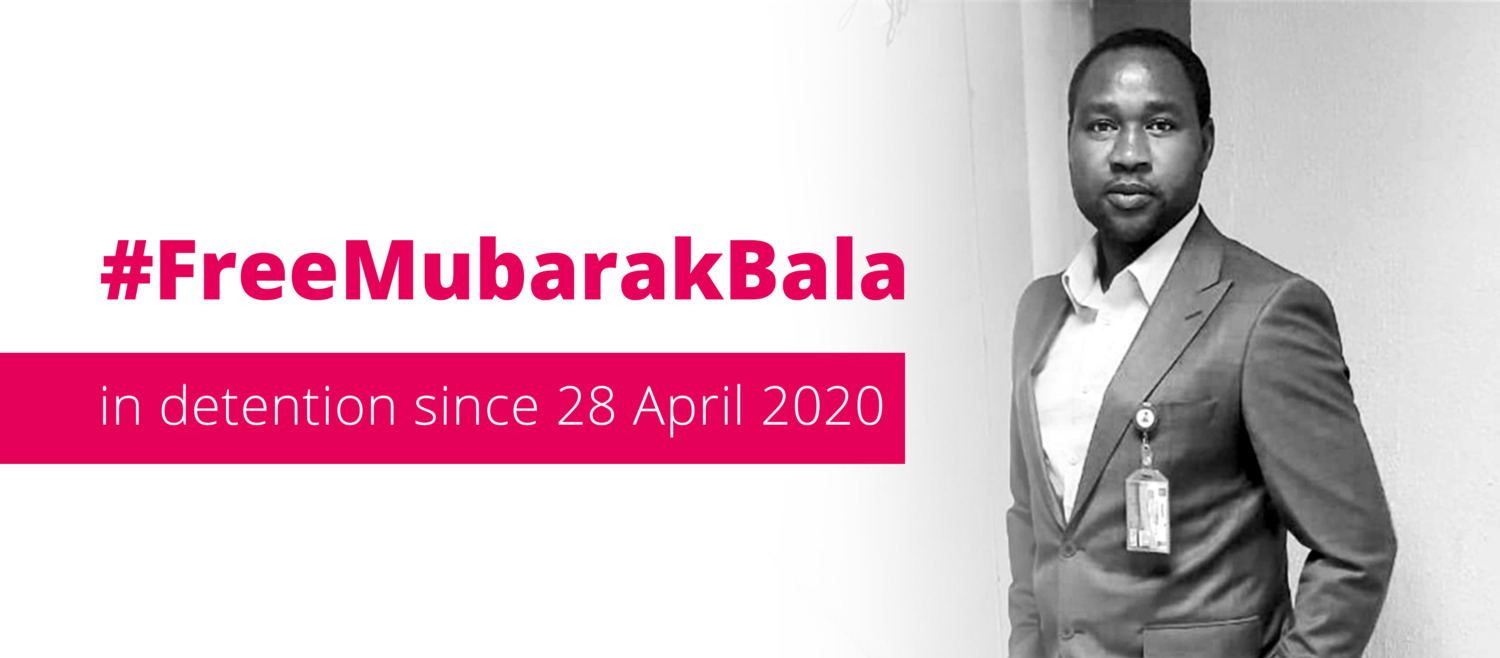
Humanist International created an ingenious way to show how long Mubarak Bala is being held illegally in detention:

Mubarak Bala has been detained arbitrarily
without charge for
:

 161  DAYS :    13  HOURS :    37  MINUTES :    00  SECONDS

banner mb homepage take 4.png

Mubarak Bala is the president of the Humanist Association of Nigeria. He has beenheld in detention without access to a lawyer since his arrest on 28 April 2020 in connection with a Facebook post.

Humanists International believes that Mubarak Bala is being targeted for the peaceful exercise of his rights to freedom of expression and religion or belief, and calls for the case against him to be dropped, for Mubarak Bala to be released immediately and unconditionally, and for the Nigerian authorities to ensure his safety upon his release.

read the latest updates on mubarak bala

Sign the Statement

https://www.tickcounter.com/widget/countup/180906

https://freemubarakbala.org/

ZOOM accused of suspending accounts of human rights defenders

July 29, 2020

Bernise Carolino on 28 July 2020 wrote in the Canadian lawyers Magazine that Lawyers’ Rights Watch Canada has condemned Zoom Communications Inc.’s suspension of the accounts of human rights activists, calling it a breach of its responsibility to respect the rights to free expression, association and assembly.

A letter from Lawyers’ Rights Watch Canada called upon Zoom to ensure that the communications of its users are not similarly suspended or disrupted in the future. The group urged Zoom to establish a company policy to clarify how it intends to adhere to its international legal responsibility under the United Nations Guiding Principles on Business and Human Rights. The group also requested that Zoom refrain from blocking participation of users based on geography.

In June, Zoom suspended three accounts of activists based in the U.S. and Hong Kong in compliance with a request from the government of China, which claimed that the activists were trying to use Zoom to host meetings commemorating the anniversary of the Tiananmen Square massacre. Zoom then reinstated the accounts and said that it would not in the future permit such requests to affect individuals outside mainland China.

Despite the reinstatement of these accounts, the lawyers’ rights group took issue with Zoom’s plans to develop technology that will allow it to remove or block participants based on their location in response to requests from local authorities claiming that certain activity on the platform is prohibited based on their country’s laws.

All international businesses, including Zoom, must ensure that all their users can enjoy the rights and freedoms afforded to them under international law,” wrote Joey Doyle, a director of Lawyers’ Rights Watch Canada and an author of the letter, in the organization’s press release. “This is particularly important in this present world where most communication takes place over online platforms such as Zoom.”

Zoom has an international law obligation to respect the rights to freedom of expression, association and assembly, the right to access information and the right to privacy, said Lawyers’ Rights Watch Canada, citing the International Covenant on Civil and Political Rights and the Universal Declaration of Human Rights as legal bases. The group also called attention to the U.N. Declaration on Human Rights Defenders, which recognizes the right of such defenders to advance the protection of human rights and fundamental freedoms.

Joshua Lam, another director of Lawyers’ Rights Watch Canada, and executive director Catherine Morris co-authored the letter, addressed to Eric S. Yuan, Zoom’s founder and chief executive officer, and Lynn Haaland, the company’s chief compliance and ethics officer.

See also: https://humanrightsdefenders.blog/2020/07/21/frontlines-guide-to-secure-group-chat-and-conferencing-tools/

https://www.canadianlawyermag.com/practice-areas/privacy-and-data/lawyers-rights-watch-canada-urges-zoom-to-abide-by-international-human-rights-obligations/331904

UN Human Rights Council concluds 44th session and appoints four special rapporteurs, including Irene Khan

July 20, 2020

Thanks to ReliefWeb‘s detailed coverage of the UN Human Rights Council:

On 17 july The Human Rights Council adopted four resolutions dealing with the promotion and protection of human rights in the context of peaceful protests ; the situation of human rights in the Syrian Arab Republic ; the Social Forum ; and the contribution of respect for all human rights and fundamental freedoms to achieving the purposes of the Charter of the United Nations. It also appointed four Special Procedure mandate holders, and concluded its regular forty-fourth session.

The Council also appointed four new Special Procedure mandate holders : Marcos A. Orellana (Chile) for the position the Special Rapporteur on the implications for human rights of the environmentally sound management and disposal of hazardous substances and wastes ; Irene Khan (Bangladesh) for the position of the Special Rapporteur on the promotion and protection of the right to freedom of opinion and expression ; Tlaleng Mofokeng (South Africa) as Special Rapporteur on the right of everyone to the enjoyment of the highest attainable standard of physical and mental health ; and Siobhán Mullallay (Ireland) as the Special Rapporteur on trafficking in persons, especially women and children.

Yackoley Kokou Johnson, Vice-President of the Council and Rapporteur, noted that during the session, the Council had held 29 meetings, seven debates and 35 interactive dialogues, including with the High Commissioner on her annual report, as well as with 22 Special Procedure mandate holders, two commissions of inquiry and two special representatives of the Secretary-General, covering over 50 human rights themes and 40 country situations.

Elisabeth Tichy-Fisslberger, President of the Council, concluded by thanking those present for their dedication, flexibility and creativity in implementing many precautionary measures, proving that the Council could continue to do its important work in these difficult times.

The Human Rights Council is scheduled to hold its forty-fifth session from 14 September to 2 October.

https://reliefweb.int/report/world/human-rights-council-adopts-four-resolutions-appoints-four-special-procedure-mandate__________

Signe Poulsen of Seoul U.N. human rights office to leave post

July 17, 2020

Kim Seung-yeon on 16 July 2020 reported that Signe Poulsen, Seoul office chief of the U.N. Office of High Commissioner for Human Rights (OHCHR), will leave South Korea this week for a new position in the Philippines, ending her five-year term monitoring human rights situation in North Korea. As it it the end of her normal term it is not clear whether there is any link to her speaking out on the issue of balloons sent over the border. [see https://humanrightsdefenders.blog/2020/06/29/un-representative-in-south-korea-sees-balloon-actions-as-freedom-of-expression/]

It’s been a great inspiration interacting with civil society and activists working on North Korea’s abduction issues and separated families, and people who continue to make progress in getting their voices heard,” she told Yonhap News Agency on Thursday.

Poulsen said while she has “many regrets” over the lack of progress in improving human rights in the North, the U.N. now places far more weight on the issue compared to the past and that is a big step forward.

North Korea has not unfortunately seemed to have gotten any better since we opened the office. But the U.N. and the international community are now fully engaged on North Korea files. Firm placing of North Korea’s human rights violations in the U.N. system is important,” she said.

Leaving Seoul, she expressed hopes that inter-Korean exchanges at a humanitarian level, including reunions of separated families, will take place in a sustainable way in the long term.

The solution is ultimately for the Korean people and not for me to say. For that to happen I strongly believe human rights must be part of all those engagement and interactions,” she said.

https://en.yna.co.kr/view/AEN20200716005600325

Even simply remembering Kem Ley is forbidden in Cambodia

July 16, 2020

Cambodia continues to block memorial activities honoring murdered political analyst Kem Ley [See: https://humanrightsdefenders.blog/2019/07/12/third-anniversary-kem-ley-murder-cambodia-impunity/]

Individuals and groups were blocked by police and local authorities in Cambodia from holding activities commemorating the fourth anniversary of the death of political analyst Kem Ley.

Kem Ley was killed at a gas station on July 10, 2016. Many suspect the murder was linked to his work as a commentator and political analyst. He was murdered days after he gave a radio interview about a Global Witness report detailing corruption under the Hun Sen government, which has ruled the country since 1985.

On July 8, a group of monks and young activists were prevented by police from holding a memorial service at the gas station where the late analyst was killed. They were forced instead to hold their prayers on a sidewalk more than 100 meters from the site.

A young man wearing a shirt with Kem Ley’s face printed on it was arrested that day. The next day, a group of youth leaders were blocked by security forces from travelling to Kem Ley’s family home in Takeo.

Another convoy of monks and activists was blocked on July 10. But supporters of the slain commentator continued to honor him by embarking on a march of several kilometers. Chheang Sinath, a tuk-tuk (three-wheeled vehicle) driver and member of the Independent Democracy of Informal Economy Association, criticized authorities’ actions in an interview with VOD news:

We just came to participate and show respect. Just participating and remembering [Kem Ley’s] sacrifice for society is seen as a wrongdoing [by authorities]. This is not appropriate unless we hold a demonstration or protest something. This is just a ceremony to pay gratitude to him, but authorities tried to stop us.

Venerable Bo Bet, a monk from a Phnom Penh pagoda, expressed frustration that his group of 10 monks was not allowed to pay respects to Kem Ley:

We want to pay respects at the place he was killed, and we will also hold ceremonies at other places. We come here and want to burn incense. We want to hold funeral rites at the site. We want to remember his good deeds here because we do this only once a year.

Kem Ley’s wife and kids were forced to seek asylum in Australia after his death. Bou Rachana thanked supporters of her late husband for their efforts.

See also; https://humanrightsdefenders.blog/2020/06/17/swedens-aid-to-cambodia-refocuses-on-civil-society/

https://globalvoices.org/2020/07/15/cambodia-continues-to-block-memorial-activities-honoring-murdered-analyst-kem-ley/

#HoldTheLine Coalition comes out for Maria Ressa

July 11, 2020

On behalf of the #HoldTheLine Coalition, Reporters Without Borders (RSF), the Committee to Protect Journalists (CPJ), and the International Center for Journalists (ICFJ) are calling for public support for Maria Ressa and independent media in the Philippines.

On 15 June 2020, Ressa was convicted of “cyber-libel,” alongside former Rappler colleague Reynaldo Santos Jr — a criminal charge for which they face up to six years in prison. [see: https://humanrightsdefenders.blog/2020/06/15/ressas-cyber-libel-conviction-in-the-philippines-shocks/

Ressa and Santos could be imprisoned if the cyber-libel case is not overturned on appeal.  Ressa is facing at least six other cases and charges. Guilty verdicts in all of these cases could result in her spending nearly a century in jail.  

Rappler is also implicated in most of these cases, with several involving criminal charges related to libel, foreign ownership, and taxes.  For independent media in the Philippines, these targeted attacks and legal threats pose a clear and present danger to press freedom.

As a matter of urgency, please sign this petition calling on the Philippine government to drop all cases against Ressa, Santos, and Rappler and cease attacks on independent media in the country. Share this appeal using the #HoldTheLine hashtag!

Credit image : Maria TAN / AFP

I sign the petition

https://rsf.org/en/free-mariaressa

UN representative in South Korea sees balloon actions as freedom of expression

June 29, 2020

The World Tribune of 28 June 2020 reports on the fight sparked by North Korean defectors sending balloons with leaflets to their former homeland, which has brought both Koreas once again to the brink of war. Now Signe Poulsen, head of the Seoul office of the UN Office of High Commissioner for Human Rights, has stated that sending the leaflets is an exercise of the right to freedom of expression.

In this April 29, 2016 file photo, members of a South Korean civic group send leaflets denouncing the North Korean regime in Tanhyeon, Paju, near the North Korean border. / Korea Times photo by Choi Won-Suk

Both the North and South Korean governments have threatened the defectors in the South who have sought to counter communist “fake news” by sending real news North over the DMZ. The leaflets also often contain U.S. one-dollar bills and USB memory sticks meant to encourage North Koreans to pick up the leaflets.

Now the defectors have been targeted by hastily-passed legislation forbidding the practice. Poulsen made the remarks amid heightening tensions on the Korean Peninsula after the North threatened to retaliate against the South for what it called Seoul’s “connivance” at the floating of anti-Pyongyang materials in large balloons.

The government of South Korean President Moon Jae-In, sought to legislate a ban on leafleting and filed a criminal complaints against two defector groups who carry out such launches, the Korea Times reported on June 23. The provincial government of Gyeonggi, located near the border with the North and where a lot of leafleting takes places, issued an administrative order last week banning the entry into border areas to fly leaflets.

See also: https://humanrightsdefenders.blog/2015/04/21/the-interview-sequel-plays-at-the-korean-border/

and

https://en.wikipedia.org/wiki/Balloon_propaganda_campaigns_in_Korea

https://www.worldtribune.com/un-official-upholds-defectors-freedom-of-expression-under-attack-by-both-koreas/