On14 May 2014 Amnesty International published a new campaign video on torture.It is specially interesting as a very short summary – in images – of the history of the anti-torture campaigns started by AI under the leadership of Martin Ennals more than 40 years ago. Read the rest of this entry »
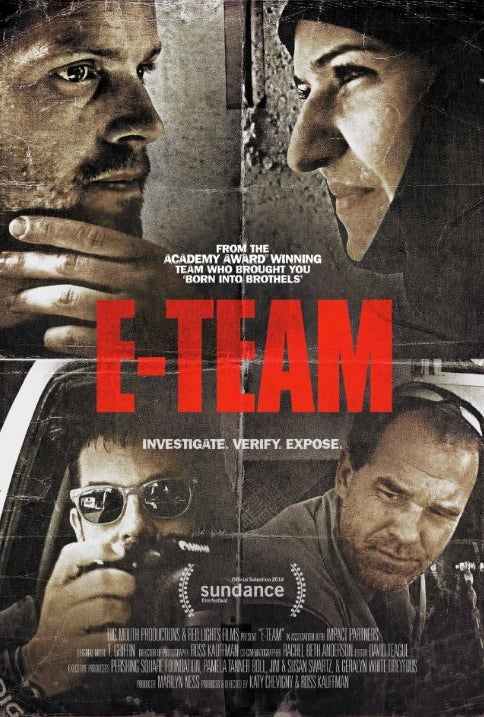
Yesterday I referred to the upcoming Human Rights Watch Film Festival in June. One of the films shown there will also appear on Netflix and therefore be able to reach a much larger audience. Interesting development for human rights films!!
The Associated Press reported on May 8 that Netflix Inc. had purchased E-TEAM as a high-profile “Netflix original,” and would distribute the film via its vast online platform as well as through a limited theatrical release in the United States. The film focuses on four researchers in the Human Rights Watch emergencies division, or E-Team, as they interview witnesses and gather other evidence of rights abuses and war crimes in Syria, Libya, and Kosovo. It highlights the personal commitment required to stop human rights violations over the long term. The filmmakers, Ross Kauffman and Katy Chevigny, operated with full creative control and had free rein from Human Rights Watch to produce a “warts and all” portrait of human rights activists in the field. It is the first time filmmakers have documented Human Rights Watch’s work so extensively.
[The film has won numerous awards on the festival circuit, including for best cinematography at Sundance. Variety called it “a documentary that’s devastating, entertaining and inspiring in equal measure.”]
As I had only just started my blog “Thoolen on Human Rights Defenders” in 2010, I must have missed a number of interesting things, such as this video uploaded to You Tube by the UN on 1 December 2010. Against the background music of Stand Up for Your Rights by Bob Marley, this video give the floor to some ‘ordinary human rights defenders’ from various parts of the world. Human Rights Day of 10 December 2010 was dedicated to human rights defenders who battle against discrimination. For the record.
I have often wondered why there is not a proper human rights (digital) TV channel. Technically is should be possible but it would require the true coöperation from the whole human rights movement to create a global channel. Glad to see that the Asian Human Rights Commission has started at least with a weekly programme. Here is episode 9 on Human Rights Day. Bravo!
To create awareness among the masses, the Flashpoint Human Rights Film Festival was held from 12-14 December 2013 in Mumbai, India. The three-day film festival was organised by Solaris Pictures in association with ACEE – The Third Eye and Movies That Matter and Alliance Francaise de Bombay. The third edition of the film festival was held at Alliance Francaise and entry was Entry free. The films screened included
If the coming days I am a bit less prolific with news on human rights defenders (maybe a welcome respite!) there is a good human rights reason: I will be in Berlin where on 13 November 2013 the first annual Werner Lottje Lecturewill be inaugurated. It is an initiative by Bread for the World and the German Institute for Human Rights. As a good friend of Werner I am delighted to be allowed to speak about his enormous contribution to the human rights world as it is today: Read the rest of this entry »
On July 3, 2013, Komas program officer Ms Lena Hendry, Executive Director Mr Arul Prakkash and one of the Board of Directors, Ms Anna Har, were arrested during the screening of the film “No Fire Zone, the Killing Fields of Sri Lanka”. MSN Malaysia reports: that today the KDN issued a notice informing Komas that Ms Lena Hedry would be charged and for her to appear in the Magistrate court tomorrow, 19 September Read the rest of this entry »
This video accompanies a new 78-page report, “Laws of Attrition: Crackdown on Russia’s Civil Society after Putin’s Return to the Presidency, which describes some of the changes since Putin returned to the presidency in May 2012. The authorities have introduced a series of restrictive laws, begun a nationwide campaign of invasive inspections of nongovernmental organizations, harassed, intimidated, and – in a number of cases – imprisoned political activists, and sought to cast government critics as clandestine enemies. The report analyzes the new laws, including the so-called “foreign agents” law, the treason law, and the assembly law, and documents how they have been used. Many of the new laws and the treatment of civil society violate Russia’s international human rights commitments, Human Rights Watch said.

 Hans Thoolen on Human Rights Defenders and their awards