
Today – 19 December 2020 – marks one year since the Government of the Maldives arbitrarily shut down the longest serving human rights group in the country, the Maldivian Democracy Network (MDN) and arbitrarily confiscated all of its funds. Since then, the Government has not reversed any of its unconstitutional actions related to the dissolution of MDN.
We remind the Government of the Maldives that Article 30(b) of the country’s Constitution guarantees the right to establish societies and non-governmental organisations (NGOs). Article 43 affords everyone the right to fair administrative action that adheres to basic fairness and procedural propriety. MDN has been deprived of these rights through arbitrary action taken without due process.
An administrative decision was taken based on allegations of a criminal offence, depriving the organisation and the human rights defenders involved of their right to appeal in the criminal and civil processes initiated by the Government of the Maldives. The right to appeal is guaranteed by Article 56 of the Constitution. Furthermore, the organisation has not been given the right of reply or to defend itself against what is widely seen as a biased decision based on the interpretation of an academic research.
We are disappointed that the Parliament of the Maldives has refused to investigate the matter and hold the government accountable. We urge the Parliament not to use its mandate selectively, and call on it to conduct its affairs equally, uphold the Constitution and the rule of law.
The Government of the Maldives, by taking arbitrary and unconstitutional actions to silence civil society, has set a dangerous precedent that has resulted in a violent witch-hunt of human rights defenders and civil society organisations. We call on President Ibrahim Mohamed Solih to conduct a fair and open enquiry into these deplorable actions and stop the harassment of the human rights community in the Maldives, as several United Nations Member States recommended during the third Universal Periodic Review of the Maldives in November 2020[1].
Signed by:
The Asian Forum on Human Rights and Development (FORUM-ASIA)
CIVICUS
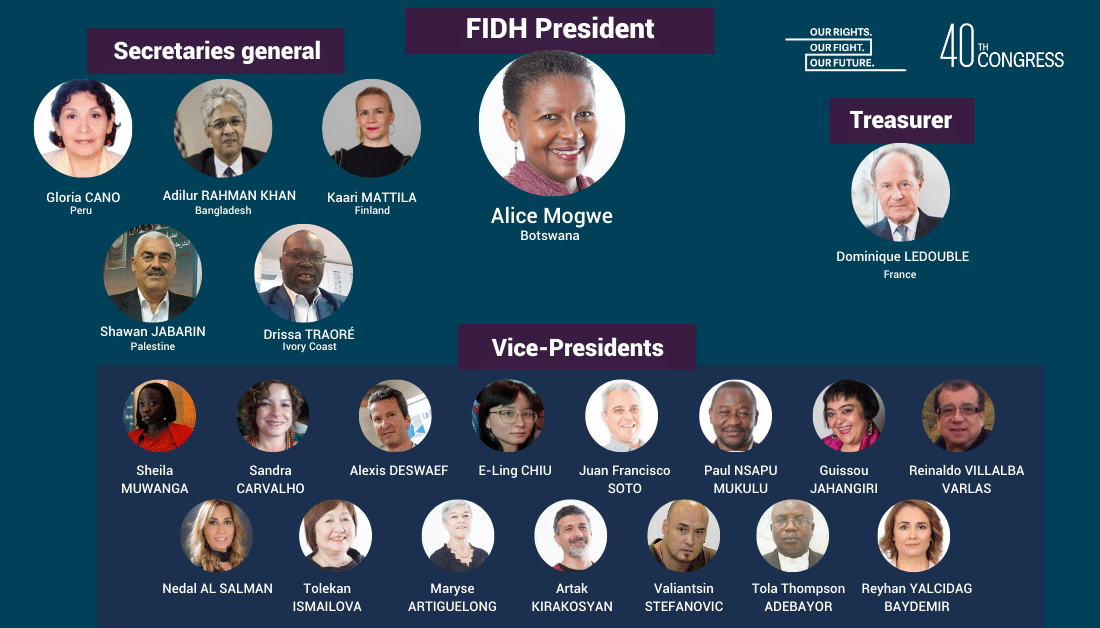
The International Federation for Human Rights (FIDH),
The Commonwealth Human Rights Initiative (CHRI)
The Maldivian Democracy Network (MDN) is a non-partisan civil society organisation based in the Canton of Geneva, Switzerland, operating under the Swiss civil code. MDN, registered in the Maldives from 2006 until December 2019, was one of the longest-running human rights groups in the country until the Government of Maldives forcefully shut down the organisation.
[1] Recommendations made to the Maldives at the 36th session of the Universal Periodic Review



 Hans Thoolen on Human Rights Defenders and their awards
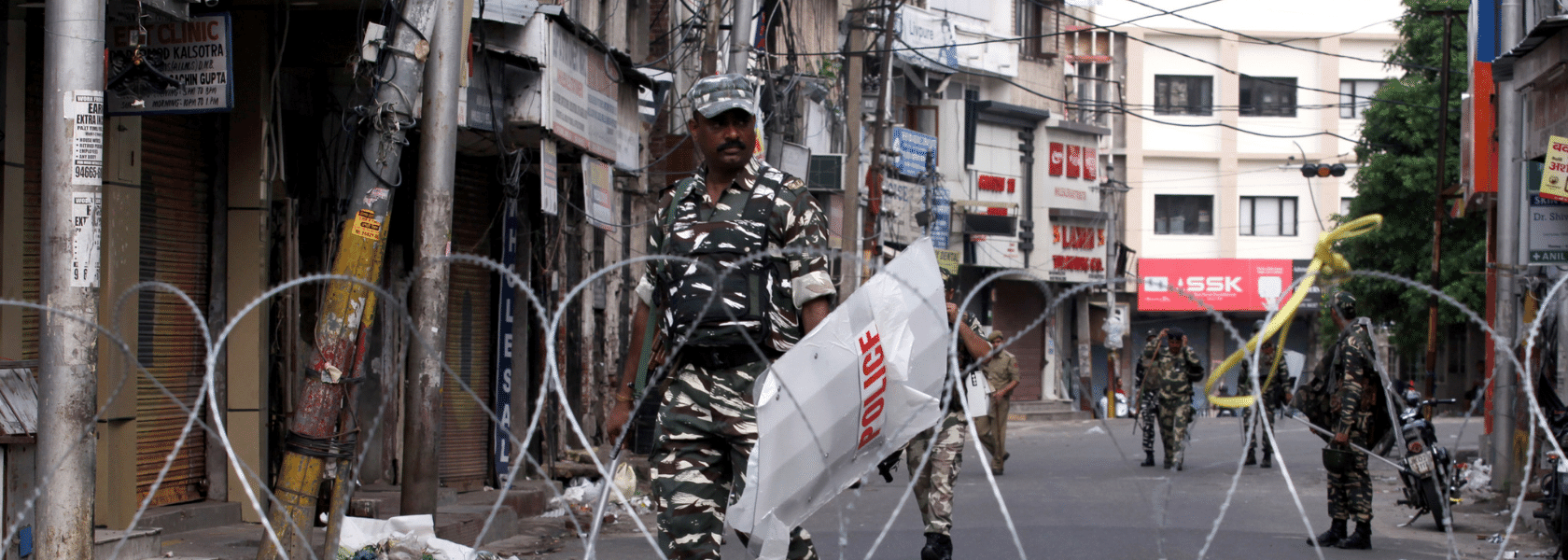
...After more than 70 years of terror, killings, torture, and disappearances, the international community must renew its efforts to end the conflict in Kashmir. In 2018 and 2019, the Office of the United Nations High Commissioner for Human Rights released reports that documented a wide range of abuses – including kidnappings, the killing of civilians, and sexual violence – perpetrated by both sides in the conflict. The UN needs to take the lead in stopping Kashmir’s torment. ……The conflict has consumed resources that should have been used for development; instead, they were channeled to arms purchases or a regional race to develop weapons of mass destruction. Everyone, regardless of age, religion, or ethnicity, has suffered, whether as a result of displacement, family separation, loss of property, the death or disappearance of friends and close relatives, grinding poverty, or simply the prospect of a future as bleak and constricted as the present.The international community has, at times, attempted to mediate between India and Pakistan. The UN has adopted resolutions demanding a referendum on Kashmir’s future status. But, even though it has long been evident that there is no military solution to the conflict – temporary ceasefire initiatives have never resulted in a lasting agreement – India to this day has resisted a plebiscite. In 2003, Pakistan’s then-president, Pervez Musharraf, formulated a four-step approach to a political solution. Without insisting on a referendum, India and Pakistan would begin a dialogue; recognize Kashmir as the main source of bilateral hostility; identify and eliminate what was unacceptable to each side; and strive for a solution acceptable to both countries – and especially to the people of Kashmir. Subsequently, a ceasefire was declared, and high-level meetings took place, but, following a terrorist attack, India terminated the talks. In 2012, Pakistani President Asif Ali Zardari and Indian Prime Minister Manmohan Singh tried unsuccessfully to revive the process.